A Glossary of the Knowledge Commons: The Conceptual Tools of Liberation in the Digital Age
Content

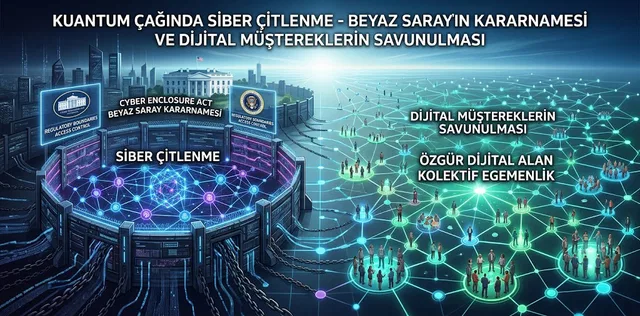
In the digital economy, while knowledge is sought to be "enclosed" by capital, we defend it as a "commons." These terms, brought into the literature by Hess and Ostrom, are the intellectual equipment the IT worker will use on the path to becoming an organic intellectual.
1. Fundamental Concepts: The Nature of the Commons
- Commons: It is the general term referring to resource systems that are shared by a group of people and are often open to social dilemmas (conflicts). In the world of knowledge, this says that every line of code and every scientific datum belongs to society.
- Common-pool resource (CPR): These are natural or human-made resource systems whose use diminishes another's benefit (subtractable) and from which it is difficult to exclude users.
- Public goods: These are goods open to everyone's access, where one person's use does not prevent another's use (non-rivalrous). Knowledge, in its essence, is a public good.
- Commons-based production: It is a form of production in which no one establishes private ownership over value, and in which cooperation is provided through social mechanisms rather than market signals or hierarchical management. "Peer production" is the broadest example of this.
2. Barricades Against Ownership and Exploitation
- Enclosure: Historically it refers to the privatization of peasants' common lands. In the digital world, "enclosure" is the transformation of knowledge into an object of profit through intellectual property.
- Commodification: It is a term of Marxist origin; it refers to the transformation of a non-commercial object into a commodity that can be sold in the market. Our data and our codes becoming products is part of this process.
- Anticommons: It is the situation in which limited scientific resources are used inefficiently or cannot be used at all due to excessive intellectual property rights and excessive patenting (especially in the biomedical and software fields).
- Intellectual property rights: These are legal rights over intangible property such as patents, copyrights, and trade secrets. Hess and Ostrom detail how these rights threaten the "commons."
3. Institutional Analysis and Governance Models
- Institutional analysis: It is the method that examines how institutions form, how they change, and how they influence individual behavior.
- Design principles: These are the fundamental characteristics, defined by Elinor Ostrom (1990), that long-lived and resilient common-pool resource institutions (for example, a successful trade union or an open-source community) must possess.
- Self-governance: It is the ability of people to exercise and control the authority to govern themselves within a society; it requires both knowledge and institutional arrangement.
- Polycentricity: It is the decentralized structure in which decision-making and rule-setting are carried out by independent authorities at different levels rather than by a single center.
4. Social Dynamics and Cooperation
- Collective action: It is the necessity for two or more individuals to work together in order to reach an outcome. It is the atomic nucleus of the trade-union struggle.
- Reciprocity: It is an individual's contribution to the welfare of society with the expectation that others will do the same.
- Social capital: It is the collective value of social networks and the tendency toward mutual aid arising from these networks.
- Stewardship: It is undertaking the care and responsibility of a resource so that it may be passed on to future generations.
- Free riding: It is a person's benefiting from the contributions of others while not contributing to the common effort himself. It is the greatest internal threat to the commons.
5. The Infrastructure and Flow of Knowledge
- Artifacts: They are the physical, observable, and nameable representation of ideas (for example, a book, a software library).
- Ideas: They are non-physical units of resource flow; thoughts, creative visions, and innovative knowledge.
- Repository: They are the institutional or digital archives that collect and distribute the documents of participants. Institutional repositories, in turn, are the structures that store the digital outputs of universities or research centers.
- Scholarly communication: It is the process concerning how knowledge spreads through formal and informal channels. Hess and Ostrom argue that this communication should be based on "Open Access."
Conclusion: Escaping Path Dependency
Hess and Ostrom warn us with the concept of Path dependency: our current decisions are captive to the decisions of the past. If we continue today on the path of "enclosure" and "commodification" in the IT sector, our future will remain in the hands of algorithmic despotism.
However, Homo Commonans, by building a free, open, and transparent process of inquiry as in the principles of Mertonianism, can take technology out of being a tool of oppression and turn it into the common heritage of humanity. This little glossary consists not only of words, but of the building blocks of a new life to be woven within the digital factory.
Reference: Hess, C., & Ostrom, E. (Eds.). (2007). Understanding Knowledge as a Commons: From Theory to Practice. MIT Press.