The Dialectic of Copyright in the Digital Age
From the Illusion of Property to the Liberation of Collective Labour

Dear Comrades Who Are Writers, Translators, and Content Producers,
At this historical juncture, when late capitalism is struggling with crises, we must expose the new targets of the regime of capital accumulation and clarify the class position of intellectual workers who hold the pen, keyboard, word, and voice.
The crisis we face today under the roof of the Türkiye Yazarlar Sendikası (TYS, Writers' Union of Turkey) is not merely a matter of AI companies' hunger for data. The problem is far broader, deeper, and more systemic: from physical books, printed daily, being immediately converted into PDF and EPUB formats and circulated through pirate networks, to the paltry shares that digital platforms and audiobook monopolies such as Storytel, Amazon, Google, and Kobo see fit to grant writers; from pirate libraries to the colossal plunder of data by AI models, we confront an integral wave of dispossession unfolding across every digital platform.
Capitalism has directed the process of “primitive accumulation,” which it began centuries ago by enclosing the peasant's land behind fences, at our books, our language, our literature, and our collective cultural accumulation today through digital networks, streaming platforms, Big Data, and generative AI (GenAI). As profit margins in the physical world narrow, capital sets its eyes on humanity's intellectual production; it regards every novel written, every text translated, and every page voiced as “free raw material” or “low-cost content” to be dispossessed.
Bourgeois ideology and the publishing industry have packaged copyright for us as “the sacred armour of individual property,” and the writer as “an independent genius selling their work on the market.” Yet today the curtains have been drawn aside. As publishing monopolies, pirate shadow economies, and Silicon Valley giants swiftly strip away the illusion of property from the writer's hands, one plain reality confronts us: copyright laws protect not the producer, but the capitalists who hold the means of production, distribution, and platforms.
This study has been written to decipher the circulation of books, text, and voice in the digital sphere through a dialectical-materialist analysis of process; to disperse the illusions of bourgeois law; and to set out concrete, public, and organized models of protection that will defend the rights of intellectual workers.
The Dematerialized Book and Digital Enclosures: A General Assessment
The capitalist mode of production subjects the copying of commodities produced in the material world to physical limits. Yet the digitization of a book (PDF, EPUB, MP3) has dematerialized the product of intellectual labour.
The Contradiction Between Zero Marginal Cost and Artificial Property
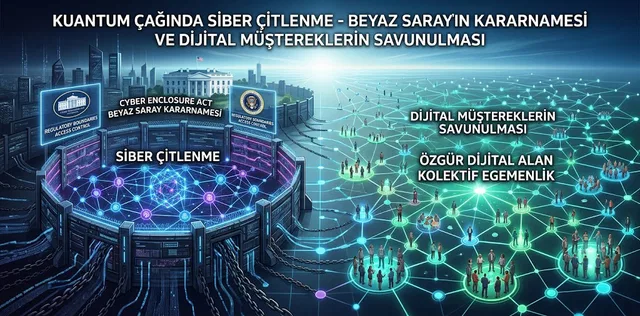
In the digital age, the marginal cost of producing a million copies of a book and distributing them across global networks has approached zero. While this vast leap in the productive forces imposes the free circulation of knowledge and literature, and their becoming the common property of society, as a dialectical necessity, capitalist property relations erect artificial barriers (“digital enclosures”) before this development: paywalls, digital rights restrictions (DRM), and rigid copyright laws.
The Two Faces of Digital Circulation: Platform Capitalism and the Shadow Economy
The circulation of books in the digital sphere takes shape along two principal lines:
-
The Subscription Rentierism of Platform Capitalism: Platforms such as Storytel, Amazon/Audible, Kobo, and Google Books have adapted the Spotify model from the music industry to publishing. The reader/listener pays a monthly subscription fee; the platform offers access to hundreds of thousands of books. Yet while a vast portion of the value produced here is transferred to the platform monopoly's infrastructure and profit margin, absurd pittances divided into cents per reading/listening time remain for the writer and translator, the book's actual creators.
-
Pirate Networks and Shadow Libraries: The informal circulation network stretching from Telegram channels to massive digital archives such as LibGen and Z-Library is branded “immoral theft” in the bourgeois media. From a dialectical perspective, however, piracy is the uncontrolled manifestation of society's need to access quality knowledge in response to the commodification of knowledge and high book prices. Yet under the present capitalist order, this pirate circulation generates profit for the hardware and internet providers that supply its infrastructure, while completely dispossessing the writer who tries to make a living from their books and the independent publishing worker.
-
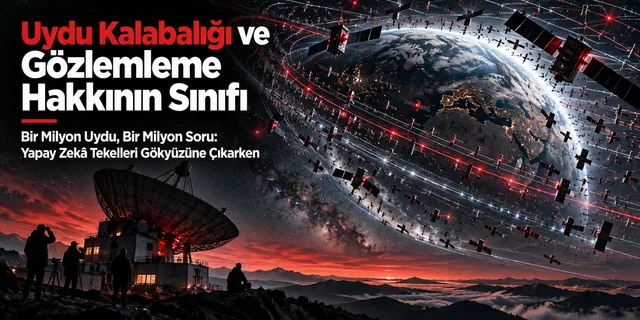
AI Data Enclosure: Both e-books on legal digital platforms and millions of PDFs/EPUBs circulating through pirate networks have been scraped through data mining by AI monopolies such as OpenAI, Meta, and Google, without any permission or payment of royalties. Humanity's vast digital library has been turned into a free input for algorithmic capital.
Dialectical Note: The digitization of the book carries the potential to democratize access to knowledge. Yet under the private ownership of the means of production and distribution, this technological leap means greater exploitation for the writer and artificially inflated walls of access for the reader.
The Class Character and Dead Ends of Bourgeois Law
Bourgeois law, by definition, protects not the worker who produces the content but the owner of the means and infrastructure. The dominant legal systems of the world are floundering in their attempt to legitimize these contradictions in the digital sphere.
-
The Pro-Capital Bias of the “Fair Use” Doctrine: This principle in Anglo-Saxon law is used as a refuge by AI companies and digital platforms. The unauthorized scraping of works is legitimized in the name of “technological progress” and “transformative use”; writers' pursuit of rights is presented as “a brake obstructing progress.”
-
The EU AI Act and the Illusion of Transparency: Although the regulations adopted by the European Union promise dataset transparency, they do not touch capital's model of accumulation. While the system envisions the sharing of a small “licensing rent” between giant technology corporations and giant publishing monopolies, it leaves independent writers, translators, and publishing workers without royalties entirely outside the table.
-
The Inadequacy of Individual Lawsuits: So long as the lawsuits writers file on grounds of copyright infringement do not touch the root of the problem—namely, the private ownership of the means of production and distribution—they are doomed to remain limited to efforts to extract symbolic compensation from capital.
The Illusion of “Sacred Property” and Capital's Scenarios of Abuse
The conservative and traditionalist mentality conceives property as an eternal, sacred entity detached from social relations of production. This idealist approach toward the writer and content producer says, “The work is the product of my mind; therefore its property belongs to me and is sacred.”
At first glance, this understanding appears to protect labour, but it contains two great historical illusions:
-
The Illusion of the “Lone Genius”: Bourgeois aesthetics constructs the writer as an isolated genius who receives inspiration from supernatural sources. Yet the succession of language, imagery, grammar, and concepts used by the writer is the product of humanity's collective practice over thousands of years. The act of creation is not an individual miracle; it is a collective synthesis in which social inputs are processed in the individual mind.
-
The Conservative Contradiction: The conservative mentality imagines that it can protect its work by clinging to the idea of “individual property.” Yet under the capitalist mode of production, individual property based on one's own labour is doomed to be defeated by capitalist property that exploits the labour of others. The moment the writer puts their work on the market, they surrender to publishing monopolies, digital distribution platforms, and slave contracts in the name of protecting copyright.
Capital's Scenarios of Dispossession
The order of capital uses the copyright mechanism not to protect the writer, but to appropriate the surplus value produced by creative labour. This wheel of exploitation has three concrete manifestations:
-
Platform Rentierism and E-book/Audiobook Exploitation: The writer and translator labour for months to prepare the book. Yet the capital groups that own the means of digital distribution (Amazon, Storytel, Kobo, etc.) appropriate 80–90% of subscription and sales revenue as “platform rent.” A ludicrous crumb from the book's sale or listening remains for the writer and translator.
-
Pirate Circulation versus Insecurity: High book prices charged by publishing monopolies and the access restrictions of digital platforms drive readers toward pirate PDF/EPUB networks. In this process, while internet service providers and smart-device manufacturers reap enormous profits, the writer is wholly dispossessed, deprived of both physical sales and digital royalties.
-
Endless Data Plunder Through AI: Technology giants use all digital e-book archives obtained through pirate or legal channels to train AI models. They then produce cheap texts imitating the writer's style, turning the writer's own data into an instrument of blackmail to erase that writer from the market and lower royalty payments.
| Dimension of Analysis | Conservative / Bourgeois Illusion | Dialectical-Materialist Reality |
|---|---|---|
| Creative Process | The sacred, isolated product of individual genius and inspiration. | A collective synthesis of social language, accumulated knowledge, and historical conditions. |
| Function of Copyright | A legal armour protecting the writer's property. | An instrument of property enabling monopolies to appropriate surplus value. |
| Digital Book / PDF | The pirate's “theft” or the platform's “service.” | The contradiction between the desire for knowledge to circulate freely and capitalist enclosures. |
| AI Plunder | The inevitable, neutral progress of technology. | Capital's move to enclose collective intellectual labour for free. |
| Access to Knowledge | A commercial good accessible to those who pay for it. | A public commons (Commons) seized through commodification. |
Escape from the Market Straitjacket: Commons and the Sharing Economy
When the mentality that sanctifies property hears of every non-market alternative, it asks, “If market royalties disappear, how will the writer make a living; how will they earn their bread from their book?” This question feeds on a deep-rooted fear; but dialectical materialism clearly reveals the class illusion behind that fear:
-
The Market Already Provides No Security for the Writer: The existing capitalist copyright and publishing market has already condemned 99% of writers and translators to insecurity and a crisis of unpaid royalties. The market rewards only a small minority reconciled with capital. The conservative mind is caught in the tragedy of defending a security that does not exist.
-
Guarantee of Social Reproduction: Instead of tying the writer's livelihood to the lottery of selling a commodity on the market, intellectual production must be recognized as a public service, and language and literature as a social commons (commons). The writer's and publishing worker's need for housing, nourishment, and access to the means of artistic production must be guaranteed through public and collective mechanisms, not capital's profit motive.
-
From the Anatolian Tradition of Commons to Digital Commons: Historical institutions such as imece and vakıf are early forms of commons in which knowledge is offered freely for public benefit and the producer is sustained through social solidarity. What must be done is to unite this legacy with the possibilities of the digital age and leap toward the understanding of “Digital Commons” (Digital Commons).
Structural Models of Sharing That Can Be Implemented Today
The following are concrete transitional instruments that can be implemented to progressively paralyze market relations:
-
Copyleft and Flexible Licensing (Creative Commons): Against the concept of copyright, copyleft prevents works from being enclosed by monopolies by prohibiting their commercial use; yet it liberates their copying, distribution, and non-profit use by society. It strikes the commodity with its own weapon and interrupts the process of knowledge's commodification.
-
Non-Market Cultural Commons: The state's cultural budget should be used not to subsidize capitalist publishers, but to build public digital libraries that digitize all printed books and offer them free to the public, and open-source publishing networks where intermediary platform rentiers take no commission.
What Must Be Done Today? Concrete Struggle and Security Models for TYS
Dialectical materialism is the philosophy not merely of understanding the world, but of transforming it and acting within concrete historical conditions. The fundamental task before us is, on the one hand, to repel capital's moves of dispossession and, on the other, to gain positions that will secure the livelihood of writers and publishing workers today, within the existing capitalist straitjacket.
Digital Culture Tax and Universal Basic Writer Income (A Transitional Demand)
In the digital age, the value produced by the intellectual worker generates enormous profits on digital networks, while a share close to zero of that profit goes to the owner of the labour. The concrete instrument to be developed against this machinery of theft is the Digital Culture Tax model:
-
Taxing Capital: A mandatory “Digital Culture and Data Share” must be levied on the turnover and data traffic of AI companies, social media monopolies, e-book/audiobook platforms (Storytel, Amazon, etc.), and telecommunications infrastructure providers. The rent capital derives from our collective memory must be appropriated through public power.
-
Universal Basic Writer Income: This revenue must be distributed as an unconditional Universal Basic Writer Income to all writers, translators, and intellectual workers who continue their productive activity, regardless of sales quotas or algorithms' arbitrary click/listen counts.
-
Dialectical Qualification: This demand for taxation is not a final solution; it is a strategic Transitional Demand that appropriates capital's surplus value within the limits of capitalism and lays the ground for final socialization.
Union Collective Agreements, E-book Standards, and the Right of Veto
The greatest weakness of writers and translators before capital is that they have been isolated at the outset of the process. A writer confronting a massive publisher or platform monopoly alone has no bargaining power at the table. We must build the union barricade in the field of publishing:
-
Mandatory Collective Licensing: Under the leadership of the Türkiye Yazarlar Sendikası (TYS) and sister labour organizations, individual print and digital contracts must be rejected; model contracts (standard contracts) must be made mandatory. E-book, audiobook, and AI data rights must not be transferred without union approval.
-
Platform Price Floor and Transparency: Minimum royalty rates must be established against subscription-based e-book and audiobook platforms; algorithmic listening/reading data must be opened to union oversight.
-
Collective Veto and Right to Withdraw Data: Against AI companies that scan e-books without authorization and pirate commercial platforms, the right of collective data withdrawal (opt-out) and legal-blockade veto must be exercised within TYS.
Writer-Producer Cooperatives and Public Distribution Networks
At the core of the problem in publishing lies not merely “writing,” but the inability to own the means of distribution and platforms. Because capital holds the distribution monopoly alone, it appropriates almost all the value created as intermediary rent.
-
Distribution Cooperatives: Writers, translators, and editors must establish their own distribution cooperatives. Non-profit collective platforms that undertake e-book and audiobook distribution in the digital sphere must be built.
-
Public Digital Libraries and Logistics: Local governments and public institutions must cut the resources they transfer to publishing monopolies and build national digital-library infrastructures that offer the entire digital e-book and audiobook archive free to the public while paying writers royalties directly from public funds.
The Sublation of Intellectual Property and the Line of Struggle
Our ultimate horizon cannot be to beg for “more humane conditions of exploitation” within the boundaries set by capitalism. We must abolish completely the pressure of commodification upon word, idea, book, and art; we must dialectically transcend intellectual property.
The Sublation of Intellectual Property
In Hegelian-Marxist philosophy, Aufhebung (Sublation) is the destruction of the reactionary and obstructive outer shell of a historical form, while preserving the productive force within it and reconstituting it in a higher social character.
The transcendence of intellectual property in the digital age is likewise not the destruction of books or knowledge; it is the bursting of the shell of private property and the restoration of knowledge to its social existence (Commune).
-
Breaking Alienation (Entfremdung): Once intellectual property is transcended, the book ceases to be an instrument of livelihood anxiety or a commodity to be sold. The creative act becomes a free human praxis through which human beings bring their own essential capacities together with society and realize themselves.
-
General Intellect (General Intellect) and the Commune: As Marx emphasized, social intellectual accumulation and technology have become the main source of production. The internet, digital libraries, and AI are humanity's common General Intellect. Our ultimate vision is for all of humanity's written and artistic heritage to be fully and freely open to the entire planet, without any paywall, platform rent, or copyright barricade.
A Strategic Road Map of Struggle for the Türkiye Yazarlar Sendikası (TYS): A Concrete Line of Action and Organization
The greatest historical impasse of bourgeois trade unionism is its belief that the contradictions created by class society can be “repaired” within the system's own limits and laws. The line of struggle we propose for the Türkiye Yazarlar Sendikası (TYS) is not the passive posture of a guild begging publishing monopolies for crumbs of royalty or seeking individual compensation in courthouse corridors.
The process before us is late capitalism's dispossession of intellectual labour through its seizure of the digital means of production. Therefore, our response must be a practical and dialectical Transitional Programme directed at this infrastructural assault.
The deepened phases of action in the strategic road map TYS must implement in the coming period are set out below:
Phase 1: Ideological Clarification and Consciousness of Intellectual Proletarianization
The first and most critical terrain of struggle is minds. No concrete action can succeed before the bourgeois illusions writers and content producers carry regarding their own class position are dispelled.
-
Destroying the Delusion of the “Small Property Owner”: Bourgeois law tells the writer the fairy tale that they are a “property owner.” Yet every writer, sculptor, translator, or programmer who does not own the means of production and distribution (printing facilities, distribution networks, digital platforms) is part of the intellectual proletariat. Through its panels, declarations, and lines of action, TYS must make its members clearly understand that they are not “individual property-owning geniuses,” but dispossessed workers.
-
The Real Face of Copyright: Copyright is not a religious armour protecting the intellectual worker; on the contrary, it is a capital contract that commodifies the work and makes it transferable to publishing and platform monopolies. In union education, the concept of copyright must be stripped of the veil of “sacred property” and deciphered as the legal instrument of surplus-value expropriation.
-
Breaking Isolation: Writing has historically been romanticized as “an act carried out alone in an isolated room.” This romanticism makes it easier for capital to hunt the writer one by one. TYS must build a culture of collective solidarity by bringing the social character of the individual process of production to the fore.
Phase 2: Organizing a Broad, Interdisciplinary Labour Front
Through the process of digitalization, capital has united publishing, voice work, software, and data processing beneath a single digital-platform roof. Therefore, the struggle of intellectual workers cannot remain trapped within the old boundaries of guilds.
-
A Class Front Beyond Sectoral Alliances: TYS must establish a United Intellectual Labour Front with the Translators' Professional Association (ÇEVBİR), Publishing Life Workers (YAY-KOOP), the Actors' Union (for voice artists), and organizations of visual artists and graphic labour.
-
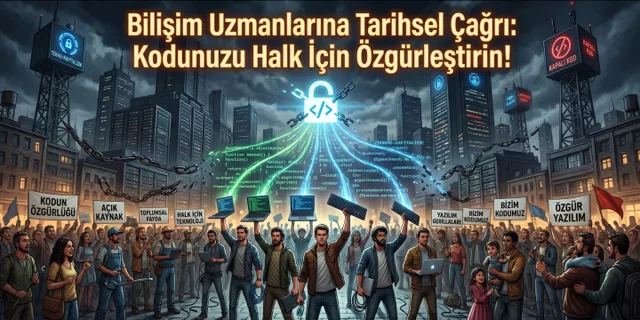
Coming Together with the Technology Proletariat: The greatest ally in protecting writers from the data enclosure of AI monopolies is the software and data worker who writes those AI algorithms, labels data, and operates the systems. TYS must establish joint forums with technology unions and software organizations, and together expose the class character of the algorithms that plunder literary labour.
-
Imposing Model Contracts (Standard Contract): The era of individual contracts in the publishing market must be closed completely. The union must impose Collective Model Contracts as a mandatory standard on publishers and platforms for all member writers and translators, setting minimum royalty rates, e-book/audiobook revenue shares, and limits on the transfer of digital rights. No contract that has not passed union approval must be signed.
Phase 3: Legal and Actual Veto Power (Digital Strike and Collective Boycott)
Capital understands only force. Filing petitions within legal frameworks or issuing statements of condemnation does not stop exploitation. The union must turn its greatest power—the power of being the source of production and data—into a weapon of action.
-
Collective Data Withdrawal (Opt-Out) and Blockade: A Collective Veto Pool must be established within TYS for writers whose works are scanned without authorization by AI companies and who do not receive the value of their labour on e-book and audiobook platforms. By uniting the rights to the works of hundreds of writers in a single collective will, the union must direct this ultimatum at capital: “Unless our copyright and platform terms are accepted, we collectively withdraw all our works from your digital platforms and datasets.”
-
Digital Strike and Platform Boycott: Digital platforms (Storytel, Amazon, etc.) that do not comply with minimum royalty rates and do not transparently open algorithmic reading/listening data to the union must be publicly named, and mass reader-writer boycotts must be organized. Writers must withdraw their works from these platforms, and readers must be called upon to cancel their subscriptions.
-
The Class Use of Pirate Networks: Pirate PDF/EPUB libraries (LibGen, Z-Library, etc.) are presented as “theft” in the bourgeois media. TYS must use this situation to strike at bourgeois hypocrisy: “It is you who commodify knowledge and hide it from the people behind extortionate prices. The only difference between digital platforms that pay no royalties to writers and pirate networks is that one generates profit for capital. We accept neither the public remaining ignorant nor the writer going hungry!” This discourse must foreground the necessity of public libraries.
Phase 4: Public Intervention and Transitional Demands
TYS must not imprison its struggle within disputes with publishers; it must popularize public transitional demands (Transitional Demands) that directly target the state and the order of capital.
-
Digital Culture Tax: A legislative campaign must be conducted for a mandatory Digital Culture Levy on the data traffic and turnover of telecommunications companies (Türk Telekom, Turkcell, etc.), internet service providers, digital platforms, and technology monopolies. Before the public, the following idea must be agitated: “Those who provide internet infrastructure earn billions, while the writers who create the knowledge and books flowing through that infrastructure cannot be left hungry!”
-
Universal Basic Writer Income: The fund obtained from the Digital Culture Tax must be transferred as an unconditional Universal Basic Writer Income to all writers, translators, and publishing workers who sustain their productivity, regardless of market sales figures, bestseller lists, or algorithmic clicks. This demand will detach the writer's vital existence from the mercy of the market.
Phase 5: Socializing the Means of Production and Distribution (Infrastructure of Commons)
The ultimate aim of the transitional programme is to build alternative public and cooperative infrastructures that will completely abolish capital's intermediary rent.
-
Publishing and Distribution Cooperatives: Under the leadership of TYS, Digital Publishing and Distribution Cooperatives must be founded: non-profit organizations operating under the self-management of writers and translators. These platforms, built with open-source software, must deliver e-books and audiobooks directly to readers; intermediary corporations' profit rent, reaching 80%, must be reduced to zero and revenue transferred directly to producers and public funds.
-
National Public Digital Library: Rather than funding capitalist publishers, the budgets of the Ministry of Culture and local governments must be compelled to establish National Digital Library Networks that purchase the digital copyrights of all printed books at union minimum rates and make these works available free of charge and without barriers to every citizen.
Comparison of Lines of Struggle
| Dimension of Struggle | Bourgeois / Yellow Unionist Approach | Dialectical-Materialist TYS Line of Struggle |
|---|---|---|
| Definition of Class | Regards writers as “special geniuses” and “independent property owners.” | Positions writers as an intellectual proletariat deprived of the means of production. |
| Legal Strategy | Takes refuge in individual courts and abstract copyright laws. | Uses Collective Model Contracts and the power of collective veto/blockade. |
| Approach to Technology | Experiences passive victimhood in the face of AI and digitalization. | Builds a Broad Labour Front with technology and data workers against technology monopolies. |
| Demand for Income | Requests a higher percentage share (a crumb) from book sales. | Demands a market-independent Universal Basic Income through the Digital Culture Tax. |
| Ultimate Objective | Seeks “more humane exploitation” within the market order. | Aims to transcend Intellectual Property through sublation (Aufhebung) by socializing the means of production and distribution. |
Conclusion: The historical task before TYS is to completely abandon the passive, defensive, guild-type organizational habits of the past. In this age in which intellectual labour is being dispossessed on a mass scale, writers and publishing workers—the real owners of production—can bring capital monopolies to heel only through an organized class line, public transitional demands, and the power of collective action. There is no other way!
Historical and Class Process Table of Approaches to Copyright
| Historical Stage / Model | Status of Knowledge and the Work | Position of the Producer / Writer | Class Purpose and Function |
|---|---|---|---|
| Traditional Bourgeois Copyright Law | Commodified individual property that can be bought and sold. | “Individual entrepreneur” selling goods on the market (Illusion). | To protect the profit investment of publishing and print capital. |
| Digital Rentier Capitalism (Platform/AI) | Content and free data for algorithmic capital. | Intellectual proletariat whose data is extracted, dependent on platforms. | To consolidate the rent of technology and platform giants. |
| Transitional Period (Public Commons) | Social existence with its commodification restricted (Commons). | Producer supported by public income and cooperatives. | To paralyze market pressure and provide the writer a humane life. |
| Final Marxist Vision | Humanity's free, universal, non-profit common heritage (Commune). | Free creative body (Praxis) liberated from alienation. | The complete liberation of knowledge and art in classless society. |
From Anxiety About the Future to Organized Hope – There Is No Other Way!
Dear Dispossessed Comrades, Intellectual Workers, Creators of the Future!
We know that today, in your homes and at your desks, you may be alone with a deep anxiety about the future. Seeing the literary production, translations, and research to which you have devoted years plundered in digital spaces and reduced to crumbs on platforms; wondering how you will pay the rent tomorrow—this may weigh heavily upon your shoulders.
The bourgeois world tries to sell you this anxiety as “personal failure.” They are lying!
This concern you feel about the future is not an individual weakness; it is the result of the wave of dispossession that late capitalism has unleashed upon you through digital enclosures, platform rentierism, and AI.
The greatest achievement of the order of capital is to isolate intellectual workers as singular individuals. Every writer, translator, and content producer isolated before a screen is an easy morsel for digital monopolies to swallow. When you sit at the table individually, you remain helpless. Yet dialectical materialism shows us that great truth: Individual isolation is weakness; collective class consciousness is the greatest transformative force history has ever seen.
The era of late capitalism has completely eliminated half-measures and rosy dreams of a middle path. There is now no third way before us besides two clear choices:
-
Either Surrender: Either we remain alone and become the digital slaves of capital; we submit to our books, texts, and voices being enclosed for free and exploited by platforms until we are erased from the market...
-
Or Organized Struggle: Or we unite our pens, keyboards, and intellectual strength upon a single class barricade! We shall build the Broad Labour Front in which writers join hands with illustrators, translators with programmers, and voice artists with data workers!
Under the roof of the Türkiye Yazarlar Sendikası and our class organizations, we call upon you:
-
To stand at the same barricade,
-
To wield our collective power of veto against the plunder of digital data and e-books,
-
To win, through struggle, our right to public taxation and universal basic income,
-
And to make literature, language, and science humanity's common commune by liberating them from the profit chains of capital!
The future belongs neither to the corporate boards of Silicon Valley nor to the cold calculations of algorithmic capital. The future is in the hands of organized workers who transform nature, society, and history through their action.
Leave fear behind, close ranks! There is no other way; we are the future!