The Mastodon Barricade Against Technofeudalism — Class Consciousness in Cyberspace
The Open Source Movement That Will Shatter Data Exploitation and the Free Software Association's Historic Call

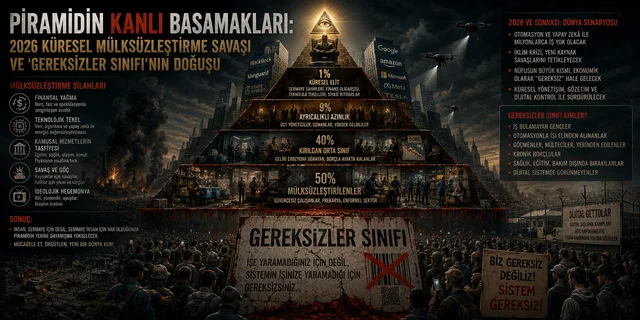
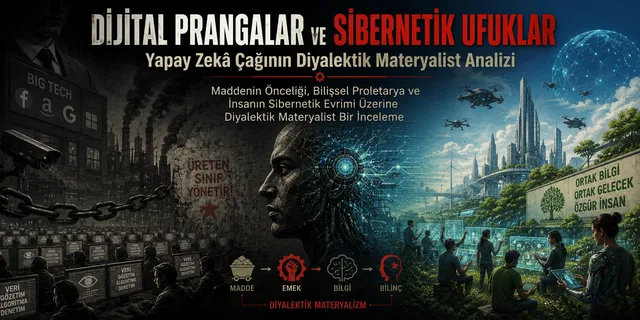
Comrades, for years we have debated capitalism's property relations in the squares, in unions, in coffeehouses. We shouted that factories must belong to workers, not bosses; that land must belong to those who work it, and production to society. Yet capital did not stand still; it moved the wheels of exploitation out of the physical world and onto the phone screens in our palms—the digital world.
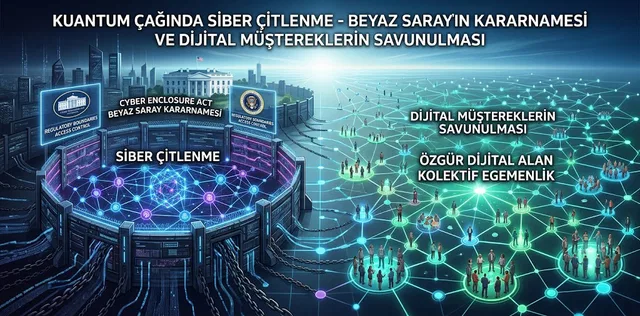
Today I see many of us spending time on Facebook saying "Our people are there, we're making our voices heard," and treating Twitter (now called X) as an indispensable public square for news. Our intentions are good—we want to organize—but by staying on these platforms, the most refined form of capitalist monopoly, we are filling the coffers of digital barons who exploit us and silence us at every opportunity.
Come, let us discuss in the plainest, most class-oriented language the basic concepts that will break these cyber chains of enclosure and the revolutionary alternative before us.
What Is "Open Source"? (The Collective Kitchen Everyone Can Understand)
The programs you use today—Facebook, Twitter, or WhatsApp—are "Closed Source" software. That is, the computer code behind these programs is locked away like a factory's secret production formula. You cannot know what goes on inside or what is done with your data. The boss (Zuckerberg or Musk) changes the rules whenever they please, cracks the algorithmic whip, and you are forced to submit.
Open Source is the collectivization of production. It means a software's code is not hidden but kept open to all humanity for inspection, development, and copying. You can compare it to a common kitchen whose recipe is posted on the wall, where everyone can add an ingredient and grow it, and where everyone can eat for free—instead of a bourgeois restaurant with a secret recipe. Open source is the digital world's act of expropriation against the private ownership of knowledge.
What Is Mastodon? (Not a Corporate Mall, but a Free Communal Square)
Think of Twitter or Facebook as enormous corporate malls. There are security guards at the door, the boss sets the rules, they can throw you out when they feel like it, and they profit from every step you take inside.
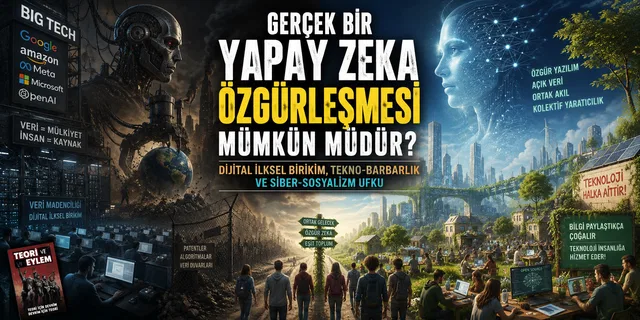
Mastodon is not a corporate mall; it is a whole of free neighborhoods and village squares connected by streets.
- It Has No Single Boss: Mastodon is not a single site owned by one company. Any union, ecology association, or group of revolutionaries can set up their own server—their own neighborhood.
- Solidarity Between Neighborhoods: A comrade in one neighborhood (server) can talk without any obstacle to a comrade on another server in the next neighborhood over, like sending greetings from one village to another.
- No Algorithm Trap: Twitter and Facebook put artificial intelligence in front of you that constantly serves up anger, hatred, and sensation to keep you on screen longer and show you ads. On Mastodon there is no artificial intelligence; whoever wrote what and when, you see it in its pure form on your screen. Your mind is not manipulated.
Why Should We Use Mastodon? (Time for a Digital Strike)
The question may arise: "Comrade, that sounds good, but everyone is on Facebook—why should I move to Mastodon?" This question is the same as saying "Everyone works the landlord's land as sharecroppers—why should we build a cooperative?"
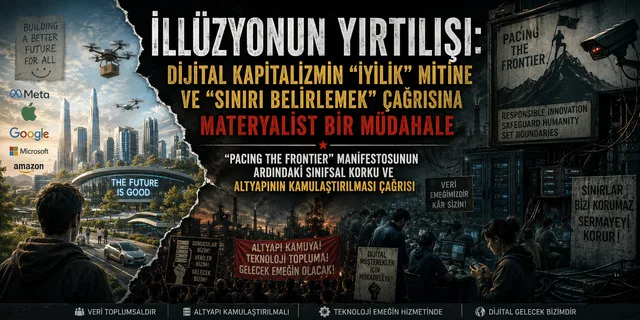
- An End to Surplus-Value Exploitation: Every post you share and every photo you like on social media giants becomes "data" for those companies and is sold to advertisers. Moving to Mastodon is taking back our labor and our time from the hands of digital monopolies.
- Protection Against Censorship: We have seen countless times how a single decision by the Twitter boss can shut down worker actions and revolutionary accounts. On Mastodon, because the people and organizations have their own servers, no one can silence us from a single center.
- Rejection of the Surveillance Society: As you browse Facebook, which union you searched for and which political view you clicked is recorded and filed. On Mastodon there are no ads and no monopoly mechanism watching you.
The Unions of the Digital Front: The Free Software Movement
Comrades; just as workers in the history of class struggle founded unions and associations, on the digital front we have organized centers that erect barricades against these savage property relations. Structures like the Free Software Association (ÖYD) in Turkey that take up this fight are the "legitimate resistance committees" of the digital world.
The Free Software Association's historic call to all society and to the opposition is clear:
- "Digital Rights Must Enter Political Programs": A union or party must defend the people's right to free and uncensored access to the internet and the use of free software just as it defends the minimum wage and job security.
- "Do Not Surrender to Surveillance Capitalism": Resisting companies spying on us second by second through phone screens is a line of class defense. Privacy is not a bourgeois luxury but the security of the working class.
- "Build Our Own Infrastructure": Democratic mass organizations must not leave their communication infrastructure to the mercy of Silicon Valley; they must build their own free software and communication networks (Mastodon servers).
We Must Take the Printing Press from the Bourgeoisie
When the printing press first appeared, the rulers wanted to monopolize knowledge; but the working class seized those presses, printed its own newspapers and leaflets, and changed the world. Today's printing press is the internet and social media networks.
Trying to do revolution in the rigged amusement parks built by billionaires is like seeking sharecropper rights in the landlord's coffeehouse. Building our own platforms, learning open source software, and migrating to free communes like Mastodon is no longer a technical hobby but a class and political duty.
We have nothing to lose but our chains—and a free digital world to win!
How should we launch the first "Digital Rights and Mastodon Setup Workshop" we will hold in local organizations or union branches as a practical and collective event, so that comrades accustomed to traditional class struggle practices (coffee meetings, leaflet distribution) who keep their distance from this technological turn do not see this digital migration as a burden?
You can reach the Bilgi Müşterekleri page at https://mastodon.social/@bilgimusterekleri.