The Eye, the Ear, the Heart of the Class: Bahadır Özgür
The One Who Wrote the News Is Inside, the One Who Did the Plunder Is Outside

Journalism Is Not a Crime: Bahadır Özgür Is Not Alone
What Is the Order That Detained the Reporter of the Fund Plunder Hiding?

Bahadır Özgür was released under judicial-control conditions
Updates
Last updated: 16 October 2026, 14:15. Newest first. Times are when a development was announced or first reported.
Friday 16 October 2026
- 14:15 — Bahadır Özgür was released under judicial control. The lawyer Ahmet Ergin wrote on X: an obligation to sign in twice a week, and a ban on leaving the country. There is no remand. Evrensel and BirGün repeated the same measures in updates at 14:25. This is a court decision; it is not an admission of guilt. The investigation continues (Ahmet Ergin, Evrensel, BirGün; all in Turkish).
- 13:40 — Hakkı Özdal, a writer at Evrensel, wrote from the courthouse: "Bahadır has been referred to the court with requests for a travel ban and judicial control with a signature obligation. We will leave here together." This is the prosecutor's request and the referral to the court; it is not a request for remand. At that hour there was not yet a court decision on judicial control, remand or release. Özdal's sentence "we will leave here together" is a colleague's statement (Hakkı Özdal, in Turkish).
- 12:10 — Evrensel announced on X that Bahadır Özgür had been brought to the courthouse; in the report linked at the same hour it relayed the words of his lawyer, Mürsel Ünder. Ünder said the technical conditions for violating the confidentiality of an investigation had not been met, and that the report contained assessments of a ministry statement: "The investigation that has been opened is not in accordance with the law." In his statement at the police station Bahadır repeated that he had prepared the report in line with the list of 141 people that the Minister of Justice, Akın Gürlek, had announced in public. There is no decision to remand, to place under judicial control, or to release in this announcement. The access block on his X account is the order already known since the previous evening (Evrensel, Evrensel on X; both in Turkish).
- 11:46 — BirGün updated its page: Bahadır Özgür was sent to the courthouse around 11:40. He had not yet been brought before the prosecutor; the decision of the prosecutor's office was awaited. There is no decision to remand, to place under judicial control, or to release. Cumhuriyet repeated the same hour of transfer in an update at 12:36 (BirGün, Cumhuriyet; both in Turkish).
- 11:04 — There is still no decision to remand Bahadır Özgür, to place him under judicial control, or to release him. At that hour BirGün's page still stood at the 06:59 sentence, "he is expected to be sent to the courthouse". CNN Türk updated its page at 11:04. The people taken into custody are again five: Murat Ağırel, Ömer Sarıgül, Aylin Kotil, Volkan Aslanbaş and Cavidan Tanrah Artuner. Emir Sarıgül is not on that list; he remains on the list of six detention orders. The same page carries a text Mustafa Sarıgül wrote from his own account. His family members' statements are being taken, and the process is continuing. The matter is a commercial dispute. The other side's claims are untrue; the source and the authenticity of the documents are doubtful. They applied to Murat Ağırel, before the investigation began, to have these claims reported. Ağırel was detained while he was investigating whether the matter was true. The family will share information and documents with the investigating authority. He asks for the presumption of innocence. This is Sarıgül's statement. It does not stand in place of the laundering allegation in the prosecutor's text, or of the complainants' claim that they were threatened (CNN Türk, BirGün; both in Turkish).
- 10:28 — There is still no decision to remand Bahadır Özgür, to place him under judicial control, or to release him. BirGün's page still stands at the 06:59 sentence, "he is expected to be sent to the courthouse". At the same hour CNN Türk, citing DHA, again wrote the people taken into custody as five: Murat Ağırel, Aylin Kotil, Ömer Sarıgül, Volkan Aslanbaş and Cavidan Tanrah Artuner. Emir Sarıgül is not on that list; the detention order against him still stands. This list of five is not the same as the three names in T24's 10:13 lead sentence (CNN Türk, BirGün; both in Turkish).
- 10:13 — T24 updated its page. The lead sentence writes the people taken into custody as Murat Ağırel, Aylin Kotil and Ömer Sarıgül, and says there is a detention order for Emir Sarıgül, Volkan Aslanbaş and Cavidan Tanrah Artuner. Further down the same page, another sentence writes that Aylin Kotil and her sons Emir and Ömer were taken into custody. That sentence also says the charge of "laundering assets" was directed at Kotil and the Sarıgül brothers. İsmail Saymaz's account still stands: there is an order for Emir, and Mustafa Sarıgül said he would surrender to the police. The list of six detention orders is relayed from the prosecutor's text. The page's two sentences do not say the same thing about Emir, and the name of the charge is not in the prosecutor's text (T24, in Turkish).
- 10:07 — Hakkı Özdal, a writer at Evrensel, wrote from the courthouse: "We are at the courthouse. We are waiting for Bahadır Özgür to be brought here after the medical examination. The police have not yet given the lawyers any information, so we do not know the time." This is information a colleague gave from the spot. It is not a decision to remand, to place under judicial control, or to release (Hakkı Özdal, in Turkish).
- 10:02 — There is still no decision to remand Bahadır Özgür, to place him under judicial control, or to release him. BirGün's page still stands at the 06:59 sentence, "he is expected to be sent to the courthouse". At the same hour CNN Türk, citing DHA, again wrote the people taken into custody as five: Murat Ağırel, Aylin Kotil, Ömer Sarıgül, Volkan Aslanbaş and Cavidan Tanrah Artuner. Emir Sarıgül is not on that list; the detention order against him still stands. This list of five is not the same as the three names in the NTV sentence just before. We are not fitting the two together (CNN Türk, BirGün; both in Turkish).
- 09:56 — The journalist Timur Soykan wrote on X about Murat Ağırel, with whom he presents a programme. Diken reported it. Soykan says he witnessed the preparation of the news: a person named Sinan Çampınar reached Ağırel and made allegations about the Sarıgül family. Ağırel did research, asked for documents, and also spoke with the Sarıgül family's lawyer. The two sides made allegations of fraud against each other. Ağırel held the story for a while because he did not find the documents sufficient. Soykan says, "We are witnesses to our friend Murat Ağırel's innocence." This is a colleague's statement. Diken speaks of the investigation under the charges of "money laundering" and "threat"; the prosecutor's written text contains the laundering allegation and the complainants' statement that they were threatened, and does not list those two charge names that way (Diken, in Turkish).
- 09:56 — NTV updated its page. Reporter Baran Bila relayed the charge directed at the suspects as "laundering the values of assets". The same report also uses "laundering assets" for Kotil and the Sarıgül brothers, and "participation" for Ağırel. The sentence Bila relayed is this: Emir Sarıgül is accused of laundering assets, and it is alleged that Ağırel participated in the process. NTV wrote Aylin Kotil, Ömer Sarıgül and Murat Ağırel as the people taken into custody, and repeated that Emir would go to the police himself. That sentence does not place Volkan Aslanbaş and Cavidan Tanrah Artuner among those taken into custody. The list of six detention orders still stands. The names of the charges are the reporter's account; those names are not in the prosecutor's written text (NTV, in Turkish).
- 09:30 — No decision to remand Bahadır Özgür, to place him under judicial control, or to release him has yet been announced. The last record is BirGün's sentence at 06:59, "he is expected to be sent to the courthouse". At the same hour CNN Türk wrote that five people in the other file had been detained: Murat Ağırel, Aylin Kotil, Ömer Sarıgül, Volkan Aslanbaş and Cavidan Tanrah Artuner. There is an order for Emir Sarıgül; NTV wrote that he would go to the police himself. NTV reporter Baran Bila reported that Kotil and the Sarıgül brothers are charged with "laundering assets", and Ağırel with "participation". Aylin Kotil is Mustafa Sarıgül's former wife; Emir and Ömer are their sons. The names of the charges are the reporter's account. The prosecutor's text had written the laundering allegation, and that the documents were given to Ağırel (CNN Türk, NTV, BirGün; all in Turkish).
- 08:56 — The Istanbul Chief Public Prosecutor's Office wrote the ground for the morning's detention. This is not a continuation of the house arrest imposed over the fund reports; it is a separate investigation opened on the complaint of the German citizens K.P. and M.B. The complainants allege the laundering of money of unknown origin through companies set up in Turkey and abroad: a contract of 80 million euros, a transfer of 100 million euros, a promise that a fund of 1 billion euros would be taken abroad as credit by the use of public power and influence, and a boat sale of 1.5 million euros. They say they gave the information and the documents to Murat Ağırel, and that they were threatened after these were passed on to the people concerned. Detention orders were issued for Emir Sarıgül, Ömer Sarıgül, Aylin Kotil, Volkan Aslanbaş, Cavidan Tanrah Artuner and Murat Ağırel. The allegations concerning Mustafa Sarıgül, YENİ Party member of parliament for Erzincan, will be sent to the Ankara Chief Public Prosecutor's Office to be assessed separately. These are the complainants' statements and the prosecutor's text; they are not a court ruling (Sözcü, in Turkish).
- 07:06 — The journalist Murat Ağırel, who was under house arrest, was detained. Şule Aydın, with whom he presents a programme, announced on X: "Murat was under house arrest, with a monitor on his ankle, and he was detained just now; he is being taken to the police headquarters on Vatan." Sözcü reported that his home was searched and that he was taken to the Istanbul Police Headquarters. Ağırel was under house arrest on the charge of "publicly disseminating misleading information" for his reporting on the fund investigation. The ground for this new detention has not yet been announced (Sözcü, Medyascope, Diken).
- 03:15 — Bahadır Özgür is still in custody on Vatan Caddesi. There is no decision to remand him, to place him under judicial control, or to release him; he is expected to be sent to the courthouse in the morning. After midnight, soL Haber confirmed this at 00:19, and Evrensel's solidarity roundup at 00:41. Live search on X is behind a login, so what was used is what reached the press from colleagues' posts (soL, Evrensel).
- 02:00 — Bahadır Özgür is spending the night at the Istanbul Police Headquarters on Vatan Caddesi. There is no decision to remand him, to place him under judicial control, or to release him. He is expected to be sent to the courthouse in the morning. This is the information BirGün reported on the evening of 15 October, still standing; no new decision has been announced.
- 00:19 — soL Haber wrote that the statement was finished, that he would spend the night in custody, and that he would be sent to the courthouse in the morning. The same update carried the TKP's social-media statement: detention over the fund reports is unacceptable; "Trying to silence journalists in order to cover the dirt of your system, in which money rules, will not suffice either" (soL).
Thursday 15 October 2026
- 21:22 — bianet relayed an X post by the journalist Hakkı Özdal: the statement at the police station was finished, and Bahadır would be taken to the courthouse in the morning (bianet).
- 21:16 — His social-media account was blocked. The Freedom of Expression Association (İFÖD) announced that an access block had been placed on Bahadır Özgür's X account, @bahadir_ozgr, which has 163,000 followers. Diken reported it at 21:16, BirGün in an update at 21:14, and T24 at 22:48. X has not yet made the account invisible from Turkey. İFÖD's notice concerns the X account (İFÖD, Diken, T24, BirGün).
- 21:14 — BirGün published the statement taken at the police station. Bahadır did not accept the charge: the report contained no secret document from the investigation file; it rested on the list of 141 people that the Minister of Justice, Akın Gürlek, had announced in public. His lawyer, Mürsel Ünder, called the detention of a journalist whose address is known, without a summons, a violation of personal liberty (BirGün).
- 20:21 — In the General Assembly, group motions by the İYİ Party, the DEM Party and the YENİ Party on freedom of the press and of expression were rejected by the votes of the AKP and the MHP. In the speech rejecting the motion, Mustafa Canbey, AKP member of parliament for Balıkesir, said: "Journalistic activity is under constitutional guarantee." The sentence was read from the rostrum in the hours when Bahadır was in custody (BirGün).
- 17:16 — Bengü Şap Babaeker, editor-in-chief of halktv.com.tr, announced: "Bahadır Özgür is being detained." The charge, in the fund investigation, is "violating the confidentiality of the investigation". Bahadır was taken to the Istanbul Police Headquarters on Vatan Caddesi. BirGün reported that he would spend the night in custody and be sent to the courthouse in the morning (BirGün, T24).
Let Us Say First What We Have to Say
Dear Young Comrades,
Journalism is not a crime. Bahadır Özgür is doing journalism. The rest of this piece is an explanation of those two sentences.
Yesterday, on the afternoon of Thursday 15 October 2026, the journalist, Halk TV writer and presenter Bahadır Özgür was detained from his home. Bengü Şap Babaeker, editor-in-chief of halktv.com.tr, announced it in a single sentence: "Bahadır Özgür is being detained." The charge, in the fund investigation conducted by the Istanbul Chief Public Prosecutor's Office, is "violating the confidentiality of the investigation". Bahadır was taken to the Istanbul Police Headquarters on Vatan Caddesi, his statement was taken, and he spent the night in custody. At 10:07 Hakkı Özdal wrote that they were at the courthouse and waiting for Bahadır to be brought after the medical examination; the police had not given the lawyers a time. According to BirGün he was sent to the courthouse around 11:40; as of 11:46 he had not yet been brought before the prosecutor. At 12:10 Evrensel announced that he had been brought; his lawyer, Mürsel Ünder, said the investigation was not in accordance with the law. At 13:40 Hakkı Özdal wrote that Bahadır had been referred to the court with requests for a travel ban and judicial control with a signature obligation. At 14:15 the lawyer Ahmet Ergin announced that the Criminal Court of Peace had released him under judicial control — signing in twice a week and a ban on leaving the country; Evrensel and BirGün confirmed this at 14:25. There is no remand; the investigation continues. The same day, by court order, an access restriction was placed on his X account, which has 163,000 followers.
What had he written? On 13 October he had turned into news the list of 141 people whose assets the prosecutor's office had frozen, and a second letter that arrived a day later. In that second letter the prosecutor's office reported that 29 names on the list were there "sehven", that is, by mistake. Among those 29 names were partners of Bulls Yatırım and Lydia Holding, companies at the centre of the fund crisis. In short, Bahadır told the public about a "mistake" in the state's own correspondence. The one detained was not those responsible, but the one who wrote the news.
This detention is not an event on its own. A day earlier, on 14 October, a TMSF trustee was appointed to Halk TV in a police raid, the broadcast was blacked out, and an access block was placed on the channel's social-media accounts. A week earlier, on 9 October, in the same fund investigation, Mustafa Balcı and Şaban Sevinç of Sözcü were remanded in custody on the charge of "publicly disseminating misleading information"; İsmail Saymaz and Murat Ağırel were placed under house arrest. Bahadır Özgür is, by bianet's count, the fifth journalist to face legal action because of the fund crisis. This morning, while the house arrest was still in force, Ağırel was detained once more. The chief prosecutor's office wrote this not as a continuation of the fund file, but as a separate laundering investigation opened on the complaint of two German citizens. The complainants claim that they gave the documents to Ağırel and were then threatened. That is the allegation the prosecutor's office relays. His colleague Timur Soykan wrote at 09:56 that Ağırel held the story because he did not find the documents sufficient. That is Soykan's statement. At 11:04 CNN Türk published Mustafa Sarıgül's own text: the matter is a commercial dispute, the documents are doubtful, and Ağırel was detained while he was investigating whether it was true. That is Sarıgül's statement. At the end of September, 147 X accounts that had posted about the fund crisis, among them economists, were blocked. In September T24 was shut down. Within twenty months Halk TV became the tenth television channel to which a trustee was appointed.
The voice that journalists, unions, parties and professional organisations have raised since yesterday meets in the sentence of Evrensel's headline: Release the journalists, catch the thieves.
In this piece we will, in order:
- Tell what happened, with its chronology, and open up the "confidentiality" charge.
- Gather the messages of solidarity: first the parties, then the unions, professional organisations and institutions.
- Show who Bahadır Özgür is, and what he told about the fund plunder, through his own videos.
- Discuss why the journalist who stands with the class is valuable to the class, and why the class will stand by him.
- Ask why a journalist is feared, what is being shut down, and what is meant to be hidden.
- Tell, historically, the role of media control in politics and Turkey's century-long transformation.
- List concrete tasks, and close by speaking to Bahadır.
What Happened? A Chronology
Let us set the facts in a row first. The source of every line is at the end of the piece.
| Date | Event |
|---|---|
| September 2026 | The Pusula and Tera Portföy funds default; on 17 September the Capital Markets Board (SPK) puts 130 funds of seven portfolio companies into liquidation. The size of the funds, according to Oksijen, is about 826 billion lira, and the number of investors is over 514,000. |
| 25 September | Bahadır Özgür on Halk TV tells the details of the fund investigation; in the following weeks, a run of reports and commentaries. |
| 30 September | Access blocks on 147 X accounts that posted about the fund crisis (bianet). |
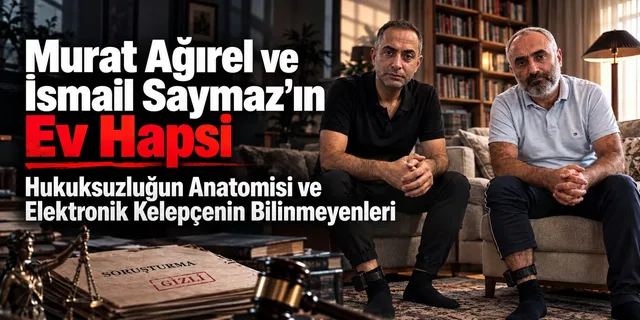
| 8–9 October | Mustafa Balcı and Şaban Sevinç of Sözcü are remanded in custody on the charge of "publicly disseminating misleading information"; İsmail Saymaz and Murat Ağırel are placed under house arrest (BirGün). |
| 9 October | Kemal Kılıçdaroğlu, on KRT, criticises Halk TV and says a complaint has been filed with RTÜK; the same day İsmail Özdemir of the MHP asks that the channel's licence be reviewed (Medyascope). |
| 12 October | An investigation is opened against those who shared documents from the fund investigation (bianet). |
| 13 October | Bahadır Özgür reports the asset-freeze list of 141 people and the letter that followed, "29 names were included in error". The same day the prosecutor's office announces that there is no new measure, and that the measure concerning 109 people continues (Cumhuriyet). |
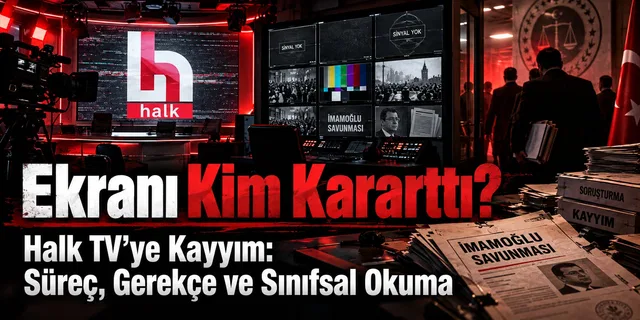
| 14 October | A police operation against Halk TV; the TMSF is appointed trustee, the broadcast is cut, and an access block is placed on the social-media accounts. The basis is the investigation into the chair of the board, Cafer Mahiroğlu, for bribery, bid-rigging and laundering the proceeds of crime (Medyascope). |
| 15 October, ~17.00 | Bahadır Özgür is detained from his home; the charge is "violating the confidentiality of the investigation". An access restriction is ordered on his X account (T24, Medyascope, Euronews). |
| 15 October, evening | In the Grand National Assembly, group motions by the İYİ Party, the DEM Party and the YENİ Party on press freedom are rejected by the votes of the AKP and the MHP. |
| 16 October, morning | Bahadır is expected to be sent to the courthouse. Murat Ağırel, under house arrest, is detained again. |
| 16 October, 08:56 | The prosecutor's office ties the detention of six people, Ağırel among them, to a laundering complaint separate from the fund file. The detail is above, in Updates. |
| 16 October, 09:30 | There is still no courthouse decision on Bahadır. In the other file five people are in detention; Emir Sarıgül is reported to be going to the police himself. |
| 16 October, 09:56 | NTV relays the name of the charge as "laundering the values of assets". Its sentence on who was taken into custody has three names; the list of six orders still stands. Timur Soykan writes that Ağırel held the story because the documents were not enough. |
| 16 October, 10:02 | There is still no courthouse decision on Bahadır. CNN Türk, citing DHA, repeats that five people are in detention. |
| 16 October, 10:07 | Hakkı Özdal is at the courthouse. Bahadır is expected after the medical examination; the police have not given the lawyers a time. |
| 16 October, 10:13 | T24's lead has three people in detention and orders for three others. The same page also has a sentence that Emir too was taken into custody. |
| 16 October, 10:28 | There is still no courthouse decision on Bahadır. CNN Türk, citing DHA, repeats that five people are in detention. |
| 16 October, 11:04 | There is still no courthouse decision on Bahadır. CNN Türk repeats the list of five in detention and publishes Mustafa Sarıgül's own statement. |
| 16 October, 11:46 | BirGün: Bahadır was sent to the courthouse around 11:40; he had not yet been brought before the prosecutor. No remand, judicial control or release. |
| 16 October, 12:10 | Evrensel announces that he has been brought to the courthouse. His lawyer, Mürsel Ünder, says the investigation is not in accordance with the law. |
| 16 October, 13:40 | Hakkı Özdal: Bahadır referred to the court with requests for a travel ban and signature judicial control. No court decision yet at that hour. |
| 16 October, 14:15 | Bahadır released under judicial control: signing in twice a week and a travel ban. No remand. |
Let us set a note beside the parliament row. According to BirGün, Mustafa Canbey, AKP member of parliament for Balıkesir, who made the speech rejecting the press-freedom motion, said: "Journalistic activity is under constitutional guarantee." This sentence was read from the rostrum in the hours when Bahadır Özgür was put in custody. This table tells clearly enough whom the guarantee is for.
The Thing They Call "Confidentiality"
Let us look inside the charge, because the whole matter is there.
According to BirGün, in his statement at the police station Bahadır did not accept the charge, and said three things:
- In his report there was not a single secret document from the investigation file. The report rested on the public statement of the Minister of Justice, Akın Gürlek, about the list of 141 people.
- The only person named in the report, the former AKP deputy chair Fatma Betül Sayan Kaya, was already a name announced to the public as a suspect.
- He said that the prosecutor's letter stated that Kemal Akkaya and Enver Çevik had been added by mistake to the list of 29 people whose assets were frozen, and that he wrote this to inform the reader.
His lawyer, Mürsel Ünder, underlined the same point: in the post there is no document from a secret investigation; the source is published reports and the prosecutor's own statements. A balance has to be struck between the confidentiality of an investigation and the public's right to receive news. Bahadır's address is known; if he had been summoned, he would have gone. The detention is a violation of personal liberty.
Let us now sum this picture up in plain language:
The state prepares a list. It sends the list to institutions. The minister speaks of the list. The next day the state says "there was a mistake in the list" and removes 29 names. The journalist writes this. The state detains the journalist for violating confidentiality.
What is secret here is not the list itself. What is meant to stay secret is why the list changed. In a crisis that melted the savings of half a million people, whose assets were frozen and whose were released "sehven" is exactly what the class wants to know. Bahadır is in custody because he asked that question.
Bahadır's last piece, according to İskender Bayhan, Istanbul member of parliament for the Labour Party (EMEP), ended with this sentence:
"They want to bring the people to a point where they cannot hear, cannot see, and in the end cannot stir."
The next day he himself was detained. It is rare for a piece of writing to be confirmed so quickly by its author.
Solidarity: Who Said What?
Hundreds of messages have been shared since yesterday. Here we gather the institutional statements and the named responses that reached the press. First the parties, then the unions, professional organisations and institutions.
Labour Party (EMEP)
Seyit Aslan, general chair of EMEP (GazeteKalem, dokuz8HABER):
"The stick of repression and of the judiciary will not suffice to keep your order of exploitation on its feet! Release Bahadır Özgür and all the other imprisoned journalists, and name those who filled their coffers in the plunder of the century."
İskender Bayhan, Istanbul member of parliament for EMEP (Evrensel):
"Our journalist friend Bahadır Özgür is in detention. He is alleged to have violated confidentiality in the fund plunder. Dear Bahadır does his job well. So he must have done it well again! (…) Bahadır is a journalist who is the people's eye, ear and heart. He must be released at once!"
Sevda Karaca, Gaziantep member of parliament for EMEP (Evrensel):
"Those who closed Parliament so that the fund plunder would not be discussed are detaining the journalist Bahadır Özgür, who reported that plunder with the essentials it requires. Bahadır Özgür's journalism, which takes truth as its basis, is fearless. With facts, he lays out to whom the money flowed, how this order works, and who must be called to account. Release Bahadır!"
Workers' Party of Turkey (TİP)
Erkan Baş, general chair of TİP (GazeteKalem, Evrensel):
"If you had pursued the thieves as hard as you pursue the journalists who exposed the fund plunderers robbing the people, the guilty would long since have been behind bars! We know the operations are deliberate, and that you mean to make this great plunder forgotten. Know, too, that you will not reach your aim! Release Bahadır Özgür at once!"
SOL Party
Alper Taş (Evrensel):
"Dear Bahadır Özgür is an investigative revolutionary journalist. His responsibility is to place the facts before the people. To dig into the fund robbery and bring its dark sides to light is the journalist's task. This is what our brother Bahadır Özgür has done."
Communist Party of Turkey (TKP)
Kemal Okuyan, general secretary of the TKP (Evrensel):
"After the fund robbery, journalists are being detained again. Did they pull off a plunder, set up a racket, invent a phoney story that such-and-such a share would soar? No. They reported a great theft. News! It is the same as charging a master baker with making bread."
Okuyan's comparison can stand as the summary of this piece. What a journalist produces is news. An order that counts the news as a crime is in fact protecting the subject of the news.
soL, in an update at 00:19 on 16 October, carried the statement the TKP posted on its own social-media account. The party called the detention over reports on the fund scandal unacceptable:
"Trying to silence journalists in order to cover the dirt of your system, in which money rules, will not suffice either."
YENİ Party
Murat Emir, deputy group chair of the YENİ Party (BirGün, İlke TV), recalled that the prosecutor's list of 141 people had fallen to 109 with the "sehven" corrections, and described the detention as follows:
"A political offensive conducted not against the fund plunderers, but against the journalists who deciphered the plunder."
Özgür Özel, general chair of the YENİ Party, said, according to Cumhuriyet, "The point is to silence Halk TV" in a speech at the Halk TV building, to which a trustee had been appointed a day earlier, and "What they are trying to silence is the people's right to receive news" in his statement at Silivri.
İYİ Party
Müsavat Dervişoğlu, general chair of the İYİ Party (Manşet Haber), speaking of the remand and house arrest of journalists in the fund investigation, addressed journalists as follows:
"I see the remand of journalists who ask questions and report the news, and the imposition of house arrest, as something done to your profession."
The picture in Parliament
On the evening of 15 October, in the General Assembly, the İYİ Party (Turhan Çömez), the DEM Party (Nevroz Uysal Aslan) and the YENİ Party (İsmail Atakan Ünver) brought group motions on freedom of the press and of expression; the Yeni Yol Party (Sema Silkin Ün) brought a motion on the capital markets, that is, on the fund crisis itself. All of them were rejected by the votes of the AKP and the MHP. Parliament chose not to discuss the fund plunder, and not to discuss the operations against journalists either. Sevda Karaca's phrase, "those who closed Parliament", is for this reason not a metaphor.
Mayors
Mansur Yavaş, mayor of Ankara Metropolitan Municipality (BirGün), on the Halk TV trustee: "The voice of the press is being silenced by the ruling of a single criminal judge of peace." He called on the country to give up "revenge law".
A note: Because the Halk TV trusteeship and the detention of Bahadır Özgür are two parts of the same week, we have included in this section the names that responded to the trustee. The responses coming from right and centre parties are valuable; but let us put it on the record: a part of these parties stayed silent in the years when the instruments now turned on them were built, or wrote those instruments themselves. Press freedom cannot be a principle that changes according to whose channel is shut. We hold this line in the same place in every period.
Unions
DİSK Basın-İş (BirGün, dokuz8HABER, Başka Gazete):
"The trustee appointed to Halk TV yesterday, and the detention of Bahadır Özgür today, have shown once again that journalists and media organisations 'not of their own' are under an all-out attack by political power."
The union stressed that protecting the public's right to receive news is not a crime, and that a claim of confidentiality cannot be made into a ground for suppressing reporting in the public interest, and closed its statement with this sentence: "Bahadır Özgür is not alone!"
Journalists' Union of Turkey (TGS) (Evrensel):
"It is unacceptable that our colleague is subjected to an investigation because of a report on a development that concerns the whole public."
The TGS demanded that Özgür be released at once, and that journalistic activity not be made the subject of a charge.
Mehmet Türkmen, general chair of BİRTEK-SEN (Evrensel):
"Did you take Bahadır Özgür because he wrote the crimes of this rotten palace regime, of this system built on the savage exploitation of the working class and of a whole people and on the plunder of the country, because he laid its filth in the open?"
Başaran Aksu of Umut-Sen (Evrensel):
"Bahadır Özgür stands at the very front of the most decent journalists in the country. He writes from the side of the working class and the labouring people. To touch him is to touch the people! Take your hands off Bahadır! Detain those who rob the people! Not the one who writes the robbers!"
Professional Organisations, Institutions and Platforms
Halkevleri (ANKA, GazeteKalem):
"The detention of the journalist Bahadır Özgür on the grounds of the reports he made about the fund plunders is unacceptable! The Palace's whole network of robber relations is in the open; the truth cannot be covered over by detaining journalists and appointing trustees to news channels! Freedom for Bahadır Özgür!"
Association of Turkish Journalists in Europe (ATGB) (BirGün), signed by its chair Recai Aksu, on the Halk TV operation: "After Tele1, Halk TV too has been silenced. (…) Journalism is not a crime." The ATGB recalled that, according to TGS figures, 18 journalists are in prison.
Fifteen bar associations (Ağrı, Batman, Bingöl, Bitlis, Dersim, Diyarbakır, Hakkari, Iğdır, Kars, Mardin, Muş, Siirt, Şanlıurfa, Şırnak, Van), in a joint statement: "We firmly reject trustee practices and interventions directed at press freedom."
284 former parliamentarians, in a joint call, demanded that Halk TV's right to broadcast freely be guaranteed at once.
Platform of Families in Pursuit of Justice (Cumhuriyet), that is, those who lost their relatives in the 6 February earthquake, on the rulings against T24 and Halk TV: "We stand with the press workers who are the voice of our struggle for justice; the free press cannot be silenced."
It is worth pausing on this last statement. People who lost a child, a spouse, a mother in the earthquake are standing by the journalists who followed their case. This is the plainest witness of whom journalism serves.
International, and civil society
On the morning of 16 October we went back over the organisations' own sites and the social-media statements that had reached the press. Live search on X is behind a login, so a post whose text is not on the organisation's site or in a news report is not written here. This pass found no new international statement that names Bahadır Özgür. What follows is on the trustee and on the same week's files against journalists; we do not mix the two.
14 October — the International and European Federations of Journalists (IFJ–EFJ). Together with their affiliates in Turkey they condemned the trustee at Halk TV: the Journalists' Union of Turkey (TGS), DİSK Basın-İş, the Journalists' Association (Gazeteciler Cemiyeti), the Izmir Journalists' Association and the Journalists' Association of Turkey (TGC). The text asks that the trustee be lifted, that editorial independence be guaranteed, that the legal basis of the decision be made public, and that journalists held for their work be released. This call is from the day before Bahadır's detention; his name is not in the text. We also did not find a separate TGC statement that names him (EFJ).
14 October — the Human Rights Association (İHD). It treated the trustee, the search of the building and the cutting of the broadcast as a grave attack on press freedom, the right to receive news and professional independence. It wrote TELE1, T24, and the blocks on the accounts of Kısa Dalga, bianet, the Mesopotamia Agency, Evrensel and soL Haber as the same narrowing. It said it does not accept journalists being put under pressure by remand and by house arrest, and it declared solidarity with Halk TV's workers and with every journalist under pressure. Bahadır's name is not in this text either; the detention was the next day (İHD, in Turkish).
15 October — the International Press Institute (IPI) and 14 organisations. They asked that the trustee be revoked at once, that the social-media block be lifted, and that the measure be aimed at the person, not at the newsroom. They recorded the timing, which fell on the day İmamoğlu's defence was due to begin, as a sign of silencing rather than of accountability. They recalled Article 28 of the Constitution: the press is free and cannot be censored. The signatories: the European Centre for Press and Media Freedom (ECPMF), the Association of Turkish Journalists in Europe, ARTICLE 19 Europe, the Progressive Journalists Association, the Dicle Fırat Journalists Association, the Committee to Protect Journalists (CPJ), the South East Europe Media Organisation (SEEMO), IFEX, the IPS Communication Foundation/bianet, the Media and Law Studies Association (MLSA), the Norwegian Helsinki Committee, P24, PEN Norway, and the Foreign Media Association in Turkey. This letter does not name Bahadır either. A separate text from Reporters Without Borders, Amnesty International or Human Rights Watch on his detention was not visible this morning (IPI, in Turkish).
Table: A Map of the Solidarity
| Who | Main emphasis |
|---|---|
| EMEP (Aslan, Bayhan, Karaca) | The stick of the judiciary protects the order of exploitation; the plunderers' names should be announced |
| TİP (Erkan Baş) | The operations are to make the plunder forgotten; pursue the thieves |
| SOL Party (Alper Taş) | Digging into the fund robbery is the journalist's task |
| TKP (Kemal Okuyan) | To charge the person who reports the news is to charge the baker with making bread |
| YENİ Party (Murat Emir, Özgür Özel) | The offensive is not against the plunderers, but against those who deciphered the plunder |
| İYİ Party (Dervişoğlu) | Remanding a journalist who reports the news is an attack on the profession |
| DİSK Basın-İş, TGS | Reporting in the public interest cannot be a crime; release him at once |
| BİRTEK-SEN, Umut-Sen | To touch the journalist who writes the exploitation of the class is to touch the people |
| Halkevleri | Detention and a trustee cannot cover over the truth |
| Bar associations, the ATGB, earthquake families | The right to receive news, and the voice of the struggle for justice, must be protected |
| İHD, IFJ–EFJ, IPI and 14 organisations | A trustee does not justify seizing a newsroom; on the morning of 16 October there was no separate text that names Bahadır |
Look at the table carefully. The sharpest sentences are the ones built with the words "exploitation", "robbery", "working class". Because the matter is not limited to a journalist's personal freedom; it is the matter of what that journalist wrote.
The gathering continues: the pass on the morning of 16 October did not turn up a new international text that names Bahadır. What reached the press from colleagues' posts is above. If a new organisational statement appears, it will be added at the top of this section.
Bahadır Özgür's Detention in the Press
From the first hours, the detention was carried in almost every outlet. For those who want to read the news from its own source:
Opposition and independent press: Evrensel · BirGün · bianet · soL Haber · T24 · Medyascope · Diken · Kısa Dalga · dokuz8HABER · GazeteKalem
Mainstream press: Cumhuriyet · Sözcü · Oksijen · Karar · Nefes · NTV · CNN Türk · Euronews Türkçe
International: DW Türkçe · bianet English · bluewin (Switzerland)
Let us also draw attention to a detail: Takvim ran the news under the headline "The charge is clear". BirGün's top headline on the home page was "He was writing about the fund plunder". The two headlines of the same event show, in a single line, through which class's eye the media is looking.
Who Is Bahadır Özgür?
According to the biography compiled by Medyascope, he was born in Kayseri in 1975. He graduated from the Finance Department of the Faculty of Political Sciences at Ankara University. He began in journalism at Evrensel in 1996. Between 2005 and 2010 he was economics editor at the newspaper Referans, then worked at Radikal; when Radikal closed he was briefly at Hürriyet. From 2018 he wrote at Gazete Duvar, then at BirGün. Most recently he was a columnist at halktv.com.tr and a presenter on Halk TV.
His field of expertise is the actual subject of this piece: the networks of relation between capital and politics, mafia structures, the mechanisms of black money. Together with Timur Soykan, Ahmet Şık, Ertuğrul Mavioğlu and Hakkı Özdal he wrote the book Duvar: Sedat Peker'in İtiraf, İfşa ve İddiaları (Wall: The Confession, Exposure and Allegations of Sedat Peker). For a speech he gave on that book at the Mudanya Book Fair in 2022 he was tried under Article 301 of the Penal Code for "publicly insulting the government"; in April 2025 he received a prison sentence of 3 months and 22 days, and the announcement of the verdict was deferred.
Let us describe his journalism in his own words. At a bianet workshop in 2022 he said:
"Investigative journalism is to set an event in a context, and it requires a political outlook."
In the same talk he said that he works mostly with open sources, with open data, and that his job is to draw the frame of what is hidden by starting from what is visible. He also said this: journalists can do journalism only if they keep their distance from the state and from those who run the state.
Set these two sentences now beside the ground of the detention. A journalist who works with open sources was detained for "violating confidentiality". Because what he did was to make visible what was meant to be hidden, by placing open sources side by side. The thing counted as a crime is not information. It is context.
The Fund Plunder Through Bahadır's Eyes
The shortest way to understand why the detention came is to hear, from his own mouth, what Bahadır told about the fund crisis. A selection from the broadcasts on Halk TV's YouTube channel (the titles are the channel's own; we introduce them in plainer words):
25 September 2026: the details of the fund investigation (a long interview)
Bahadır Özgür tells the details of the fund investigation (25 September 2026)
▶ Bahadır Özgür tells the details of the fund investigation (25 September 2026)
How did the fund bubble burst in plain sight?
Bahadır Özgür: The fund bubble burst in plain sight
▶ Bahadır Özgür: The fund bubble burst in plain sight
Companies with zero employees, and a plunder in the billions
Bahadır Özgür: A plunder in the billions with zero employees
▶ Bahadır Özgür: A plunder in the billions with zero employees
Why should Tera be raided and the records seized?
Bahadır Özgür: Tera should be raided and the computers seized
▶ Bahadır Özgür: Tera should be raided and the computers seized
The portfolio manager's messages
Bahadır Özgür: The portfolio manager's messages
▶ Bahadır Özgür: The portfolio manager's messages
"Years from now we will call it the Fatma Betül scandal"
Bahadır Özgür: Years from now we will call it the Fatma Betül scandal
▶ Bahadır Özgür: Years from now we will call it the Fatma Betül scandal
Who carried out the 20-billion plunder?
Bahadır Özgür: Who carried out the 20-billion plunder in the fund heist?
▶ Bahadır Özgür: Who carried out the 20-billion plunder in the fund heist?
On the list of frozen assets (a few days before the detention)
Bahadır Özgür: The list in the fund plunder
▶ Bahadır Özgür: The list in the fund plunder
Holdings and the New Rich Through Bahadır's Eyes
The fund plunder is the latest link in a work Bahadır has carried on for years. A few broadcasts in which he told how holdings, the new rich and the crime economy are woven into one another:
The Ciner Holding operation: are other holdings next?
Bahadır Özgür: The Ciner Holding operation and the holdings
▶ Bahadır Özgür: The Ciner Holding operation and the holdings
The rich, Aşk-ı Memnu, and the orange juice on the table: Turkey's old and new rich (Yerin Kulağı)
Yerin Kulağı with Bahadır Özgür: Turkey's old and new rich
▶ Yerin Kulağı with Bahadır Özgür: Turkey's old and new rich
The political economy of becoming a gang (Özgürlükçü Gençlik, before the Summit of Futurelessness, 13 March 2026)
Bahadır Özgür: The Political Economy of Becoming a Gang
▶ Bahadır Özgür: The Political Economy of Becoming a Gang
For short excerpts: "A guide to finding the source of wealth, from Hanımın Çiftliği to Cavit Çağlar's plane" and "Police, politicians, the state, the judiciary: the invisible face of the crime economy".
Young comrades, watch in particular the "guide to finding the source of wealth". There Bahadır teaches a method: how you can work out where a fortune came from, from records everyone can reach. What an order fears most is the spread of this method.
Why Is the Class's Journalist Valuable?
Information, too, is a form of property
Under capitalism, information is not distributed equally. The fund manager knows which share is being inflated; the small investor does not. The minister knows why the list changed; the pensioner whose money is locked in the fund does not. The boss knows months ahead that the factory will close; the worker learns it at the gate. This information asymmetry is as old as exploitation itself, and an inseparable part of it.
In the fund crisis this asymmetry is naked. The question we asked in "Who Got Out Before the Door Closed?" was exactly this: before the funds locked, who pulled their money out, and who stayed inside? The great majority of the 514,000 investors were not millionaires; they were people who had put a retirement bonus, dowry money, a severance payment into the promise of "20 percent a month". One does not need to be a genius to think that those who got out before the door closed were the ones who knew in advance.
Bahadır Özgür's journalism is a journalism that tries to break this asymmetry in favour of the class. It carries what capital knows inside itself to those outside capital. To write the list of frozen assets is to put before the people the question "in this order, whose money is protected, and whose money melts".
Marx was a journalist too
Young comrades often forget this: Marx's turn towards political economy began at a newspaper desk. In 1842, as editor of the Rheinische Zeitung, he wrote the debates on the law against the theft of wood in the Rhine province. Poor peasants gathering dry branches from the forest were counted as "theft", because the forest was now private property. In the preface to A Contribution to the Critique of Political Economy, which he wrote in 1859, Marx tells that he was forced, on the occasion of these articles, to deal with economic questions for the first time. The newspaper was shut by Prussian censorship in 1843.
One hundred and eighty-four years later, the logic has not changed. The poor person who gathered a branch from the forest was counted a thief, and the one who enclosed the forest and made it property was counted the owner. Today the journalist who writes the fund plunder is counted guilty, and those removed from the list "sehven" are counted innocent. The language of law gives away which side property is on.
Lenin, too, wrote in 1901, in Where to Begin?, that the class newspaper is not only a collective propagandist and agitator, but also a collective organiser. News turns scattered anger into a common knowledge, and common knowledge into a common action. The root of capital's fear of the journalist is here.
Turkey's class journalists
On this soil, the journalism that stood with the class paid heavy prices:
- Metin Göktepe, an Evrensel reporter, was beaten to death in detention in Istanbul on 8 January 1996. He had gone to Alibeyköy to cover the funeral of prisoners killed at Ümraniye Prison, was detained there, and was killed with police batons at the Eyüp indoor sports hall. Bahadır Özgür began in the profession in 1996, at the same newspaper. This is not a coincidence; it is the continuation of a school, of a tradition.
- Uğur Mumcu was killed in a bomb assassination in Ankara on 24 January 1993. He was the author of Papa-Mafya-Ağca, which Bahadır cites as an example of investigative journalism.
- Musa Anter was killed in Diyarbakır on 20 September 1992; in the first half of the 1990s, dozens of reporters and distributors of the newspapers on the Özgür Gündem line fell to unsolved killings.
- Namık Tarancı, Diyarbakır representative of the magazine Gerçek, was shot in Diyarbakır on 20 November 1992. The gunman was a Hizbullah trigger-man; Tarancı was writing the dirty war that, in those years, ran hand in hand with the state in the Kurdish provinces.
- Hrant Dink was shot in front of Agos on 19 January 2007.
What these names share is that they made visible the connections that power and capital did not want seen. Göktepe was covering the funeral of the prisoners killed at Ümraniye, Mumcu the ties of the arms and drugs trade to the state, Anter what the Kurdish people lived, Tarancı the dirty war, Dink the truth that official history has not faced. Bahadır writes the flow of money.
The Class Stands by Its Journalist
The sentence of Başaran Aksu of Umut-Sen can be the title of this section: "To touch him is to touch the people."
Let us read this not as a slogan, but as a historical fact. The Metin Göktepe case was a pursuit that lasted for years so that the police would not go unpunished; his colleagues, the readers of Evrensel and the labourers carried that pursuit on together, and five of the accused police were in the end convicted. At Hrant Dink's funeral, hundreds of thousands walked saying "We are all Hrant". In the Cumhuriyet case, in the Gezi case, in the cases of Kurdish journalists, the corridors of Silivri and of Çağlayan filled with solidarity. Not leaving the journalist alone is something the labour movement of this soil knows.
But standing by someone also has a class content, and this has to be said plainly to the young comrades:
Standing by someone is not a work of charity. The class protects its own eye and its own ear. What Bahadır wrote are things the worker, the pensioner, the small saver have a right to know. To protect him is to protect our own right to receive news.
Standing by someone does not depend on a preference of channel. We can criticise Halk TV's editorial line, its ownership structure, its relation with the main opposition; we have criticised them. But an investigation into tenders concerning the owner of a channel cannot be a ground for silencing the reports of the journalists who work there. A trustee seizes the journalist's labour too.
Standing by someone is knowing that the journalist is a labourer. The journalist, too, is a wage labourer. De-unionisation in the media, precarity, the pressure to "open your own YouTube channel", led journalists to remain unorganised. That DİSK Basın-İş and the TGS stand beside Bahadır recalls that journalism is a labour struggle.
Why Do They Fear a Journalist?
No weapon in hand, no army, no party. A computer, a telephone, and questions. Why, then, does the police go to a journalist's house in the morning, why is the X account restricted, why is a trustee appointed to the channel?
The answer is that what is feared is not the journalist, but the connection the journalist establishes. In Bahadır's own definition, investigative journalism is to set the event in a context. If the fund plunder is told on its own as "the fraud of a few bad managers", it is harmless for the order. But the matter changes if these questions are asked one after another:
- Why did these funds grow for eleven months under the eye of the SPK?
- What is the name of a former AKP deputy chair doing on this list?
- Which names left the list "sehven", and why?
- On the morning of the crisis, why was liquidity opened to the banks and not to the fund investor?
- Who got out before the door locked?
When these questions come side by side, a class map emerges: how capital and political power are tied to each other, on whom the cost of the crisis was charged, to whom the profit flowed. When this map is drawn, the relation behind technical words such as "market", "fund", "investment" becomes visible: the transfer of small savings to big capital.
In our piece "Control for Capital, the Blast for Us" we had set out the mechanisms of this transfer one by one. Bahadır's reports were giving those mechanisms a name. When a name is given, an abstract "crisis" becomes a concrete responsibility.
What is being shut down?
Halk TV's blacked-out screen, Bahadır's restricted account, T24's closed site, 147 X accounts. All of these aim at the same thing: common knowledge itself.
In a crisis, people try to understand what happened. To understand, they talk, write, share, read the news. This is a knowledge commons that forms of itself. As the knowledge commons about the fund crisis grows, anger ceases to be scattered and finds a target. Detentions, access blocks and trustees are directed at enclosing this commons, that is, at digital enclosure. They try to pull public knowledge back into a private domain, that is, into the monopoly of power and of capital, with concepts such as "confidentiality of the investigation", "disinformation", "public order".
Table: What Is Said, and What Is in Fact the Case
| What they say | What is in fact the case |
|---|---|
| "The confidentiality of the investigation is being protected" | What is kept secret is not a document, but why the list changed |
| "Misleading information is being spread" | True information is disturbing the wrong people |
| "A trustee was appointed to Halk TV because of a financial investigation" | The broadcast was blacked out, the right to receive news was suspended |
| "Journalistic activity is under constitutional guarantee" | In the fund crisis, five journalists have faced legal action |
| "There is no structural risk in the markets" | The savings of 514,000 people entered liquidation |
| "The crisis is temporary and manageable" | What is being managed is not the crisis, but the narrative of the crisis |
| "Not people's profession, but concrete acts, are decisive" | The concrete act: writing the news |
Media Control and Politics
How is consent produced?
Gramsci showed that the ruling class governs not only by force, but also by consent. Consent is produced in the school, in the mosque, in the family, and most of all in the news. People know the world largely through the news; whoever controls the news largely determines what people count as "normal", as "crisis", as "crime".
Edward Herman and Noam Chomsky, in Manufacturing Consent in 1988, told that even in a country said to have a "free press", such as the United States, the news passes through five filters: ownership, advertising, dependence on official sources, organised pressure against criticism, and anti-communism. These filters work without requiring censorship, because the media is already in capital's hands.
Turkey's particularity is this: here, when the filters do not suffice, the stick comes in. And in the last twenty years the stick and ownership have joined in a single instrument: the TMSF trustee. A trustee means both seizure (ownership) and silencing (the stick).
Turkey's Century-Long Transformation
We can read the history of media control in Turkey according to the instruments used. The instruments of each period changed; the aim, to make the voice of the ruling bloc a single voice, stayed the same.
The single-party period: control by ban. With the Law on the Maintenance of Order (Takrir-i Sükûn), enacted on 4 March 1925, the opposition newspapers of the Istanbul press were shut, and journalists were tried in the Independence Tribunals. The press was defined as the bearer of nation-building and of state ideology; opposition publishing was counted a "threat to the regime". The left press met constant closure and prosecution through the 1930s and 1940s.
The Democrat Party period: control by law and by the money of official announcements. Multi-party life began with a promise of freedom to the press; but from the mid-1950s penalties for press offences were made heavier, opposition journalists went to prison, and the distribution of official announcements turned into an instrument of reward and punishment. Power getting its way by giving a newspaper its "bread", or by cutting it, was the first rehearsal of today's pool order.
1961–1980: a short opening, and the press of the class. In the relatively libertarian climate of the 1961 Constitution, the working class put out its own publications, and unions their own newspapers. Journalists' rights to a written contract, to notice and to severance had been set out in the Press Labour Law, No. 5953 of 1952, and were widened on 4 January 1961 by Law No. 212. With the memorandum of 12 March 1971 this opening narrowed: newspapers were shut, writers and journalists were tried in martial-law courts.
12 September: control across the board. The coup shut newspapers again and again, opened thousands of cases, and in practice destroyed the left press. As we told in detail in 12 September: The History, Balance Sheet, and Present of a Class Coup, the junta's real target was the organised working class; the silencing of the press was a part of that target. The 1982 Constitution and the press legislation that followed laid the foundation of many instruments still used today.
Özal and the 1990s: control by the turn to holdings. The neoliberal transformation turned the media into a "sector". In 1990 the first private television went on air; newspapers moved from Babıali to the plazas, and ownership passed into the hands of holdings in which banking, energy and construction were woven together. The journalist was now the employee of a boss, and that boss needed tenders, credit and incentives from the state. De-unionisation in the big newspapers spread in this period; the news could be written to the extent that it did not clash with the holding's interests. In the same years the Kurdish press was targeted directly with violence. RTÜK was founded in 1994.
The AKP period: the change of hands of ownership. The Sabah-ATV group, seized by the TMSF in 2007, was sold the next year to a holding close to power. In 2009 tax penalties of billions of lira were imposed on the Doğan Group; the group shrank, and in 2018 sold its media assets to Demirören with credit from a public bank. The concept of "pool media" was born in this process: by changing ownership, the editorial line was changed for good. In 2013, while the Gezi resistance went on, a news channel's broadcasting of a penguin documentary became the symbol of this transformation.
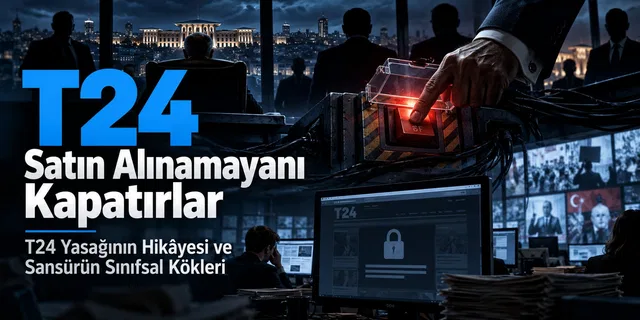
After 2016: decree and trustee. With the state-of-emergency decree-laws, more than 150 media organisations were shut with a single signature. The disinformation law enacted in 2022 (Turkish Penal Code 217/A) made "publicly disseminating misleading information" a crime; in the fund crisis Mustafa Balcı and Şaban Sevinç of Sözcü were remanded under this article. Since 2025 the wave of trustees has reached the televisions: Flash TV, Ekotürk, six channels tied to Can Holding (including Habertürk, Show TV and Bloomberg HT), TELE1, and now Halk TV. In September 2026 T24 was shut down. The title of our piece "They Shut Down What They Cannot Buy" is the summary of this period: first they try to buy; what they cannot buy, they shut down.
Table: Periods and Instruments
| Period | Principal instrument | Its class function |
|---|---|---|
| 1925–1950 | Takrir-i Sükûn, closure, the Independence Tribunals | The single voice of the new state; the suppression of the opposition and of the left |
| 1950–1960 | Heavier press penalties, official announcements | Protecting the alliance of the commercial bourgeoisie and power |
| 1961–1980 | A short opening; closure and martial law on 12 March | Lowering the voice of the organising working class |
| 1980–1983 | Junta bans, mass trials | The liquidation of the left and union press |
| 1983–2002 | The turn to holdings, de-unionisation, violence against the Kurdish press | Binding the news to capital's commercial interest |
| 2002–2016 | TMSF seizures, tax penalties, sales | The transfer of ownership to capital close to power |
| 2016–2026 | Decree-laws, the disinformation law, the trustee, the access block | Silencing the remaining independent voice with the apparatus of law |
The lesson that comes out of this table is this: media control was never only a matter of "press freedom"; in every period it was the instrument by which the ruling class bloc reconstituted itself. Today's trustee order is a fraction of capital liquidating the others and, while doing so, liquidating public knowledge as well. As we saw in the fund crisis, the cost of this liquidation falls on the small saver, on the people who cannot get the news, on the media labourer who loses the job.
Let us also underline something: this history is not only a history of repression, it is a history of resistance. In every period another newspaper came out in the place of the one that was shut; the journalist who was dismissed went on writing somewhere else; from Evrensel to Duvar, from BirGün to independent YouTube channels, journalism found itself new paths. Bahadır Özgür's career is precisely the map of this path: Evrensel, Referans, Radikal, Hürriyet, Duvar, BirGün, Halk TV. They shut the newspapers; he went on writing.
What Will We Do? Concrete Tasks
Solidarity begins as a feeling, but it continues as a practice. Concrete proposals for the young comrades:
- Follow the courthouse. Today and at the hearings that follow, be at Çağlayan, or follow the developments live from the announcements of the professional organisations and the unions. The crowd in the hearing room is a message both to the judge and to the public.
- Keep Bahadır's reports alive. In place of the restricted account, share, read and discuss his reports, his videos and his articles. Watch the videos in this piece; talk about them at your workplace, at your school. Multiplying the information that is meant to be silenced is the most direct answer.
- Keep talking about the fund plunder. The aim of the detentions, as Erkan Baş said, is to make the plunder forgotten. Do not let it be forgotten. Whose money was lost, whose money was protected, who left the list? Keep asking these questions.
- Subscribe to the independent press. Outlets without a boss, or supported by their readers, stay on their feet only with the support of their readers. Reading the news for free prepares the ground for someone else to buy the news.
- Support the organising of the media labourer. Follow the campaigns of DİSK Basın-İş and the TGS. Encourage your friends who do journalism to unionise. The unorganised journalist is the trustee's easiest target.
- Build your own knowledge commons. In times of crisis, do not leave information to the institutions alone. Form small working groups that compile, verify and archive sources. Learn Bahadır's method of working with open sources; watch the guide to finding the source of wealth.
- Stand against selective solidarity. Stand with everyone who is silenced, from Kurdish journalists to opposition channels, from local journalists to YouTube broadcasters. Press freedom is indivisible.
Dear Bahadır
When you read these lines you may already be out, or you may not. Whichever it is, know this:
You are not alone. Since yesterday evening, the workers of this country, the unionists, the families who lost their relatives in the earthquake, the students, your colleagues, the parties and the voice of the streets are saying the same sentence: Freedom for Bahadır Özgür.
Your last piece ended, "They want to bring the people to a point where they cannot hear, cannot see, and in the end cannot stir." Our answer to you is this:
We hear. We hear the fund plunder, the list, the "sehven", who got out before the door closed.
We see. We see the order in which the journalist is detained and the plunderer stays free.
We stir. We stir in the courthouses, in the workplaces, in the unions, in the schools, in the writing.
You began in the profession at Evrensel in 1996, the year Metin Göktepe was killed. You carried that tradition for thirty years. While you wrote the dark relations of capital and of politics, you never forgot whose story this is: the story of the pensioner whose money melts, of the young person left unemployed, of the country that is plundered. When it is you who writes that story, standing by you is our job too.
You had said that journalism is a matter of distance: distance from the state. We are speaking of a closeness: closeness to the class. You stood close to the class. The class will stand close to you.
You are our comrade. A comrade is not left alone.
Journalism is not a crime. Bahadır Özgür is not alone. Release the journalists, catch the thieves.
Hour-by-hour developments are in the Updates section at the top of this piece.
Sources
The detention and the process
- Ahmet Ergin: released under judicial control, twice-weekly signature and travel ban — X, 16 October 2026, 14:15 (in Turkish)
- "Bahadır Özgür released under judicial control" — Evrensel, 16 October 2026, 14:25 (in Turkish)
- "Journalist Bahadır Özgür released under judicial-control conditions" — BirGün, 16 October 2026, 14:25 (in Turkish)
- Hakkı Özdal: referred to the court with travel-ban and signature judicial-control requests — X, 16 October 2026, 13:40 (in Turkish)
- "Detained journalist Bahadır Özgür sent to the courthouse" — Cumhuriyet, 16 October 2026, 12:36 (in Turkish)
- "Bahadır Özgür brought to the courthouse; his lawyer: the investigation is not in accordance with the law" — Evrensel, 16 October 2026, 12:10 (in Turkish)
- Evrensel: Bahadır Özgür brought to the courthouse — X, 16 October 2026, 12:10 (in Turkish)
- "Journalist Bahadır Özgür sent to the courthouse" — BirGün, 16 October 2026, 11:46 (in Turkish)
- "Mustafa Sarıgül's statement and the list of five in detention" — CNN Türk, 16 October 2026, 11:04 (in Turkish)
- Hakkı Özdal: "We are at the courthouse" — X, 16 October 2026, 10:07 (in Turkish)
- "Money-laundering allegation: five people taken into custody" — CNN Türk, 16 October 2026, 10:28, DHA (in Turkish)
- "The Germany investigation: three people in detention, orders for three" — T24, 16 October 2026, 10:13 (in Turkish)
- "Soykan: Murat Ağırel had held the story because he did not find the documents sufficient" — Diken, 16 October 2026, 09:56 (in Turkish)
- "Money-laundering allegation: five people taken into custody" — CNN Türk, 16 October 2026, 10:02, DHA (in Turkish)
- "Detention orders for Aylin Kotil, Emir Sarıgül and Ömer Sarıgül" — NTV, 16 October 2026, 09:56 (in Turkish)
- "New detention orders in the morning operation" — Sözcü, 16 October 2026, 08:56 (in Turkish)
- "Money-laundering allegation: detention orders for six people" — CNN Türk, 16 October 2026, 09:30 (in Turkish)
- "Detention orders for Aylin Kotil, Emir Sarıgül and Ömer Sarıgül" — NTV, 16 October 2026, 09:15 (in Turkish)
- "Bahadır Özgür is expected to be sent to the courthouse" — BirGün, 16 October 2026, 06:59 (in Turkish)
- "Journalist and Halk TV writer Bahadır Özgür detained" — T24, 15 October 2026
- "Journalist Bahadır Özgür detained: he will spend the night in custody" — BirGün, 15 October 2026
- "Journalist Bahadır Özgür detained" — bianet, 15 October 2026
- "Another journalist detained over reporting on Turkey's investment fund crisis" — bianet English
- "Journalist Bahadır Özgür detained" — Medyascope, 15 October 2026
- "Halk TV presenter and journalist Bahadır Özgür detained" — Sözcü
- "Journalist Bahadır Özgür detained" — Cumhuriyet
- "Journalist and Halk TV commentator Bahadır Özgür detained" — Euronews Türkçe
The fund investigation and the list
- "Another 'sehven' in the fund-plunder list! They pulled back 29 of the 141" — Halk TV, 13 October 2026
- "Who are the 141 people whose assets were frozen in the fund investigation?" — Cumhuriyet
The Halk TV trustee and the media
- "The process leading to the appointment of a trustee to Halk TV" — Medyascope, 14 October 2026
- "A trustee for 10 television channels in about 20 months: Halk TV became the last link" — Cumhuriyet
- "The opposition's 'press freedom' motion rejected by the votes of the AKP and the MHP" — BirGün, 15 October 2026
Messages of solidarity
- "Response to the detention of Bahadır Özgür: Release the journalists, catch the thieves" — Evrensel, 15 October 2026 (EMEP, TİP, SOL Party, TKP, Halkevleri, TGS, DİSK Basın-İş, BİRTEK-SEN, Umut-Sen)
- "EMEP general chair Aslan: Release Bahadır Özgür…" — GazeteKalem
- "Erkan Baş responds to the detention of Bahadır Özgür" — GazeteKalem
- "Statement on Bahadır Özgür from Emir of the YENİ Party" — BirGün
- "Dervişoğlu: They cannot escape this scandal by arresting a few people" — Manşet Haber
- "Statement on Halk TV and Bahadır Özgür from DİSK Basın-İş" — BirGün
- "Response from Halkevleri to the detention of journalist Bahadır Özgür" — ANKA
- "Turkey: Halk TV seized, broadcasts halted" — EFJ, 14 October 2026
- "We do not accept the trustee appointed to Halk TV" — İHD, 14 October 2026 (in Turkish)
- "The trustee appointment at Halk TV must be reversed" — IPI and 14 organisations, 15 October 2026 (in Turkish)
- "Joint response from 15 bar associations to the appointment of a trustee to Halk TV" — BirGün
- "Response from the Association of Turkish Journalists in Europe to the Halk TV operation: Journalism is not a crime" — BirGün
- "Call for Halk TV from 284 former parliamentarians" — BirGün
- "EMEP general chair Aslan: Release Bahadır Özgür…" — dokuz8HABER
- "Response from Emir of the YENİ Party to the detention of journalist Bahadır Özgür" — İlke TV
- "Response from Mansur Yavaş to the appointment of a trustee to Halk TV" — BirGün
- "DİSK Basın-İş: Journalists and media organisations are under an all-out attack" — dokuz8HABER
- "Statement on Halk TV and Bahadır Özgür from DİSK Basın-İş" — Başka Gazete
- "Response from Halkevleri to the detention of journalist Bahadır Özgür" — GazeteKalem
On Bahadır Özgür
- "Bahadır Özgür: Investigative journalism requires a political outlook" — bianet, October 2022
- "Prison sentence for journalist Bahadır Özgür" — Medyascope, 15 April 2025
Related pieces at Bilgi Müşterekleri
- "Who Got Out Before the Door Closed?" — 23 September 2026
- "Control for Capital, the Blast for Us" — 30 September 2026
- "They Shut Down What They Cannot Buy: The Story of the T24 Ban and the Class Roots of Censorship" — 30 September 2026
- "12 September: The History, Balance Sheet, and Present of a Class Coup" — 11 September 2026
Theoretical background
- Karl Marx, A Contribution to the Critique of Political Economy, Preface (1859); Rheinische Zeitung articles (1842)
- V. I. Lenin, Where to Begin? (1901)
- Antonio Gramsci, Prison Notebooks
- Edward S. Herman and Noam Chomsky, Manufacturing Consent, 1988