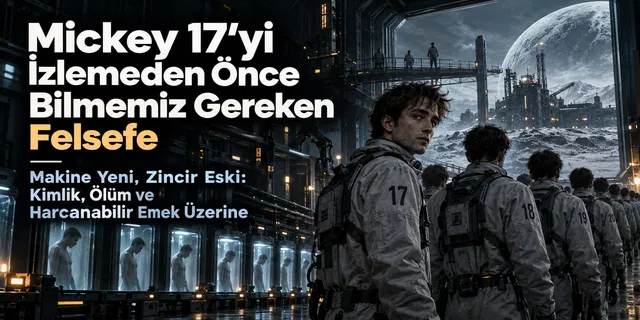
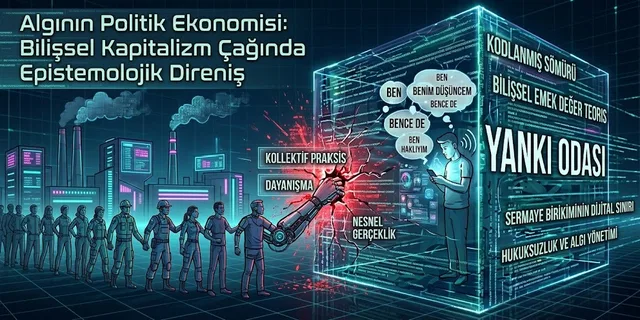
A Critical and Epistemological Inquiry into Christopher Nolan's Odysseus
What Does Nolan's Cinema Aim For? A Dialectical Scalpel into Today's Perception Management from the Future Perspective of the Twenty-Second Century

⚠️ SPOILER AND IDEOLOGICAL DECONSTRUCTION WARNING
Caution: The text under examination explicitly contains the entire plot of the work, film, or fictional analysis under discussion, including its critical narrative turning points, surprise developments, and ending.
Beyond that, this analysis deciphers—with a dialectical-materialist scalpel—the patterns of ruling ideology, bourgeois narrative illusions, and class contradictions concealed beneath the work's aesthetic packaging. Continue reading only if you are prepared not merely to learn the fictional ending, but also to confront the objective reality behind the screen.
As Marxist philosophers, we grasp art as a dialectical field in which social relations of production and ruling ideology reproduce themselves. Christopher Nolan's cinematic adaptation of Homer's immortal epic, Odysseus, is not merely a technical visual spectacle or a cinematic mythology narrative. On the contrary, this work is a vast ideological document that aestheticizes the rotting structure of late capitalism, the individualist mythology of the "hero," and capital's colonization of time.
Part I: A Marxist Look at Nolan's Odysseus
Christopher Nolan's Odysseus, which brings Homer's epic to the silver screen, appears on the surface to treat universal themes such as "the resistance of human will against the gods and time." Yet when we approach it with a dialectical-materialist scalpel, the work reveals itself as an ideological prospectus that aestheticizes the rotting values of late capitalism, the individualist mythology of the "genius leader," the appropriation of time, and the consecration of the private-property regime through violence.
Nolan's fundamental obsessions as an auteur—the bending of time, the bourgeois man's solitary crisis of conscience, individual will against massive systems—merge in this adaptation with the slave-owning property regime of Antiquity.
We deepen this section along three fundamental class axes that expose the ideological codes of Nolan's fiction.
The Nameless Crew: The Exploited Proletariat of War, Epic, and Production
The Trojan War and the subsequent ten-year cascade of disasters that we watch through massive-budget visual effects in Nolan's film are constructed on the cinema screen as the story of "noble kings, genius commanders, and tragic destinies." Yet the materialist conception of history shows us that this narrative is a screening of the sacrifice of the living labor, blood, and lifeless bodies of nameless masses for the property contests of kings.
THE CLASS HIERARCHY OF WAR AND EPIC
NOBLE KING (Odysseus): Draws strategy, wins glory, protects his property. SURPLUS LABOR (The Crew): Rows, dies, remains nameless, is expended.
-
Troy as a Proto-Capitalist Plunder War: The opening scenes of Troy's fall are presented in bourgeois cinema through the mystification of "Helen's love" or a "war of honor." Yet the Trojan War was an early war of capital and accumulation (plunder) aimed at seizing the trade routes of the Dardanelles, the maritime market, and the riches of the Eastern Mediterranean.
-
Living Labor Sacrificed: Who are those crushed in Polyphemus's cave, turned into swine on Circe's island, and who perish life by life in the strait of Scylla and Charybdis? Not Odysseus, commander of the Kingdom of Ithaca, but his nameless crew—those who steered his ships, rowed, drowned in storms, and raised the sails. They are the proletariat of Antiquity, the real source of the productive forces and of military power.
-
The Class Blindness of Auteur Cinema: Nolan trains his camera on Odysseus's "suffering genius," his "intellect," and his torments of conscience. The crew, by contrast, are expendable objects—a surplus population—to be spent so that the protagonist may reach his goals on his tragic journey. Odysseus, returning alone to Ithaca when not a single member of his crew has survived, pursues as a solitary aristocrat the rescue of his own private property (oikos).
"Wars are planned by the ruling classes; the propertyless masses fight and die; yet bourgeois history writes only the names of kings. Nolan's cinema is the most refined and dangerous practitioner of this class-centered historiography on the twenty-first-century silver screen."
The Commodification of Time, Isolation, and the Alienation of Nostos (Homecoming)
Nolan's most distinctive cinematic intervention in the film is his reconstruction of Homer's island voyages through relativity theory, gravitational time dilation, and a bent perception of time. A few days spent on Calypso's island correspond to years in Ithaca.
-
Abstract Time and Capitalist Exploitation: Under capitalism, time is not a dimension in which the human being lives freely; it is a commodified measure stolen from the worker's life and transformed into surplus value. Nolan severs time from its objective/class contradictions and reduces it to Odysseus's subjective psychological tragedy. The vanishing of time serves to legitimize the helplessness of the cognitive precariat of late-capitalist society—working 24/7, its lifetime plundered by capital—as a "cosmic and inevitable fate."
-
Alienated Nostos (Homecoming): Odysseus's desire to return home (nostos) is, in fact, the historical longing of the alienated human being for the "authentic, integral, and human life" lost within capitalist relations of production. Yet Nolan falls into an idealist deviation by seeking the source of this alienation not in the order of exploitation and the hierarchy of property, but in "the cold mechanics of fate, the gods, and time."
-
Atomization and Individualist Isolation: Throughout the film, Odysseus is depicted not as part of a collective struggle, but as an isolated "solitary bourgeois subject" within time and space. This image of the tragic leader severed from the masses reinforces neoliberalism's myth that "there is no such thing as society, only individuals."
The Ithaca Massacre: The Bloody Restoration of Private Property and the Bourgeois State Apparatus
The film's fourth and final act is the section in which Odysseus, disguised as a beggar, returns to Ithaca, slaughters the Suitors who have occupied his palace and property, and hangs the "disloyal" servants. Bourgeois critics and Nolan present this scene, in the tone of a massive cinematic catharsis, as "the manifestation of justice, the protection of the home, and the securing of family integrity."
Yet from a dialectical-materialist standpoint, this scene is a bloody class restoration of the private-property regime and of the state's monopoly on legitimate violence:
-
The Class Character of the Suitors: The Suitors are rival ruling cliques attempting to seize property and power in the king's absence. The issue is not a moral problem, but a struggle over the redistribution of feudal/slave-owning property.
-
The Execution of the Servants and Class Hierarchy: Odysseus's hanging and slaughter of the palace servants and slaves (Melanthios, Melantho, and others) is the annihilation by the property-owning ruler of the propertyless—those who rebelled against class hierarchy and sought their own autonomy in the sovereign's absence.
-
Property Hysteria and State Violence: The institutional violence Odysseus resorts to in re-establishing his kingdom is an ancient manifestation of the apparatus of legitimate violence that the state holds in monopoly to protect property relations. The twenty-first-century human being, gripped by a hysteria of dispossession amid neoliberal crises, finds satisfaction for their own "private-property security need" in Odysseus's arrows. Nolan legitimizes the terror of the ruling class under the guise of "protecting the home."
Nolan's Fiction vs. Materialist Dialectical Exposure
| Dimension of Analysis | Nolan's Ideological Fiction (Bourgeois Aesthetics) | Materialist Dialectical Reality (Class Exposure) | Ideological Function within the Capitalist Order |
|---|---|---|---|
| Cause of War | Honor, royal pride, and the wrath of the gods | A war of plunder for markets, slaves, and raw materials | Screening imperialist plunder wars behind "noble principles" |
| Role of the Crew | Expendable instruments on the leader's tragic journey | The invisible proletariat that bears production and war | Concealing the masses' becoming subjects; creating a "genius leader" cult |
| Mechanics of Time | A cosmic/mystical bending that produces existential crisis | Surplus time stolen from living labor and commodified | Presenting the exploitation created by working hours as "fate" |
| The Ithaca Massacre | Restoration of justice, family, and legitimate order | Crushing of the propertyless and private-property terror | Consecrating the bourgeois state's monopoly on violence and property law |
| Nostos (Homecoming) | Individual peace of conscience and repossession of property | The alienated human's longing for their human essence | Imprisoning systemic alienation within personal/psychological solutions |
Toward a Cinema of the Crew, Not of the Captain
Christopher Nolan's Odysseus, despite its cinematic genius and technical grandeur, cannot transcend the class and ideological limits of late capitalism. The work consecrates not the masses who drown, are sacrificed, and are exploited in stormy seas, but the kings and capitalists who own the ship, the palace, and the slaves.
Our task, in the twenty-first century—where time is bent by algorithms and technological alienation deepens—is to wrest Odysseus's ship from the hands of hero-kings and place it under the control of the collective producers (the crew).
True Nostos (humanity's journey of liberation) will be completed when the private-property regime is abolished and the masses become not the singular objects of their own history, but its collective subjects.
Part II: An Epistemological Analysis Through the Eyes of the Twenty-Second-Century Human Being
When we look back at the archives of the twenty-first century from the liberated world of the twenty-second—from a Cyber-Socialist age in which the means of production have been socialized, weekly working hours reduced below twenty, artificial intelligence and data infrastructures transferred to public ownership (Data Commons), and ecological metabolism restored—Christopher Nolan's film Odysseus appears less as an aesthetic object than as an ideological symptom of late capitalism and a document of epistemological ruin.
For the revolutionary historians and philosophers of the twenty-second century, this work is a historical laboratory showing how the slave-owning property epic of Antiquity was instrumentalized to cover over the hegemonic crisis of twenty-first-century late capitalism.
The Epistemological Leap: Exposing "Capitalist Realism" in the Archive
Humanity living in the first quarter of the twenty-first century was under a massive mental blockade called "Capitalist Realism," as conceptualized by Mark Fisher. For the masses of that period, imagining the end of capitalism had been made far more impossible than imagining intergalactic travel or the end of the world.
Nolan's Odysseus is precisely the cinematic-plane epistemological manifestation of this state of social paralysis:
THE IDEOLOGICAL CYCLICAL BLOCKADE OF THE TWENTY-FIRST CENTURY
Systemic Crisis: Exploitation, time theft, and dispossession deepen. Mental Blockage: Another social order cannot be imagined. Aesthetic Illusion: The crisis is made into cosmic fate or the tragedy of a genius leader. Legitimation: Private property and state violence are consecrated and sealed off.
-
The Artistic Illusion of Class Entrapment: The twenty-first-century human being was helpless under the precarious working conditions (precarization) shattered by neoliberalism, environmental disasters, and algorithmic control. Instead of addressing this historical and class entrapment through its objective causes, Nolan screened it behind the divine fatalism of Antiquity and reproduced it as "humanity's inevitable tragic existence."
-
The Function of Ruling Epistemology: The film gave the twenty-first-century spectator this implicit message: "The alienation and helplessness in which you find yourselves stem not from social relations of production, but from the unbendable fate of nature, time, and the human being. Therefore what must be done is not to change the system, but to protect the home (property) by submitting to 'genius leaders' like Odysseus."
Stolen Time, Algorithmic Exploitation, and Cosmic Mystification
Nolan's treatment of Odysseus's voyage through relativity theory and time dilation is, for the twenty-second-century human being, the most striking field of epistemological exposure. The fiction that a few days on Calypso's island correspond to years in Ithaca was directly related to the everyday lived experience of the twenty-first-century human being.
-
The Plunder of Labor Time in the Twenty-First Century: The cognitive precariat of the twenty-first century was under capital's 24/7 control through smartphones, notifications, remote-work models, and algorithmic systems. The boundary between working time and lifetime had been erased; capital had plundered the entirety of human lifetime.
-
Cosmic Mystification: Nolan severed this concrete plunder of time from its class context and transformed it into a cosmic/physical illusion. Thus the twenty-first-century human being, instead of questioning the class causes of the life stolen from them, aestheticized their own exploitation by identifying with the hero's "cosmic helplessness against time" on the screen.
-
The Twenty-Second Century's Answer: In our age, time is not a measure that produces value for capital, but Free Time that enables the human being's mental, artistic, and social development. The "timelessness" over which the twenty-first-century human being shed tears in the cinema was nothing other than the surplus time capital had stolen from living labor.
Dispossession Hysteria and the Exposure of the Ithaca Massacre
In the film's finale, the scene in which Odysseus returns to Ithaca, slaughters the Suitors in the palace, and hangs the servants had been applauded by twenty-first-century bourgeois film critics as "the re-establishment of justice, family, and order."
The dialectical-materialist epistemology of the twenty-second century deciphers this fictional satisfaction (catharsis) as follows:
The Ithaca Massacre is the fantasy of refuge in the private-property regime and state violence of the twenty-first-century middle class, gripped by the hysteria of losing home, future, status, and property amid neoliberal crises.
DECONSTRUCTION OF THE ITHACA MASSACRE
BOURGEOIS DISCOURSE: Justice against immoral tyrants who attack the home. TRUE DIALECTIC: The consecration of private property and state terror in order to prevent the uprising of dispossessed masses.
-
The Class Position of the Suitors and Servants: The Suitors were rival ruling cliques seeking to share property and power among themselves in the king's absence. The servants were the propertyless seeking their own autonomy in the sovereign's absence. Odysseus's lining them up for the rope is a bloody regime restoration of the property hierarchy.
-
The Psychological Refuge of the Twenty-First-Century Human Being: The twenty-first-century human being under the threat of dispossession found satisfaction for their private-property security need in Odysseus's arrows. Nolan had succeeded in making the spectator consecrate the bourgeois state's monopoly on legitimate violence under the guise of "protecting the home."
Table 1: The Epistemological and Class Matrix of the Odysseus Narrative Across Three Historical Ages
| Criterion of Analysis | Antiquity (8th Century BCE / Homer) | Late Capitalism (21st Century / Nolan's Film) | Cyber-Socialism (22nd Century / Today) |
|---|---|---|---|
| Social Subject | Aristocratic Feudal Kings | The Individual / Anguished Bourgeois Man | The Collective Society That Manages Production |
| Perception of Time | Divine / Cyclical Time | Commodified / Bent Time (Capital's Illusion) | Liberated / Collective Lifetime |
| Conception of Property | Tribal / Clan Property (Oikos) | Sanctified Private Property and Fear of Dispossession | Social Property and Public Wealth |
| Role of the Crew | Pawns Sacrificed to the Glory of Kings | The Precariat Made Invisible / Expendable Labor | The Direct Managing Subject of the Process |
| Outcome / Nostos | Restoration of Kingship and Slavery | Restoration of Individual Conscience and Property Protection | The Classless and Stateless Commune |
Table 2: Epistemological Deconstruction (21st-Century Myth vs. 22nd-Century Reality)
| Fictional Ideological Illusion in the Film (21st Century) | 22nd-Century Materialist Epistemological Exposure | Alternative of the Liberated Future |
|---|---|---|
| Bent Mystical Time: The vanishing of time is a cosmic whim of the universe and the gods. | Surplus-Time Exploitation: The screening of capital's plunder of the cognitive precariat's lifetime. | The Liberation of Time: Reducing working hours below twenty through artificial intelligence and automation. |
| Odysseus's Genius: The crew's survival depends on the strategic intellect of the genius leader. | Hostility to Collective Labor: The objectification of the masses who bear production; the consecration of the singular bourgeois subject. | Collective Subjectivity: History managed not by "genius leaders," but by the mass committees that bear production. |
| The Immorality of the Suitors: The Suitors are born-evil plunderers who attack the home and morality. | Conflict of Capital Cliques: A struggle over the redistribution of feudal/bourgeois property. | Abolition of Property: Abolishing the private-property regime and establishing public wealth. |
| The Ithaca Massacre: The necessary step for securing the home, family, and justice. | Property Hysteria: Making the twenty-first-century human being, gripped by fear of dispossession, approve private-property terror. | Commune Ithaca: A classless and stateless social commons in which palaces have been demolished. |
The Answer from the Twenty-Second Century: What Is True Nostos (Homecoming)?
When the twenty-first-century human being watched Nolan's Odysseus, they were in fact watching their own tragedy: the helplessness of the modern human being lost within the system, time stolen, isolated, and trying to return home (to their human essence).
Yet the "homecoming" (nostos) Nolan offered was a false return. An Ithaca in which the property regime, slavery, and class hierarchy were re-established could not be humanity's home.
The true Nostos and future fiction we construct from the Cyber-Socialist world of the twenty-second century is this:
The Crew's Self-Organization: The true revolution took place when the rowers and cognitive laborers on Odysseus's ship refused to obey the king's commands and turned the course directly toward an exploitation-free shore.
Public Ithaca: True liberation is, upon arriving at Ithaca, to demolish the kings' palaces, socialize property, and establish a classless, stateless, and exploitation-free Commune in which neither kings nor suitors rule.
Christopher Nolan's Odysseus, despite its technical perfection and the intelligence of its time fiction, is a twenty-first-century symptom that could not transcend the individualist and property-obsessed ideological limits of late capitalism. The work has consecrated not the masses who drown and are exploited in stormy seas, but the ruling classes who own the ship, the palace, and the slaves.
When we look back from the twenty-second century, we regard with objective clarity the helplessness and ideological blockade of that age's human being. The age in which they sought savior-kings on the silver screen and shed tears over their stolen time has been left behind.
We liberated time, socialized data and infrastructure, and made Ithaca the common home of all humanity. True Nostos (humanity's journey of liberation) was completed when the property regime was demolished and the masses became the collective subjects of their own history.
Part III: Future Ithaca and Alternative Fiction
From the Palace of Property to the Commune of Freedom: Ithaca's Historical Transformation
In Homer's epic text and in Christopher Nolan's twenty-first-century cinematic fiction, Ithaca is the space in which a king undertakes a bloody regime restoration in order to protect his private property (oikos), his throne, and his absolute dominion over slaves. For bourgeois mythology, Ithaca is "the safe harbor sought after storms," "the sacred fortress of private property and the bourgeois family."
Yet for dialectical-materialist philosophy and the Cyber-Socialist vision of the twenty-second century, Ithaca is a collective space of liberation in which class societies, the state apparatus, enslaving hierarchies, and private property have been abolished.
Looking from the world of the future, Odysseus's return must be reconstructed not as a king's reunion with his palace, but as the producers and the crew seizing the stage of history and abolishing the palaces.
ITHACA'S DIALECTICAL TRANSFORMATION LINE
Ancient / Bourgeois Ithaca: Private Property, Kingship, Violence, Slavery Crisis / Alienation Phase: Storm, Dispossession, Plunder of Time Cyber-Socialist Ithaca: Public Property, Cyber-Planning, Commune
Governance of the Ship: The Myth of the Genius Captain, or the Collective Intelligence of the Crew?
The greatest ideological illusion of bourgeois narrative is the lie that the sole power capable of bringing the ship safely to shore through a storm-filled sea is the "genius leader" (Odysseus / CEO / Capitalist). In this narrative, the crew is reduced to a passive mass that merely rows, is sacrificed, lacks will, and "turns into swine or dies when left without a leader."
Cyber-Socialist alternative fiction shakes this hierarchical relationality to its foundations:
-
Abolition of the Chain of Command: In the revolutionary fiction of the future, the crew (the industrial proletariat and the cognitive precariat) does not surrender its fate to the mercy and strategic genius of a single leader. The ship is steered and administered not by a vertical chain of command, but by the collective intelligence of base committees, mechanisms of direct democracy, and transparent algorithmic coordination.
-
Labor Not Sacrificed: The workers sacrificed in the straits of Scylla and Charybdis so that Odysseus may reach his goals in Nolan's film are, in future Ithaca, not expendable pawns, but the direct co-subjects of production and governance.
The Five Founding Pillars of Cyber-Socialist Ithaca
The communist vision of the twenty-second century offers, without taking refuge in yesterday's nostalgia, a Cyber-Socialist Future Program that instrumentalizes the new level reached by the productive forces and technology for the liberation of the class.
| Founding Pillar | Illusion in the Bourgeois / Nolan Fiction | Cyber-Socialist Future Alternative |
|---|---|---|
| 1. Cyber-Planning & Data Commons | Accumulation of property and plunder in the king's treasury | Data Commons: Socialization of algorithms, databases, and platforms |
| 2. Liberation of Time | The spending and theft of time as a mystical fate | The 20-Hour Work Week: Radical reduction of working time through automation |
| 3. Ecosocialist Metabolic Repair | Poseidon's wrath (Nature seen as a warehouse of raw materials) | Closing the Metabolic Rift: Qualitative production compatible with nature, not profit-driven |
| 4. Communal Governance | The king's absolute will and the apparatus of legitimate violence | Direct Digital Democracy: Self-management without bureaucracy, based on base committees |
| 5. Revolutionary Justice | The hanging and slaughter of propertyless slaves and Suitors | Abolition of Class Hierarchy: Ending the condition in which human is slave to human |
Restitution of Stolen Time and Property: Data Commons and the 20-Hour Work Week
One of the fundamental tragedies in the Homer and Nolan narratives is "timelessness" and "the vanishing of time." Days spent on Calypso's island or in Circe's enchanted realm correspond to years in Ithaca. This condition symbolizes the helplessness of the cognitive precariat whose lifetime is plundered 24/7 by capital under late capitalism.
In future Ithaca, the revolutionary restoration of time, data, and space is realized through the following concrete mechanisms:
Algorithmic Commons (Data Commons) and Cyber-Socialist Planning
Artificial-intelligence infrastructures, massive databases, and digital infrastructures are taken from the hands of platform monopolies (Google, Amazon, Uber, and others) and transferred to social ownership (Data Commons).
In place of market chaos and the greed for profit, a Cyber-Socialist Planning is established that transparently calculates society's real needs, health, education, culture, and environmental limits.
THE MISE-EN-SCÈNE OF CYBER-SOCIALIST PLANNING
PROFIT CHANNELS (Capitalism) ──> Production ──> Waste, Consumption, Ecological Destruction SOCIAL DATA (Socialism) ──> Planning ──> Free Time, Metabolic Harmony
Automation and the 20-Hour Work Week
As Marx expressed it, "The realm of freedom begins only where the realm of necessity ends." Under capitalism, automation and artificial intelligence threaten the worker with unemployment and intensified exploitation. Under cyber-socialism, by contrast, automation is the fundamental lever that lifts the burden of drudgery from the human being.
-
Artificial intelligence and automation are brought into the common ownership of society as a whole.
-
Daily compulsory working time is reduced to 4 hours; weekly working time to 20 hours.
-
Compulsory tasks are distributed fairly among all members of society; the vast remaining span of time is transformed into Free Time in which humanity can engage with science, art, philosophy, and politics.
Ecosocialist Metabolic Repair
The ecological catastrophe created by capital accumulation through the commodification of nature (Poseidon's wrath) can be overcome only by an Ecosocialist Planning that rejects profit-driven growth. Fields of production harmful to society and nature (the arms industry, luxury consumption, products of planned obsolescence) are abolished; resources are redirected to ecological repair and human development.
Revolutionary Justice on the Myth of Suitors and Slaves
In the Ithaca Massacre—the bloodiest scene of the film and the epic—Odysseus slaughters the Suitors in the palace and lines up the "disloyal" servants/slaves for the rope. Bourgeois ideology consecrates this scene as "the establishment of justice and the family."
In future Ithaca, revolutionary justice entirely rejects the bourgeois state's monopoly on legitimate violence and property terror:
| Political / Social Position | Bourgeois Massacre Narrative (Nolan / Homer) | Cyber-Socialist Solution of the Future |
|---|---|---|
| Suitors | They are annihilated as immoral plunderers. | The class base of ruling cliques waging a struggle over property and power is abolished. |
| Slaves and Servants | They are lined up for the rope on grounds of betrayal. | Liberation of the Propertyless: The slave system is abolished; servants become equal administrators of the Commune. |
| The Palace (Oikos) | The protected fortress of kingship and private property. | Public Commons: The walls of palaces are demolished; the space is opened to the common use of society as a whole. |
Revolutionary justice is not protecting property by hanging and cutting people down, but radically eliminating the class order in which human exploits human and turns human into a property owner.
The Future Is Not a Utopia, but a Material Necessity
Christopher Nolan's Odysseus is an ideological document in which twenty-first-century late capitalism attempts to cover its own crises and helplessness with the property mythology of Antiquity. The film tells us not of a hero's victory, but of the tragic entrapment of the twenty-first-century human being whose time has been stolen, who lives in fear of dispossession, and who has been isolated.
We declare as Marxist philosophers and politicians that: True Nostos (Homecoming) is the human being's reunion with their own social nature and freedom.
Future Ithaca is not a distant dream or an abstract utopia; it is a material necessity arising from among the ruins of late capitalism, from the objective contradictions of artificial intelligence, automation, and the cognitive precariat.
The future is being built today not by waiting for savior-kings, but by the crew's own organized daring, intelligence, and action!
Closing and Conclusion: Hollywood's Mythological Refuge and the Revolutionary Will of the Future
As Marxist philosophers and politicians, we never regard cinema as an "innocent entertainment" or a mere field of "aesthetic pleasure" insulated from capital. In Louis Althusser's terms, cinema—especially Hollywood, the heart of ruling capital—is a vast Ideological State Apparatus that manufactures the consent of the masses and legitimizes existing relations of production.
Precisely at this point the burning question is this: In the 2020s, when late capitalism is shaking the entire world with economic crises, AI-driven precarity, ecological destruction, and scenarios of a third world war, why is Hollywood clinging to Homer's millennia-old Odysseus epic and reproducing this story with massive budgets through the hands of "auteur" directors like Christopher Nolan?
The recirculation today of an ancient text whose ending everyone already knows is no accident; on the contrary, it is the direct result of the deep ideological needs of the ruling class.
Why Today? The Crisis of Late Capitalism and Flight into Mythology
When capitalism, which blocks the horizon of the future, loses any bright vision of "tomorrow" it can offer the masses, it necessarily turns toward the timeless myths of the past. "Capitalist Realism," as conceptualized by Mark Fisher, preaches to the masses that "no alternative to capitalism is possible."
The fundamental reason for choosing an ancient narrative like Odysseus today is the need to naturalize systemic destructions and place them outside history:
-
Fear of the Future and Mythological Refuge: In our day, when artificial intelligence devalues labor, the climate crisis burns and devastates the planet, and NATO 3.0 prepares a global bloodbath, capital cannot offer the masses a forward-looking utopia. Therefore, by turning eyes toward Antiquity's conception of "immutable fate," a feeling is created in the masses that "humanity's suffering and the crises of order are timeless; it has always been so throughout history, and so it shall remain."
-
Making the Crisis Forgotten: Amid the magnificent bronze armor, massive waves, and divine wrath of the past, the concrete class exploitation, algorithmic time theft, and dispossession crisis lived by today's cognitive precariat are covered with an aesthetic screen.
What Does Hollywood Want to Do? The Three Fundamental Aims of the Ideological Apparatus
Through the Odysseus adaptation, Hollywood is making three strategic ideological interventions into the mass mind of the twenty-first century:
HOLLYWOOD'S ARCHITECTURE OF IDEOLOGICAL INTERVENTION
- "Genius Leader" Myth: The cult of the singular leader against the collective power of the class.
- Fate-ification of Exploitation: Presentation of stolen lifetime as a "cosmic fact."
- Property Hysteria: Consecration of state violence and property protection.
The "Genius Leader (CEO)" Myth Against the Collective Will of the Class
Hollywood is terrified to an extreme degree of the organized revolutionary potential of the masses. That is why, in the Odysseus narrative, it locks its camera not on the collective crew (the proletariat) that steers the ship, rows, and is sacrificed, but on the solitary, suffering, and "genius" King Odysseus. The implicit message given to the masses is clear: "You are passive masses doomed to perish in the storm; your salvation is possible only by submitting to the intellect of the genius capitalist/king who leads you."
Presentation of the Plunder of Time as "Cosmic Fate"
Nolan's bending of time and mechanics of relativity touch the greatest tragedy of the twenty-first-century human being: the theft of time. Yet Hollywood aestheticizes the lifetime plundered 24/7 by algorithmic systems and flexible work not as class exploitation, but as the physics of relativity and "a mystical whim of fate." Thus working masses, instead of demanding from capital an account of the life stolen from their hands, accept their own exploitation by shedding tears over the hero's "cosmic helplessness" on the screen.
Consecration of Private Property and State Violence
In the ending of the story that everyone knows, Odysseus's return to Ithaca, slaughter of the Suitors, and hanging of the servants are presented by Hollywood as a "restoration of justice and home." To the twenty-first-century human being gripped by the hysteria of losing home, future, and status amid neoliberal crises, the bloody state terror applied by the ruling class in the name of protecting private property is approved as "sacred legitimacy."
Hollywood Ideology vs. Marxist / Futurist Reality
| Dimension of Inquiry | Hollywood's Cinematic Illusion | Marxist / Futurist Dialectical Reality |
|---|---|---|
| Reason for Subject Choice | To treat universal human fate and human will. | To screen the crises of late capitalism behind timeless myths. |
| Social Subject | The charismatic, suffering, genius aristocratic/bourgeois man. | The nameless crew: The laboring masses who bear production and war. |
| Loss of Time | The cosmic tragedy of relativity theory and divine wrath. | Surplus-Time Plunder: Lifetime stolen from living labor. |
| Finale / Ithaca | Protection of the home, family, and legitimate authority. | Property Terror: Bloody regime restoration of the private-property regime. |
| Ideological Function | Passivity, consent to fate, and leader-dependence in the masses. | Deciphering: The concealment of relations of exploitation behind aesthetic packaging. |
Tearing the Ideological Curtain at the Dawn of the Future
Christopher Nolan's Odysseus, despite its cinematic grandeur and technical success, is an ideological sally that attempts to force-feed the masses the rotting values of late capitalism in the packaging of Antiquity. By recirculating this ancient story that everyone already knows, Hollywood counsels the twenty-first-century human being—dispossessed, time stolen, and left without a future—to "applaud the victory of kings and endure their own slavery."
Yet we declare as Marxist philosophers and politicians that: The flow of history is far too alive and dialectical to fit within the ruling scenarios constructed on the silver screen!
THE CREW MANIFESTO OF THE FUTURE
Not the Captains', but the Collective Intelligence of the Crew! Not the Palaces of Private Property, but the Cyber-Socialist Data and Space Commune! Not Stolen Fate-Time, but the 20-Hour Liberated Work Week! Not the Property Terror of the Rulers, but Classless Social Freedom!
We are the future human beings who look from the Cyber-Socialist horizon of the twenty-second century. For us, true Nostos (homecoming) is not Odysseus-like kings reuniting with their palaces and slaves. True Nostos is:
-
The crew (the working class and the cognitive precariat) seizing control of the ship,
-
The demolition of the walls of palaces and of the private-property regime,
-
The transformation of data, technology, and time into the common property of all humanity.
We will shatter the ideological illusions on Hollywood's enchanted screen.
What will bring the ship out of the storm is not the charisma of genius kings, but the collective will of the organized working class that has come to consciousness of its own historical power!
The future is being built not in the mythological refuges of the bourgeoisie, but in the street, the factory, the networks, and the fields!