The Source Code of Class: The Great Integration of Intellectuals and Laborers
From the Soviet Experience to Digital Plazas: A Roadmap on Breaking the White-Collar Illusion and the Task of the Organic Intellectual

Hello, comrade. Once again we're putting our heads together over a deep, theoretical, and equally practical "bug." Building the bridge between the massive "system integration" at the founding of the Soviet Union and the situation of today's IT laborers—who think themselves bourgeois but are actually mere "keyboard labor"—is a true work of architecture.
The Soviet experience showed us this: if you can't pull the one who holds technical knowledge over to the side of the class, the revolution throws a "runtime error." Come, let's look at history's dusty but instructive log records and sketch a solution architecture for today's white-collar confusion.
1. The Soviet Experience: The Synchronization of the "Spetsy" (Specialists) and the Workers
When the Soviet Union was founded, the Bolsheviks faced a great dilemma: the workers had seized the factories, but most of the engineers and doctors who would run those complex machines, build the bridges, and prevent epidemics belonged to the old order.
The Soviets paid off this "technical debt" through the following methods:
- Spezialspetsy (Old-Regime Specialists): Lenin followed a pragmatic path, saying, "We cannot build socialism without specialists." They were given high salaries and privileges, but "Worker Commissars" (the stick) were placed over them. This is the first hybrid model of technical knowledge plus class control.
- Workers' Faculties (Rabfak): As a long-term solution, a new layer of "Proletarian Intellectuals" was raised directly from the children of workers and peasants. That is, the intellectual class was "rewritten" from the bottom up.
- Material and Prestigious Motivation: Doctors and engineers were organized not only ideologically but by being honored as founding actors of society. They were told, "You are not merely specialists; you are the designers of the new world."
2. Today's White-Collar Illusion: "Status" vs. "Reality"
Today, the IT laborer who defines themselves as "white-collar" is in fact far more exposed to exploitation than the engineers of the Soviet era. But we have a problem: the user interface (UI) is different. The free coffee in offices, flexible working hours, and "we are a family" slogans serve as a "wrapper" that hides the code of exploitation.
The White-Collar Worker's Situation vis-à-vis Class
| Feature | Perceived (Status) | Reality (Class) |
|---|---|---|
| Means of Production | "My intelligence and my laptop" | The company's servers, intellectual property rights |
| Work Process | "I'm the boss of my own work" | KPIs, JIRA tickets, and burnout |
| Security | "I'm a sought-after expert" | Staring down a wave of layoffs |
3. The Solution: The Organic Intellectual Formula and the Integration Policy
"Ignoring" this segment with petty-bourgeois tendencies is strategic suicide. Because today the IT laborer has become the central nervous system of social production. A strike without them is like a factory with the electricity cut.
What Path Should the Organic Intellectual Follow?
In Gramsci's definition, the "Organic Intellectual" is the one who gives their class consciousness of its homogeneity and function. In our case, this person could be a senior software developer, a system architect, or a project manager. The solution formula should be the following:
- Change the Terminology: To the white-collar worker who reacts to the word "worker," speak of "your loss of control over the surplus value you produce." Explain exploitation in technical terms (Efficiency vs. Human effort).
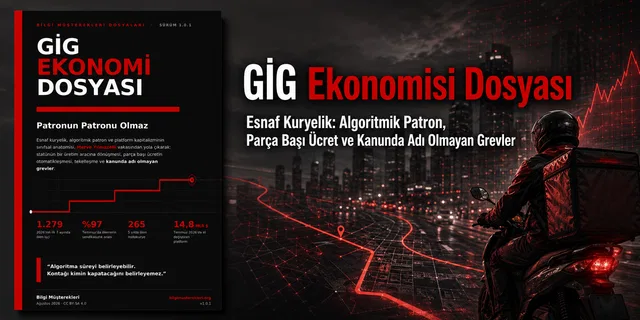
- Common Pain Points: Show that the link between the doctor's mobbing and the courier's speed pressure is the same "algorithmic management."
- Organize the Critical Mass: Instead of "suppressing" petty-bourgeois tendencies, graft this segment's desire for technical creativity onto the vision of "a world under worker control." Tell them, "Develop for humanity, not for the company."
Important Note: The class defender must see this in-between state not as a "contradiction" but as a "potential." You don't need to dress the white-collar worker in a "worker's apron" for them to realize they're being exploited; it's enough to show them how their own code or labor is being commodified.
4. The Strategic Decision: Grassroots Unionism or Specialist Organizing?
My answer to the question is clear: the United Front.
Grassroots "blue-collar" unionism is the engine of the struggle; but the organizing of IT workers/specialists is the software of that engine.
Don't ignore them: If they don't organize, they'll come at us as strikebreaking "automations."
Synchronize them: Tie petty-bourgeois tendencies to the class struggle under headings like "ethical IT" and "the democratization of technology."
As those who defend class unionism, our code is this: while we defend the rights of the minimum-wage data-entry worker on the one hand, we expose the unethical exploitation in the "Senior" software developer's project on the other. Class differences can only be melted down under a common goal (the democratization of the means of production and of data).
In the world of the future, white-collar workers will understand that they are not "white," that the stain on them is exploitation. Our task is to shine a light on that stain.
The Road Toward Enlightenment
Comrade, we're carrying the topic up a layer, to the level of "architectural design." Today's class-conscious intellectual—especially if they're in the IT field—is not merely an "agitator" but at the same time a "Lead Auditor" who deciphers the workings of the system.
The Soviet process of "persuading the specialists" has today given way to the task of "breaking the illusion." Because today's white-collar intellectual, while thinking themselves a part of the system, is in fact seen only as "an efficient function."
Here is the manifesto of the deepened tasks that the class-conscious contemporary intellectual must undertake to transform white-collar and IT-laborer masses into "an organic class":
1. Task: Dissolving Technological Mystification (Demystification)
Capital presents technology as a "neutral, inevitable, and sacred" force. Artificial intelligence, algorithms, or automation are marketed as if they were natural phenomena descended from the sky, independent of human labor.
- Deepening: The intellectual must decipher the "boss logic" behind these algorithms. They must ask the question: "Is this algorithm increasing efficiency, or is it digitizing control and exploitation?"
- Action: To explain to the masses that technology is not neutral, that every line of code can serve the interest of a class. To define software architecture as an arena of the class struggle.
2. Task: Building the "Precariat Bridge"
The white-collar worker's greatest illusion is that a high salary or comfortable offices will protect them from the fate of the working class. Yet in the IT world, being "Senior" does not protect you from being erased in a wave of "reorganization."
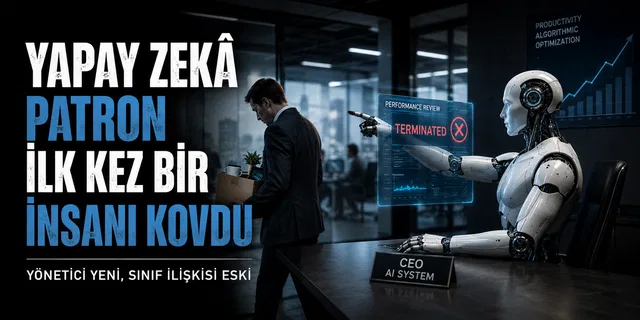
- Deepening: The intellectual must establish the link between the "privileged worker" and the "precarious courier." They must show that both are governed by the same algorithm, and both are sacrificed to "performance metrics."
- Action: To present to the white-collar worker the truth—"You're not on a career ladder, you're on the digital version of an assembly line"—without wounding them, but with jolting clarity.
3. Task: Updating the Software of Language
Classic 19th-century terminology struggles to reach today's software developer who drinks "Café Latte" and runs "Sprints." We need to "refactor" our words.
- Deepening: Being able to say "creative force that has lost control over its own labor" instead of "proletariat." Using the concept of "the enormous data rent the company extracts from your mental effort" instead of "surplus value."
- Action: As Gramsci said, to be a "permanent persuader," we must seat the alienation the worker experiences—in their own vocabulary (burnout, mobbing, technical debt)—on a class footing.
4. Task: Building Counter-Hegemonic Spaces
Against the ideology that companies impose under the name of "corporate culture," building a "culture of solidarity" is the intellectual's essential task.
- Deepening: To refute in-office competition, the lie of "meritocracy," and the fairy tale that "the best one wins." To prove that individual success stories are "masks" hiding collective exploitation.
- Action: To organize the union not only as a place of "seeking rights," but at the same time as an "intellectual refuge" and a "free production space." To convert the spirit of collective production in the open-source world into union organizing.
The "Way Out of Purgatory" Formula for the Organic Intellectual
The IT intellectual who is a class defender must code this "in-between" state not as a weakness but as a strategic advantage:
- Put Technical Authority at the Service of the Class: Use the analytical power that engineering provides to build the union's bylaws, strategy, and exposure mechanisms. Take the stance: "I know how this system works, and now I'll tell you how we can stop it."
- Strategy of Mass-Building: Instead of ignoring petty-bourgeois tendencies (the passion for status, individualism), transform them through the concepts of "professional honor" and "freedom of creativity." With the emphasis "Real creativity begins only when you're freed from the boss's restrictions and greed for profit," pull the specialist over to the side of the class.
- Flatten the Hierarchy: Within the union, melt down the "specialist-worker" distinction through knowledge-sharing sessions. Take on the role not of the intellectual who monopolizes knowledge, but of the educator who distributes knowledge and "makes everyone a specialist."
In conclusion, comrade; the class-conscious intellectual is the one who holds the key to that "white-collar prison" in the IT sector. That key is technical knowledge. If we use this knowledge only to write code, we serve the boss; if we use it to raise the class's consciousness, we serve the future.
We don't ignore petty-bourgeois tendencies; we "synchronize them with reality." Because we know that when the servers shut down, when the lights go out, and when those plazas empty, the only thing left in our hands is the hand of the comrade beside us.
We'll make the future's "Initial Commit" together!