Algorithmic Crystallization and Aesthetic Liberation: The Future of Music and Art in the Age of the General Intellect
The Crisis of Ownership in AI Art and the Dialectic of Creativity in the Human of the Future

The debates being waged today about the relationship between artificial intelligence and art are confined within the narrow limits of bourgeois aesthetic understanding and capitalist property relations. On one side stands a technophobic conservatism that takes refuge in the Romantic era's myth of the "individual genius," declaring "The music that artificial intelligence makes is not music"; on the other stands a Silicon Valley fetishism that views technology as a sacred gift, free from the domination of capital...
Yet when we look at the matter through the lens of historical materialism and through the eyes of the liberated human of the future, what stands before us is neither an apocalyptic scenario nor a frictionless technological utopia. Before us stands a leap of humanity's collective accumulation into a new phase, and a dialectical rupture in the development of the means of production that shakes the aesthetic domain.
General Intellect and Algorithmic Deconstruction
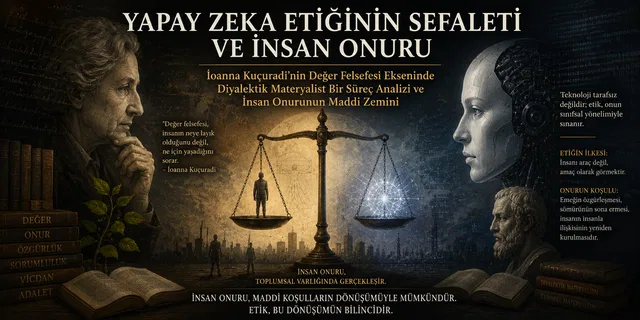
Karl Marx, in the Grundrisse, while describing the development of the productive forces, advances a fascinating concept: the General Intellect. According to Marx, in the advanced stages of capitalism, social knowledge, science, and collective intelligence become productive forces in their own right. Fixed capital (machines) is the embodied form of this social knowledge.
Artificial intelligence is precisely the flesh-and-blood incarnation of this definition. No AI model is created in a vacuum; it is the concentration in algorithms of humanity's thousands of years of music theory, rhythmic patterns, acoustic discoveries, and the living labor of software workers. In other words, AI music is the crystallization of the values produced by living labor into the form of dead labor (the machine).
Is AI Music "Music"?
The historical answer to this question is yes. Throughout history, music has evolved together with technological tools (instruments, recording technologies, digital sound processors). What artificial intelligence does is to scan humanity's shared artistic heritage (datasets) and reorganize sound waves with a social consciousness.
The production here does not come from a "non-human" source; on the contrary, it is the reflection back, by the machine, of social humanity's own collective intelligence. To declare it non-art is a typical manifestation of humanity's alienation from the colossal productive forces it has itself created.
Digital Enclosure and the Crisis of Ownership: The Problem of Patents and Copyright
The current legal system is experiencing a structural paralysis as it debates to whom to grant ownership of works produced by artificial intelligence. For capitalist law always defines ownership through "individual commodity production." Yet AI production is, by its very nature, collective.
When we analyze the patent and copyright situation of artificial intelligence with a Marxist approach, we encounter the following realities:
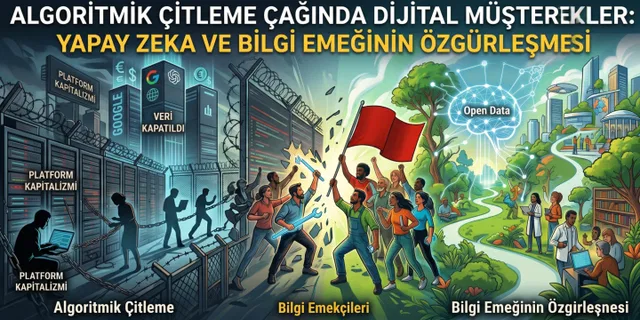
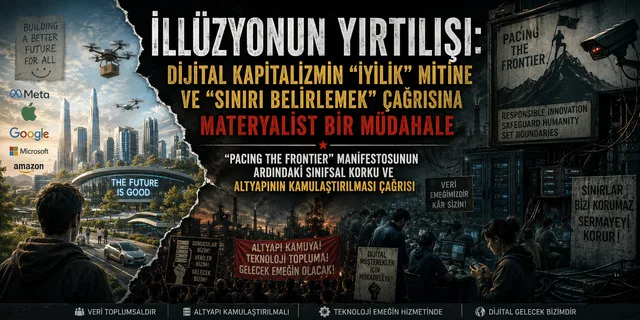
- Digital Primitive Accumulation (Data Plunder): The big technology monopolies have plundered all of humanity's shared artistic heritage under the names of "open source" or "data." This situation strikingly resembles the enclosure of common peasant pastures during the collapse of feudalism, turning them into the private property of the bourgeoisie (the Enclosure Acts). Capital is enclosing humanity's aesthetic pastures.
- Patent Monopolization: In the current system, patents and copyrights will ultimately flow not to the individual writing prompts or to the actual artists in the dataset, but to the giant companies that hold the means of production (computational power and servers). Copyright law is being turned into a legal weapon not to protect art, but to expropriate surplus value in the age of artificial intelligence.
- The Historical Alternative (What Ought to Be): No private property can be established over any aesthetic value produced by means of artificial intelligence. Since the input is the shared heritage of all humanity and the process is a product of the General Intellect, then the output too must be the common property of all humanity (Commons). In the world of the future, AI products cannot be patented or hidden behind copyright walls; on the contrary, they constitute an aesthetic ground that everyone can freely access and build new productions upon.
The Relationship Between Art and Artificial Intelligence in the Human of the Future
Capitalism uses artificial intelligence to cheapen the labor force, to avoid copyright costs, and to turn art into fast-consumption junk food (content). In the liberated society of the future, however, this hostile contradiction between technology and the human will disappear.
The Theory of Aesthetic Liberation
For the human of the future, artificial intelligence will be not a "rival" or a robot that replaces the human, but a cognitive prosthesis that multiplies human creative capacities and frees the human from technical drudgery.
| Dimension | The Capitalist Order of Art | The Liberated Order of Art of the Future |
|---|---|---|
| The Nature of Art | A market commodity (Content) produced for the sake of livelihood. | The act of human self-realization (Free art). |
| Technical Barrier | Expensive studios, copyright barriers, the monopoly of technical expertise. | Production opportunity democratized by AI and accessible to all. |
| The Artist's Role | A modern slave who feeds the algorithms and produces value for the system. | An aesthetic curator/orchestra conductor who directs the algorithm like a new instrument. |
The human of the future will not waste time memorizing the rules of harmony or grappling with technical studio parameters. By taking on the "craft" and "technical execution" portion of art, artificial intelligence will catapult the human mind into the dimension of pure philosophical, conceptual, and aesthetic creativity.
Art will cease to be the privilege of a specially gifted minority or a professional occupational group. As in Marx's famous prediction: the human who hunts in the morning, fishes in the afternoon, and engages in criticism in the evening will, at night, design a new musical universe together with their artificial intelligence.
Conclusion: The Aesthetic Manifesto of the Future
Music made with artificial intelligence is the future echo of humanity's own past sounds. The point is not to reject this technology, but to break the yoke of capital upon it.
When private ownership of the means of production disappears, artificial intelligence will not kill art; on the contrary, it will free art from being a "job" done to sustain a livelihood, and make it the purest, freest form of expression of the human species.
By completing the mechanization of the aesthetic domain, artificial intelligence is opening the door to humanity's ultimate aesthetic liberation.