We Stand with Journalists on 24 October
No to Censorship, Freedom for the News — the Labour of Those Who Produce the News, the Right to Receive It, and Journalism in the Age of Surveillance

If We Fall Silent, the Truth Stays in the Dark: We Stand with Journalists on 24 October
No to Censorship, Freedom for the News — the Labour of Those Who Produce the News, the Right to Receive It, and Journalism in the Age of Surveillance
In Brief: What Is Happening?
Dear Young Comrades,
This Saturday, 24 October 2026, journalists are taking to the streets in ten cities at the same time. Press and professional organisations, led by the Journalists' Union of Turkey (TGS), DİSK Basın-İş, the Journalists' Association, the Press Council, the Progressive Journalists' Association (ÇGD), the İzmir Journalists' Association (İGC) and the Dicle Fırat Journalists' Association (DFG), are holding marches and press statements from Istanbul to Van and from Diyarbakır to İzmir under the slogan "No to censorship, freedom for the news."
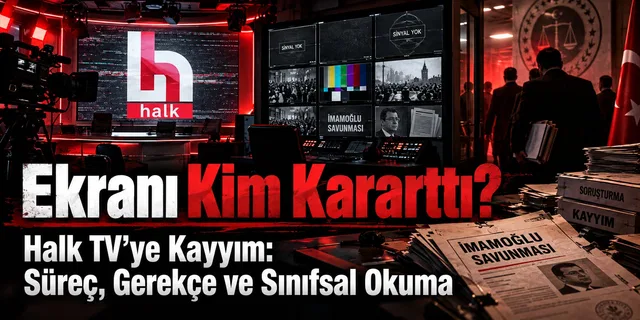
The date is no coincidence: 24 October is the first anniversary of the appointment of a trustee to TELE1. In the year since, the chain of trustees has reached all the way to Halk TV. In the first three weeks of October alone, seven journalists were arrested, including Derya Okatan, Hasan Güraksu, Şaban Sevinç, Mustafa Balcı, Murat Ağırel and İsmail Arı; Bahadır Özgür was detained and his account shut down; İsmail Saymaz was placed under house arrest. Hundreds of X accounts were made invisible from Turkey. In Reporters Without Borders' 2026 index, Turkey ranks 163rd out of 180 countries.
The organisations' demand is simple: an end to the detention, arrest and house arrest of journalists, to the appointment of trustees to media outlets, to the closure of news sites and to access blocks on social media accounts. The most memorable sentences of their joint statement are these:
"Journalism is not a crime. If we fall silent, the truth stays in the dark. If we cannot write, the people cannot learn. If we cannot ask, those in power do not answer for anything."
In this piece we first give, city by city, where and when to meet. Then we describe how journalists work, what they are up against, how the order of surveillance hems them in, and the line that runs from Hasan Tahsin to today. Next we step outside Turkey to look at the state of journalism in the world, compare which rights journalists are granted from Norway to the US and from France to China, and discuss why journalism is considered a respected profession. And at the end we have a call: This action is not only journalists' action. The right to receive news belongs to all of us. Let us be in the squares on Saturday.
Saturday 24 October: Meeting Points, City by City
| City | Time | Meeting point | Route / programme |
|---|---|---|---|
| Istanbul | 13:00 | Kadıköy, in front of the Bull Statue | March to Kadıköy Square, press statement |
| Adana | 13:00 | Artists' Park, in front of the Press Monument | Press statement |
| Ankara | 14:00 | Kolej Junction | March to Sakarya Street, press statement |
| İzmir | 14:00 | Alsancak, Kıbrıs Şehitleri Street, in front of the Türkan Saylan Cultural Centre | March towards the port |
| Antalya | 14:00 | In front of the Attalos Statue | March to Cumhuriyet Square |
| Bursa | 14:00 | Osmangazi, Şehreküstü Square | Press statement |
| Eskişehir | 14:00 | Köprübaşı | Press statement |
| Kocaeli | 14:00 | İzmit, Uğur Mumcu Park | Press statement |
| Diyarbakır | 14:00 | In front of the courthouse | March to the BTK, press statement |
| Van | 14:00 | Sanat Sokağı (Art Street) | March to the City Square, press statement |
Notes:
- The organisations announced that in provinces outside these ten cities, too, people will take to the streets together with local journalists' associations and press workers. Follow the accounts of the journalists' association, the TGS or DİSK Basın-İş representation, or the ÇGD branch in your province.
- The Ankara Bar Association announced that it will join the action in Ankara at 14:00. TİP (the Workers' Party of Turkey) shared the call from its social media accounts; messages of support also came from Özgür Özel and from İYİ Party circles.
- That the route in Diyarbakır ends in front of the BTK (the Information and Communication Technologies Authority) is not a detail but a statement: today's censorship operates not only in the courthouse but also in the technical infrastructure through which access blocks are enforced.
- There may be last-minute changes to times and places. Check the organisations' official accounts before you set out.
Part One: The Balance Sheet of October 2026
A one-month cross-section
Why are journalists saying "Enough, we can't breathe"? Simply listing the period from 1 to 22 October is answer enough:
- 2 October: Derya Okatan was detained in Ankara, taken to Istanbul and arrested. The charge: "secret documents" on digital material that had been seized earlier.
- 6 October: Hasan Güraksu, the owner of Gür Haber, was arrested after reporting the allegation that spoiled meat had been served at Burdur State Hospital.
- 9 October: Şaban Sevinç and the Sözcü editor Mustafa Balcı were arrested over reports and posts about the fund investigation.
- 10 October: İsmail Saymaz was placed under house arrest following an appeal by the prosecutor.
- 14 October: Police entered Halk TV's building in Istanbul, the TMSF (Savings Deposit Insurance Fund) was appointed as trustee, and the broadcast was cut. Access was blocked to the channel's YouTube, X, Facebook, Instagram, TikTok and Telegram accounts.
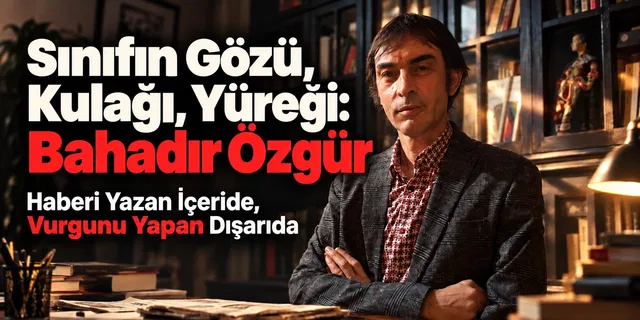
- 15 October: Bahadır Özgür was detained on the allegation of "violating the confidentiality" of the fund investigation; his X account, with around 163,000 followers, was shut down. The same day in İzmir, Bahadır Altan was detained over a post reacting to the trustee appointment at Halk TV.
- 19 October: Murat Ağırel was arrested on a charge of "laundering assets derived from crime" in the file known as the "Sarıgül investigation".
- 21 October: BirGün reporter İsmail Arı was arrested on a charge of "publicly disseminating misleading information" following a complaint by the former president of RTÜK (the Radio and Television Supreme Council), Ebubekir Şahin. For the second time in a year. The same day, Halk TV's X account, with around 3 million followers, was made invisible from Turkey.
Each item on this list has its own legal justification: espionage, breach of confidentiality, money laundering, disinformation, bribery, terrorism. Looked at one by one, each appears to be "an isolated judicial process". Looked at together, a pattern emerges: whatever the name of the charge, what is cut off in the end is always the same thing, namely the public's ability to learn something.
The chain of trustees: 10 channels in 20 months
Halk TV is not an isolated case but the latest link in a chain. In about twenty months, ten television channels passed under TMSF management:
| Date | Channel | Investigation |
|---|---|---|
| March 2025 | Flash TV | Illegal betting, laundering the proceeds of crime |
| August 2025 | Ekotürk TV | The Papara investigation |
| September 2025 | Habertürk, Show TV, Bloomberg HT, HT Spor, Show Türk, Show Max | The Can Holding investigation |
| 24 October 2025 | TELE1 | "Espionage" investigation into Merdan Yanardağ |
| 14 October 2026 | Halk TV | Charges of bribery, bid rigging and laundering against the channel's owner |
TELE2 Haber, set up online by journalists who left TELE1, also ended its broadcasts this month. Merdan Yanardağ is still in detention.
There is one point to note here. In most of the channels to which trustees were appointed, the subject of the investigation is not journalism but the owners' business dealings. For Halk TV, too, the prosecutor speaks of unrecorded bribes exceeding 14 million lira and a transaction volume exceeding 30 billion lira. Trying these allegations is the job of the courts. But a question must be asked: if a boss is accused of a commercial crime, why is the news bulletin on the screen blacked out, why are the reporters' social media accounts shut down, why is the channel's archive taken offline? Property can be seized; but seizing the production of news is something else. Using media ownership as a tool of political control is made possible precisely by blurring these two things together.
The picture in numbers
| Indicator | Data | Source |
|---|---|---|
| Press freedom ranking | 163rd of 180 countries ("very serious" category) | RSF, April 2026 |
| Journalists in prison (start of October) | 29–30 | DFG September 2026 report |
| In September 2026 alone | 15 detentions, 8 arrests, 10 journalists out of work, RTÜK penalties against 14 outlets | DFG |
| Access blocks in September 2026 alone | 3,492 pieces of digital content, 4 news sites | DFG |
| April 2025–April 2026 | More than 300 journalists tried in 224 criminal cases; prison sentences totalling more than 53 years | TGS 2025–2026 report |
| Physical attacks in the same period | At least 34 journalists | TGS |
| "Disinformation law" (Turkish Penal Code Art. 217/A) | From October 2022 to April 2026, 83 journalists charged 114 times; 10 arrests | Veriler Ne Diyor / Medyascope |
| RTÜK penalties (in one year) | About 15.15 million lira | TGS |
The number of journalists in prison varies from organisation to organisation: the TGS counts only those arrested "because of journalistic activity" (at least 14 in April 2026), while the DFG uses a broader definition. Knowing this difference matters, because the language of those in power exploits exactly this gap: "No one is inside for journalism; they are all in for other crimes." Look at the list above and decide for yourself.
Part Two: The News Is a Product of Labour
Who is a journalist?
For us, journalism is not just the famous face of a columnist on screen. Behind a news story there are reporters, camera operators, photojournalists, editors, copy editors, video editors, graphic designers, social media editors, technicians, and printing and distribution workers. A news story is a product of the collective labour of dozens of people. In Marx's terms, a production process in which the "general intellect", society's common knowledge, is worked up and offered back to society.
That is why journalism is a two-sided question:
- A question of labour: how much are those who produce the news paid, how secure are they, under what conditions do they work?
- A question of rights: can society get hold of information that does not suit those in power or capital?
The two cannot be separated. A precarious journalist is open to being silenced; a silenced journalist stays precarious.
The one who writes the poverty story is poor too
DİSK Basın-İş's regular wage-floor surveys show the picture clearly:
- According to the December 2025 survey, the average wage of press workers is 42,000 lira; 61% of workers earn even less than this average.
- One in ten press workers works at or below the minimum wage; six in ten stay below twice the minimum wage.
- The share of those paid above the poverty line is only 5%.
- The average length of service at a workplace is around 3–4 years. In the March 2025 survey, 88% of workers had worked at the same workplace for less than five years.
In other words, nineteen out of twenty of the people who report on the poverty line, inflation and rent rises live below that line. Dismissal is a phone call away. At every channel to which a trustee is appointed and every newspaper that closes, dozens, sometimes hundreds, of press workers are left jobless overnight. The local press, meanwhile, is already under pressure to "behave" because of its dependence on revenue from official public notices.
What does the union want? For a press worker just starting out, a wage floor of at least twice the minimum wage, an additional increase for each year of experience, a metropolitan allowance and a field allowance. These are not exaggerated demands; they are the bare minimum for the profession to be liveable.
Precarity is a form of censorship
This needs to be said plainly: economic precarity is the quietest and most effective censorship. Before writing a story, a journalist asks two questions: "Will I be arrested because of this story?" and "Will I lose my job because of this story?" The first question depends on the prosecutor, the second on the boss. In Turkey, most media bosses are holding companies dependent on public tenders and permits in sectors such as energy, construction, mining and finance. The newsroom sits on the same balance sheet as the holding's tender files. In this situation, the boss does not need to say "censorship"; the journalist has already learned what will "cause problems". We call this self-censorship, and the material basis of self-censorship is a class relation of dependence.
That is why journalists unionising is not just about wage bargaining. An organised newsroom can also stand up to a management that says "we won't publish this story".
Part Three: Journalism in the Age of Surveillance
The legal architecture of censorship
Today's regime of repression built itself through legislation. Three critical steps of the last six years:
- 2020 – Law No. 7253 (the social media regulation): Large platforms were obliged to appoint a representative in Turkey. This made access blocks and content removal requests directly enforceable.
- October 2022 – Turkish Penal Code Art. 217/A ("publicly disseminating misleading information"): Those who drafted the law said it "has nothing to do with journalists". In three and a half years, 83 journalists were charged 114 times under this article. The most frequently targeted name is İsmail Arı, who is back in prison today: six times. Those who reported on the tents in the earthquake zone, AFAD's (the Disaster and Emergency Management Authority's) seizure of aid, or a prison riot were tried under this article. In other words, a large part of what was punished as "disinformation" was accurate information that did not suit the state.
- May 2026 – Amendment to Law No. 5651 (age and identity verification): Social media platforms were obliged to verify users' ages, with verification planned to take place through e-Devlet (the state's e-government portal). Presented as a measure to protect children, this regulation, as Prof. Yaman Akdeniz of İFÖD (the Freedom of Expression Association) has warned, in practice means a compulsory digital identity and surveillance infrastructure. Which account you connect to, from which platform and when becomes a record that can be matched to your identity. The restriction on VPNs has been withdrawn for now, but it has been announced that it will return with a new bill.
Being made invisible
The old censorship confiscated the newspaper; the new censorship makes the account "invisible from Turkey". The difference is great. A confiscated newspaper became a scandal; an account made invisible disappears silently. Readers may not even notice that what they are looking for has been banned.
In September 2026, access was blocked to 3,492 pieces of digital content in a single month. On some days, 250 X accounts were shut down at once. In October, the accounts of T24, bianet, Mezopotamya Agency, Yeni Yaşam and Halk TV were blocked, along with those of dozens of journalists from Şirin Payzın to Alican Uludağ and from Erdal Sağlam to Dinçer Gökçe. Among the blocked accounts is EngelliWeb's own account, which records the blocks. Recording censorship is being censored too.
Here we also have to talk about the role of the platform companies. X, which claims to be a "free speech absolutist", is among the quickest to comply with court orders in Turkey. For Silicon Valley's monopolies, freedom of expression is not a principle but a market variable. They would rather shut an account than lose a market. What we call the digital panopticon is exactly this: an order of surveillance in which the state's legal apparatus and the technical infrastructure of the private platform monopolies merge, where every post is recorded, classified and, when required, deleted.
A new threat: Algorithms and artificial intelligence
Surveillance does not come only from the state. Newsrooms, too, are increasingly managed by "data". Click-through rates, time on screen and the headlines the algorithm pushes forward are turning into an invisible editor that decides what the journalist will write. In other pieces we have called this mental Taylorism: the measuring, fragmenting and speeding-up of mental labour.
Artificial intelligence creates pressure from two directions. On one side, news texts and the archives journalists have produced over years are being used to train language models without their consent or any share for them. This is the second expropriation of journalists' collective labour. On the other side, bosses are cutting staff on the grounds that "AI can do this", and loading more work onto those who remain. The worker who produces the news is both feeding the machine with their past labour and having their future seized.
Part Four: From Hasan Tahsin to Today
To understand what is happening today, we need to look back. Because in these lands journalism has always been done at a price.
A chain
- 1919 – Hasan Tahsin: On the day İzmir was occupied, 15 May 1919, the person who fired the first bullet at the occupying forces was a journalist. The founding narrative of the Republic begins with a journalist.
- 1925 – The Law on the Maintenance of Order (Takrir-i Sükûn): Opposition newspapers were closed and journalists were tried before the Independence Tribunals. The press was silenced in the name of "order". If this sentence sounds familiar, there is a reason.
- 1948 – Sabahattin Ali: The writer of Markopaşa, prosecuted and imprisoned for what he wrote, and finally killed on the Bulgarian border. His killer was a man with ties to the state.
- 1952–1961 – The years of gains: Law No. 5953 secured journalists' employment rights; Law No. 212, passed on 10 January 1961, strengthened them. This is where the celebration of 10 January as "Working Journalists' Day" comes from. These rights were not a favour but the product of journalists' organised struggle.
- The coups of 1971 and 1980: Newspapers were closed, cases were opened demanding thousands of years in prison, journalists were tortured. 12 September "disciplined" the press too, and laid the ground for today's relationship between media and capital.
- 1979–1993 – Assassinations: Abdi İpekçi (1979), Çetin Emeç (1990), Turan Dursun (1990), Musa Anter (1992), Uğur Mumcu (1993). Each a dark file connected to the state, the counter-guerrilla and deep relationships. The real perpetrators of most of them have still not been tried.
- The 1990s – Özgür Gündem and Kurdish journalists: Dozens of the newspaper's reporters, distributors and staff were killed in murders whose perpetrators were never identified; in 1994 its building was bombed. This period is a page of the price paid by Kurdish journalists that is still not talked about enough. That the DFG is still one of the organisations keeping the most detailed reports of violations today is a consequence of this history.
- 1996 – Metin Göktepe: The Evrensel reporter was beaten to death in custody. Thanks to public pressure, it became one of the rare cases in which the perpetrators were tried. This, too, teaches us something: solidarity gets results.
- The 1990s–2000s – De-unionisation: In the big media groups, unionised journalists were dismissed en masse or forced to resign from the union. The disorganisation of journalists opened the way to the repression that followed.
- 2007 – Hrant Dink: He was killed in front of Agos, in a murder the security services knew about in advance. The hundreds of thousands who said "We are all Hrant" showed that the journalist was not alone.
- 2013 – Gezi: While the squares were burning, a penguin documentary on the screens. Dozens of journalists dismissed for reporting the news. The barest lesson in what media ownership means.
- 2016–2018 – The state of emergency and monopolisation: With state-of-emergency decrees, more than 150 media outlets were closed with a single signature; for a time Turkey was the country that jailed the most journalists in the world. In 2018, with the sale of Doğan Media to Demirören, most of the mainstream media came to be concentrated in the hands of capital close to the government.
- 2022–2026 – The era of digital censorship and trustees: The disinformation law, mass access blocks, trustees for ten channels in twenty months. And this month: Halk TV.
The lesson of history
Looking at this chain, we see two things. First, the methods change but the target does not. The bullet gives way to the court order, the court order to the trustee, the trustee to algorithmic invisibility. Second, everything journalists have won was won through organised struggle, and everything they have lost was lost through lack of organisation.
| Yesterday | Today |
|---|---|
| The newspaper was confiscated | The account is made "invisible from Turkey" |
| Police entered the printing house | The TMSF is appointed as trustee to the channel |
| "Publishing against the state" | "Publicly disseminating misleading information" |
| Assassinations by unknown perpetrators | Attacks by known but unpunished perpetrators, targeting |
| The newspaper boss was a publisher | The media is a subsidiary of tender-dependent holdings |
| The journalist was monitored by telephone | The journalist is monitored through digital traces matched to their identity |
| The censor kept a list of banned books | Censorship is done jointly by the platform algorithm and the access-block order |
| Law No. 212, acquired rights | Precarious, short-term employment below the poverty line |
Part Five: Journalism in the World
The picture in Turkey is not an exception but a harsh example of a general trend in the world. Seeing this matters in two ways: against those who normalise repression by saying "it's like this everywhere", and against those who treat the problem as peculiar to us by saying "everything is fine in the West".
The global picture: The worst period in a quarter of a century
- Press freedom is at its lowest level in 25 years. In RSF's 2026 index, the average score of the 180 countries fell to the lowest level in the index's history. For the first time, more than half of all countries are in the "difficult" or "very serious" category. The situation worsened compared with last year in 100 countries.
- The fastest-deteriorating area is law. Legal indicators declined in 110 of the 180 countries. Journalism is increasingly being criminalised through counter-terrorism, national security and "fake news" laws. In other words, Turkey's 217/A is not an isolated invention; it is the local version of a model spreading around the world.
- Record deaths. The Committee to Protect Journalists (CPJ) recorded that 129 journalists and media workers were killed in 2025. This is the second record year in a row. About two-thirds of the deaths (86 people) were caused by Israeli fire. Since 7 October 2023, the number of Palestinian journalists killed in Gaza has exceeded 220. Sudan, Mexico, Ukraine and the Philippines are the other bloody addresses on the list. In 81% of the 47 cases the CPJ classified as "deliberate murder", the perpetrator was Israel.
- The prisons are full. According to the CPJ, as of 1 December 2025, 330 journalists around the world were in prison because of their work; for five years the figure has never fallen below 300. The countries jailing the most journalists are China (50), Myanmar (30), Israel (29 Palestinian journalists), Russia (28), Belarus (25) and Azerbaijan (24). Of the jailed journalists, 61% are being tried on "anti-state" charges; a quarter have been held for more than five years without being convicted. Almost a third report having been mistreated.
- "Democracies" are backsliding too. The US fell seven places in the RSF index to 64th. Cuts to the funding of public broadcasting, news agencies being barred from official events and the economic collapse of local newspapers are the main reasons for this decline. In the European Union, meanwhile, RSF finds that some member states are violating the European Media Freedom Act (EMFA) that they themselves adopted.
There is a class reading of this picture: as the crisis of capital accumulation deepens around the world, the rulers feel a greater need to control the flow of information. News about war, migration, climate, corruption and poverty is news that erodes the legitimacy of the ruling order. The worldwide rise in pressure on journalists is a sign that "manufacturing consent" becomes harder in times of crisis, and that coercion comes to the fore.
The minimum floor of international law
Journalists' rights rest on a common legal foundation signed by many countries:
- The Universal Declaration of Human Rights, Article 19 (1948): Everyone's right to seek, receive and impart information and ideas "through any media and regardless of frontiers".
- The International Covenant on Civil and Political Rights, Article 19: Turns the same right into a binding treaty.
- The European Convention on Human Rights, Article 10: Freedom of expression. The European Court of Human Rights (ECtHR) defines the press as the "public watchdog" of democratic society and regards the confidentiality of journalistic sources as "one of the basic conditions" of press freedom (Goodwin v. the United Kingdom, 1996). Turkey is a party to this convention and is one of the countries that most often violates Article 10 at the ECtHR.
- The EU European Media Freedom Act (EMFA, in force since August 2025): Brings safeguards such as the protection of sources, limits on the use of spyware against journalists, transparency of media ownership and the fair distribution of state advertising.
- The EU Anti-SLAPP Directive ("Daphne's Law", 2024): Named after Daphne Caruana Galizia, the journalist murdered in Malta. It provides protection against abusive lawsuits filed to silence journalists. Member states were supposed to transpose this directive into their national law by 7 May 2026, but almost none met the deadline.
These rights on paper matter; but as the picture shows, paper alone protects no one. Rights live only to the extent that there is an organised force to defend them.
Country by country: The rights of journalists
| Country | Legal guarantees | Source protection and access to information | Economic and professional rights | Current problems |
|---|---|---|---|---|
| Norway (RSF 1st) | Freedom of expression and of the press in the constitution; strong self-regulation (the Press Complaints Commission) | Source confidentiality strongly protected by law and the courts | The state's press support fund keeps local and pluralistic publishing alive; the great majority of journalists are unionised, collective agreements are widespread | The freest environment in the world, but digital platforms absorbing advertising revenue is squeezing local media |
| Sweden (RSF 5th) | The Freedom of the Press Act of 1766, the first law of its kind in the world; today part of the constitution | Public officials' right to give information to the press (meddelarskydd) is guaranteed; the state is forbidden from investigating the source of a leak. The principle of public access to official documents has existed since the 18th century | A strong tradition of unions and collective agreements | Threats from organised crime, online harassment |
| Germany | Basic Law, Article 5: freedom of the press and "there shall be no censorship" | Journalists' right to refuse to testify; a right to information from public authorities under the state press laws | Collective agreements through the unions (DJV, ver.di); the Press Council's code of ethics | Attacks on journalists at demonstrations, far-right hostility to the press |
| France | The Press Freedom Law of 1881 | Source confidentiality guaranteed by a 2010 law, but disputes over violations continue | The 1935 journalist statute: press card, severance pay and the "conscience clause" (the journalist's right to leave with compensation if the outlet changes hands or its editorial line changes); state support for newspapers and tax relief for journalists | Billionaires concentrating media ownership, crises of editorial independence |
| Italy | Constitution, Article 21 | Source protection exists but is limited | The Order of Journalists (Ordine dei giornalisti), a public-law body, and a national collective agreement | Defamation still a criminal offence; spyware (Paragon) found on journalists' phones in 2025; journalists living under police protection because of mafia threats |
| United Kingdom | No written constitution; ECHR Article 10 incorporated through the Human Rights Act | Source protection exists in law, but can be overridden by terrorism and national security laws | A strong union (NUJ), but growing precarity in the sector | Wealthy claimants intimidating the press with defamation suits (SLAPPs); the mark left by the Assange case |
| USA (RSF 64th) | The First Amendment: "Congress shall make no law… abridging the freedom… of the press." Very hard for public officials to sue for defamation (New York Times v. Sullivan, 1964) | A federal freedom of information law (FOIA) exists; but there is no federal shield law, and journalists can be jailed for refusing to reveal their sources | The collapse of local newspapers: thousands of counties have become "news deserts" | Those in power declaring the press an "enemy of the people", cuts to public broadcasting funding, journalists covering protests being detained |
| Hungary | EU member, party to the ECHR | Exists on paper | — | Capital close to the government gathering hundreds of media outlets into a single foundation; the capture of the media under "elected authoritarianism" |
| Mexico | Constitutional guarantee and a protection mechanism for journalists | — | Most local journalists low-paid and precarious | One of the most dangerous places for journalists among countries not at war; collusion between drug cartels and local officials, with the great majority of murders unpunished |
| Russia (RSF 172nd) | Constitutional guarantee on paper | — | — | The "foreign agent" law, censorship of war reporting, the arrest of foreign and Ukrainian journalists |
| China (RSF 178th) | The constitution mentions press freedom, but party control is paramount | — | Journalism depends on a state licence | The country that jails the most journalists in the world; the liquidation of independent media in Hong Kong |
| Turkey (RSF 163rd) | Constitution, Articles 26 and 28; party to the ECHR | Source confidentiality exists in the Press Law, but is breached in practice through seized phones and computers | Employment rights won through Press Labour Law No. 5953 (1952) and Law No. 212 (1961); but because of de-unionisation, only a minority of journalists benefit from these rights | 217/A, trustees, mass access blocks, e-Devlet-based identity verification |
What does the table tell us?
We can draw four conclusions from this comparison:
- The freest countries are the countries with the strongest unions. What carries Norway, Sweden and Finland to the top of the list is not only liberal constitutions; it is high unionisation, collective agreements and public support mechanisms that do not leave journalism at the mercy of the market. Even in RSF's economic indicator, there is a large gap between Norway and the country in tenth place. Press freedom cannot survive without a material basis.
- Constitutional guarantees alone are not enough. The US has one of the strongest constitutional guarantees of press freedom in the world; but the economic collapse of local journalism and political hostility have pushed the country down to 64th. The enemy of press freedom is not only the state but the market itself.
- Concentration of ownership is a problem everywhere. Billionaires in France, a pro-government foundation in Hungary, tender-dependent holdings in Turkey. Their forms differ, their essence is the same: whoever holds the means of producing the news draws the limits of the news.
- France's "conscience clause" is a thought-provoking example. Since 1935, a French journalist has had the right to leave with compensation if their outlet changes hands and its editorial line changes. In other words, the law recognises the journalist's conscience as a labour right. A journalist working at a channel to which a trustee has been appointed has no such safeguard in Turkey today.
Part Six: Journalism as a Respected Profession
The fourth estate
Journalism is often called "the fourth estate", alongside the legislature, the executive and the judiciary. The phrase comes from the idea that the press is an institution that holds power to account and asks questions on behalf of the people. But let us be careful: the other three powers have constitutional authority, budgets, police and courts. The journalist has only a question and the public's trust. The power of the fourth estate comes precisely from the public standing by it. That is the meaning of taking to the squares on 24 October.
How does the world value this profession?
In many parts of the world, journalism is one of the professions most highly esteemed by society:
- The 2021 Nobel Peace Prize went to two journalists: Maria Ressa of the Philippines and Dmitry Muratov of Russia (Novaya Gazeta). In its citation, the Nobel Committee stressed that freedom of expression is "a precondition for democracy and lasting peace". Six reporters at Muratov's newspaper had been killed, among them Anna Politkovskaya.
- The Pulitzer Prizes have honoured public-interest journalism in the US for more than a century. The Washington Post reporters who uncovered Watergate became the symbol of a story that brought down a president.
- The Panama Papers (2016) and the Pandora Papers (2021): These investigations, carried out by the International Consortium of Investigative Journalists (ICIJ) bringing together hundreds of journalists, brought to light the wealth of the world's rulers in tax havens. The finest example of how journalism can work as a cross-border knowledge commons.
- The UNESCO/Guillermo Cano World Press Freedom Prize bears the name of the Colombian journalist Guillermo Cano, killed in front of his newspaper in 1986.
- In many countries there are monuments and days of remembrance for journalists: 3 May, World Press Freedom Day; 2 November, the International Day to End Impunity for Crimes against Journalists. In Turkey, 10 January, Working Journalists' Day, and the commemorations of Uğur Mumcu and Hrant Dink are this land's own tradition.
The value a country places on journalists is seen less in its awards than in its law and its budget. In Sweden, a public official giving information to the press is constitutionally protected; in Turkey, the same act becomes the subject of a "breach of confidentiality" investigation. In Norway, the state sets aside funds to keep the local newspaper alive; in Turkey, the local newspaper is punished by having its official notices cut off. The difference lies in whether journalism is considered a public service or a danger to be controlled.
The crisis of trust: Who is eroding journalism's reputation?
We need to be honest: in many countries, trust in the media is declining. In the US, according to Gallup polls, the share of those who trust the mass media "a great deal" or "a fair amount" has fallen to a historic low, below 30%. In Turkey, too, trust in the mainstream media is low.
But the cause of this loss of trust needs to be diagnosed correctly. What has lost the public's trust is not the reporter chasing the story in the field; it is editorial policies that set headlines according to the boss's tender book, screens that have taken on the role of government spokesperson, and newsrooms forced to bend the truth for the sake of clicks. In other words, the crisis of trust is a crisis not of journalism but of the commodification and instrumentalisation of journalism.
Marx, while still a 24-year-old journalist, wrote in the Rheinische Zeitung, in his articles on censorship: "The primary freedom of the press lies in not being a trade." One hundred and eighty years later, this sentence still stands as the simplest thing that can be said against both the censorship of those in power and the censorship of capital.
Let us not forget: Marx, Engels and Gramsci were all journalists. The history of the socialist movement is also the history of newspapers, printing presses, distributors and reporters. Every newspaper in which the working class tells its own reality is part of this respected profession.
Part Seven: Why Is This Our Business?
The right to receive news is a commons
Dear Young Comrades, the name of our site is Knowledge Commons. Knowledge is society's common wealth. News is the everyday form of this common wealth. Like water, air and land, knowledge can be enclosed. Access blocks, trustees and the arrest of journalists are the tools of this enclosure.
It is thanks to journalists that we learn that a miner died in a cave-in, that a workplace death happened in a factory, to whom a municipality sold public land, that rotten meat was served in a hospital, who withdrew their money before a fund collapsed. The struggle of the working class can only grow stronger to the extent that it can see its own reality. When the news is blacked out, those who lose most are those with the least power and the least voice.
That is why there is no such thing as "journalists' business" as something separate. As DİSK Basın-İş has underlined: the issue is not only journalists' but the people's right to receive news.
Press freedom as a class issue
Defending press freedom only as a liberal "right of expression" falls short. Because the real enemy of press freedom is not only bans but the structure of ownership. Whoever holds the means of producing the news (channels, newspapers, platforms), the news is shaped largely according to their interests. Today there is, on one side, the media of capital close to the government and, on the other, the media of opposition capital under threat of trusteeship. The journalist, on both sides, is a waged worker.
That is why what we defend is not only the protection of "opposition channels". We defend:
- Journalists being able to report without fear for their jobs, their wages and their unions,
- Editorial independence in newsrooms being guaranteed against the bosses too,
- Public broadcasting being under the control of society, not of those in power,
- Support for cooperative and non-profit news initiatives in which journalists and readers come together,
- Freeing digital infrastructure from the mercy of the platform monopolies through free software and open protocols.
Part Eight: What Can We Do?
On Saturday
- Be there. Go to the meeting point in your province. A crowd is a journalist's strongest shield. Remember the Metin Göktepe case.
- Don't go alone. Bring your union, your school society, your neighbourhood solidarity group, your professional chamber. Let your banner read "No to censorship, freedom for the news" or "Journalism is not a crime".
- Report it. Document the action yourself too: photos, video, short notes. But be careful when sharing protesters' faces. In the age of surveillance, solidarity also includes protecting one another.
- If you are far away, give support. Share the action on social media, spread the organisations' statements, boost the hashtags.
After Saturday
- Subscribe to independent media. Directly support news organisations that are not dependent on advertising and tender revenue and stay afloat with readers' support. In the final analysis, what keeps journalism alive is its readers.
- Write letters to jailed journalists. A letter makes the wall of the cell thinner. You can find addresses in the lists the organisations publish.
- Follow the hearings. Attend journalists' trials as an observer. An empty courtroom tells the judge that the defendant has been left alone.
- Document censorship. Keep a record of blocked content and closed accounts. Contribute to the knowledge commons work of initiatives such as EngelliWeb.
- Learn and teach digital self-defence. End-to-end encrypted communication, secure password management, open-source tools. These are now basic literacy not only for journalists but for everyone.
- Support journalists' unionisation. If you are a press worker, join the TGS or DİSK Basın-İş. If not, encourage the press workers around you to organise. A secure journalist is a journalist who is harder to silence.
Concrete demands
We support the organisations' demands and make them concrete as follows:
- All journalists arrested because of journalistic activity must be released immediately; detention must be the exception, not the rule.
- Turkish Penal Code Art. 217/A must be repealed; the access-block provisions of Law No. 7253 must be revised.
- The trustees appointed to media outlets must be withdrawn; investigations into owners must not be made a pretext for halting the production of news.
- Access-block orders must be transparent, reasoned and open to appeal; account and site closures must be carried out not en masse but one by one and under judicial review.
- The e-Devlet-based identity verification on social media must be abandoned.
- For press workers, a wage floor of at least twice the minimum wage, job security and the removal of obstacles to union rights must be ensured.
- Impunity for the murders of and attacks on journalists must end.
- ECtHR rulings must be complied with; source confidentiality must not be breached through seized devices; the use of spyware against journalists must be banned.
- As in Sweden, public officials' right to disclose information in the public interest (whistleblower protection) and, as in France, the journalist's conscience clause when an outlet changes hands must be guaranteed.
Asking Questions Is a Right
Dear Young Comrades,
Journalism is by its very nature a profession of asking questions. "Who won this tender?", "Who is responsible for this workplace death?", "Where did this money go?" When these questions can no longer be asked, it is not only journalists but all of us who lose something: the ability to hold power to account.
The line running from Hasan Tahsin to Uğur Mumcu, from Musa Anter to Metin Göktepe, from Hrant Dink to the comrades in prison today tells us this: in this country the price of writing the truth has always been heavy, but those who write the truth have never run out. The reason they never ran out was the readers, workers, unions and solidarity that stood behind them.
This Saturday, let us be part of that solidarity.
If we fall silent, the truth stays in the dark. Journalism is not a crime. No to censorship, freedom for the news!
Saturday 24 October — let us meet in the squares.
Sources
- Euronews Türkçe, "Journalists to march in 10 provinces on Saturday 24 October", 21 October 2026 (in Turkish). https://tr.euronews.com/2026/10/21/gazeteciler-24-ekim-cumartesi-gunu-10-ilde-yuruyus-yapacak
- bianet, "Journalists take to the streets against repression" (in Turkish). https://bianet.org/haber/gazeteciler-baskilara-karsi-sokaga-cikiyor-324673
- dokuz8HABER, "Press organisations protest in many cities on 24 October: We can no longer breathe!" (in Turkish). https://dokuz8haber.net/basin-meslek-orgutleri-24-ekimde-bircok-kentte-eylemde-artik-nefes-alamiyoruz
- Medyascope, "Journalists call for action: 'No to censorship, freedom for the news'", 20 October 2026 (in Turkish). https://medyascope.tv/2026/10/20/gazetecilerden-eylem-cagrisi-sansure-hayir-habere-ozgurluk/
- Dicle Fırat Journalists' Association, "24 October call from press organisations" (in Turkish). https://www.diclefiratgazeteciler.org/haberler/basin-meslek-orgutlerinden-24-ekim-cagrisi
- ANKA, "Ankara Bar Association: We hear the journalists' call for solidarity, we will be there on 24 October" (in Turkish). https://ankahaber.net/haber/ankara-barosu-gazetecilerin-dayanisma-cagrisini-duyuyoruz-24-ekim-de-alandayiz-60d5c5a5
- BoldMedya, "Pressure on the press increased in October", 22 October 2026 (in Turkish). https://boldmedya.com/2026/10/22/ekim-ayinda-basina-baski-arttii-11-tutuklama-21-gozalti-kayyim-ve-yasaklar
- Euronews Türkçe, "Trustee appointed to Halk TV: 11 detained, what are the charges?", 14 October 2026 (in Turkish). https://tr.euronews.com/2026/10/14/halk-tvye-kayyum-atandi-11-kisi-gozaltinda-suclamalar-neler
- Cumhuriyet, "Trustees for 10 television channels in about 20 months: Halk TV is the latest link!" (in Turkish). https://www.cumhuriyet.com.tr/siyaset/yaklasik-20-ayda-10-televizyon-kanalina-kayyim-halk-tv-son-halka-oldu-2546573
- Medyascope, "Sarıgül investigation: 15 people including Murat Ağırel arrested", 19 October 2026 (in Turkish). https://medyascope.tv/2026/10/19/murat-agirel-aylin-kotil-ve-omer-sarigul-tutukluluga-sevk-edildi/
- Dicle Fırat Journalists' Association, September 2026 Report on Rights Violations against Journalists (in Turkish). https://www.diclefiratgazeteciler.org/haberler/dfg-eylul-ayi-gazetecilere-yonelik-hak-ihlalleri-raporunu-acikladi
- TGS, Press Freedom Report 2025–2026 (in Turkish). https://www.tgs.org.tr/tgs-basin-ozgurlugu-raporu2025-2026/
- Medyascope, "Reporters Without Borders 2026 Index: Turkey ranks 163rd in press freedom", 30 April 2026 (in Turkish). https://medyascope.tv/2026/04/30/sinir-tanimayan-gazeteciler-2026-endeksi-turkiye-basin-ozgurlugunde-163uncu-sirada/
- Medyascope, "Disinformation law: 83 journalists charged 114 times", 9 April 2026 (in Turkish). https://medyascope.tv/2026/04/09/dezenformasyonla-mucadele-yasasi-83-gazeteci-114-kez-suclandi/
- ANKA, "DİSK Basın-İş wage floor report: 61 per cent of press workers earn below the average wage", January 2026 (in Turkish). https://ankahaber.net/haber/detay/disk_basinisten_taban_ucret_raporu_basin_emekcilerinin_yuzde_61i_ortalama_ucretin_altinda_calisiyor_285041
- T24, "DİSK Basın-İş report: one in three press workers earns less than 30,000 lira", March 2025 (in Turkish). https://t24.com.tr/ekonomi/disk-basin-is-raporu-her-3-basin-emekcisinden-biri-30-bin-tl-nin-altinda-maasla-calisiyor,1226729
- StudyoRecap, "How will identity verification on social media work?" (in Turkish). https://www.studyorecap.com/p/sosyal-medyada-kimlik-tespiti-uygulamas
- Medyascope, "EngelliWeb's social media account made invisible in Turkey", 14 October 2026 (in Turkish). https://medyascope.tv/2026/10/14/engelliwebin-sosyal-medya-hesabi-turkiyede-gorunmez-kilindi-su-ana-kadar-hangi-hesaplar-erisime-engellendi/
For the world section:
- RSF, "2026 World Press Freedom Index: global press freedom falls to its lowest level in 25 years" (as published by WBOC). https://www.wboc.com/online_features/press_releases/reporters-without-borders-global-press-freedom-index-falls-to-its-lowest-level-in-25-years/article_19ec78c4-5afb-5217-82f2-665155aebd72.html
- RSF, "2026 RSF Index by region: press freedom in decline in 100 out of 180 countries". https://rsf.org/en/classement-mondial-2026-par-régions-une-dégradation-de-la-liberté-de-la-presse-dans-100-pays-sur
- Euronews Türkçe, "World press freedom at its lowest level in 25 years", 30 April 2026 (in Turkish). https://tr.euronews.com/2026/04/30/dunya-basin-ozgurlugu-son-25-yilin-en-dusuk-seviyesinde-turkiye-163-siraya-geriledi
- CPJ, "Journalist jailings imperil a free press worldwide amid reports of life-threatening prison conditions", January 2026. https://cpj.org/2026/01/journalist-jailings-imperil-a-free-press-worldwide-amid-reports-of-life-threatening-prison-conditions-cpj/
- Al-Monitor, "Record 129 journalists and media workers killed in 2025, mostly by Israel, says CPJ", February 2026. https://www.al-monitor.com/originals/2026/02/record-129-journalists-and-media-workers-killed-2025-mostly-israel-says-cpj
- ARTICLE 19, "EU: As deadline passes, we call for urgent implementation of Anti-SLAPP Directive", May 2026. https://www.article19.org/resources/eu-as-deadline-passes-we-call-urgent-implementation-of-anti-slapp-directive/
- Karl Marx, "Debates on Freedom of the Press and Publication of the Proceedings of the Assembly of the Estates", Rheinische Zeitung, May 1842.