The Labor Architecture of the Digital Age: The Problems of IT Workers and the Organic Intellectual Perspective
From Mental Taylorism to the Digital Commons: Seeing the Truth Behind the Pixels and Re-Coding Reality in the Service of the Class

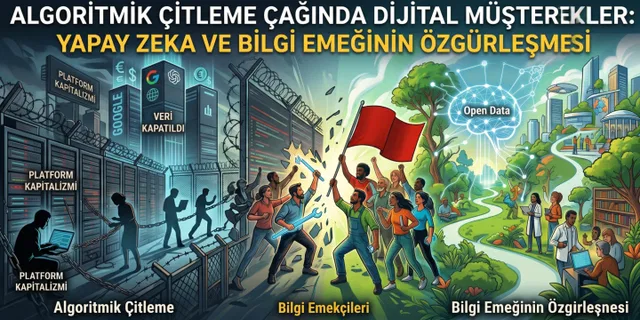
Today, the IT sector leads one of the fastest and deepest transformations in human history. However, the IT workers at the center of this transformation—at the keyboard, in the server rooms, and in the data centers—are often distanced from the true value of their own labor in the shadow of "corporate family" fairy tales and fancy titles. As the "white-collar" fairy tale ends for IT workers, we face a reality in which capitalism has evolved into a "technofeudal" stage, where cloud capital has turned workers into "cloud serfs."
This document aims to compile the current problems of IT workers from a structural perspective and to explain, with academic rigor, how a Gramscian "organic intellectual" approach to these problems can be constructed.
PART 1: The Current Problems of IT Workers
The IT sector is a vast field of work that encompasses not only computer engineers but many different lines of work. However, this breadth brings with it complex and layered forms of exploitation.
1.1. Structural and Infrastructural Problems
In the case of Turkey, the IT sector has developed in a service- and sales-oriented manner rather than a production-oriented one. This has caused the sector to remain dependent on foreign sources, and hardware and strategic software projects to be unrealizable domestically.
- Unplanned Education-Employment Policies: The education system's inability to provide a workforce suited to the economy's real needs leads to skill mismatches in the labor market.
- Foreign Dependency and Exploitation: The foreign dependency in hardware production constitutes an infrastructural problem that increasingly worsens the working conditions of domestic IT workers.
- The Subcontracting Chain: Breaking work into sub-parts and transferring them to smaller firms (subcontracting) is one of the greatest legal and de facto obstacles to the organization of IT workers.
1.2. The Transformation of the Labor Process and Deskilling
The mental activities called "cognitive labor" are being fragmented by the principles of modern "scientific management" (Taylorism) and turned into routine and simple operations.
- Mental Assembly Lines: In areas such as call centers and data entry, workers are turned from "being creative" into "obedient robots" forced to conform to standard scripts.
- The Usurpation of Tacit Knowledge: The experience (tacit knowledge) the worker has acquired over the years is coded through algorithms and databases, severed from the worker, and transferred into the ownership of capital.
- Title Inflation: To conceal the precarity of low-paid and routine jobs, flashy names such as "data entry specialist," "hygiene consultant," or "chief/manager" (for those who have no team) are handed out.
1.3. Flexible Work and Burnout
While IT technologies eliminate the worker's dependence on a place, they have imposed the notion of being "workable anytime, anywhere" (flexible work).
- The Continuity of the Concept of Working Hours: Under the name of flexible work, working hours increase, and the concept of working hours, becoming continuous, invades the individual's private living spaces.
- Psychosocial Risks: Job insecurity and an intense pace mass-produce health problems such as chronic stress, depression, and insomnia.
- Algorithmic Management: "Digital assembly lines" (call centers, micro-work platforms), where labor is measured in seconds and kept under constant surveillance and discipline, discipline IT workers.
PART 2: The Organic Intellectual Perspective and Class Integration
The greatest dilemma of IT workers is that they still see themselves in a "privileged" or "middle-class" position. Breaking this illusion and making the IT worker a part of the class is the fundamental task of the "organic intellectual."
2.1. Who Is the Organic Intellectual?
According to Antonio Gramsci, organic intellectuals are vanguards who emerge directly from within their own class, who speak that class's language and universalize its interests.
- The Ethical Responsibility of Technical Expertise: The scientist and the technical expert are, in the struggle for social liberation, not merely personnel but ethical actors who organize the consciousness of the class.
- Overcoming the Paradox: In the digital age, organic intellectuals (YouTubers, developers, open-source developers) are dependent on the platforms they criticize (Google, Meta, etc.); they must overcome this paradox by building independent networks "outside the platform."
2.2. The Soviet Experience and the Socialism of Tomorrow (The Perspective of Sinan Dervişoğlu)
Sinan Dervişoğlu, drawing on the experiences of actually-existing socialism, offers critical observations on the integration of technical intellectuals with the working class.
- The Mastery of Technical Knowledge: Workers managing the factory is possible not only through political consciousness, but also through mastery of technical knowledge and processes.
- Learning Management Techniques: Dervişoğlu, citing Lenin, states that for workplaces managed by workers (cooperatives) to come about, working people must know management techniques and accounting, and that this requires a cultural revolution of at least 20 years.
- Technology Against Bureaucracy: The internet project (an inter-factory network) proposed in the Soviet Union in the 1960s but rejected by the bureaucracy demonstrates the potential of IT workers to cut the bureaucracy out of the loop.
PART 3: Solution and Roadmap: The Source Code of Truth
A holistic approach to the problems of IT workers as organic intellectuals must be built upon the following strategic pillars:
3.1. The Democratic Planning of Technology
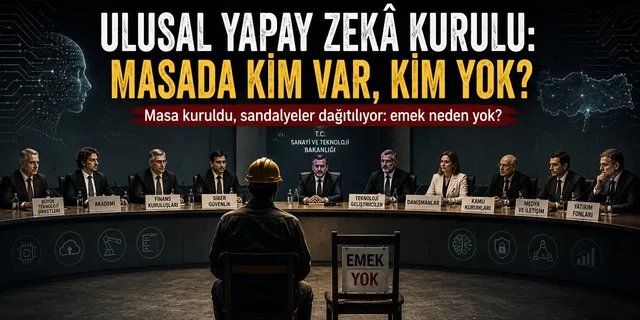
It is imperative that technological development not be left solely to profit-oriented market dynamics, but be subjected to public oversight.
- Take Back CTRL: The processes of technological design must be removed from being capital-centered and planned jointly by the designer (knowledge worker) and the implementer (traditional worker) as subjects.
- Shortening the Workday: Artificial intelligence and automation must be subjected to rational planning not to lower labor costs, but to shorten the workday and lighten the heavy workload.
3.2. The Knowledge Commons
Taking knowledge out of the bounds of private ownership and turning it into a social commons is the fundamental political goal.
- Open Source and the Sharing Economy: Against the "enclosure" of knowledge by patents and copyrights, open-source models must play a strategic role in the decentralization of production.
- The Nationalization of Dispossessed Data: Against individuals' private lives being exploited as the "new oil," it must be defended that data is a collective ownership right.
3.3. Organization and a New Class Language
IT workers must break from the "middle-class" illusion and define themselves around the concept of the "collective laborer."
- Uniting the Fragmented Structure: A new class unity must be established on the reality that, in the production of a smartphone, the labor of everyone from the miner to the designer is interconnected.
- Trade-Union Transformation: Unions must abandon their old, Fordist-based models and blend flexible, horizontal solidarity networks specific to the service and IT sectors with traditional trade-union discipline.
- Common Sense Against Algorithmic Hegemony: Acknowledging that data and artificial intelligence are apparatuses of hegemony, an alternative intellectual and moral leadership must be built against the personalized "filter bubbles."
CONCLUSION: The Construction Point of the Future
The IT worker is not merely a technician who produces data; they are the "organic intellectual" who will free science from the domination of capital, direct technology toward the real needs of society, and build theoretical and practical bridges in humanity's struggle for liberation.
The way out for the "cloud serfs" against the lords of technofeudalism passes through a holistic class consciousness that addresses technical design, the economic model, and political power together—freed from the naivety of technological optimism (solutionism).
It must not be forgotten that what appears as development in one section of capitalism is, in another section, an increase in exploitation. True freedom will begin with our democratic control over technology, not technology's control over us.
Solidarity Sustains Life; The Organized IT Worker Liberates!