In the Shadow of Intelligent Agents: Google I/O 2026 and Information Labor in the Grip of Techno-feudalism
The usurpation of cognitive labor in the shadow of AI agents and the cyber-political map of liberation

On May 19–20, 2026, the heart of the technology world once again beat at the Shoreline Amphitheatre in Mountain View, California. Google I/O 2026 took the stage, as it does every year, with dazzling colors, flawless demos, and promises of "making life easier." This year's main theme was the transition of artificial intelligence from a passive assistant into the "Agentic AI" phase—able to make proactive decisions on its own.
Gemini 3.5 Flash, the multimodal creativity studio Gemini Omni Flash, the AP2 Protocol (Universal Cart) that autonomizes e-commerce, the AI-first Aluminium OS that unifies operating systems, and the Android XR smart glasses that overlay the physical world with a digital layer were the stars of the stage.
Yet as an information worker, you are forced to look beyond the functions you write every day, the databases you optimize, and the APIs you integrate. Behind the sleek interfaces and the fluent presentations there operates a vast mechanism of political economy. This article was written to decipher the relations of production behind the glittering outputs of Google I/O 2026 and to cast a radical projection onto the future of the technology world.
The Automation of Code and the Usurpation of Cognitive Labor
Software developers, data scientists, and system architects generally see themselves as occupying a position different from, and more "privileged" than, capitalism's traditional factory workers. Yet tools such as CodeMender and the Migration Agent introduced at Google I/O 2026 shatter this illusion over cognitive labor.
In a normative world, autonomous tools that reduce the migration of a project from React Native to Kotlin from weeks to hours, or that self-patch security vulnerabilities in code, ought to emancipate the worker. But within capitalist relations of production, this automation means the following:
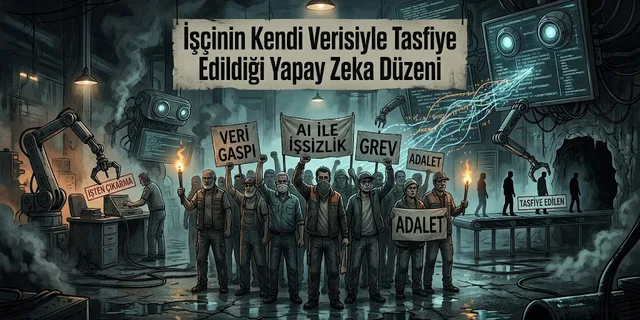
The immense rise in the productivity of labor returns to the worker not as more free time, but to capital as higher "surplus value." When you work 8 hours a day and finish 10 weeks of work in 2 days, the company does not give you 8 weeks of paid leave. On the contrary, it drives down the value of labor power by pushing the "reserve army of industry" (unemployed software developers) in the labor market up behind you. The information worker is condemned to greater precarity (precarization) out of fear of being replaced by the AI code they themselves produced. The tool the worker produces turns into a weapon that strikes the worker back; this is exactly what Marx called alienation.
The Threat of Techno-feudalism: Cloud Rent and Digital Serfdom
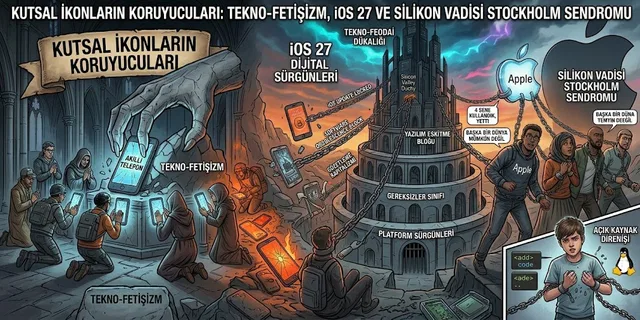
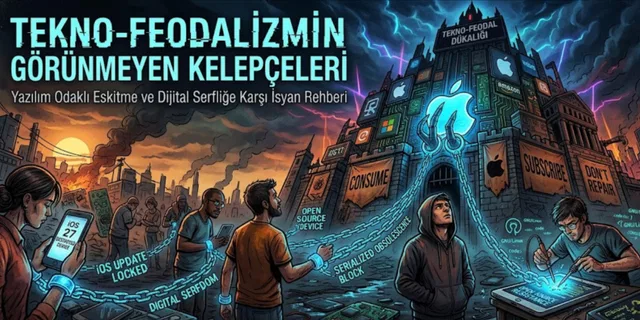
What we face today is not merely classical free-market capitalism. Monopolies such as Google, Microsoft, Meta, and Apple are dragging the world into a new dark age: Techno-feudalism.
The classical capitalist produces goods in their factory and earns profit by selling them on the market. The techno-feudal autocrats (Big Tech), however, rather than producing goods, take possession of the digital spaces in which economic circulation and social life take place.
- Digital Serfdom: Everyone who produces content, supplies data, and trains the algorithm on the YouTube Shorts Remix platform with Gemini Omni Flash, polished at Google I/O, is in fact a modern serf working on Google's "cloud lands." As we interact, their cloud capital grows, while only crumbs of algorithmic visibility remain to us.
- The AP2 Protocol and the Enclosure of Consumption: With the Universal Cart system, you entrust your credit card to your AI agent, and it browses the internet on your behalf and buys the most suitable product. Marx's theory of "commodity fetishism" reaches its ultimate peak here: the human being is excluded not only from production but also from the act of consumption. While algorithmic agents bargain among themselves in the market and complete transactions, human will is entirely bypassed and an uninterrupted flow of cloud rent is mechanized.
- Android XR and the Colonization of Perception: The mixed-reality glasses presented in partnership with Samsung and Gentle Monster are a project to transform physical public space into private property. Every street you turn your head toward, every object you look at, is instantly datafied and "enclosed" into Google's advertising and data-mining wheel. Reality turns into capital's arena of spectacle.
Another Technology World Is Possible: Emancipated Solutions
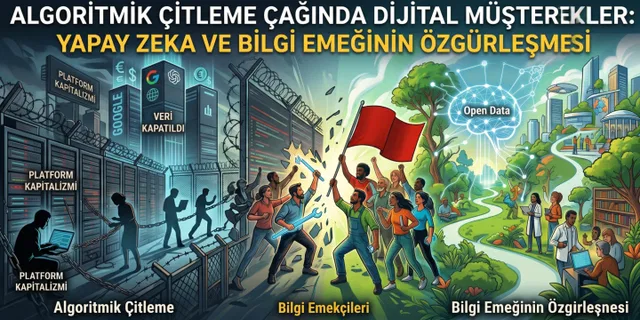
The problem is not in the intelligent agents we produce, the powerful language models, or the fluid operating systems; the problem is the imprisonment of these tools within the boundaries of private property. If we had nationalized these vast productive forces and made them humanity's common heritage (Digital Commons), each would be a wonderful lever that beautifies life:
| Google I/O 2026 Technology | Techno-feudal / Capitalist Use | Humanity-Centered / Post-Capitalist Solution |
|---|---|---|
| CodeMender & Migration Agent | Laying off software developers, cheapening cognitive labor, and increasing precarity. | Infrastructure Liberator: Updating the aging software of public hospitals, state schools, and logistics networks within hours, soaring the quality of public service. |
| Antigravity & Information Agents | Manipulating the consumer, creating artificial needs and financing them via the Universal Cart. | Participatory Planning Agent: Cyber-coordinators that map the real food, medicine, and energy needs of neighborhoods and cities and ensure the fair and ecological distribution of resources. |
| Android XR (Smart Glasses) | Turning streets into advertising space, commodifying the human gaze, and deepening the surveillance society. | Augmented Accessibility: Public guides that describe the world to the visually impaired by voice, instantly translate sign language, and show the ecological health of plants in nature. |
| Gemini Omni & Flow Music | Usurping copyrights, making creative production dependent on platforms under monopoly control. | Collective Culture Workshop: A free global art infrastructure that releases the creative potential within every individual (music, cinema, design) without barriers of profit or censorship. |
Summary of Radical Transformation: From Necessity to Freedom
When the chains of techno-feudal property are broken, the following would change in the technology world and in daily life:
- A 10-Hour Working Week: Autonomous code agents and AI integrations would be used to radically reduce mandatory working time rather than to leave software developers and other workers unemployed. The vast free time remaining would become a true "realm of freedom" in which the human being is freed from alienation and devotes themselves to art, philosophy, science, and social life.
- Cyber-Planning Instead of Market Anarchy (Cybersyn 2.0): In place of the blind market mechanism that produces crises, overproduces, and slaughters nature; open-source AI agents working in the background would calculate the global carbon footprint, plan production according to social need, and wipe scarcity from the face of the earth.
Conclusion: The Power at the Keyboard
Comrade information worker; while you are at the keyboard, every line of code you write and every algorithm you design has the power to shape the world. But in the current system, this power fuels a mechanism that exploits you more and turns the world into the feudal estate of the Silicon Valley barons.
Google I/O 2026 showed us how immense a maturity the productive forces in humanity's hands have reached. Now it is the turn of the hands that produce these forces to tear off the chains of property upon them and offer technology to the common commons of all humanity. The future will be not a commodity sold over share values on Silicon Valley panels; it will be the common work of the cyber-proletariat that will emancipate it.