Guardians of Sacred Icons: Techno-Fetishism, iOS 27, and the Silicon Valley Stockholm Syndrome
Dictionary of Sacred Fanboy Fallacies: Illusions and Facts

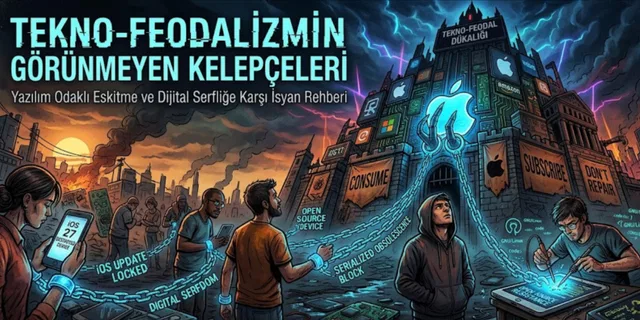
Congratulations! That notorious time of year has come again, and the trillion-dollar technology dukedoms have put their sacred relics on display — "new emojis, AI-powered laundry strings, and titanium cases with corners slightly more rounded." And of course, that magnificent digital ritual did not delay: iOS 27 was announced. Immediately afterward, the plug was quietly pulled on devices sold at kidney prices just a few years ago as the "quantum leap that would change the world," on the pretext of "technical inadequacy."
But the real subject of this article is not Apple's insidious planned-obsolescence tactics. The subject of this article is that excessively devoted, excessively visionary crowd behind the gleaming store windows who call the whip "innovation," who defend their master's castle against the slaves in the field, who perform intellectual acrobatics to rationalize every financial expropriation: techno-fetishists and fanboys.
The crowd before us has become such perfect "voluntary soldiers" in capital's consent-production mechanism that they not only fall in love with their executioner but even defend the executioner's rope invoice with rational justifications. Come, let us place one by one under the heading "Dictionary of Sacred Fanboy Fallacies" those famous defense arguments of the techno-fetishist camp and the tragic logical errors they contain.
Dictionary of Sacred Fanboy Fallacies: Illusions and Facts
Fallacy 1: "In the 90s they also said 'The Internet Came, Print Media Died' — it didn't die. People adapted; no one became unemployed overnight."
-
Category: False Analogy (Comparing Apples to Uranium)
-
The Fanboy's Fantasy: Technological transformations are always gentle; the market balances itself; obsolete professions sweetly give way to new ones.
-
What Actually Happens: The internet revolution of the 90s was a change of medium and infrastructure. The newspaper moved from paper to website; this process reduced the printer but created the digital journalist and web developer. Most importantly: what produced content and code was still the human brain (a transition from manual to mental labor). Today's artificial intelligence and software-based techno-feudal siege is not an infrastructure change but the direct liquidation of human intelligence and cognitive labor. Companies train models by stealing the open-source code and designs you produced in the past and replace you with them. As in the Figma example, we are talking about an order that paralyzes the designer overnight by cutting retroactive operating-system support. To equate the softness of the past analog-digital transition with today's monopolistic structure that throws human reason into the trash is merely chronological ignorance.
Fallacy 2: "You have to put the pros and cons of owning technology on the scales and weigh them. The pros outweigh the cons, so don't fixate on small things."
-
Category: Timid Submission and Greater Good Fallacy
-
The Fanboy's Fantasy: Since I can take photos with great filters, I can turn a blind eye to the company defrauding me, sabotaging my device, and expropriating my property rights.
-
What Actually Happens: This is precisely what Mark Fisher called "Capitalist Realism": seeing the system as so without alternatives that you accept even its crimes as "the price of progress." The fact that cars were invented and make our lives easier does not legitimize automobile manufacturers' right to remotely detonate our car engines every four years to force us to buy new models, does it? The premise "technology is useful" does not yield the conclusion "the deliberate obsolescence crimes of techno-companies are sacred." You put "comfort" on one side of the scale; capital puts your digital sovereignty on the other and lightens it.
Fallacy 3: "I buy a pair of shoes and wear them for 7–8 years. The approach of 'wouldn't it be nice if the sole were replaced' causes the shoe to let in water and grow mold. Modularity doesn't suit technology."
-
Category: Universalizing the Order One Is Victimized By Fallacy
-
The Fanboy's Fantasy: If something is repaired or a part is replaced, it must break; it is best to remain one piece (and unrepairable).
-
What Actually Happens: This argument is the tragedy of citing another industry that has itself become a victim of planned obsolescence in order to defend planned obsolescence. Before industrial capitalism, quality shoes (with Goodyear-welted stitching) were produced for a lifetime. When the sole wore out, it was replaced at the cobbler's, the leather was oiled, and they were worn for generations; they neither let in water nor grew mold. To think that the shoe sector's condemnation of you to disposable quality is an unchanging physical law of nature is proof of how perfectly consent production works. They sell you unrepairable plastics and you call it an "engineering marvel."
Fallacy 4: "If it were modular or democratic, what would happen to the device's stability and water resistance? Would I take the risk of my device not working when I need it most?"
-
Category: False Dilemma (Either Be a Slave or Remain Primitive)
-
The Fanboy's Fantasy: Only devices that are fully sealed, glued shut, and under the control of a single company can run reliably and safely.
-
What Actually Happens: The desktop computers and servers on which the heaviest, most stable professional work in the world is done (from NASA simulations to Hollywood editing) are 100% modular. You choose your RAM, graphics card, and processor yourself, and these machines run for years without crashing. If modularity brought instability, the Linux server rooms carrying the world's digital infrastructure would be filled with one-piece Apple computers. What you call "stability" is the guard treating you well; what we want is to get out of the prison.
Fallacy 5: "If a modular phone were good, that project would have succeeded back then. So the market doesn't need it — there is no alternative."
-
Category: Market Darwinism Fallacy and Information Blindness
-
The Fanboy's Fantasy: The free market always brings the best, most rational product to the fore. If modular systems worked, they would be market leaders today.
-
What Actually Happens: In capitalism, a product's dominance in the market shows not that it is technologically the best but that it is the product that best protects capital's profit cycle. The reason Google shelved the Modular Phone project it launched, inspired by Dave Hakkens's Phonebloks idea, was not technical impossibility; it realized that this project would completely undermine that sacred "spray billions of dollars in fresh money every year" cycle in the smartphone market. If you can use a phone for 15 years by replacing only the broken part, whom will the tech giants sell to, and what, in the next quarter? Capital removes long-lived technologies that cut the branch it sits on from the market or kills them before they are born. Does the fact that fast food is the best-selling food in the world show that it is the highest-quality and healthiest nourishment?
Anatomy of Software Shackles: Figma, M1, and the Proprietary Fraud Theater
Let us come to that famous "+2–3 more years" delusion. Today, cloud-based tools like Figma, which hold the entire design/software world captive, work in such harmony with the techno-cartel behind them that the moment your operating system falls one notch behind the manufacturer's artificial calendar, you are thrown out of the ecosystem. Your phone physically works, the screen is crystal clear, but you cannot do your job.
What is even more tragic is that the techno-fetishists who worshipped Apple when it introduced the M1 chip in 2020 are now ready to applaud Apple deliberately withholding its own artificial intelligence (Apple Intelligence) from M1 processors. The M1 is still so powerful that it cannot drive you to the store; that is why they erect the "artificial intelligence" barrier in software before it.
If this situation seems to you like a "technological necessity," let us look at the penalties cut by competition authorities — that is, the cartel's official criminal record:
- Apple and "Batterygate": For secretly slowing old iPhones without users' knowledge, it was fined 25 million euros in France and 10 million euros in Italy; in the US it agreed to pay 500 million dollars in compensation.
- Samsung: Convicted in Italy for deliberately slowing Galaxy Note 4 devices to sell new models.
- Printer Cartels (HP, Epson, Canon): They underwent global investigations for hidden software codes that display "cartridge empty" warnings while ink still remains inside.
You still believe and applaud the "we are eco-friendly, we are carbon neutral" lies flying through the air at launch events; while they kill your working device through software assassination, they create billions of dollars in e-waste mountains behind them.
Real Technological Progress: The Alternative Ecosystem They Say "Doesn't Exist"
The greatest delusion of techno-fetishists is believing that nothing can be produced outside the boundaries of capitalism. Yet behind Silicon Valley's enormous billboards, repairable and free hardware/software projects that return property rights to the user are running at full speed. The concrete fortresses of that parallel universe the fanboys say "doesn't really exist":
Modular and Free Phones
- Fairphone: The greatest rebuke drawn against the smartphone market's disposable model. It is 100% modular. Screen cracked, battery worn out? With the small screwdriver from the box, you order the part yourself and replace it in five minutes. It is also water-resistant and runs stably. https://www.fairphone.com
- Shiftphones: This Germany-based modular phone project also offers an alternative to capitalist plunder by producing environmentally friendly, fully repairable hardware that meets fair-trade standards. https://www.shiftphones.com
- PinePhone (Pine64): A truly free tool with hardware privacy switches (kill-switches), on which you can install whichever Linux distribution you want, open-source down to the mainboard. https://www.pine64.org
Modular and Open Hardware Computers
- Framework Laptop: The most rational answer the computer sector has given to Apple. It ends the absurdity of RAM and storage soldered to the motherboard. You plug and unplug whichever port you want (Type-C, HDMI, card reader) like Lego. When the mainboard (CPU) ages, you replace only the mainboard and keep your case and screen. https://frame.work
- MNT Reform: An independent computer architecture with fully open-source hardware schematics, a mechanical keyboard, trackball, and every cell customizable by the user, cleansed of the surveillance software chips of monopolistic companies. https://mntre.com
From Micro to Macro: "House Slaves" Who Praise the Bars of Their Cage
When open-source advocates and digital sovereignty defenders expose this mechanism, the fanboy immediately shouts with that protective reflex: "You're jumping from micro to macro in an instant!" Capitalism wants precisely this. You focus only on the 120Hz fluidity of the screen in your hand (micro); do not think about the children enslaved in Congolese mines for your device's battery, or the e-waste ghettos of Africa (macro). Do not connect the dots so the wheel keeps turning.
Writers and programmers who work in the technology sector and fiercely defend this order are like "house slaves" of the digital plantation. Because they are fed a little better than the slaves in the field, because they are given nice computers and high salaries in foreign currency, they defend their master's castle with their lives. They cannot even imagine another world — a democratic model in which knowledge and technology belong to the people — because that vision shakes their comfortable cages.
Final Curtain: Closing Time for the "Useless Class" of the Future
Dear techno-fetishists, faithful congregation of "as long as it works for me" comfort; you who defend these monopolistic ecosystems like sports teams are in fact the most tragic victims of what you worship. With the qualified white-collar intelligence you boast of, the day when you will read the layoff notice sent by those devices you buy spending thousands of dollars every year is very near.
Throughout history, technological progress has always replaced muscle power, and humanity has always taken refuge in that consolation: "Machines take our muscles but our intelligence remains ours; we will create new jobs." When the internet came in the 90s, this happened too. You wrote code, made designs, and saw yourselves as a protected bourgeoisie outside that macro destruction.
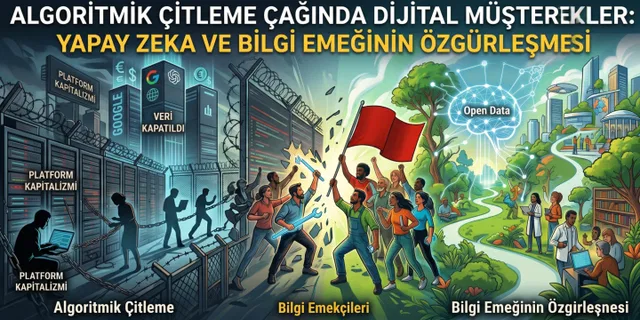
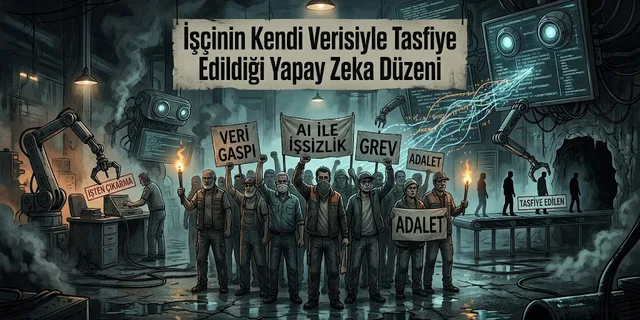
However, the monopolistic artificial intelligence and technology arrangement you defend today is replacing "skilled mental labor requiring intelligence" for the first time in human history. In this new order that Nick Srnicek calls "Platform Capitalism" or Yanis Varoufakis calls "Techno-Feudalism," the ruling classes will no longer need broad masses of people even as an "exploitable working class"; in Yuval Noah Harari's phrase, you will become "the useless and insignificant class."
The "stability" and "magnificent optimization" you watch with admiration while defending your master's castle is nothing other than the perfection of your own liquidation. When the companies you worship make you unemployed tomorrow, that qualified white-collar intelligence you boast of will be worthless in the technological junkyards of the ghettos. Your era is over — you just don't know it yet.
Another World Order Is Possible (It Is Not Sold in Boutique Stores)
The only model in which technological progress leaves people unemployed, hungry, and helpless is capitalism. When scientific and technological advances are purged of the profit hunger of monopolistic companies and become the common heritage of humanity (Digital Commons), an entirely different world arrangement is possible:
-
The Internet Itself: It was built as an open protocol (TCP/IP) with public funds so that scientists could share data freely. If the internet had been invented by Apple or Microsoft today, you would probably be paying a monthly subscription fee to enter every website.
-
A Free Space for Life: Today the open-source world has built a magnificent universe against this dependency network erected by monopolies. Computers companies throw away come back to life with GNU/Linux (Mint, Ubuntu, Debian); Nextcloud you set up at home protects your data instead of iCloud; decentralized Mastodon and Pixelfed reject algorithmic manipulation instead of X or Instagram.
When artificial intelligence and automation take over mental routine work, this need not condemn humanity to hunger; it can be used to liberate humanity from 40-hour weekly slavery. Production processes can be rationally planned not according to the artificial consumption frenzy pumped by advertising agencies but according to society's real needs and the planet's ecological limits.
Stop praising how kind the guard is and how "stable" and shiny the prison bars are; stop excusing today's financial expropriation with nostalgia for the past. At the turn ahead, you will either accept becoming the "useless and insignificant class" these monopolistic companies will condemn you to, or you will be part of that great awakening that returns ownership of technology to the people. However comfortable your cage, it does not change the fact that you are behind bars. Wake up, unite, and take back your digital sovereignty!