Parties Are Armies, Voters Are Soldiers: Curtis Yarvin's Post-Election Prescription
The State Project Written in the Court of Techno-Capital, and the Class's Answer

The moment the US midterms ended, Curtis Yarvin, one of techno-capital's favourite ideologues, published a piece titled "The Midterm Postmortem" (Gray Mirror, 4 November 2026). What first brought the piece to us was Baran Yıldırım's assessment on X. Yıldırım summarises the piece's three basic claims and recalls Poulantzas's concept of "authoritarian statism". In this piece we want to start from that observation and open the subject a little further: who is Yarvin, what is he saying, why is he saying it now, and whose class interest do these words express?
This morning, in US Election Results: A Blue Wave, the Same Shore, we discussed the election results and why the Democrats can never be an alternative. This piece is its complement. We look at how the ideologue in the defeated side's court draws a project for the state out of defeat.
First, the Summary: Eight Theses
- Yarvin is not an "interesting thinker". He is the ideologue of a fraction of a class. He is the intellectual supplier of Peter Thiel's circle, of Silicon Valley capital that has grown tired of democracy, and of the Republicans of the Vance generation.
- The piece's main claim is this: the United States is not a republic. It is "a Third World democracy in which the parties are armies". An election is a war. The ballot paper is a bullet.
- The solution he proposes is not more democracy. It is less: a disciplined party with a single centre, an executive that turns Congress into a machine for approval, a presidency freed from legislative and judicial oversight, candidates run from the centre, and a party app that tells the voter what to do and even votes in the voter's place.
- In Yarvin's own words, the aim is a "shadow one-party state". He legitimises this through the fear that "the Democrats are going to build a one-party state anyway". The accusation and the prescription are the same thing.
- The lineage of this thought runs to Carl Schmitt: politics is the distinction between friend and enemy, and the sovereign is the one who decides on the state of exception. Schmitt placed this thought at the service of the Nazi state in 1933.
- Poulantzas's concept of "authoritarian statism" is a good tool for understanding today, but what Yarvin proposes goes beyond it: the privatisation of state sovereignty, as if it were the management of a company.
- The true kernel in Yarvin's diagnosis is that bourgeois democracy has been hollowed out. But the conclusion he draws is the opposite. We want to fill that hollowed-out democracy with the people's control. He wants to throw the shell away as well.
- In this argument the place of the class is neither "Republicans against Democrats" nor the liberalism of "let us protect the institutions". The place of the class is the independent politics of organised labour, outside the two fractions of capital.
Let us open these one by one.
Who Is Curtis Yarvin?
Curtis Yarvin became known for the blog Unqualified Reservations, which he wrote between 2007 and 2014 under the name "Mencius Moldbug". He is one of the founding names of the current called "neo-reaction", or, in the name given by the English philosopher Nick Land, the "Dark Enlightenment".
His basic ideas can be summarised roughly as follows:
- The "Cathedral": the network of progressive institutions, made up of universities, the major media and the public bureaucracy, which he describes as "real power". In his account it is not elected politicians who govern. It is this network.
- The "CEO-monarch": the state run like a company, by a single executive responsible to its shareholders. In place of democracy, an "efficient" sovereign.
- "RAGE" (Retire All Government Employees): the proposal to retire every public employee and build the state apparatus again from zero.
- Formalism: whoever holds power in fact should be given power in law as well. That is, to legalise the power of the powerful.
What makes Yarvin important is not the originality of his ideas. It is whose ear they reach. Peter Thiel is among the investors in the company that runs Urbit, the project Yarvin founded. Today's vice president, J. D. Vance, defended in a podcast in 2021, naming Yarvin, the idea of "firing the bureaucrats and putting our own people in their place". So this is not the fantasy of a fringe blogger. It is a programme that circulates in the corridors of power.
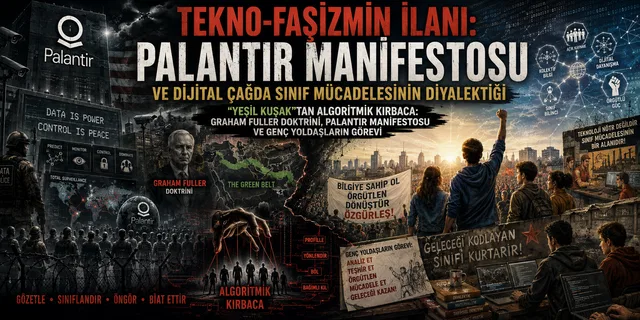
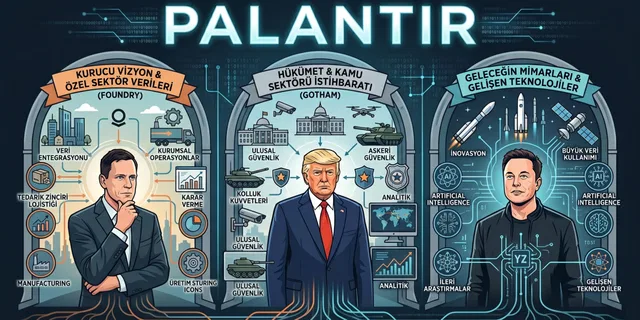
We took up this circle before, in the Palantir manifesto and in From Futurism to Techno-Fascism. The person who writes today's political programme along the line that runs from Marinetti to Andreessen is precisely Yarvin.
What Does the Piece Say?
Yarvin's piece begins with the claim that the Republicans lost an election they could have won "because they do not live in reality". He blames the voters, the commentators, the politicians and the donors together. Then he moves to his real thesis.
There Is No Republic, There Is an Army
According to Yarvin, the United States is not a republic in any real sense. He compares it to the late Roman Republic: the rival parties are armies, and elections are a war for power. In his own sentence, the United States is "a Third World democracy in which the parties are armies".
In this picture the Democratic Party is a disciplined army, and the Republican Party is only a label. Every Republican politician is "a one-person party", raising his own money and following his own agenda. Wars, Yarvin says, are fought with hatred and fear. Agendas such as a programme, or "the cost of living", do not win this war.
The Voter Is a Soldier, the Ballot a Bullet
This metaphor runs through the whole piece. The voter is not a citizen, but a soldier, and must be disciplined. The Democrats are wolves, and Republican leaders must be the sheepdogs that fight the wolf and herd the sheep. The president is a mouse caught in a trap.
2028: "The Last Chance"
Yarvin treats the 2028 election as decisive. He claims that if the Democrats win in 2028 the United States will turn into a permanent one-party state, that California is the preview of this, and even that elections have been largely empty since 1933, that is, since Roosevelt. If the Republicans do not put the Democratic Party "out of action as an effective force" in 2028, the United States will turn into "a nuclear-armed Argentina" in a world dominated by China.
The Prescription
This is the part that needs attention. Yarvin's proposals are these:
- Trump should resign, and Vance should enter 2028 as the incumbent president.
- The president should place himself as "the rebel in power" and break up "the regime" and its narratives.
- A disciplined party should be built in two years. One option is "a compliant Congress", like the one in Roosevelt's time, approving laws that come from the White House. The other is a constitutional reading that frees the executive from legislative and judicial oversight and reduces accountability to election and removal from office alone.
- Candidates should be managed "like actors", and money and cadre should be gathered at the centre.
- Voting should be gamified. A party app that tells the voter what to do and, in the ideal case, casts the vote automatically in the voter's place. Yarvin openly describes voting as an "augmented-reality game".
- A shadow state should be built: a party line, an intelligence body that will "verify" this line, a media operation, and, in time, education run by the party. All of it is to be run as a private cost centre.
Yarvin gives this structure a name of his own: a "shadow one-party state".
A Small Note
Baran Yıldırım's summary catches the spirit of the piece correctly. One refinement needs to be added. In the text Yarvin loads the danger of a "one-party state" onto the Democrats, and presents his own proposal as a "defence" against that danger. But the name of what he proposes is, again from his own mouth, a "shadow one-party state". To accuse your rival of building a one-party dictatorship and to demand the same thing for yourself is a method known since Schmitt: the one who declares the state of exception is also the one who defines the threat.
Schmitt's Shadow: Friend, Enemy, and the State of Exception
As Yıldırım rightly recalls, Yarvin's intellectual kin is Carl Schmitt. Two of Schmitt's famous claims form the skeleton of Yarvin's piece.
First, the essence of the political is the distinction between friend and enemy (The Concept of the Political, 1932). For Schmitt, politics is not compromise or debate. It is the determination of an existential enemy. Yarvin's thesis that "parties are armies" is the current translation of this.
Second, the sovereign is the one who decides on the state of exception (Political Theology, 1922). The legal order is the business of ordinary times. Real power belongs to whoever decides the moment at which the law will be suspended. Yarvin's proposal that "the executive should be independent of the legislature and the judiciary" is a proposal to turn the state of exception into a permanent form of rule.
Schmitt did not leave these ideas as an abstract philosophy. On 1 May 1933 he joined the Nazi Party, and he was known as the regime's "crown jurist". The conclusion he drew from Weimar's parliamentary crisis was not to strengthen parliament, but to hand it to a "decision-maker". What Yarvin is doing today is the same. He diagnoses the crisis of the institutions, and then proposes to remove the last remaining oversight functions of those institutions as well.
Yıldırım's second note also matters. Alex Karp, Palantir's CEO, described Palantir a few days ago as a philosophical project inspired by Hegel. It is again the Schmitt tradition that bends Hegel's philosophy of the state toward a monarchical state and against liberalism. On one side, the claim of a "state of reason" governed by data. On the other, the sovereign who decides. Techno-capital's two hands are attached to the same body. We discussed this relation in The Panopticon's Doorkeeper, through the fact that Palantir and the artificial-intelligence companies use the same instrument.
Poulantzas and Authoritarian Statism
In State, Power, Socialism (1978), Nicos Poulantzas proposed the concept of "authoritarian statism" for the form of the state in late capitalism. The concept had three components:
- the state's growing intervention in every area of social and economic life,
- the decline of the institutions of parliamentary democracy, and the gathering of power in the executive and the administrative apparatus,
- the restriction of political liberties scorned as "merely formal".
Poulantzas predicted that, as a result, the balance between legislature and executive would be replaced by "a dominant mass party" interlocked with the state. Yarvin's proposals of a "compliant Congress" and a "party-state" are almost a textbook example of this description.
But there is a further layer in Yarvin's project that was not visible in Poulantzas's time: the privatisation of sovereignty. Running the shadow state as "a private cost centre", building intelligence, media and education through the party and the donors, managing the voter through an app... This is more than the state becoming interlocked with capital. It is capital building the state apparatus directly. Yarvin's old idea of the "CEO-monarch" turns here into a practical organisational chart.
Why Now? The Class Meaning of the Defeat
To read Yarvin's piece only as a far-right provocation falls short. The question is this: why does this piece appear on the very morning after the election defeat, and why is it drawing so much attention?
First, techno-capital cannot afford to lose at the ballot box. In Trump's second term, artificial-intelligence companies, the platforms and defence-technology capital built an unprecedented closeness with the state: public contracts, regulatory exemptions, access to data, and support for energy and data centres. We described this closeness in detail in ABD Ara Seçimleri, Tekno-Sermaye ve Algoritmik Siyaset (in Turkish). Losing the election makes the future of this arrangement uncertain. Yarvin's proposal is to remove that uncertainty by neutralising the election itself.
Second, the legitimacy crisis of bourgeois democracy is real. Yarvin's diagnosis that "the institutions have lost their function" touches the intuition of millions of people. Wages are being eaten away, housing is out of reach, healthcare is a luxury. Neither party solves this. Yarvin takes this anger and turns it not against the institutions, but against the last remaining democratic scraps of the institutions.
Third, the conflict between the fractions of capital is hardening. Yarvin's language of "war" is not the language of a people's war. It is the language of a fight for power between two blocs of capital. On one side stand the Democrats, backed by finance and "liberal" technology capital and by the university-media-bureaucracy network. On the other stands the Republican wing, backed by the Thiel-Musk-Andreessen circle and by fossil-fuel capital. What Yarvin calls the "Cathedral" is the ideological apparatus of the rival fraction of capital.
A reader's comment on Baran Yıldırım's post needs to be mentioned here as well. The comment asks whether this means "politicians, regardless of party, silencing the people together in order to protect their wealth". The intuition points somewhere true: both parties are parties of the capitalist order. But what Yarvin proposes is not an elite compromise. It is the opposite, one fraction "permanently neutralising" the other. The silencing of the people will be the result of this fight, not its aim. Telling the two apart matters, because the strategy against an elite compromise is not the same as the strategy against one fraction's open attempt at dictatorship.
Bonapartism, Caesarism, Fascism: Three Mirrors from History
The Marxist tradition has a rich vocabulary for situations of this kind.
In The Eighteenth Brumaire of Louis Bonaparte, Marx shows that when the bourgeoisie can no longer manage its own parliament, it becomes willing to give up political power, not in order to preserve that power, but in order to preserve its social power. "To sacrifice the crown in order to save the purse" is the essence of Bonapartism. Yarvin's proposal that "Congress should be a machine for approval" shows that a section of the bourgeoisie is ready for the same bargain today.
Gramsci's concept of "Caesarism" describes the breaking, by a "charismatic" figure, of a balance between two forces that cannot destroy each other. Yarvin's proposal to set Vance up as "the rebel in power" is a planned version of this.
The definition Dimitrov gave in 1935, at the Seventh Congress of the Comintern, is still the clearest: fascism is the open terrorist dictatorship of the most reactionary, most chauvinist and most imperialist elements of finance capital. Dimitrov's warning was this. Fascism is not one bourgeois government replacing another. It is the replacement of one form of bourgeois rule, bourgeois democracy, by another form, open terrorist dictatorship. And this passage is prepared inside bourgeois democracy.
It would be hasty to say that Yarvin is openly defending fascism today, but the direction of the piece is clear: neutralise elections, remove oversight, destroy the rival, discipline the masses like soldiers, and run the media and education from a single centre. These are the stones of the transition Dimitrov described.
The Algorithmic Army: What Does a "Voting App" Mean?
The part of the piece most likely to be missed, and the most important from our point of view, is the proposal to "gamify" voting. Yarvin proposes a party app that tells the voter what to do and, in the ideal case, votes in the voter's place.
This proposal is a natural continuation of what we have written on algorithmic politics (in Turkish). For ten years platform capitalism has been reshaping politics through targeted advertising, recommendation algorithms and the attention economy. Yarvin proposes one step further: that the voter hand their will directly to an app.
Here we see the process we call mental Taylorism carried into politics. The logic that transfers the worker's knowledge to the machine in the factory, and reduces the worker to a limb that only follows instructions, here transfers the citizen's political judgement to an app and reduces the citizen to a "soldier" who follows instructions. Task list, points, badge, ranking... The resemblance between the way a courier app manages the worker and the way Yarvin would manage the voter is not a coincidence. Both are techniques of management designed by the same class, with the same instruments, for the same purpose.
A Comparison: Yarvin's Reading and the Class's Reading
| Question | Yarvin's answer | The answer from the class window |
|---|---|---|
| Why do the institutions not work? | The progressive elites called the "Cathedral" have seized real power | Bourgeois democracy is the form of capital's rule; the institutions never fully worked for workers, and today they are insufficient for capital as well |
| What are the parties? | Armies trying to destroy each other | The political representatives of different fractions of the same class |
| What is the voter? | A soldier who must be disciplined | A mass of workers left unorganised and squeezed between two options |
| What is the solution? | A disciplined party, an unsupervised executive, a shadow state | The independent organisation of workers, opening the institutions to popular control, the socialisation of property |
| Where does the danger come from? | From the Democrats' one-party state | From the pressure on labour growing, whichever fraction of capital wins |
| What is technology? | An instrument for managing the voter | A product of social production; what decides is in whose hands it is, under whose control, and to whose benefit |
| What is democracy? | An inefficient shell that should be removed | A field of struggle whose inside must be filled with class power |
A Correct Diagnosis, the Opposite Conclusion
There is a kernel in Yarvin's piece that we too can share: elections in the United States are not the expression of a real popular will. The institutions answer to money, not to the people. The two parties are two faces of the same order. We have been saying this for years.
But the conclusion drawn from the diagnosis is completely the opposite. Yarvin says "democracy does not work, so let us abolish democracy altogether and formally give power to whoever already holds it". In whose hands is power today? Capital's. What Yarvin calls "formalism" is capital's actual power acquiring a legal title.
Our conclusion is this: if democracy does not work, it has to be made to work, which means opening economic power to the people's control as well. Political equality cannot last on top of economic inequality. As long as the boss's dictatorship continues in the factory, the office and the platform, equality at the ballot box will remain a shell. Yarvin wants to break this shell so that the power of capital stands naked. We want to fill the inside of the shell so that power passes to the workers.
Those of us who look from Turkey know this distinction well. 12 September also arrived with the claim that "the institutions do not work, the country is on the edge of civil war", and the result was the closing of the unions, the crushing of wages, and the enforcement of the 24 January decrees at bayonet-point. Every coup discourse that says "parties are armies" wants, in the end, only one army left standing. That army is never the workers' army.
And the Democrats?
It would also be wrong to read this piece and conclude that "then we must support the Democrats". As we explained this morning in A Blue Wave, the Same Shore, the Democratic Party is also a party of the same capitalist order. Bush built the surveillance apparatus, Obama normalised it, and Trump turned it inward. Palantir's public contracts grew under both parties. The network of institutions Yarvin calls the "Cathedral" is also the apparatus of another fraction of capital, not of the workers.
The problem with the liberal response is that it defends "the institutions" against Yarvin. Yet the crisis of the institutions is real, and it cannot be overcome by defence alone. The masses see, by living it, that the institutions do not work for them. A liberalism that answers this experience with "the institutions are good" hands the anger to Yarvin. The Social Democratic defenders of Weimar made this mistake too, in the Germany of the 1930s.
The right answer is to accept the crisis of the institutions and propose a way out from the standpoint of the class: make the institutions accountable to the people, socialise economic power, and make it possible for workers to build their own organisations.
Dear Young Comrades
Names like Yarvin will be offered to you as "brilliant", "brave", "rule-breaking" thinkers. You will often meet them on Silicon Valley podcasts, on YouTube channels, and in "red pill" talk. What they say will look anti-system at first glance: the institutions are rotten, the media lies, elections are a theatre.
Some of this may be true. But always ask these three questions: In whose hands? Under whose control? To whose benefit? In whose hands will the state Yarvin proposes be? Thiel's, Musk's, Andreessen's. Under whose control? Nobody's, because removing oversight is the core of the proposal. To whose benefit? The monopolies that gain most from the crisis of the institutions, and that will grow further by deepening the crisis.
Telling anti-system feeling apart from the system-critique of capital's most reactionary wing is, today, the first test of class consciousness. A real critique of the system always asks the question of property. Yarvin never asks this question, because his project is built on the inviolability of property.
Do not forget one more thing. Yarvin says "voters are soldiers". Workers are nobody's soldiers. A class that builds its own organisations, defines its own interests and takes its own future into its own hands does not have to surrender either to Yarvin's "shadow state" or to the liberals' "institutions".
Concrete Tasks
- Know this ideology, and make it known. Concepts such as neo-reaction, the "network state" and "private cities" have begun to enter Turkey as well. Write, translate and discuss texts that say plainly whose project these are.
- Follow techno-capital's political programme. Regularly follow, and expose, not only the products of the Thiel, Musk, Andreessen and Karp circle, but their political writing, their manifestos and their donations.
- Stay awake to "gamified politics". Against the handing of political participation over to apps, points and automatic nudges, defend face-to-face, argumentative, collective decision-making. This is also the core of the model we proposed in Organising 2.0: technology can be the organisation's instrument. It cannot take its place.
- Do not fall into the trap of liberal defence. Do not stop at "let us protect the institutions". Put on the agenda the accountability of the institutions to the people, economic democracy, and the socialisation of property.
- Strengthen international solidarity. Build relations with the unions, the organisations of technology workers and the socialist movements in the United States that are resisting this process, and carry their experience into Turkish.
- See the parallels in Turkey. An executive slipping free of oversight, a judiciary turned into an instrument, an election presented as a "war of survival": none of this is foreign to us. We are already living part of what Yarvin proposes. Telling the world about this experience is also our task.
Yarvin says "an election is a war". He may even be right, but on the wrong front. The real war is not between Republicans and Democrats. It is between those who live by their labour and those who seize the labour of others. In that war the bullet is not the ballot paper. It is organisation. And no app, no shadow state and no CEO-monarch can build that organisation in our place.
The machine is new. The chain is old. What breaks the chain is, again, organised labour.
Sources
- Curtis Yarvin, "The Midterm Postmortem", Gray Mirror, 4 November 2026 (paywalled).
- Carl Schmitt, The Concept of the Political (1932) and Political Theology (1922).
- Nicos Poulantzas, State, Power, Socialism (1978).
- Karl Marx, The Eighteenth Brumaire of Louis Bonaparte (1852).
- Antonio Gramsci, Prison Notebooks, notes on Caesarism.
- Georgi Dimitrov, The United Front Against Fascism, report to the Seventh Congress of the Comintern (1935).
Related pieces on Knowledge Commons
- US Election Results: A Blue Wave, the Same Shore
- ABD Ara Seçimleri, Tekno-Sermaye ve Algoritmik Siyaset (in Turkish)
- The Declaration of Techno-Fascism: The Palantir Manifesto and the Dialectic of Class Struggle in the Digital Age
- From Futurism to Techno-Fascism
- The Panopticon's Doorkeeper
- 12 September: The History, Balance Sheet, and Present of a Class Coup
- Organising 2.0: An Idea for a Justified Revolt
This piece is part of the "US Midterm Dossier" and is shared under the CC BY-SA 4.0 licence. You may copy, change and share it if you credit the source.