Albatros Computing Cooperative and Software Cooperativism 101
We Saw a Future in Karaburun

We Saw a Future in Karaburun: Albatros Computing Cooperative and Software Cooperativism 101
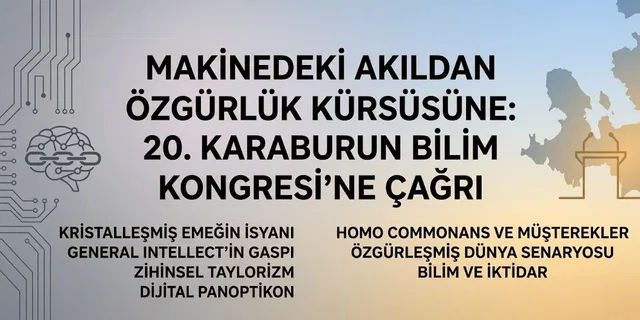
At the 20th Karaburun Science Congress we found our theory not on paper but in a team sitting across the table: Albatros Computing Cooperative. This essay does two jobs — it explains from scratch, in plain language, what a software cooperative is; then it introduces this sole living example in Turkey and its larger family in the world.
Dear Young Comrades,
In Karaburun we heard a lot of ideas and read a lot of papers. But the most instructive moment of the congress was not in a session hall; it was in conversation: we met comrades from Albatros Computing Cooperative.
It mattered to us, because for months on this page we had been working theoretically on the question “can software labor be organized otherwise” — cooperatives, open source, commons. Meeting Albatros showed that the answer to that question is not a utopia but a team that has been working in practice in Istanbul for eight years.
So we split this essay in two. First, in case you have never heard of it: what a software cooperative is, at the 101 level. Then: who Albatros is, and how many like it there are in the world.
Part One: Software Cooperative 101
How does it differ from an ordinary software company?
In an ordinary software company it works like this: one or a few capital owners found the company, hire developers for a wage, decisions are made by the board (that is, the capital owners), and profit goes to them. The developer produces, but has no say over what will be produced, to whom it will be sold, or how the proceeds will be distributed.
In a software cooperative that cycle is broken. The person who writes code is also a member-owner — producer, decision-maker, and beneficiary are the same person. The basic principle is simple: one person, one vote. Unlike in a company, whoever holds more shares does not hold more voice; everyone’s vote is equal.
We can summarize this in three questions — the three we keep asking on this page:
In whose hands? Under whose control? For whose benefit?
In an ordinary company the answer to all three is the same: the capital owner’s. In a cooperative the answer to all three is the same: the laborer’s who produces.
Is this really possible?
Let us be honest here: a cooperative is not a magic formula. It must compete under market conditions, find clients, issue invoices — it is not a charity. The difference is with whom decision and proceeds stay while it does so. The second part of the essay shows how this works not on paper but in practice.
Is it legally possible in Turkey?
Yes — and this is an important point, because most people do not know it. Cooperatives Law No. 1163 allows at least seven people to come together and found a cooperative. Turkey has a long tradition from agricultural cooperatives to consumer cooperatives; the problem is not with the cooperative form itself, but that almost no one has tried it seriously in the computing sector.
Part Two: Albatros Computing Cooperative
Eight years, 23 projects, a single principle
Albatros Computing Cooperative is an Istanbul-based software cooperative that runs on a worker-owner model. Their first meetings began at the end of 2018; their official founding was completed in 2022. Today, with eight worker-owners — developers, a designer, analysts, a coordinator — they have delivered 23 completed projects in web development, application/product development, consulting, and more recently artificial intelligence/LLM solutions.
A sentence in their manifesto summarizes exactly the three questions we set out in the first part of this essay:
"If we are the ones who produce, we think those who decide and those who benefit should be us as well."
This sentence is not a slogan; it is the cooperative’s way of working itself. Decision, responsibility, and proceeds are shared equally among the members; management is horizontal, not hierarchical.
Why we are telling this especially to “young comrades”
Because for a young person entering or thinking of entering the computing sector, the issue is not an abstract ideological debate but a concrete career question: will you work without a contract, stay forever “junior,” live in fear of losing your job — or work in a structure where you receive the return on what you produce directly? Albatros is proof that the second answer is not a fantasy.
Part Three: Albatros Is Not Alone — An Ecosystem from the World
When Albatros is set beside its peers worldwide, it becomes clear that it is part of a large and growing movement. A brief introduction:
FACTTIC (Argentina) — The national federation of computing cooperatives; 41 cooperatives, more than 600 people. A network in which individual cooperatives pass knowledge, work, and solidarity to one another.
CoopCycle (Europe) — A federation of bicycle courier cooperatives. They share their software under a license they call “Coopyleft”: only cooperatives and associations may use it commercially; for-profit companies may not.
Mensakas (Barcelona) — A food-delivery cooperative founded by former Deliveroo/Glovo couriers; a member of the CoopCycle network. A real employment contract for everyone.
SMart (Belgium) — A freelancer labor cooperative with 90,000+ members across nine European countries. It invoices on the freelancer’s behalf and in return provides social security and a payment guarantee within seven business days at latest.
Liga Coop (Brazil) — A national passenger-transport federation of 12 cooperatives from eight states; a shared app against Uber and 99.
Núcleo de Tecnologia do MST (Brazil) — The technology unit of the Landless Workers’ Movement; develops open-source software.
SEWA (India) — A vast federation organizing women workers in the informal sector; designs platform cooperatives together with the workers themselves.
Gamayyar (Kenya) — A new African tech workers’ cooperative bringing together content moderators and data labelers.
None of these became giants alone — all of them grew inside a federation or network. That is a guide for Albatros too: a single cooperative stays small; cooperatives that link to one another scale.
So what now?
This meeting is a starting point for us. In the dossier ahead, drawing on Albatros’s practice and these examples in the world, we have prepared a structural model and shared code of conduct for how such a network could be built in Turkey — on the logic of node, union, shared frame. Open to everyone interested.
And our real call is this: if you too work in a software cooperative or are thinking of founding one, write to us.
We want this page to stop being a one-way theory text and become a meeting point.
Sources
- Albatros Computing Cooperative, institutional website.
- Platform Cooperativism Consortium, directory and resource site.
- FACTTIC member list and federation information, P2P Foundation Wiki.
- CoopCycle Federation, institutional website and license text.
- Mensakas, institutional website.
- SMart Cooperative, institutional website.
- Liga Coop / Federação Nacional das Cooperativas de Mobilidade Urbana news, Extra Classe.
- Academic article on the Brazilian solidarity economy and platform cooperativism (Núcleo de Tecnologia do MST / Sementes case), Internet Policy Review.
- SEWA, institutional website.
- Gamayyar African Tech Workers Cooperative, founding page.
- Cooperatives Law No. 1163, Article 2.
- 20th Karaburun Science Congress, official website.