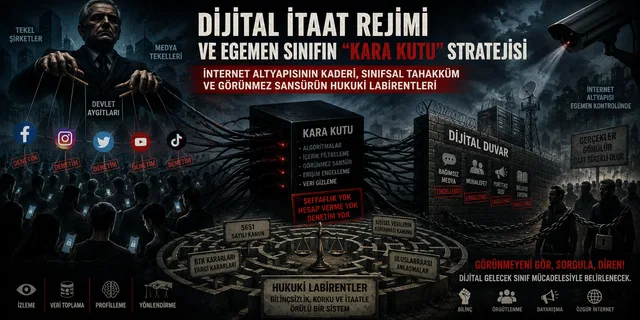
The Child-Protection Excuse of Those Who Begrudge Children a Single Meal, and the Surveillance Gate on Social Media
An Empty Plate, a Registered Account

The Child-Protection Excuse of Those Who Begrudge Children a Single Meal, and the Surveillance Gate on Social Media
An Empty Plate, a Registered Account
Dear Young Comrades,
To understand how much a politics values children, look not at its speeches but at its budget and its votes. Love of children is cheap at the lectern; it is expensive on the plate.
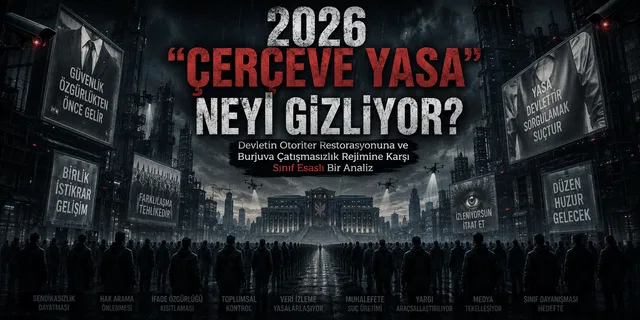
On 1 November 2026 a social media ban for under-15s comes into force in Turkey. The justification is "protecting our children". In this piece we take that justification seriously and first explain exactly what the law brings for social media users. Then we ask a question: What else has a government that wants to protect children done for children? We answer it with documents and show what the law is really aimed at. Each section opens with a short summary, followed by the details.
Short summary
- New rules for social media accounts: From 1 November 2026, opening a new account will require an age token obtained from e-Devlet, the state's e-Government portal. No accounts for under-15s; accounts for 15 to 18-year-olds will be restricted. All existing accounts in Turkey, adults' included, will be closed unless verified by 31 March 2027.
- The surveillance side: The token is produced by e-Devlet; the record of who requested it and when stays with the state. The token's technical guideline is secret. The same law requires blocks on political content to be enforced within one hour and the re-uploading of blocked content to be prevented with artificial intelligence. A plan to match every account with a national ID number is next in line in the new judicial package.
- And what has been done for children: This law does not put a single bite on a child's plate. Here is the same government's report card on children:
- Food: Proposals for one free meal a day in schools have been rejected in Parliament again and again by the votes of the AKP and the MHP. Before the 2023 election, "free meals for 5 million students" was promised. After the election, the programme was suspended everywhere except the earthquake zone and bussed schooling. Today only 1 million of more than 18 million students receive free meals, the great majority of them children in bussed schooling.
- Poverty: According to Eurostat data, Turkey ranks first in Europe for child poverty and risk of social exclusion: a rate of 37.6 per cent, roughly 8 million 122 thousand children.
- Labour: In the 2025–2026 school year at least 95 child workers died in workplace homicides. Over the past 13 years the figure is at least 862. More than 400 thousand children are in the MESEM system, which sends them to workplaces under the name of school.
- At the state's own door: On 11 October 2026 in Edirne, 13 of 14 unaccompanied migrant children placed in a children's home complex run by the Ministry of Family went out with permission to visit a shop and did not return. The ministry's first reaction was to declare that the children were not under the state's "permanent protection and care status".
- Dormitories: In Konya Taşkent in 2008, 17 students and a teacher died; in Adana Aladağ in 2016, 11 schoolgirls and a carer died, both in unlicensed dormitories. In Karaman, a teacher was sentenced to 508 years in prison for abusing children housed in homes linked to the Ensar Foundation and KAİMDER. Permission to investigate public officials came only years later.
- Housing and budget: Of roughly 4 million university students, only a quarter can find a place in a state dormitory, and KYK capacity fell this year. The share of investment in the Ministry of National Education budget fell from 17 per cent in 2002 to 8 per cent in 2026. Turkey spends roughly one third of the OECD average per primary-school pupil.
Conclusion: Here the child is not protected but used. Feeding a child is expensive and wins the government nothing. Registering the citizen is cheap and wins it lasting power. The real purpose of the law is control; the child is the most indefensible cover for that control.
Now let us turn to the details.
Part one: What does the social media law bring?
In brief: After 1 November 2026, the precondition for using a social media account in Turkey is obtaining an age token from e-Devlet. The rule applies not only to children but to everyone. The law also contains provisions that speed up the blocking of political content and lays the infrastructure for a next step that would match every account with an identity.
What will you need to use a social media account?
In brief: When opening a new account, you will log in to e-Devlet, get an age token and upload it to the platform. If you do not verify your existing account the same way by 31 March 2027, it will be closed. No accounts under 15; accounts for 15 to 18-year-olds are private, have no live streaming and are tied to a parental panel. Platforms will later be able to suspend an account on the basis of their own age estimates. The technical guideline that determines how the token works is secret.
Let us look step by step at exactly what the law and the regulation require. There are two underlying texts: Law No. 7578, adopted on 22 April 2026 and published in the Official Gazette on 1 May (Alomaliye), and the Regulation on the Provision of Separate Services Specific to Children and on Age Verification by Social Network Providers, published by the Cyber Security Directorate on 10 October 2026 (Official Gazette, issue 33396). Both come into force on 1 November 2026 (Pekin Law, Euronews Turkish).
Who does it cover? All domestic and foreign social network providers accessed from Turkey. The regulation does not list platforms one by one, but it is clear that services such as Instagram, TikTok, X, YouTube and Facebook fall within its scope. Where messaging apps, in-game chats and forums fall is not clear in the text.
When opening a new account (from 1 November 2026):
- You log in to e-Devlet with your national ID number and password (or with an e-signature, mobile signature or bank login).
- You request an "age verification token" for social media. The system looks at the date of birth in your civil registry record and produces an electronically signed token.
- You upload this token to the platform where you are opening the account.
- The platform verifies that the token was produced by the Directorate and reads only two pieces of information: have you turned 15, and have you turned 18.
- If you are under 15, your request to open an account is refused. If you are between 15 and 18, a "separate" child account is opened. If you are 18 or over, a normal account.
If you already have an account: Every account you use today, whatever your age, must be verified the same way at least once by 31 March 2027. Unverified accounts are closed. Accounts found to belong to under-15s are closed and their data deleted; those belonging to 15 to 18-year-olds are converted into child accounts. If you have more than one account (personal, work, association, union), it appears that each will need separate verification; how this will work has been left to the technical guideline.
It does not end after verification: After the first verification, platforms may also use their own age-estimation methods. If "reasonable suspicion" arises that an account is being used contrary to its age bracket, the account is suspended and a new token is requested. The regulation sets no limits on what these methods may be; in international practice, facial analysis, voice, hours of use and behavioural patterns are chief among them (bianet).
What changes for accounts of 15 to 18-year-olds?
- The account is private by default and cannot be made public.
- Live streaming is not allowed.
- Only accounts the child follows can message them; "seen" receipts are not sent.
- Follower and following lists are visible only to the account holder.
- The account cannot be found through contact-list or e-mail matching and cannot be shown as a follow suggestion.
- Technical measures to prevent screenshots are applied.
- Infinite scroll and autoplay cannot be used.
- The child's data cannot be used for profiling, and they cannot be shown personalised advertising.
Parental panel: Platforms must provide Turkish-language tools through which parents can manage account settings, spending limits, paid subscriptions and purchases, usage time and location sharing. The child cannot switch off these controls without the parent's knowledge.
Right of appeal: Appeals against the result of age verification, or against the suspension or closure of an account, can be made free of charge and in Turkish. Appeals cannot be decided entirely by automated systems; human review is mandatory. While an appeal is pending, the account's data cannot be deleted. However, no time limit is set for how long an appeal may take.
Foreigners: Foreigners temporarily in Turkey will use an exceptional token issued on the basis of passport details, without identity verification. What will happen to other groups who do not or cannot have an e-Devlet account (undocumented migrants, for example) is unclear.
Sanctions on platforms: A non-compliant platform is first notified of the violation and given time to correct it. If it does not comply, a fine of up to 3 per cent of its global turnover. Then, if there is no compliance within 30 days, an advertising ban in Turkey. If there is still no compliance three months later, bandwidth throttling, first by 50 per cent and then by up to 90 per cent (KS Law). In practice this means the platform becoming almost unusable from Turkey.
Other provisions that made it into the law: Platforms with more than 10 million daily users will enforce access-blocking and content-removal orders issued in cases "where delay is deemed harmful" within one hour, and will prevent the re-uploading of removed content by every means, artificial intelligence included. Platforms and game distributors will carry out risk assessments under the headings of "fundamental rights, public order, public health" and submit them to the administration. Digital games will be age-rated, and large foreign gaming platforms will appoint representatives in Turkey.
What remains unclear: The technical guideline (Article 12 of the regulation) that will determine the token's technical structure, whether it is single-use, which platform or account it will be generated for, and which transaction records will be kept on e-Devlet and for how long, has not been made public. In other words, what citizens most need to know, where and how their data will be held, is still unknown.
In short, after 1 November the precondition for using a social media account in Turkey is passing through the state's identity gate. Through this gate, built to learn a child's age, the 70-year-old pensioner will pass just as the 15-year-old pupil will.
Who is the law really aimed at?
In brief: Most of those passing through the token gate will be adults. The record stays with the state, and there is no written ban on matching. Two articles unrelated to children have been added to the law: enforcement of blocks on political content within one hour, and an upload filter. A direct identity requirement had been withdrawn after a backlash; now the same goal arrives through the "child" gate.
We have seen the rules. Now let us look at whom these rules target. We examined the subject in detail in our first piece, "The Token at the Gate"; here we recall its essence.
Everyone will pass through the gate. Under the regulation, all existing social media accounts in Turkey must be verified with an e-Devlet token by 31 March 2027. The 15-year-old child, the 45-year-old worker and the 70-year-old pensioner alike. Unverified accounts will be closed (Webtekno, T24). In the words of Prof. Dr. Yaman Akdeniz of Bilgi University, this is "a regulation made to abolish adults' right to anonymity" (Kısa Dalga).
The record stays with the state. The citizen requests the token by logging in to e-Devlet with their identity. The guideline that will determine the token's technical structure is secret. The regulation does not say whether the state can match the token to an account. The Freedom of Expression Association (İFÖD), drawing on presentations made in the parliamentary committee, reported that the token could be generated specifically for an account and could contain the username, and described the system as "a digital profiling infrastructure under the cover of child protection" (İFÖD).
Two articles that have nothing to do with children. The same law obliges platforms with more than 10 million daily users to enforce orders issued under Article 8/A of Law No. 5651 in cases "where delay is deemed harmful" within one hour (KS Law). Article 8/A is not a child-protection article. It is the basis for access blocks imposed on grounds of national security and public order without waiting for a judge's decision. A large share of the blocks targeting journalists and opposition accounts come through this route. The same law also requires the re-uploading of removed content to be prevented "by every kind of measure, artificial intelligence included"; in technical terms, an upload filter. As İFÖD reported, citing Reuters, of the 1,270 accounts restricted on X in September 2026, only 115 had an identifiable court order (bianet).
The next step. In the days the law passed through Parliament, Justice Minister Akın Gürlek announced a separate plan: registration and login on major platforms would be routed through e-Devlet, and identity data would be held by the Information and Communication Technologies Authority (BTK) (Webtekno). According to details reported in the press, every account would be tied to an e-Devlet profile, and judicial authorities would be able to get from an account name to a real person through BTK data (Investing.com). After a broad backlash, the provision was removed from the 12th Judicial Package in June (bianet). But it was "postponed to the next package" (İlke TV). "Two-step verification" for social media accounts is among the topics under discussion for the 13th Judicial Package, expected in Parliament in October (Milli Gazete).
Put the pieces together and the sequence becomes clear. A direct identity requirement drew a backlash and was withdrawn. The same goal has now come through the "child" gate, under the name of an age token. Once the token infrastructure is in place and every adult has passed through the gate once, putting identity rather than age inside the token will become a technical detail.
Part two: How are children actually protected?
In brief: The law's justification is children. Yet the same government has repeatedly rejected one meal a day in schools. Turkey is Europe's leader in child poverty. Children die in fields, in workshops and in MESEM. Children in the state's own institutions can go missing; in unlicensed dormitories children have burned and been abused, and the responsibility of public officials was either never questioned or questioned only years later. Student dormitories are inadequate, and investment in education has shrunk by half.
The story of a single meal
In brief: Before the election, "free meals for 5 million students" was promised; after the election, the programme was suspended. Proposals for one free meal a day in schools were rejected in 2024 and 2025 by AKP and MHP votes. Today only 1 million of more than 18 million students receive free meals, most of them children in bussed schooling.
Let us start with the chronology. Every date rests on a document.
1 February 2023, three months before the election. Then Minister of National Education Mahmut Özer announced that free school meals would begin in pre-school education from 6 February and would reach "5 million students gradually within a year". Provincial directorates published announcements titled "Free Meals for Five Million Students" (Mersin Provincial Directorate of National Education).
September 2023, four months after the election. The programme was "temporarily" halted in schools outside the earthquake zone. No reason was given. At that time only 1.8 million of roughly 19 million students were benefiting from the meals. A programme that was supposed to expand was cut back (Gazete Duvar).
15 November 2024. While the Ministry of National Education's 2025 budget was being debated in Parliament's Planning and Budget Committee, the CHP, the DEM Party and the İYİ Party each submitted a motion for one free meal a day in schools. All three were rejected by the votes of AKP and MHP members (Sözcü).
15 April 2025. A bill by CHP Istanbul MP Ali Gökçek providing for one free meal a day for students was rejected in the General Assembly by AKP and MHP votes. Gökçek said that roughly 10 million children live in poverty and that one in three children goes to school without breakfast: "Healthy nutrition is not a luxury for children, it is a basic need" (Cumhuriyet, ABC Gazetesi).
November 2025, ahead of the 2026 budget. The CHP's Suat Özçağdaş calculated the annual cost of one meal a day for every child at 235 billion lira. In the same speech he said that tax exemptions granted to structures close to the government had exceeded 760 billion lira that year. In other words, the cost of one meal a day is not even a third of the tax forgone (Medyascope). According to the same source, the Ministry of National Education's share of the central budget fell in ten years from 13.38 per cent to 10.26 per cent.
4 September 2026. Minister of National Education Yusuf Tekin announced the number of students who received free meals in the last school year: 1 million 16 thousand in total. Of these, 820 thousand were students in bussed schooling. The rest were students in special education, day boarding and boarding hostels (Türkiye Gazetesi).
Let us give credit where it is due: 1 million children are being fed, and that matters. But this food is a by-product not of a nutrition policy but of a transport policy. Lunch is given because the child is bussed from their village to school. The child of the urban poor who goes hungry to the school in their own neighbourhood is left out of this calculation. As for the "5 million" promise, it evaporated with the election.
Keep this chronology in mind. The social media law we described in Part one was adopted by the same Parliament, with the same majority, on 22 April 2026, on the grounds of "protecting our children".
A map of unprotected children
In brief: More than 8 million children are at risk of poverty and social exclusion. Hundreds of thousands of children are out of school. The number of child workers is rising, and TurkStat did not publish the relevant table this year. More than 400 thousand children work in MESEM. In a single school year at least 95 child workers died in workplace homicides.
Food is only one corner of the picture. Let us look at children's real lives.
Poverty. In a ranking based on Eurostat data for 2025 and later, Turkey is at the top in Europe for child poverty and risk of social exclusion, at 37.6 per cent. That means roughly 8 million 122 thousand children. It is ahead of North Macedonia, Spain, Bulgaria and Romania (Halk TV). Eight million children. These children's problem is not Instagram; it is an unheated home, a missed meal, a family that cannot pay the rent.
Those out of school. According to Ministry of National Education statistics for 2024–2025, 273 thousand children of primary-school age and 484 thousand of lower-secondary age are out of school. At upper-secondary age, 1 million 130 thousand young people are not enrolled anywhere, and more than 1 million are in open education (Cumhuriyet). We all know where a child who is not in school is: in the field, in the workshop, in the industrial estate, on the street.
Child labour. In 2019 TurkStat counted 720 thousand child workers. According to the same source, the number rose to 970 thousand in 2024. When informal work, seasonal agriculture and migrant children are added, some expert estimates exceed 2 million. A striking detail: in its April 2026 "Children in Statistics" bulletin, TurkStat did not include data on child workers aged 15–17; the relevant table, published every year, was not published this year (Cumhuriyet). Those who cannot solve a problem hide its numbers.
MESEM. In recent years the Vocational Education Centres (MESEM) have turned into a system that, under the name of "school", sends 14 and 15-year-old children to workplaces four days a week. According to Ministry of National Education records, more than 421 thousand children are in this system. According to a November 2025 statement by the CHP's Özçağdaş, at least 16 children have died in MESEM since September 2023. According to the May 2026 report of the Health and Safety Labour Watch (İSİG), the figure has reached at least 20 (as relayed by DGD-SEN). MESEM is the legitimisation of child labour under the label of "education". For capital, labour that is almost free and insured by the state; for the child, the promise of a diploma.
Workplace homicides. According to the İSİG report, at least 95 child workers died in workplace homicides in the 2025–2026 school year, a 32 per cent increase on the previous year. Twenty-eight of them were aged between 5 and 14. Thirty-seven lost their lives in agriculture, 18 in construction and 10 in metalwork. Fourteen were migrant or refugee children (bianet). Since 2013, at least 862 child workers have died.
Now let us ask this question: How many of these 95 children died because of social media? None. All of them died because of an order that sends children to work instead of school. The law passed to "protect our children" contains not a single article that would change that order.
Children at the state's own door: the 13 children who went missing in Edirne
In brief: Thirteen of 14 unaccompanied migrant children in an institution run by the Ministry of Family went out with permission to visit a shop and remained missing for four days. The ministry's first reflex was to say that the children were not under the state's "permanent protection and care status". A state that cannot keep track of the children in its own building wants to know the owner of every social media account.
While the law was being debated, in the second week of October, a small news item that said a great deal appeared. Fourteen unaccompanied children of foreign nationality, caught in Edirne while trying to cross abroad irregularly, had been handed over to the İlk Kabul Arda Children's Homes Complex Directorate, part of the Ministry of Family and Social Services. On 11 October they went out with permission to go shopping. One came back; 13 did not (BirGün, Yol TV).
The ministry's statement consisted of two sentences. The first was the expected one: "The situation was immediately reported to the law enforcement forces and work has begun to find the children." The second was the one that deserves real attention. Objecting to the press phrase "children under state protection went missing", the ministry stressed that the children were not under the state's "permanent protection and care status", but had been detected in the border region and temporarily handed over to the institution. The children were found on 15 October: 11 in Edirne, in the city centre and in places near the Greek border, and 2 in Istanbul (Cumhuriyet).
We are glad the children were found. But this incident clearly showed two things. First, children caught at the border, with no one by their side, the most exposed to human smugglers and abuse, could remain missing for four days from the state's own institution. Second, the ministry's first reflex was to protect not the child but the institution: "They were not under our permanent protection."
Now put this picture side by side with the law's promise. A state that cannot keep track of 14 children in its own building aims to know who owns every social media account in a country of 85 million. This gulf between the capacity to protect children and the capacity to monitor citizens is the clearest indicator of which one is being invested in.
Children who burned in dormitories
In brief: In Konya Taşkent in 2008, 17 students and a teacher died; in Adana Aladağ in 2016, 11 schoolgirls and a carer died, both in unlicensed dormitories. The trials dragged on for years, and the responsibility of public officials was never questioned. A state that never asked the dormitories housing children for a licence is now asking every adult for their identity.
Housing children not by the hand of the state but by the hand of religious communities and associations is nothing new in Turkey. And it is children who have paid the heaviest price for this order.
Konya Taşkent, 1 August 2008. In an unlicensed girls' boarding Qur'an course run by a local association, gas leaking from an LPG cylinder exploded when a light was switched on for the dawn prayer. The three-storey building collapsed. Seventeen students and a teacher died, and 29 students were injured. The trial lasted nine years. The Court of Cassation overturned the first verdict. The retrial concluded only on 19 March 2024, sixteen years after the disaster, and most of the defendants were acquitted (Cumhuriyet).
Adana Aladağ, 29 November 2016. An electrical fire broke out in a girls' dormitory belonging to the Süleymancı religious community, largely made of wood and, according to an expert report, without a licence. Eleven lower-secondary schoolgirls and a carer died (Wikipedia). In May 2022, the regional appeals court sentenced eight people to between 4 and 15 years in prison. The families had also demanded that the district governor, the district director of national education and the village heads be tried (bianet). The question of how an illegal dormitory could operate for years remained unanswered as far as public officials were concerned.
What these two disasters have in common is the lack of a licence. And the lack of a licence is not negligence but the result of a choice. Instead of building dormitory capacity itself, the state turned a blind eye to religious communities and associations filling the gap, and often encouraged it. A state that never asked the structures housing children for a licence is now asking every adult for their identity in order to have a social media account.
Children abused in dormitories
In brief: In Karaman, a teacher was sentenced to 508 years in prison for abusing children housed in unregistered homes linked to a foundation and an association; permission to investigate public officials was given years later and only partially. In Istanbul's Bahçelievler, an indictment was prepared for 24 child victims at a boarding Qur'an course linked to the Diyanet. The common pattern: an unsupervised institution, a reflex to protect the institution, and the responsibility of public officials left unquestioned.
We must take care in writing this section. We refer only to incidents that have been finalised by a court ruling or that are the subject of formal judicial proceedings. In cases that have not concluded, the presumption of innocence applies. But the finalised incidents say enough.
Karaman, 2016. Abuse of boys staying in homes rented by people close to the Ensar Foundation and the Karaman KAİMDER association came to light. The teacher who taught in these homes was sentenced to 508 years and 3 months in prison for abusing ten children. The abuse had taken place between 2012 and 2015 in unregistered dormitories. The Ministry of the Interior gave permission to investigate three public officials, among them the former provincial director of national education, only in October 2019. No permission was given regarding the governor of the time (Diken, Diken).
Istanbul Bahçelievler, 2025. An investigation was opened into allegations of sexual abuse of children staying at a boys' boarding Qur'an course housed in a mosque building and linked to the Presidency of Religious Affairs (Diyanet). The Bakırköy Chief Public Prosecutor's Office prepared an indictment against the suspect, who worked at the course as a master instructor, on charges of "sexual abuse of a child" and "deprivation of liberty" in respect of 24 child victims. The suspect was arrested and denies the charges (Sözcü). Reports from the first days of the investigation said that the course was continuing its activities and that the children were still staying at the same institution (soL).
The common pattern in these incidents is this: the child is entrusted to an unsupervised structure. When abuse comes to light, the first reflex is to protect the institution. The responsibility of public officials is either never questioned or questioned years later and in a limited way. Truly protecting children means supervising these structures, sending independent children's rights inspectors into boarding institutions and making complaint channels accessible to children. None of this is in the new social media law.
Student dormitories: where the state has withdrawn
In brief: KYK capacity fell this year; among the blocks closed are some that are not earthquake-resistant. Only a quarter of roughly 4 million university students can find a place in a state dormitory. Private dormitories cost hundreds of thousands of lira a year; the gap is filled by the market and by religious-community dormitories.
The housing problem is a problem not only for young children but for young people too. According to data compiled by BirGün (BirGün, 4 August 2026, BirGün, 15 September 2026):
- The bed capacity of the Credit and Dormitories Agency (KYK) fell from 996,306 in 2025 to 993,258 as of 30 June 2026. Capacity fell while the number of students rose.
- In the first half of 2026, 28 blocks with 9,577 beds were closed. Among the reasons given are that the buildings had "completed their economic life" and lacked earthquake safety. In other words, students lived for years in buildings that were not earthquake-resistant.
- Only a quarter of roughly 4 million students in formal higher education can find a place in a state dormitory.
- Annual fees for private dormitories range from 110 thousand to 700 thousand lira in Istanbul and from 160 thousand to 800 thousand lira in Ankara. The monthly KYK grant and loan is around 4 thousand lira.
- Students describe the KYK dormitories where they do find a place as "unsafe, far from campus and old". Critics say that students who cannot find a place in a state dormitory are forced into dormitories run by religious communities and orders.
The picture is clear: the state is withdrawing from housing. The market and religious communities fill the space it leaves. The market excludes the poor student; the religious community draws them into its own network. Either way, the young person is deprived of a public right.
The education budget: numbers do not lie
In brief: The share of education investment in the Ministry of National Education budget fell from 17 per cent in 2002 to 8 per cent in 2026. 83 per cent of the budget goes on staff and social security contributions. Turkey spends roughly one third of the OECD average per primary-school pupil.
Behind this whole picture lies a budget choice. According to the assessment of the 2026 budget made by Eğitim Sen, the education workers' union, in November 2025 (BirGün):
- The Ministry of National Education's 2026 budget is roughly 1.94 trillion lira. About 83 per cent of it goes on staff costs and social security contributions.
- The share of education investment in the ministry's budget was 17.18 per cent in 2002. It fell to 9.73 per cent in 2025 and to 8.26 per cent in 2026. In other words, the share set aside for new schools, new dormitories and earthquake-resistant buildings has shrunk by more than half.
- According to the OECD's Education at a Glance 2025 report, Turkey spends roughly 3,914 dollars per primary-school pupil. The OECD average is roughly 10,812 dollars.
- The ministry's share of the central budget fell in ten years from 13.38 per cent to 10.26 per cent (Medyascope).
In the same assessment, Eğitim Sen also criticises the reduction of permanent support staff, hygiene problems in schools, the lack of free meals, and the protocols that open schools to religious and community-linked structures. Its demands are clear: 6 per cent of national income for education, one free and healthy meal every day, and 120 thousand permanent support staff.
An education system that tries to solve school cleaning with donations collected from parents, security with "volunteer" parents, and food with the pocket money in a child's pocket does not set aside a budget to protect children. But it sees no problem in demanding every adult's identity in order to protect children on social media.
Part three: Why? The political economy of the excuse
In brief: This is less hypocrisy than a calculation of cost and gain. Protecting children is expensive, and the money comes out of capital; control is cheap, and the citizen pays for it. Because the child is a justification that cannot be objected to, it is the most convenient cover for surveillance.
Protection is expensive, control is cheap
In brief: Food, social workers, public dormitories and ending child labour require a budget and take something from capital. The cost of age verification, on the other hand, is loaded onto platforms and citizens, and the state is left with a permanent inventory of records.
It is easy to read this contradiction as hypocrisy. But that reading, while not wrong, is superficial. The issue is not morality but a calculation of cost and gain.
Protecting children really is expensive. One meal a day costs 235 billion lira a year. A social worker and a psychological counsellor in every school, free nurseries in neighbourhoods, family income support that would end child labour, closing MESEM and setting up genuine polytechnic education, banning and inspecting child labour in seasonal agriculture: all of these require a budget. What is more, this spending takes something from capital. From the agricultural boss who uses child labour as cheap labour, from the workshop owner who has a MESEM child working almost for free, from the pro-government company that grows on tax exemptions.
Control, by contrast, is cheap and has a high return. The cost of age verification is paid by platforms and citizens. The state merely adds a token module to e-Devlet. What it gets in return is priceless: an inventory in which every active social media account in Turkey has passed once through the identity gate. Together with the one-hour blocking rule and the upload filter, an infrastructure that can delete political content quickly and permanently.
That is why the two policies are products of the same mentality. There is no contradiction between rejecting one meal a day and asking for identity on everyone's account; both come from the same class calculation. The money to be spent on children is taken from capital, while the cost of controlling citizens is paid by citizens.
Why is the child such a convenient excuse?
In brief: "Immorality" in 2020, "disinformation" in 2022, "children" in 2026: the justification changes, the direction of control does not. Because no one can object to protecting children, legitimate parental concern is turned into the ground of consent for the control project. The valuable articles in the law are the sugar coating on the surveillance articles.
Look at the justifications for the internet laws passed in Turkey in the last six years: in 2020, "immorality on social media" and the "irresponsibility" of platforms; in 2022, "disinformation"; in 2026, "children". Each time the toolbox grew: the requirement for a local representative, advertising bans, bandwidth throttling, prison sentences, and now the identity token. The justifications changed; the direction did not.
The child is the most effective link in this chain, because it cannot be objected to. You can oppose the justification of "terrorism" or "disinformation"; you can say the definition is arbitrary and serves to silence criticism. But whoever opposes "protecting children" is declared the enemy of children. This is the mechanism the sociologist Stanley Cohen called "moral panic": a social anxiety (children's screen addiction, bullying, abuse) rests on real ground, but it is exaggerated, attributed to a single cause and used to legitimise an authoritarian solution. We described this through the discourse of the family in our piece "Whose Family Is Safe?".
To put it in Gramsci's language, hegemony here works by combining coercion and consent. Parental anxiety is real; worrying about the effect of screens on children is legitimate. The government takes this legitimate anxiety and turns it into the ground of consent for its own project of control. Opposing the law is presented as "leaving children defenceless". Yet the hand that leaves children defenceless is the one that refuses them a meal.
Let us also note this: the law does contain genuinely valuable articles. The ban on profiling and personalised advertising for under-18s, and the ban on infinite scroll and autoplay. These touch the business model of platform capital. But implementing these articles did not require asking anyone for identity. Telling a platform "you will not profile children" and demanding e-Devlet approval from every adult are different things. The law deliberately ties the two together; the valuable articles are the sugar coating on the surveillance articles.
What is said and what is done
In brief: Put what has not been done for children side by side with what has been done for control, and it is plain which one is being invested in.
| Not done for children | Done for control |
|---|---|
| Proposals for one free meal a day in schools were rejected in 2024 and 2025 | Routing every account through e-Devlet was adopted in April 2026 |
| The "meals for 5 million students" promise was suspended after the election | The token infrastructure goes live on 1 November 2026 |
| 8 million children are at risk of poverty and social exclusion | Every active account in Turkey will be verified one by one |
| At least 95 child workers died in workplace homicides in a single school year | Blocks on political content will be enforced within one hour |
| More than 400 thousand children in MESEM work in workplaces | The re-uploading of blocked content will be prevented with artificial intelligence |
| TurkStat did not publish the table on child workers aged 15–17 this year | The token's technical guideline is kept secret |
| In Edirne, 13 of 14 children in an institution were missing for four days; the first statement was "they were not under our permanent protection" | In a country of 85 million, the owner of every account is to be known |
| In Aladağ and Taşkent, children died in unlicensed dormitories | e-Devlet approval is demanded for every social media account |
| In Karaman, permission to investigate public officials came years later, and only partially | Blocks on political content are made to be enforced within one hour |
| KYK capacity fell; only one in four students has a place in a state dormitory | The budget and technical staff for the token infrastructure are ready |
| The share of education investment fell from 17 per cent to 8 per cent | The cost of the control infrastructure is loaded onto platforms and citizens |
| The cost of one meal a day: 235 billion lira a year | The identity-matching plan is next in line in the new judicial package |
What does truly protecting children mean?
In brief: First the plate, then a person in every school; an end to child labour, public and supervised dormitories, a real budget for education. Limits on platform capital for everyone, not an identity requirement for citizens.
Criticism must also propose a programme. A society that wants to protect children does the following:
First, the plate. A free, healthy meal for every student from pre-school to upper-secondary school. This is not charity but part of education. A hungry child cannot learn.
School, not workplace. Closing MESEM in its form that sends children to workplaces; effectively ending work under the age of 18; zero tolerance for child labour in seasonal agriculture, with income support that makes this possible for families. Child labour is a result of poverty; it does not end with a ban unless poverty is eliminated.
A person in every school. A social worker, a psychological counsellor and a nurse in every school. What will spot bullying, abuse and neglect early is not software but a person.
Public dormitories, supervised institutions. Closing all unlicensed and unregistered dormitories, opening boarding institutions to independent children's rights inspection, and a public, free and earthquake-resistant dormitory place for every student. For children in state care, not the "they were not under permanent status" defence, but full responsibility whatever their status.
A real budget for education. At least 6 per cent of national income for education, raising the share of investment again, freeing schools from dependence on parents' donations.
Time for children. Without parents having time to spend with their children, a "parental control panel" is empty talk. Shorter working hours, free nurseries, playgrounds, libraries and youth centres in neighbourhoods. Whoever wants to take the phone out of a child's hand must offer them a better life than the phone.
Limits on platform capital, not identity for citizens. Addictive design, profiling and targeted advertising should be banned not only for children but for everyone. If age verification is necessary, it should be done with an architecture that reveals identity neither to the state nor to the platform, with open source code and subject to independent audit.
None of the articles of this programme is new. Unions, professional chambers and children's rights organisations have been saying them for years. What is missing is not technical knowledge but political will. And the votes in Parliament show clearly where the political will lies.
Concrete tasks
In brief: Let parents raise free meals, education workers bear witness to poverty in the classroom, IT workers press for data minimisation, and all of us follow the identity provision in the 13th Judicial Package.
To parents: Raise the demand for free meals in school-parent associations. Voice your concerns about the social media law together with your child's real needs: "Before a phone ban, we want food, a counsellor and a safe building at school."
To education workers: You know how many children in your class arrive without breakfast and how many work after school. Compiling this knowledge at union level and making it public is a stronger testimony than any law.
To IT workers: We are the ones who will write the token integrations. Ask which data is logged, how long it is kept and who can access it. As a technical team, object to a system set up in the name of protecting children being used to profile adults.
To everyone: When the 13th Judicial Package comes to Parliament, follow the social media identity verification provision. In June it was public backlash that got the provision withdrawn. It is possible to build the same backlash again, this time despite the "child" cover. Follow and support the lawsuit İFÖD has announced it will file against the regulation.
The plate and the gate
Dear Young Comrades, if a government's view of children had to be summed up in a single scene, it would be this: a child stands at the school gate without breakfast. He is not given food; it is considered too expensive. His older brother is in an unlicensed dormitory, his older sister is waiting on the reserve list of a KYK dormitory where she could not find a place. Another child, caught at the border, walks out of the state's door with permission to visit a shop and disappears, and the state says "he was not under our permanent protection". But every account on the phones of that same child's mother, father and older brother will be put through the state's gate. The cost of that is not considered a problem.
The child's plate stays empty, and the adult's account gets registered. This is not called child protection. It is control hiding behind the child.
That is why the question to ask on 1 November is this:
"Those who begrudge children a single meal: which child are they protecting by demanding all of our identities?"
Let us ask this question together. Those who will truly protect children are not the government that speaks in their name, but us, who organise for them.
Sources
- Mersin Provincial Directorate of National Education, "Free Meals for Five Million Students", 1 February 2023: https://mersin.meb.gov.tr/www/bes-milyon-ogrenciye-ucretsiz-yemek/icerik/4202
- Gazete Duvar, "Ministry of National Education suspends free school meals", 12 September 2023: https://www.gazeteduvar.com.tr/meb-ucretsiz-okul-yemegini-askiya-aldi-haber-1637384
- Sözcü, "AKP and MHP reject proposal for one free meal a day in schools", 15 November 2024: https://www.sozcu.com.tr/okullarda-bir-ogun-ucretsiz-yemek-onerisine-akp-ve-mhp-den-ret-p104607
- Cumhuriyet, "CHP bill on one free meal a day for students rejected by AKP and MHP votes", 15 April 2025: https://www.cumhuriyet.com.tr/turkiye/chpnin-ogrencilere-bir-ogun-ucretsiz-yemek-verilmesine-iliskin-kanun-2319149
- ABC Gazetesi, "Children begrudged a plate of food", 15 April 2025: https://abcgazetesi.com.tr/cocuklara-bir-tabak-yemek-cok-goruldu-akp-ve-mhp-oylariyla-mecliste-reddedildi-804795
- Medyascope, "CHP's Suat Özçağdaş: Cut one of every two lira going to cronies and you could give children free meals", 19 November 2025: https://medyascope.tv/2025/11/19/chpli-suat-ozcagdas-yandaslara-giden-iki-liradan-birini-kesseniz-cocuklara-ucretsiz-yemek-okullara-guvenlik-gorevlisi-verirsiniz/
- Türkiye Gazetesi, "The Ministry of National Education attaches great importance to nutrition! Free meal support exceeds 1 million students", 4 September 2026: https://www.turkiyegazetesi.com.tr/egitim/meb-beslenme-meselesine-buyuk-onem-veriyor-ucretsiz-yemek-destegi-1-milyon-ogrenciyi-1813670
- Halk TV, "Turkey at the top in child poverty", 14 September 2026: https://halktv.com.tr/ekonomi/avrupa-bizi-kiskaniyor-cocuk-yoksullugunda-zirve-turkiyenin-1054989h
- Cumhuriyet, Aytunç Ürkmez, "Turkey marked the World Day Against Child Labour with a grim picture", 14 June 2026: https://www.cumhuriyet.com.tr/turkiye/turkiye-dunya-cocuk-isciligiyle-mucadele-gunu-nu-kara-bir-tabloyla-gecirdi-4-milyon-cocuk-okul-disinda-2-milyonu-is-yasaminda-2511960
- bianet, "At least 95 child workers lost their lives in the 2025–2026 school year", 22 September 2026: https://bianet.org/haber/2025-2026-egitim-yilinda-en-az-95-cocuk-isci-hayatini-kaybetti-323667
- Alomaliye, "Law No. 7578 published: Maternity leave and a new era on social media", 1 May 2026: https://www.alomaliye.com/2026/05/01/7578-sayili-kanun-yayimlandi-dogum-izni-ve-sosyal-medyada-yeni-donem/
- Pekin Law, "New regulation for social network providers: The regulation on child-specific services and age verification", 13 October 2026: https://pekin.com.tr/2026/10/13/sosyal-ag-saglayicilari-icin-yeni-duzenleme-cocuklara-ozgu-hizmet-ve-yas-dogrulama-yonetmeligi/
- Euronews Turkish, "The age limit of 15 on social media: What is in the regulation, and how will age verification work?", 10 October 2026: https://tr.euronews.com/2026/10/10/sosyal-medyada-15-yas-siniri-duzenlemede-neler-var-yas-dogrulamasi-nasil-yapilacak
- Webtekno, "Published in the Official Gazette: Social media ban for under-15s is here", 10 October 2026: https://www.webtekno.com/turkiye-15-yas-alti-sosyal-medya-yasagi-h226798.html
- T24, "Social media ban begins on 1 November: How will it work?": https://t24.com.tr/gundem/sosyal-medya-yasagi-1-kasimda-basliyor-nasil-isleyecek,1353156
- Kısa Dalga, "Social media ban: Protecting children or abolishing adults' rights?", April 2026: https://kisadalga.net/haber/ozel-haber/15-yas-alti-cocuklara-sosyal-medya-yasagi-kanunla-ne-amaclaniyor-137534
- Freedom of Expression Association (İFÖD), "Logging in to social media with ID: A digital profiling infrastructure under the cover of child protection", 6 April 2026: https://ifade.org.tr/basin-bultenleri-ve-duyurular/sosyal-medyaya-kimlikle-giris-cocuk-koruma-kilifi-altinda-dijital-fisleme-altyapisi/
- KS Law, "Amendments to Law No. 5651 coming into force", April 2026: https://www.ksavukatlik.com/5651-sayili-kanunda-yururluge-girecek-degisiklikler/
- bianet, "The age limit of 15 on social media: Protecting children or controlling users?", October 2026: https://bianet.org/haber/sosyal-medyada-15-yas-siniri-cocuklari-korumak-mi-kullanicilari-denetlemek-mi-324349
- Webtekno, "Justice Minister announces: Social media will be accessed via e-Devlet", 22 April 2026: https://www.webtekno.com/sosyal-medyaya-e-devlet-ile-girilecek-h215833.html
- Investing.com Turkey, "The e-Devlet era on social media: Details of the identity verification system become clear", 7 May 2026: https://tr.investing.com/news/general-news/sosyal-medyada-edevlet-donemi-kimlik-dogrulama-sisteminin-detaylar-netlesti-3892075
- bianet, "12th Judicial Package: Social media identity verification removed from the bill", 23 June 2026: https://bianet.org/haber/12-yargi-paketi-lgbti-lar-sosyal-medyada-kimlik-dogrulama-cocuk-cezalari-ve-nafaka-tekliften-cikarildi-320786
- İlke TV, "The 12th Judicial Package adopted in Parliament", 17 July 2026: https://ilketv.com.tr/12nci-yargi-paketi-mecliste-kabul-edildi-neler-yer-aldi-hangi-basliklar-cikarildi/
- Milli Gazete, "Has the 13th Judicial Package come out, and when will it come to Parliament?", 19 September 2026: https://www.milligazete.com.tr/13-yargi-paketi-cikti-mi-ne-zaman-meclise-gelecek-iceriginde-neler-var
- BirGün, "13 foreign children missing in Edirne: Ministry of Family makes a statement", 13 October 2026: https://www.birgun.net/haber/edirne-de-yabanci-uyruklu-13-cocuk-kayip-aile-bakanligi-aciklama-yapti-740136
- Yol TV, "13 unaccompanied foreign children missing in Edirne", 13 October 2026: https://www.yoltv.com/2026/10/13/edirnede-yabanci-uyruklu-refakatsiz-13-cocuk-kayip/
- Cumhuriyet, "Of the 13 children reported missing in Edirne, 11 found in Edirne and 2 in Istanbul", 15 October 2026: https://www.cumhuriyet.com.tr/turkiye/edirne-de-kayip-olarak-aranan-13-cocuktan-11-i-edirne-de-2-si-istanbul-da-bulundu-2547066
- Cumhuriyet, "It became a grave for 18 people... New verdict in the Qur'an course case", March 2024: https://www.cumhuriyet.com.tr/turkiye/18-kisiye-mezar-olmustu-kuran-kursu-davasinda-yeniden-karar-cikti-2197476
- Wikipedia, "2016 Adana student dormitory fire": https://en.wikipedia.org/wiki/2016_Adana_student_dormitory_fire
- bianet, "Aladağ dormitory fire case: 8 people sentenced to prison", 31 May 2022: https://bianet.org/haber/aladag-yurt-yangini-davasi-8-kisiye-hapis-cezasi-262629
- Diken, "Karaman case: 508 years and three months in prison": https://www.diken.com.tr/?p=278728
- Diken, "Years later, permission to investigate officials over the child rapes in Karaman", October 2019: https://www.diken.com.tr/?p=731090
- Sözcü, "Sentence sought in the allegation of sexual abuse of 24 children at a Diyanet Qur'an course revealed", 29 May 2025: https://www.sozcu.com.tr/diyanet-in-kuran-kursunda-24-cocuga-cinsel-istismar-iddiasinda-istenen-ceza-belli-oldu-p178808
- soL Haber, "17 children abused at a Diyanet Qur'an course", 25 April 2025: https://haber.sol.org.tr/haber/diyanetin-kuran-kursunda-17-cocuk-istismar-edildi-397768
- BirGün, "Housing crisis at the door: KYK bed capacity falls", 4 August 2026: https://www.birgun.net/haber/barinma-krizi-kapida-kyk-yatak-kapasitesi-dustu-727264
- BirGün, Deniz Güngör, "A student's first exam is finding housing", 15 September 2026: https://www.birgun.net/haber/ogrencinin-ilk-sinavi-barinmak-734693
- BirGün, "Eğitim Sen protests at the gates of Parliament: The 2026 education budget is a budget of 'giving up'", 21 November 2025: https://www.birgun.net/haber/egitim-sen-den-meclis-kapisinda-eylem-2026-egitim-butcesi-bir-vazgecis-butcesidir-670815
- DGD-SEN, relay of the İSİG May 2026 report: https://x.com/DGDSEN/status/2065396434451505474
- Knowledge Commons, "Whose Family Is Safe?": https://bilgimusterekleri.org/en/blog/kiminailesiguvende/