Whose Eye Are the Glasses?
Watermark, Smart Glasses, and the Data Breach: The Class of Surveillance in the Age of Artificial Intelligence

Whose Eye Are the Glasses?
Watermark, Smart Glasses, and the Data Breach: The Class of Surveillance in the Age of Artificial Intelligence
Dear Young Comrades,
This week three pieces of news fell onto the same table. They look independent of one another, but they ask the same question: Who is watching whom, with which tool, and on whose account?
Let us first give a short summary of the situation, and then open each of them.
Summary of the Situation
A watermark on text in the EU. Article 50 of the European Union's Artificial Intelligence Act requires content produced by artificial intelligence to be marked in a form that is "machine-readable". On 5 October OpenAI announced that it will add an invisible watermark (textGrain) to text produced by ChatGPT and Codex users in the EU. The watermark is a statistical trace, placed in the choice of words by a hidden key. Access to the detector, however, is not open to everyone. Who will possess it, and who will not? That is the real question.
A ban on smart glasses in Norway. On 5 October the Norwegian government proposed a temporary ban on glasses with cameras and artificial intelligence, a ban that could cover the school, the nursery, the playground, the health institution, the changing room of the sports hall, and even the park, the beach, the museum and the shopping centre. If this ban passes, Norway will be the first country to do it. In the same days it emerged that Meta plans to add facial recognition to its glasses, that it is developing prototypes which "record everything", and that intimate images captured by the glasses were labelled in Kenya by low-paid workers.
Notifications of data breaches. On one side it was reported that a database of the US Department of Defense, containing the social security numbers of 3 million people, was read from the inside, unencrypted, for nine months. On the other, the EU's "Digital Omnibus" package proposes to extend the breach-notification period from 72 hours to 96, and to raise the threshold for notification from "risk" to "high risk".
Our reading. States want to trace both the output of artificial intelligence and the surveillance of artificial intelligence. But they do this not in order to protect the citizen, but in order to decide in whose hands the monopoly of surveillance will be kept. The company says "we see for you", the state says "we regulate for you". The one who wears the glasses, the one who reads the watermark, and the one who sells the leaked data are not us. In this triangle the working class is the side that is watched, that labels, or that pays the bill of the leak.
Let us now pass to the detail.
Three Pieces of News, One Question
When surveillance is discussed, people usually fall into two traps.
The first is the fetishism of technology. "The glasses are bad, the watermark is good", or the reverse. Yet the tool says nothing on its own. The same camera can describe the step in front of a visually impaired person, and it can match an activist's face in a database. What decides is whose hands the tool works in, under whose control, and for whose benefit.
The second is the duality of state and company. "Companies are watching us, let the state protect us", or "the state is watching us, let the market set us free." Neither proposition sees the class. What happened this week shows us plainly: the state and the monopoly are bargaining not over the principle of surveillance, but over its share.
We will read this piece with the blog's three questions: In whose hands? Under whose control? For whose benefit?
The Watermark: The Passport of the Text
What happened?
Article 50 of the EU Artificial Intelligence Act, from 2 August 2026, imposes on providers of artificial intelligence the obligation to mark the content they produce in a detectable form. An "omnibus" regulation in July 2026 gave systems already on the market before August, such as ChatGPT, time until 2 December 2026. In June 2026 the European Commission published a Code of Practice explaining how this will be done. Anthropic, Google, Meta, Microsoft and OpenAI pledged that they will comply with this code.
The textGrain method OpenAI announced on 5 October works like this: when the model chooses the next word, it puts, in place of the randomness it would normally use, pseudo-random values calculated from a hidden key and from the previous words. No invisible character is added to the text. The trace is carried in the words themselves. When hundreds of these small nudges pile up, someone who possesses the key can see, statistically, that the text came out of a machine.
Technical limits
The figures show that the watermark is not a "certain proof":
- In a passage of 400 tokens the detection rate is about 95 percent; at 200 tokens it is 80 percent.
- When 10 percent of the words are replaced with synonyms, the detection rate falls from 92 percent to 66 percent; when 25 percent are replaced, it falls to 17 percent.
- Among the EU languages, success varies between 42 percent and 69 percent. Turkish is not an EU language. No figure was announced for Turkish.
- The Code of Practice exempts texts shorter than 200 tokens from the watermark obligation.
- In the API the watermark is off by default. If the developer does not turn it on, the text is not marked.
So the watermark is an option for the company that pays and embeds the API in its own product, and an obligation for the ordinary user. After a heavy rewriting, or after a translation, the trace is largely erased. As the source also warns, the absence of a watermark does not prove that the text came from a human hand.
In whose hands?
The really important part is the detector. For now OpenAI limits access to the detector to "approved researchers and specialist organisations". The EU's Code of Practice, for its part, foresees "regulated access" to text detectors for competent authorities, law enforcement, the media, verification bodies and civil society. Private companies are not on this list.
Let us read this table with care:
| What is written on the package | What is going on behind it |
|---|---|
| "The fight against disinformation" | The detector key is in the monopoly's safe; the authority to read it is in the state's hands |
| "Transparency" | Transparency works only from the user towards the model. The model's training data, its weights and its logs are closed |
| "There is no user identity in the watermark" | The watermark does not carry an identity, but the provider's logs remain. The bridge between the text and the account is a court order away |
| "The same rule for everyone" | The company that embeds the API in its own product can keep the watermark off; the end user cannot |
| "The fight against fake content" | Heavy rewriting and translation erase the trace. For a determined disinformation apparatus it is not an obstacle; for the ordinary student and worker it is a stamp |
We have to separate one thing here. Fake news, fake voice and fake image produced by artificial intelligence are a real problem. The circulation, before an election, of a fabricated recording of a candidate's voice, or the discrediting of a strike with "images of violence", are exactly the attacks we will come up against. The need to know the source of a content is a legitimate need.
The problem is under whose control this need is met. If the detector key is in a private company's safe, and if the authority to read it is given first of all to the police, the right "to know the source" is recognised not for the people but for the apparatus. A door is opened for a teacher to examine a student's homework, for an employer to examine a worker's report, for a prosecutor to examine a journalist's text, with the question "did a machine write this?" And with a statistic whose margin of error is high.
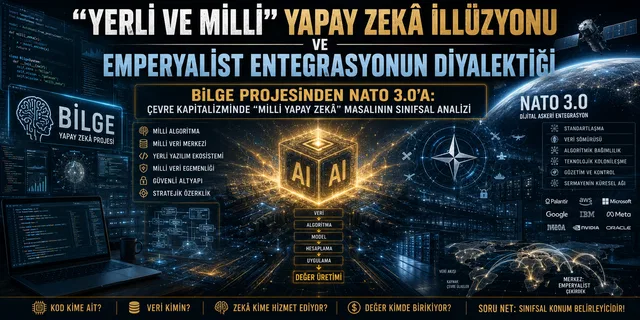
We had asked this too in our piece on the Directorate General of Public Artificial Intelligence: in whose service is the state's capacity for artificial intelligence being built? The watermark is the European counterpart of this question.
The Glasses: The Passport of the Face
What did Norway propose?
The statement of Norway's Minister of Digitalisation, Torgeir Micaelsen, is this: "I am concerned about the spread of a powerful new technology that puts people at risk of being photographed, filmed or recorded without their knowledge." The temporary ban is presented as a period of "informed debate" for a lasting regulation.
The scope of the proposal is wide. Schools, nurseries, playgrounds, youth centres, health institutions, the changing rooms of sports halls, and in all likelihood beaches, parks, museums, shopping centres, concerts and sports matches. Use inside the home remains free. The Labour Party government does not have a majority on its own in parliament, so the passing of the law depends on the opposition.
Norway is not alone either. In the Netherlands the Hans Anders glasses chain withdrew Ray-Ban Meta glasses from sale in more than 400 shops. In the United Kingdom cinemas have begun to ban glasses with cameras. Australia is discussing a restriction in public workplaces. In California, Governor Newsom vetoed the law that would have punished smart glasses which record in secret.
What is Meta planning?
To understand Norway's concern, one has to look at where the glasses are going. The glasses' today is one thing, their tomorrow another:
- Scale. According to EssilorLuxottica, in 2025 alone more than seven million Ray-Ban Meta glasses were sold. Since 2023 the total has passed nine million. This is not a toy; it is an infrastructure that is spreading.
- "Name Tag": facial recognition. According to internal documents reported by the New York Times, Meta plans to add to the glasses a facial-recognition feature that recognises the person opposite and brings up information about them. The same document says the company considered releasing this feature in a period when "the resources of the civil-society groups we would expect to attack us are directed at other problems". Read that sentence once more. The monopoly calculates the moment when public attention is scattered as a marketing window.
- "Super sensing": glasses that record everything. According to the Financial Times, Meta is developing prototypes that take a continuous sound recording and a photograph every few seconds. The raw image is not stored, but the "metadata" extracted from it goes to Meta's servers. It is reported that executives did not want to turn on the LED light which shows that recording is underway while this feature is open, and that the use of the collected data to train Meta's own models was discussed. Researchers had already shown that the existing LED can easily be disabled.
In short, the "nice features" (translation, directions, the answer to "where did I put my keys?") are a door. What enters through that door is the continuous flow of face, voice and location data.
The worker at the other end of the glasses
The most hidden face of this story is here. In February 2026 the Swedish newspapers Svenska Dagbladet and Göteborgs-Posten revealed that images captured by the glasses were shown to data-labelling workers at a subcontracting company called Sama in Nairobi. The workers were labelling images of people recorded in the bathroom, while undressing, during sexual intercourse, and bank cards that were clearly visible in the image. In one worker's words: "In some videos you see someone going to the toilet, or undressing."
What followed is even more instructive. On 16 April 2026 Meta cancelled its contract with Sama. 1,108 workers were given six days' notice of dismissal. The ground was announced as Sama's "not meeting our standards", but which standard it was was not said. According to Naftali Wambalo of the Africa Tech Workers Movement, the standard that was applied was the standard of silence. Those who spoke to journalists were punished.
This is the same order we described in our piece the Digital Guillotine. In the north, privacy is violated; in the south, the worker who processes this violation for a low wage is traumatised. When the violation comes out, it is again that worker who loses the job. The monopoly protects its "standards" by dismissing the witness of its own crime.
The state's glasses
Norway's ban is a positive step. But when the same picture is looked at from the United States, the image changes.
Agents of US Immigration and Customs Enforcement (ICE) were photographed with Meta glasses during raids in at least six states. On 18 August 2026 ICE banned, in an internal memo, its personnel from wearing Meta glasses while on duty. The ground was that the device "could unintentionally record or transmit sensitive information". So the concern was not the immigrants' privacy; it was the state's own data going to Meta's servers.
The same ICE already uses the Mobile Fortify application, which scans faces and matches them instantly with state databases. According to budget documents, it is preparing to develop its own smart glasses, which will do biometric recognition, to complete this.
The lesson that comes out of this is very clear: the state is not banning surveillance; it is deciding on whose server the surveillance will sit. Meta's glasses are banned; the state's glasses are on the way.
Policing with Artificial Intelligence: The Camera Comes Down into the Street
The glasses are the most personal form of surveillance. But states are building the surveillance of artificial intelligence on a much wider scale.
The United Kingdom. With the police-reform white paper the Home Office published in January 2026, it announced that it would raise the number of vehicles that do live facial recognition (LFR) from 10 to 50. £26 million was set aside for a national facial-recognition system, and £115 million over three years for a new National Centre for Artificial Intelligence in Policing. The figures are striking: Essex police scanned 2.2 million faces in a year and arrested 117 people. In London, in the first four months of 2026, 1.7 million scans were made and 44 arrests took place. So for every arrest, tens of thousands of innocent faces were scanned. In May 2026 facial recognition was used for the first time as part of a protest-policing operation.
Turkey. It was planned that body-worn cameras with artificial-intelligence-supported facial recognition, developed by ASELSAN for the General Directorate of Security, would be distributed to 40,000 to 45,000 police officers. The cameras transmit location information and the image instantly to the command centre, and the user records are archived at the Ministry of the Interior. Let us set this beside another figure: according to a report, in 2025 8,477 people were detained at actions and gatherings in Turkey, and 1,112 people were arrested. Facial recognition is being built in order to raise the efficiency of the apparatus that produces these figures.
The reason we put Europe's ban and Turkey's body-worn camera into the same picture is this: both are a move by the state to gather surveillance in its own hands. Norway closes the sensitive areas of society to the private glasses, but it does not touch the camera of the police. The EU gives the authority to read the watermark to the police. Britain opens the street to the camera. Turkey fastens the camera to the police officer's collar. The forms differ; the direction is the same.
We had pointed to this too in our pieces the Palantir Manifesto and Anthropic's Activist Monitoring System. The target list widens, every time, in the same order: the terrorist, the immigrant, the opponent, the worker.
Notifications of Data Breaches: The Accounting of the Leak
Surveillance has an unseen face too. The data that is collected is not protected.
The Pentagon. At the Defense Manpower Data Center, attached to the US Department of Defense, between October 2025 and 16 July 2026, that is for nine months, the social security numbers, dates of birth, contact details and military-personnel data of 3 million people were accessed without authorisation. The data was not encrypted. The state with the largest military budget in the world was storing its own soldiers' identity information as plain text.
"Vibe-coding" applications. The same week it was reported that about 16,000 databases on Supabase, which provides the back end of applications coded rapidly with artificial intelligence, were left open, together with names, addresses, telephone numbers and passwords. The security bill of the logic "let artificial intelligence write the code, let the product come out fast" was again charged to the user.
The EU's "simplification". In this picture, what is the EU's proposal? The Digital Omnibus package, presented in November 2025, proposes to extend the 72-hour notification period in Article 33 of the GDPR to 96 hours, and to limit the notification obligation to breaches that give rise to a "high risk". The European Data Protection Board supported these two changes on the ground of "reducing the administrative burden", but it also warned that the changes to the definition of personal data in the same package could weaken protection.
So the EU, on the one hand, brings in an obligation to watermark the output of artificial intelligence, and on the other it loosens the obligation of companies to notify data leaks. Traceability is imposed on the user; transparency is withheld from the companies. This is not a contradiction; it is two faces of the same class priority.
In Turkey the situation is even more bare. As we wrote on KVKK's "80s trend" warning, while citizen data leaked from state institutions is sold on "query panels", the institution advises the citizen not to share photographs on social media. In a country where the breach notification is made, you at least learn of the breach. In a country where the notification is for show, you never know where your data is.
Whose Work Does It Serve?
Let us now ask the three questions in order.
In whose hands?
| Tool | Ownership | Authority to read / to access |
|---|---|---|
| Text watermark | The model-provider monopoly (OpenAI, Google, Meta…) | The monopoly + "competent authorities" and the police |
| Smart glasses | Meta / EssilorLuxottica | Meta's servers, subcontracted labelling companies |
| Police facial recognition | The state (ASELSAN, the Home Office, ICE) | The police and intelligence |
| Leaked data | On paper, the state or the company | In practice, data brokers and query panels |
In no row of the table is there a "citizen" or a "worker" column. We are the ones who are watched, but we have no say over our data.
Under whose control?
Norway's ban, the EU's watermark, ICE's internal memo, the Digital Omnibus. All of them are regulation from the top down. In none of them is there the organised voice of those who are watched. Unions, neighbourhood assemblies, student organisations are not at the table where these rules are written. The state writes the rule, the company applies it, and they share the oversight among themselves.
For whose benefit?
Here we see four winners:
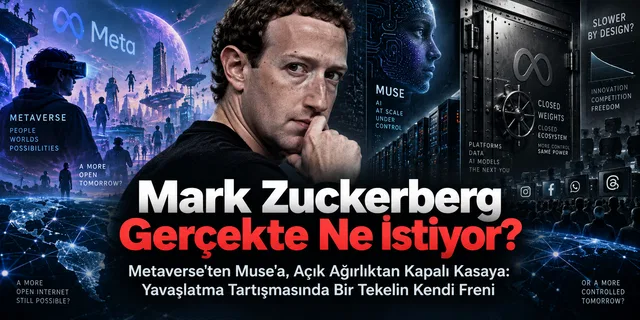
The monopoly. For Meta the glasses are not a sale of hardware; they are a data channel that sits where the telephone cannot reach (on the face, in the eye, in the ear). The data collected by "super sensing" is a raw material for training its models. The watermark, for its part, is a market barrier for the large providers. Only the large ones can meet the cost of compliance, and they hold the detector key too. The answer to the question we asked in What Does Mark Zuckerberg Actually Want? becomes concrete here: what Meta wants is that people see the world through its lens.
The state apparatus. The state wants to monopolise surveillance. While it bans the private glasses, it builds its own glasses; it reserves for itself the authority to read the watermark; it brings facial recognition down into the street and into the demonstration.
The employer. The next stop of the glasses is the workplace. A regime of supervision by glasses that records the worker's every movement and measures their every second, in the name of "productivity", in the warehouse, in the field and in retail, will be the embodied form of the algorithmic management we saw in the Luna case and in the call centres. The watermark, for its part, gives the employer and the school a new instrument of interrogation: "Did you write this report?"
The data brokers. Every datum that is collected is a datum that will one day leak. And every datum that leaks is someone's commodity.
Those who lose are plain: the woman recorded in front of the glasses, the Kenyan worker who labels the image behind the glasses, the immigrant and the activist scanned by the camera, the soldier whose data is stored unencrypted, the student interrogated on the suspicion that "a machine wrote it".
An Answer to the Objection "But the Glasses Really Are Useful"
We should take this objection seriously. Smart glasses can be a real help for visually impaired people: they can read the writing in front of them, give directions, recognise a face and say who it is. The Norwegian government too foresees an exception for "uses that have a social benefit". Instant translation can let a migrant worker explain their trouble in a hospital. To refuse these would be hostility to technology, and we are not hostile to technology.
Our answer is this: none of these benefits requires the data to go to Meta's server. Image processing can be done on the device. Facial recognition can be limited to the people the user has recorded with their own consent. The recording light can be made impossible to switch off at the hardware level. The labelling work can be done in humane conditions, with the worker having a say. The reason these are not done is not technical; it is economic. The monopoly's business model rests on the data being gathered at the centre.
In short, the problem is not the glasses; it is the property relation they stand in. The same technology can be built as an infrastructure that is public, open source, running on the device, and whose data stays with the user. What we described in the Socialist AI Manifesto is exactly this: when the machine is held in common, the glasses are not a chain but an aid.
A Box of Concepts: The Digital Panopticon
The panopticon Jeremy Bentham designed in the eighteenth century was a prison in which every cell was seen from the tower in the middle, but the prisoner could never know whether they were being watched. The aim was not to watch at every moment; it was to make the prisoner correct their own behaviour through the possibility of being watched.
The smart glasses break this tower up and scatter it into the street. There is no longer a single tower; there are millions of small towers. Each of them is on a person's face, and all of them are tied to the same centre. You cannot know whether the person opposite you is recording you. If they are recording, you cannot know where the data goes. The watermark carries the same logic into writing: you cannot know whether the text you wrote will one day be scanned with the question "did a machine write it?"
The class function of the panopticon has not changed: to produce obedience through the possibility of being watched. The only thing that has changed is that the tower now belongs to the monopoly, and that the state is asking for its key.
Seen from Turkey
While Norway discusses banning the glasses, in Turkey the discussion itself does not exist. Ray-Ban Meta glasses are sold in Turkey. When the facial-recognition feature arrives, how it will be assessed under the KVKK is unclear. The institution's performance up to today, for its part, gives no hope.
On the other side, the state's own capacity for surveillance by artificial intelligence is growing fast: body-worn cameras, city security systems, the applications listed under the heading of "public security" in Turkey's Artificial Intelligence Action Plan. In Europe, at least, the question "where, and on what condition, can the police use facial recognition?" is discussed inside a legal frame. In Turkey the answer to this question is most of the time in a circular, and sometimes nowhere.
For this reason the struggle in Turkey is on two fronts: both against the monopoly's glasses and against the state's camera. To defend one in the name of the other, that is, to say "the domestic camera is good" or "the European regulation protects us", is not to see the class.
Concrete Tasks
For ourselves:
- Let us set an open rule, at actions, meetings and union talks, for smart glasses and for devices that record. Let us add to the codes of conduct of events a clause that says "no recording without consent". (The KVKK section of our guide Event Organizing and Comradeship can be a basis for this.)
- Let us not trust the watermark in texts we produce with artificial intelligence; let us state this openly. Let transparency be our principle, not the fear of the detector.
- Let us keep the list of institutions and companies whose data has leaked, and let us follow breaches of personal data collectively.
For unions:
- Let us add to collective agreements clauses that place a ban, or a strict limit, on wearable cameras, smart glasses and biometric monitoring in the workplace.
- Let us demand a provision that forbids the employer from using "was this written with artificial intelligence?" detection tools as a ground for discipline. The margin of error of these tools is high enough for a worker to lose their job.
- Let us build international solidarity with data-labelling and content-moderation workers. Let us make heard the voice of organisations such as the Africa Tech Workers Movement in Kenya.
As public demands:
- A legal ban on the police using live facial recognition, especially at gatherings and demonstrations.
- That on smart glasses the recording indicator be impossible to switch off at the hardware level, and that facial recognition be banned by default.
- That watermark detectors be open not to the police, but to public institutions subject to open and independent audit, and to the people. Either transparency for everyone, or surveillance for no one.
- Not the extension of data-breach notification periods, but their shortening. That those responsible be openly called to account in leaks from state institutions.
- That in Turkey the KVKK be turned into a board that is genuinely independent, and that the state's own processing of data also be brought within the scope of audit.
On Whose Face Will We Place the Eye?
Dear Young Comrades,
Bentham's tower was of stone. Meta's tower is of glass, and it is fastened to our face. The EU's tower is hidden inside the words. The state's tower is on the police officer's collar and at the corner of the street. What they all have in common is that the one who watches is one class, and the one who is watched is another.
Norway's ban teaches us something: these technologies are not an inevitable fate. A society can say "not here". But who will form that sentence is what decides. When the ministry forms the sentence, tomorrow an exception comes for the ministry's own glasses. When organised workers, students and neighbourhoods form the sentence, they are also the ones who decide who has earned the exception.
The glasses are new; the gaze is old. The machine is new; the chain is old.
To see is a right. Not to be seen is a right too. The only force that can defend both at once is the organised class that opens its own eye in the face of both the monopoly and the apparatus.
In solidarity, Bilgi Müşterekleri
Sources
The text watermark and the EU Artificial Intelligence Act
- OpenAI will start watermarking ChatGPT's text in the EU — TechCrunch, 5 October 2026
- OpenAI will watermark ChatGPT in the EU but leaves the API opt-in — ActuIA
- OpenAI launches text watermarking under the EU AI Act — Digital Watch
- The EU AI Act's Transparency Rules: A Practical Guide to Article 50
Smart glasses
- Norway proposes temporary ban on AI smart glasses — NBC
- Norway set to become first country to slap a temporary ban on smart specs — TechRadar
- Norway Wants to Ban AI Smart Glasses Before Covert Recording Goes Mainstream — Android Headlines
- Meta Plans 'Name Tag' Facial Recognition for Ray-Ban Smart Glasses — MacRumors
- Meta's 'Super Sensing' Prototype Glasses Quietly Record Everything — MacRumors
- Kenyan workers training Meta's AI glasses say they see users' most intimate moments — TechCabal
- Meta cancelled the contract with the people who saw what its glasses see — The Next Web
State surveillance and policing
- ICE agents can't wear Meta glasses while they work, official memo warns — Engadget
- ICE plans to develop own smart glasses to supplement its facial recognition app — 404 Media
- Cops get more facial recognition vans as UK bets big on AI policing — The Register
- England: police use of facial recognition technology growing rapidly — Statewatch
- ASELSAN's artificial-intelligence facial-scanning body camera for the police — Tamindir
- Turkey detained 8,477 people, arrested 1,112 during protests in 2025 — Stockholm Center for Freedom
Data breaches
- Data Breach Roundup (Sep 25 – Oct 1, 2026) — Privacy Guides
- EU Digital Omnibus Seeks 96-Hour GDPR Breach Deadline — Bright Defense
Related pieces on Bilgi Müşterekleri
- Did You Know There Is a Directorate General of Public Artificial Intelligence?
- Anthropic's Activist Monitoring System
- The Declaration of Techno-Fascism: The Palantir Manifesto and the Dialectic of Class Struggle in the Digital Age
- KVKK's "80s Trend" Warning and Privacy in the Digital Age
- What Does Mark Zuckerberg Actually Want?
- The Digital Guillotine: Meta's "4 AM" Operation and the AI Order Where Workers Are Liquidated With Their Own Data
- An AI Boss Fired a Human for the First Time
- The Factory Behind the Headset: Algorithmic Domination in Call Centers and Global Resistance
- On Turkey's Artificial Intelligence Action Plan (2026–2030)
- For the Restitution of the General Intellect: The Socialist AI Manifesto Is Out
This piece is shared under the CC BY-SA 4.0 licence. You may reproduce, transform and share it with attribution.
Tags: artificialintelligence, surveillance, kvkk, digitalpanopticon, technocapitalism