The Badge Changed, the Class Did Not
The Class Anatomy of Candidate Selection in the Parties of the Order, from Tugay to Savaş, and the Need for a Socialist Front

The Badge Changed, the Class Did Not
The Class Anatomy of Candidate Selection in the Parties of the Order, from Tugay to Savaş, and the Need for a Socialist Front
First, a Summary: What Does This Piece Say?
Today, on 7 October 2026, President Erdoğan pinned the AKP badge on the lapel of Cemil Tugay, mayor of İzmir Metropolitan Municipality. For the first time in twenty-seven years, İzmir will be governed by a party of the right. A year ago Tugay had said that the chance of his passing to the AKP was "not even one in a million" (Euronews, 7 October 2026). Before him, Özlem Çerçioğlu in Aydın (August 2025), Burcu Köksal in Afyonkarahisar (May 2026), and on 29 September the mayors of Çiğli, Çerkezköy and Elmalı walked the same road. According to Medyascope's compilation, the number of mayors who have passed to the AKP since the 2024 local elections has reached 76, and 17 of them had been elected from the CHP (Medyascope, 30 September 2026). With Tugay that number rose.
The thesis of this piece is this: The problem is not the "turncoats" one by one, but the criterion that made them candidates. The CHP (and the YENİ Party born from it) chooses its candidate not according to a programme, a class belonging, or a relation of accountability built with an organisation, but according to the "electability" poll, the capacity to take votes from the right, local capital and fellow-townsman networks, personal fame, and loyalty to the general chair. For someone chosen in this way, the party is not a community of principle but a carrying vehicle. When the vehicle weakens, or when a stronger vehicle comes to the door with the option "the badge or the handcuffs", the vehicle is changed.
The most naked example of this criterion is Lütfü Savaş. Savaş, who was mayor of Antakya from the AKP between 2009 and 2014, was transferred to the CHP in 2014 and made the candidate for Hatay Metropolitan Municipality; after the earthquake of 6 February 2023, when he was asked how many of the buildings he had licensed had collapsed, he could say "I didn't measure it", and of a contractor whose building had collapsed he said "an idealistic person". The CHP nominated him again, while Hatay's rubble had not yet been cleared, because he was "ahead in the polls". Savaş lost the election, was expelled from the party, and then filed a case for the annulment of the CHP congress. With the "absolute nullity" ruling the Ankara Regional Court of Appeal gave on 21 May 2026, the party's elected leadership was removed from office. So the candidate the CHP insisted on carrying because he was "electable" ended as the plaintiff in the case that dissolved the party itself by the hand of the judiciary. A more instructive lesson is rarely found.
This is not a personal misfortune; it is the report card of a type of party. In Turkey, social democracy has, whenever it was squeezed, stood each time on the side of capital and of the state: from the single-party period's strike ban to the martial law that closed the socialist parties and the unions in 1946, from the Ecevit government's IMF agreements and martial law to the 5 April decisions, of which the SHP was a partner, and to Sivas, and on to the DSP's "Hayata Dönüş" operation and international arbitration. The name of this in local government today is "contractor municipalism": an order in which the municipality is an apparatus that distributes rent through zoning, tenders and urban transformation, and the mayor is the referee of this distribution. In this order the difference between an AKP mayor and a CHP mayor is not a difference of class content, but a difference of style and of cadre. This is why the badge changes so easily.
For this reason neither the CHP nor the YENİ Party can be an answer to the problems of the working class: in the face of wages, housing, subcontracting, precarity, workplace deaths, the earthquake and urban rent, what these parties promise is "the same order, managed more cleanly". What the class needs is a different order.
The second half of the piece sets out from this conclusion: in Turkey there is a need for a socialist front. This front is neither the melting of the socialist parties under a single roof, nor a list alliance that is founded from election to election and then dissolved. Our proposal is a common minimum programme; candidate criteria bound to a text and open to the public (a worker's wage, recall, an open declaration of assets, a municipality without subcontracting); people's assemblies at the local level; a backbone based on unions and committees in the workplace; a common publication and digital infrastructure; and a democratic internal functioning that recognises the right to separate. At the end of the piece we discuss, step by step and with concrete tasks, how this can be built.
In short: The badge changed, the class did not. Our work is not to count badges, but to organise the class.
Dear Young Comrades
I would like you to read this piece as the continuation of the answer we gave to the question "Why doesn't the opposition win?" and of the piece "Why Do Workers Vote for the Right?". In the first (The Class's Answer to Evrim Ağacı's Question, 7 September 2026) we tried to explain the opposition's inability to win not by game theory but by class relations. In the second (Why Do Workers Vote for the Right?, 19 September 2026) we said "the left went to the right first". Today we will talk about the concrete picture of that thesis in local government.
Let us begin with a warning: this piece is not a "list of traitors". It is easy to condemn, one by one and morally, the mayors who changed party, and it teaches nothing. The question that concerns us is this: How did these people get there, who brought them there, by what criterion, and why does the same criterion go on producing the same result?
What Happened? A Short Chronology
Let us first set the facts in order. A class reading cannot be made before the facts are put in their place.
The Big Picture: from 2024 to 2026
- 31 March 2024: In the local elections the CHP became the first party for the first time since 1977. It won many provinces and districts, including Aydın, İzmir and Afyonkarahisar. In Afyon a CHP mayor was elected for the first time in 74 years.
- 14 August 2025: Özlem Çerçioğlu, mayor of Aydın Metropolitan Municipality, joined the AKP on the anniversary of the AKP's founding, after 23 years of CHP membership (Medyascope, 25 February 2026). Özgür Özel described this passage with the phrase "the badge or the handcuffs". Months after her passage, on 25 February 2026, Çerçioğlu was acquitted in the case of bid rigging.
- 12 May 2026: Burcu Köksal, mayor of Afyonkarahisar, joined the AKP, taking her badge from Erdoğan (Euronews, 12 May 2026).
- 21 May 2026: The 36th Civil Chamber of the Ankara Regional Court of Appeal ruled that the CHP's 38th Ordinary Congress of November 2023 was "void by absolute nullity"; the Özgür Özel leadership was removed from office, and Kemal Kılıçdaroğlu and the old leadership were restored. At the head of those who filed the case was Lütfü Savaş, the former mayor of Hatay Metropolitan Municipality (NTV chronology).
- 18 June 2026: Cemil Tugay resigned from the CHP, saying "the 'absolute nullity CHP' is not the roof of this struggle", and remained independent (Medyascope, 18 June 2026). A short time later he said "a new party will be founded, and I will be there" (Cumhuriyet).
- 24 July 2026: Özgür Özel and 91 deputies resigned from the CHP and founded the YENİ Party. The day of the founding was deliberately made to coincide with the anniversary of Lausanne; the Friday prayer was performed in a historic mosque, and the first meeting was held at the Anadolu Club. Özel said the party was open to everyone "who has no problem with the Republic and with Atatürk" (Yetkin Report, 24 July 2026). Hundreds of mayors elected from the CHP passed to the YENİ Party.
- September 2026: After the absolute nullity, a section of the mayors who remained in the CHP began to pass to the AKP. Foça (İzmir), Akkışla and Felahiye (Kayseri) were the first of these. In İzmir, 6 of the 28 municipalities the CHP held changed hands. Müslim Sarı, spokesperson of the Kılıçdaroğlu leadership, said that responsibility should also be sought by looking at "who determined these candidates, and by what method" (Medyascope, 10 September 2026).
- 29 September 2026: Mayors, nine of them together, among them Vahap Akay (Çerkezköy), Onur Emrah Yıldız (Çiğli), Halil Öztürk (Elmalı), Görbil Özcan (Şenkaya) and Aydın Dinçer (Marmara), elected from the CHP, pinned on the AKP badge. In Çiğli the CHP administration that had continued since 1999 came to an end (Sözcü, 29 September 2026).
- 30 September 2026: Tugay met Erdoğan at the presidential residence.
- 5 October 2026: Zeynel Emre, spokesperson of the YENİ Party, accepted that Tugay might pass to the AKP, and asked "Who boards a sinking ship?" (Cumhuriyet, 5 October 2026).
- 7 October 2026: The day promised by the promotional video the AKP had published days earlier, passing from heaps of rubbish to flowers in bloom and ending with the date "07.10.2026" (NTV), arrived: Tugay entered the AKP headquarters saying "I love İzmir very much" (Diken), and Erdoğan pinned on his badge. Özel called this frame "a shameful photograph" (Euronews, 7 October 2026).
A Detail: In Whose Favour Do the Numbers Speak?
According to Medyascope's compilation of 30 September, of the 76 mayors who have passed to the AKP since 2024, 34 were from the New Welfare Party, 17 from the CHP, 9 from the İYİ Party, and the rest from DEVA, the Felicity Party, the Democrat Party and the DEM Party (Medyascope). So the matter is not peculiar to the CHP; there is a market in municipalities spread across the whole politics of the order. This market, which even Emin Çölaşan was obliged to call a "market in municipalities" (Sözcü, 9 May 2026), is the main object of this piece. soL Haber's well-placed question falls here too: are those who say "the ballot box is the solution" not aware of this decay, in which what comes out of the ballot box can change hands outside the ballot box? (soL, 12 May 2026)
Four Portraits, One Criterion
Let us now set four names side by side. The aim is not to expose persons, but to make visible the common criterion that binds them to one another.
Cemil Tugay: the Technocrat "Not Open to Debate"
Tugay is a plastic surgeon, a graduate of the medical faculty of Ege University. From 2009 he ran his private practice, in 2010 he joined the CHP, and he was elected mayor of Karşıyaka in 2019 and of İzmir Metropolitan Municipality in 2024 (Milli Gazete biography; Medyascope). In 2024 he won İzmir with close to 49 per cent of the vote, 314,000 votes ahead of the AKP candidate Hamza Dağ.
The common point of the comments made when he was nominated was this: "He is not perceived as someone open to debate" (Medyascope, 30 January 2024). In the politics of the order, this is praise. From our point of view it is a warning: no one had debated which class he would stand beside.
The answer to this question came in June 2025. About 23,000 workers employed in İzmir Metropolitan Municipality's companies İZELMAN, İZENERJİ and EGEŞEHİR went on strike because of a dispute over the collective agreement. During the strike Tugay collected rubbish and stepped in front of the cameras, and accused the union of acting with a political aim. The sentence he said is worth putting on the record: "Some of our mayors are in this situation; the driver is almost earning a higher salary than the mayor" (Diken, 2 June 2025). This language, which sees the worker on strike as an obstacle in front of its own budget and the union as a "political" threat, cannot be distinguished from the AKP's language. A mayor's class place is visible not in their badge, but in which side they look to on the day of the strike. Tugay had made his side plain that day. Today's badge is only the official registration of that.
There is this too: when Tugay resigned from the CHP in June 2026, he presented it as a reaction to the "absolute nullity" and said he would pass to the YENİ Party. But when the YENİ Party was founded he did not go there; he remained independent, and then he met Erdoğan. A year earlier he had said "there is not even a one-in-a-million chance", and that he would resign the mayoralty rather than abandon his world view. So the "principle" that was the ground of the resignation was an intermediate stop. From a moral point of view this is a contradiction. From a class point of view it is consistent: the mayor's loyalty was not to the party or to the programme, but to the continuity of the apparatus he managed.
Özlem Çerçioğlu: Why Were Twenty-Three Years of Membership Not Enough?
Çerçioğlu had been governing Aydın since 2009. She was nominated in 2009, in Baykal's period; she was made the candidate again in 2014 and 2019, in Kılıçdaroğlu's period, and in 2024, in Özel's period. So three separate general chairs of the CHP carried the same name by the same criterion: she wins.
Yet there was a bid-rigging case concerning her tenders of 2013–2015, and her name had also come up in the Aziz İhsan Aktaş investigation (Kısa Dalga). Months after her passage to the AKP, on 25 February 2026, she was acquitted (Medyascope). It is not our job to debate the legal correctness of this acquittal. But we have to say this: if a party nominates its candidate for twenty years without ever asking about the candidate's tender relations, their place in the distribution of rent, and how fragile this place makes them, that party is preparing, with its own hand, the material for the government's bargain of "the badge or the handcuffs".
Burcu Köksal: Being "One of Us"
Köksal is the daughter of a family of teachers, a lawyer; in 2007 she was chair of the CHP's Afyon women's branch, and then a deputy for three terms. In 2018 she passed to the İYİ Party for a few weeks and came back. In the 2024 campaign she said "the municipality's door will be open to every party except the DEM Party" (Medyascope, 7 May 2026). The CHP leadership passed this off as a "slip of the tongue" and kept her candidacy.
The secret of the CHP's winning in Afyon after 74 years was this too: being "one of us" in the eyes of the nationalist electorate. So the CHP won Afyon not by taking its own programme to Afyon, but by likening itself to Afyon's right-wing common sense. A municipality won in this way is ready to be lost at the moment it is won, because the electorate was not told "you don't have to be right-wing", but "we are already like you". Then the question turns into this: if we are saying the same thing, why should they choose us and not the original?
After she passed to the AKP, Köksal praised Kılıçdaroğlu to the pro-government press and asked for "respect for the absolute nullity" (BirGün, 23 May 2026). The mouth that a year earlier had said "I am a CHP member for life" was, a year later, calling for respect for the ruling that dissolved its party by the hand of the judiciary.
Lütfü Savaş: the Most Naked Form of the Criterion
Now we come to the real example. Lütfü Savaş's story is a textbook case that shows, in all its nakedness, the candidate-selection logic of the party of the order. Let us tell it step by step.
Act one: the AKP mayor. Savaş is a physician born in Yayladağı, an associate professor; someone who took part in the founding of the medical faculty of Mustafa Kemal University and served as an adviser to the rector. In 2009 he was elected mayor of Antakya from the AKP with 47.3 per cent of the vote (Medyascope, 15 June 2026).
Act two: the transfer to the CHP. In 2014 he passed to the CHP and, as the CHP's candidate, became Hatay's first metropolitan mayor with 41 per cent. In 2019 he won again. The CHP took him not because he was a person of a programme, but because he could carry votes from the AKP's base. This is exactly "transfer politics": as a football club signs a goalscorer, the party takes the local figure who brings votes. (Savaş also being the honorary president of Hatayspor almost takes this analogy out of being an analogy.)
Act three: the earthquake. On 6 February 2023 Hatay was razed. A great part of the buildings that collapsed had been built during Savaş's mayoralty, which was approaching fifteen years. Scientists had warned in 2011 that an earthquake of magnitude 7.2 in the region could kill 40,000 people (BirGün, Berkant Gültekin, 13 January 2024). After the earthquake Savaş said, of a contractor whose building had collapsed, "An idealistic person. If we question this too much, we will have done an injustice to those who build." In May 2023 the New York Times reported the claim that a contractor had donated more than 200,000 dollars to Hatayspor, of which Savaş was the honorary president, and that this was connected to licensing relations (Medyascope). When he was asked how many of the buildings he had licensed had collapsed, his answer was a single phrase: "I didn't measure it" (Diken).
Read this sentence once more: I didn't measure it. Its class meaning is this: the municipality's licensing apparatus works not in order to measure the safety of the people who will live inside the building, but in order to measure the turnover speed of the contractor's capital. What is not measured is what is not considered worth measuring. In Hatay, what was not measured was the life of the worker, the pensioner, the student, the tenant.
Act four: candidacy again. Eleven months after the earthquake, despite the intense objection of the people of Hatay and of its own base, the CHP nominated Savaş again. Upon the objections the candidacy was "reconsidered", debated for days, and in the end it was continued with Savaş, by calling it "a political decision" (Duvar English). The ground was the polls; Özel said that Savaş performed well in the countryside, that there was no better alternative than him, and that responsibility for the earthquake was "collective" (Diken). BirGün writer Berkant Gültekin called this "the new leadership's first great mistake", and wrote that winning by compromising on values would waste a real change.
Let us name the criterion here: electability beat accountability. Between the account of those who remained under the rubble and the number in the poll, the party chose the number in the poll.
Act five: losing. On 31 March 2024 Savaş lost to the AKP candidate Mehmet Öntürk, 43.96 per cent to 44.47, by a margin of about 3,000 votes (NTV). The candidate imposed because he was "electable" could not win. The logic of the poll collapsed even by its own criterion.
Act six: expulsion and the case. In December 2024 Savaş was expelled from the CHP because of posts criticising its attitude towards the DEM Party. On 15 February 2025 he filed a case for the annulment of the congress, and in March 2025 he filed a second case against the extraordinary congress (Bianet). On 24 October 2025 Ankara's 42nd Civil Court of First Instance rejected the demand; on appeal, on 21 May 2026, the Ankara Regional Court of Appeal gave the "absolute nullity" ruling (NTV). On 10 June 2026 Savaş came to the CHP headquarters and said he was there to say "congratulations to the friends who were appointed" (Cumhuriyet).
The curtain falls. Let us gather it up: a figure taken from the AKP, counted among those responsible for the earthquake, made a candidate again for the sake of a poll despite the base, who lost and was expelled, ended as the plaintiff in the case that removed the party's elected leadership from office by the hand of the judiciary. This case is not Savaş's work alone; behind it there is the government's strategy of shaping the opposition through the judiciary, and we openly reject this strategy. The changing of a party's elected leadership by a court ruling is, whichever party it is applied to, a precedent against democratic rights. As we said when writing on the İBB cases: we do not have to acquit anyone, but everyone needs the law.
But this rejection of ours does not prevent us from seeing the CHP's own share. The lever in the government's hand was a figure produced by the CHP's own criterion of candidate selection. The person to whom the party opened its door by a transfer became the person who locked the party's door.
The Common Denominator, in a Table
| Name | Where did they come from? | Why were they made a candidate? | The class test | The result |
|---|---|---|---|---|
| Cemil Tugay | A plastic surgeon with a private practice, joined the CHP in 2010 | "Not open to debate", a "successful manager" in Karşıyaka | In the 2025 strike he declared the union "political" against 23,000 workers | 7 October 2026: the AKP badge |
| Özlem Çerçioğlu | Mayor of Aydın since 2009 | Under three general chairs, "she wins" | Her tender relations were not questioned | 14 August 2025: the AKP; then acquittal |
| Burcu Köksal | A lawyer, a deputy for three terms; a short time in the İYİ Party in 2018 | "One of us" in nationalist Afyon | The words "open to everyone except the DEM" were counted a "slip of the tongue" | 12 May 2026: the AKP |
| Lütfü Savaş | AKP mayor of Antakya, 2009–14 | Carries votes from the AKP base, strong in the countryside | The earthquake: "I didn't measure it"; "idealistic" for the contractor | He lost, was expelled, and became the plaintiff in the absolute-nullity case |
In no row of this table is there a column for "what is their programme?", "what bond do they have with which union, which neighbourhood organisation?", "to whom will they give an account?". Because the party never opened this column.
The Problem Is Not in the Person but in the Criterion: How Does the Party of the Order Choose Its Candidate?
The question of Müslim Sarı, spokesperson of the Kılıçdaroğlu leadership, "Who determined these candidates, and by what method?" (Medyascope), is a rightful question, but it has been asked from the wrong mouth. Because the story of the four names above spreads across the periods of three separate general chairs: Çerçioğlu's first candidacy began in Baykal's period; Savaş's transfer of 2014, Köksal's terms as a deputy, Çerçioğlu's candidacies of 2014 and 2019, and Tugay's Karşıyaka candidacy of 2019 are the product of Kılıçdaroğlu's period; Savaş's re-candidacy after the earthquake, Köksal's Afyon candidacy and Tugay's İzmir candidacy are the product of Özel's period. So the criterion does not change according to the general chair. The criterion belongs to the type of the party.
Let us list the criteria of candidate selection that operate in the party of the order:
The Fetish of "Electability"
Almost all of the candidacy decisions rest on the answer the polling companies give to the question "who wins?". The poll measures the electorate's consciousness today; it does not aim to change that consciousness. For this reason poll politics is by its nature conservative: the candidate who most resembles the existing common sense wins. In a country where the right is hegemonic, this means that the candidate who most resembles the right is chosen. In Gramsci's language, it is surrendering to common sense instead of struggling with common sense.
The Capacity to Carry Votes from the Right
The AKP base in Savaş's case, the nationalist base in Köksal's, the ülkücü (idealist-nationalist) tradition in the example of Mansur Yavaş: the candidacy formula the CHP has found most "successful" since 2014 has been to take someone from inside the right. This formula works at the ballot box in the short term. In the long term it does two things at once. First, it gives its own electorate the lesson "our ideas cannot win; we can win only by looking right-wing". Second, it turns the elected person's relation with the party into a borrowed relation. What is borrowed is returned when its owner asks for it back.
Local Capital and Fellow-Townsman Networks
A metropolitan campaign costs millions of lira. An important part of this money comes from local business circles, the chambers, the contractors, the tradespeople and the fellow-townsman associations. The candidate goes into debt to these networks before being elected. After they are elected, the zoning plan, the tender and the licence are the forms in which this debt is paid. The claim of the Hatayspor donation in the Lütfü Savaş case is one end of this relation that has become visible. These networks do not change party; the networks follow power, and the mayor follows the network.
The Personal Brand and the Ideology of "Service"
"Not open to debate", "a successful manager", "a person of service", "above politics"… All of these expressions say the same thing: the candidate is without politics, that is, does not take a side between the classes. But in a class society, not taking a side means standing beside the existing side. The ideology of "service municipalism" sets up the municipality as a service company, the elector as a customer, and the worker as a cost item. Tugay's look at the worker on strike was the natural result of this ideology.
Loyalty to the General Chair, Closure to the Member
There is a primary mechanism in the CHP's statute, but almost all of the big candidacies are determined at the general centre, between a narrow staff of aides and the polling companies. The member does not choose their candidate; they watch the announcement of the candidate. The delegate system, for its part, as the congress case also showed, is a structure shaped by bargaining among provincial chairs and local centres of power. The result of this closure is this: the candidate feels responsible not to the member, but to the narrow circle that chose them. When that circle disperses (absolute nullity is the harshest example of this), the candidate's bond with the party dissolves too.
The Absence of a Mechanism of Accountability
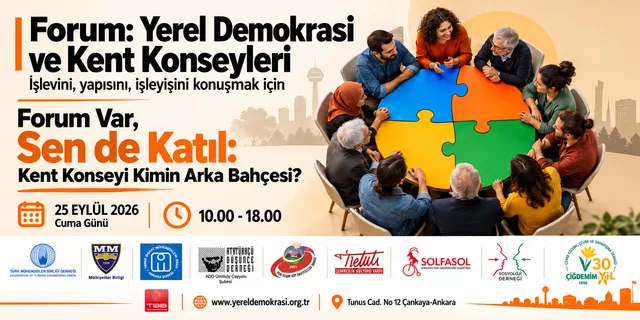
There is no institutional mechanism by which the elected mayor regularly gives an account to their own party, to their own electorate, or to the workers of their own municipality. City councils, as we discussed in detail before, work in most places as the municipality's "back garden". There is no right of recall. The budget is not participatory. In this gap the mayor's only real counterpart is the central government: the appropriation, the İller Bankası credit, treasury land, the restructuring of the social-security debt, and the investigation file.
Is the YENİ Party Different?
Here we have to be honest: the YENİ Party was born, on the one hand, as the product of a democratic reaction against the absolute-nullity ruling, and among the mayors who passed to it from the CHP there has for now been no one who passed to the AKP. We note this. But there is also no sign that the new party's criterion for candidates is different from the old one's. The criterion by which the party defines itself is "everyone who has no problem with the Republic and with Atatürk" (Yetkin Report). This is not a class criterion, but a criterion of loyalty to the regime; Savaş, Çerçioğlu, Köksal and Tugay would all have passed this criterion comfortably. Indeed Tugay himself was saying for a while "I will be in the new party".
The words of YENİ Party spokesperson Zeynel Emre, "Who boards a sinking ship?", are instructive from this angle too (Cumhuriyet). Let us ask the question the other way round: if the ship had not been sinking, would boarding it have been legitimate? If the wrongness of changing party is tied not to principle but to "the ship's buoyancy", then what we are discussing is not morality but market analysis. This language is a language that speaks from inside the "market in municipalities".
"Party of the Order" and "Contractor Party": Let Us Clarify the Concepts
Young comrades, I want to use these two concepts not as slogans but as instruments of analysis. So let us proceed by defining them.
What Is a Party of the Order?
A party of the order is a party that takes capitalist property relations as given, and presents itself as a candidate for the management of these relations. However harsh an opposition it makes in domestic politics, the thing it debates is "who will manage, and how"; the question "who will own" does not come to the table. The shortest way to recognise a party of the order is to ask these four questions:
- Does it open to debate the ownership of the factory, the land, the city, the data?
- Has it shown in practice that it will defend the right to strike, to a union and to organise even when it comes to power?
- Does it set up its relation with the organisations of capital (TÜSİAD, MÜSİAD, the chambers) as a public relation of account, or as a relation of consultation and approval?
- At the moment of crisis, that is, at the moment of the balance of payments, the IMF, the earthquake, war, a wave of strikes, how does it decide who will pay the bill?
The AKP, the MHP, the İYİ Party, the CHP, the YENİ Party: however different their ideological colours, they stand in the same place in the answer to these four questions. The difference is for which section, in which style, and with which cadre the same order will be managed.
What Is a Contractor Party?
The last twenty-five years of Turkish capitalism have been a period in which accumulation flowed to a great extent through construction, land rent and the public tender. In this period the municipality ceased to be only an institution that collects the rubbish and builds the road; it turned into an apparatus of producing and distributing rent, which determines the value of urban land, turns a field into a building plot overnight with a zoning plan, and empties a neighbourhood through urban transformation and fills it again.
When we say contractor party, we mean a type of party organised around this apparatus, which builds its cadre, its financing and its bond with the electorate through the rent this apparatus distributes. The AKP is the most developed form of this type: the "gang of five" debate, the public–private partnership guarantees, TOKİ, the urban transformation law and the zoning amnesty are this type's appearances at the national scale.
And the CHP? CHP municipalities promise to manage, locally, "more transparently" and "with less corruption", the order the AKP built at the national scale. A part of this promise is real; practices such as the nursery, the public bread, the cheap water should not be belittled. But the apparatus itself does not change: the zoning plan changes by the same logic, the tender is given by the same logic, urban transformation proceeds by the same logic, subcontracting (under the name of turning into companies) continues by the same logic. For this reason a CHP mayor's turning into an AKP mayor is a road as short as walking from one end of the apparatus to the other. What changes is only the badge; the plot is the same plot, the contractor the same contractor, the worker the same worker.
"The Badge or the Handcuffs": the Anatomy of the Mechanism
The expression "the badge or the handcuffs", which Özel used for Çerçioğlu, correctly describes a mechanism of coercion. But when we ask why this mechanism works, we arrive at a class answer. The mechanism stands on three feet:
- Financial dependence: Municipalities depend on central budget shares, on İller Bankası, and on the restructurings of social-security and tax debt. The centre can tighten the tap.
- Legal fragility: Every apparatus that distributes rent produces files. The tender, the zoning, the licence… Each of them can be the subject of an investigation. If there is corruption it should be tried; but the opening and closing of the prosecution according to a change of party shows that the law has turned into an instrument of political bargaining. Çerçioğlu's acquittal, which came after the passage, made this question inevitable in public opinion.
- The ideological gap: The first two feet are the same for every mayor. But not every mayor crosses. What makes the crossing possible is the third foot: the absence of a bond, resting on a programme, a class and an organisation, that ties the mayor to the party. A trade unionist, a neighbourhood organiser, a workers' leader can answer the question "the badge or the handcuffs?" with "the handcuffs"; history is full of the examples of this. But for a manager who has built their life on "service" and "electability", this is a cost–benefit calculation.
So the government's coercion is real, but the reason this coercion yields a result so easily is the ideological gap the opposition's criterion for candidates has created. The tyrant enters the houses whose door they find open.
Social Democracy's Report Card in Turkey
Let us now take a step back and look at a wider question: are these events a deviation peculiar to the CHP's present managers, or a continuation of the historical character of the social democracy that is called "the left" in Turkey?
A Short Reminder from the World
We discussed social democracy's world report card in detail in the piece on the AfD; here let us only recall the turning points:
- 4 August 1914: The German Social Democratic Party (SPD) said "yes" to the war credits. Internationalism, at the first great test, surrendered to the national bourgeoisie's war budget.
- January 1919: The Freikorps units directed by Gustav Noske, defence minister of the SPD government, crushed the Spartacist uprising; Rosa Luxemburg and Karl Liebknecht were killed.
- Bad Godesberg, 1959: The SPD formally removed Marxism from its programme and adopted the principle of "as much market as possible".
- 1983: In France the Mitterrand government lived through the "austerity turn" (tournant de la rigueur); the socialist promises were taken back in two years in the face of capital flight.
- 1997–2005: Blair's "Third Way" and Schröder's Hartz reforms made social democrats, not the parties of the right, neoliberalism's most effective practitioners.
- After 2010: In Greece, PASOK, as the party that signed the austerity memorandums, almost disappeared.
The common pattern is this: social democracy is "left" in periods of growth to the extent that it can distribute to the class a share of capital's profit. In periods of crisis it counts the rescue of capital's profitability as the state's duty, and charges the bill to the worker.
The Report Card in Turkey, Period by Period
In Turkey the history of social democracy is intertwined with the history of the CHP, and the history of the CHP with the founding of the republic. This gives Turkish social democracy a feature different from the one in the West: here social democracy was not born from the organisations of the working class (the unions, the workers' parties), but was born as an opening towards the left from the state's founding party. This birthmark continues to this day.
The single-party period (1923–1946). The Labour Law of 1936 banned the strike and the lockout. The Associations Law of 1938 banned the founding of associations and organisations on a class basis. The principle of populism ideologically denied the existence of the class struggle with the discourse of "a mass without privilege, without class, fused together". The Wealth Tax of 1942, for its part, became the instrument of the transfer of the non-Muslim bourgeoisie's wealth to the Muslim-Turkish bourgeoisie. So the founding of the "Turkish bourgeoisie" was a conscious class policy of CHP power.
1946. With the passage to multi-party life, socialist parties and unions were founded by the amendment made to the Associations Law. Within a few months, in December 1946, again in the period of CHP power, the Istanbul martial law closed these parties and unions. The Unions Law of 1947 allowed unions but left the strike as forbidden.
"Left of centre" and the Ecevit period (1965–1980). In the face of the rise of the workers' movement of the 1960s and of the Workers' Party of Turkey, founded in 1961, the CHP adopted in 1965 the discourse of the "left of centre". The function of this discourse was to bind the worker and labouring masses, who were shifting to the left, not to a socialist party but to a party inside the order. The CHP's answer to the right, which attacked with "the left of centre is the road to Moscow", was in fact that it had opened to the left in order to cut off socialism's path. In the 1970s, in Ecevit's person, labouring hopes rose; in 1977 the CHP passed 41 per cent. But the Ecevit government of 1978–79 was the government that signed stand-by agreements with the IMF and, after the Maraş massacre of December 1978, declared martial law in 13 provinces. The martial-law apparatus that formed the infrastructure of 12 September was founded with the signature of a "populist" government. We discussed this in detail in the 12 September dossier.
The SHP–DYP coalition (1991–1995). The SHP, the social democratic party of the period after 12 September, formed a coalition with the DYP of Demirel and then of Çiller. This period is the period in which the Sivas massacre of 2 July 1993, the village evacuations in the Kurdish provinces, and the unsolved murders reached their peak. With the decisions of 5 April 1994 wages were crushed and privatisation accelerated; all of these were lived in the period of a government of which the social democrats were partners. The Gazi events of March 1995 were also lived immediately after the SHP's merger with the CHP, in the period of the government in which the CHP was a partner with the DYP. In the same years the İSKİ scandal that broke out in the SHP municipality in Istanbul became one of the first great public examples of the relation of "social democratic municipalism" with rent.
DSP power (1999–2002). The DSP, which carried the name "democratic left", in the government it formed with the MHP and ANAP, put international arbitration into the constitution in 1999, gave letters of intent to the IMF, and after the crisis of February 2001 applied Kemal Derviş's programme. The operation called "Hayata Dönüş" in the prisons on 19 December 2000 was carried out in the period of his premiership. An important part of the institutional architecture of neoliberalism in Turkey was founded immediately before the AKP, with the signature of a "left" prime minister.
The Baykal and Kılıçdaroğlu periods (2002–2023). In Baykal's period the CHP turned into a middle-class party on the axis of nationalism and secularism; its bond with the working class was almost entirely broken. In Kılıçdaroğlu's period, with the discourse of "helalleşme" (reconciliation) and the Nation Alliance, the party opened still further to the right. In the 2023 election more than thirty deputies of DEVA, the Future Party, the Felicity Party and the Democrat Party entered Parliament on CHP lists. So the CHP carried deputies to the parties of the right from its own list; but it did not open the same door to the workers' organisations, the unions, the socialist parties.
The Özel period and the YENİ Party (2023–2026). In Özel's period the CHP became the first party in 2024. The criterion of this success was again "electability", and most of the names that are the subject of this piece were nominated in this period. In 2025 the harshest reaction to the strike of 23,000 municipal workers in İzmir came from a CHP mayor. The YENİ Party, for its part, instead of changing this line, defined its founding with the symbols of Lausanne, the Friday prayer and the Anadolu Club, that is, with loyalty to the regime.
The Report-Card Table
| Period | The "left" in power | What did it do to the class? |
|---|---|---|
| 1936–1938 | CHP (single party) | Strike ban; ban on organisation on a class basis |
| 1942 | CHP | The Wealth Tax: transfer of non-Muslim capital to the Turkish bourgeoisie |
| December 1946 | CHP | The newly founded socialist parties and unions were closed by martial law |
| 1965 | CHP ("left of centre") | An opening to the left in order to cut off the socialist rise |
| 1978–79 | CHP (Ecevit) | IMF stand-by; martial law in 13 provinces after Maraş |
| 1991–95 | SHP/CHP–DYP | The 5 April decisions; Sivas, Gazi, village evacuations; the İSKİ scandal |
| 1999–2002 | DSP–MHP–ANAP | International arbitration; the IMF; the Derviş programme; the Hayata Dönüş operation |
| 2023 | CHP (Nation Alliance) | Lists for the parties of the right; no door for the workers' organisations |
| 2024–2026 | CHP/YENİ municipalities | A stance against the worker in the 2025 İzmir strike; transfer candidates; the flow of mayors to the AKP |
Let us be fair as we read this table: there were moments in the CHP's history to which the labouring masses bound a real hope; in the 1970s millions of workers voted for Ecevit, in 1989 the SHP municipalities created a serious excitement of social municipalism, and today too there are countless honest, labouring people in the base of the CHP and of the YENİ Party. Our criticism is not of these people, but of the type of party that each time holds their hope inside the limits of the order. The problem is not a problem of intention; it is a problem of structure.
Why Can These Parties Not Be an Answer to the Class?
Let us now come to the real question. The question "All right, they have faults, but what else is there against the AKP?" is a well-placed question, and it should be answered seriously. Our answer is this: neither the CHP nor the YENİ Party can be the class's answer, because:
The Class Composition They Represent
The core electorate of these parties is the urban, educated, white-collar middle class and public employees. Their organisational and financial backbone, for its part, is local business circles, the self-employed, and municipal networks. In this composition the working class is a mass that votes but does not decide. Looking at the proportion of workers and trade unionists on the party boards, on the deputy lists and on the municipal councils is enough to see this fact.
The Reflex of Crisis Management
The report card above shows it: this type of party, at the moment of crisis, counts the protection of capital's profitability as the state's duty. Today inflation, the exchange rate, debt and climate crises stand in front of Turkey. On the question of to whom the bill of these crises will be charged, what the economic cadres of the CHP and of the YENİ Party propose is "a return to orthodox policy", "the investment environment", "the rule of law and predictability". That is, confidence for capital, patience for the worker.
The Form of Doing Politics: the Ballot Box and the Court
The instruments of opposition of these parties are the ballot box and the court. The strike, the occupation, workplace organisation, the neighbourhood assembly are either absent from these parties' repertoire or unwanted. Even in the face of the absolute nullity, the main answer was again a legal objection and a rally. Yet the ballot box and the court are today the fields the government itself uses most effectively. To play, against an opponent who writes the rules of their own game, only by those rules, is to accept defeat from the start.
The Nature of the Municipal Apparatus
The municipality, inside the existing property relations, is an apparatus in which rent is distributed. The party that manages this apparatus without questioning the property relations mediates, whether it wants to or not, in the distribution of rent. The "I didn't measure it" in Hatay, the attitude to the strike in İzmir, the tender files in Aydın are different appearances of this mediation. To go beyond this, the municipality has to be turned into an institution of the commons, that is, an institution that pulls the city's land, water, transport and housing out of the market and opens them to collective control. This, for its part, has no place in the programme of the party of the order.
The Criterion for Candidates Is a Result
The criterion for candidates that we have been discussing since the beginning of the piece is a result of this structure, not its cause. If a party does not rest on the working class, it cannot be expected to choose its candidate according to accountability to the working class. It chooses its candidate according to capital, the poll and the general chair. To correct the criterion, the party's class basis has first to be changed. This is not something that can be done from inside a party of the order.
The "Lesser Evil" Trap
At every election it is said "let us send the AKP away now, the rest comes later". The problem of this approach is that the "later" never comes. For twenty-five years what has been asked of the working class is to postpone its own independent politics and vote for the order's "less bad" party. The result is in the open: the AKP is still in its place, and the mayors elected from the "less bad" party are passing to the AKP. So the lesser-evil strategy failed by its own criterion too. Worse, this strategy systematically weakened the independent organisation of the working class. One of the answers to the question why workers vote for the right is this too: the class that has no voice of its own turns towards whoever has the loudest voice.
And the Socialists? Let Us Look at Ourselves Too
The credibility of a criticism depends on the critic applying the same criterion to themselves. The socialist movement is not flawless in these matters.
The Gökhan Zan example. In the 2024 local elections the Workers' Party of Turkey nominated in Hatay the former national footballer Gökhan Zan. This was showing that the "famous candidate" shortcut of the parties of the order had a counterpart on the left too. Two weeks before the election, on 17 March 2024, when claims emerged that Zan had made "contacts we could never accept", the Workers' Party of Turkey withdrew the candidacy; Zan, for his part, did not withdraw from the candidacy and took 2 per cent of the vote (Duvar English; NTV). It is to the party's credit that it acted quickly, saying "we cannot ignore even the smallest suspicion". But the lesson is this: if the criterion for candidates has not been put into a text and is not open to the public, a socialist party too can open the door to the wrong candidate.
The same city, two separate choices. On the other hand, the same Hatay, in the 2023 general election, sent to Parliament on the Workers' Party of Turkey list Can Atalay, the lawyer detained in the Gezi case. So the Hatay electorate is an electorate that could elect both Savaş, of whom the poll said "he wins", and a detained lawyer whom the poll did not take into account at all. This is a concrete datum showing that the thesis "one cannot win without resembling right-wing common sense" is wrong. The matter is not the electorate; it is what was proposed to the electorate.
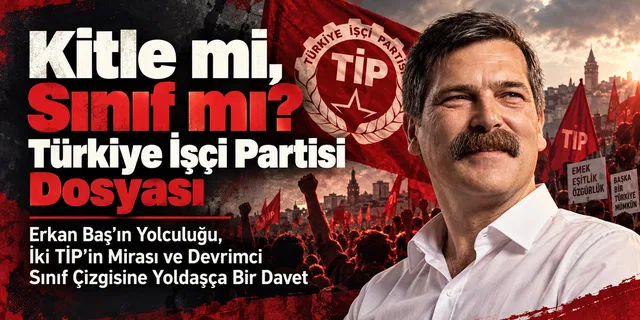
Fragmentation. The Turkish left passed through different experiences of alliance, such as the Labour and Freedom Alliance founded in 2022 and the Socialist Power Union founded in 2023. The common weakness of these experiences was that they were founded tied to the election calendar and could not turn, after the election, into a lasting structure of common action. Today there is no common criterion for candidates, no common programme and no common calendar of action among the socialist parties, the unions, the professional organisations and the local initiatives. This gap feeds the "there is no other option" discourse of the parties of the order. In the Workers' Party of Turkey dossier we discussed the distinction between the class party and the mass party; this piece is the continuation of that discussion on the plane of the front.
Why a Socialist Front?
What Is a Front, and What Is It Not?
Let us first clarify the concept, because the word "front" is used on the left in different senses.
- A front is not a merger. It is essential that the parties keep their own organisational independence, their programme, their publication and their debate. Differences are not suppressed; they are debated openly.
- A front is not only an electoral alliance. List partnerships that are founded from election to election and then dissolved are not a front; at most they are temporary agreements. A front is a structure of common action that also works between elections.
- A front is not a "popular front" with the parties of the order. The popular fronts founded in the 1930s with the bourgeois parties against fascism secured important gains in some places, but they confined the working class's independent politics to the limits of the bourgeois allies. The front we propose is an independent front of the working class and of the socialists. This does not exclude, when necessary, taking a common attitude with the parties of the order on single questions of democratic rights; but it makes no concession on organisational and programmatic independence.
- A front is not limited to the socialist parties. Class unions, workplace committees, professional chambers, women's and LGBTI+ organisations, ecology movements, urban and housing movements, student organisations, pensioners, earthquake-survivor solidarities, the legal structures that struggle for the democratic demands of the Kurdish people: all of them can be a component of this front with their own identity.
Why Now?
- The opposition of the order is fragmenting. An opposition divided among the CHP, the YENİ Party and the mayors flowing to the AKP leaves millions of electors alone with the question "whom will I trust?". This is a historical gap for the socialists. If the gap is not filled, the right and the right's new forms will fill it.
- The badge economy is alienating the electorate. The experience "I voted, the mayor passed to the other side" has created in millions of people a deep suspicion about the meaning of the ballot box. This suspicion will turn either into indifference or into a new form of politics.
- The government is determining the shape of the opposition through the judiciary. Trustees, absolute nullity, investigations… In this environment an opposition that rests only on the ballot box and the judiciary is defenceless. A front that rests on an organised social base, on the workplace and on the neighbourhood, is much more resilient.
- There is movement in the class movement. The strike of 23,000 workers in İzmir, the actions of courier and warehouse workers, of teachers, of health workers, the pensioners' rallies, show that the class is not dead. But these movements have no political expression. Opposite the İzmir worker on strike there was a CHP mayor, and there was no metropolitan candidate, for whom that worker could vote, who defended their own strike.
How Can It Be Done? A Proposal for a Road Map
What I will present here is not a command, but a proposal open to debate. Each heading should be debated and shaped in the organisations' own democratic processes.
Step One: a Common Minimum Programme
The core of the front is a minimum programme short enough to fit on one page, but with every article concrete. As a draft I propose these headings:
- The wage and livelihood: The minimum wage to be left outside tax and set according to the poverty line; the automatic protection of wages against inflation (eşel mobil, the sliding scale).
- The right to organise: The removal of the branch thresholds, the counting of union membership in the workplace as sufficient on its own for authorisation, the removal of strike bans and of strike postponements.
- The end of subcontracting and of turning into companies: The taking onto the permanent staff of the workers in municipal companies; a ban on subcontracting in the public sector.
- Housing: A lasting ceiling on rent increases, a tax on empty dwellings, rental social housing by the public hand; on-site transformation in urban transformation, and priority for the tenant rather than the property owner in expropriation.
- The earthquake and the city: A ban on the zoning amnesty; the transfer of licensing and inspection to a public inspection institution independent of the contractor; the trial of those responsible for the earthquake; the account of 6 February.
- The commons: The holding of water, energy, transport and data under public and democratic control; the review of privatisations.
- Democratic rights: The end of the trustee practice, an end to intervention by the judicial or administrative road in the will of those who were elected; freedom of expression and of organisation.
- Peace and equal citizenship in the Kurdish question: The carrying forward of the democratic solution process with legal guarantees.
- Women and youth: The making visible of women's labour, public and free nurseries; free education and housing for the young.
- Ecology: A veto right for the local people in mining and energy projects from Akbelen to the Kaz Mountains; the charging of the climate crisis's bill to capital.
Step Two: Candidate Criteria Bound to a Text
We return to the question at the centre of this piece. The place where we will show our difference from the parties of the order most concretely is the candidate contract. Every person who will be a candidate in the name of the front commits, before being elected and openly to the public, to the following:
- The principle of a worker's wage: The elected person takes for their personal use only as much of the office allowance as an average worker's wage, and transfers the rest, in a form open to the public, to the account of the front or of the local solidarity funds. This principle comes from the Paris Commune of 1871; in The Civil War in France Marx puts forward the working of the Commune's officials at a worker's wage as one of the basic features of the new type of state.
- Recall: Even if there is no legal mechanism of recall, the candidate commits in advance and in signed form to resign by a decision the people's assembly or the front board to which they are bound will take at a certain proportion. This commitment's being open to the public secures its moral and political bindingness. In the long term, the entering into law of the electorate's right to recall the elected person is a part of the programme.
- Not changing party: The elected person commits that they will not pass to another party during their term of office; that if they do, this is a breach of contract against the electorate, and that they will resign. ("The seat is not the person's; it belongs to the programme.")
- An open declaration of assets and of interests: On taking office and every year, the assets, company partnerships, and relations with persons who do business with the municipality, of themselves and of their relatives of the first degree, are disclosed to the public.
- A municipality without subcontracting, and the union right: The union right of everyone who works in the municipality is under guarantee; no public campaign is waged against the municipal worker on strike, and the collective-bargaining table proceeds with minutes that are open and available to the public.
- A participatory budget: A certain share of the budget is spent by the direct decision of the neighbourhood assemblies. Changes to the zoning plan do not come to the council without being debated at an open meeting in the neighbourhood concerned.
- Distance from the contractor: Campaign donations are open to the public; donations are not accepted from companies that do business with the municipality, or from their managers.
- A bond with an organisation: The candidate should be someone who has actually struggled in a union, a professional organisation, a neighbourhood or urban movement, and who is known in that struggle. Fame is not a criterion.
A Comparison: Two Criteria, Two Politics
| The party of the order's criterion for candidates | The socialist front's criterion for candidates |
|---|---|
| Electability in the polls | Having been tested in the struggle |
| The capacity to carry votes from the right | Openly defending the class's interest |
| Local capital and fellow-townsman networks | A bond with the union, the neighbourhood and the professional organisation |
| The personal brand, fame | Loyalty to the collective programme |
| Loyalty to the general chair | Giving an account to the member and to the people's assembly |
| The office salary and privilege | The principle of a worker's wage |
| Untouchability during the term of office | A commitment to be recalled |
| Hidden campaign financing | Open donations, a ban on the contractor's donation |
| "Service municipalism" | Municipalism of the commons |
| A "budget" discourse against the worker on strike | Standing beside the worker on strike |
| The party as a carrying vehicle | The party as a community of programme and organisation |
Step Three: People's Assemblies at the Local Level
The front should be built not by a general-centre agreement from the top down, but by neighbourhood and district assemblies from the bottom up. Our guide on the city council and the people's assemblies presents a detailed model of this. In short:
- In every district an open assembly is founded, made up of the representatives of the organisations that join the front, and of independent individuals.
- This assembly debates the local prospective candidates, has the candidate contract signed, and hears the elected person regularly.
- Between elections the assembly makes a plan of action, together with the people of the neighbourhood, on local problems (rent, transport, rubbish, the school, earthquake safety).
- The assembly's meetings are open to the public, and its minutes are published.
In this way the candidate becomes the candidate not of the general centre or of the polling company, but of local organised society. The greatest guarantee against the pressure of "the badge or the handcuffs" that would take a mayor to the AKP is this too: it is much harder to seat alone at the bargaining table a person behind whom an assembly, a neighbourhood, a union stand.
Step Four: a Backbone in the Workplace
If a socialist front remains only on the plane of the election and the neighbourhood, it will again have played on the field of the politics of the order. Real power is where production is. For this reason:
- The organisations that join the front form, with the class unions (DİSK first among them) and with the independent unions, a common calendar of workplace organisation.
- Workplace committees are supported in strategic sections such as municipal workers, courier and warehouse workers, teachers, health workers, computing workers. In the Computing Worker's Handbook we had presented concrete proposals on this.
- Unconditional solidarity is shown, in the name of the front, to every worker on strike. In the 2025 strike in İzmir there was a CHP mayor opposite the worker; at the next strike there should be a front beside the worker.
Step Five: a Common Publication and Digital Infrastructure
One of the greatest advantages of the parties of the order is access to the media. The front cannot imitate this, but it can do something else:
- A common platform of news and analysis; an open site that compiles from the publications of different organisations and announces the common campaigns.
- An open transparency portal on which the candidate contracts, the declarations of assets and the assembly minutes are published.
- Online systems of assembly, voting and the gathering of views, run with open-source tools. (We discussed the technical model of this in the digital section of our city-council guide.)
- A knowledge commons, in which knowledge is not turned into a commodity and is shared under free licences such as CC BY-SA.
Step Six: a Democratic Internal Functioning
A front's greatest enemy is not the opponent outside, but the struggle for hegemony inside. To prevent this:
- Common action, separate propaganda: Every organisation freely defends its own views; common decisions, for their part, are applied in common.
- A qualified majority instead of consensus: Waiting for unanimity on every decision paralyses the front. On the matters of the minimum programme, decisions are taken by a qualified majority, and minority views are entered in the record.
- The right to separate: An organisation has the right to leave the front; this leaving is met not as a betrayal but as a democratic choice.
- Principle against the cult of the person: The front's spokespersonship rotates, and the same person is not allowed to come to the front for a long time.
- A culture of comradely criticism: Mistakes are spoken of openly. As in the Gökhan Zan example, a wrong decision is corrected without being hidden.
Step Seven: Preparation for the Election Calendar
The time that will pass until the next general and local elections is enough to build this front, but it is not long at all. The stages proposed:
- The first six months: An open process of debate among the organisations that want to join the front; the publication of the draft minimum programme, its debate in forums open to the public.
- Six months to a year: The founding of the first people's assemblies at the provincial and district level; the adoption of the final form of the candidate contract.
- One to two years: The testing and strengthening of the assemblies through local struggle campaigns (rent, subcontracting, earthquake safety); the working of the calendar of workplace organisation.
- Before the election: The assemblies' determining their own candidates; the announcement, with contracts open to the public, of the common lists and candidates in the name of the front.
Concrete Tasks for Young Comrades
So that this piece does not remain a text for reading, let us end with concrete tasks each of us can do:
- Get to know the municipality in your own district. Who is the mayor, from which party were they elected, are they still in that party? Read the zoning decisions, the tender announcements and the company budgets of the municipal council over the last year. These are documents open to the public.
- Meet the municipal worker. Learn which union the workers employed in your municipality are in, when the collective agreement ends, whether they are subcontracted or company workers. Be there at the next strike.
- Join the city council and the neighbourhood meetings. Observe whether the city council really works, who speaks, who is silenced. If necessary, call the first meeting yourself in order to found an independent neighbourhood assembly.
- Debate the candidate contract. Debate, in the organisation, the union, the student club of which you are a member, the eight-article candidate-contract proposal in this piece. Write its lacks and its excesses, and send them to us too.
- Contribute to the minimum programme. Which article of the ten-article programme is the most urgent where you live? Which article is missing? Write your own local version.
- Make a call for unity in your own organisation. Whichever socialist organisation you are in, talk with the friends there about the possibilities of common action and of a front with the other organisations. Look for the common denominators instead of enlarging the separations.
- Keep not a "badge list" but a "criterion list". It is easy to share on social media the list of mayors who changed party. Instead, produce content that tells by what criterion these persons were made candidates, why this criterion is wrong, and what the correct criterion should be.
- Do not forget Hatay. The account of 6 February has still not been asked. Follow the earthquake cases, and keep in memory the responsibility of those who said "I didn't measure it" and of those who nominated them. Do not separate the debate on local government from earthquake safety.
- Read, and have others read. Marx's The Civil War in France, Lenin's The State and Revolution, and texts on the history of the Turkish left are basic sources for understanding the historical roots of the proposals in this piece. Found a reading group.
Not the Badge, the Organisation
Dear young comrades,
Today, in İzmir, another badge was pinned on a mayor's lapel. Tomorrow, in another city, another badge will be pinned on another mayor's lapel. Each of these news items can make us live anger and disappointment. But we should direct our anger to the right place.
The mayors who change their badge show how narrow the options the order presents to us are. The criteria that nominated them show the reason for this narrowness. And social democracy's report card in Turkey shows that this narrowness is not a coincidence but history.
Lütfü Savaş's words "I didn't measure it" are in fact like a summary of the politics of the order: a politics that does not measure the human being's life, the worker's labour, the city's future. Our task is to measure what is not measured, to count what is not counted, to make visible what is not seen. Neither a mayor, nor a general chair, nor a polling company can do this. Only an organised class can do this.
A socialist front will be the political expression of this organised class. It will not be easy. We have our separations, our resentments, our historical wounds. But the picture opposite us does not grant us the luxury of these separations. Either we will wait for the next "lesser evil" in the order's market in badges, or we will build our own criterion, our own programme, our own candidates and our own organisation.
The badge changes, the class does not. The class's badge is the organisation.
For better days, together.
Sources
Current developments
- Euronews — Cemil Tugay pinned on the badge: in İzmir the municipality passed to the AK Party (7 October 2026)
- Diken — Cemil Tugay at the AKP headquarters (7 October 2026)
- NTV — A striking İzmir post from the AK Party: the 7 October detail
- Cumhuriyet — A statement on Cemil Tugay from the YENİ Party (5 October 2026)
- Medyascope — İzmir Metropolitan Mayor Cemil Tugay resigned from the CHP (18 June 2026)
- Cumhuriyet — Cemil Tugay, who resigned from the CHP: a new party will be founded, and I will be there
- Milli Gazete — Who is Cemil Tugay?
- Medyascope — Macit Sefiloğlu: "Cemil Tugay is not perceived in İzmir as someone open to debate" (30 January 2024)
- Diken — The İzmir mayor, 2 June 2025
- Medyascope — Which mayors joined the AKP? (30 September 2026)
- Medyascope — After the absolute nullity, mayors who remained in the CHP are passing to the AKP (10 September 2026)
- Sözcü — 9 mayors joined the AKP (29 September 2026)
- Kısa Dalga — "The badge or the handcuffs": 15 mayors who resigned from the CHP passed to the AKP
- soL Haber — 17 mayors who passed from the CHP to the AKP (12 May 2026)
- Medyascope — Özlem Çerçioğlu, who passed to the AKP, was acquitted in the bid-rigging case (25 February 2026)
- Euronews — Burcu Köksal resigned from the CHP and joined the AK Party (12 May 2026)
- Medyascope — Who is Burcu Köksal? (7 May 2026)
- BirGün — Burcu Köksal, who passed to the AKP, spoke to the pro-government press (23 May 2026)
- Sözcü — Emin Çölaşan, "Burcu Hanım" (9 May 2026)
Absolute nullity and the YENİ Party
- NTV — The absolute-nullity ruling in the CHP: how did the process work?
- Yetkin Report — Özel founded the YENİ Party (24 July 2026)
- Euronews — Özgür Özel and 91 deputies resigned from the CHP (24 July 2026)
Lütfü Savaş
- Medyascope — Who is Lütfü Savaş, the name at the centre of the debates? (15 June 2026)
- BirGün — Berkant Gültekin, "The Lütfü Savaş impasse: there are things that have to change" (13 January 2024)
- Diken — Lütfü Savaş did not know how many of the buildings he licensed had collapsed: "I didn't measure it"
- Duvar English — CHP decides to move forward with Savaş's re-candidacy
- NTV — Lütfü Savaş, who lost the election: we will make our objection, we will take our right
- Bianet — Lütfü Savaş filed a case for the annulment of the CHP congress
- Cumhuriyet — Lütfü Savaş, who filed the nullity case, came to the CHP headquarters (10 June 2026)
- Duvar English — The Workers' Party of Turkey withdraws Gökhan Zan's mayoral candidacy (17 March 2024)
Experiences of socialist alliance
Classic texts
- Karl Marx, The Civil War in France (1871)
- V. I. Lenin, The State and Revolution (1917)
- Antonio Gramsci, Prison Notebooks
Related pieces on Bilgi Müşterekleri
- The Class's Answer to Evrim Ağacı's Question (7 September 2026)
- AfD's 43.8 Percent Is Not a Deviation: It Is the Bill of a Two-Hundred-Year Line and Thirty-Five Years of Dispossession (11 September 2026)
- Why Do Workers Vote for the Right? (19 September 2026)
- Forum: Local Democracy and City Councils (20 September 2026)
- Mass or Class? A Dossier on the Workers' Party of Turkey (3 October 2026)
- The Bakırhan Interview, the Fifty-Sixth Day of the Framework Law, and the Class Anatomy of a Party from HEP to DEM
- Guides: Joining Local Government — From the Kent Konseyi to the People's Assembly; 12 September; the Computing Worker's Handbook