Neşet Ertaş: A Parting, A Poverty, A Class
From Kırşehir to Gurbet, from Bağbaşı to Bozlak: The Story of an Abdal and of a Dispossessed Anatolia

The Class of a Garip: Telling Neşet Ertaş to Young Comrades
On the fourteenth anniversary of his death: the steppe, the Abdals, Bağbaşı, and the türkü of a poverty
Dear Young Comrades,
Today, at midday on 25 September 2026, there will be a graveside visit at Bağbaşı Cemetery in Kırşehir. The mayor, the deputy governor, members of parliament, and Neşet Ertaş's family will lay carnations on the earth and a prayer will be said; in the evening there will be a free concert in Cacabey Square, and on stage will be the municipality's Abdals Music Ensemble. Kırşehir has been a UNESCO "City of Music" since 2019. Neşet Ertaş is the city's brand.
In the neighbourhood that bears the same name as that cemetery, in Bağbaşı, Neşet Ertaş was stoned as a child for walking bareheaded. In his own words: "The children started throwing stones at me in Bağbaşı because I was walking around without a hat." For an Abdal child to go about without a hat "was not the done thing"; it was counted as disrespect. In the same neighbourhood, according to a 2015 field study, 81 percent of Abdal households lived on a green card — that is, on the state's "certificate of poverty."
This piece is about the distance between those two scenes. On the fourteenth anniversary of his death we will introduce Neşet Ertaş to you; but not in order to set him in a display case as "the plectrum of the steppe." We will tell him from inside the class he was born into, from the neighbourhood where that class still lives today. Let us begin with three questions:
- How did an Abdal child — a child with no land, no school, no "ağa" — become one of the most beloved voices of a country?
- Why did this country forget him for twenty-odd years in gurbet while he was alive, and shoulder his coffin when he died?
- Who is the "garip" in his türküs? A feeling, or a class?
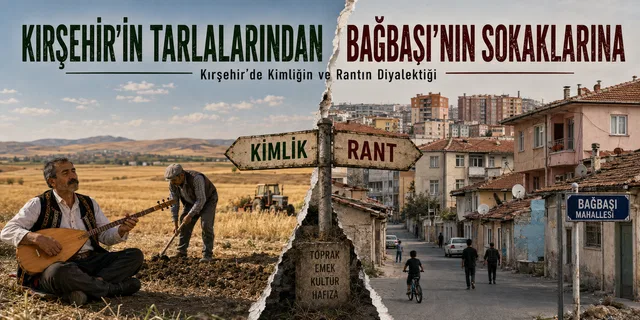
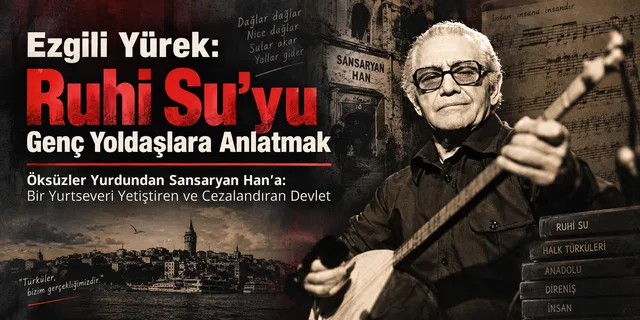
In an earlier piece, From the Fields of Kırşehir to the Streets of Bağbaşı, we briefly noted the unravelling in Kırşehir and the commodification of the Abdal tradition. This piece is built on that one; what we passed over there in a sentence we will follow here across a lifetime. And we will keep the principle we set down in our pieces on Ruhi Su, Yılmaz Güney, and Víctor Jara: to tell the artist neither as a saint nor as a victim; to understand him inside the social relations that produced him.
The Story of a Garip
Kırtıllar, 1938: A Village Without Land
Neşet Ertaş was born in 1938 in the village of Kırtıllar, in the Çiçekdağı district of Kırşehir. Kırtıllar is not an ordinary Central Anatolian village; it is an Abdal village. That distinction determines everything that follows in this piece.
In the Anatolian village the foundation of the social hierarchy is land. Those who have land are "peasants"; little or much, they own something. The Abdals had no land. They made their living by playing at other people's weddings, by tinning, by making sieves and baskets, by whatever they were given. Ottoman records list them as "Turkmen Gypsies" and, at the end of the seventeenth century, they were subjected to the cizye levied on Gypsies. They themselves say "Abdal," bind themselves to the Alevi-Bektashi faith, and treat the label "Gypsy" as a grave insult.
His father, Muharrem Ertaş (1913–1984), was born in the village of Yağmurlu Büyükoba as the son of the zurna player Kara Ahmet, and was a master who played and sang at Central Anatolian weddings for more than sixty years; one of the great voices of the bozlak. His mother, Döne Hanım, was from the village of Hacelobası in Keskin.
Neşet's mother died while he was still a child. He tells what followed himself:
"When my mother died my father loaded his five orphans onto the back of an animal and went from village to village looking for a mother for us. No one would give us their daughter, or their widowed daughter-in-law. If people had been people, perhaps my brother would not have died of neglect at three months."
Read that sentence slowly. "No one would give their daughter" is not a love story; it is a story of status. A landowning peasant does not give his daughter to a landless musician, to an Abdal. Marriage, in the village, is the circuit through which property and standing circulate; those without property have no entry into that circuit. The death of a three-month-old baby "of neglect" is the price of that closed door.
Cymbals, Spoons, Violin, Saz: Music as Child Labour
Neşet began playing at weddings at five or six: first the darbuka, spoons, cymbals; then the violin, the kemençe, the cümbüş; last the bağlama. Alongside his father he also danced as a köçek — that is, he danced at weddings. With his father he travelled the villages of Kırşehir, Yozgat, Kırıkkale, Nevşehir, Niğde, and Kayseri.
"I was eight. We went from village to village, door to door. Flour, wheat, bulgur — whatever they gave us, that is what we lived on."
It is easy to see here the romantic "making of a folk bard." What we are looking at is a child's labour. Neşet Ertaş's musical education is part of a family's survival strategy: if a child plays the cymbals as well, a little more tip comes out of the wedding. Below we will see, in figures, that today a third of school-age Abdal boys in Bağbaşı work, and that a significant share of them play at weddings. Eighty years later, the same scene.
Let us hear the inner logic of the wedding economy from him as well:
"Everyone who was not an Abdal, the old and the young, was our ağa. We had to show them respect. Even with a five-year-old child we would speak by saying 'my ağa's son, my ağa's daughter…'"
"We had no other income. Against which wall was my father supposed to leave five orphans and go?"
Attend to the word "ağa." Saying "my ağa" to a five-year-old child is not personal courtesy; it is the language of a relation of production. The Abdal musician sells his labour not for a wage but for a tip. The tip is the wage transformed into a personal favour: its amount is set not by a contract but by the giver's whim. That is why those who live by tips must watch the giver's mood and call him "my ağa." Even capitalism's free wage-labour does not yet exist here; the relation is a semi-feudal relation of patronage.
The everyday face of this relation is humiliation:
"Wherever we went they would say 'the Abdals have come, the Abdals have gone'; we had taken it on by then."
"One day, while I was playing with the children in a village, I heard one of them say, 'We were brought forth from the soil, you from dung.'"
"We from the soil, you from dung (manure)." This sentence from a child's mouth is the barest summary of the village's class ideology. Those who own land count themselves as created from the soil; those without land are its residue. A property relation has been turned into a creation myth.
Istanbul, 1957: A Garip Nightingale
In his youth Neşet went to Istanbul. His first record came out in 1957: "Neden Garip Garip Ötersin Bülbül" (Why Do You Sing So Forlorn, Nightingale). The words were his father Muharrem Ertaş's; the label was Şençalar. In his own words: "At last I went to the Şençalar Plak studio. I played there, I signed a contract. Kadri Şençalar took me and brought me to Beyoğlu Saz."
"I signed a contract." The child who played for tips in Kırtıllar is, for the first time in Istanbul, putting his name to an agreement. This is the Abdal musician's passage from the wedding economy into the culture industry — that is, into the record market. The passage is both a deliverance and a new dependence: he will now work not at the whim of an "ağa" but to the account of a record company. And the title of the first record carries the key word of his entire later career: garip.
Ankara: "Local Artist"
After about two years in Istanbul he settled in Ankara. When he heard his uncle Hacı Taşan on the radio, he says, "I took up the saz, got on the bus, and went to Ankara Radio House." At Ankara Radio he made programmes under the title "local artist from Kırşehir" and met Muzaffer Sarısözen.
The title "local artist" is a small but instructive detail. The Republic's cultural apparatus collects folk music, notates it, broadcasts it on the radio; but it classifies those who produce that music as "local." What is "national" is the collecting institution; what is "local" is the person collected. This is the other face of the enlightenment institutions we described in our piece on Ruhi Su: the same state throws a conservatory-trained opera singer into prison, and shelves an Abdal master who never went to school as "local." In both cases the power of decision lies not with the one who makes the music but with the one who classifies it.
The Ankara years are also the years of the gazino and the pavyon. Radio gives prestige but does not keep you; a living comes from playing in nightclubs and saz halls. Neşet Ertaş met his wife, Leyla Hanım, in a gazino in Ankara. The marriage lasted seven years; they had three children: Döne, Canan, Hüseyin. They separated in 1970. This marriage, which his father did not approve, became the subject of one of his most personal türküs, "Cahildim Dünyanın Rengine Kandım" (I Was Naive, I Was Taken In by the World's Colours).
The 1970s are his most productive years on the record market. "Gönül Dağı" (The Mountain of the Heart) was recorded in these years, in 1970 or 1971, on a 45. Over his lifetime he cut some four hundred records; the great majority of the nearly five hundred türküs he published were his own work.
Paralysis, Rent, and Gurbet
At the end of the 1970s paralysis began in his fingers. For a musician this is the same thing as a worker catching his hand in a machine: the loss of the means of production, that is, of the body. He received treatment; but first the rent had to be paid:
"I could not pay the rent on my house. I told an acquaintance… He straightened his tie, said 'Uh-huh,' and left. Then I went to Germany on the sponsorship papers my brother sent."
Who the "acquaintance" who straightened his tie was, we do not know; we do not need to. The scene is clear enough: an artist whose records play in millions of homes, whose voice is heard on the radio every day, leaves his country because he cannot pay the rent. Even the legal form of the departure is meaningful: the "bakım kâğıdı," the sponsorship paper — that is, the document a worker brother in gurbet submitted to the German authorities so that he could take him in. The plectrum of the steppe entered Germany as a dependant for whom a worker's family had assumed responsibility.
He was treated first in Berlin, then settled in Cologne. In Germany he played at guest-worker weddings; that is, he continued the work he had done in Kırtıllar, this time at the weddings of workers who had migrated from Central Anatolia to the banks of the Rhine. For a time he taught saz at an art school. He stayed there for twenty-odd years.
"I stayed in Germany for twenty-odd years. Never mind anyone coming to my house — not one person telephoned one day to ask, 'Are you dead or alive?'"
"I am in my house in Germany, and on TRT they were saying 'this türkü taken from the late Neşet Ertaş.'"
That second sentence is perhaps the most important document in this piece. State radio went on broadcasting his türküs; the türkü lived in the state's archive. But the man who made the türkü was, in the eyes of that same state, dead. The product of labour had been torn from its producer and turned into the property of an institution; the producer had vanished. It is hard to find a barer example of what Marx called alienation: a human being becomes "the late" beside his own product.
The Return: Harbiye, İzmir, and a Refusal
In 2000 he returned to the stage in Istanbul, at the Harbiye Cemil Topuzlu Open-Air Theatre. The recording of the concert opens with "Bir Ayrılık, Bir Yoksulluk, Bir Ölüm" (A Parting, A Poverty, A Death), which gathers his whole life in three words. After the return he settled in İzmir.
In these years he was offered the title of State Artist. He refused. He explained why to Agos in 2008:
"What does State Artist mean? We are all citizens of this state, artists of this country. And what is a 'State Artist,' besides? I saw a 'distinction' here, so I did not accept it."
The meaning of this refusal should not be overstated; Neşet Ertaş was not a political militant, and he did not define himself as one. In 2006 he accepted the Grand National Assembly's Outstanding Service Award; he received the title "Living Human Treasure," given by the Ministry of Culture within UNESCO's intangible cultural heritage framework. But what he refused is meaningful: a hierarchy. A man crushed all his life under the distinction between "ağa" and "Abdal," between "national" and "local," did not recognise a distinction offered to him from the very top. The sentence "because I saw a distinction" is the seventy-year-old answer of the child who was stoned in Bağbaşı.
The Gown: "I Who Never Went to School"
On 25 April 2011 Istanbul Technical University, on the initiative of the State Conservatory of Turkish Music, gave him an honorary doctorate. What he said at the ceremony is like the balance sheet of a life:
"On this honoured day I who never went to school stand before you."
"I did not go to school, yet they dressed me in this robe as if I had finished school."
"I am a saz player, I play türküs and I sing türküs. I know nothing else."
"We are all travellers, coming and going. I am a member of a lineage that comes down from Kerem, from Mecnun, from Pir Sultan Abdal."
An Abdal who never went to school, wearing a gown, in the hall of an engineering university. It is possible to read this scene as a "success story." We will read it otherwise: the gown is a prize given to individual genius; but that the man wearing it could not go to school is not individual, it is class. In Bağbaşı today there are still children who cannot read or write, who leave school early, who play at weddings. Putting a gown on one person does not solve the school problem in the neighbourhood that person came from; sometimes it covers it over. The honorary doctorate of a man who, in his own words, "never went to school" is also a confession document of the order that deprived him of school.
Death and Two Funerals
Neşet Ertaş left us on the morning of 25 September 2012 in a hospital in İzmir, at the end of a long struggle with advanced cancer. His funeral was seen off twice, and both farewells staged the contradictions of his life.
In İzmir, in the hospital garden, a tension broke out over where the funeral rite would be held. Engin Gündük of the Alevi Bektashi Culture Associations said, "Neşet Ertaş, who lived 74 years with an Alevi-Bektashi identity, is being Sunnified in death"; he added that "a forced state ceremony is being arranged for a man who refused the title of State Artist while he was alive." There was a brief scuffle. In one of his last interviews Neşet Ertaş had defined himself as Bektashi and said he respected all beliefs.
The next day, on 26 September, tens of thousands joined the funeral that set out from Ahi Evran Mosque in Kırşehir. Prime Minister Recep Tayyip Erdoğan shouldered the coffin; CHP leader Kemal Kılıçdaroğlu, Deputy Prime Minister Beşir Atalay, Minister of Culture and Tourism Ertuğrul Günay, and President of the Constitutional Court Haşim Kılıç were there. According to soL, Erdoğan said at the funeral, "Trillions, millions, offices, ranks — all of it is empty."
His will was to be buried at his father's feet. The first grave that was dug was far from his father's; at Minister Günay's request the grave was dug again, at Muharrem Ertaş's feet. Neşet Ertaş was buried in Bağbaşı Cemetery.
Let us set the scene once more. A country's prime minister shoulders an Abdal's coffin, and that coffin is lowered into the cemetery of the neighbourhood where Abdals live. The shoulder that bore the weight of the coffin never bore the green-card queue of that neighbourhood. The words "offices, ranks — all of it is empty" are spoken from the very top of office, in the cemetery of those who have none. The state dresses him, in death, in the title he refused while alive — dresses him in the ceremony itself.
The "Garip" Documentary: A Parting, A Poverty, A Death
One of the works that reintroduced Neşet Ertaş to a wide public is "Garip," the documentary Can Dündar made in 2005 and Kalan Müzik published. The documentary has three parts, and the titles of the parts come from Neşet Ertaş's türkü of the same name: "Bir Ayrılık," "Bir Yoksulluk," "Bir Ölüm." It opens with Neşet Ertaş meeting the land of his birth and his fellow townsfolk after fifty-five years; archive footage of Muharrem Ertaş, scenes shot in the village, the story of gurbet and return, are woven together. After his death NTV rebroadcast the documentary on 29 September 2012. Today the first part and the third part can be watched on YouTube.
We recommend that you watch the documentary; but we also recommend that you watch it with two eyes.
The first eye sees the documentary's power. Can Dündar made one of the finest examples of Turkish television's tradition of taking an artist "back to his roots." He carries Neşet Ertaş's voice, his silence, the endless emptiness of the steppe, the bond of mastery between a father and a son, to the viewer. The three part titles, without meaning to, give the skeleton of a class biography: parting (from the mother, the village, the wife, the country), poverty (from Kırtıllar to Germany), death (of the brother, of the mother, of being declared "the late").
The second eye sees the documentary's limit. A liberal-humanist documentary is inclined to tell "garip" as a state of mind: loneliness, melancholy, gurbet, the fate of "these lands." But garip is not a state of mind; it is a social position. In Turkish the word garip comes from Arabic ġarīb: stranger, without place or home, without anyone. In the Anatolian türkü the garip is the person with no land, no house, no "ağa," no backing. The documentary's camera shows this poverty but does not give it a name: is this poverty "fate," or the product of a particular property order? Even a good documentary, if it leaves the question to the viewer's tears, has left the answer to the dominant narrative. Our work is to write that answer.
The Class of the Garip: Where Do the Abdals Stand?
Now to the question itself. Where do the Abdals stand on the map of class?
There are easy answers, and both are wrong. The first is the "ethnic/cultural minority" answer: the Abdals are a community with a culture of their own; the problem is "recognition." This answer sees culture but does not see poverty, the material basis of exclusion. The second is the "lumpen" answer: a section with no regular work, living from wedding to wedding, off the books. This answer sees poverty but turns it into a moral defect, an "irregularity."
The right answer is the historical one. The Abdals are the propertyless service labourers of the Anatolian countryside. Because they do not own land they stand outside the village's order of production, but because they provide services indispensable to the village's reproduction (wedding music, tinning, sieve-making, basket-making) they stand inside it. Inside but outside: this is exactly what Marxist sociology calls the "marginal." Without a wedding the village cannot marry; a village that cannot marry cannot reproduce itself; but the one who plays the wedding cannot take that village's daughter.
This form of labour has three features:
- It is seasonal. Weddings are held in summer and after the harvest. In a 2018 study in Kırşehir an Abdal musician sums it up in a single sentence: "Work two months, lie idle ten." In winter they put it on the grocer's slate; in the summer wedding season they close the debt. This is the debt cycle of the rural proletariat.
- It is a tip, not a wage. We have already seen: the tip ties the price of labour to the buyer's whim. That is why the Abdal musician sells not only his music but his obedience, his saying "my ağa." The labour market is interwoven with a status market.
- It is hereditary. The trade passes from father to son, because other doors into a trade are closed. Without land you do not become a farmer; without school you do not become a civil servant; if the stamp "Abdal" is on you, you do not become an apprentice to a shopkeeper. What Neşet Ertaş took from his father, and his father from Kara Ahmet, is a class fate as much as an artistic inheritance.
These three features make the Abdals Anatolia's oldest "flexible" labourers. What we today call the gig economy — contractless, insecure labour, tied to the buyer's whim, seasonal and piece-rate — has been the ordinary condition for Abdals for centuries. Today the courier sells a smiling face to the customer for a "star rating"; yesterday the Abdal musician said "my ağa" for a tip. The form changed; the relation is the same.
Alevism, Bektashism, and the Deep Grain of Kırşehir
Kırşehir is one of the knot-points of Anatolia's history of belief and craft. The tomb of Ahi Evran, counted as the founder of the Ahi organisation, is here; Hacıbektaş is an hour away; the Cacabey Madrasa is one of the astronomical centres of the Seljuk period. The Abdal ocaks (Mazlum Abdal, Tozlu, Kara Yağmurlu) are part of the Alevi-Bektashi organisation of belief in this geography.
A class reading of this historical grain is possible and necessary. The Ahi organisation was the organisation of urban craftsmen and artisans: solidaristic within, closed to the outside. The Alevi-Bektashi path, by contrast, took shape as the faith of the countryside, the nomad, and the poor against the Ottoman state's central Sunni ideology. From the Babaî revolt of the thirteenth century to the Kızılbaş uprisings of the sixteenth, many of Anatolia's social rebellions fed on this vein of belief; the Plain of Malya, where the Babaî revolt was crushed, still lies within the borders of Kırşehir. The Abdals were on the lowest layer of this vein: outside the centre as belief (Alevi), and outside the village as class (landless).
This means a double exclusion. A 2004 linguistic study notes that the Abdals of Kırşehir "slowly Sunnified as they mixed with their surroundings." Other studies say they have sustained their Alevi-Bektashi identity. The contradiction between these two observations is in fact two faces of one process: an excluded community is forced to adapt to the dominant identity in order to reduce the exclusion. Assimilation is, more often than not, not a choice but a survival strategy. The mosque–cemevi tension at Neşet Ertaş's funeral is this process made visible at a graveside: the man who said "I am a Bektashi" while he lived could not choose whose rite would see him off in death.
Today, on the fourteenth anniversary of his death, the official commemoration programme in Kırşehir has a mevlit and a serving of helva; there is no cem. We record this as an observation, not as an accusation. How someone is remembered is a question of power, as much as who is remembered.
A warning here as well: to set Alevism, or Abdallık, in a display case of "distinctiveness" is also a trap. The egalitarian, anti-hierarchical vein of the Alevi-Bektashi tradition is real; but that vein, by itself, did not abolish poverty. Belonging to an ocak did not get the Abdal child into school. Faith can be the language of solidarity; but without the material organisation of solidarity — that is, the union, the cooperative, the association, the neighbourhood assembly — language is not enough.
The Political Economy of the Steppe: Poverty in Central Anatolia
To read Neşet Ertaş's story only as the story of the Abdals is also incomplete. Because his türküs were heard as their own story by millions of Central Anatolians who are not Abdals. Why?
Because Central Anatolia, for most of the Republic's history, was the country's labour depot. When mechanisation in agriculture began in the 1950s, the number of tractors in Turkey increased twenty-fourfold in twelve years: 1,756 in 1948, 42,136 in 1960. The tractor that came with the Marshall Plan meant yield for the landowner, unemployment for the landless or near-landless peasant. Sharecroppers, farmhands, small peasants flowed to the cities — first to Ankara, to Istanbul, then to Germany. Labour migration from Kırşehir to Germany began in 1964 with two thousand people; today an estimated fifteen to twenty thousand people from Kırşehir live in Europe. In the laments of the Kırşehir region, Germany appears as an image of its own.
The wedding economy dissolved with this migration as well. As the village emptied, the village wedding declined; in the city came the wedding hall, the organ, the electronic sound system. The Abdal musician's traditional market narrowed. That Neşet Ertaş played at guest-worker weddings in Germany is, from this angle, symbolic: because the market migrated, the musician migrated too. Labour goes where capital and population have gone.
Today's figures show that this process is not over:
- The population is shrinking. According to figures TÜİK released in February 2026, Kırşehir's population fell to 242,777 in 2025; it declined by 1,769 people in a year.
- It is losing people. In 2025, 9,729 people came to Kırşehir and 10,902 left; net internal migration was minus 1,173. The only province in the region with net in-migration is Nevşehir.
- Income lags. According to TÜİK's 2024 data, GDP per capita in Kırşehir is 10,572 dollars; the Turkish average is 15,325 dollars. Kırşehir ranks 48th among 81 provinces and was one of the three provinces whose economy contracted that year.
- The districts lag further still. In the Ministry of Development's SEGE-2022 district ranking, Kırşehir Centre is 181st; but Çiçekdağı, where Neşet Ertaş was born, is 782nd, and Akçakent 849th — that is, in the least developed sixth tier.
- Industry is a single item. There are two large-scale enterprises in the province: Petlas, founded by the state in 1976 and later privatised, and Çemaş. In 2022, 90 percent of the province's 368 million dollars of exports was plastics and rubber — that is, in practice, a single tyre factory.
This table is the numerical form of what we called "spatial punishment" in our Yağmurlu piece. The poverty of Central Anatolia is not natural; it is the result of the land regime, of industry piling up on the coasts and in the big cities, of public investment being withdrawn from the town, of privatisation. The emptiness of the steppe is not a geography; it is a model of accumulation. And in this model the Abdals are the lowest link: the poor community of the poor neighbourhood of a poor region.
That is why the "gurbet" in Neşet Ertaş's türkü became the türkü of millions. Gurbet is not a feeling; it is the result of a relation of production: having to leave your hometown in order to be able to sell your labour-power. The "garip" türkü that a construction worker from Kırşehir heard in Ankara, that a factory worker heard in Cologne, was putting his own class experience into words. Neşet Ertaş's universality is not the universality of a soul; it is the prevalence of a class experience.
The Fate of Bağbaşı
Now let us return to the neighbourhood where Neşet Ertaş was stoned and where he was buried. Because if his story is one person's story, Bağbaşı's is a community's story, and that story is not over.
Bağbaşı is the neighbourhood of Kırşehir where Abdals live in concentration. Abdals from Kırşehir also live in Kaman, in Mucur, in Çiçekdağı Kırtıllar, in Yerköy, and in neighbouring districts; a significant share have migrated to İzmir to find work.
The 2015 study "Access of the Kırşehir Abdals to the Right to Education," published in Eğitim Sen's journal Eğitim Bilim Toplum, counted Abdal households in Bağbaşı and its surroundings systematically for the first time. The figures are these:
| Indicator | Rate |
|---|---|
| Living on a green card (health coverage tied to a certificate of poverty) | 81% |
| Covered by SSK social insurance | 15% |
| With no coverage at all | 4% |
| Whose trade is musicianship | 37% |
| Primary-school graduates | 57% |
| High-school graduates and above | 9% |
| Unable to read or write | 6% |
| School-age boys who work | 34% |
| School-age girls who work | 19% |
| Who say they are looked down on in society | 59% |
| Who say they are looked down on in public institutions | 35% |
| Who say there is no institution that supports them | 92% |
Among the jobs of working boys, playing at weddings (22%), shoe-shining (14%), and collecting scrap (13%) stand out. At the head of the forms of being looked down on comes being called "Abdal" itself; the share of children mocked and nicknamed at school is 23 percent.
The 2018 study "Abdals as the Working Poor in Turkey," published in the Journal of Administrative Sciences, gives the same picture this time in the voices of those interviewed: 27 percent with no income at all, 41 percent working without insurance, no university graduates. One of those interviewed says, "They treat you as second class because you are Abdal." Another: "We are hungry people left at the bottom." A third describes the scattering of the neighbourhood: "In this Kırşehir we were 300–400 households. Now there are not twenty households left living in our neighbourhood."
Urban Transformation: From Garden to Block
This scattering has a name: urban transformation. Bağbaşı was declared an urban transformation zone on 10 February 2011. Through TOKİ, 2,712 dwellings in all were planned in three stages; the draw for the first stage was held shortly after Neşet Ertaş's death, on 6 November 2012. Rights-holders were given rent assistance of 600 lira a month for up to eighteen months. The dwellings of the third stage had still not been handed over to their owners about a year after the delivery date; the matter was carried to parliament in a written question.
A paper presented at a 2021 symposium of the Chamber of City Planners of TMMOB describes how the neighbourly and solidarity networks of Bağbaşı women who moved from detached houses with gardens into TOKİ blocks grew weaker. This is the class effect of urban transformation that we have seen everywhere in Turkey: the poor's real capital is not so much money as relations. The child left with a neighbour, the grocer who writes it on the slate, the wedding gone to together: these are a poverty community's infrastructure of survival. The apartment block, the mortgaged title deed, and the scattered neighbourhood tear that infrastructure out. A small Central Anatolian version of what happened to the Roma who were cleared from Sulukule and settled forty kilometres away in Taşoluk.
Neşet Ertaş was buried in Bağbaşı Cemetery on 26 September 2012, in the very middle of this transformation. The cemetery stayed where it was; the neighbourhood was scattered. The care shown to a community's dead was not shown to its living.
Clasped to the Breast at the Funeral, Excluded in Life: "Cıngan" Culture
In a 2008 interview Neşet Ertaş relates a classification he heard in childhood:
"They would count the various peoples in our country, and last they would say 'Cingan.' We came just before the Cingans."
And he recalls an Anatolian saying: "If you are rich they call you bey or pasha / If you are poor they call you Abdal or Cingan."
These two lines are this piece's thesis in the people's mouth. Attend to the saying: "Abdal" and "Cingan" are used here not as ethnic names but as names of poverty. The rich are called "bey," "pasha"; the poor are called "Abdal," "Cingan." Ethnic insult is the language of class insult. The people said this before the sociologists.
The word "Cıngan" (or "cingan," "çingen") is still used in Central Anatolia today to insult Abdals, Roma, Dom — in short, everyone poor and counted as "outside the settled order." The function of this word is the very mechanism we described in our piece on racism: telling one of two poor people working for the same daily wage "you are lower" and thereby making their common enemy invisible. The child who threw stones at the Abdal child in Bağbaşı was probably also a child of a poor family. The distance between the one who threw the stone and the one who was hit was much shorter than the distance between the one who threw the stone and his "ağa."
Now look at the contradiction. The same society:
- Walked in the tens of thousands at Neşet Ertaş's funeral, but said nothing when the Abdal child in Bağbaşı was called by a nickname at school.
- Made Kırşehir a "UNESCO City of Music," but left 81 percent of the community that makes that music condemned to the green card.
- Applauds Abdal music on the festival stage, but will not take an Abdal youth as an apprentice beside a shopkeeper.
This contradiction can be read as hypocrisy, but it is more than that: it is a form of appropriation. The culture industry and city marketing tear the value a community produces (the music, the türkü, the "authenticity") away from it and turn it into the symbolic capital of a city, a municipality, a ministry. The türkü is claimed; the one who makes the türkü is excluded. This is the cultural form of the expropriation of the product of labour. Surplus value is not produced only in the factory; it is also extracted from a neighbourhood's music.
The language of official policy documents this invisibility. In Turkey's 2023–2030 Strategy Document for Roma Citizens and in the 2026–2030 action plan, the word "Abdal" does not appear even once. On the state's map of poverty the Abdals do not exist as a separate item. Let us say here what we said in our education dossier: the absence of data is also a datum. What is not counted is not solved.
Claimed Abroad, Looked Down on at Home
One of the most striking patterns in Neşet Ertaş's life is that he gained value the further he moved from his hometown.
In Istanbul a record company signed a contract with him. In Ankara the radio broadcast him. In Germany guest workers had him play at their weddings. In 2000 in Harbiye thousands gave him a standing ovation. In Istanbul a technical university put a gown on him. But in Kırşehir, in Bağbaşı, he was still "Abdal." In 1990, while Neşet Ertaş was still in Germany, Abdal musicians speaking in the local paper Kırşehir Çiğdem summed up their situation like this: "We are the owners of a trade that does not even find the chance to weep for its dead."
This pattern has an explanation. In a distant city, in a concert hall, Neşet Ertaş is an "artist"; the urban listener consumes him as an aesthetic object, independent of his class position. In his hometown he is the man of a particular neighbourhood, a particular family, a particular status; everyone knows "whose what" he is. The hierarchy of the town is far more rigid than the anonymity of the big city. For the local notables an Abdal, however famous, is the man who plays at their wedding.
Today this picture has partly changed; the Kırşehir Municipality has an Abdals Music Ensemble, a commemoration programme is held every year, and in August a panel on "the roots of Abdal culture" is organised at the Neşet Ertaş Culture and Music Festival. These things are valuable and we do not belittle them. But the question that must be asked is this: did this institutionalisation change the green-card rate in Bağbaşı? What do a few salaried, insured musicians in the municipal ensemble mean for the rest of the neighbourhood? The measure of claiming someone is not the festival poster; it is the high-school diploma of the child in the neighbourhood.
Unable to Enter Civilian Life: Insecurity and Invisibility
The problem of the Abdals' "integration into civilian life" is usually presented as a problem of cultural adaptation: nomadic habits, a closed community, endogamy, a "different way of life." This presentation confuses the result with the cause.
A community's access to the rights of citizenship depends not on an abstract "adaptation" but on concrete institutions: insurance, regular work, a title deed, school, health care. Let us look at the figures once more. An 81 percent green-card rate means that access to health care depends not on an employment relation but on a finding of poverty. A 41 percent rate of work without insurance means no pension in old age. A winter on the grocer's slate means indebtedness to the grocer, the moneylender, the relative. Thirty-five percent looked down on in public institutions means being met as "Abdal" even as you walk through the state's door.
The 2021 study that SODEV, İPA, and the Zero Discrimination Association conducted with Rom, Dom, Lom, and Abdals in five provinces shows that this picture is not peculiar to Kırşehir: 77.5 percent face the problem of unemployment, 80 percent are in debt, a quarter have no social coverage; average life expectancy is 68.5 years, ten years shorter than the Turkish average. Fifty-nine percent of those interviewed say they ate no meat for a year.
The conclusion is clear: the Abdals' inability to enter civilian life comes not from their "inadaptability" but from the material doors of civilian life being closed to them. A significant part of what we call cultural difference is a form of defence produced by generations of exclusion. Endogamy, the closed community, solidarity within the trade: these are the ways a community that no other institution protects protects itself. If you open the doors this defence becomes unnecessary; if you keep the doors closed and expect "adaptation," you have merely culturalised the exclusion.
Education and Poverty: "I Who Never Went to School"
Let us return to Neşet Ertaş's sentence at ITU: "On this honoured day I who never went to school stand before you." That an Abdal child in Kırtıllar in the 1940s did not go to school is not surprising. What is surprising is that in 2015 in Bağbaşı 6 percent of Abdals still could not read or write, and only 9 percent were high-school graduates or above. In the 2021 study the high-school continuation rate among Rom, Dom, and Abdal youth is 8.5 percent. In another study the share of Roma women who cannot read or write is close to 33 percent, and the share of women who are higher-education graduates is one in a thousand.
Behind these figures there is a simple economics. If a family's living depends on the saz the child plays at a wedding, the shoe he shines, the scrap he collects, every hour that child spends at school is the family's loss. Poverty produces lack of education; lack of education reproduces poverty. The mockery and the nicknames suffered at school close this cycle: the child is both pulled out of school economically and made to feel unwanted at school.
Neşet Ertaş is not the exception to this cycle; he is its brightest proof. He could not go to school; but talent opened the door of class by the width of one person. Opening that door to everyone is the work not of a talent but of a policy: a free and genuinely inclusive school, a school meal, a child allowance, a social security that does not leave the family's income dependent on the child's labour. Our education dossier discusses the detail of this policy. Here let us add only this: a country does not pay its education debt by putting a gown on the child it did not send to school, at the age of seventy.
The Official Narrative and a Class Reading
Let us set what we have told so far side by side:
| Official / nostalgic narrative | Class reading |
|---|---|
| Neşet Ertaş is "the plectrum of the steppe," "the heart-voice of Anatolia." | Neşet Ertaş is a music worker who came out of the Abdals, the propertyless service labourers of the Anatolian countryside. The power of his voice comes from his putting this class experience into words. |
| The word "garip" is a melancholy, a state of the heart. | Garip is a social position: without land, without a house, without an "ağa," without backing. The melancholy in the türküs is the emotional expression of this position. |
| The Abdals are a community with a culture of their own, a "colourful" tradition. | The Abdals are a poor community, 81 percent of them on the green card, a third of their children working. The culture has been produced inside this poverty and in spite of it. |
| Neşet Ertaş was a humble man of the people who did not curse his fate. | Neşet Ertaş is a labourer who had to leave his country because he could not pay the rent, who was forgotten for twenty years, who refused the privilege the state offered "because he saw a distinction." |
| The state claimed his funeral; Kırşehir clasped him to its breast. | The state shouldered his coffin but left his neighbourhood to transformation and his fellow townsfolk to the green card. What is claimed is the türkü; not the community that makes the türkü. |
| Kırşehir's being a UNESCO City of Music is the value given to Abdal culture. | City marketing turns a community's cultural labour into the city's symbolic capital. The measure of value is not the festival; it is the high-school diploma in Bağbaşı. |
| The poverty of Central Anatolia is "the fate of the steppe." | The poverty of Central Anatolia is the result of the land regime, of mechanisation, of industry piling up on the coast, and of privatisation. Gurbet is the migration form of this model of accumulation. |
What Is Being Covered Over?
At commemorations of Neşet Ertaş, three things are usually covered over. Let us open them.
The first is his being Abdal. In most commemorations Neşet Ertaş is a "man of Kırşehir," an "Anatolian bard," a "man of the heart"; that he was Abdal is either not said at all or is passed over as a folkloric detail. Yet every break in his life, from his birth to his grave, was determined by the class content of this identity. To erase his being Abdal is to erase the exclusion he lived.
The second is his Bektashism. The funeral and the commemorations of a man who defined himself as Bektashi were, and still are, conducted largely with the rituals of another faith. This is more than disrespect for one person's belief; it is writing over a history. The Alevi-Bektashi tradition was the organisation of belief of the countryside and the poor against central authority in Anatolia; to carry one of this tradition's best-loved voices outside that tradition also empties the tradition of its social content.
The third is his gurbet. Neşet Ertaş's Germany years are, in most commemorations, passed over briefly as "the period he lived abroad." Yet those years are the years of an artist leaving his country over the rent, going into gurbet on "sponsorship papers," being declared dead on state radio. To tell those years is to tell how this country treated its own artist. A pattern we have seen in other forms in our pieces on Yılmaz Güney and Ruhi Su: this country, while the artist is alive, either imprisons him or exiles him or forgets him; after he dies it gives his name to a square, to a culture centre.
Class in the Türküs: The Social Source of Melancholy
Now we come to the hardest and the most beautiful part: the türküs themselves. When you listen to Neşet Ertaş's türküs something in a person breaks; you all know this. The question is: what is that thing that breaks, and why does it break?
In this section we will not set down the words of the türküs one by one; we want you to listen to the türküs, to hear their words with your own ear. But we will look at what each of them says, at which feeling it awakens, and at the social source of that feeling.
"Neden Garip Garip Ötersin Bülbül": A Poverty in the Form of a Question
The first record begins with a question. The words are Muharrem Ertaş's: a human being asks a nightingale why it sings so garip. In classical Anatolian poetry the nightingale is the lover of the rose; in both divan poetry and folk poetry its song is the pain of love. But in this türkü the one who asks the question is himself a garip, and the nightingale becomes a mirror: a human being puts his own condition into words by asking it of a bird, because there is no human being who will listen to that condition.
The feeling it awakens: loneliness. But the source of this loneliness is not metaphysical. It is the loneliness of someone with no land, who cannot enter the village's marriage network, who is met wherever he goes with "the Abdals have come." The question is asked of the nightingale because society does not want to hear that question. The first record a father and a son filled together opens with a question a class asks about its own condition. The answer to that question is not in nature; it is in society.
"Anadan Öksüzüm," "Gariptir," "Garipler": The Social Condition of Orphanhood
Many of Neşet Ertaş's türküs are built on orphanhood, on having no one, on being garip. Even his pen name is "Garip." In these türküs orphanhood is not merely the loss of a mother; it is a social unprotectedness. His father loads five orphans onto the back of an animal and goes from village to village looking for a "mother"; no one gives their daughter; a three-month-old brother dies of neglect.
The feeling it awakens: having no one to stand for you. The listener recognises the unprotectedness in his own life: the worker with no one beside him when he is sacked from the factory, the migrant working uninsured on a building site, the young person left alone in the city. The power of the türkü comes from this recognition. When we read it with the eye of class we see this: orphanhood is the name, in individual experience, of a society's failure to build the institutions that would protect the poor. Where there is no social state, everyone is a little orphaned.
"Az mı Çektim": An Accounting of What Has Been Suffered
The question of this türkü is in its title: the account of the troubles suffered. The feeling it awakens is a reproach; a reproach whose addressee is unclear. Fate? The beloved? The world?
Let us stop here and say something. The reproach in Neşet Ertaş's türküs is most often unaddressed; the agent it is aimed at is not named. This is not his fault; it is the result of the historical position of Anatolian folk poetry and of the class that produces that poetry. An unorganised class speaks its pain but cannot name the agent; because to name the agent it must first see itself as a class. In our piece on Víctor Jara we set down the first lesson of Latin America's New Song movement as "poverty has an agent"; in one song Jara accused a minister by name. Neşet Ertaş's türkü does not come to that point. That it does not come there does not diminish him; but it describes our task: to complete the accounting of the troubles he listed by naming those responsible for them.
"Gurbet Gel," "Yine mi Gurbete Düştü Yolumuz": The Türkü of Migration
Gurbet is a condition Neşet Ertaş both lived and sang. These türküs tell of parting, of the road, of not being able to return.
The feeling they awaken: longing and helplessness. For a part of those who listen, this feeling is entirely concrete: a tyre factory in Cologne, a construction site in Ankara, a textile workshop in İzmir. The figures we listed above — that is, thousands of people leaving Kırşehir every year — show that these türküs are still being written. With the eye of class: gurbet is the dragging of labour-power after capital. The türkü records the mark of this dragging on the human heart.
"Ah Yalan Dünya": The Transience of Property, a Two-Sided Wisdom
This türkü speaks the emptiness of the world's goods, of wealth, of fame. It is one of the deepest themes of Anatolian Sufism and of Alevi-Bektashi deyiş: goods and property are passing, the human being is a traveller who will go. Neşet Ertaş's words at ITU are of this vein: "We are all travellers, coming and going."
The feeling it awakens: a kind of stillness, a letting-go. But this wisdom is two-sided, and the eye of class must distinguish the two sides. On the one hand, the words "the world's goods are a lie" are a critique of accumulation, of greed, of property's drive to make itself eternal; they are the language of the poor's moral superiority over the rich. On the other hand, the same words can also be a consolation: since everything is passing, then endure poverty, do not ask for justice. Remember the sentence Marx wrote on the social function of religion: religion is "the sigh of the oppressed creature, the heart of a heartless world." That is, both the expression of a real pain and a protest against that pain and a comfort that makes it possible to live with that pain.
Neşet Ertaş's funeral showed how these two sides come apart: when the words "offices, ranks — all of it is empty" are spoken from the mouth of the holder of the highest office, they become not a critique but an acquittal. The wisdom of the false world, in the poor's mouth, is an objection to property; in the property-owner's mouth it is a cover that prevents property from being questioned. The same line changes class according to who says it.
"Gönül Dağı": The Steppe's Landscape Turned Inward
Perhaps Neşet Ertaş's best-known türkü constructs an inner world as a landscape: the heart is a mountain; rain and blizzard fall on it; a flood runs inside it. The emphasis on secrecy that repeats at the ends of the lines says that the feeling cannot be lived openly, that it remains hidden.
The feeling it awakens: a suppressed passion, a love that cannot come to the tongue. When we read it with the eye of class this emphasis on secrecy is meaningful. Who is it who cannot live their feelings openly, who cannot speak their love? The Abdal youth to whom no one will give their daughter; the musician who marries the woman he loves in the gazino without his father's approval; the service labourer who cannot pour out his heart before the people to whom he must say "my ağa." The flood on the mountain of the heart runs inside because it cannot run outside. The landscape of the steppe has turned into the inside of the person of the steppe. That the feeling remains "hidden" is not a trait of temperament; it is the projection of a social pressure.
"Zahidem": What Stands in the Way of Love
"Zahidem" is not Neşet Ertaş's composition; it is a türkü based on a real love said to have been lived in Kırşehir at the beginning of the twentieth century, the story of Arap Mustafa and Zahide, which the Abdals made into a türkü and passed from generation to generation. Muharrem Ertaş sang it as well; Neşet Ertaş recorded it in 1970.
The feeling it awakens: the pain of not being able to meet. Anatolia's tradition of lovers who cannot meet (Kerem and Aslı, Leyla and Mecnun, Arzu and Kamber) rests almost always on the same obstacle: family, status, property, difference of faith. The lineage Neşet Ertaş bound himself to at ITU, "from Kerem, from Mecnun," is exactly this. With the eye of class: the tales of lovers who cannot meet are the record, in the people's memory, of the dominion of property and status over love. What stands in the way of love is not fate; it is the order that turns marriage into a transfer of property and standing.
"Cahildim Dünyanın Rengine Kandım": The Glitter of the City
In this türkü, which he wrote on his own marriage and separation, Neşet Ertaş tells himself as someone taken in by "the world's colours."
The feeling it awakens: regret and coming of age. Here it is possible to read "the world's colours" as a village child's encounter with the city, the gazino, the record market. For a young Abdal passing from Kırtıllar to Beyoğlu, and from there into Ankara's night life, the city is both a freedom and a new trap. The glitter of the city delivers him from the village "ağa" but leaves him in the hands of the record company and the gazino boss. The türkü records the personal cost of this passage.
"Neredesin Sen": The Name of Absence
This türkü, Neşet Ertaş's own work, of which there are four distinct interpretations, addresses an absence. Whom? A beloved, a mother, a hometown — perhaps all of them.
The feeling it awakens: searching. For a worker in gurbet the addressee of the question "where are you" is the hometown; for an orphaned child it is the mother; for a labourer torn from his own product it is perhaps the return on his own labour. The addressee of the türkü is left open, and this openness allows every listener to set their own loss there. Here lies the secret of Neşet Ertaş's art: to say the personal generally enough that everyone can recognise their own loss, and concretely enough that everyone can feel it in their own life.
"Bir Ayrılık, Bir Yoksulluk, Bir Ölüm": The Life Cycle of a Class
And at the end, the türkü that opened the Harbiye concert and that gave Can Dündar's documentary its part titles. The triad of the greatest troubles a human being can suffer in this world: parting, poverty, death.
The feeling it awakens: the whole weight of a life. But look at this triad with the eye of class. All three appear "natural"; yet all three are distributed by class. Parting: whose child goes into gurbet, whose child stays in the hometown? Poverty: there is no need even to say that this is class. Death: in Rom, Dom, and Abdal neighbourhoods average life expectancy is ten years shorter than the Turkish average; in Kırtıllar a three-month-old baby dies "of neglect." Even death is not distributed equally.
What Neşet Ertaş does in this türkü is to summarise the life cycle of a class in three words. What we must do is to set a question in front of each of these three words: Who imposed this parting? Who produced this poverty? Who hastened this death?
From Melancholy to Organisation
The dominant feeling of Neşet Ertaş's türküs is melancholy. This melancholy must not be belittled; it is the real expression of a real pain, and it has shown millions of people that their pain can be shared. The feeling that a türkü "is telling my condition" is the first, most primitive form of a class consciousness: noticing that others have lived the same thing.
But melancholy is not the last form of consciousness. In our piece on why workers vote for the right we spoke of the difference between a "class in itself" and a "class for itself": sharing a common position is one thing; acting together to change that position is another. Melancholy is the feeling of the "class in itself"; the awareness of a common pain. Organisation is the form of the "class for itself"; a common will directed at the source of that pain.
To listen to Neşet Ertaş's türküs with the eye of class is not to refuse their melancholy; it is to complete it. That an Abdal youth in Bağbaşı listens to "Az mı Çektim" and weeps is a beginning. That the same youth asks about the green-card rate in his neighbourhood, the school-leaving rate, whom the urban transformation served, is the next step. And that he asks the same question together with the worker in Kırşehir's tyre factory, the courier in Ankara, the retired guest worker in Cologne, is the completion of the work the türkü left half done.
Commemoration Programmes
The programmes organised on the fourteenth anniversary of Neşet Ertaş's death and reported in the press are these:
- Kırşehir, 25 September 2026 (today): The Kırşehir Municipality's 4th UNESCO Music Festival and Neşet Ertaş Commemoration Programme. At 12.00 a graveside visit at Bağbaşı Cemetery; in the afternoon a serving of helva in Cacabey Square; from 19.00 a free concert in Cacabey Square: the Girls' and Women's Choir, Yunus Deveci, the Kırşehir Municipality Abdals Music Ensemble, and Emre Fel. Details: Kırşehir Çiğdem, BirGün, Cumhuriyet.
- Kırşehir, 26 September 2026, Saturday, 10.00: A special Neşet Ertaş programme to be broadcast live on Halk TV from Sanat Sokağı at the Ahi Evran Veli Complex; the Abdals Ensemble will also be on stage. Details: Kırşehir Çiğdem.
- Ankara, 12 September 2026 (held): The "Night of Commemoration for Neşet Ertaş, the Plectrum of the Steppe," organised by the Kırşehirliler Foundation and Ankara Metropolitan Municipality at AOÇ. Report: Yeni Ankara.
- Ankara, Keçiören (held): The commemoration night of Keçiören Municipality and the Kırşehirli Platform Association at Fatih Stadium (20–21 September). Report: Ajans Türk.
- Kırşehir, August 2026 (held): The 2nd Neşet Ertaş Culture and Music Festival organised by the Kırşehir Governorate on 7–9 August; the programme also included a panel on "the roots of Abdal culture." Report: Kırşehir Haber Türk.
We were not able to find an announced commemoration programme for 2026 from İzmir, Istanbul, or Germany. If you know of an event — especially a commemoration organised by Abdal musicians themselves or by labour organisations — write to us and we will add it.
Concrete Tasks
To commemorate is to do. There is a way of commemorating Neşet Ertaş other than setting him in a display case:
- Listen to the türküs in order. First Muharrem Ertaş's bozlaks; then "Neden Garip Garip Ötersin Bülbül," "Zahidem," "Gönül Dağı," "Neredesin Sen," "Ah Yalan Dünya"; last the recording of the 2000 Harbiye concert. Listen to the words carefully; in each one ask who the "garip" is.
- Watch the "Garip" documentary with two eyes. While watching Can Dündar's documentary open two columns on a sheet of paper: what the documentary shows, and what the documentary does not name. Watch it with your friends and discuss.
- Read the Agos interview. Erol Mutlu and Ulaş Tosun's 2008 interview "Gör ki neler geldi o garip başa" is the clearest class testimony from Neşet Ertaş's own mouth. Read it aloud at a commemoration night.
- Get to know Bağbaşı. If your road takes you to Kırşehir, see not only the Neşet Ertaş Culture House and the grave, but the neighbourhood itself. Listen to the word of those who live there; do not speak in their name, speak with them.
- Ask for the data. The Abdals' name does not even appear in the official strategy documents. Ask the municipality, the members of parliament, the development agency for education, health, and employment data on Abdal neighbourhoods. What is not counted is not solved.
- Make education concrete. Take part in, or organise, volunteer study, literacy, scholarship, and counselling work in Bağbaşı and neighbourhoods like it. Let Neşet Ertaş's sentence "I who never went to school" not be repeated for the next generation.
- Organise musicians' labour. Wedding and entertainment musicians are among Turkey's most insecure labourers. The union organisation of musicians, in a form that will also include Abdal musicians, is a question of labour policy, not of cultural policy.
- Object to the word "Cıngan." Wherever you hear this word, explain the class insult behind an ethnic slur. Remind people that the one who throws the stone and the one who is hit work for the same daily wage.
- Follow the urban transformation. In Bağbaşı and neighbourhoods like it, whom did the transformation serve? How many old residents were able to stay in the new dwellings? How many had to leave because of debt? Carry these questions to local councils and city assemblies.
- Sing the türkü together. At a commemoration night, in a strike tent, at a neighbourhood meeting, sing a Neşet Ertaş türkü. A türkü listened to alone is consumption; a türkü sung together is organisation.
Dear Comrades,
Neşet Ertaş once defined himself as "a member of a lineage that comes down from Kerem, from Mecnun, from Pir Sultan Abdal." Attend to this family tree: Kerem, the lover who cannot reach the one he loves because of his status; Mecnun, the madman who falls into the desert of the same obstacle; Pir Sultan Abdal, the bard hanged for standing against tyranny. The lineage Neşet Ertaş chose for himself is a lineage of love and revolt, and every link of that lineage bears the mark of a conflict with the dominant order.
Today carnations will be laid on his grave in Kırşehir. Let them be laid. But a few streets from that grave, in Bağbaşı, there are still children who play from wedding to wedding, who go to the doctor on a green card, who are called by nicknames at school. The truest way to commemorate Neşet Ertaş is to accept that the "garip" in his türküs is still alive, is still in that neighbourhood. Commemoration begins where melancholy ends.
Garip is not a state of mind; it is the name of a class. Those who love the türkü and forget the one who made the türkü expropriate once more. What we owe the garip is not a lament; it is organisation.
Knowledge belongs to everyone. Reproduce it.
Related Pieces
This piece is part of the blog's memorial line.
Kırşehir, the Abdals, and racism: From the Fields of Kırşehir to the Streets of Bağbaşı · What Is This Thing Called Racism?
Artist and class: The Melodious Heart: Telling Ruhi Su to Young Comrades · From the Ugly King to Yol: Reading Yılmaz Güney Through Class · Víctor Jara, Chile, and the Class Legacy of Latin Resistance
Labour, education, and poverty: Our Education Dossier Is Out: Whose School Is It? · Gig Economy Dossier · TÜİK: Two Figures, One Country · Why Do Workers Vote for the Right?
Sources
Neşet Ertaş in his own words:
- Erol Mutlu and Ulaş Tosun, "Gör ki neler geldi o garip başa", Agos, 4 April 2008 (full text: İzdiham; T24).
- "İTÜ'den Neşet Ertaş'a fahri doktora", Hürriyet, 25 April 2011; "Bozkırın sesine fahri doktora", Cumhuriyet.
Life and work:
- "Ertaş, Neşet", TDV İslâm Ansiklopedisi.
- "Garip (Neşet Ertaş)" and "Muharrem Ertaş", Türk Edebiyatı İsimler Sözlüğü.
- "Orta Anadolu'nun gezgin ve âşık Abdalı: Muharrem Ertaş", Anadolu Ajansı.
- "Neşet Ertaş kimdir?", Cumhuriyet.
- Nafiz Camgöz, on Neşet Ertaş's türküs, Motif Akademi, 2023.
- Gülcan Zengin, the theme of gariplik in Neşet Ertaş's türküs, IJSES 2(1), 2012.
- Ahmet Keskin, "Representation of Traditional Abdal Music and Neşet Ertaş", Uluslararası Sosyal Araştırmalar Dergisi 7/34, 2013.
- "Zahide'nin gerçek öyküsü", Sabah, 14 February 2021.
- Erol Parlak, Garip Bülbül Neşet Ertaş, Ministry of Culture and Tourism Publications.
Death and funeral:
- "Neşet Ertaş'ı on binler uğurladı", Anadolu Ajansı, 26 September 2012.
- "Neşet Ertaş'ın cenaze töreni gerginlik yarattı", NTV; "Neşet Ertaş için cami-cemevi tartışması", T24.
- "Neşet Ertaş son yolculuğuna uğurlandı", soL.
- "Neşet Ertaş'ın mezar yeri değiştirildi".
The "Garip" documentary:
The Abdals and Bağbaşı:
- Ramazan Yıldız et al., "Kırşehir Abdallarının Eğitim Hakkına Erişimi", Eğitim Bilim Toplum 13/49, 2015.
- Emel İslamoğlu, Sinem Yıldırımalp, Cemal İyem, "Türkiye'de Çalışan Yoksullar Olarak Abdallar: Kırşehir İlinde Bir Araştırma", Yönetim Bilimleri Dergisi 15/30, 2018.
- Mahmut Sarıkaya and Mahmut Seyfeli, "Kırşehir Abdal/Teber Dili", TÜBAR XV, 2004.
- Saim Ayata, "Anadolu Abdalları", Erciyes Üniversitesi İlahiyat Fakültesi Dergisi 30/1, 2012.
- Erol Parlak, on Abdal musicians, Türk Kültürü ve Hacı Bektaş Veli Araştırma Dergisi 61, 2012.
- Suat Kolukırık, on Gypsy and related groups in Turkey, 2006.
- Erdi Demir, on the Anatolian Abdals, Hacettepe Türkiyat Araştırmaları 40, 2024.
- "TOKİ Kırşehir Bağbaşı 3. etap son durum", Emlak Kulisi.
Roma, Abdals, and poverty:
- "Türkiye'de Romanlar ve yoksulluk araştırması", Gazete Duvar, 2021.
- Minority Rights Group and the Zero Discrimination Association, "Türkiye'de birçok Roman barınma ve eğitim haklarına erişemiyor", 2017.
- Strategy Document for Roma Citizens 2023–2030 and Phase II Action Plan 2026–2030, Ministry of Family and Social Services.
Kırşehir and Central Anatolia:
- "TÜİK verileri açıklandı: Kırşehir nüfusu azaldı", February 2026.
- "TÜİK 2025 göç verileri", Kızılırmak Avanos.
- "İllere göre kişi başı GSYH, 2024", Rudaw, December 2025.
- SEGE-2022 district tier list.
- Kırşehir industry, Ahiler Development Agency investment portal.
- Y. Saygılı Savaş, "Kırşehir Yöresi Ağıtlarında Al(a)manya İmgesi", Uluslararası Türkçe Edebiyat Kültür Eğitim Dergisi 10(2), 2021.
- Ömer Ağır, mechanisation in agriculture in the 1950s, 2021.
- "Kırşehir'in Abdal müziğine UNESCO tescili", Anadolu Ajansı, November 2019.