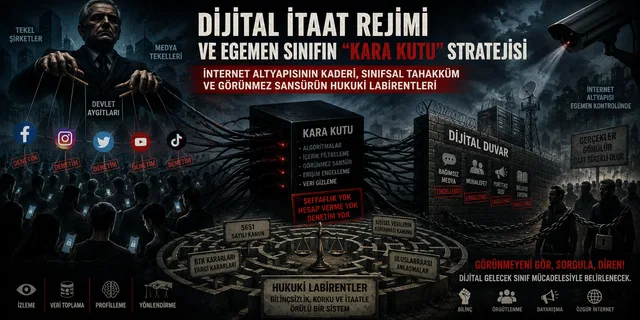
The Anatomy of Internet Censorship in the Context of the Change.org Block
Mechanisms of Suppressing Truth and Their Social Consequences

As of June 19, 2026, Turkey's digital public sphere faced a new wave of shutdowns: Change.org, the world's largest online petition and campaigning platform, was blocked from access by a decision of the Kula Criminal Court of Peace dated June 17, 2026, numbered 2026/337.
The sudden blackout of a platform that serves as a means for the masses to make their voices heard across a wide spectrum—from environmental destruction to animal rights, from workers' protests to local government decisions—is not merely a legal procedure; it is a technical, political, and economic show of force.
Engineering Digital Borders: The Technical Details of Blocking
When state apparatuses block access to a website, they fundamentally resort to three different technical methods. In Turkey, the Information and Communication Technologies Authority (BTK) and internet service providers (ISPs) generally use combinations of these methods:
- DNS Blocking / Poisoning: This is the most basic blocking method. When you type
change.orginto your browser, your computer asks your ISP's DNS server which IP address corresponds to that name. The censorship mechanism intervenes in this server, either sending you a wrong IP address or redirecting you directly to BTK's "Access Blocked" warning page. - IP Address Blocking: The IP addresses of the servers hosting the target site are directly blacklisted on the service providers' main routers. In this case, when the user tries to reach the site, packets are dropped on the data path before they ever reach their destination.
- Deep Packet Inspection (DPI): This is the most widely used and aggressive method today. Even if the site's IP or DNS is changed, the SNI (Server Name Indication) packets sent during the initial unencrypted connection phase (TLS Handshake) between the user and the server are inspected. The moment the string "change.org" is detected inside the packet, the data flow is artificially cut off.
Crossing Digital Fences: A Technical Access Guide
Technology is inherently fluid by nature and always leaves a door open against the efforts of central authorities to exercise absolute control. The basic technical methods used to access blocked platforms such as Change.org are as follows:
1. Secure DNS and Encrypted SNI (DoH / DoT)
If the blocking is only at the DNS level, changing your device's DNS settings (for example, by using Google 8.8.8.8 or Cloudflare 1.1.1.1) may be sufficient. However, to bypass DPI-based blocks, DoH (DNS over HTTPS) or DoT (DNS over TLS) protocols that encrypt DNS traffic must be activated. You can do this by enabling the "Use Secure DNS" option in your browser settings (Chrome, Firefox, etc.).
2. Virtual Private Networks (VPN)
A VPN creates an encrypted tunnel between your device and a server abroad. Your internet service provider cannot see which site you are visiting (Change.org); it only sees that you are sending data to an encrypted server.
Technical Tip: In situations where commercial VPNs are also blocked, a personal VPN line you set up on your own virtual server (VPS) via WireGuard or OpenVPN protocols, or advanced censorship-circumvention-focused protocols such as V2Ray/Xray, offer a definitive solution.
3. The Tor Network (The Onion Router)
Tor, which transmits data layer by layer encrypted through volunteer servers (nodes) around the world, is one of the most radical ways to bypass censorship and remain anonymous. Against states' efforts to block the Tor network, access can be gained using mechanisms such as Tor Bridges and meek-azure.
The Political Economy of Internet Censorship
So why do states feel the need to shut down even a platform that hosts petition campaigns and appears at first glance to be "liberal and reformist"? The answer to this question lies in the nature of the bourgeois state and in digital property relations.
1. Preserving Class Domination and the Status Quo
In the Communist Manifesto, Marx and Engels define the modern state apparatus as "a committee for managing the common affairs of the whole bourgeoisie." In capitalist formations such as Turkey, the state is obliged to ensure the uninterrupted continuation of the process of capital accumulation.
Platforms such as Change.org are digital arenas where the working class, the peasantry, and oppressed sections raise their voices against capital. For example, a petition campaign launched against a mining company's destruction of nature, against an industrialist's massacre of workers, or against the state's neoliberal policies can unite millions of people around a common demand. By imposing access blocks, the state aims to prevent the crystallization of mass and collective opposition that would turn against capital domination.
2. Digital Enclosure and the Expropriation of Knowledge Commons
At the dawn of capitalism, the fencing off of commons—pastures and lands under feudal collective use—and their incorporation into private property (the process of primitive accumulation) is being repeated today in the digital world.
As a product of humanity's collective production and "General Intellect," the internet possesses the potential to be a commons. Yet the capitalist state sees the free flow of knowledge, data, and public debate spaces as a threat to class interests. Digital censorship is an ideological fence driven into the internet's free and collective character.
3. Hegemony Crisis and the Bankruptcy of Consent Production
As Gramsci emphasized, the ruling class establishes its power not only through the apparatus of coercion (army, police, courts), but through mechanisms of consent (media, education, culture). In periods when economic crises deepen and the dominant ideology fails to produce consent, a hegemony crisis emerges.
In a conjuncture where mainstream media is kept entirely under control, uncontrolled platforms such as Change.org become areas where the consent mechanism cracks. At the point where those in power cannot win the masses' consent, they try to discipline the public sphere by deploying the naked apparatus of coercion (BTK blocks and Criminal Court of Peace decisions).
The Freedom Fallacy and the Nakedness of Class Truth
The access block imposed on Change.org is far more than a technical censorship event; it is a current manifestation of class struggle carried into the digital realm. The ruling classes will continue to fence off the digital world, bringing code and networks under their command, in order to protect property relations and their own political authority.
The access block imposed on Change.org, beyond being a technical censorship practice, plainly exposes the structural hypocrisy of the capitalist system and the collapse of its greatest narrative—the myth of "liberal freedom." Neoliberal ideology marketed the internet and digital networks for years as "an absolute utopia of freedom where borders have fallen and everyone has an equal right to be heard." Yet the overnight blackout of Change.org and similar platforms deciphers the class nakedness behind this "freedom fallacy."
Under capitalism, freedom is by its very nature conditional and false. The system grants the masses the "freedom" to speak, collect signatures, or complain only so long as they do not pose a threat to processes of capital accumulation. Digital platforms are tolerated by bourgeois democracy so long as they function as "safety valves" that cool social anger and domesticate radical activism. But the moment these channels touch capital's direct interests, expose the ruling classes' mechanisms of exploitation, or trigger the masses' potential for uncontrolled organization—at that moment capitalist institutions wipe away all their liberal makeup.
The Pragmatism of Capital: The capitalist state and its courts do not hesitate for a moment to trample their own laws, international treaties, and "democracy" promises when it comes to protecting property relations. The moment its own survival and profit margins are endangered, even the most democratic-seeming capitalist institution does not shy away from displaying the most despotic reflexes.
Therefore, this culture of blocking is part of the continuity inherent in the nature of capitalism. This situation is not an exceptional accident or a temporary governance error; it is a structural defense mechanism of capital dictatorship. The bourgeoisie's discourse of a "free internet" in fact amounts only to capital's freedom to circulate without hindrance, to commodify data, and to digitize labor-value exploitation. What falls to the working class and the oppressed, on the other hand, are the digital fences and access blocks that rise before them every time they push against these limits.
In conclusion, the shutdown of Change.org has once again proven to us that the digital public sphere cannot be built with the permission of the ruling classes. The political task before IT workers, activists, and class revolutionaries is not to remain trapped in the illusion of seeking rights on registered platforms left to the mercy of the bourgeois state and capital. The real vision is to radically and with our own hands build commons-based public spheres and alternative class organizations that will shake this hypocritical system to its roots and sever code and networks entirely from property relations. Freedom lies not in the access permits graciously granted by the rulers, but in the collective action that will tear down the walls blocking that access.
In response, the task of IT workers and the oppressed classes is not merely to circumvent these walls from behind using VPNs, but to build a collective consciousness and activism that will wrench technology and knowledge commons from the hands of capital and its state apparatus.