A Common Product Is Not Common Without Common Ownership
A Comradely Reply to Cengizhan Kaptan on Artificial Intelligence, Open Source and Ownership

A Common Product Is Not Common Without Common Ownership
A comradely reading of Cengizhan Kaptan's article on our relationship with artificial intelligence and technology
Summary
This piece is long, so for comrades in a hurry we first set out the whole argument in one place. The details, sources and reasoning follow the summary.
The occasion and the article's thesis
In an article published in Toplumsal Dayanışma on 14 October 2026 on our relationship with artificial intelligence and technology, our comrade Cengizhan Kaptan starts from ArtCraft, a set of free, open source alternatives to ten applications ranging from Photoshop to Excel, which developer Brandon Thomas wrote in Rust with the help of artificial intelligence. Recalling the birth of Linux and the SCO lawsuits, he argues that the monopolies may go on the legal offensive, but that such an attack may not succeed. He contends that artificial intelligence is the common product of humanity, that it should therefore be public, and that this should be defended not as a slogan but as a radical policy. He speaks favourably of Bernie Sanders's proposal for partial public ownership, draws attention to European support for open source cloud software, and closes with a call: we will either watch, or we will become active agents.
Strengths
- A correct diagnosis: He locates the problem in ownership rather than in the machine. What frightens the worker is not the code but how the owner of the code uses it. This carries Marx's lesson about the Luddites into the present.
- Avoiding both traps: He falls neither into the conservative romanticism that fears technology nor into the technocratic optimism that worships it.
- From the concrete to theory: He starts from a real event of the week, showing young readers how theory can be built from within the news of the day.
- Historical memory: Through Linux and the SCO case he reminds us that today's fights resemble yesterday's.
- Turning towards a programme: He sets out to turn "artificial intelligence must be public" from a slogan into a policy.
- An organising call: By asking whether we are spectators or agents, he invites readers to question their own practice.
Where it could be developed
- Facts: The name of the project (ArtCraft), its developer and the outcome of the SCO case (SCO lost, Linux won) could be made clear.
- The legal question: The legal question raised at the start of the article remains unanswered. The Google v. Oracle ruling, the OOXML standard and the copyright uncertainty around AI-written code shed light on this question in favour of the clones.
- The difference between open source and the commons: ArtCraft uses permissive licences, which do not stop the code from being turned into a monopoly's closed product tomorrow. The difference between copyleft and permissive licences needs to be discussed.
- The dependency paradox: These "anti-monopoly" applications were written with another monopoly's AI model. The rent may simply be moving from the application to the model.
- Theoretical grounding: The premise of a "common product of humanity" can be grounded in Marx's concept of the general intellect in the Grundrisse; publicness then becomes not a moral demand but a demand for restitution.
- The Sanders proposal: The content of the proposal (50 per cent of the shares of large AI companies, a sovereign wealth fund of about $7 trillion, an appointed seven-member commission, an annual dividend of more than $1,000 per person) should be laid out and read critically: sharing dividends is not the same as establishing social control.
- European examples: Examples such as Schleswig-Holstein, Denmark and openDesk could be named; but we should not forget that the discourse of "digital sovereignty" is also the discourse of European capital.
- The organised subject: Those who are to become agents should be described: computing workers, data producers and local public institutions.
The open source ecosystem: exaggerations and illusions
Our biggest addition to the article is an introduction to the open source ecosystem without romanticising it:
- The numbers: According to a Harvard study, the value open source provides to companies is about $8.8 trillion, while the cost of rewriting the software itself is only $4.2 billion. More than 90 per cent of the value comes from 5 per cent of developers. This is evidence not only of the triumph of the commons but also of its exploitation by capital.
- The maintainer's solitude: 60 per cent of maintainers are unpaid; public institutions account for 1 per cent of their income. Log4Shell and the xz backdoor showed that the world's infrastructure rests on the shoulders of a few exhausted volunteers.
- Five illusions: Confusing free with gratis, and "free labour"; believing the community is horizontal (when the major contributions come from the salaried employees of monopolies); believing that power is distributed if the code is open (the SaaS loophole and the licence wars at HashiCorp, Redis, Elastic and Red Hat); believing the common ground belongs to no one (GitHub is owned by Microsoft, Android and Chromium are controlled by Google); and the openness laundering (open-washing) carried out under the name of "open" AI.
- The global picture: Absolute dominance on servers and supercomputers, a single-digit share on the desktop. In the United States it is a tool of corporate strategy, in Europe of digital sovereignty, in China of geopolitical independence; in the Global South it means a position of cheap labour and users; in Turkey it is a field left to the goodwill of individual institutions.
- Conclusion: Open source is a tool and a field of struggle, not a strategy in its own right. To turn it into a commons, a legal fence (copyleft, AGPL), material infrastructure (public or cooperative servers and computing power) and recognition of labour (public funding, trade union protection) must be built together.
Our proposal
A common product is not common without common ownership. The code may be open; but as long as the server, the model and the value remain closed, our commons are open to being enclosed again at any moment. Publicness is a demand for restitution. The agent of this demand is the organised unity of computing workers, data producers and local public institutions. At the end of the piece we turn this proposal into six concrete tasks: taking stock of institutions' software, reading licences, mapping our dependency on AI, discussing the Sanders proposal in reading groups, building ties with computing workers, and continuing to write.
Dear Young Comrades,
Yesterday (14 October 2026) Toplumsal Dayanışma published a short but timely article by our comrade Cengizhan Kaptan on our relationship with artificial intelligence and technology (in Turkish). The article starts from an event that has occupied the technology press for a week, the appearance of open source "clones" of Adobe and Microsoft Office applications, and arrives from there at a much bigger question: whose property should artificial intelligence be?
We value this article for two reasons. First, most debates on the left about artificial intelligence get stuck either in a pessimism that fears technology or in an optimism that worships it. Comrade Cengizhan falls into neither; he locates the problem in ownership, not in the machine. Second, the article ends not with a conclusion but with a call: we will either watch, or we will become active agents. The best response to a call is to take it seriously, think it through and develop it.
In this piece we will first discuss the strengths of the article and then the places where it could be developed. Criticism here is not a matter of handing out marks; it is an attempt to carry the same question a little further together. As Knowledge Commons, this is a field we too have been working on for years, and we share in a comradely spirit what the article made us think about.
What does the article say?
Let us briefly lay out the skeleton of the article:
- The occasion: A developer writing free, open source alternatives to a range of applications, from Photoshop to Excel, in Rust with the help of artificial intelligence, and releasing them to the public.
- A historical analogy: The birth of Linux, the development of its distributions (Debian, Arch, Red Hat) and the lawsuits based on Unix ownership that the SCO Group launched in 2003. The author thinks the big companies may also attack these new applications through the courts, but that such an attack may not succeed.
- The economic framework: The revenue channels of artificial intelligence (data centres, chips, cloud services) and the possibility of a stock market bubble.
- The political proposal: Artificial intelligence is the common product of humanity; it should therefore be public. This should be defended not as a slogan but as a radical policy. Bernie Sanders's proposal for partial public ownership is cited as a step in this direction.
- The source of fear: People's worry that artificial intelligence will take their jobs. According to the author, the monster is not the machine but whoever holds its ownership.
- The practical horizon: Open source cloud software that is gaining support in Europe, and the real rupture that socialist movements could bring about by entering this field.
- The closing: With reference to Adorno, the idea that social theory can only emerge from a living social process, and that we will be either spectators or agents.
Strengths
It puts the problem in the right place: ownership, not the machine
In our view, the most valuable idea in the article is this: what frightens people is not artificial intelligence but whose hands it is in. This carries into the present the distinction Marx draws in his chapters on machinery. Writing about the Luddites who attacked machines, Marx notes that "it took both time and experience before the workpeople learnt to distinguish between machinery and its employment by capital, and to direct their attacks, not against the material instruments of production, but against the mode in which they are used." Comrade Cengizhan reminds us of exactly this lesson. What leaves workers unemployed today is not code; it is a social relation in which code is used to replace workers and raise profits.
This stance also protects him from two errors we frequently encounter on the left: the conservative romanticism that sees technology as bad in itself, and the technocratic optimism that believes technology will liberate us of its own accord.
It starts from a concrete, current event
The article begins not as an abstract essay on "AI and society" but from a real development of the week. This is a very important lesson in method for young readers: building theory from within an event happening before our eyes. That a free alternative to a product a monopoly has sold behind a subscription wall for years can appear within a few weeks puts the question "where does the value of software come from?" in front of everyone.
Historical memory: Linux and SCO
The article reads today's event not as a novelty without history but as a continuation of the free software movement's experience of more than three decades. Recalling the SCO case is apt: SCO, claiming to own Unix, attacked IBM and companies using Linux, but in 2007 a court ruled that the Unix copyrights actually belonged to Novell, and SCO filed for bankruptcy the same year. The author's intuition is right: monopolies try to win in court what they cannot win in the market, and it does not always work. It is valuable for a young reader to see that there is such a thing as "the history of technology", and that today's fights resemble yesterday's.
The aim of building publicness as policy, not slogan
The author says that "artificial intelligence must be public" should not remain a slogan but become a radical policy. This claim matters, because the left's greatest weakness in the field of technology is its inability to turn a correct diagnosis into a programme. This is where the article's real contribution lies: not settling for the diagnosis, but opening the question "so what is to be done?"
The call to become agents
The closing call sums up the spirit of the article. It is true that in debates on technology the left has often remained a commentator, and often a critic. Asking whether we are spectators or agents invites readers to question their own practice. This is the article's most organising aspect.
Where it could be developed
Now let us carry the same question a little further. The following notes should be read not as the article's shortcomings but as the rooms one finds on walking through the door the article opens.
The facts could be made a little firmer
The project behind the article is called ArtCraft and its developer is Brandon Thomas. According to the project's website there are ten applications: PhotoCraft (Photoshop), VectorCraft (Illustrator), FilmCraft (Premiere), LightCraft (Lightroom), EffectCraft (After Effects), DesignCraft (InDesign) and PdfCraft (Acrobat), along with WordCraft, GridCraft and DeckCraft on the Office side. The applications are still at a "very early alpha" stage and, as Cybernews reported, were written with Anthropic's Claude model.
Why do these details matter? Because the article's question about possible code similarity and its thesis of "the community against the giants" need to be rethought in the light of exactly these facts. As we will see in the next section, the facts do not weaken the thesis; they make it more complex and more interesting.
The "negative" outcome of the SCO case also needed spelling out: the outcome was negative for SCO and positive for Linux. A young reader who does not know this detail may miss the real force of the author's historical analogy, namely that the monopoly lost the legal war.
The legal question was raised but not answered
The article opens by asking what the legal dimension of all this will be, but does not return to the question. Yet there are three important points of reference here that young comrades should know:
- Reimplementing an interface is not a crime. In 2021, in Google v. Oracle, the US Supreme Court ruled that reimplementing a software interface (API) can count as fair use. Imitating a program's function is not the same as stealing its code. This is critical for the grounds of any lawsuits that might be brought against the clones.
- File formats are no longer a lock. The format of Office documents (OOXML) has become an international standard; LibreOffice has worked with these formats for years. The real lock is not the file format but habit, training and institutional contracts.
- Who owns code written with artificial intelligence? In the United States, the courts and the Copyright Office have held that works produced without human contribution cannot benefit from copyright protection. This raises the question: who can assert which licence over a code base largely written by artificial intelligence? This question feeds directly into the article's "common product" thesis, and we wish it had been taken up.
"Open source" does not always mean "commons"
In our view, this is the article's most important gap. The article treats open source almost as something public by nature. Yet the oldest debate within the free software movement is precisely about this:
- Permissive licences (such as MIT and Apache) open the code to everyone; but they also allow a company to take that code and turn it into a closed product.
- Copyleft licences (such as the GPL) say that whoever uses this code must keep the code they derive from it open too. In other words, they build a legal fence against the enclosure of the commons.
ArtCraft's website says the code is released under permissive open source licences. This may be a well-intentioned choice; but in the end it means that nothing prevents this code from being locked into a product by Adobe or another monopoly tomorrow. Over the past decade, AWS taking open source databases and selling them as cloud services, and projects such as Elastic and Redis changing their licences in response, showed that this debate is being lived in practice, not just in theory.
To put it in Marxist terms: open source is a form of the socialisation of production, but not of the socialisation of appropriation. Code is written in common, while its value is usually appropriated privately. Linux is no different: the kernel that carries the world's cloud today largely carries the profits of monopolies such as Google, Amazon and Microsoft. In the article, the Linux example is told as a success story; yet it can also be read as a story of enclosure. Seeing both faces together is essential for a socialist politics.
The dependency paradox: beating a monopoly with a monopoly's tool
The most interesting aspect of the ArtCraft episode does not appear in the article at all: these "anti-monopoly" applications were written with the model of another monopoly, a large AI company. In other words, the rent of one software monopoly is being eroded through a subscription to another monopoly. This is a contradiction but also a sign: the cost of producing software is falling, yet the key to that fall, the large language models, is being concentrated in the hands of a few companies.
The question that follows is this: is the rent moving from the application to the model? If the money paid yesterday for a Photoshop licence is paid tomorrow to the model that writes the code, then what we have is not liberation but a change of hands. The article's thesis of "the community against the giants" becomes much sharper once it takes this new dependency into account. At this point, the question of open-weight models and public computing infrastructure that we discussed in the Socialist AI Manifesto becomes unavoidable.
The premise of a "common product of humanity" can be grounded theoretically
The article's basic premise is correct: artificial intelligence is the common product of humanity. But in the article this premise stands as an assumption rather than as something demonstrated. Yet Marx has a ready-made concept for it: the general intellect. In the "Fragment on Machines" in the Grundrisse, Marx speaks of a stage in which social knowledge becomes a direct force of production and knowledge is objectified in machines.
Large language models are an almost word-for-word realisation of this fragment: texts, code, translations, forum answers and encyclopaedia entries written by millions of people, in other words the accumulated product of social labour, crystallise as a "model" on a company's servers. In our work The Revolt of Crystallised Labour we called this "the expropriation of the general intellect". With this concept, the article's intuition becomes an argument: the model must be public because it was taken from the public in the first place. This is not a moral demand but a demand for restitution.
A brief introduction to the concepts of value and surplus value could also have been given here. Had it been shown why software sells at a high price even though it can be copied for free, that is, that its price comes not from labour value but from monopoly rent, the meaning of the ArtCraft episode would also have become clear: what the free clones do is expose how artificial that rent is.
The Sanders proposal could be treated in more detail and more critically
The article speaks favourably of Sanders's proposal as offering a different perspective, but does not set out its content. According to an AP report from June 2026, the proposal is as follows:
- 50 per cent of the shares of companies with annual AI sales above $200 million would be transferred to the public as a one-off tax.
- By Sanders's calculation, these shares would be pooled in a sovereign wealth fund worth about $7 trillion.
- The fund would be run by a seven-member commission appointed by the president and confirmed by the Senate.
- Every American would receive an annual payout of more than $1,000 from the fund's returns; the remaining earnings would go to public services such as education, housing and health.
This is a genuinely bold proposal for US politics, and valuable for bringing public ownership of artificial intelligence into mainstream debate. But seen through socialist eyes, three questions need to be asked:
- Ownership or dividends? The proposal does not make the companies public; it shares out their profits. For the fund to earn income, the companies have to make a profit, which means continuing to replace workers and enclose data. Citizens become shareholders drawing dividends from their own unemployment.
- Who will run it? A seven-member commission formed by political appointment is state ownership, not public ownership. Workers, users and data producers have no say. Norway's oil fund is a good example: a rich fund, but the oil worker has no say over production.
- What will be produced? The proposal discusses only how the profit will be divided, not what the models will produce, for whom and under what conditions.
These criticisms do not make the proposal worthless; on the contrary, they are the way to take it seriously as a starting point. Had the article opened up the difference between "publicness", "nationalisation" and "commoning", it would have put a much richer map in front of its readers.
The European examples could be named and read in class terms
The article says open source cloud software is gaining support in Europe but gives no examples. Concrete examples give readers both hope and a sense of scale:
- In Germany, the state of Schleswig-Holstein decided to move its public administration from Microsoft to LibreOffice and Linux.
- Denmark's Ministry of Digital Affairs announced a similar move in 2025.
- openDesk, an open source office and collaboration suite developed for German public institutions, works as an alternative run by the public sector.
- Software such as Nextcloud and OpenStack sits at the heart of Europe's "digital sovereignty" and "EuroStack" debates.
But we must also be careful when reading these examples. Europe's wave of digital sovereignty is largely an effort by European capital and states to protect their own turf against US monopolies. The way the Gaia-X initiative quickly turned into a lobby for large companies is a good example. In other words, "open source cloud" is a field of struggle, not an inherently socialist field. Socialist movements entering it could, as the article says, bring about a real rupture; but that requires a programme based on worker and user control, separate from the sovereignty discourse of European capital.
The organisational subject: who will become an agent, and how?
The article's closing call is strong, but it leaves open who the agent is to be and how they will organise. In our view this question has at least three layers:
- Computing workers. The people who train the models, write the code, label the data and keep the servers running. Artificial intelligence transforms their labour process first. Trade union organising is the first link here.
- Users and data producers. The Wikipedia editor, the open source contributor, the engineer answering questions on a forum, the translator, the illustrator. All of them produced the model's raw material, and none of them were asked.
- Public institutions and local governments. Which software is used in schools, municipalities and universities is a political decision. The demand to switch to open source is a concrete demand that can be organised at the local level straight away.
The reference to Adorno could also be opened up a little at this point. Adorno is right when he says social theory emerges from a living process; but he himself was a theorist who had largely severed his ties with that process. Marx's eleventh thesis in the Theses on Feuerbach offers a more direct ground for this call: "The philosophers have only interpreted the world, in various ways; the point is to change it." The spirit of the article is already closer to this.
The open source ecosystem: exaggerations, illusions and the real situation in the world
In Comrade Cengizhan's article, open source stands almost like a ready-made weapon against the monopolies. This hope is understandable; the free software movement really is one of the most interesting experiences of common production to have sprouted within capitalism. But young comrades need to get to know this ecosystem with all its contradictions, without romanticising it. Because exaggerating a field of struggle is as harmful as belittling it: a field that is exaggerated is abandoned in disappointment.
What do the numbers say?
Let us first acknowledge the scale. According to a study by Frank Nagle and colleagues at Harvard Business School, published in 2024, if open source software did not exist, the companies that use it would have to spend about $8.8 trillion to write the same software from scratch. Companies would have to spend about 3.5 times what they currently spend on software.
The study's second figure is discussed less but is more instructive: the cost of rewriting the software itself is only $4.2 billion. In other words, there is a gap of more than two-thousand-fold between the cost of production and the use value. And one more thing: more than 90 per cent of the value created comes from the labour of only 5 per cent of developers.
A Marxist reader looking at these figures sees this: the largely unpaid labour of a small group of workers has become a common production input for all software capital. Companies take this input for free and are spared trillions of dollars in costs. This is evidence not only of the triumph of the commons but also of its systematic exploitation by capital.
The maintainer's solitude
Who are these 5 per cent of workers, and how do they live? According to Tidelift's 2024 maintainer report, 60 per cent of maintainers describe themselves as unpaid hobbyists. Among their sources of income, public institutions account for 1 per cent, foundations for 3 per cent and direct payments from companies for 5 per cent. The generation of maintainers is also ageing: the share of maintainers under 26 fell from 25 per cent in 2021 to 10 per cent in 2024. The work of maintenance is not being handed on to the young.
The cost of this is not abstract. Two incidents showed how dependent the whole world is on this solitude:
- Log4Shell (December 2021). A vulnerability in the Log4j library, used on millions of servers, put the world on alert, from banks to government agencies. Behind the library stood a handful of volunteers working in their spare time.
- The xz backdoor (March 2024). The sole maintainer of a compression tool found in almost every Linux distribution had worked alone for years and was burnt out. An identity that turned up to "help" spent two years earning trust and then planted a backdoor in the code. The attack was caught thanks to a half-second delay that a Microsoft engineer noticed by chance.
The world's digital infrastructure rests on the shoulders of a few unpaid, exhausted people. To call this a "community" is to see only half the problem.
The first illusion: free means gratis
The founding principle of the free software movement was "free as in free speech, not as in free beer". But in the way the ecosystem works today, gratis has overtaken freedom. This is exactly what Tiziana Terranova analysed in 2000 with the concept of "free labour": the digital economy ties unpaid labour to value production through volunteering, passion and a sense of community. While volunteering is sanctified as a virtue, the cost of reproduction is in fact shifted onto the worker: the developer who works for one company by day keeps, by night and for free, a library used by other companies running.
The second illusion: the community is horizontal
Open source is described as a horizontal network of free individuals. The real picture is different. For years, the great majority of contributions to the Linux kernel have come from salaried employees of companies such as Intel, Google, Huawei, Red Hat (IBM), Meta and AMD. The ecosystem's big projects, such as Kubernetes, Chromium, Android, React and PyTorch, were either started by a monopoly or are governed by one. The board of the Linux Foundation consists largely of representatives of the companies that pay the highest membership fees.
There is a paradox here: the great success of open source is at the same time the result of its absorption by big companies. Companies finance the common infrastructure together because they compete not on the infrastructure but on the closed services they build on top of it. This is how capital socialises its own common costs.
The third illusion: if the code is open, power is distributed
The code may be open; but today the value of software is concentrated not in the code but where the code runs, that is, in the cloud, in data and in platforms. The GPL requires the source code to be shared when the software is distributed; but when a company does not distribute the software and instead runs it on its servers and sells it as a service, this requirement does not apply. This is called the "SaaS loophole". The AGPL was written to close it; but most big companies ban AGPL-licensed software through internal policy.
The result: the cloud monopolies took open source software and sold it as a service, while the companies and communities that developed that software got nothing back. The licence wars of recent years are the direct consequence:
- HashiCorp (August 2023) moved Terraform from an open source licence to a "business source" licence; the community responded by forking it as OpenTofu. The company was then sold to IBM.
- Redis (March 2024) restricted its licence; the Valkey fork was born under the Linux Foundation. A year later, Redis returned to the AGPL.
- Elastic went through the same swing (restricting its licence in 2021 and returning to the AGPL in 2024).
- Red Hat (June 2023) restricted public distribution of the RHEL source code.
Reading these wars as "bad company, good community" is not enough. What is happening here is a distributional fight between capitals: small software capital and the cloud monopolies are arguing over who gets to keep the value produced in common. The community is usually caught in between.
The fourth illusion: the common ground belongs to no one
GitHub, the common square of the open source world, has belonged to Microsoft since 2018. Most of the world's open source code sits on a monopoly's servers, subject to its terms of service. What is more, this code was used to train the same monopoly's paid AI coding assistant; the class action brought over this is still being argued. The npm package registry is also tied to the same company through GitHub. Android is an "open source" operating system, but the services phones need in order to actually work are in Google's closed package. Chromium is open, but the great majority of the world's browsers run on this single engine, and so depend on one company's technical decisions.
In other words, the commons is often like a marketplace set up on a monopoly's land: the stalls are shared, the ground is private.
The fifth illusion: "open" AI
In the age of artificial intelligence the illusion has taken a new form: the "open" model. Most of the models presented as open today are only open-weight; that is, the parameters of the trained model can be downloaded, but the training data, the training code and the process are closed. This is like sharing the compiled version of a program while hiding its source code.
Meta's Llama models are the best-known example: their licence makes use by companies with more than 700 million monthly users subject to Meta's permission, restricts fields of use and therefore does not meet the Open Source Initiative's (OSI) definition. This practice has a name: open-washing. Coined by analogy with greenwashing, the term describes dressing up a product that is not open with the legitimacy of openness. The exemptions the EU AI Act grants to "open source" models risk becoming an incentive that rewards this laundering.
In October 2024 the OSI published its Open Source AI Definition. The definition requires not the training data itself but only "sufficiently detailed information" about that data. For this reason, part of the free software community considers the definition too loose. The debate continues, but the core issue is clear: the model's raw material, the data that is our common labour, is the link that remains most closed.
The global picture: a map of success, a map of dependency
Looking at the world, open source is both everywhere and nowhere:
- Servers and supercomputers: Since 2017, all of the world's 500 most powerful supercomputers have run Linux. The backbone of the internet, the cloud and smartphones is open source.
- The desktop: Linux's desktop share has been in single-digit percentages for years. In office software, design and accounting, the dominance of closed monopolies largely continues. This is exactly the field ArtCraft targets.
- The United States: The corporate headquarters of the ecosystem. The biggest contributors, foundations and platforms are here. Open source here is largely a tool of corporate strategy.
- Europe: Where public interest in open source is highest, through the debate on "digital sovereignty". Germany's Sovereign Tech Agency is one of the first major institutions to channel public funds into critical open source infrastructure. The EU's Cyber Resilience Act, meanwhile, introduces new obligations and a "steward" status for open source projects, which raises concerns about a new bureaucratic burden on volunteer projects.
- China: Uses open source as a strategy of technological independence: Huawei's openEuler and OpenHarmony operating systems, the domestic code platform Gitee, and open-weight models such as DeepSeek and Qwen that have spread worldwide. Here openness is a geopolitical tool against US export restrictions. This shows us that open source is not inherently "left-wing" or "liberating", and that it can also be used as a competitive weapon between different blocs of capital.
- The Global South: Open source matters greatly as a way of escaping licence costs; but the centres of contribution, governance and decision-making are largely in the North. Developers in the South are the ecosystem's users and a source of cheap labour, not its rule-makers.
- Turkey: There is a public experience such as Pardus, open source migrations in some public institutions, and a lively volunteer community. But the dominance of closed software in public procurement, and the fact that open source depends on the goodwill of individual institutions rather than being a matter of public policy, remain the core problem.
So what is to be done?
None of these contradictions make open source worthless. On the contrary, they show how far social production can go within capitalism, and how easily that production is tied to capital as long as property relations remain unchanged. What Marx called the contradiction between the forces and the relations of production is playing out before our eyes in the world of software.
The conclusion is this: open source is a tool and a field of struggle; it is not a strategy in its own right. What will turn it into a commons is building these three things together:
- A legal fence: Licences, such as copyleft and the AGPL, that protect the commons against enclosure.
- Material infrastructure: Servers, computing power and hosting under public or cooperative ownership; the machine, not just the code, held in common.
- Recognition of labour: Recognising maintainers' labour through public funds, trade union protection and mandatory corporate contributions. Volunteering is a fine thing; but infrastructure cannot be kept running on volunteering.
That is why projects like ArtCraft matter: they show how artificial the rent of the software monopolies is. But turning these projects into a lasting commons requires organisation that goes beyond code.
The article's thesis and the extension we propose
| What the article says | The extended version |
|---|---|
| Artificial intelligence is the common product of humanity | Artificial intelligence is the crystallised form of social labour and the general intellect, expropriated; publicness is a demand for restitution |
| Open source is a force against the monopolies | Open source socialises production, not appropriation; without copyleft and public infrastructure it can be enclosed |
| Linux is a success story | Linux is both a success story and a story of enclosure; today it carries the cloud profits of the monopolies |
| The open source community can build collective power against the giants | The ecosystem's major contributions come from the salaried labour of monopolies, while maintenance comes from unpaid, solitary volunteers; $8.8 trillion of value flows largely to capital |
| "Open" models and open tools provide independence | Open weights are not open source; open-washing is widespread, and the common squares (GitHub, Android, Chromium) sit on the monopolies' land |
| The monopolies may go on the legal offensive | The Google v. Oracle ruling and the copyright uncertainty around AI-generated code shift the legal ground in favour of the clones |
| Sanders's proposal for partial public ownership is a positive step | The proposal is a bold starting point, but distributing dividends is not the same as social control |
| Open source cloud is gaining support in Europe | The European examples (Schleswig-Holstein, Denmark, openDesk) are valuable, but the discourse of "digital sovereignty" is also the discourse of capital |
| We will either watch or become agents | The agent is the organised unity of computing workers, data producers and local public institutions |
Concrete tasks
A few suggestions for young comrades to turn Comrade Cengizhan's call into practice:
- Start with your own institution. Which software is used in your school, association, union or municipality, and who is paid how much in licence fees? Draw up a list. Voice the demand "public money, public code" at the local level against public money being spent on closed software.
- Read the licence. Look at the licence of an open source project you contribute to or use. Is it permissive or copyleft? Consider choosing copyleft licences for your own projects.
- Map the dependency. Which AI services do you depend on when writing code or producing text? Learn about open-weight models and running models locally, and teach each other.
- Discuss the Sanders proposal. Take this proposal up as a case study in your reading groups: discuss the difference between public ownership, state ownership and common ownership through a concrete proposal.
- Build ties with computing workers. The agents in this field are a broad stratum of computing workers, not limited to those who write code. Support trade union organising, and read The Computing Worker's Handbook together.
- Keep writing. As Comrade Cengizhan did, read a technology story in the news through a class question, and write about it. Debate only deepens as it multiplies.
Dear Comrades,
Our comrade Cengizhan Kaptan's article is short, but it asks the right question. In the age of artificial intelligence, the real fight is not with the machine but with the machine's owner. What the article made us think is this: a common product is not common without common ownership. The code may be open, but as long as the server that runs the code, the model that writes it and the company that collects its value remain closed, our commons are open to being enclosed again at any moment.
That is why we agree with the article's closing words and add one step: to avoid remaining spectators, we first need to know where we stand, whose labour produces what, and who appropriates it. Then we need to turn that knowledge into an organised demand.
We thank Comrade Cengizhan for his work and hope the debate continues. This piece, too, is not an answer but a continuation.
Knowledge belongs to everyone.
Sources
- Cengizhan Kaptan, article on our relationship with artificial intelligence and technology, Toplumsal Dayanışma, 14 October 2026 (in Turkish)
- ArtCraft Software: Open Source Adobe & Microsoft Alternatives in Pure Rust
- Cybernews, AI developer builds free Adobe and Microsoft Office clones, 8 October 2026
- Thurrott, Open Source AI Dev is Going After Microsoft Office, Too
- AP / WTOP, Bernie Sanders unveils plan to give the public direct ownership of AI companies, June 2026
- Frank Nagle, Manuel Hoffmann, Yanuo Zhou, The Value of Open Source Software, Harvard Business School, 2024; Working Knowledge summary: Open Source Software: The Nine Trillion Resource Companies Take for Granted
- The Register, report on Tidelift's 2024 open source maintainer survey, 18 September 2024
- The Register, opinion piece on open-washing, 25 October 2024
- Tiziana Terranova, "Free Labor: Producing Culture for the Digital Economy", Social Text, 2000
- Karl Marx, Grundrisse, "Fragment on Machines"
- Karl Marx, Capital, Volume I, chapter "Machinery and Modern Industry"
- Karl Marx, Theses on Feuerbach
- US Supreme Court, Google LLC v. Oracle America, Inc., 2021
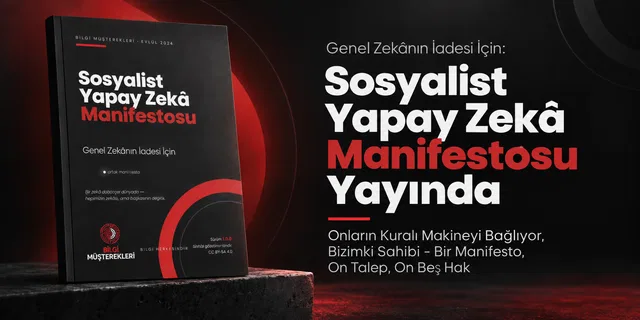
- Knowledge Commons, Socialist AI Manifesto
- Knowledge Commons, The Revolt of Crystallised Labour
- Knowledge Commons, The Computing Worker's Handbook