AI-Assisted Attack on the European Commission
Whose Shield, Whose Sword? On the Class of Cybersecurity

Dear Young Comrades,
On 19 November, the European Commission confirmed that AI tools had been used in a cyberattack detected on 22 October. Spokesperson Thomas Regnier described it as an “AI-generated cyber campaign.” Several internal applications were temporarily taken offline, most have been restored, and the investigation continues.
The news has been summed up in a single sentence in Turkey and around the world: AI is changing not only defence but also attack. True, but incomplete. The sentence has no subject. Who carried out the attack, using whose tool? What was hit, who bore the cost, and who holds the key to defence? Let us pursue these questions.
As usual, a brief summary first, then the detail.
Summary: Seven Theses
- The attack affected the institution's working people. Disruptions were reported in payslip, timesheet, leave and medical reimbursement applications. The effects reached workers' everyday lives.
- The attackers are people using AI, not AI itself. How and to what extent the tool was automated in this incident has not been disclosed. Saying “AI attacked” turns the instrument into a subject.
- The sword is available, the shield is in the club. A publicly available tool was used in the attack, while Anthropic shared its advanced defence model through a restricted partnership.
- The commons bears a cost. AI has accelerated vulnerability discovery, while the work of fixing flaws often falls on volunteer or underpaid open-source maintainers.
- Speed is capital's tempo. The interval between discovery and exploitation is shrinking. This tempo affects security workers' working hours, sleep and margin for error.
- The EU's answer is also a market plan. Its July action plan frames cybersecurity in part as an area for European economic growth.
- Transparency remains in question. Some staff complained about a lack of communication; the Commission says it informed those affected.
Let us take these one by one.
What Happened? What Is Known and Unknown
Let us establish the facts first. Our method is to speak from evidence, not speculation.
According to RTÉ's Reuters report, the attack was detected on 22 October. The Commission said its scale was difficult to assess while the investigation continued. It temporarily took several applications offline as a protective and preventive measure, and most have since been restored.
Which applications? According to Politico, disruption affecting Sysper, which handles payslips, timesheets and leave, and MyPMO, the medical reimbursement system, lasted more than ten days. Salaries were generally paid, but some staff could not submit timesheets or request leave. Whether personal data was accessed remains under investigation.
Regnier said the attackers used a publicly available AI tool but did not name it. Politico, citing an EU official, reported that CERT-EU had identified ARTEX, an open-source tool; the Commission spokesperson did not confirm the name. The stages at which the tool was used and its degree of autonomy in this incident have not been publicly established. According to The Record, CERT-EU and the European Data Protection Supervisor were informed.
The data picture remains unresolved:
- The Commission says it has found no evidence of a data breach affecting its staff as a whole.
- Politico reports that significant amounts of personal data may have been affected, but that investigations continue. The absence of evidence of a breach affecting all staff is not proof that no data was affected.
The attackers' identities have not been disclosed. Regnier said he was unaware of a ransom demand. Politico reported that the Commission convened its highest internal crisis-management body and that Technology Sovereignty and Security Commissioner Henna Virkkunen briefed fellow commissioners on 18 November.
We have an attack, a tool, services taken offline, an uncertain data picture and roughly four weeks between detection and public disclosure. This tells us as much about institutions and capital as it does about AI.
The Third Incident This Year
October's attack was not the Commission's first incident in 2026.
- January/February: The Commission announced an attack on the central infrastructure managing employees' mobile devices. According to The Record, some staff names and phone numbers may have been accessed; no compromise of the devices themselves was detected.
- March: The cloud infrastructure hosting Europa.eu websites was breached. The Record's account of CERT-EU's investigation says approximately 92 GB of compressed data was taken and attributes the attack to TeamPCP. The data later appeared on a ShinyHunters site.
- October: Human resources and medical reimbursement systems were disrupted.
Consider the areas involved: mobile device management, cloud infrastructure and human resources. These systems can affect institutional services and the everyday lives of employees alike. But the March cloud breach and the October HR incident did not target the same systems; officials have not established a connection between them.
These incidents invite us to question the resources and priorities devoted to protecting workers' services and personal data.
Who Is the Attacker? Do Not Make the Tool the Subject
Headlines say “AI attacked.” Let us correct that: people using AI carried out the attack.
This is not a word game. What Marx called commodity fetishism makes relations between people appear as relations between things. Today we face a new form of that illusion: the questions of who uses a tool, with whose money and for what purpose disappear, leaving a machine supposedly attacking on its own.
The illusion does two things:
- It dissolves responsibility. “AI attacked” obscures the distinct roles of those who develop tools, the institution making security decisions and those carrying out attacks. In this case, the exploited vulnerability and the attackers have not been disclosed.
- It makes fear saleable. A threat without a subject appears boundless; against a boundless threat, a boundless budget can be demanded.
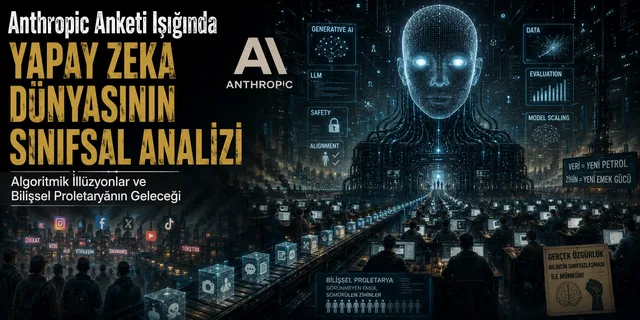
When we examined Anthropic's threat report, we noted a similar use of language: “misuse” can stop us asking who sets the boundaries of proper use. The question applies here too. Who decides how a powerful tool is made available, and who gains from that decision?
The Sword Is Available, the Shield Is in the Club
This incident reveals an asymmetry.
On one side is the tool used by the attackers: publicly available, according to the Commission. ARTEX, the tool identified by Politico's source, is open source, although commercial versions also exist.
On the other side is advanced defensive capacity. In April 2026 Anthropic did not release its Mythos Preview model for general use. Instead it created Project Glasswing, a restricted partnership. Its initial partners included AWS, Apple, Broadcom, Cisco, CrowdStrike, Google, JPMorganChase, the Linux Foundation, Microsoft, NVIDIA and Palo Alto Networks. In June, the partnership was expanded to approximately 150 additional organisations.
Let us be clear: withholding a powerful vulnerability-discovery tool from general release may be understandable. The issue is not simply the choice, but who makes it and whose interests it serves.
A private company and its selected partners determine who receives access to this particular tool for protecting critical software. Imagine an insurer deciding which homes get fire protection by looking at its own customer list. Forrester's assessment notes the risk of Anthropic becoming a major dependency for cybersecurity companies.
The European Commission appears to recognise the problem. Its Cybersecurity and AI Action Plan, announced on 7 July, calls for a common framework for public and private organisations to obtain structured access to advanced AI tools. Even one of the world's largest political and economic blocs is negotiating access to advanced shields with their owners.
Attack capacity has spread; access to some of the most advanced defensive capacity is concentrated. The sword is available, the shield is in the club. Municipalities, hospitals, schools, small cooperatives and unions outside the partnership cannot access this particular model, although other commercial and open defensive tools exist.
The Machine Finds the Flaw, a Person Fixes It: The Cost to the Commons
According to Anthropic, Glasswing partners found more than 10,000 high- or critical-severity vulnerabilities in the first month. But there is another side to the story.
A Cloud Security Alliance research note reported that, as of 22 May 2026, 97 patches had been confirmed for 1,596 vulnerabilities disclosed to open-source maintainers. This early snapshot does not show the current patching position in later months. The issue is that AI discovery can outpace open-source patching capacity.
Let us translate that into class terms:
- Finding vulnerabilities with a frontier model is capital-intensive: large models, substantial computing power and large firms.
- Fixing vulnerabilities remains labour-intensive: someone must read and understand the code, devise a correction, test it and release it.
- One advanced tool is held by a restricted partnership, though other tools exist. Fixing work may still be done by an open-source maintainer volunteering an evening or a weekend.
Anthropic committed $100 million in model-usage credits and $4 million in direct contributions to open-source security organisations. The nominal amounts appear to be 25 to 1, but usage credits are not directly equivalent to cash donations. The difference invites discussion about who receives resources and in what form.
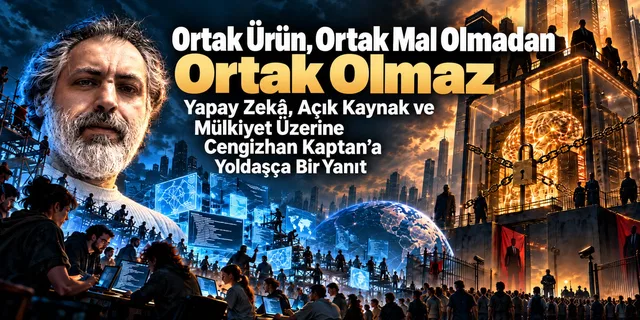
As we argued in our articles on Open Access Week and Cengizhan Kaptan, a shared product cannot truly be common property without shared ownership. Much of our digital infrastructure rests on the open-source commons; corporations benefit from it while maintainers face additional work. As the Hugging Face case showed, the security of the commons also depends on how its participants organise.
The component or vulnerability used in the Commission incident has not been publicly identified. More generally, securing the dependencies of critical systems and supporting the labour that maintains them are essential.
Whose Tempo Is Speed?
According to the EU cybersecurity agency ENISA's annual report, covered by Euronews on 10 November, the interval between discovering a vulnerability and making it usable in attacks is approaching zero. A 2025 survey cited in the report found that 45% of participating organisations struggled to recruit specialists with the necessary cybersecurity skills.
A document from the Commission's IT department, DG DIGIT, obtained by Politico raises similar concerns. The Next Web reports that advanced models could make attacks faster, wider and harder to detect, and that attacks outside working hours could cause major data losses before staff can respond. The document proposes automated defences for certain high-risk cases under human oversight.
Pay attention to “outside working hours.” Cybersecurity demands a response to threats that do not respect working time. Institutions can respond in different ways, but two risks deserve attention:
- Keeping security workers permanently on call and alert: an acute form of the mental Taylorism that puts even attention on a shift schedule.
- Automating defence in a way that turns it entirely into a closed service and subscription expense. Automation itself does not necessarily require that dependency.
In both cases, capital's competitive tempo can shift the burden to workers' health or to a vendor's invoice. RTÉ's report also notes that technology experts linked US flight and banking disruptions to attempts to patch newly identified vulnerabilities rapidly. Speed itself can become a security risk. Responsibility should not rest solely on the person who makes a mistake, but also on those who impose the conditions in which mistakes become more likely.
The question from Human in the Loop returns: is the human in the loop controlling the system, or paying for its failures?
The EU's Response: Security or Market?
Read the Commission's July action plan carefully. It acknowledges that AI can be misused to find vulnerabilities, automate attacks and increase the scale and speed of cyber incidents. It then proposes:
- Structured access to advanced models;
- AI factories and planned gigafactories;
- Investment in European AI capacity under the Technology Sovereignty Package;
- AI adoption by critical infrastructure operators to find and fix vulnerabilities;
- A “Grand Challenge” bringing companies, researchers and organisations together and supporting growth in the EU market;
- An ENISA campaign to secure critical open-source software.
The last item is important and positive. But our reading of the overall plan is that cybersecurity also becomes an arena of accumulation for European capital competing with the US and China. “Sovereignty” here risks meaning the market sovereignty of European monopolies rather than the sovereignty of the public.
This is a familiar pattern: threat perceptions and security investment can reinforce each other in the same market. Offensive and defensive tools sometimes develop in the same technology ecosystem, though that does not mean the same company carries out both the attack and the defence. As threats grow, so does the market. The rivalry between blocs discussed in Whose Distillation? becomes a contest over whose shield is more sovereign. We are on the side of workers whose access to services has been disrupted and whose data may be at risk, not Washington, Brussels or Beijing.
Transparency and the Press
The attack was detected on 22 October; the public learned of it on 19 November, almost four weeks later.
Regnier said disclosing security measures while the investigation was under way could undermine them, and that standard incident-response procedures had been followed. He also said affected people had been informed; what they were told, and when, has not been fully explained.
The technical justification may have merit. But from a class perspective, management decides when information is given, to whom and in how much detail. Three staff members who spoke to Politico complained of insufficient communication, while the Commission says it informed those concerned. We do not know exactly who learned what and when. Workers whose timesheet, leave and medical reimbursement services were disrupted should have a voice in the process.
This is the public-sector counterpart of the “performance of transparency” we saw in Anthropic's threat report. Transparency requires an obligation to provide information, not simply disclosure at the holder's discretion.
Looking from Turkey
“You might say, ‘It happened in Brussels; what has it got to do with us?’” It has everything to do with us.
The European Commission helped create one of the world's most comprehensive data-protection regimes. It has CERT-EU, ENISA and the EDPS. Yet it has experienced three disclosed incidents this year, and the fate of staff data in the latest remains uncertain.
Now consider Turkey:
- Personal data from public systems has appeared for sale through query panels;
- Plans for a digital identity wallet raise questions about the relationship between identity, health, education and financial information (The Wallet Is Ours, Whose Is the Key?);
- Rules introducing e-Government-based age verification for social media accounts have entered into force (Age Verification);
- Workers in some factories wear location-tracking cards (The Card Around Our Neck).
The more data is centralised, the more attractive a target it can become. If a Commission staff system can be disrupted, what risks arise when a country's citizens' data is concentrated? And when an incident occurs, how will people learn about it? Our discussion of AI and surveillance raises the same concern: collecting personal data creates an obligation to protect the people to whom it belongs.
Two Columns: The Official Account and a Class Reading
| What the official account says | What a class reading sees |
|---|---|
| “AI is changing cyberattacks.” | People used AI. Making the tool the subject obscures responsibility. |
| “Some internal applications were temporarily taken offline.” | Payslip, timesheet, leave and medical reimbursement services were disrupted. Workers bore consequences. |
| “A publicly available tool was misused.” | Attack tools are spreading while access to some advanced defensive models is restricted. |
| “AI found tens of thousands of flaws.” | Advanced discovery is capital-intensive; remediation also requires human labour, often from under-resourced maintainers. |
| “Attacks now move at machine speed.” | The tempo can be imposed on security workers' shifts or reflected in vendors' subscription bills. |
| “We will strengthen EU digital sovereignty.” | The plan also supports European capital and treats security as a market. |
| “We did not disclose the process for security reasons.” | Some staff complained of poor communication; the extent and timing of notification remain unclear. |
Our Position: Security Must Be a Commons
Our response is simple but radical: digital security should be a public commons, not merely a service to be purchased.
That means:
The shield must belong to everyone. Powerful tools for protecting critical software should reach municipalities, hospitals, schools, unions and cooperatives through public, accountable and democratic institutions. Access conditions should be the subject of public debate, not decided solely by a corporate legal department.
The labour of fixing vulnerabilities must be paid. Maintainers of open-source infrastructure should receive regular, secure support from the public and from companies that profit from that infrastructure. Discovery must be accompanied by resources for remediation.
Workers must have a right to know. If their data is at risk, employees should learn promptly and fully from their institution and through their representatives, not from the press. Worker representatives should have a place in incident-response processes.
Security workers must organise. The cybersecurity worker patching flaws on a night shift or staying awake at an alarm console is among the least visible tech workers. Working hours, on-call pay and protection against individual scapegoating should be on the union agenda.
Cyberspace must not be surrendered to militarism. Major attacks can be used to justify more surveillance, secrecy and military spending. We must challenge measures that eliminate privacy in the name of security.
Concrete Tasks
- Ask about your workplace's data. Where are your payslip, health and leave records held, on whose servers, and who protects them? Submit written questions through your union or workplace representative.
- Raise the right to incident notification. Demand clauses in employment and collective agreements requiring timely, detailed notification of affected workers following a data breach.
- Support open source. If you write code, examine the security issues of the open-source projects you use. If not, ask your institution to contribute to them regularly.
- Press municipalities and public institutions. Ask for transparency about cybersecurity budgets, software sourcing and incident-response arrangements, without disclosing details that would compromise security.
- Connect with cybersecurity workers. Make the problems of colleagues working in security operations centres and on-call systems a distinct part of tech-worker organising.
- Challenge the phrase “AI attacked.” Restore the subject in every discussion: who, with whose tool, for whose benefit, and at whose expense?
Dear Comrades,
The attack on the European Commission shows that AI is changing offensive capabilities. But it also invites a deeper question: as technology changes, who is left to bear the cost?
The sword is widely available. Access to advanced shields is controlled by clubs. The burden of patching falls on workers sustaining the commons, the burden of on-call work on security workers, and disruption and possible data risk on the institution's employees. Timely, clear communication is also a workers' right.
The machine is new; the chain is old. As before, organised labour can break it. Making digital security a people's commons rather than a corporate subscription is a new front in this century's class struggle. Let us take our place there.
In whose hands? Under whose control? For whose benefit? Let us ask these three questions of every security story.
Together, for a better future.
Sources
- RTÉ / Reuters — AI tools used in cyberattack on European Commission (19 November 2026)
- Reuters / Euronext — EU Commission confirms cyberattack through use of AI tools
- Politico — Cyberattack hits the Commission (19 November 2026)
- The Record — European Commission confirms cyberattack
- The Next Web — European Commission plans to use AI to respond faster to cyberattacks (14 October 2026)
- European Commission — New EU plan for advanced AI and cybersecurity (7 July 2026)
- Euronews — ENISA report on AI and cyberattacks (10 November 2026)
- The Record — EU and Dutch government announce hacks following Ivanti zero-days
- The Record — CERT-EU attributes cloud breach to TeamPCP
- Anthropic — Project Glasswing and Expanding Project Glasswing
- Cloud Security Alliance — AI Discovery Outpaces Open Source Patching Capacity
- Forrester — Project Glasswing: The 10 Consequences Nobody's Writing About Yet
Related articles: The Gatekeeper of the Panopticon · Whose Distillation? · The Hugging Face Case · Human in the Loop · A Handbook for Tech Workers · The Wallet Is Ours, Whose Is the Key? · Age Verification · The Card Around Our Neck · AI and Surveillance · Open Access Week 2026 · A Shared Product Is Not a Commons Without Shared Ownership
This article is shared under CC BY-SA 4.0. It is a living document and will be updated as the investigation progresses.