Whose Party Is the Fund Crisis Breaking?
The Profit Comes from Us, the Decisions from Them

The Crack in the Spine: Whose Party Is the Fund Crisis Breaking?
A Class Reading of Bahadır Özgür's Assessment
Dear Young Comrades,
It has been five weeks since the fund crisis broke. A great deal has been written in that time: which company, which fund, which name. The lists grew longer, the figures grew larger. But the crisis's real question is still unanswered: Whose crisis is this?
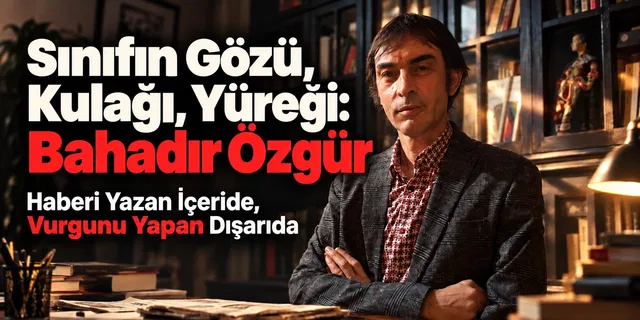
On 21 October the journalist Bahadır Özgür was a guest on İlke TV's Güncel Yorum programme and approached this question from a different place than mainstream commentary. For Özgür, the real danger of the fund crisis for the AKP is neither corruption nor the opposition. The danger lies in the party's social spine: in the shopkeepers, the traders, the small and medium-sized businesses spread across Anatolia.
In this piece we will set out Özgür's assessment, test it against the news that has appeared in Evrensel and BirGün over the last few days, and discuss where a class reading can take it deeper.
The investigation details in this piece are at the allegation stage; there are no final convictions, and the presumption of innocence applies.
First, the Summary: What Does This Piece Say?
For those in a hurry, the whole piece in seven sentences:
- There is anger, but not yet politics. The feeling that "you walked off with the billions and we got the minimum wage" is widespread; but unless this anger is organised, it will not flow in any direction of its own accord.
- The fight inside the AKP is a fight over rent, not over the order. The clash between appointed bureaucrats and elected politicians is about whose hands the spoils will be distributed through and to whom the bill will be sent. The last week's dismissals show the limits of this fight: the names go, the structure stays.
- Justice works along class lines. While the losses of 455,000 victims are locked in at the liquidation price, a "voluntary return" door is opened for those who made unjust gains; the middle ranks are arrested. There is detention for 75 kilos of pistachios, but none for a 2.2-billion-lira gain.
- Workers' money was in these funds too. According to a claim raised in Parliament, billions of lira from the Unemployment Insurance Fund were invested in these funds. The crisis is not only the "investor's" crisis; it is directly the working class's crisis.
- The AKP's real spine is shaking. According to Bahadır Özgür, shopkeepers, Anatolian traders and small and medium-sized businesses are, for the first time, tending to break away from the right. This section cannot be won over by a pay rise, only by a fundamental change in economic policy.
- The petty bourgeoisie that breaks away can go either way. Shopkeepers in crisis have historically been both allies of the workers' movement and the mass base of a harder right. Where they go depends on who organises them.
- The politics of names is not enough. Telling the crisis as "bad people stole" whitewashes the order. The real question is "why could it be stolen?", and the answer is an order that suppresses wages and pushes savings into speculation.
Now let us go into the detail.
1. What Happened in Five Weeks?
| Date | Development |
|---|---|
| 13–17 September | Investigation into Pusula Portföy, defaults in the funds, a 5.54% drop in the BIST 100; the Capital Markets Board (SPK) puts more than 130 funds into liquidation. |
| 26 September | YENİ Parti spokesperson Zeynel Emre claims that former minister and AKP Deputy Chair Fatma Betül Sayan Kaya and her husband made roughly 2 billion TL from Özata Denizcilik shares. The same day Kaya resigns from her party posts (Euronews). |
| 29 September | Prosecutors request a freeze on the Kaya couple's assets. |
| 1 October | AKP Group Chair Abdullah Güler: "Whatever anyone's responsibility, we will do what is necessary"; a Fund Monitoring and Coordination Board is set up, and the State Supervisory Council steps in (Halk TV). |
| 2–3 October | The number of people held in pre-trial detention rises to 85; among them are the son-in-law of Deputy Minister of Treasury and Finance Osman Çelik and Özata Denizcilik board member İskender Balcı (Oksijen). |
| 7 October | The Kaya couple give statements as suspects and deny the charges; they say they sent the gains to an account designated by the Savings Deposit Insurance Fund (TMSF). |
| 7 October | AKP Group Chair Güler: "The judiciary is working"; no parliamentary inquiry commission will be set up (BirGün). |
| 9 October | The AKP submits a bill on the liquidation to Parliament. Güler: the liquidation will be completed with the funds' "own resources", and "no budget resources will be used" (Foreks/AA). |
| 9 October | Justice Minister Akın Gürlek: 214 people and companies made 187.6 billion TL from three funds (Tera, Pusula, Hedef); 141 of them are individuals who made more than 100 million TL. Those who exited the funds on 13–16 September are being examined; the names have been reported to the TMSF (BirGün). |
| 14 October | Minister Şimşek grants permission to investigate former SPK Chair İbrahim Ömer Gönül for "abuse of office" (Evrensel). |
| 16–17 October | SPK bulletin: criminal complaints against 37 people over trading in Vişne Madencilik and Işıklar Enerji shares, and 21 licences revoked; the list includes Emre Tezmen and Erkan Kilimci of Tera, and Nusret Altınbaş, owner of Atlas Portföy (BirGün). |
| 20 October | SPK Chair Mahmut Sütçü leaves office; some reports call it a "resignation on health grounds", while Evrensel and Bloomberg report it as a "dismissal". Deputy Minister Osman Çelik retires (Olay). |
| 21 October | In a single day: the SPK suspends the operations of Alnus, Bulls and Pusula Yatırım; detention orders for 31 people, including Nusret Altınbaş, owner of Altınbaş Holding; Erdoğan tells his parliamentary group they are working "with a surgeon's precision", then leaves a question about further dismissals unanswered; Parliament debates the liquidation bill; Gürlek's tally: legal action against 404 people, 88 in pre-trial detention, 195 under judicial control, 42 fugitives, asset freezes on 351 people and 102 companies (Evrensel). |
We discussed the mechanism itself in detail in earlier pieces of the Stock Exchange Dossier: the inflation of fictitious capital, the closed fund circuit, whom the measures protect. This piece is not about the mechanism; it is about how the crisis has been turned into politics.
2. What Does Bahadır Özgür Say? Five Observations
Observation 1: This time the base is genuinely uneasy
Özgür says he has not seen an issue that has made the AKP base this uneasy in a long time. Corruption in public tenders and favouritism in appointments had not shaken the base, because people said, "if this one doesn't take it, the other one will." The fund issue is different, because three things piled up on top of each other: a period of severe poverty, the collapse of small businesses that had covered part of their costs with stock-market gains, and the entry of the word "billion" into everyday life.
This last observation of Özgür's is a subtle one. A billion is not the people's everyday measure; it is used when talking about the world's population or the state budget. "Making two billion lira in five months" is something people cannot imagine. And when an unimaginable figure is put next to the minimum wage and the pension, the question arises by itself: If there was this much money, why are we condemned to the minimum wage?
According to Özgür, people are no longer interested in each new name; their minds are stuck on a single point: "You walked off with the billions, and this is what we got."
Observation 2: The fight is between the appointed and the elected
Özgür does not see the debate inside the AKP as a "clique clash". For him there is a concrete marker: under the presidential system of government, a bureaucratic cadre has formed that arrives everywhere by appointment, from ministries to boards, builds its own networks, and is unelected, unaccountable and unsupervised. The political cadres squeezed into Parliament (Özgür names Hayati Yazıcı and Abdullah Güler) see the fund crisis as an opportunity against this cadre. Their reasoning: "We are the ones who face the people; we are the ones who have to win elections."
Observation 3: There will be no major overhaul, because you cannot separate them
So will any change in the system come out of this fight? Özgür's answer is no. There will be changes of names, the political cadres will be "placated", but over 25 years bureaucracy, politics and commerce have become so symbiotic that you cannot separate them "like picking the bones out of a fish". Try to get rid of one finger and you lose your arm. The basic workings of the presidential system, the 50+1 threshold, the concentration of power in one hand: none of this will be touched before the election.
The point he draws attention to is this: even the harshest criticism inside the AKP does not demand prosecution. Nobody is saying "let whoever is responsible be tried"; they are saying "let their power be taken away". The matter has been handed over to Erdoğan's anger, and that anger will probably stop at dismissing senior bureaucrats.
Observation 4: There is no investigation
This is perhaps Özgür's most striking claim. There are detentions and arrests; but in his view there is no investigation, in the legal sense, even at a minimal level. If you are looking for organised crime on the stock exchange, you need phone analysis, identification of contacts, physical surveillance, the seizure of accounting records; Özgür says none of this has made it into the case file. Most of those arrested are mid- and senior-level portfolio managers, that is, "white-collar workers". Meanwhile those who made the killing and invested the money walk away: their names are announced, but they are not charged.
According to Özgür, what is going on is not an investigation but a question of political management: Who will bear the political cost of the scandal that has come to light, and how can they get out of it with the least damage?
Observation 5: The real break is among the shopkeepers
And the most important observation. On the programme, Ercüment Akdeniz reports that AKP supporters on the ground are expecting a minimum wage of 52,000 lira and a pension of 36,000 lira; the question is, if this is granted, will the base say "fine"? Özgür's answer: they could grant it, but it would not work as well as it used to. Because the AKP's problem is not with its wage-earning base.
"The AKP was never a party of workers and pensioners."
According to Özgür, the real social network that has kept this line standing since the days of the Milli Görüş (National Outlook) tradition is shopkeepers, traders, and small and medium-sized businesses spread across Anatolia. This section is going through its hardest period since the 2001 crisis, has had its cash trapped in the funds and, in Özgür's words, is tending for the first time to break away from a right-wing party. This section cannot be won over with a pay rise; it can only be won over by a signal of fundamental change in economic policy, that is, by moving away from Mehmet Şimşek's programme. He draws attention to the elections in the chambers of industry and commerce, and says the pro-government press has started to threaten the chambers. The young left in 2019, the pensioners in 2024; now the spine is shaking.
3. Beyond the Video: What Have Evrensel and BirGün Written in the Last Few Days?
Özgür's assessment was broadcast on 21 October. The news that appeared in Evrensel and BirGün on the same day and the days before strengthens some of his observations and corrects others. Let us take them one by one.
"No investigation"? The figures grew, the question stayed the same
Özgür's claim that "there is not even a minimal investigation" should be set against the tally the Justice Minister announced the same evening: legal action against 404 people, 88 in pre-trial detention, asset freezes on 453 people and companies. Let us also correct one detail: the "141 people" Özgür mentions is not the number of people in detention; it is the number of individuals who made gains of more than 100 million lira, according to Gürlek's statement of 9 October. The number in detention is 88.
But the growth of the figures does not remove Özgür's real question; on the contrary, it sharpens it. The real issue is voluntary return. In the parliamentary debate reported by Evrensel, YENİ Parti MP Ümit Özlale asked: if Minister Şimşek says of those who made unjust gains that "we have records of all of them, we identified them through the algorithm", why wait for a voluntary return first? Özgür Karabat also said that the Minister had stated "three more people, together with the former minister, have paid", but that who paid how much was not disclosed even in committee. A proposal for an independent liquidation board was rejected; oversight of the liquidation was again left to the SPK.
So the picture is this: the person who made the gain can return the money and leave the process without being named; the victim, meanwhile, waits for the liquidation without knowing who returned how much. This is the legal meaning of Özgür's sentence that "the one who put in the money walks away."
"It will stop at dismissals": the prediction holds
Özgür had said that Erdoğan's anger would stop at "dismissing senior bureaucrats". The last week's list confirms this: SPK Chair Sütçü has gone, Deputy Minister Osman Çelik has retired, permission has been granted to investigate former SPK Chair Gönül, and Türkiye Sigorta General Manager Taha Çakmak has resigned (BirGün). Erdoğan, for his part, left unanswered on 21 October the question of whether there would be further dismissals.
The same day, at his group meeting, Erdoğan explained that they were managing the crisis in three categories: paying savings back to investors, holding those who made unjust gains to account before the courts, and preventing similar problems. In the same speech he described the opposition's allegations against ministers as "the politics of slander". One thing is missing from the three categories: why this order was built in the first place.
The "elected" camp is inside the structure too
Özgür saw the fight as one between the appointed and the political cadres squeezed into Parliament. The list BirGün compiled on 21 October shows that both camps are inside the same network. Allegations and verified information are mixed together in the list; but put side by side, a pattern emerges:
- a travel ban on Mustafa Yazıcı, son of Hayati Yazıcı;
- money left in Tera's TP2 fund by four companies co-owned by former minister Nihat Zeybekci;
- Vice President Cevdet Yılmaz himself announcing that his private secretary had suffered losses in the fund;
- figures from Tera's management having been appointed as presidential advisers and to presidential boards;
- Pusula Portföy's owner, Muhammed Yarız, being a former executive of the AKP's Istanbul Youth Branch.
The opposition points to other connections as well: the CHP's Faik Öztrak to a network of bureaucrats who "came out of the coat" of Borsa İstanbul Board Chair Erişah Arıcan; Ümit Özlale to links with the Berat Albayrak era. Albayrak announced through his lawyers that they would file suit, and likened the allegations to the methods of "the international mind behind 17–25 December" (Evrensel). Özgür's image of "picking the bones out of a fish" becomes concrete here: whichever name you pull, a network comes out behind it.
There were warnings, and the mechanism kept running
According to Evrensel and BirGün, reporting on Bloomberg's investigation, Borsa İstanbul inspectors reported suspicious activity to their superiors again and again. Şimşek reportedly said in November 2025 that they knew manipulation was being carried out through the funds, and MSCI voiced concern about coordinated trading in June. The redemption requests Tera could not meet reportedly exceeded 300 billion lira.
This confirms the thesis we set out in the Stock Exchange Dossier: the mechanism ran in full view of the regulator. The problem was not that it "went unnoticed" but that it was not stopped even though it was noticed. And the reason is in BirGün's list: those who should have stopped it and those who profited were inside the same network.
The Unemployment Insurance Fund: workers' money was there too
Perhaps the least discussed but, from a class perspective, the gravest allegation of the past week came during the parliamentary debate from CHP Karabük MP Cevdet Akay. According to Akay, 3.4 billion TL from the Unemployment Insurance Fund in August, and a total of 3.8 billion TL by 15 September, was placed in these funds. Akay asked whether other public institutions had also invested money.
If this allegation is confirmed, the picture changes. The Unemployment Insurance Fund is money built up from premiums deducted from workers' wages, money that is supposed to be paid to workers who lose their jobs. Investing this money in funds promising 20% a month shows that the crisis is not only the "small investor's" but the crisis of the whole working class, organised or not. Özgür's observation that "the AKP was never a workers' party" shows itself here once again: the worker's unemployment protection may have been opened up to speculation without the worker being asked.
Punishment for the one who reports the news
The pressure on the press, mentioned in the programme's description but given little room in the conversation, has come into focus in the latest news. According to the Independent Communication Network's (BİA) July–September report, seven journalists were jailed in three months and access was blocked to at least 52 news reports; the report notes that access was blocked to the X accounts of journalists and outlets that reported on the fund robbery and irregularities in the market. BirGün reporters are among those blocked (Evrensel).
The same pattern again: the list of the robbery is not disclosed, but the account of the one who writes about the robbery is shut down. While the right to know who gained what is shielded by "the right not to be stigmatised" and "investor privacy", the journalist's right to report is restricted under the "disinformation" article.
The face of the victim
In Parliament, Yeni Yol MP Sadullah Kısacık gave the number of victims as 455,700 and read out a message from one of them: savings built up over years for a mother's medical treatment, military service, a trousseau, a home and a car. He also criticised the crisis management: in a crisis directly affecting half a million people, no one from the SPK or Borsa İstanbul comes before the public; the statements are made by the Directorate of Communications.
This detail is not a small one. The word "investor" hides a class; the items in the message reveal it. Money for medical treatment, money for a trousseau, money for military service is not capital; it is the security a wage earner has put aside against the future.
4. The Strength: Reading a Party Through Its Class
Let us give credit first: the most valuable aspect of Özgür's assessment is that he reads a party not through its vote share or its leader's character but through the social section it rests on. Most political commentary in Turkey gets stuck on the question "What will Erdoğan do?" Özgür instead asks: "What is the ground Erdoğan is standing on, and why is that ground slipping?" This is the question closest to Marxist analysis.
The second strength is the "symbiotic structure" observation. He sees the fusion of bureaucracy, politics and capital not as moral decay but as a structure built over 25 years. That is why he does not fall into the "a few rotten apples" line.
The third is the critique of justice. The observation that "the one who put in the money walks away, the portfolio manager is inside" shows the class structure of justice directly. Evrensel's headline fitted it into a single sentence: no detention for a 2.2-billion-lira robbery, but detention for 75 kilos of pistachios.
Now let us turn to the places where the assessment can be developed.
5. Going Deeper 1: What Is the "Appointed vs Elected" Fight Really About?
The picture Özgür describes (an unelected, unaccountable bureaucratic cadre that has declared itself the owner of the country) is a familiar one in Marxist literature. In The Eighteenth Brumaire of Louis Bonaparte, Marx describes a situation in which executive power, with an enormous army of officials, rises above society and the state appears to have "made itself completely independent". This is what we call Bonapartism: when the balance between classes breaks down, the executive appears as an arbiter standing above every class.
But Marx's real warning is this: this independence is only apparent. The executive does not hang in mid-air; it protects a particular order of property. So when reading the fight between the appointed and the elected, we need to ask: what are the two sides actually divided over?
The answer: over whose hands the rent is distributed through. Both sides defend the same model of accumulation; where they part ways is over which network will hand out that model's spoils and which network will be sent the bill. Özgür's observation that "criticism inside the AKP demands power, not prosecution" shows exactly this. The political cadres are not saying "let there be no robbery"; they are saying "do not send the political bill for the robbery to us."
There is a concrete sign of this too: reports appeared in the press that an asset freeze had also been placed on Mustafa Yazıcı, son of Hayati Yazıcı, whom Özgür named as one of the voices of the political cadres. In other words, the "elected" camp is not outside the structure either. Özgür's own "fish bone" image goes beyond his own observation here: if the bones cannot be separated, then the fight is not about the fish itself.
In Poulantzas's terms, this is a struggle between fractions within the power bloc. The bloc is not breaking up; its centre of gravity is shifting within it. The distinction matters, because part of the opposition tends to read every crack inside the AKP as "the system is collapsing". Yet fraction struggles sometimes weaken the bloc and sometimes strengthen it by reorganising it. The departure of the SPK Chair and a deputy minister, the permission to investigate the former SPK Chair, Erdoğan leaving the question of further dismissals unanswered: these look like steps in the "limited to dismissals" solution Özgür foresaw.
6. Going Deeper 2: What Does "It Was Never a Workers' Party" Mean?
Özgür's sentence "the AKP was never a party of workers and pensioners" is true; but it must be read carefully.
What is true is this: the AKP has never been a party that represented the interests of workers. The subcontracting regime, the moves against severance pay, the strike bans, the record of workplace deaths are the proof. In Özgür's description, workers and pensioners were only ever given money "like alms".
But what is missing is this: millions of workers voted for the AKP for twenty years. This has to do not with workers being in "false consciousness" but with how hegemony is built. A party can win a class's votes without representing that class's interests: through social assistance networks, religious-community and hometown ties, identity politics, and by making unorganised workers dependent on the state one by one. As we wrote in the Acemoğlu debate, a worker voting for the right is above all an expression of being unorganised.
A second point: the word "alms" captures the AKP's outlook well; but it cannot be our word. The minimum wage is not alms; it is the price of labour power, that is, the cost of the worker being able to reproduce themselves and their family. A worker expecting 52,000 lira is not waiting for a donation; they are claiming what they are owed. Özgür's observation that "handing out money no longer works" may be true for the government's electoral calculations; but from the worker's point of view the wage demand is legitimate whether or not it works at the ballot box, and even more legitimate after the fund crisis. Because the fund crisis has exposed, in a way everyone can see, that the "there are no resources" line is a lie.
7. Going Deeper 3: Where Do the Shopkeepers Who Break Away Go?
Özgür's most important observation is that shopkeepers and small and medium-sized businesses are tending to break away from the right. Taking this observation seriously means taking the question that follows seriously too: Where do those who break away go?
In Marxist literature this section is called the petty bourgeoisie: those who work with their own labour but are at the same time owners of property, however small, who may also employ workers, squeezed between the two great classes. In the Eighteenth Brumaire, Marx describes this section's political behaviour in a single word: oscillation. In moments of crisis the petty bourgeoisie swings from one side to the other, because it fears big capital and it fears dispossession, that is, becoming a worker.
History shows us that this swing has two directions. In periods of crisis the petty bourgeoisie has sometimes allied with the workers' movement and sometimes become the mass base of a harder right. In 1930s Europe, bankrupt shopkeepers and small property owners formed fascism's first mass base. So the news that "shopkeepers are breaking away from the AKP" is not good news in itself. Where those who break away end up depends on who organises them.
And note this detail: according to Özgür, this section's demand is that the Şimşek programme be abandoned. This demand points to a contradiction between fractions of capital. Tight monetary policy means stability for finance capital and big capital; for the small business whose credit is cut and which is crushed under interest payments, it means death. The shopkeeper's demand for "cheap credit" and the worker's demand for "a decent wage" are not the same thing; at times they even clash, because the shopkeeper is also an employer. But both are being crushed under the same programme: the programme that suppresses wages, cuts credit and moves savings into finance.
This is exactly where the left's task lies: neither to ignore the shopkeepers' anger nor to dissolve workers' politics into shopkeepers' politics. It is to draw this section into an alliance under working-class leadership with demands such as cooperative credit, opening public banking to small producers, and protecting local producers against the big chains. If this is not done, someone else will fill the gap.
8. Going Deeper 4: The Class Meaning of "No Investigation"
Özgür's claim that "there is no investigation" is a legal assessment. But there is a class structure behind it, and it needs to be called by its name.
Look at the three legs of crisis management so far:
- The small investor who put money into the funds: Under the bill, the liquidation will be carried out with the funds' "own resources", and no budget resources will be used. In other words, the loss will be locked in at whatever the liquidation price turns out to be.
- The big winner who got out at the top: The Kaya couple say they sent their gains to an account designated by the TMSF. The bill opens a "voluntary return" route; who returned how much is not disclosed. The gain can be returned; for the one who returns it, the process can turn into a "settlement".
- The middle ranks: Portfolio managers, brokers and intermediaries are arrested. The crisis wants a name, a face; that face is chosen from the middle ranks.
Put these three legs side by side and a pattern emerges: the loss of those at the bottom is made final, the gain of those at the top is opened to bargaining, and those in the middle are punished. Here the law does not act as a neutral arbiter between classes; it works as the apparatus that distributes the crisis's bill. Özgür's observation that "this is not an investigation but the management of political cost" is the legal face of this pattern.
9. Going Deeper 5: The Critique of the Opposition and the Missing Link
Özgür directs a polite but clear criticism at the opposition: it was the opposition that brought the scandal to light, and this is perhaps the first time in 10–15 years that this has happened. But announcing "name after name" afterwards was a mistake. The people are already stuck; now they want a solution.
We agree with this criticism and take it one step further. The politics of names reduces the crisis to a moral problem: "Bad people stole." In this frame, the solution is for the bad people to go and good people to come. Yet the fund crisis, as we showed in earlier pieces of the Stock Exchange Dossier, is the product of a chain whose individual links are each legal: privileged shares, hedge funds, related-party transactions, leverage. Change the names and the chain stays in place.
The opposition's missing link is this: The people want "a solution", but which solution? "Cleaner management", or a change in the order itself that pushes wage earners' savings into speculation? Proposing "a better SPK" in response to the fund crisis reduces the problem to the regulator's incompetence. The class answer is this: as long as wages stay below the cost of reproduction, as long as deposits lag behind inflation, as long as housing is out of reach, small savings will flow into the next "20% a month" promise.
10. Going Deeper 6: The Road to the Election — The Constitution and the Splintering of the Opposition
In the last part of the programme the conversation turns to the election. On 15 October, Chief Presidential Adviser Mehmet Uçum said that the drafting of a new constitution had begun as of 1 October and that the election would most likely be held in March or April 2028 (Euronews).
According to Özgür, no decision has been made yet. Changing the constitution to open the way for Erdoğan's candidacy, turning the election into a "confirmation mechanism", leaving the constitution until after the election: all the scenarios are in play at once. But one priority is clear: splintering the unity of the opposition and neutralising strong alternative candidates. The continuing operations against municipalities are part of this priority. The examples Özgür gives: Esenyurt Mayor Ahmet Özer being unable to return to office despite being acquitted, and Ahmet Türk being unable to return.
Özgür's important observation here is that the fund crisis will change this plan as well. If an internal bureaucratic purge is under way, strong political figures squeezed into Parliament may come to the fore, and the election campaign may pass into their hands.
Let us combine this with a class reading. The constitutional debate is presented as a legal debate; yet every constitution is the legal record of a particular order of class relations. The 1982 Constitution put on record the order of 12 September, which shut down the unions and banned strikes. The constitution being debated today should be read with this question: will it limit the order the fund crisis has exposed (an unelected, unaccountable executive that shares out rent among itself), or make it permanent?
The second point: municipalities are not an ordinary tier of administration. City budgets, public services, employment and tenders are distributed from there. Replacing an elected mayor with an appointee is the local counterpart of the "supremacy of the appointed over the elected" that Özgür describes in the fund crisis. So the fund crisis and the operations against municipalities are not separate topics; they are two faces of the same way of governing. On one side an elected mayor cannot return to office; on the other, a two-billion-lira gain is opened to bargaining by being returned to a TMSF account.
11. Observation and Reading Side by Side
| Bahadır Özgür's observation | What a class reading adds |
|---|---|
| The base grew angry when it put "billion" next to the minimum wage. | The anger is spontaneous and not yet political; whether it becomes politics depends on organisation. |
| The fight is between appointed bureaucrats and elected politicians. | This is a struggle between fractions within the power bloc; the split is over whose hands the rent is distributed through, not over the order itself. |
| The structure is symbiotic; there will be no major overhaul, it will stop at dismissals. | The symbiosis shows the Bonapartist executive's tie to the order of property; the fraction struggle may also strengthen the bloc by reorganising it. |
| There is no investigation in the legal sense, only the management of political cost. | The law works as the apparatus that distributes the crisis's bill: the loss of those at the bottom is made final, the gain of those at the top is opened to bargaining. |
| (The past week's news) 88 in detention, legal action against 404; but a "voluntary return" route for unjust gains. | As the figures grow, the question sharpens: the one who gained can return the money anonymously and leave, while the victim does not know who returned what. If the Unemployment Insurance Fund allegation is confirmed, the crisis is directly the working class's crisis. |
| The AKP was never a workers' party; handing out money no longer works. | It did not represent workers' interests but it won their votes; this is an expression of being unorganised. The wage is not alms but the price of labour power; the demand is legitimate. |
| The real break is among shopkeepers, SMEs and Anatolian traders. | The petty bourgeoisie oscillates in a crisis; where those who break away go depends on who organises them. If the left does not fill the gap, the right will. |
| The opposition should stop announcing names and offer a solution. | The solution is not "cleaner management" but a change in the order that pushes wage earners' savings into speculation. |
| The constitutional scenarios are open; the priority is to splinter the opposition. | A constitution is the legal record of class relations; putting the appointed above the elected in municipalities is the local counterpart of the way of governing seen in the fund crisis. |
12. So What Is to Be Done?
Reading and watching
-
Watch the chamber elections. The elections in the chambers of industry and commerce that Özgür draws attention to are the best place to see the cracks within capital itself. Which names are standing, which are withdrawing, whom is the pro-government press targeting? This is the class struggle reflected within the ranks of the bourgeoisie itself.
-
Read the liquidation law line by line. The meaning of the sentence "no budget resources will be used" is to whom the loss will be written off. Follow the text of the bill on the Grand National Assembly website: is there, or is there not, a provision on priority for small investors, the personal liability of the founders, and the return of money by those who got out at the top?
-
Keep a "who is inside, who is outside" table. Write the titles of those arrested and the fate of those who made gains side by side. The class pattern of justice is best seen in such a table.
Talking and organising
-
Demand an account of the Unemployment Insurance Fund. The 3.8-billion-lira allegation raised in Parliament is a direct concern of the unions and workers' organisations. By what decision and with whose approval the fund entered these investments, and how much of it cannot be recovered, should be asked through parliamentary questions, union statements and freedom-of-information requests. This money is the workers' premiums.
-
Defend the one who reports the news. Share the reports of journalists whose accounts were shut down for covering the fund robbery, and subscribe to their outlets. If the list of the robbery is not disclosed, those who search for the list must not be left alone.
-
Talk to the shopkeepers in your neighbourhood. Listen to the grocer, the repairman, the small workshop owner hit by the fund crisis. Do not tell them "you voted for the AKP, you deserved it"; talk together about what they lost and why they lost it. Credit, rent, interest, the pressure of the big chains: the common enemy is this order itself.
-
Do not withdraw the workers' demand. The debate over "handing out money doesn't work" must not turn into belittling the wage demand. Demands for the minimum wage and for pensions can be defended more strongly after the fund crisis, on ground where the "there are no resources" lie has collapsed.
-
Pull the debate from the language of morality to the language of structure. When the fund crisis comes up around you, put the question "why could it be stolen?" next to the question "who stole?". The names will change in the next scandal; the structure stays the same.
Collective alternatives
- Discuss collective forms of small savings. The cooperative, the solidarity chest, the shopkeepers' credit cooperative. They do not promise "20% a month"; they promise security and autonomy. The fund crisis's half a million victims now know what that difference means.
13. Final Word
Bahadır Özgür ends the programme with a question: how will the AKP pull back together the shopkeepers, traders and small and medium-sized businesses spread across Anatolia?
That question is the government's question. Ours is different: Who will organise that section? And before that: who will organise the wage earners who make up most of the half a million investors, the worker who put their severance pay into a fund, the pensioner who entrusted their lump-sum payment to an "expert"?
The fund crisis has exposed one thing in a way everyone can see: there is money in this country. A measure called the billion has entered some people's everyday lives. The people who see this are angry, hurt and stuck. But as Özgür also says, this reaction is not yet a political reaction.
Dear young comrades, if one thing remains from this piece, let it be this:
Anger is born spontaneously, but it does not find its direction spontaneously. The vacuum left by a government cracking at the spine is filled by whoever is organised. Turning the sentence "you walked off with the billions, and this is what we got" into a political programme is our job.
Sources
Video
- Fon krizi nasıl çözülecek? AK Parti bu krizden nasıl etkileniyor? Bahadır Özgür değerlendirdi — İlke TV, Güncel Yorum (Denizcan Abay, Ercüment Akdeniz, Banu Güven), 21 October 2026
Chronology and developments
- Eşiyle birlikte ifade vermişti: Fatma Betül Sayan Kaya, AK Parti'den ihraç mı edildi? — Euronews, 7 October 2026
- AKP'den Hayati Yazıcı'nın oğlu hakkında ilk açıklama: "Kimin ne sorumluluğu varsa gereğini yapacağız" — Halk TV, 1 October 2026
- Fon soruşturmasında 20 kişi daha tutuklandı, tutuklu sayısı 85'e yükseldi — Oksijen, 3 October 2026
- AK Parti, fon tasfiyesine ilişkin kanun teklifini TBMM Başkanlığına sundu — AA/Foreks, 9 October 2026
- Fon vurgunu sonrası SPK Başkanı istifa etti, Bakan Yardımcısı Osman Çelik emekliliğe ayrıldı — Olay, 20 October 2026
- Gözaltı uygulamasında bile derin adaletsizlik: 2,2 milyar liralık vurguna yok, 75 kilo fıstık için var — Evrensel
- Fatma Betül Sayan Kaya'nın 2,2 milyarlık fon vurgununda yeni perde — Cumhuriyet
- Mehmet Uçum'dan yeni anayasa açıklaması ve seçim takvimi — Euronews, 15 October 2026
- Ruşen Çakır: Fon krizi muhalefete rağmen iktidarı sarsmaya devam ediyor — Medyascope, 13 October 2026
Evrensel
- Fon vurgunu ile ilgili kanun teklifi görüşmeleri: "Madem haksız kazanç sağlayanları tespit ettiniz, neden gönüllü iadeye başvuruyorsunuz?" — 21 October 2026
- Adalet Bakanı Akın Gürlek: Fon soruşturmasında 88 kişi tutuklandı — 21 October 2026
- Fon vurgunu: Erdoğan "görevden alma" sorusunu yanıtsız bıraktı — 21 October 2026
- Berat Albayrak'tan fon soruşturması açıklaması: Öztrak ve Özlale'ye dava açılacak — 21 October 2026
- 3 ayda 7 gazeteci tutuklandı, en az 52 habere erişim engeli getirildi — 21 October 2026
- Eski SPK Başkanı Ömer Gönül'den rüşvet iddiasına yanıt — 21 October 2026
- Fon vurgununda yeni iddialar: Fatma Betül Sayan Kaya'nın hesaplarını Tera Menkul yönetti — 21 October 2026
- İddia: Fon krizi Tera Grubu'nda fiziksel kavgaya neden oldu — 21 October 2026
- SPK üç yatırım şirketinin faaliyetlerini geçici olarak durdurdu — 21 October 2026
BirGün
- Altınbaş Holding'in sahibi Nusret Altınbaş da aralarında: Fon vurgunu soruşturmasında 31 gözaltı kararı — 21 October 2026
- Erdoğan: Fon konusunu 3 farklı kategoride takip ediyor, cerrah titizliğiyle hareket ediyoruz — 21 October 2026
- Hastalık tüm vücudu sardı — 21 October 2026
- Berat Albayrak'tan "fon vurgunu" iddialarına yanıt — 21 October 2026
- Bloomberg, fon krizinin perde arkasını yazdı — 21 October 2026
- SPK'den 3 aracı kuruma faaliyet durdurma kararı — 21 October 2026
- Fon vurgununda yeni gelişme: SPK'den onlarca kişi hakkında suç duyurusu ve lisans iptali kararı — 17 October 2026
- Akın Gürlek'ten fon vurgunu açıklaması: Üç fondan 214 kişi ve şirket 187,6 milyar lira kazandı — 9 October 2026
- AKP'li Güler açıkladı: Fon vurgunu için TBMM'de araştırma komisyonu kurulmayacak — 7 October 2026
- Tutuklular belli, vurguncular hani? — 4 October 2026
Theory
- Karl Marx, The Eighteenth Brumaire of Louis Bonaparte (the apparent independence of the executive; the oscillation of the petty bourgeoisie)
- Nicos Poulantzas, Political Power and Social Classes (the power bloc and its fractions)
- Karl Marx, Capital, Volume III, Part Five (fictitious capital)
Related pieces
- Saving Acemoğlu Does Not Save the Class
- TÜİK: Two Figures, One Country: 8.1% and 30.6%
- 12 September: The History, Balance Sheet, and Present of a Class Coup
- Whose Family Is Safe?
- The Class's Answer to Evrim Ağacı's Question
Knowledge Commons — Knowledge Belongs to Everyone. The investigation details in this piece are at the allegation stage; there are no final convictions, and the presumption of innocence applies. The assessments in the video belong to Bahadır Özgür; the quotations are summarised from the transcript of the conversation. The news is reported as it appeared in Evrensel and BirGün as of the evening of 21 October 2026. This piece is not investment advice. CC BY-SA 4.0.