Journalists' Open Call to Musk, and the Partnership of Censorship
From Whom Do We Ask for the Key?

From Whom Do We Ask for the Key? Journalists' Open Call to Musk, and the Partnership of Censorship
Dear Young Comrades,
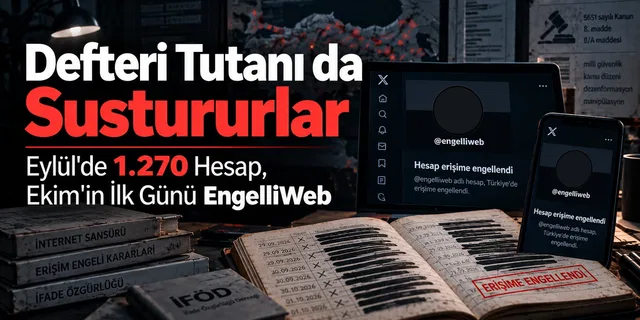
In one week we stood at the head of the same fire with three pieces. First we told how blocking works, technically. Then we discussed why T24 was shut down. After that we wrote of the silencing, too, of EngelliWeb, which documents the censorship. Today the fire has a new face: journalists made an open call to the company itself that closed their accounts, that is, to Elon Musk's X. DW Turkish reported the news under this headline too.
In this piece I will first summarise the event briefly, then go into the detail. Our question is simple, but heavy: What does it mean to ask for the key of censorship from the hands that fitted the lock?
The Situation in Brief
What happened? On 6 October 2026 the International Federation of Journalists (IFJ), the European Federation of Journalists (EFJ) and the Journalists' Union of Turkey (TGS) made a joint statement. They asked the management of X not to close to access, "in the absence of an independent judicial ruling", the accounts of journalists and media organisations in Turkey (journo, bianet).
Why now? Because September 2026 became the darkest month in the history of the internet in Turkey. According to the data of the Freedom of Expression Association (İFÖD):
- In September an access-block ruling was issued on at least 1,270 X accounts. This number, in a single month, passed the whole of 2025.
- The ruling on only 115 of these accounts can be known. It is not known on what ground 1,155 accounts were closed.
- The total following of the accounts whose ground is not known exceeds 35 million.
- X applied about 90 percent of the rulings: 1,139 of the 1,270 accounts became invisible from Turkey (Karar, Bold Medya).
- In the last wave, on 30 September, 147 more accounts were closed. The total following of these accounts is about 2.65 million. The accounts of T24, Kısa Dalga, Sol Haber and Evrensel were on the list too.
- On the morning of 5 October at least 88 more accounts were blocked. İFÖD's own account was among them (Turkish Minute).
What was asked? The organisations' demands of X, in brief, are these: that it check whether there is a court ruling, that it reject the unilateral requests of administrative authorities, that it turn back requests that are vague and disproportionate, that it restrict only specific content instead of closing the whole account, that it inform the user affected, and that it explain in detail, in its transparency reports, the requests coming from Turkey.
Our assessment, in a single sentence: The call is just, it is necessary, and it deserves solidarity. But the address it speaks to is not the solution of the problem; it is a part of the problem. This censorship has two partners: the state that decides, and the monopoly that applies. The lasting solution is not in the conscience of one of the partners. It is in the ownership of the infrastructure of communication.
Let us now pass to the detail.
The Call Itself: Who Said What?
Let us underline one thing first: one of the organisations that made this call is a union. TGS is the journalists' organisation of labour. The IFJ and the EFJ too are the federations that unite the journalists' unions of the world and of Europe. So this statement is not merely a declaration of "liberal press freedom". It is at the same time labour's objection to the seizure of the instrument of labour. We will open this below.
The demands the organisations directed at X are these:
- To check with care, for every request coming from Turkey, whether there is an independent court ruling,
- Not to count as a sufficient ground the unilateral requests of administrative authorities and public institutions,
- To examine the legal basis of the requests, and to reject those that are general, vague and disproportionate,
- To inform the users affected about the source of the request, its legal basis and its scope,
- To restrict specific contents instead of closing the whole account,
- To share in detail, in transparency reports, the blocking requests in Turkey.
The statement also reminds us of this: it is written in X's own policy that a valid legal document, such as a court ruling, must be attached to requests for an access block (Cumhuriyet). The organisations are asking of X not something new, but that it comply with the rule it set itself.
This detail is not small. If journalists' federations have to write an open letter in order for a company to apply its own rule, that rule stands in the shop window shown to the customer, not in the storeroom.
What the Figures Tell: A Year in a Month
İFÖD's data show both the scale of this censorship and its direction. We had reported it earlier, in the piece on blocking: in 2024 the number of X accounts closed to access in Turkey was around 20. In 2025 this number rose to 995. In September 2026 it reached 1,270 in a single month.
The waves need to be told apart too. In the EngelliWeb piece we had counted three fronts:
- The morality front (after 12 September): It began, through the discourse of "Ailem Güvende", with LGBTI+ organisations. It spread to women's organisations, to journalists, to academics and to unions.
- The finance front (mid-September): Economists, analysts and journalists who spoke of the fund crisis were targeted. On 22 September, 194 accounts were closed in a single day. Uğur Gürses, Bilge Yılmaz and Naz Yavuzarslan are among them. The prosecutor's office's ground was that these posts "might frighten the investor" (The Next Web).
- The security front (ongoing): This is the field in which anything can be closed on vague grounds such as "national security" and "public order".
The detail of the finance front matters. The fund crisis we wrote of in our stock-exchange dossier was exactly this: the small saver lived the loss, while those on the inside reached the information in time. When the account of the economist who spoke of the crisis is closed on the ground that it "frightens the investor", what is protected is not the investor. What is protected is that the question of how the loss was distributed not be asked. Information, too, has a class.
90 Percent: "The State Decides, the Monopoly Applies"
The heart of this piece is this figure: 90 percent.
The access-block ruling is given by a criminal court of peace, or, through Article 8/A of Law 5651, by an administrative authority. But the one that presses the button which makes the account invisible from Turkey is X's own system. 90 percent of the rulings were applied. The ground of 1,155 rulings is not known. That is, X to a large extent applied rulings whose ground it did not explain to the public.
Worse still, the practice of notification weakened too. Prof. Yaman Akdeniz, the founder of İFÖD, says that X used to inform users, and that this is now largely not done. It was the same when his own account was closed: "X notified me, but it gave no detail, no copy of the ruling, and no ground" (The Next Web). The journalist Hikmet Adal tells the same thing: "You are left having to find, first, yourself, a ruling that has been issued about you" (journo). In order to be able to object, one has to know the ruling. The one who does not know the ruling cannot object. Secrecy here is not a side effect; it is the mechanism itself.
The legal ground is troubled too. In 2023 the Constitutional Court had ruled that the application of 8/A did not contain the safeguards that would prevent the arbitrary intervention of public authorities (Turkish Minute). Today the same article is being operated like an express lane, on the request of the Cybersecurity Presidency. We had told, in our piece on the Directorate General of Public Artificial Intelligence, what kind of centre of power this institution turned into with Law 7590, which entered into force on 31 July 2026. The access block, bandwidth throttling, the interception infrastructure and the management of public data were gathered under the same roof.
So the picture is this: on one side an executive apparatus without oversight, on the other a private monopoly that gives no account. Between the two, a public sphere of 35 million followers is quietly closing.
Musk's Record: What Does a "Free-Speech Absolutist" Do?
When Elon Musk bought Twitter in October 2022 for 44 billion dollars, he introduced himself as a "free-speech absolutist". We had discussed this discourse too in our piece Daron's Challenge, Elon's Test. Let us look at the record; the distance between the word and the deed is instructive.
| Event | What did Musk's X do? |
|---|---|
| December 2022, ElonJet | He himself suspended the accounts of the journalists who reported the location of Musk's jet. |
| May 2023, the elections in Turkey | Just before the election he closed some accounts in Turkey. Musk's answer to the criticisms: "The choice is this: either the whole of Twitter is throttled, or access to some tweets is restricted. Which do you want?" |
| August–October 2024, Brazil | First he defied the judiciary, and the platform was shut in the country. About a month later he paid the fines, appointed a representative, and complied with the rulings. |
| March 2025, Turkey | After İmamoğlu's arrest he announced that he objected to the closure of more than 700 accounts. A significant part of the accounts still became invisible from Turkey. |
| 2025, India | He filed a case against the government's content-removal portal, and lost in court. The platform goes on operating in India. |
| September 2026, Turkey | It applied about 90 percent of the 1,270 rulings. There is no known statement to the public. |
This table tells us not a moral tale, but a cost calculation. X does not hesitate to silence the journalist who disturbs its own boss. When it comes face to face with the state in a large market, it either bargains or it bows. Sometimes it publishes a statement and objects, but still it applies the ruling. What is decisive is not the principle; it is the size of the market, the advertising revenue, the risk that the representative will go to prison, and the company's political calculations in that country.
Musk's sentence of 2023 is in fact an honest confession: "Either all of it, or a part of it." Among the options there is no "none of it". Because the condition of the platform's staying in Turkey is that it come to terms with the state. This is not a choice of freedom of expression. It is a choice of market share.
Let us remember one thing more. After taking over the company, Musk laid off about 80 percent of the workers. The trust and safety teams, and the legal and policy units, were the places that shrank the most. To examine one by one every request that comes in, to turn back the ones without a ground, and to inform the user, takes labour. The careful check that the organisations ask of X is the labour that X, in order to cut costs, liquidated with its own hands. The demand is right; but the company's business model has been built in the opposite direction of this demand.
An Account Is an Instrument of Labour: "They're Taking the Means by Which You Earn Your Bread"
If we speak of this subject only through freedom of expression, we miss something. A journalist's X account is, today, their instrument of production. It is the channel by which they reach the source of news, the distribution network by which they carry their news to the reader, and the archive they have accumulated over years.
What the journalists tell shows this plainly (MLSA, journo):
- Onur Dalar: "In a way, they're taking the means by which you earn your bread out of your hands."
- Meral Danyıldız: Her account was closed on 28 September. On her old account she had 43,000 followers. With her new account she was able to reach only 11,000. She herself can see the news, the photographs and the videos she shared over years, but the reader in Turkey cannot.
- Yıldız Tar: Access to an archive of more than a hundred news items was lost. "A memory, an archive, was gone."
- Sarya Toprak: She lost the network of communication she had built with her account of 12 years. Because she could not learn which court ruling had been relied on, she could not object either.
It is instructive to look here in Marx's language. 43,000 followers are the accumulated form of years of journalistic labour. Every news item, every verification, every photograph taken in the field wove that network. But this accumulation is not the journalist's property. It stands on the platform's server, in the platform's ownership. When the state gives a ruling and the platform presses a button, the journalist is, in a single night, torn from the product of their own labour.
This is the appearance, in journalism, of the digital enclosure we told of in our pieces on labour in the age of AI. The place that looks like a commons is in fact private property. The one who puts their labour into the commons cannot claim a right over that labour. Censorship lays this dispossession bare: the journalist possesses their own reader, their own archive, their own network only so far as the two partners permit.
Furkan Karabay's words are to the point for this reason too. To close an account is "no different from closing a newspaper". Once, to close a newspaper, the printing press had to be sealed. Today the printing press is in the hands of a company in Texas. The seal is in Ankara.
Is Migration a Solution? Bluesky, Mastodon, and the Question of Ownership
As the blocks grow, journalists look for a new address. Publications such as the Guardian, La Vanguardia and Le Monde have stopped institutional sharing on X. A great many journalists are moving to Bluesky, Mastodon and Threads (Yeni Ankara).
But let us say a disappointment from the start: to change the platform is not to change the ownership. According to the same news, Bluesky too complies with valid legal requests. Up to April 2025 the courts of Turkey had given rulings for 63 Bluesky accounts, and the platform had made 19 of them invisible. In 2025 Bluesky received 1,470 legal requests, and approved 1,334 of them.
So the problem is not Musk's personality. The problem is that public communication has been bound to an infrastructure that is central and privately owned. The boss may change, the platform may change; so long as the state holds the trump card of "either I close all of it, or you close a part of it", the result is similar.
For this reason we should hold the debate on migration with this question: Which infrastructure cannot be closed by a single decision of a single company?
- Federated networks (such as Mastodon): A single server can close, but the network does not close. The community can set up its own server.
- One's own site, and RSS: The journalist's archive stands on their own domain, on their own server. The reader comes by subscription, not by the algorithm's permission.
- Email newsletters: An old method, but a durable one. It sets up a direct relation with the reader.
- Cooperative and union servers: Journalists' organisations can build a common infrastructure for their members.
None of these ends censorship by itself. As we told in the piece on blocking, the state can block at the level of DNS, of IP and of SNI too. But the difference between them is large. On a central platform, censorship is the pressing of a button. On a distributed infrastructure, censorship turns into an attack that is plainly seen, and whose cost is high. This difference buys time for organising.
The Demands of the Call, and Their Class Counterparts
Let us weigh the demands one by one, not in order to belittle the call, but in order to carry it forward.
| The call's demand | Its class counterpart, and its limit |
|---|---|
| Accounts should not be closed without a court ruling | Right. But the criminal courts of peace today rule on a single type of ground. If there is no independence of the judiciary, the condition of a "court ruling" ceases to be a safeguard. The demand has to be joined with the struggle for the independence of the judiciary. |
| The unilateral requests of administrative authorities should be rejected | Right. It should be thought together with the demand that Article 8/A be removed. To ask of the company what it is the state's to do is to write the responsibility to the wrong address. |
| Not the whole account, but specific content, should be restricted | Right, and concrete. But which content "is to be restricted" is again decided by the same two partners. |
| The user should be informed | The most urgent demand, and the cheapest. That X does not do this is a choice of saving on cost, and of compliance with the state. |
| Detail should be given in the transparency reports | Right. But voluntary transparency depends on the company's wish. What is needed is a record that is compulsory, independently audited, and open to the public. |
| X should comply with its own policy | The one who writes a company's rules, the one who applies them, and the one who changes them, is the company itself. The rule is a tool in its owner's hand. |
The summary of the table is this: every one of the demands is just. But every one of them asks the platform to behave better without questioning the ownership. As a first step, this is of value. As a last step, it is insufficient.
Why, Then, Do We Still Stand with This Call?
Let us not allow a misunderstanding here. The criticism above does not mean "the call is in vain".
First, international pressure works. That X objected in front of the public in March 2025 was the result of the international reaction. Companies are sensitive to a cost to their reputation. Advertisers, the European Union's Digital Services Act, and international press organisations can raise this cost. This pressure can bring about the opening of some accounts. Even to bring back a single journalist's archive matters.
Second, the call puts it on the record. That 1,155 rulings without a ground, 35 million followers, and the journalists name by name pass into international documents is evidence that will be used in the legal struggle tomorrow.
Third, and most important: it is a union that is making this call. That TGS takes this matter up not only as freedom of expression, but as the seizure of its members' instrument of labour, is the right ground. The organisation of labour is defending the instrument of labour.
Our task, while we support this call, is to carry it one step further: from waiting for mercy from the boss, to demanding that the infrastructure be made public.
The Computing Worker's Place in This Fire
This event has a face that concerns our own front too. Among the accounts blocked was the software developer Fatih Kadir Akın. EngelliWeb, that is, the project that has documented internet censorship since 2008, was blocked too.
As we wrote in the Computing Worker's Handbook, the computing worker is not only the person who writes code. The network administrator, the content moderator, the product manager and the designer are part of this labour too. And it is again this labour that builds the infrastructure of censorship, that operates it, and that writes the systems which decide whether a notification will be sent to the user.
This means two things:
- To share with society the technical knowledge of censorship is a responsibility. To make common such knowledge as encrypted DNS, VPNs, OONI Probe measurements and the setting up of a federated server is the most concrete solidarity the computing worker can give the journalist.
- The alliance between the journalist and the computing worker is no longer a preference; it is a necessity. The journalist's instrument of production is the computing infrastructure. The infrastructure the computing worker produces serves either freedom or censorship, according to the hands it is in.
Concrete Tasks
What can we do in the face of this picture? There are steps that each person can take from the place where they stand.
For readers:
- Go directly to blocked journalists' and publications' own sites. Subscribe to their RSS feeds and email newsletters.
- Be a direct subscriber and supporter of independent publications. Journalism that rests on the reader's support, and not on the algorithm's, is more durable.
- Share with those around you the blocked accounts, the journalists' new accounts, and the sites.
For journalists and publications:
- Keep your archive on your own domain. Let the real record of every share on the platform be on your server.
- Set up direct channels of relation with the reader: a newsletter, RSS, a federated account.
- Move together with your union. The loss of an account is a loss of labour, not an individual misfortune.
For computing workers:
- Give voluntary support to journalists' organisations, to local associations and to unions in their setting up of federated-server, site and newsletter infrastructure.
- Measure the censorship, and document it: with tools such as OONI Probe, open the access data to the public.
- Hold open workshops on encrypted DNS, VPNs and secure communication.
For unions and democratic mass organisations:
- Turn into a common campaign the demand for the removal of Article 8/A of Law 5651.
- Demand of the platforms that they publish, in a public record that is compulsory and independently audited, every request coming from Turkey and every ruling that is applied.
- Bring onto the agenda the idea of carrying public communication onto a public and common infrastructure: a network, bound to one another, made up of the servers of the union, the chamber, the municipality and the university.
Not to the One Who Fitted the Lock, but to Claiming the Door
Dear Young Comrades,
1,270 accounts in a month. 35 million followers. A rate of application of 90 percent. 1,155 rulings whose ground is not known. Even the ledger that documents the censorship was closed.
Behind these figures, how a system works can be seen: the state decides, the monopoly applies, the journalist is torn from the product of their own labour, the reader is left in the dark. The journalists' open call to Musk is a just objection, made to one cog of this wheel. Let us support it, let us spread it, let us take it up as our own.
But let us not forget this either. To ask for the key from the one who fitted the lock is a step; it is not a road. The lasting road is to turn the infrastructure of communication into a commons that no one can close with a single button. The journalist's archive should be the journalist's, the reader's news the reader's, and society's memory society's.
Knowledge belongs to everyone. There should not be a single hand that can close it.
In solidarity
Sources
- DW Turkish, "Access blocks in Turkey: an open call from journalists to Elon Musk and to X", 7 October 2026.
- journo, "Journalism accounts are being closed to access: a call to X from the IFJ, the EFJ and the TGS", 6 October 2026.
- bianet, "A call from press organisations to X: 'do not become a partner in Turkey's censorship'", 6 October 2026.
- Cumhuriyet, "An open call from press organisations to X: 'Do not close the accounts to access without a judicial ruling!'", 6 October 2026.
- Kısa Dalga, "A call from press organisations to X: put an end to the access blocks", 6 October 2026.
- Karar, "An X-blocking report from İFÖD: in September the wave of censorship turned into a tsunami", October 2026.
- Bold Medya, "A censorship tsunami on X: an access block on 1,270 accounts in Turkey", 2 October 2026.
- Gazete Pencere, "İFÖD's X account too was made invisible from Turkey", October 2026.
- MLSA, "Journalists' X accounts are being blocked one by one: 'They're taking the means by which you earn your bread'", October 2026.
- The Next Web, "X withheld nearly 500 accounts in Turkey in a week, censorship monitor says", September 2026.
- Turkish Minute, "Turkey orders at least 88 X accounts blocked, including freedom of expression group", 5 October 2026.
- Turkish Minute, "Turkish authorities issued blocking orders for at least 1,270 X accounts in September", 2 October 2026.
- Yeni Ankara, "Flight from X, to where? As the access blocks grow, journalists look for a new address", October 2026.
- X Global Government Affairs, statement objecting to the rulings on more than 700 accounts in Turkey, March 2025.
Pieces on Bilgi Müşterekleri on which this piece is built:
- "How Does Blocking Work, Technically?", 1 October 2026.
- "They Shut Down What They Cannot Buy: The Story of the T24 Ban and the Class Roots of Censorship", 1 October 2026.
- "Did You Know There Is a Directorate General of Public Artificial Intelligence?", 1 October 2026.
- "They Silence the One Who Keeps the Ledger Too", 2 October 2026.
- "Daron's Challenge, Elon's Test: Technocapitalism's Fake Duel", 29 July 2026.