Rejecting the Ruling Class’s Playing Field: The Reality of Hegemony, Passive Revolution, and an Independent Class Line
Beyond Reformist Illusions—On Building the Counter-Hegemony of the Working Class and Oppressed Peoples by Rejecting the Political Plane Itself

Dear comrades,
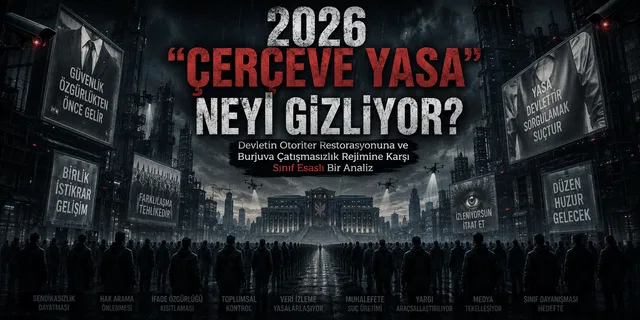
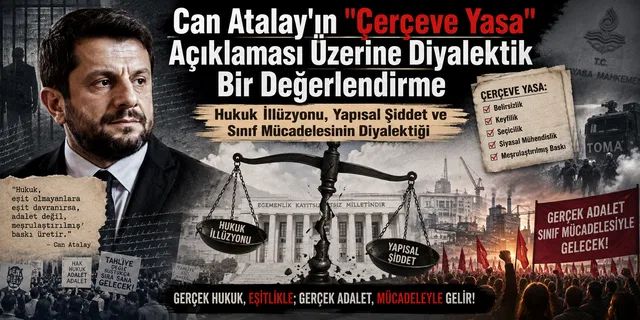
In recent debates in Turkey’s political atmosphere on the "Framework Law," the "new process," and the resolution of the Kurdish question, Ahmet Yaşaroğlu’s article titled "Outside the Framework," published in Evrensel, and similar approaches have once again brought a deep ideological weakness in left public opinion to the surface. This approach codes the tactical steps the ruling class takes in moments of crisis as an "objective opportunity that widens the ground of struggle," and ties the future of the Kurdish people and of Turkey’s laborers to the legal channels drawn by the ruling class.
Yet among the concepts most abused and emptied out in these debates stands the concept of hegemony.
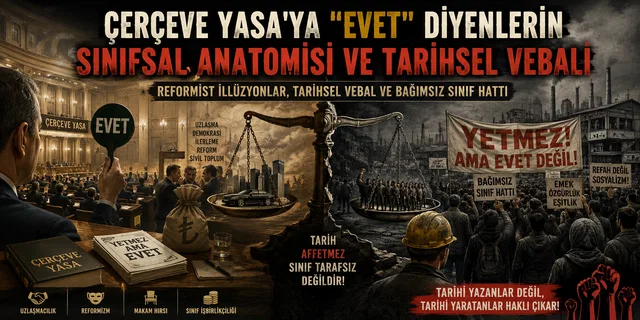
Both in Yaşaroğlu’s article and among circles that try to turn this process into the theoretical ground for saying "Yes" or for articulating to the process, the fact that being trapped in the dichotomies offered by the ruling class (Yes/No) in reality means being made a reserve for the hegemonic equation set up by those in power and for the mechanism of "passive revolution" is obscured.
It is a historical necessity to treat the matter not in the shallowness of crude polemic, but with the revolutionary Marxist-Leninist theoretical depth that runs from Antonio Gramsci to Vladimir Lenin; to restore the concept of hegemony to its essence in the light of dialectical materialism; and to define an independent proletarian line.
The Theoretical Depth of the Concept of Hegemony: Coercion, Consent, and the Integral State
The reformist left, poisoned by bourgeois political science and bourgeois ideology, often takes the concept of hegemony for a crude "domination" or merely for the power of holding the apparatuses of repression. Yet in Marxist theory, especially in the form Gramsci conceptualized in the Prison Notebooks, hegemony is the capacity of the ruling class to make its own class interests accepted as "the universal interest of all society," not only by relying on force but by establishing an intellectual, moral, and cultural leadership over society.
In this theoretical framework, fed by Lenin’s grasp of proletarian hegemony, the power of the ruling class rises on two fundamental pillars:
-
Political Society (Apparatuses of Coercion): Mechanisms that use direct force, such as the army, the police, the judiciary, and the bureaucracy.
-
Civil Society (Apparatuses of Consent): Channels that produce consent, such as schools, the media, trade unions, legal regulations, and cultural institutions.
Gramsci calls the combination of these two structures the Integral State: State = Political Society + Civil Society (that is, Hegemony Armored with Coercion).
Capital regimes do not resort only to force in moments of crisis. On the contrary, in moments when the crisis deepens they bring the channels of "civil society" and legal arrangements into play and draw an epistemic boundary. That boundary is itself the hegemonic limit that determines what the masses and the opposition "can think, what they can demand, and what will be accepted as 'realistic.'"
"Passive Revolution" and the Mechanism of Molecular Absorption
The process hailed in Ahmet Yaşaroğlu’s article "Outside the Framework" as a "legal opportunity that widens the ground of struggle" is, in dialectical-materialist categories, a complete example of passive revolution.
Passive revolution is the process by which the ruling class, in order to forestall a revolutionary explosion from below or a crisis of ungovernability (organic crisis), integrates (absorbs) some of the demands of the opposition and the oppressed from above downward, through measured reforms, into the system.
This process works dialectically as follows:
-
Molecular Absorption (Assimilation): Those in power take the demands of the oppressed that carry radical potential and tame them by confining them within the bourgeois-legal framework they themselves have constructed.
-
Liquidation/Integration of Leadership and Cadres: A portion of oppositional dynamics is made part of legal politics and parliamentary bargaining and turned into a prop for the system’s sustainability.
-
The Rebuilding of Consent: The masses are given the illusion "Look, the state is solving problems; a legal ground is opening," and mass anger is passivized.
Therefore, to detach a "Framework Law" or a "negotiation ground" brought by those in power from the balance of class forces and to read it as "the expansion of democracy" is the error of mistaking the ruling class’s passive-revolution move for "democratization." Reformism becomes an ideological apparatus that carries water to the ruling class’s field of passive revolution.
The Epistemic Trap of Ruling Discourse: False Dichotomies
When those in power put a "Framework Law" on the agenda, they do not merely offer a draft law; they set up a false dichotomy that determines the language and logic of the opposition:
Power’s Hegemonic Equation:
Either you will say "Yes" to the reform, the legal framework, and the process I offer, and come onto the reasonable/democratic line;
Or by opposing this process you will fall into the ranks of the nationalist, status-quo, war-mongering "No" camp.
The reformist line falls into this hegemonic trap and immediately articulates itself to the option "Yes / There Is Ground." Yet revolutionary Marxism must know that to say "Yes" or "No" at the table set by those in power is to accept from the start the legitimacy of that table and the playing field of those in power.
As Gramsci put it, to build counter-hegemony is not to answer the questions asked by the ruling class, but to reject the very plane on which those questions are asked and to carry one’s own independent questions into the consciousness of the masses.
Process Analysis: Qualitative Differences between Hegemonic Articulation and Counter-Hegemony
The dialectical differences among the ruling class’s hegemonic filter, the reformist stance, and an independent revolutionary stance become clear in the following process analysis:
| Parameter of Analysis | Ruling Class’s Hegemonic Line (Capital Regime) | Reformist Articulation Line (Yaşaroğlu et al.) | Independent Revolutionary Proletarian Line (Counter-Hegemony) |
|---|---|---|---|
| Theoretical Basis | Passive Revolution and the Fortification of the Integral State. | Legalist Reformism and an Idealist Grasp of Rights. | Dialectical Materialism and Proletarian Hegemony. |
| Reading of Process | Absorb the opposition in a moment of crisis and consolidate the home front. | Treat power’s move as "the widening of the legal ground." | Expose power’s crisis-management move and break the game. |
| Stance on Hegemony | The subject that establishes hegemony and draws the limits of debate. | The object drawn onto the "Yes/No" field drawn by ruling hegemony. | The subject that deciphers ruling hegemony and rejects the playing field. |
| Approach to the Kurdish Question | Confine the national movement within bourgeois limits; tame it. | Offer passive support by pinning hopes on the legal framework. | Defend the full equal rights of the oppressed nation (RNSD) on an anti-capitalist line. |
| Link to Class Struggle | Cover heavy economic exploitation with the packaging of "national consensus / peace." | Treat the economic crisis and the political process as separate from each other. | Unite the struggle against the Mehmet Şimşek program with the struggle for political rights. |
Counter-Hegemony and the War of Position
Reformist circles frequently abuse Gramsci’s concept of the "War of Position." For them, taking part in legal processes and supporting framework laws is "winning a position."
Yet for Gramsci the War of Position is not infiltrating the institutions of the bourgeois state or articulating oneself to its laws. The War of Position is the process by which the working class and the oppressed masses build their own independent institutions, their own class consciousness, their own culture, and their own practical-legitimate organizations outside the bourgeois state and against it.
-
Independent Class Mass Organizations: Rights are won not by the grace of parliament or by framework laws, but by practical foci of resistance built in factories, fields, and workplaces.
-
Ideological Position against Chauvinism: The struggle against oppressor-nation chauvinism cannot be waged by becoming a reserve for the bourgeois state’s packaging of "peace." It must be explained to the Turkish worker, with a dialectical grasp, that without the freedom of the Kurdish people their own freedom is impossible.
-
Rejection of the Table: The false choice between the legal carrot extended by bourgeois power and the stick it brandishes must be rejected; a third revolutionary front resting on the self-power of the working class and of the oppressed peoples must be raised.
Rejecting the Plane and Trusting Self-Power
The fundamental methodological error fallen into in Ahmet Yaşaroğlu’s article "Outside the Framework" and in similar texts is to overlook the character of the bourgeois state and the hegemonic traps it constructs.
It does not matter how "progressive" or "grand" your demands look on paper; if the form and method by which you voice those demands remain inside the playing field and the limits of legality drawn by the ruling class, what you are doing is carrying material to the capital regime’s passive revolution.
The real equality, emancipation, and future of Turkish and Kurdish laborers lie not in the "framework laws" of those in power, but in the independent, united, and revolutionary counter-hegemonic struggle the two peoples will build against capital and its fascistic state.