What Will We Say When We Knock on the Door?
Reading the TİP Party Council's Statement Alongside Its Earlier Texts

Dear young comrades,
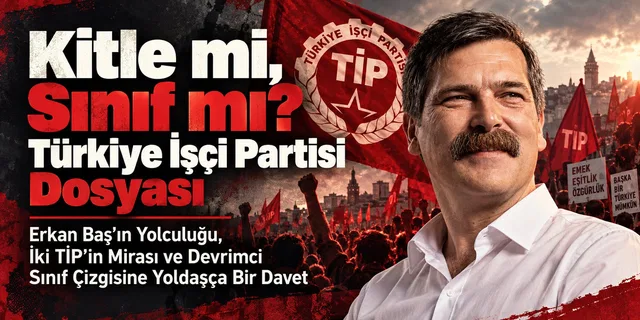
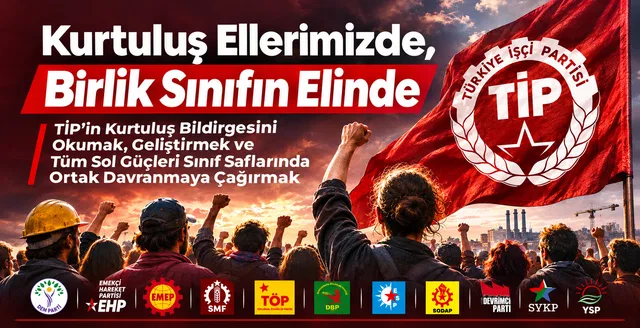
The Party Council of the Workers' Party of Turkey (TİP) met in Istanbul on 15 November and published its statement today. Two weeks ago, we wrote "Liberation Is in Our Hands, Unity Is in the Hands of the Class" about the party's Liberation Declaration. At the beginning of October, "Mass or Class? The Workers' Party of Turkey Dossier" examined the party's history and present from a class perspective.
This article follows on from both. We will read the new statement not in isolation but alongside what TİP has written and said, and how it has voted in parliament, over the past six months. What a text leaves unsaid is also a position; without reading both together, we cannot understand where a party is heading.
Let us be clear at the outset: our approach to this statement is comradely and our purpose is to walk together. The criticisms and views below are not offered by someone grading the party from outside, but in the spirit of shared responsibility among comrades working in the same streets for the liberation of the same class. We openly embrace what we find strong and set out what could be developed with equal openness, so that we can move further together.
First a brief summary, then the details.
Summary First
- The statement is an organising plan. It has five points: the fund scandal, the budget, the DİSK rally, 25 November and door-to-door organising. Contested questions such as elections, alliances and the peace process are not addressed.
- It puts the Liberation Declaration into practice. Its concerns — refusing to be confined to electoral arithmetic, making people political subjects rather than merely voters, and finding a channel for anger — remain. The "Liberation Is in Our Hands" meetings give fieldwork an organisational form.
- The diagnosis of counter-revolution remains, but the tone changes. Alongside the 3rd Congress's defensive diagnosis comes an emphasis on rising opposition to authoritarian regimes around the world and young people drawn to left and socialist demands.
- The most valuable insight concerns economic choices. Seeing the economic squeeze as the product of deliberate government choices rather than bad managers moves the question from competence to the model of accumulation.
- The greatest gap is the silence on peace. In February the report was unacceptable in its existing form; in August all three TİP MPs voted yes. The November statement says nothing about the Kurdish question.
- A second gap is the fragmentation of the opposition. The party that said it would resist counter-revolution in May says nothing about the split in the main opposition today.
- Class is mentioned relatively little. The text's central terms include "the people", "citizens" and the "Palace regime". Its demands remain at the level of budget distribution; the question of ownership is not opened.
- Workers answering the door will ask the questions the statement passes over. Filling these gaps is therefore necessary not for criticism's sake, but for the work on the ground itself.
What Does the Statement Say?
The text is short and consists of five numbered points.
The world and the country. The introduction cites elections in the United States and Serbia and protests in France as signs of growing opposition to authoritarian regimes. It notes that young people are coming together around left and socialist demands. Its picture of Turkey includes the fund scandal, workplace deaths and pressure on journalists and politicians. Despite all this, it stresses that millions have not surrendered to the "Palace regime".
The fund scandal. The statement observes that the government is trying to distance Erdoğan from the scandal. After TİP's call for a joint parliamentary opposition inquiry received no concrete response, the party established its own research commission.
The budget and the economy. TİP MPs are said to have shown in budget debates that the budget is made for the needs of capital rather than the people. The economic squeeze is attributed not to technical error or incompetence, but to the government's deliberate choices. Public resources should go to people's needs rather than interest payments, guarantees and incentives for capital. An "Economy Package for the People" has been prepared and will be announced.
Labour. The party has decided to join the 29 November rally in Kartal organised by 14 unions affiliated with DİSK, the Confederation of Progressive Trade Unions of Turkey. Its demands include fairness in income and taxation, a decent life, union rights and democracy.
Women. TİP women will be in public squares across the country on 25 November, the International Day for the Elimination of Violence against Women.
Organising. The party will listen to citizens "street by street, door by door" and hold local and sectoral "Liberation Is in Our Hands" meetings. The aim is to make the people subjects of politics instead of reducing citizens to voters.
A Six-Month Trajectory: Reading the Statement Alongside Earlier Texts
A single statement is a snapshot of a party at one moment. To see its direction, we need to put the photographs in order.
| Date | Text or event | TİP's position |
|---|---|---|
| 3rd Congress | Congress speech | The period is described as an internationally organised counter-revolution |
| 17 February 2026 | Draft report of the parliamentary process commission | Erkan Baş: the report cannot be accepted in its current form |
| Report vote | Vote in the commission | TİP's Ahmet Şık voted no |
| 21–22 May 2026 | Court's absolute-nullity ruling concerning CHP | "We will resist counter-revolution" meeting; Baş: this is not an internal CHP matter |
| 12 June 2026 | T24 interview | Comments about a candidate whose mother tongue is Kurdish, the reaction and an expression of regret |
| 8–10 August 2026 | Party Council and framework-law vote | All three TİP MPs voted yes |
| 1 October 2026 | Opening of parliament | TİP did not attend and made a statement outside the Constitutional Court |
| 2 November 2026 | Liberation Declaration | Rejecting confinement to electoral arithmetic, door-to-door work, MESEM and free school meals |
| 16 November 2026 | Party Council statement | Fund scandal, budget, DİSK rally, 25 November and "Liberation Is in Our Hands" meetings |
Two distinct lines emerge from this table.
The first line is continuous. It runs from the diagnosis of counter-revolution through the Liberation Declaration to today's organising plan. TİP does not accept the rules of parliament's narrow playing field. It boycotts the opening of parliament, goes out into the field and knocks on workers' doors. A DİSK rally is a natural next step for a party whose chair joined Doruk Mining workers in a hunger strike.
The second line zigzags. Positions on two of the most debated questions, the peace process and relations with the opposition, have changed over the months, and neither is addressed in the latest statement. A party may naturally change its position on disputed issues. But removing a question from the agenda rather than explaining and openly discussing a change means failing in its responsibility to its own base.
What Is Valuable: The Economic Squeeze Is a Choice
One of the statement's strongest features is its analysis of the economic squeeze.
Much of the main opposition treats the crisis as a failure of administration: the wrong people were appointed, oversight failed and merit was lost. This view may seem innocent, but it conceals something. The language of merit targets not the system that produces the scandal, but the people who manage it badly. It implies that the system will work once the people are replaced.
TİP's statement takes a different approach. It attributes the squeeze not to technical error but to government choices, and identifies interest payments, guarantees and incentives for capital as targets. This moves the question from administration to the model of accumulation.
We reached a similar conclusion in "The Crack in the Backbone". When Erdoğan described managing the crisis in three categories, he skipped the question of why this system was created. The voluntary repayment mechanism allowed those who had gained unfairly to leave the system without their names being disclosed. In "The Cost of the Fund Scandal" we asked who pays the price.
TİP's establishment of its own research commission is also important. When the parliamentary opposition did not take concrete steps towards a joint commission, deciding to do the work through the party rather than wait means building an organisation's own institution where existing institutions are blocked. If the commission is not to be limited by the resources of three MPs, it should involve fund victims, bank and finance workers, investigative journalists and lawyers. Then it could become a people's inquiry rather than solely a party initiative.
What Is Valuable: Political Subjects, Not Just Voters
The statement's second strength is its approach to organising.
In "The Class's Answer to Evrim Ağacı" we argued that perpetual opposition is the form taken by competition within capital in a system where the working class lacks its own party. Cartel parties operate without members or dues, detached from society and like extensions of the state. The mass party, by contrast, is an invention of the working class: it rests on members, dues, unions, cooperatives and associations, and looks from society towards the state.
Going door to door, listening, recording what is heard and treating citizens as more than "supporters" or a "rally crowd" is an attempt to rebuild mass-party practice. At the meeting announcing the Liberation Declaration, the party said this work had begun in Bağcılar, Esenyurt, Sarıgazi and Sultanbeyli. This is a deliberate turn towards Istanbul's working-class districts.
That was also the essence of the model we proposed in "Organising 2.0": the fragmented new working class can be reached where it lives and works, through local and sectoral networks. Planning the "Liberation Is in Our Hands" meetings on both levels is therefore right.
What Could Be Developed: Four Questions
We call this section "what could be developed", not "weaknesses". Our purpose is not to condemn a comrade party but to raise the questions standing before its work on the ground. We write in the spirit of comradely criticism: unity against external attack, open and fraternal discussion within. Our criticism is part of walking together, not separate from it.
First: Silence on Peace
The statement contains no mention of peace, Kurds, the process or the framework law.
Yet TİP has shifted its position repeatedly on this question. In February Erkan Baş said the commission's report was unacceptable in its existing form, and Ahmet Şık voted no in the commission. In June Baş's comments about a candidate whose mother tongue is Kurdish drew criticism, and he expressed regret. In August the Party Council met; TİP supported the law while recording its reservations, and all three of its MPs voted yes. At the time, we discussed the law's hegemonic function in "Rejecting the Ruling Class's Playing Field".
The silence after these different positions can be read in two ways. Either the discussion within the party has not yet concluded, or the issue has deliberately been removed from the "labour agenda". The second reading is more dangerous because it repeats an old error of the Turkish left: treating the oppression of a nation as a separate file from the problems of the working class.
Whether a law passed by parliament is being implemented, Kurdish workers' demands concerning their mother tongue, local government and appointed trustees, and the question of whose peace will be built are class questions. In whose hands, under whose control and for whose benefit will peace be established? Will it be a bargain between employers and the state, or a common gain for workers of both peoples? The party's base should hear what reservations accompanied support for the law, what has happened since and what the party will do next.
Second: The Fragmentation of the Opposition
When the absolute-nullity ruling came in May, TİP saw it as a concrete step in the counter-revolution and said it would resist. According to the parliamentary distribution in August, Özgür Özel's New Party held 91 seats and the CHP under the administration installed after the ruling held 45. The main opposition is split in two.
The statement says nothing about this. Refusing to be confined to electoral arithmetic is a sound principle, explicitly defended in the Liberation Declaration. But not being confined is different from not speaking. A party that diagnoses counter-revolution must explain the tools by which it fragments the opposition, which fractions of capital benefit and how the working class should maintain its independence. If this space is left empty, others will fill it — with the narrow question of who the candidate will be.
Third: The World and Imperialism
The introduction looks at the world, but sees only the rise of democratic opposition. Imperialism appears once, in the phrase "imperialist wars". Gaza, Israel, NATO and Turkey's role in the region are absent.
For a party whose provincial officials were detained over NATO protests and which organised an Anti-Imperialist Peace Summit, failing to connect arms spending to the food on workers' tables during the budget debates is an omission. The "Economy Package for the People" could make that connection. Placing military spending alongside spending on education, health and housing is the simplest way to unite the demand for peace with the demand for bread.
Fourth: Naming the Class
The statement's principal terms include "the people", "citizens", "millions" and the "Palace regime". The phrase "working class" appears several times in the context of the DİSK rally.
"Palace regime" is a powerful term for agitation; everyone understands what it means. But it carries a risk: it can reduce the problem to a form of government and the person at its head. Exposing attempts to distance Erdoğan from the fund scandal is right. Still, the more the focus remains on an individual, the more it obscures the fact that the same system of accumulation could continue under another administration after the Palace is gone.
When presenting the Liberation Declaration, Erkan Baş said that the opposition talked only about changing the government, whereas the system itself must also be questioned. In the new statement, this sound insight remains at the level of redistributing budget items. The question of who will control funds, banks, energy and guaranteed public-private projects — the question of ownership — is not opened. If the Economy Package for the People opens it, the statement will gain meaning in retrospect. If not, it will remain a well-intentioned criticism of the budget.
Two Readings
| The statement's language | What class politics would ask |
|---|---|
| Millions who have not surrendered to the Palace regime | Which classes make up these millions, and which class will lead them? |
| The political connections behind the scandal will be exposed | Who will own and control funds, banks and capital markets? |
| The budget should meet people's needs | What organised force is ready to meet capital's response if interest payments, guarantees and incentives are stopped? |
| Listening to citizens door to door | Into which organisations, committees and lasting structures will the demands heard be transformed? |
| Participation in the DİSK rally | How will the party's own organised strength in workplaces and unions grow? |
| Rising opposition around the world | What will be the Turkish working class's position on imperialism, NATO and wars in the region? |
| Peace and the Kurdish question: absent | Whose peace will it be? What reservations accompanied support for the law, and what followed? |
| Fragmentation of the opposition: absent | How did counter-revolution fragment the opposition, and how will the working class remain independent in this situation? |
Going Door to Door: Concrete Tasks
A few proposals for every comrade working on the ground, whether or not they belong to TİP:
- Record the questions, including those without answers. People at the door will likely ask most often about candidates, alliances and peace. The list should go to the Party Council. The value of door-to-door work lies in allowing questions from the base to change the centre's agenda.
- Turn the fund investigation into a people's inquiry. Build a joint effort with victims, finance workers, journalists and lawyers. Publish the findings as open data.
- Open the Economy Package for the People to public discussion. Discuss the draft with unions, professional chambers and workers' associations before it is announced. Put ownership and public oversight at its centre.
- Do not leave 29 November as a single day's participation. Establish a small committee in every workplace attending the Kartal rally to discuss the next step.
- Make women's labour visible on 25 November. Explain violence at home, at work and in the street alongside wages, insecurity and the burden of care.
- Organise an open internal discussion on peace. The framework-law vote, the party's reservations and its future position should be discussed in open forums with members' participation.
- Do not forget imprisoned comrades. Young people like Nehir and Nevin, imprisoned for unfurling a banner, detained provincial officials and imprisoned journalists are concrete stories to tell at the door.
Dear Comrades,
This statement shows a party's determination to go out into the field, and that determination is valuable. Seeing the fund scandal as a product of the model of accumulation, trying to make citizens political subjects rather than merely voters, and standing at labour rallies and resistance tents are things the Turkish left needs today.
But when the door opens, the worker facing us will not ask only about bills, rent and a child's school meal. They will also ask: "With whom? With which candidate? What will happen to peace?" The answers cannot be formed in a single party's council alone, but through the common work of all the organised forces of the class.
We repeat what we said in our article on the Liberation Declaration: liberation is in our hands, but unity is in the hands of the class. Unless the doors knocked on separately by TİP, EMEP, the Left Party, SYKP, the working-class base of DEM Party and independent unions come together on a shared map, anger will once again find no channel. Common action, common committees and a common programme against every form of sectarianism: this is also what Organising 2.0 proposes.
Every criticism in this article grows from the desire to knock on the same doors and stand shoulder to shoulder in the same squares as our TİP comrades. We have formulated and shared our views in a comradely spirit; we are ready to listen to the replies with the same openness and think together.
Let us have something to say when we knock on the door. Let those words belong not to one party alone, but to the class.
Knowledge belongs to everyone.
Sources
Primary texts
- Workers' Party of Turkey: Party Council statement (16 November 2026)
- Erkan Baş: congress speech and diagnosis of counter-revolution
TİP's earlier positions
- Evrensel: TİP announces the Liberation Declaration (2 November 2026)
- Evrensel: TİP does not attend the opening of parliament (1 October 2026)
- Gazete Oksijen: Erkan Baş on the commission report (17 February 2026)
- Cumhuriyet: Vote on the process commission report
- Rudaw: Erkan Baş's T24 interview and subsequent statement (June 2026)
- Halk TV: News about Erkan Baş
- bianet: News about parliament
- WSWS: Parliament passes the framework law (11 August 2026)
- Evrensel: Parliamentary seat distribution (10 August 2026)
- Cumhuriyet: Erkan Baş joins Doruk Mining workers' hunger strike
From Knowledge Commons
- Liberation Is in Our Hands, Unity Is in the Hands of the Class
- Mass or Class? The Workers' Party of Turkey Dossier
- Organising 2.0
- The Crack in the Backbone
- The Cost of the Fund Scandal
- Rejecting the Ruling Class's Playing Field
- The Class's Answer to Evrim Ağacı
- A Banner Is Not a Crime: Nehir and Nevin