A Trustee for Those Who Reported the Fund
Sözcü TV, the TMSF and the Class Anatomy of Digital Martial Law

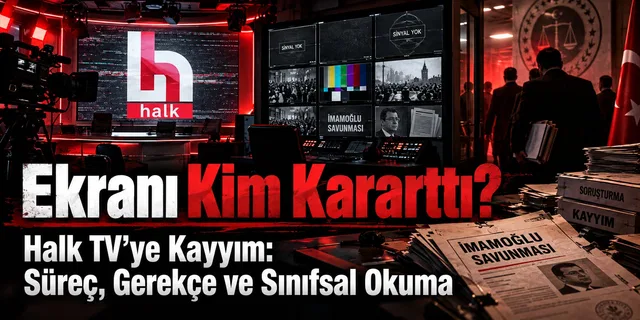
On the morning of 17 November, dozens of broadcast vans stood outside the Sözcü TV building in Maslak. A few hours later, the repeat of a programme debating the fund scandal had been replaced on screen by a documentary called "Turkey's Stars". At noon the channel returned to the air; but there were no more debate programmes, no guests, only hourly news bulletins. After TELE1 and Halk TV, one more was added to the television stations placed under state control in the last two years.
Sözcü's front page the next morning read "We became victims of the fund!" In this article we take that headline seriously, but read it beyond Sözcü's own line. The questions are these: how did an insurance fund turn into the country's biggest media proprietor? What happened to those who set up the fund while those who reported the plunder were silenced? What do İFÖD's figures say about this picture?
First, the Summary
- What happened? By a decision of the Istanbul 4th Criminal Magistrates' Court, the TMSF was appointed as trustee over Mega Ajans ve Reklamcılık Ticaret AŞ, the company behind Sözcü TV and sozcu.com.tr. Four executives were detained. No trustee was appointed to the printed newspapers Sözcü, Tavır and Korkusuz.
- The official justification: an investigation into the group's owner Burak Akbay for FETÖ/PDY membership and financing of terrorism, resting on MASAK reports. Yet the Sözcü columnists and executives tried on the same file were acquitted in March 2025 after an appeal-court reversal.
- The real ground: for months, Sözcü had been one of the main outlets reporting the political dimension of the fund plunder. Its editor Mustafa Balcı was detained in October as part of the fund investigation. The trustee management's first act was to remove the debate programmes.
- Two trusteeships in one day: on 17 November, the TMSF was also appointed as trustee to the company of the son of AKP deputy chair Hayati Yazıcı. The same institution, on the same day, took charge of black money on one side and of the media reporting that black money on the other. The class meaning of these two appointments is not the same.
- The timetable of censorship: first the news was blocked (24 September), then the reporter was prosecuted (October), and last the ownership of the outlet was seized (17 November). This is a three-step sequence.
- İFÖD's figures: as of the end of 2025, 1,505,484 websites and domain names are blocked in Türkiye. In September and October 2026 alone, 2,137 X accounts were blocked. That is nearly half of the ten-year total of Article 8/A blocking between 2015 and 2025.
- The TMSF's transformation: a fund set up to insure deposits has taken over the management of ten television stations in two years. The same people rotate from one channel to the next as trustees, and seized channels are sold to pro-government capital. The trusteeship is both an instrument of silencing and one of ownership transfer.
- Defending Sözcü: defending Sözcü does not mean defending its nationalist, proprietary line that fires its own workers. What we defend is the public's right to information and the work of the press workers behind the screen.
- The limit of bourgeois opposition: the "victim of the fund" narrative locates the plunder in morality and corruption. For us, the fund plunder is the ordinary functioning of capital accumulation intertwined with the state.
- The task: to multiply those who document censorship, to organise press workers, and to connect the small savers who lost out in the fund plunder with the censorship that now prevents the question from being asked.
What Happened on 17 November?
The operation began before dawn. Counter-terrorism teams searched the building and the roads were closed. According to Interior Minister Mustafa Çiftçi, the operation involved 100 squads and 250 riot police. The detention orders covered Sözcü TV board chair Funda Tuncer Sıdalı, former general manager Mustafa Asım Akgül, the newspaper's finance director Yonca Yücekaleli and former signatory İsmail Öz.
The trusteeship order covers Mega Ajans, which publishes Sözcü TV and sozcu.com.tr. Hakan Hastaoğlu, who had also served on the trustee board appointed to Habertürk, was named trustee. The printed newspapers Sözcü, Tavır and Korkusuz remained outside its scope. This distinction is no accident. The government knows that access, influence and debate now live on screen and online. The difference between the print edition's circulation and the reach of the television station and the website shows why the trusteeship went where it did.
The screen at the moment of the takeover told the whole story. It was showing a repeat of the programme, hosted by Ekrem Açıkel, in which İbrahim Kahveci, Fikret Bila, İsmail Saymaz and İlhan Cihaner were debating the fund scandal. The broadcast was cut and replaced with a documentary. When the schedule resumed at noon, it became clear there would be no debate or guest programmes. Reports came that İsmail Küçükkaya was not being allowed into the building. In CHP politician Ali Mahir Başarır's summary: no debate programmes, "because the fund is being discussed, poverty is being discussed".
Reactions came from a broad spectrum. The Istanbul Bar Association declared that interventions against the press through the misuse of criminal-procedure measures had become "unbearable". Thirteen bar associations issued a joint statement. KESK announced it would stand in solidarity with Sözcü TV's workers. Opposition party leaders reacted sharply. Another striking response came from AKP politician Savcı Sayan, who said restricting press freedom weakens the state. This voice from within the ruling bloc is one of the signs of how the fund file has turned into an internal AKP reckoning.
The Justification: Terrorism, MASAK and a Nine-Year-Old File
The chief prosecutor's justification is not new. The prosecution claims that Burak Akbay, who lives abroad, financed the two companies behind Sözcü's publications (Estetik Yayıncılık AŞ and Mega Ajans) from foreign bank accounts and thereby ran the "media arm" of the Gülen structure. The basis is MASAK reports.
The claim has a history. Sözcü's columnists and executives were tried years ago on similar charges, the convictions were overturned on appeal, and on 5 March 2025 all seven defendants were acquitted. In the words of Sözcü's lawyer Ersan Barkın, the search rests on a file the Court of Cassation had previously overturned and in which it found no crime.
Minister Çiftçi's defence rests on two sentences: the investigation concerns not editorial policy but "financial movements and the financing of terrorism", and the process is the judiciary's discretion, not the Interior Ministry's. This defence has two weaknesses.
First, the justification does not match the scope of the trusteeship. If the problem is money Akbay transferred to the companies, what does intervening in the seized company's broadcast schedule, removing debate programmes and barring specific journalists from the building explain? Why is the first act of a financial investigation to decide what can be discussed on screen?
Second, in Türkiye the concepts of "terrorism" and "terror financing" have become a garment that can be fitted onto almost any form of opposition. For TELE1, "espionage"; for Halk TV, "financial crimes"; for Sözcü, "terror financing". The accusation changes, the outcome does not: the management of a critical channel passes to the TMSF.
In the same press statement the minister said something else, and that sentence falls right at the centre of this article. Çiftçi explained that the Police Care and Assistance Fund (POLSAN), the Police Strengthening Foundation and an affiliated company suffered no loss on their investments in these funds: the investment began in January 2022, the amount placed in the funds reached 1 billion 113 million lira, a net profit of 114 million lira was made, and in mid-2025 they exited the funds "because returns were no longer above the market". The inspection board was tasked with examining whether there was intent or negligence.
Let us put this statement side by side with the rest: the police's institutional savings left the funds, unharmed, before they collapsed. The same police raided the channel reporting the funds' collapse. We make no accusation of crime here. But the question is open: while small investors were trapped inside the funds, is the ability of an institutional, "insider" investor to exit on time not another instance of the early-exit pattern we described earlier? Asking this question is journalism. The channel doing that journalism can no longer ask it.
Same Day, Same Fund, Two Trusteeships
The most instructive aspect of 17 November was that the TMSF was also in the news that day with another trusteeship decision.
That day the prosecutor decided to appoint the TMSF as trustee to Adil Katılım Bankası AŞ, Adil Varlık Yönetim AŞ, Adil Tasarruf Finansman AŞ and Dünya Varlık Yönetim AŞ. Adil Varlık Yönetim AŞ belongs to Mustafa Yazıcı, son of AKP deputy chair and Politburo member Hayati Yazıcı. According to the prosecution, resources obtained through credit and securities issuances with no real commercial activity were transferred into the bank's capital, invested in the Tera funds to generate high profits through manipulative transactions, and then laundered by lending them back to group companies. These are, for now, allegations.
In the same days, within the fund investigation, the entire personal assets of Ali Emre Ballı and İlkay Ballı were seized and trustees were appointed to 21 companies. Recall that the measure imposed on 30 September on the assets of Mustafa Yazıcı and Ali Emre Ballı was lifted the same evening. Six days later, Ballı's lifeless body was found in his car.
Now let us place the two trusteeships side by side:
| Trustee over the fund network | Trustee over those who reported the fund |
|---|---|
| The measure imposed on 30 September was lifted the same evening; the trustee came only months later | The trustee came before dawn, with hundreds of police |
| Justification: black money, manipulation, laundering (concrete allegations) | Justification: a "terror financing" file the Court of Cassation had already overturned |
| The company keeps operating; management changes hands | The company's editorial content was changed on day one |
| The trustee's stated aim: protect the victim, secure the assets | The trustee's outcome: the debate programmes were removed |
| Political connections are inside the investigation, but the "untouchable" names remain contested | Those who asked about the political connections (Balcı, Ağırel, Saymaz) are being prosecuted |
| Winners: those who exited in time | Losers: the millions deprived of the right to information |
The same legal instrument performs two different class functions. The trusteeship over the fund network manages a settling of accounts among fractions of capital and the redistribution of the losers' assets. The trusteeship over the media determines how, and whether, that reckoning is discussed in public. The first regulates property, the second information. Both are the work of the same state apparatus, in the same week, for the same purpose: to manage the crisis without upsetting the internal balances of the ruling bloc.
The Fund Plunder: Who Won, Who Paid?
We told the story of the fund crisis in detail in the Bourse Dossier. Here we recall only as much as needed to connect it to the trusteeship.
On 17 September 2026, the Capital Markets Board (SPK) ordered the liquidation of the funds of seven portfolio companies. At the centre were Tera and Pusula. In the liquidation process, 62.2 billion lira was paid to 390,219 investors; according to the interior minister, 112 of 433 suspects were arrested. It was said that the losses of fund victims would be covered not from the budget but "with the funds of those who made unjust gains".
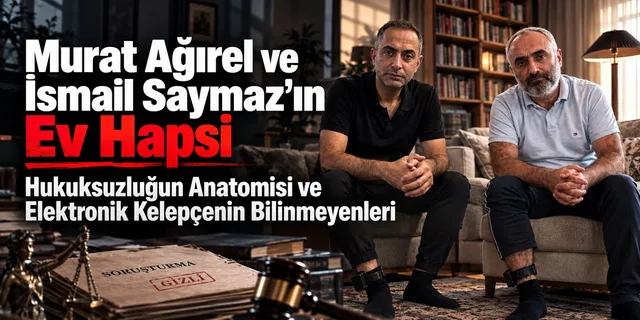
So who won? Much of Sözcü's reporting was aimed precisely at that question. It was Sözcü columnist İsmail Saymaz who was among the first to report that companies co-owned by AKP deputy chair Nihat Zeybekci had invested in the TP2 fund under examination, and to relay Zeybekci's words, "Unfortunately, there is state negligence". The information that Tera's flagship fund, TLY, was closed to TEFAS and open only to twelve privileged individuals was also on Sözcü's pages. Mustafa Balcı had questioned the network of relationships around AKP spokesperson Ömer Çelik's attendance at a Limak Philharmonic concert in Bodrum; he was detained.
This is the trusteeship's real meaning for the government. As long as the crisis can be explained by the "greed" or "lax oversight" of individual managers, there is no problem. The moment the crisis touches the question of the "political leg", the point where state and capital merge, the news becomes a crime, the reporter a suspect, and the channel a candidate for receivership.
The Timetable of Censorship: From the News to the Reporter, from the Reporter to the Institution
The trusteeship over Sözcü did not come out of nowhere. The chronology of the last three months shows censorship climbing the stairs step by step.
| Date | Event |
|---|---|
| 12 September 2026 | "My Family Is Safe" operations; the start of the censorship wave on social media |
| 17 September | The SPK orders the liquidation of the funds of seven portfolio companies |
| 24 September | Blocking of fund-crisis reporting by Gazete Pencere, Evrensel and Sözcü under Law 5651/8A. The same day, blocking orders for at least 250 X accounts |
| 24 September | The accounts of İFÖD founder Yaman Akdeniz and Başaran Aksu of the Independent Miners' Union are blocked |
| 30 September | At least 147 accounts posting about the fund crisis are blocked; T24's website and its X account with 1.9 million followers are blocked |
| 30 September | The measure imposed that day on the assets of Mustafa Yazıcı and Ali Emre Ballı is lifted the same evening |
| 1 October | The X account of EngelliWeb, which documents censorship, is blocked on grounds of "national security and public order"; İFÖD's own account follows |
| 9 October | Sözcü editor Mustafa Balcı and Şaban Sevinç are detained as part of the fund investigation; İsmail Saymaz and Murat Ağırel are "suspects" |
| 14 October | Trustee appointed to Halk TV; all the channel's social media accounts blocked the same day |
| 21 October | Halk TV's X account with 3 million followers is made invisible from within Türkiye |
| 1 November | e-Devlet age verification for social media access enters into force |
| Mid-November | Seizure of the Ballı family's assets and trusteeships over 21 companies in the fund investigation |
| 17 November | Trusteeship over Sözcü TV and sozcu.com.tr; the same day, a trustee for the company of Hayati Yazıcı's son |
The logic of this table is clear. First information is blocked: news is closed to access, the account sharing it is made invisible. Then the person producing the information is targeted: the journalist is detained, arrested. Last, the ownership of the institution producing the information is seized. On the first step the target is content, on the second labour, on the third capital. Censorship touches every link of the production process in turn.
The most symbolic step was the silencing of those who document censorship. The blocking of the X account of EngelliWeb, which has recorded internet censorship in Türkiye since 2008, shows that the government now wants to eliminate not only information but the knowledge that information is being blocked. This is what we called, in our piece on the Freedom House report, "darkness erasing its own map".
İFÖD's Figures: Digital Martial Law by the Numbers
The title of İFÖD's EngelliWeb 2025 report sums it up: "Digital Lockdown: Silencing the Public in the Name of Public Order". The main findings of the report prepared by Prof. Dr. Yaman Akdeniz and Ozan Güven are these:
| Indicator | Figure |
|---|---|
| Blocked websites and domain names as of end-2025 | 1,505,484 |
| Number of decisions producing these blocks | 1,284,464 |
| Distinct institutions and magistrates' courts issuing blocking orders | 875 |
| Blocked sites and domains as of end-2024 (comparison) | 1,264,506 |
| Increase in one year | about 241,000 |
| End-2024: blocked URLs | about 270,000 |
| End-2024: blocked X accounts / X posts | about 17,000 / 75,000 |
| End-2024: blocked YouTube videos | about 25,500 |
Among the 875 authorities able to issue blocking orders, alongside the Presidency and the ministries, the BTK, criminal magistrates' courts and prosecutors, are the Turkish Jockey Club (102 decisions), enforcement offices (67), the BDDK (17) and the Supreme Election Council (5). The authority to decide what can and cannot be seen online is scattered across the country. This diffusion is not disorder; it is the order itself: while no one is responsible, everyone can block.
The autumn of 2026 added new speed to this structure. İFÖD's monthly figures:
| Period | Blocked X accounts (Law 5651/8 and 8A) |
|---|---|
| September 2026 | at least 1,270 (a combined following of about 35 million) |
| October 2026 | at least 867 |
| Two-month total | 2,137 |
| X accounts blocked under 8A, 2015–2025 (ten-year total) | more than 4,800 |
In just two months, almost half as many accounts were blocked as in ten years. Among those blocked in October were Halk TV, T24, the Workers' Party of Türkiye, journalists, academics, lawyers, economy commentators, İFÖD and EngelliWeb. Those who changed their usernames or opened new accounts were blocked again. By 28 October, the number of Steam game pages blocked from Türkiye had reached 767. From 1 November, social media access was tied to e-Devlet age verification (we explained the technical details of this mechanism earlier).
The legal basis deserves separate attention. In its Artı Media GmbH judgment, the Constitutional Court found that Article 8/A of Law 5651 contains no safeguard against arbitrary interference and that the violation stems directly from the statute. According to İFÖD, 8/A is nonetheless applied to ever wider circles each month. This says something beyond the rule-of-law debate: the gulf between the Constitutional Court's ruling and the practice of the criminal magistrates' courts is not a conflict between different arms of the state but a division of labour. One states the principle, the other continues the practice; the system feeds on both functions.
The platforms' role must not be forgotten either. As 21 human rights and media organisations stated jointly, neither X nor Meta made any public statement in the face of the September and October censorship waves; in its notification to İFÖD, X did not even share the particulars of the decision, referring only to "obligations arising from local laws". The finding of İFÖD's earlier "Digital Regime of Obedience" report is confirmed here: platform monopolies protect market share, not users' rights. The platform of Musk, the "free-speech absolutist", is the fastest executor of the Turkish state's censorship decisions. Under monopoly capitalism, the rhetoric of freedom is a commodity traded for market access.
TMSF: From Insurance Fund to State Media Holding
TMSF stands for Savings Deposit Insurance Fund. It was founded to secure the deposits of savers in failing banks. Today that fund is effectively Türkiye's largest media manager.
According to Bianet's compilation, from March 2025 to October 2026, before Sözcü, the management of ten television channels passed to the TMSF: Flash Haber (illegal-betting investigation), Ekotürk (Papara investigation), Habertürk, Show TV, Bloomberg HT, HT Spor, Show Türk and Show Max through the Can Holding investigation, TELE1 through the "political espionage" investigation, and Halk TV through the financial-crimes investigation. Sözcü TV became the eleventh.
Two patterns stand out here.
First, the continuity of the trustee cadre. İbrahim Paşalı, the former Yeni Şafak columnist placed over Halk TV, had previously been appointed trustee to the Can Holding media, TELE1, Flash TV and Ekotürk. Hakan Hastaoğlu, appointed to Sözcü, comes from the Habertürk board. What exists is not a series of individual court decisions but a management cadre. In BirGün's phrase, a "trustee prince". The seized media are run as a network passing through the same hands.
Second, the link between seizure and sale. Flash TV, which passed to the TMSF, was sold to SAFE Media in August 2026. The trusteeship process is not merely a "temporary administration"; it is a channel through which ownership is transferred from one fraction of capital to another. First it is seized, then administered, then sold. The buyer is capital close to the government.
Marxist literature has a name for this: accumulation by dispossession. The bourgeois state reshapes the internal distribution of capital through political instruments, even within a market that operates by its own rules of legitimacy. When the TMSF took over failed banks in 2001, this was the crisis bill being charged to the public. When hundreds of companies belonging to the Gülen community were seized after 2016, it was the liquidation of a fraction of capital. Today, as opposition media are seized, the two functions merge: the property of rival or disobedient capital is taken, and at the same time the public's information channels are brought under control.
This is why reading the trusteeship merely as a "press freedom" problem falls short. The trusteeship is also a property regime. Just as we read the trustees appointed to municipalities in the Selçuk Mızraklı article as the removal of the budget from oversight and the liquidation of public commons, we must read the media trusteeship the same way: not the privatisation of the public sphere of information, but its transfer to the ruling bloc through nationalisation.
Defending Sözcü, Thinking Beyond Sözcü
Here we must be honest. Sözcü is not a workers' newspaper. It is a bourgeois media organisation on a Kemalist-nationalist line, proprietary, dependent on advertising revenue and clicks. Its editorial line has at times produced headlines that fuel anti-migrant sentiment. It has also practised towards its own workers what proprietors ordinarily do: in December 2025, following a change of management, at least 15 journalists were dismissed from Sözcü TV without cause, and the Contemporary Journalists' Association declared this "unacceptable". At the beginning of November 2026 there were again reports of dismissals; press workers who had spent years there announced one by one that they were parting ways with the paper.
Labour conditions inside opposition television are not bright either. In May 2026, DİSK Basın-İş described Halk TV as "a structure that promises democracy and justice outside but has turned into a workers' hell inside".
Does all this justify the trusteeship over Sözcü? Of course not. On the contrary, all of it shows more clearly that what we defend is not Sözcü's proprietor but Sözcü's audience and its workers. What was removed from the schedule after the trusteeship was not the proprietor's profit but millions' right to information about the fund plunder. Those whose jobs have become uncertain are the cameramen, editors, reporters and production staff behind the screen. Let us not forget that a year after the trustee was appointed to TELE1, its workers still had not received their dues, and that the fate of 200 people at Halk TV remains uncertain.
The limit of bourgeois opposition also shows in the "We became victims of the fund" headline. Sözcü's fund reporting was valuable, but its framing remained largely moral: corruption, irregularities by those close to the government, "the nation's money". This framing is correct but insufficient. The fund plunder is not the product of a few ill-intentioned managers but of an accumulation model in which credit, funds, banks and politics turn in the same hands. While credit moves from bank to fund, from fund to equity, and from equity back to credit, its name is not "irregularity" but the bare Turkish form of financialised capitalism. The loss of the small investor and of the worker who put savings into a fund is the necessary outcome of this model. Sözcü did not question the model, only that it was "in the wrong hands". The trusteeship could not bear even that limited questioning. This is precisely where the government's weakness shows.
Why Now?
The timing is not a coincidence. Three developments converge.
First, the fund investigation is moving into the ruling bloc itself. The trusteeship over Hayati Yazıcı's son's company, Fatma Betül Sayan Kaya's judicial process, Zeybekci's "I am a victim" statement, Savcı Sayan's questions to the BDDK: the AKP is settling accounts with itself over the fund. In Cumhuriyet's phrase, "the AKP's fate hangs on the fund". If this reckoning takes place in public, on debate programmes, with names spoken aloud, it becomes uncontrollable. It must happen behind closed doors, on the government's own timetable and with its own chosen names.
Second, the interim payments and the liquidation timetable are falling short of expectations. Hundreds of thousands of small investors do not know when or how much of their money they will receive. If this anger reaches the screen, it prepares the ground for fund victims to organise.
Third, after the trusteeship over Halk TV, Sözcü TV had remained one of the most-watched screens of the mainstream opposition. With the screen closed, the opposition's "speaking" public sphere is squeezed almost entirely onto the internet and the printed press. The internet, as the İFÖD tables above show, is already largely blocked.
The Government's Narrative and the Facts
| What the government says | What the facts show |
|---|---|
| "The investigation is about financial movements, not editorial policy" | The trustee's first act was to remove debate programmes and guests from the air |
| "Financing of terrorism" | In the file relied upon, all defendants were acquitted in March 2025 |
| "The process is the judiciary's discretion, not political" | Eleven channels in two years; the same trustee cadre from channel to channel |
| "We are protecting fund victims" | The journalists who reported the fund are in prison; the measure on the fund network was lifted the same evening |
| "We are protecting public order" (8A) | The Constitutional Court ruled that 8A lacks safeguards against arbitrariness; the practice keeps expanding |
| "Fighting disinformation" | The accounts of EngelliWeb and İFÖD, which document censorship, were blocked |
| "The police institutions suffered no loss in the funds" | Institutional savings exited with profit before the funds collapsed; the small investor stayed inside |
Concrete Tasks
For press workers: a joint rights-monitoring table with the Journalists' Union of Türkiye (TGS), DİSK Basın-İş and Haber-Sen for the job security, severance and compensation rights of those working under trusteeships. The dues TELE1 workers still have not received should be that table's first file. We listed detailed proposals in Questions for Press Workers and If We Stay Silent.
For those who document censorship: at a time when EngelliWeb and İFÖD are being silenced, multiplying and mirroring their data, publishing it regularly on our own sites and in our bulletins. Documentation is also a common; it must not depend on a single account or a single platform.
For the information infrastructure: building a distribution network that does not depend on platform monopolies: federated networks (such as Mastodon), RSS, email bulletins and our own servers. The answer to a blocked account is not opening a new one but building a structure whose blocking does not depend on a single decision.
For fund victims: the losers of the fund plunder are largely workers and small traders trying to protect their savings. Connecting this group to censorship, that is, showing the link "if you cannot ask where the money went, you cannot get your money back", matters. Joint petition and monitoring committees of fund victims can be established together with journalists and lawyers.
For the legal struggle: multiplying the objections demanding that 8/A be brought before the Constitutional Court for concrete norm review, and, in line with İFÖD's call, demanding that all blocking decisions be served with their reasons. Turning the bar associations' joint statements into a permanent monitoring mechanism.
For the battle of ideas: explaining the trusteeship not only through the concept of "democracy" but through the concepts of property and class. For the opposition, the trusteeship is a violation of law; for the working class it is a dispossession and the seizure of the information commons.
Dear Comrades,
There is a great distance between us and Sözcü, and there is no need to hide it. But today the issue is not Sözcü's editorial line. The issue is that in a country, asking whom the fund plunder enriched can be mentioned in the same breath as financing terrorism. The issue is that an insurance fund becomes the owner of television stations, a criminal magistrates' court becomes the editor of the internet, and a platform monopoly becomes the courier of censorship.
They blocked the news, arrested the reporter, seized the institution. The next step is always the same: to convince the last remaining voice, that is us, to silence ourselves. We will not take that step. Information belongs to everyone. The only way to protect what belongs to everyone is to keep producing it together, in an organised way, without depending on a single screen or a single account.
Sources
- Medyascope, A trustee is appointed to Sözcü TV: What happened (live blog, in Turkish), 17 November 2026
- Habertürk, A trustee is appointed to Sözcü TV (in Turkish), 17 November 2026
- Cumhuriyet, A trustee is appointed to Sözcü TV and Sözcü.com.tr (in Turkish), 17 November 2026
- Cumhuriyet, Sözcü's striking headline: "We became victims of the fund!" (in Turkish), 18 November 2026
- Bianet, Sözcü newspaper's response to the trusteeship decision (in Turkish), 18 November 2026
- Haberler.com, Sözcü TV's first broadcast after the trustee (in Turkish), 17 November 2026
- Sabır Gazetesi, Sözcü TV's broadcast cut, a documentary put on screen (in Turkish), 17 November 2026
- Yirmidört TV, Minister Çiftçi: the Sözcü TV trusteeship was made within the investigation of financial movements and the financing of terrorism (in Turkish), 18 November 2026
- Medyafaresi, How was Sözcü TV founded? From 2007 to the trusteeship decision (in Turkish), 17 November 2026
- Cumhuriyet, New development in the fund investigation: a trustee for Hayati Yazıcı's son's company (in Turkish), 17 November 2026
- Sözcü, Trustees appointed to 21 companies in the fund investigation (in Turkish), 16 November 2026
- Cumhuriyet, Fund investigation reports (in Turkish) (112 arrests, 62.2 billion lira paid out)
- Evrensel, Minister Çiftçi on the fund plunder: no money will be paid from the Treasury or the budget (in Turkish), 11 October 2026
- Evrensel, AKP's Nihat Zeybekci corrects his "state negligence" remarks (in Turkish), 30 September 2026
- Sözcü, They remained outside the judicial circle (in Turkish)
- Medyascope, Fund crisis: Şaban Sevinç and Mustafa Balcı detained (in Turkish), 9 October 2026
- Medyascope, Access blocked to three reports on the fund crisis (in Turkish), 24 September 2026
- Evrensel, Access blocked to reports on the fund scandal (in Turkish), 24 September 2026
- Evrensel, EngelliWeb's X account also blocked (in Turkish), 1 October 2026
- Bianet, Those who document censorship are being silenced (in Turkish)
- Medyascope, EngelliWeb's X account made invisible from Türkiye (in Turkish), 14 October 2026
- Evrensel, İFÖD announces: 1,270 X accounts blocked in September, 867 in October (in Turkish), 2 November 2026
- İFÖD, EngelliWeb 2025: Digital Lockdown, 31 July 2026
- Diken, İFÖD reports on 2025 censorship: digital martial law (in Turkish)
- Diken, EngelliWeb 2024 report: Kafkaesque censorship in the digital cage (in Turkish)
- Diken, İFÖD reports on the "Digital Regime of Obedience" (in Turkish)
- ARTICLE 19, Türkiye: The government and platforms must urgently end internet censorship (in Turkish)
- Euronews Türkçe, EP Türkiye rapporteur reacts to Halk TV (in Turkish), 15 October 2026
- Bianet, Government seizes control of 10 TV channels in less than two years
- Medyascope, From Habertürk to Halk TV: media outlets under TMSF management (in Turkish), 14 October 2026
- Yeniçağ, Control of 10 television stations passes to the TMSF in two years (in Turkish)
- BirGün, Appointed to Halk TV as well: The ruling party's 'trustee prince', İbrahim Paşalı, 14 October 2026
- Evrensel, Halk TV's X account under trusteeship made invisible from Türkiye (in Turkish), 21 October 2026
- Evrensel, TELE1 workers have not received their dues, uncertainty continues at Halk TV (in Turkish), 16 October 2026
- Evrensel, ÇGD reacts to Sözcü TV: the dismissal of 15 journalists is unacceptable (in Turkish), 2 December 2025
- Evrensel, Sözcü faces reaction over 'dismissals' and 'Erman Toroğlu' (in Turkish), 1 November 2026
- Evrensel, DİSK/Basın-İş statement on Halk TV (in Turkish), 9 May 2026
Related Bilgi Müşterekleri articles: A Trustee for Halk TV · Six and a Half Trillion: The Price of the Fund Plunder · The Crack in the Spine · If We Stay Silent · Questions for Press Workers · Internet Freedom 2026 · Age Verification on Social Media · TİP and Censorship