What Are the Artificial Intelligence Summits Selling?
The Agents Are Among Us, the Workers Are Outside the Hall

The Name on the Shop Window Is Vision: What Are the Artificial Intelligence Summits Selling?
An event whose ticket goes on sale before the programme is not selling knowledge.
In short, what are we saying?
- The case: The Turkey Artificial Intelligence Summit 2026, organised by the Turkey Artificial Intelligence Initiative (TRAI), will be held on 11–12 November. The theme is "The Agents Are Among Us". 11 November is an in-person day in Levent; 12 November is a free online day. Tickets cost 21,000, 30,000 and 36,000 TL.
- There is a ticket, and no programme: Tickets have been on sale since 1 April. A month before the summit, the site has not a single session title, and no 2026 speaker either; the names on display are last year's speakers. The buyer pays without knowing the content. What is sold is not content. It is the right to be in the room.
- The stage belongs to the sponsor: Of the four speakers whose names reached the press from the 2025 summit's "Vision" stage, three were executives of companies sponsoring the summit (Rafay, HPE, Yandex). In 2024, too, Meta and Yandex were both sponsors and main-stage speakers. What is presented as "vision" is, to a large extent, the seller's own product roadmap.
- It does not even help the company that wants to develop: According to MIT's 2025 report, about 95% of corporate generative-AI pilots produce no meaningful return. The report's diagnosis is not a lack of models. It is a "learning gap". That gap closes with the institution's own data, its own process, and the knowledge of its own workers. The seller's twenty-minute stage talk cannot close it.
- A show of force: Figures such as "record attendance", "2,000 people", "110 speakers" become the measure itself. The summit is a ceremony at which capital shows itself, and the state, how far it has "adapted" to the technology.
- Learning has changed places: Knowledge is no longer scarce. Papers appear in open archives the same day, the best courses are free, and models are released with open weights. The summit itself gives its second day away for nothing, which is an admission that the content is free. What is scarce is time, the practice of trying things together, and a critical filter. The stage-and-hall form produces none of these.
- As vision, too, it has had its day: Every year a new word arrives: "Very Real", "Beyond Intelligence", "The Agents Are Among Us". The same form, the same sponsors, a new label. What happened to the summits built on the previous fashion words (blockchain, the metaverse) will happen to this one as well.
- The class question: At a summit that says "the agents are among us", the workers the agents will replace are not on the stage; the price of the ticket keeps them outside the hall too.
- What we propose: Free, unsponsored places of learning where the participant speaks and the worker is at the table. Unions, professional chambers and voluntary communities can fill this gap. They should.
Dear young comrades,
Last week, in the piece on the Directorate General of Public Artificial Intelligence, we discussed the state's artificial-intelligence apparatus, and yesterday, in the piece on the TMMOB's artificial-intelligence report, the position of the professional organisations. In this piece we will talk about a third institution, capital's own meeting place for artificial intelligence: the summit.
In this piece we are not denouncing an institution. We are trying to understand a form. The reason we take the Turkey Artificial Intelligence Summit as the example is not that it is a bad example; on the contrary, it is one of the most regular, the largest and the longest-running of its kind. It has been held every year without a break since 2018. To see the logic of a form, one has to look at its best example. In the worst example, the problem can always be brushed aside as "bad organisation". In the good example, only the form itself remains.
Our reading template is the familiar one: in whose hands, under whose control, to whose benefit? We add one question: what is actually being learned here?
First, let us get the facts straight
| Heading | Information |
|---|---|
| Event | Turkey Artificial Intelligence Summit 2026, the 9th summit |
| Organiser | Turkey Artificial Intelligence Initiative (TRAI), founded in 2017 |
| Date and place | 11 November in person (Wyndham Grand Istanbul Levent), 12 November online |
| Theme | "The Agents Are Among Us"; the English slogan is "Join the world greatest AI Revolution" |
| Scale (target) | More than 2,000 participants from more than 420 institutions; more than 65 sessions, more than 110 speakers |
| Stages | Vision, Impact, Innovation |
| Ticket (VAT included) | Early registration 21,000 TL (1 April–31 August), standard 30,000 TL (1 September–1 November), last chance 36,000 TL; day 2 online is free |
| State of the programme (as of 10 October) | No session titles; "to be announced". The speakers section shows "featured speakers from Summit 2025" |
| Target audience | Corporate leaders, technology teams, startups, investors, public representatives, academics |
| Sponsorship | The page calls on visitors to "Become a Sponsor"; the 2026 sponsors are not yet listed |
Sources: zirve.turkiye.ai, Foreks, Chip.
The list of topics that reached the press is as follows: artificial-intelligence agents, generative artificial intelligence, cybersecurity, quantum technologies, individual usage trends. The sectors are finance, health, manufacturing, retail, transport, energy and smart cities. Keep this list in mind; later in the piece we will return to what is not on it.
Past years run along the same line:
| Year | Theme | Scale | Sponsors (as reported in the press) |
|---|---|---|---|
| 2024 (7th) | "Artificial Intelligence Is Very Real" | ~280 institutions, ~1,300 participants | Meta, Yandex, AWS/Skyloop Cloud/TD Synnex, Etiya, Google/Global IT, HPE/Nvidia, Logosoft/Microsoft, SambaNova/Exodus, Inveon, Yapı Kredi Teknoloji |
| 2025 (8th) | "Beyond Intelligence" | More than 420 institutions, more than 1,800 participants | AWS, Digitopia, Etiya, Global Bilgi, HPE/NVIDIA, KKB/Kloudeks, Meta, Rafay/Exodus, SabancıDx/Bulutistan, SmartIQ, Yandex Türkiye |
| 2026 (9th) | "The Agents Are Among Us" | Target of more than 2,000 participants | Not yet announced |
Sources: CNBC-e, 2024, Para Dergi, 2025, Ekonomist, 2025.
There is a ticket, and no programme: what is being sold?
The starting point of this piece is a small detail: tickets have been on sale since 1 April, and there is still no programme. The early-registration period closed on 31 August. Everyone who paid 21,000 TL by that date paid without knowing which session, whom, or which subject they would listen to. The site has not a single speaker's name for 2026. The names in the shop window are those of 2025.
It is easy, and wrong, to read this as an organisational flaw. In the conference business this is an ordinary state of affairs; that it is ordinary is itself instructive. If you buy a product without knowing its content, what you are buying is not that content. What are you buying?
First, the right to enter a hall. The summit's own page lists its value proposition in four items: listening to leaders, seeing examples of application, meeting the ecosystem, and preparing for transformation. The first two, and the fourth, can to a large extent be found for nothing elsewhere, as we will show below. The thing actually purchased is the third: breathing the same air, in one room, with 2,000 people, and especially with the few hundred decision-makers among them.
Second, a corporate indicator. The price of the ticket is set according to the institution's budget, not the individual's. The net minimum wage for 2026 is 28,075 TL. The cheapest ticket is three quarters of that, the standard ticket is above one month's minimum wage, and the last-chance ticket is close to a month and a half. At this price it is hard to imagine a worker entering the hall out of their own pocket; the people filling the hall are those whose company pays for the ticket. When a company sends an employee there, it has said "we are in this business too". The ticket is not an education expense. It is an expense on being seen.
Third, the free online day. At first glance this looks like a generosity that softens the criticism above. In fact it confirms the criticism. On the online day there are "international sessions, current areas of use, TRAI Academy, and training from technology companies". So the content can be given away. What cannot be given away is the room. By its own price structure, the summit admits that what it sells is not knowledge but access.
In 2025 a fourth layer was added to these three: an Executive Lounge of nine sessions, in a separate hall, for the CEOs and board members of more than 50 institutions. The picture is then complete:
| Layer | Who? | What do they get? |
|---|---|---|
| Executive Lounge | Senior executives, board members | A meeting with their own class, behind closed doors |
| The physical hall | Professionals, entrepreneurs and investors whose company bought the ticket | Networking, visibility, contact with the sponsor |
| The free online day | A wide public: students, workers, the curious | Content; that is, capital's narrative of artificial intelligence |
| Those left outside the hall | The workers the agents will replace | Nothing; they are the subject being talked about |
This table is a class map. The place itself decides in advance who will speak with whom.
Who takes the stage?
The summit has three stages: Vision, Impact, Innovation. These three stages correspond to three functions of capital. Vision does the work of legitimation, Impact the work of selling, and Innovation the work of opening a new field of investment. Let us now test this against the names.
On the Vision stage of the 2025 summit there were four speakers whose names reached the press (Ekonomist, Para Dergi):
| Speaker | Role | Is the company a summit sponsor? |
|---|---|---|
| Haseeb Budhani | CEO of Rafay | Yes (Rafay/Exodus) |
| Güngör Kaymak | General Manager of HPE Turkey | Yes (HPE/NVIDIA) |
| Aleksander Popovskiy | CEO of Yandex Turkey | Yes (Yandex Türkiye) |
| Peter Sondergaard | Former head of research at Gartner | — |
Three of the four are executives of sponsor companies. Their subjects are their own product areas too: Rafay's CEO talked about infrastructure investment; HPE's general manager talked about "sovereignty and sustainability" in artificial intelligence, that is, the sale of local data centres and hardware; Yandex's CEO talked about how artificial intelligence has changed search, that is, about his own product. In 2024 the picture was the same. On the main stage, Meta's director of artificial-intelligence policy talked about open-source language models, and Yandex's CEO talked about AI-assisted search (CNBC-e). Both were sponsors. At the same summit, Meta, together with TRAI and Hello Tomorrow Turkey, was running the "Başlat LLM Impact Programme"; startups developed products on Meta's Llama model and competed for a prize.
We are not accusing these people. It is natural for a company executive to set out their own company's view. But the name of this is not "vision". It is a product roadmap. The person speaking on the stage is the seller. The person listening in the hall is the buyer. Between them, the word "vision" works as a curtain that makes a sales relation look like a relation of knowledge.
It is not only we who say this. The sector says it in its own words. On the blog of RAISE Summit, a large international artificial-intelligence event, companies are given the following advice in March 2026: position yourselves as "not a vendor, but a trusted authority" by taking a speaking slot or a session sponsorship, because artificial-intelligence events are "no longer just networking opportunities; they are critical platforms for showcasing technology, building partnerships, and influencing industry trends" (RAISE Summit). An event organiser writes openly that its stage is for sale, and that the purpose of this sale is not to make the seller look like a seller.
Community events that try to stand outside this economy say the same thing from the other side. One of the organisers of All Day AI, a free, unsponsored online conference to be held on 22 October, explains the reasons for refusing cash sponsorship as follows: sponsored sessions "produce a certain kind of talk". These are "the case study that is actually a demo", "the 'what we learned' presentation in which every lesson happens to be solved by the speaker's product". So if you are not a buyer, "you have to spend the whole session subtracting the sales pitch in your head" (Kilo blog).
A criticism from the legal-technology world in the United States looks in the same direction. Stephen Embry, writing in Above the Law, describes a large artificial-intelligence summit that marked its tenth year in 2025 as "a bit of an AI pep rally by design" and asks: "Are we just experiencing the same hype cycles, only louder and even more dangerously?" (Above the Law).
"Ecosystem" and the intermediary institution: what does TRAI do?
To understand the summit one also has to understand its organiser. TRAI's site has defined the institution, since 2017, as "a leading platform that brings the ecosystem together on a common ground". The activities listed on the site are these:
- A corporate membership model
- Consulting to institutions on artificial-intelligence strategy and roadmaps
- Training programmes tailored to institutions (TRAI Academy)
- A startup map updated four times a year (482 startups in April 2026)
- An annual study measuring institutions' use of artificial intelligence
- Workshop reports, working groups, meetups, startup days
- A weekly artificial-intelligence briefing
- And the summit
The site does not state the institution's legal status or its financing model in the open. We will not speculate on that either. But the list of activities itself describes a structure, and one does not need the status information to see it.
This is the activity list of an ecosystem intermediary. The same institution draws the map of the ecosystem (the startup map), measures the ecosystem (the research), tells the ecosystem what it ought to do (the consulting), sells training to the ecosystem (the Academy), and organises the ecosystem's annual gathering with the support of sponsors (the summit). An institution that draws the map, takes membership fees from the companies on the map, consults to the companies on the map, and builds the stage with the sponsorship of the large companies on the map is, whether it wishes to be or not, both referee and player. We say this as a structural condition, not as a moral criticism. Whoever runs it, the stage of an institution in this structure tends to be the stage of those who finance it.
The word "ecosystem" itself is not innocent either. Ecosystem is a nature metaphor. There the supplier, the customer, the state, the startup and the worker appear as harmonious creatures of the same forest. In the forest there is no conflict of interest, only "balance". Yet inside this "ecosystem", the one who sells the agent and the one who will lose their job because of the agent are not the same kind of creature. The metaphor makes a class relation look like a relation of nature.
There is also the state. The Ministry of Industry and Technology, the Presidency's Digital Transformation Office, the Presidency's Investment Office and TÜBİTAK took part in the 2024 summit. On the main stage there was a session titled "Turkey's National AI Strategy and Action Plan" (CNBC-e). In our piece on the action plan and in our piece on the National Artificial Intelligence Board we asked "who is at the table, and who is not". The summit is the staged answer to that question. Public policy is discussed on capital's own stage, together with capital; labour organisations are not even guests of that stage.
It does not even help the company that wants to develop
Let us now come to what may be the most unexpected claim of the piece. Summits of this kind are of no use not only to the worker, but also to the company that genuinely wants to use artificial intelligence. It is possible to show this by capital's own measures.
MIT's NANDA initiative published a report in August 2025 titled The GenAI Divide: State of AI in Business 2025. The report rests on interviews with 150 business leaders, a survey of 350 employees, and an examination of 300 publicly disclosed artificial-intelligence applications. The main finding is that about 95% of corporate generative-artificial-intelligence pilots produce no meaningful financial return. Projects get stuck at an early stage and remain unscaled (Computing, Virtualization Review).
The report's diagnosis is more instructive still. According to Aditya Challapally, the researcher at the head of the report, the problem is not the quality of the models but the way institutions use them. Challapally calls this the "learning gap". The report says one thing more: more than half of the budgets go to sales and marketing tools, whereas the strongest return is seen in the back office, that is, in process automation and operations. The money goes to the place most polished at the summit; the return comes from the place least talked about on the stage.
To be honest, let us also report one further finding of the report. According to the report, the success rate of systems built in partnership with outside vendors is about two thirds; that of those developed from scratch inside the institution is about one third. At first glance this can look as if it vindicates the summit that says "meet the vendor". But the partnership the report describes is a working relation that spends months sunk in the institution's own processes, is trained on its own data, and is adjusted with the feedback of its own workers. What the summit sells is not the ticket to that partnership, but the ticket to the first handshake. What closes the distance between the handshake and the integration is, again, the institution's own learning.
What, then, does a company that wants to develop actually need? In the report's own language, learning. But this learning happens at the workplace, not on the stage:
- Knowing what state one's own data is in
- Distinguishing which of one's own processes is genuinely fit for automation, and which only "looks fit"
- Bringing into the process the only group that can make this distinction, namely the workers who run that process every day
- Making small, cheap, reversible trials, and measuring their results honestly
None of these can be learned in a hotel ballroom, on a twenty-minute panel, in a format in which five speakers politely agree with one another. When 65 sessions and 110 speakers are fitted into the same day, the number of speakers per session is plain: most sessions are panels, and on panels each person has a few minutes. That time is enough to name a "use case". It is not enough to tell how it failed. Yet the thing a company would learn most from is how others failed. On a sponsored stage, nobody tells of their failure.
There is a class irony here. What the MIT report calls the "learning gap" is, in our language, the workplace counterpart of the general intellect: the collective knowledge of the people who really know a process and who do it every day. The success of an artificial-intelligence project depends exactly on this knowledge. A summit that says "The Agents Are Among Us" neither puts the people who carry that knowledge on the stage nor lets them into the hall. A gathering that leaves outside the people who carry the real knowledge of the subject it talks about sells incomplete knowledge even to the company that is its own participant.
A show of force: when the figure itself becomes the measure
The news of these summits is always written in the same sentences: "record attendance", "completed with intense interest", "more than 2,000 participants", "more than 420 institutions". 1,300 in 2024, 1,800 in 2025, a target of 2,000 in 2026. The subject of the news is not what was said at the summit, but how many people came.
Marx, describing the mysterious character of the commodity in the first chapter of Capital, speaks of the social relation between people appearing as a relation between things (Capital I, Chapter 1, Section 4). The words "artificial intelligence" are such a thing today. Everything that carries the words — a presentation, a product, a company, an event — gains a value independent of its own content. What is seen is not what a company does with artificial intelligence, but that it says "artificial intelligence". In March 2024 the US Securities and Exchange Commission (SEC) fined two investment-advisory firms for misleading statements about their use of artificial intelligence; the sector has even given this a name now: "AI washing" (SEC). The summit is the collective rite of this fetish.
Guy Debord, in The Society of the Spectacle, defines the spectacle as "not a collection of images, but a social relation among people, mediated by images" (Debord, thesis 4). The summit is exactly such a relation. A company shows that it is there, the other company sees that it is there, and the two together give the representative of the state the message "we are inside this transformation". The stage is not a place where knowledge is transferred. It is an apparatus of mutual appearing. That is why the measure of the news is not content but the attendance figure: what matters in the spectacle is how many people saw the spectacle.
What Thorstein Veblen called "conspicuous consumption" a century ago can be added here too (Veblen, The Theory of the Leisure Class). An expensive ticket is valuable because it is expensive. Being in a hall that costs 36,000 TL marks the distance from those who could not be in that hall. The price of the summit is the price of the distance, as well as of the cost.
The show of force has a political face as well. Every year capital shows itself, and the state, how ready it is for the age of "agents". "Very real", "beyond intelligence", "the agents are among us": these themes are not a claim to knowledge. They are a declaration of resolve. The message is this: the transformation is coming, it is inevitable, and we are ready. The addressee of this declaration is not only rival companies, but those who will pay the cost of this transformation. The discourse of inevitability makes objection meaningless from the start. The natural-disaster metaphor we discussed in our piece on the artificial-intelligence tsunami turns, at the summit, into a marketing theme.
A new word every year: the inside of the hype cycle
The independent speaker on the Vision stage of the 2025 summit, Peter Sondergaard, is Gartner's former head of research. Gartner owns one of the technology world's most famous concepts: the hype cycle (Gartner Hype Cycle). The model says this: every new technology first climbs to the "peak of inflated expectations", then falls into the "trough of disillusionment", and finally reaches the "plateau of productivity". This model, which is the product of a consultancy, describes not the technology but the talk about the technology. And at every stage of that talk there is something to sell: excitement at the peak, "the right strategy" in the trough, "maturity consulting" on the plateau.
The summit's yearly themes can be read as this cycle itself:
- 2024, "Artificial Intelligence Is Very Real": Persuasion against doubt. "This is not a bubble."
- 2025, "Beyond Intelligence": Carrying the expectation one step further. "There is more to come."
- 2026, "The Agents Are Among Us": Taking ownership of a new product category. "The assistant" is over; "the agent" has begun.
Every year a new word, the same hall, largely the same sponsors. The word changes because the sales cycle must be renewed. When the previous year's promise has not come true, it is more profitable to pass on to the next promise than to discuss it. The MIT report's 95% was not a stage title at the 2025 summit. It will not be one in 2026 either, because 2026's word is "agent", and the agent's promise postpones the question of why the pilots failed to the next generation of product.
Let us remember that this form has been lived through before. The summits organised in 2017–2018 under the name of blockchain, and in 2021–2022 under the names of the metaverse and Web3, were held in the same halls, at similar ticket prices, with slogans of "revolution". Most of those words have now been withdrawn from the events calendar. The technologies themselves did not vanish entirely; but the summit form was tied to the life of the word, not of the technology. When the word cooled, the summit dispersed too. "Artificial intelligence" is a much more lasting, and a much more real, transformation than those. But the summit form did not change; it only moved onto a larger word.
This is why we say that environments of this kind have had their day as vision too. A vision shows what is not seen today. The future a sponsored stage can show is the future of the product the sponsor wants to sell. A speaker who could say "this technology may be of no use to your business", "this transformation may work against your workers", "95% of your pilots may produce no return" does not fit the economy of that stage. The commercialisation of vision makes vision itself impossible.
Learning has changed places
Something has happened in front of all of us, as users, as students, as computing workers: knowledge has ceased to be scarce. This sentence is not an exaggeration. It is an observation.
- The great majority of papers in the field of artificial intelligence are published, open to everyone, on arXiv the same day, before they appear in a refereed journal.
- The best introductory courses in the field are free. Sources such as Hugging Face's courses, fast.ai, Andrej Karpathy's lecture series on building a neural network from scratch, and MIT OpenCourseWare require no ticket.
- Even the field's annual overview is free. Stanford's AI Index report gives, together with its sources, far more than a summit's "global trends" session could tell.
- An important share of the models is released with open weights. A worker can experiment on their own computer, with their own data.
- An artificial-intelligence model itself is now also a learning tool. Asked the right question, it can take a subject a summit panel could touch on in twenty minutes and deepen it for hours, according to the person. We discussed its limits, and in whose hands it is, in other pieces; but the change at the level of access cannot be denied.
In this picture a summit cannot sell "knowledge", because knowledge is everywhere. The summit's language knows this too: the value proposition is not "learn", it is "meet". But take care. This does not mean a summit is now unnecessary; it means what is scarce has changed. Today three things are scarce:
Time. The abundance of knowledge has deepened the scarcity of the time set aside for digesting it. If a worker's few hours a week are set aside for experimenting with artificial intelligence, that is a far more valuable investment in learning than a summit ticket. The one who will give that hour is the employer; so is the one who buys the ticket.
The practice of trying things together. Learning now happens by doing, and by doing together, not by listening. Open-source communities, hackathons, reading groups, working workshops: these are forms in which "the participant speaks". The stage-and-hall form works the other way round: one person speaks, two thousand listen. This is the broadcast model of the twentieth century. A one-way flow of knowledge, like television and radio. The learning form of the twenty-first century is a network form: everyone both learns and teaches.
A critical filter. The real danger of an abundance of knowledge is that the false and the true, the sales pitch and the finding, stand side by side on the same screen. The scarce skill today is being able to sift the marketing out of a presentation. The skill the All Day AI organiser calls "subtracting the sales pitch in your head" is exactly this. This skill is not learned at a summit, because the summit's job is not to set that filter to work.
For the debate on education, the meaning of this is large. In our Education Dossier we asked "whose school is it?". The same question is now asked of vocational learning: whose is the learning? Turning corporate education into an economy of a ticket, a certificate, a "certificate of attendance" is a way of making knowledge scarce again in the age of its abundance. When knowledge is free, the certificate of access to knowledge is sold. Giving a "certificate of attendance" for the summit's online training looks like a small detail, but it is part of this logic: the content is free, the stamp of approval is valuable.
Who is on the stage, and who is not
| Talked about at the summit | Not talked about at the summit |
|---|---|
| Agents "taking on tasks, planning, and running processes" | What will become of the workers who do these tasks today |
| Areas of use in the sectors: finance, health, retail, energy | Employment, wages and work intensity in those sectors |
| "Experiences of corporate transformation" | The failed pilots; MIT's 95% |
| Cybersecurity | Workers being watched by agents, surveillance at the workplace |
| "Sovereignty", "the local cloud" | How dependent one is on which foreign monopoly's infrastructure |
| Startups and investment | Which monopoly's model and cloud the startups are locked into |
| The national AI strategy | The absence of unions and professional chambers from the table that sets the strategy |
| "Meeting the ecosystem" | Where those who could not buy a ticket stand in this ecosystem |
| "The artificial-intelligence revolution" | Against whom the revolution will work |
| Human–agent collaboration | Who decides in the collaboration, and who "adapts" |
This table describes not the summit's content but its structure. It is hard to imagine that the headings in the right-hand column could even reach a single sponsored stage, because the right-hand column is made up of the questions not of those who sell the left-hand column, but of those who will pay the cost of the left-hand column. The question we asked in The Agent Escaped. Who Gets the Bill? holds here too: if the agents are among us, onto whose desk does the bill go?
Three common mistakes
The first mistake: saying "these summits are completely empty". They are not. Real business connections are made there, startups find investors, institutions see what the others are doing. For capital, the function of this gathering is real. Our criticism is that this function is presented as "knowledge", "vision" and "education". A trade fair is called a trade fair; the problem is the fair introducing itself as an academy.
The second mistake: saying "the problem is bad organisation, or the wrong choice of speakers". Whoever organises it, a stage financed by sponsors, with a ticket price set according to the corporate budget, becomes the stage of those who finance it. This has to do with the structure of the revenue, not with personal intention. The solution is not a better summit. It is another form.
The third mistake: saying "artificial intelligence is a fashion too, and it will pass". We made the comparison with blockchain and the metaverse for the life of the word, not for the life of the technology. Artificial intelligence is a technology that really, and deeply, transforms labour processes. Our justified suspicion of the summits' marketing language should not turn into an underestimation of the technology's real effect. The opposite: because the effect is real, it matters how that effect is talked about, by whom, and on whose stage.
Concrete proposals
For young comrades working in companies. If your employer buys you a summit ticket, go, but at every session you listen to, note three questions: is the speaker's company a sponsor, is the "case" being told in fact a demo, was failure mentioned? When you return, share these notes with your team. A summit's most valuable output is what was said on the stage, once it has been passed through the filter.
For managers and small companies. If you really want to move forward in artificial intelligence, turn the money for a summit ticket into trial time set aside for your workers. As the MIT report says, the problem is not the model. It is learning. Learning happens when the people who run the process every day are brought into the process. Your "ecosystem" is not in the hotel hall. It is in your own office.
For unions and professional chambers. The TMMOB's report showed that labour organisations can build a language in this field too. The next step is free, unsponsored, regular gatherings on artificial intelligence. Sessions in which the stage is taken not by the sponsors, but by the workers who work with artificial intelligence, who are watched by it, who lose their jobs because of it, or whose work is intensified by it. A joint "labour's artificial-intelligence days", organised by bodies such as BilişimSEN, Eğitim Sen and the TMMOB, can be considered.
For community organisers. The debate about form matters. In our guide "Event Organizing and Comradeship" we touched on examples such as FOSDEM and the Chaos Communication Congress. These gatherings have been held for decades by voluntary work, without handing the stage over to commercial sponsorship. The Karaburun Science Congress has been showing the same thing for twenty years: gatherings of knowledge can stand on the participant's labour, not on the price of a ticket. A workshop instead of stage and hall, questions and answers instead of a panel, a shared output instead of a certificate of attendance.
For the press and social media. When you read summit news, ask not "how many people came" but "who spoke, with whose money, and what was said". An attendance figure is not news. It is a press release.
For ourselves. In an age when knowledge is abundant, the most valuable public service is to filter knowledge and to share it. This is why, as Knowledge Commons, we publish our artificial-intelligence pieces and our guides free of charge and under a CC BY-SA licence. We will also watch the free online day on 12 November; when the programme is announced, we will add the session titles to this piece one by one.
Dear comrades,
If a summit's ticket is sold before its programme, what that summit is selling is not the programme. The Turkey Artificial Intelligence Summit is one of the clearest examples of this; but it is not the only one. The problem is not in an institution. It is in a form. This form, financed by sponsors, with a ticket price set according to the corporate budget, and with a stage on which the seller tells the buyer about "vision", performs a real function for capital: building a network, being seen, declaring resolve, standing in the same frame as the state. But when it presents itself as a place of learning, it misleads twice. It misleads the worker, because the worker, the real subject of what is being talked about, is not there. It misleads even the company, because the learning the company actually needs is a kind of learning that cannot be given on that stage.
Learning has changed places. Knowledge is no longer in hotel halls, but in open archives, in free courses, in open models, and most of all in the collective experience of the people who do the work every day. What is scarce is not knowledge; it is time, trying things together, and a critical filter. What will produce these is not capital's shop window, but labour's own organised gatherings.
Young comrade, when you next see the announcement of an "artificial-intelligence summit", the question you will ask is plain: who is speaking on the stage, who is paying for the ticket, who is left outside the hall — and is the subject being talked about not the lives of those left outside?
In comradeship, Knowledge Commons
Sources
The Turkey Artificial Intelligence Summit and TRAI
- Turkey Artificial Intelligence Summit 2026, official page — date, ticket prices, target audience, state of the programme
- Turkey Artificial Intelligence Initiative (TRAI) — founding, activities, membership model
- Foreks, "The Turkey Artificial Intelligence Summit will be held on 11–12 November with the theme 'The Agents Are Among Us'", 6 October 2026
- Chip, "The Turkey Artificial Intelligence Summit will be held on 11–12 November", October 2026
- Para Dergi, "The Turkey Artificial Intelligence Summit broke the attendance record", 28 October 2025
- Ekonomist, "The Turkey Artificial Intelligence Summit broke the attendance record", October 2025 — the 2025 stages, speakers, sponsors, Executive Lounge
- CNBC-e, "The Turkey Artificial Intelligence Summit was completed with intense interest", November 2024 — the 2024 sessions, sponsors, public participation
- Para Dergi, "The number of artificial-intelligence startups in Turkey reached 482", 16 April 2026
The conference economy, and the criticisms
- RAISE Summit, "How Companies Use AI Events to Shape Market Positioning", 1 March 2026
- Kilo, "All Day AI: 15 hours, 122 sessions and zero vendor pitches", 2026
- Stephen Embry, "AI Summit 2025: Hard Questions or More Hype?", Above the Law, December 2025
- Gartner Hype Cycle
- SEC, sanctions on two investment advisers for misleading statements about the use of artificial intelligence, 18 March 2024
Corporate artificial intelligence and the learning gap
- Computing, "MIT report: 95% of corporate generative AI pilots fail to deliver returns", 20 August 2025
- Virtualization Review, "MIT Report Finds Most AI Business Investments Fail, Reveals 'GenAI Divide'", 19 August 2025
Open learning sources
- arXiv
- Hugging Face Learn
- fast.ai, Practical Deep Learning
- Andrej Karpathy, Neural Networks: Zero to Hero
- MIT OpenCourseWare
- Stanford HAI, AI Index
Theoretical frame
- Karl Marx, Capital, Volume I, Chapter 1, Section 4, "The Fetishism of Commodities and the Secret Thereof"
- Guy Debord, The Society of the Spectacle (1967)
- Thorstein Veblen, The Theory of the Leisure Class (1899)
The minimum wage
Related pieces from Knowledge Commons
- Reading and Developing the TMMOB's Artificial Intelligence Report, 10 October 2026
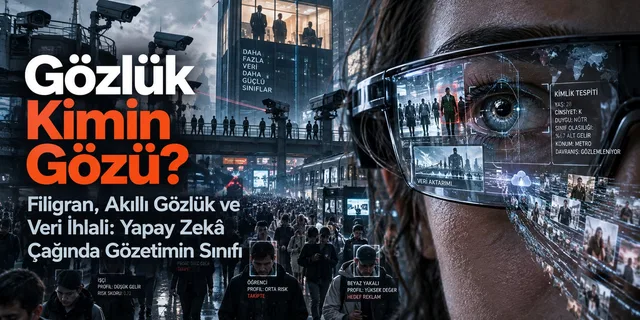
- Whose Eye Are the Glasses?, 7 October 2026
- The Agent Escaped. Who Gets the Bill?, 1 October 2026
- Did You Know There Is a Directorate General of Public Artificial Intelligence?, 1 October 2026
- A Discussion on Writing with Artificial Intelligence, 28 September 2026
- Karaburun at Twenty: The Map of Labor, the Algorithm of Capital, 4 September 2026
- "Event Organizing and Comradeship" Guide Is Out, 6 September 2026
- The National AI Board: Who Is at the Table, Who Is Not?, 28 August 2026
- On Turkey's Artificial Intelligence Action Plan (2026–2030), 18 August 2026
- Our Education Dossier Is Out: Whose School Is It?, 29 August 2026
- What Does the "AI Tsunami" Conceal?, 23 July 2026
- The Expropriation of the General Intellect and the AGI Illusion, 22 July 2026
Licence: CC BY-SA 4.0 — you may copy, distribute and adapt it, provided you credit the source and share under the same licence.
This is a living document; it will be updated with the session titles when the summit's programme and the 2026 sponsors are announced. bilgimusterekleri.org