The Health Budget Grew. Why Didn't the Nurse's Share?
Health Workers’ Share, City Hospital Rents and the Question of "Whose Health?" in the Ministry of Health’s 2027 Budget

Today the Plan and Budget Commission of Turkey's Grand National Assembly is debating the Ministry of Health's 2027 budget. Minister Kemal Memişoğlu has requested 1 trillion 967 billion Turkish lira for the ministry's central and provincial organisations. The figure is large, and the increase looks large too: 33.4 per cent compared with approximately 1 trillion 475 billion lira in 2026. Outside the commission chamber, however, another question is being asked: how much of this increase will make a difference to the lives of nurses, midwives, resident physicians, laboratory technicians, patient care workers and cleaners?
In this article we will try to read the budget not as an accounting table, but as a document about distribution. First a brief summary, then the details.
Summary: The 2027 Health Budget in Ten Points
- The budget grew, but health's share shrank. While the central government budget increased by 44.1 per cent, the Health Ministry's share fell from 7.8 to 7.2 per cent. The pie grew, but health's slice became thinner.
- Twice as much goes to interest as to the Health Ministry. The 3.975 trillion lira projected for interest in 2027 is roughly twice the ministry's budget.
- The 33 per cent increase must be considered alongside inflation. Health professional organisations argue that the nominal rise does not amount to a real improvement.
- More than half the budget is for personnel costs, but that does not mean an automatic pay rise. Approximately 1 trillion 114 billion lira is allocated to personnel costs; this pays existing staff and does not itself produce an increase in wages.
- 160.7 billion lira for 18 city hospitals. Of this, 82.3 billion is rent, or a usage fee, and 78.4 billion is for services. The entire budget of the General Directorate of Public Health is less than one sixth of that sum.
- 30 per cent for preventive care, 70 per cent for treatment. The model continues to meet the person who has already fallen ill as a "service recipient" rather than prioritising prevention.
- Health workers are both too few and exhausted. The numbers of doctors and nurses per thousand people in Turkey are far below the OECD averages; annual doctor visits per person have passed 13, and consultations can fall to five minutes.
- The pay system is a hospital version of piecework. Performance and incentive supplements intensify labour, set workers against one another and do not count towards pensions.
- The Constitutional Court struck down the limit on duty pay as an "excessive burden". Duty hours beyond the cap went unpaid; this was unpaid surplus labour organised by law.
- The issue is not budget technique but class choice. Money exists; it goes to companies, interest and rent. Workers' organised strength will determine their share.
Now let us examine each point.
A Budget Is a Document About Distribution
Budget books are thick and their tables detailed. That thickness often conceals this fact: a state budget is a political decision about how the value produced in society will be distributed among classes. Who pays taxes, who receives spending, who collects interest and who receives rent are class questions, not technical ones.
According to the Turkish Medical Association's assessment of 13 November, more than 87 per cent of total budget revenue in 2027 will come from taxes. We have previously discussed how a significant share of these taxes is indirect — paid at the supermarket, in household bills and at the fuel pump — in our articles on inflation and electricity. In other words, workers themselves already pay much of the health budget. The question is how much of the tax they pay comes back to them.
From a Marxist perspective, health care occupies an interesting position. Capitalism depends on the daily reproduction of labour power: workers need to be healthy enough to return to work the next morning. Health spending is, in this sense, part of the cost of reproducing labour power. Capital's approach to this cost is clear: keep it as low as possible, make workers pay out of pocket where possible, and turn a profit where possible. Turkey's Health Transformation Programme, implemented since 2003, did just that: it expanded services, but through marketisation; increased access, but through co-payments, additional fees and private hospitals; and built hospitals, but with rent paid to companies rather than the public.
What Do the Numbers Say?
A growing pie, a thinner slice
Let us put the figures together. According to the TTB, the 2027 central government budget is 27 trillion 276 billion lira, and the Health Ministry budget is 1 trillion 966 billion 862 million lira. While the central budget grew by 44.1 per cent, the ministry's share fell from 7.8 to 7.2 per cent. Under the functional classification — health spending across all institutions — the share is also calculated to have fallen from 8.4 to 7.3 per cent.
There was a similar picture last year. According to a 2026 analysis published by Bianet, the increase that appeared on paper to be 44.6 per cent was only 6 per cent when calculated in 2025 prices. This year's nominal increase is even lower. In a joint statement, the Istanbul Medical Chamber (İTO) and the Health and Social Service Workers' Union (SES) argue that an increase of 33 per cent does not provide a real improvement against inflation above 30 per cent. The exact calculation of the real change depends on the period and inflation rate used for comparison.
Interest: Twice the health budget
The same budget projects 3.975 trillion lira in interest expenditure for 2027, roughly twice the Health Ministry's budget. According to İTO and SES, interest accounts for 14.6 per cent of the central budget. Interest is the state's payment to its lenders, including banks and financial capital. When a nurse is told there is "no money" for duty pay while this line grows each year, the budget's priorities become clear at a glance.
City hospitals: A guaranteed flow from public pockets to companies
For 2027, 160.7 billion lira has been allocated to 18 city hospitals: 82.3 billion in usage fees and 78.4 billion in service fees. Medium-term forecasts for 2026–2029 put the total resources to be transferred to the companies operating these hospitals at 695.3 billion lira. By comparison, the General Directorate of Public Health's 2027 allocation is 24.5 billion lira, or 1.2 per cent of the ministry's budget. The money going to city hospitals is 6.6 times the directorate's allocation.
The ministry has developed a defence of this arrangement. At last year's commission hearing, Minister Memişoğlu said that public-private partnership (PPP) payments were falling as a share of the budget, from 10.5 per cent in 2022 to 5.3 per cent in 2026. The proportional decline may be correct, but the problem is not the proportion: it is the mechanism. The public pays rent for a quarter of a century for hospitals whose buildings it does not own, under guarantees often linked to foreign currency or an index. According to the Court of Accounts, final completion certificates had not even been issued for 17 hospitals, and energy expenses belonging to companies' commercial areas had not been collected from them at 10 hospitals. In the words of Ali Karaoba, Republican People's Party (CHP) MP for Uşak, city hospitals are the ministry's "biggest black hole".
One detail deserves emphasis: the 78.4 billion lira "service fee" largely purchases services such as cleaning, catering, security, parking and IT from companies. Labour lies behind this money too: thousands of workers employed through companies in city hospitals, many on minimum wage. The public purchases these workers' labour not directly but through an intermediary company, paying that company's profit as well. To forget these workers when discussing health workers' share would be to accept the division capital imposes on us.
Selling treatment rather than preventing illness
According to İTO and SES, the 2027 budget allocates 585 billion lira to preventive health services and 1 trillion 359 billion lira to treatment: 30 per cent versus 70 per cent. A closer look at the preventive-care line makes the picture clearer: 40.8 per cent goes to payments for contracted family medicine and 43.1 per cent to personnel costs. The amount left for direct public health measures — vaccination, screening, water and food inspection, occupational health and school health — is very small.
The class significance is clear. Preventive health requires addressing the social roots of illness: poverty, poor housing, unsafe water and arduous, insecure work. Treatment, by contrast, receives the person who has already fallen ill as a "case" and sells them a service. One is a common good; the other is a market. In our article after the HABAŞ explosion, we described how occupational health is treated as an "expense". The same logic is applied to public health as a whole.
Health Workers: Too Few, Exhausted and Divided
The numbers
According to Minister Memişoğlu's presentation, the health system has approximately 1.5 million people in its workforce, including 251,000 doctors; preparations to recruit 38,000 staff are said to be in their final stages. In 2025, the number of doctor visits reached 1.138 billion.
Let us read the same figures from the worker's point of view. According to data cited by İTO and SES, Turkey has 2.4 doctors and 2.9 nurses per thousand people, while the OECD averages are 3.9 doctors and 9.2 nurses. Although the figures vary somewhat between calculations — some sources give 2.70 for doctors and 3.07 for nurses and midwives — the picture is the same: our number of nurses is around one third of the OECD average. Annual doctor visits per person have reached 13.2, and consultations can last as little as five minutes. Fewer people are seeing more patients in less time.
Even the targets are being lowered. The 2028 target for nurses and midwives per 100,000 people was 500 in the strategic plan, 400 in the 2026 programme and 395 in the 2027 budget justification. The number of nurses fell by 685 between 2024 and 2025. According to TTB data, in 2025 alone, 2,234 doctors obtained certificates of good standing to work abroad. This is not only "brain drain"; it is a sign of burnout and flight.
The pay system: Piecework in the hospital
To understand health workers' pay, it is enough to look at Marx's analysis of piece wages in the first volume of Capital. Marx says that piece wages are a modified form of time wages, but particularly suited to intensifying labour, placing supervision on workers themselves and setting workers against one another.
Turkey's performance-based supplementary payment system is precisely this. A doctor's "points" are determined by the number of patients examined and procedures performed; nurses and technicians receive additional payments from the same pool. The results are clear:
- Labour intensifies: the five-minute consultation is not an aberration but a natural product of the system.
- Workers compete against workers: two people carrying the same workload in the same ward may receive different supplements; gaps emerge between professions and institutions.
- The future becomes insecure: much of the pay does not count towards pensions, so health workers can lose a significant part of their income overnight when they retire.
- The patient becomes a "customer" and the doctor a "seller": the line between medicine and commerce becomes blurred.
This helps explain why union demands repeatedly call for "a single basic wage, reflected in pensions and above the poverty threshold". That is the demand SES voiced in protests outside the Health Ministry: payments divided into base, incentive and duty components should be consolidated, count towards pensions and, at their lowest, exceed the poverty threshold.
Duty shifts: Unpaid surplus labour organised by law
One of the most immediate problems facing health workers is duty shifts. Working nights, weekends and holidays takes a toll on bodies, families and social life. In Turkey, some of these shifts went entirely unpaid for years. Additional Article 33 of Law No. 657 limited paid duty time to 60 hours a month in family and community health centres and 130 hours elsewhere. Shifts beyond that limit went unpaid even when they were compulsory.
The Constitutional Court struck down this limit in November 2025; its decision was published in the Official Gazette on 10 March 2026. Its reasoning is striking: the rule did not meet the requirements of Article 18 of the Constitution, which prohibits forced labour, and imposed an excessive burden on health workers.
In Marxist terms, the state, as a public employer, was using the law to refuse payment for part of the labour workers had performed. This is surplus labour in its starkest form. The court ruling is an important victory, but the central question now is: where is provision for this decision in the 2027 budget? Is there a separate, visible allocation for the duty hours that must be paid once the cap is removed, or will the decision be diluted in practice through new limits and excuses about "staff planning"? This is one of the first questions workers' representatives should ask in the commission and the General Assembly.
On-call duty is a separate wound. Many health workers other than specialist physicians are effectively on call but cannot receive payment under the regulations; SES has for years demanded payment, citing a Court of Accounts decision.
A personnel expenditure line does not mean a pay rise
About 1 trillion 114 billion lira, more than half the budget, is allocated to personnel expenditure. Some reports might present this figure as "good news for health workers". It is not. As Kapsam Haber notes, this line covers the salaries of existing staff, social security contributions and planned recruitment; it does not mean salaries will rise by the same proportion. Civil servants' pay rises are already framed by the 2026–2027 collective agreement and inflation adjustments. The budget shows no political will to go beyond that framework.
A divided workforce
It would be misleading to speak of health workers as a single category. People working in the same hospital have at least four different employment statuses:
- Permanent civil servants: doctors, nurses, midwives, technicians and administrative staff;
- Contract personnel;
- Contract family physicians and family health workers;
- Workers employed through companies under service contracts, including cleaning, catering, security, patient care and IT workers.
Each status carries different pay, security and union rights. The union landscape is also divided. Before the budget debates, the authorised union Sağlık-Sen called for increases in base payments, incentive supplements and duty pay, but does not question the system itself: the performance logic and the city hospital model. SAHİM-SEN chair Özlem Akarken says the budget increase must be reflected in the lives of frontline staff, injustices in duty and supplementary pay must be addressed, and pay gaps between professions must be closed. SES and TTB connect the problem beyond wages to the market-driven structure of the health system.
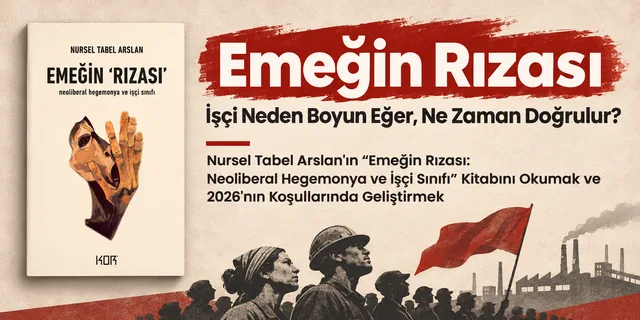
For capital, this division is not a weakness but a management tool. As long as doctors are separated from nurses, permanent employees from subcontracted workers, and city hospitals from family health centres, the total wage bill can be kept low. As we discussed in Labour's Consent, consent is produced not only through coercion but also through such fragmented, individualised pay structures.
Two Budget Logics
The table below puts today's budget logic alongside the public-service approach demanded by health workers' unions and professional organisations.
| Today's budget logic | Public health and workers' logic |
|---|---|
| Health's share of the central budget falls to 7.2% | Raise the share to at least 10% and bring preventive care close to 40% |
| Twice as much for interest as for the Health Ministry | Put public health and labour first |
| 160.7 billion lira in rent and service fees for 18 city hospitals | End the PPP model and guaranteed payments; bring hospitals into public ownership and invest publicly |
| Fragmented pay based on performance and incentives, not reflected in pensions | A single basic wage, reflected in pensions and above the poverty threshold |
| Unpaid or capped duty shifts and unpaid on-call time | Pay for every duty and on-call hour, with supplements for nights and holidays |
| Workers employed through service contracts and companies | Secure permanent positions for all health workers |
| 70% for treatment; illness treated as a "case" | Preventive health addressing the social roots of illness |
| Co-payments, additional fees and out-of-pocket spending | Free, equal health care in people's mother tongues |
| The budget is written above and read below | Democratic planning and oversight involving unions and professional organisations |
The right-hand column is largely drawn from İTO and SES's list of 13 demands. An important feature of this list is that it does not separate the demand for wages from the public's right to health. Secure employment, a single wage, measures against violence, public guarantees for vaccines and medicines, an end to regional inequalities, childcare, democratic oversight and higher direct taxes on capital all stand together. That is as it should be: a nurse's duty pay and a patient's five-minute consultation are two sides of the same problem.
In Whose Hands, Under Whose Control, for Whose Benefit?
Let us ask our three usual questions of the health budget.
In whose hands? Health infrastructure is increasingly leaving public hands. City hospital buildings belong to companies; the number of private hospitals has more than doubled in 25 years to 540, accounting for 34 per cent of hospitals; half of neonatal intensive care beds are in the private sector. The minister's own target is to increase the private sector's share from 18 to between 25 and 30 per cent. As ownership shifts, so does decision-making.
Under whose control? Although the budget is debated in Parliament, in practice it is prepared by the executive and passes as an unchangeable package. Health workers' organisations are outside this process. TTB says it received no response to its request to participate in the budget hearings; without data and participation, there can be no oversight.
For whose benefit? The numbers answer: the financial capital receiving interest, the construction and service monopolies receiving rent and service fees, and the private health capital taking a share of a growing market. Workers pay twice: once through indirect taxes that finance the budget and again through co-payments and out-of-pocket spending for services. Health workers pay a third time: through unpaid duty shifts, wages that do not count towards pensions and their exhausted bodies.
Why Do We Say "Health Workers"?
A note on terminology: in Turkish, this article mostly uses sağlık emekçisi — "health labourer" or "health worker" — rather than the more neutral sağlık çalışanı, or "health employee". This is not merely a stylistic choice. The word "employee" describes the person as an institutional resource, a unit of "human resources"; indeed, the minister speaks of a "workforce of 1.5 million" in his presentation. "Worker", on the other hand, describes a person as a social subject who produces value through labour and has a stake in its distribution. Doctors, nurses and cleaners in the same hospital, despite their different wages, are all part of the same class position: they live by selling their labour power and do not control their labour. As we discussed in The Class of Words, one way to free ourselves from hegemony is to speak in our own language.
Concrete Tasks
The budget will most likely emerge from Parliament very close to its present form. But the struggle does not end when the budget season ends; the budget can also be challenged, pressed and exposed throughout the year in which it is implemented. Our proposals:
- Follow up on the Constitutional Court ruling. Each institution should record duty pay owed following the removal of the cap; unions should organise collective applications and legal action over unpaid shifts. Parliamentary questions should ask what provision the budget makes for the ruling.
- Hold institution-level "budget reading" meetings. At every hospital and family health centre, regardless of union affiliation, discuss what the budget gives to and takes from that institution. Post city hospital rent and service fee figures on the wall.
- Unite across employment statuses. Permanent employees should adopt their colleagues' demand for secure positions as their own. The wall separating the nurse from the cleaner is the wall that pushes down both their wages.
- Build a common platform for a single wage. Against the performance system, the demand for "a single basic wage, reflected in pensions and above the poverty threshold" should be put forward as a minimum shared demand around which all unions, including the authorised union, can unite.
- Stand with the public. Five-minute consultations, medicine shortages, co-payments and appointment queues are patients' concerns too. Health workers' demands should be voiced together with patients' families, neighbourhood associations and pensioners' organisations. "Duty pay for nurses" and "fifteen minutes for patients" can appear on the same banner.
- Build a data commons. Where ministry data is not published, unions and professional organisations should collect their own field data — duty hours, patient numbers, incidents of violence and staffing shortages — in an open and shareable form. A knowledge commons is a prerequisite for budget oversight.
- Organise. Organisation carries all these efforts forward. The networked, workplace-based model of organising across employment statuses proposed in Organising 2.0 is especially suited to fragmented sectors like health, where people work in shifts around the clock.
Dear Young Comrades,
When you open a budget book, you encounter trillions, and those numbers can make you feel small. Yet every kuruş of those trillions is someone's labour: VAT paid at the supermarket, tax on a bill, deductions on a payslip. Where those trillions go is also the result of someone's decision.
This year the decision once again went in the same direction: twice as much for interest, guaranteed rent for corporate hospitals, a growing market for private health care; for the nurse, a line headed "personnel expenditure". The share of the nurse caring alone for forty patients in an emergency department at three in the morning, the resident physician unpaid for duty beyond 130 hours a month, and the worker cleaning a city hospital corridor on minimum wage will be written not in the budget book but in the outcome of organised struggle.
Health is not a commodity; a health worker is not a "human resource". Health is a commons belonging to us all, and those who keep it standing must also be able to decide how we build it.
The machine is new, the chain is old. But the hand holding the chain is not stronger than the hand that organises.
Sources
- Yeni Ankara, "The Health Ministry's 2027 budget in Parliament", 16 November 2026
- Ticaret Gazetesi, "The Health Ministry's 2027 budget is 1.97 trillion lira", 16 November 2026
- İndigo Dergisi, "The health budget is 1.97 trillion lira: What will workers' share be?", November 2026
- Kapsam Haber, "The Health Ministry's 2027 budget: What will happen to salaries?", 16 November 2026
- Turkish Medical Association, assessment of the 2027 budget proposal, 13 November 2026
- Cumhuriyet, İTO and SES statement on the health budget, 16 November 2026
- Nu Medya 24, "To whom is health entrusted in Turkey?", November 2026
- Medikal Akademi, legal analysis of the removal of the duty-pay cap and retrospective claims
- NTV, Constitutional Court ruling on health workers' duty pay, 10 March 2026
- Bianet, "The Health Ministry's 2026 budget proposal"
- Habertürk, the Health Minister's answers during the 2026 budget hearings
- DHA, Sağlık-Sen's demands before the budget hearings
- Haberler.com, SES protest and demands outside the Health Ministry
- BirGün, "Pay on-call duty fees"
- Medyascope, "The CAO's work continues — Kayıhan Pala", 24 June 2026
- Karl Marx, Capital, Volume I, chapter on piece wages
Related Knowledge Commons Articles
- Two Thermometers
- The 2027 Trap in the Electricity Bill
- The HABAŞ Explosion: Not an Accident, but a Mode of Production
- Labour's Consent
- On Breaking Free from the Language of Hegemony
- Organising 2.0
This article is published under the CC BY-SA 4.0 licence. It may be quoted, reproduced and shared with attribution under the same licence.