The Price of Asking a Question
Ahmet Şık, Akın Gürlek, and the Anatomy of an Intimidation Operation
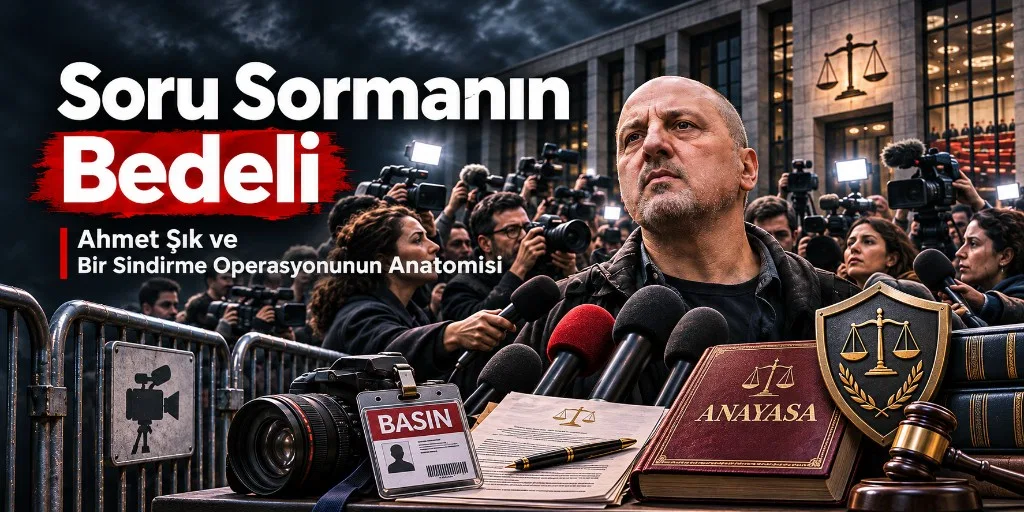
A member of parliament, with the authority the floor of Parliament and a parliamentary question give him, is asking questions of the Minister of Justice. The minister answers none of these questions; through his lawyer he files a criminal complaint, opens a claim for non-pecuniary damages, and announces that the member of parliament "will no longer be addressed". A few days later the member's friend of many years, and his business partner, is remanded in custody on a drugs tip-off. A month later the member's wife is taken from her home in the morning and brought in for a statement on an allegation of "political or military espionage".
In this essay we will tell, in order, what has happened since September between Ahmet Şık, Istanbul member of parliament for the Workers' Party of Turkey (TİP), and the Minister of Justice, Akın Gürlek: the questions that were asked, the answers that were not given, the remand of Ahmet Saymadi, the allegation that "let him delete the tweet, and we will release his friend", and the taking into custody of Yonca Verdioğlu Şık. Then we will ask this question: Why does a question frighten so much?
As usual, a short summary first, and the detail after.
Summary: What Happened, in Ten Points
- The background is the fund crisis. The crisis that began in September with the collapse of the Pusula and Tera portfolio funds struck more than half a million investors. The ties, running into the circle of power, of those who left the funds early and of those who gained, came onto the agenda. Ahmet Şık went after these connections.
- The questions turned towards Gürlek. From the end of September, through parliamentary questions and social-media posts, Şık asked Gürlek about the troll and media network which he alleges is run inside the Ministry under the name "Mehmet Kap", about Gürlek's housing and title-deed records, about offshore connections, and about whether he had met the suspects held in the fund investigation.
- A lawsuit came instead of an answer. Gürlek described the allegations as "slander". Through his lawyer he filed a criminal complaint, opened a claim for non-pecuniary damages, and announced in public that Şık would no longer be answered.
- The target was first a friend. The Beyoğlu business of Şık's friend and business partner, Ahmet Saymadi, a member of the Party Council of the Socialist Refoundation Party (SYKP), was targeted by troll accounts. On the night of 3 October a narcotics raid was made on the business. Nothing was found. Saymadi was nevertheless remanded in custody on 5 October on a charge of "facilitating drug use", and he is still in prison.
- It was not drugs that were asked about; it was Şık. According to Saymadi's account, in the interrogation he was not asked about a concrete act related to drugs; he was asked about his relation with Ahmet Şık and about the money transfers between them.
- The allegation of a "silence bargain". Barış Terkoğlu wrote that a "silence-bargain offer" reached Şık through intermediaries, and that Şık refused it. On 9 November, in Parliament, TİP General Chair Erkan Baş made a still more concrete allegation: it had been said, "Let Ahmet delete that tweet, and we will release his friend."
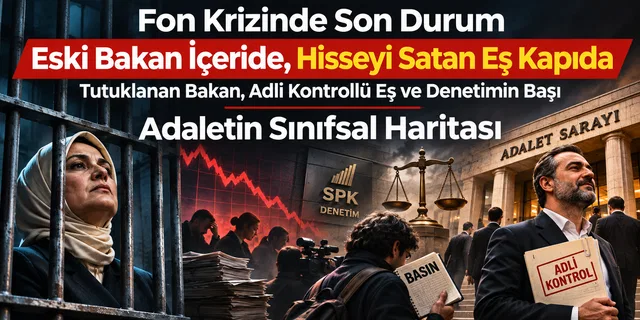
- The next morning his wife was taken into custody. On 10 November Yonca Verdioğlu Şık, a feminist rights defender who has worked since 2008 at the Heinrich Böll Foundation association, was taken from her home. The charge was "political or military espionage".
- There is no concrete act; the questions are about the association. In the statement she was asked about 205 payments she had made into the association's account (the greater part of them her salary), about the association's projects, and about work with LGBTİ+ organisations. T24's update of 11 November at 10:04 writes that, in front of the courthouse, the lawyer also listed the work with Kaos GL. According to her lawyer there was no concrete act. Yonca Şık was released under a ban on leaving the country. The date of the ban parts company across the pages: sources at the Ministry say about five months earlier, BirGün says 21 October, and T24 writes the examination down to 30 June.
- Şık's answer was a single sentence: "When you take the law out of the state, what remains in your hands is not called a state; it is called a gang."
- The lesson: This event is not a personal quarrel between a minister and a member of parliament. It is an apparatus which, because of immunity, cannot touch the member who asked the question, taking his circle hostage. The question that was asked is the question of whose pocket the fund crisis flowed into; that is why it has met so heavy an answer.
Let us now pass to the detail.
The Parties: Who Is Who?
Ahmet Şık
Some young comrades may know Ahmet Şık only as a member of parliament. Yet his real identity is investigative journalism. In 2011 his book "The Imam's Army", which tells of the organisation of the Gülen community inside the police and the judiciary, was seized while it was still a draft, before it had been printed, and Şık remained in custody for nearly a year. At that date the community and the AKP stood on the same side, and it was the judiciary of that partnership that counted the book an "organisational document".
The irony of history does not end here. The same Ahmet Şık was, after 2016, remanded again, this time in the Cumhuriyet case, accused of being an assistant to the structure he had for years tried to expose. That is, in two separate periods Şık was punished by two blocs of power that were enemies of each other, for the same reason: because he asked about the relations of those who hold power. He was then elected a member of parliament from the HDP, and in 2023 from TİP (Wikipedia).
Akın Gürlek
Akın Gürlek's career, for its part, is a summary of how, in the last ten years in Turkey, the judiciary has turned into a political apparatus. According to the record bianet compiled:
- In his period as a judge, as president of the Istanbul 14th Heavy Penal Court, his signature is on the Academics for Peace cases, on sentences totalling more than 159 years for the lawyers of the Progressive Lawyers' Association (ÇHD), on the 9 years and 8 months given to Canan Kaftancıoğlu, the 4 years and 8 months given to Selahattin Demirtaş, and the two and a half years of imprisonment given to Şebnem Korur Fincancı. In the Gezi case he rejected the objections to the continued detention of Osman Kavala and his friends.
- In June 2022 he became Deputy Minister of Justice.
- In October 2024, as Istanbul Chief Public Prosecutor, he ran the Ahmet Özer investigation that led to the appointment of a trustee to Esenyurt, the Beşiktaş operation, and the process that began with Ekrem İmamoğlu being taken into custody on 19 March 2025.
- On 11 February 2026 he became Minister of Justice (Medyascope).
Gürlek is also the public face of the fund-crisis investigation. It is he who announced, on 9 October, that 214 persons and companies had gained 187.6 billion TL from three funds, and, on 21 October, that there were 88 people remanded. That is, the person at the head of the apparatus running the investigation is at the same time the person the questions are about. This is what Ahmet Şık calls a "conflict of interest".
Ahmet Saymadi
Ahmet Saymadi is a member of the SYKP Party Council, a socialist who has run restaurants for many years. This is not his first remand either: in 2025, within the investigation into the Peoples' Democratic Congress (HDK), he was held for about five months on the ground of events belonging to the years 2011–2013 (bianet), and, as Evrensel reported, he was released under a ban on leaving the country after receiving a sentence of 6 years and 3 months. He is a close friend of Ahmet Şık and a partner in the business called Kadim in Beyoğlu.
Yonca Verdioğlu Şık
Yonca Verdioğlu Şık is a feminist rights defender who has worked since 2008 as programme coordinator in the Turkey representation of the Germany-based Heinrich Böll Foundation. She is Ahmet Şık's wife.
The Fund Crisis: The Ground of the Question
We cannot tell this story apart from the fund crisis. As we discussed in detail in the stock-exchange file (Six and a Half Trillion: The Money Wiped Off the Exchange, the Life Missing from the Table, Whose Party Is the Fund Crisis Breaking?), with the default of the Pusula and Tera funds in the middle of September, 130 funds were put into liquidation, and the savings of more than 514 thousand investors, about 826 billion TL, were suspended. The greater part of these were small savers, pensioners, shopkeepers. According to an allegation voiced in Parliament, billions of lira from the Unemployment Insurance Fund had also been transferred into these funds.
The picture that emerged in the same period was this: some large players had left the funds just before the collapse, among those who gained were relatives of former ministers and of senior bureaucrats, and the regulatory institutions had ignored the warnings for years. That is, the question had turned from "who lost" to "who knew beforehand, and who gained".
Ahmet Şık's questions touched exactly this point. Did the apparatus running the investigation itself stand inside this network?
Chronology: From September to November
| Date | Development |
|---|---|
| 21 September | With a parliamentary question, Şık asks whether a connection of Gürlek's with the TLY fund is being investigated (Medyascope). |
| 25 September | Şık tables a question to Minister Şimşek and Minister Gürlek, asking whether the members of the judiciary involved in the fund scandal, and the persons behind the blocking of the news, are being investigated (BirGün). |
| 27 September | Şık puts nine questions to Gürlek about the troll and media network which he alleges is run inside the Ministry under the name "Mehmet Kap" (Cumhuriyet). |
| End of September | Şık asks six questions about a flat in Süzer Plaza, the rent, and the renovation costs. Gürlek files a criminal complaint and opens a claim for non-pecuniary damages; his lawyer describes the allegations as "slander" (Cumhuriyet). |
| 29 September | Social-media accounts close to the government make posts targeting Yonca Şık's job at the Heinrich Böll Foundation and her feminist and LGBTİ+ work (Kısa Dalga). |
| 3 October, 23:00 | A raid is made on Kadim, which had been targeted by troll accounts, with about 50 narcotics police. The search and the tests find no element of a crime. Saymadi is taken into custody; although he is the only suspect, the custody period is extended (Barış Terkoğlu, Cumhuriyet). |
| 5 October | Saymadi is remanded. Saying "Take your hands off my family, my friends and my comrades. Deal with me", Şık puts seven new questions to Gürlek (BirGün). The same day Gürlek's lawyer announces that Şık "will not be addressed" and that the answer will be given "only before the law" (NTV/AA). |
| 26 October | Saymadi: "It was not drugs that were asked about; it was my relation with Ahmet Şık" (Evrensel). |
| 4 November | The Istanbul 12th Criminal Judgeship of Peace, claiming that there is "concrete evidence" in the file, decides that Saymadi's remand will continue (Evrensel). |
| 9 November | The budget of the Ministry of Justice is before the Plan and Budget Commission. Erkan Baş: "They are saying, let Ahmet delete that tweet, and we will release his friend" (BirGün). |
| 10 November, morning | Yonca Verdioğlu Şık is taken into custody from her home in Beyoğlu on an allegation of "political or military espionage" (Diken). The headline of TİP's announcement: "First the threat came, then the instruction." |
| 10 November, 16:51 | Diken reports Kadıgil's words in Parliament: Ahmet Şık had a bypass last week, and his wife is a cancer patient (Diken). |
| 10 November, evening | After a statement lasting about an hour she is released under a ban on leaving the country (haberler.com, ANKA). BirGün writes that the statement began at 16:52 and that the release was around 18:10. The same page reports that the ban is dated 21 October and that Yonca Şık learned of the ban during the statement (BirGün). |
| 10 November, 21:44 | Evrensel reports the words of Sevda Karaca, EMEP member of parliament for Antep, in the same day's Youth and Sports budget. Karaca names the custody as the carrying out of the previous day's threat (Evrensel). |
| 11 November, 10:04 | T24 updates the page it entered at 13:50 on 10 November. It writes that it was reported that the Istanbul Chief Public Prosecutor's Office has been conducting an examination since 30 June. It writes that it was learned during the statement that the ban had been given after the investigation began. 21 October and 30 June stand apart. The lawyer lists, among the questions, the work with Kaos GL. The page writes that members of Kaos GL's board were remanded in the Ailem Güvende operations. It writes that the Heinrich Böll Turkey representation attended COP31, which Turkey is hosting. It puts the attendance down as "yesterday". It does not write the day separately. (T24) |
| 11 November, 11:28 | bianet updates the page it entered at 11:23. It reports the message that Ahmet Saymadi, a member of the SYKP Party Council, wrote from Metris Prison on his X account. Saymadi is glad at the release and wishes that those inside, himself included, be released. The page does not write this as the party's statement. Saymadi is still inside (bianet). |
The Questions That Were Asked: What Disturbed the Minister So Much?
A member of parliament's parliamentary question is a constitutional instrument of oversight. The minister is obliged to answer; if he does not, that too is an answer. Ahmet Şık's questions gather in four clusters. We report all of them here as allegations, in Şık's own words; none of them has been proved by a court judgment. But none of them has been answered either.
The "Mehmet Kap" Network
The nine questions Şık asked on 27 September ask, in sum, this: Does someone named "Mehmet Kap" work at the Ministry of Justice? Is this a false identity? Is the person who, under this name, corresponds over WhatsApp with troll accounts and members of the media Furkan Torlak, who is said to have had to leave his post at the Directorate of Communications because his name had come up in a drugs investigation, and who later became Gürlek's press adviser? Is the line that was used registered in the name of a Syrian national? Are documents, images and disinformation that violate the rights of suspects being distributed through this network? Is the minister aware of this?
These questions matter, because everything that happened afterwards happened by exactly the method these questions describe: first targeting on social media, then the operation.
Housing and Title Deeds
Şık alleged that a minister was a tenant in a flat in Süzer Plaza, that the title deed of the flat appeared to belong to a business person from the AKP, that the monthly rent was 750 thousand TL, and that the renovation costs were met by a business person's family. Gürlek's lawyer, for his part, said that the minister and his wife live in the ministry lodging and have not rented another dwelling, and asked Şık for the rental contract and the proof of payment (Cumhuriyet). Şık also recalled that Gürlek had answered "4 title deeds" to the allegation of 16 properties put forward by Özgür Özel, and asked whether the passive title-deed records of all past purchases and sales would be disclosed.
Offshore and the Conflict of Interest
In the seven questions of 5 October Şık asked whether Gürlek or his relatives have companies abroad with an offshore connection, and whether transactions were made through these companies with the portfolio companies named in the fund investigation. Recalling that, a few months before the fund crisis, the Capital Markets Board (SPK) had fined Tera Portföy about 9 million TL, and that in that period Gürlek's wife was serving at the SPK, he asked whether his being at the head of the judiciary running the investigation gives rise to a conflict of interest.
Meetings with Remanded Suspects
Perhaps the heaviest question was this: From his period as deputy minister to today, in 2024, 2025 and 2026, did Gürlek meet, in hotels in Istanbul, Emre Tezmen, Muhammed Yarız and Erdin Özel, who are today remanded in the fund investigation? If he did, when, where, and for what purpose?
The common point of these four clusters is plain: All of them ask about the relation of the apparatus investigating the fund crisis with the network under investigation. The credibility of a corruption investigation depends on the person running the investigation standing outside that network. So long as this question remains unanswered, the 88 people remanded and the balance sheet of 187 billion lira both remain in the shadow of a question mark.
What Came Instead of an Answer
The Lawsuit, and "We Will Not Address You"
Gürlek's first answer was a legal one: a criminal complaint and a claim for non-pecuniary damages. His lawyer, Abdullah Adır, said that Şık had not presented "a single document" supporting his allegations, used a disparaging expression about Şık, and announced that from then on "the necessary answer will be given only before the law" (NTV/AA).
A detail has to be noticed here. It is legally possible for a minister to open a lawsuit because of a member of parliament's allegation. But answering a parliamentary question is the minister's constitutional duty. When the minister does not carry out this duty and chooses only the path of a lawsuit, parliamentary oversight turns into a judicial threat. What is more, in this case the plaintiff minister himself sits at the highest administrative post of the judiciary that will hear the case.
The Remand of a Friend
The second answer came to Ahmet Saymadi. As Barış Terkoğlu reported, troll accounts first "exposed" that Şık was a partner in a restaurant in Beyoğlu, and targeted Saymadi. On the night of 3 October, around 23:00, about 50 narcotics police entered the business. Saymadi, the business and the customers were searched, and tests were carried out. Nothing came out. Blood, urine and hair samples were taken from Saymadi. He was the only suspect, but his custody was extended by a day. On 5 October he was remanded on a charge of "facilitating drug use".
In Terkoğlu's summary: "No, there are no drugs. There is no one who used them either."
Saymadi's own account is clearer still. In the interrogation he was not asked about a concrete act related to drugs; he was asked about his relation with Ahmet Şık and about the money transfers between them (Evrensel). Şık explained that these transfers were Saymadi making the business's purchases of goods with his own credit card and taking his share from Şık on the day of payment, and that the statements had been submitted to the court. It also emerged that Saymadi had been added to a file opened in 2025 and known as the "celebrities investigation". On 4 November his remand was continued. Today, as these lines are written, Ahmet Saymadi is still in prison.
"Delete the Tweet, and Your Friend Walks"
The third link is the allegation of a bargain. Terkoğlu wrote that "a silence-bargain offer" reached Şık through intermediaries, and that Şık refused it. On 9 November, while the budget of the Ministry of Justice was being debated, Erkan Baş entered this allegation in the parliamentary record: while Saymadi was giving his statement, it had been said, "Let Ahmet delete that tweet, and we will release his friend" (BirGün). Baş addressed the minister: "You set your trolls on Ahmet's family, his daughter, his wife, his friend."
As Sera Kadıgil reported in Parliament the next day, in the same sitting it had been conveyed directly to the minister that Yonca Şık and their daughter had been threatened. It was also reported in the press that, in the same budget sitting, Gürlek said to Turan Taşkın Özer, a member of parliament from the YENİ Party, "if you were not a member of parliament, your house would have been searched" (Haberler.com). An answer by the minister to the allegations directed at Ahmet Şık, for its part, did not appear in the news.
Note this sentence to one side: "If you were not a member of parliament." Immunity protects a member of parliament. It does not protect his wife, his daughter, or his friend.
The Next Morning: "Espionage"
One day after Baş's words in Parliament, on the morning of 10 November, Yonca Verdioğlu Şık was taken from her home in Beyoğlu. The charge was "political or military espionage".
What was asked in the statement was the following:
- The source and the purpose of 205 payments she had made into the account of the Heinrich Böll association. Yonca Şık said that the greater part was her salary, and that the rest was documented association expenditure.
- The association's projects funded by the German Federal Foreign Office. Yonca Şık recounted that in 2026 they supported work on the Kurdish question, that in 2025 they supported activities to raise taxi drivers' awareness of violence against women, and that they supported a digital-museum project directed at the memory of 12 September.
- Whether the work with LGBTİ+ organisations fell within "de-gendering". Yonca Şık rejected this definition.
- The purpose of a statement, years earlier, by one of the association's directors.
- Joint work with Kaos GL. T24's update of 11 November at 10:04 writes that the lawyer listed this in front of the courthouse. The same page writes that members of the association's board were remanded in the Ailem Güvende operations. We recounted those operations in our essay Whose Family Is Safe?. This remand is not written as a sentence from Yonca Şık's mouth in the statement.
The assessment of her lawyer, Meral Hanbayat, is short and plain: no concrete act was put forward in the statement (ANKA). After a statement lasting an hour, Yonca Şık was released under a ban on leaving the country. BirGün writes the clock more finely: the statement began at 16:52, and the release was around 18:10. The same page reports that the ban is dated 21 October and that Yonca Şık learned of it during the statement (BirGün).
In statements sourced to the Ministry it was alleged that the investigation had begun about five months earlier and that the ban on leaving the country had been given then (T24). Erkan Baş described this as a "lie". T24's update of 11 November at 10:04 writes, on the same page, that the examination has been going on since 30 June. It writes that it was learned during the statement that the ban had been given after the investigation began. The same update writes that the Heinrich Böll Turkey representation attended COP31, which Turkey is hosting. It puts the attendance down as "yesterday". It does not write the day separately. About five months, 21 October and 30 June stand apart. But even if the investigation began five months earlier, this question still stands: in a file in which no concrete act has been found for five months, why did taking the person from her home in the morning, instead of calling her in for a statement, fall exactly on the day after the allegation of "let him delete the tweet" was entered in the parliamentary record?
Diken, at 16:51 on 10 November, reports Kadıgil's words in Parliament: Ahmet Şık had a bypass last week, and his wife is a cancer patient (Diken). Terkoğlu too had written that Şık had a heart attack in this period. Kadıgil's question sums up the whole picture: "Is this the price, in this country, of being a member of parliament?"
Messages of Support
TİP's statement on the custody, and Erkan Baş's words in Parliament, are above. Apart from those, two messages stand in the published record.
The Labour Party. Evrensel updated at 21:44 the page it entered at 21:28 on 10 November. Sevda Karaca, EMEP member of parliament for Antep, began that day's Youth and Sports Ministry budget with Yonca Şık: "Akın Gürlek, who threatened the members of parliament in Parliament yesterday, had the threat carried out today. Yonca, the wife of Member of Parliament Ahmet Şık, was taken into custody." Then: "What do those who have turned the judiciary into an instrument of political revenge think; what do you think; will you remain exempt from this?" (Evrensel)
The SYKP. bianet updated at 11:28 the page it entered at 11:23 on 11 November. Ahmet Saymadi, a member of the SYKP Party Council, wrote from Metris Prison, on his X account: "I began the day with the bad news that Yonca Şık had been taken into custody. A wrong has fortunately been turned back, and Yonca Abla has been released. I wish that everyone held in prison unjustly and unlawfully, myself included, will be released as soon as possible. I wish that the climate of fear in our country, in which an attempt is being made to silence everyone, will end as soon as possible." The page does not write this as the party's statement. The message is Saymadi's. Saymadi is still inside (bianet).
As these lines are written, no published message of support in the name of the YENİ Party, the SOL Party, the Communist Party of Turkey or the DEM Party was found that names Yonca Şık. A text that does not exist is not written here.
Two Accounts Side by Side
| The government's account | What the facts show |
|---|---|
| Şık's allegations are slander; not a single document has been presented. | The questions ask not for a document, but for an answer; answering parliamentary questions is the minister's constitutional duty, and none of them was answered. |
| Saymadi was remanded in a drugs file; it has nothing to do with Şık. | Nothing was found in the search; in the interrogation it was not drugs that were asked about, but his relation with Şık. |
| The judiciary is independent; there is no political instruction. | The allegation "let him delete the tweet, and we will release his friend" is in the parliamentary record; the next morning, custody for the wife. |
| The investigation directed at Yonca Şık is an old one; espionage is a serious crime. | There is no concrete act in the statement; the questions are about salary payments, violence against women, the memory of 12 September, and the work with Kaos GL. The date of the ban parts company across the pages. |
| The minister is defending his personality rights through the law. | The minister who opened the lawsuit is at the same time at the administrative head of the judiciary that will hear the case. |
| The fund investigation is being conducted with determination. | The questions about the relation of the person running the investigation with the network under investigation are unanswered. |
Why Does a Question Frighten So Much?
Let us now try to read these events not one by one, but as a whole. Let us recall our blog's three questions: In whose hands? Under whose control? To whose benefit?
The Fund Crisis Is a Transfer of Property
The basic thesis we wrote in the stock-exchange file was this: the fund crisis is not the theft of a few bad people; it is a form of the transfer of small savings to big capital and to the network of power. While the savings of half a million people froze, those who knew the collapse beforehand and got out in time gained. The question of with what information, and with whose being informed beforehand, this transfer was made, is the heaviest class question. Because this question ties the question "who stole" to the question "for whom does the order work".
Ahmet Şık's questions made exactly this connection. If there is a relation between the person at the head of the investigation and the network under investigation, the investigation itself also becomes a part of this transfer: a sorting that determines who will be sacrificed and who will be protected. What Erdoğan called "the precision of a surgeon" also depends, for what it is, on the answer to this question. Such a question, whether it is true or false, touches the very heart of the system's legitimacy. The heavy answer comes from this.
Law Is a Class Relation
Ahmet Şık's sentence, "when you take the law out of the state, what remains in your hands is a gang", is a strong sentence. But, young comrades, we have to carry this sentence one step further.
From a Marxist point of view the state is not a neutral referee above classes; it is the organised power of the ruling class. Law, too, is the form of this power that has been bound to rules and made foreseeable. The bourgeoisie needs law for two reasons: to regulate the competition inside itself, and to establish the consent of working people. Law is the "consent" face of domination; naked coercion is its other face.
When the capacity to produce consent weakens, that is, when the economy enriches a handful of people while impoverishing the majority, when scandals such as the fund crisis shake even the base of power, domination leans more on the face of coercion. The forms of law are preserved, but their inside is emptied: there is a charge, but there is no act; there is a remand, but there is no evidence; there is an investigation, but there is no measure. In our essay Whose Law Is the Republic's Law? we discussed this transformation through the election of the bar associations.
For this reason the word "gang" describes not a deviation, but a tendency. When class domination is not limited by law, relations become personal: "If you ask about my friend, I will take your friend." This is the logic of the mafia, and it is for this reason that Erkan Baş's calling the order "in the manner of a mafia" in the commission is not an exaggeration.
Taking Hostages Is a Method
Perhaps the most important side of this event is the method. Ahmet Şık cannot be touched directly, because of his immunity. So his circle is touched: first his friend, then his wife. The target is not the person himself; it is his ties.
This method is not new in Turkey. Collective punishment applied to the families of militants on 12 September and to villages in the Kurdish provinces, and the dismissal, after 15 July, of the spouses of those who had been purged, are examples of the same logic. What is new is this: a member of parliament can now be the target of this method because of a parliamentary question. This means that parliamentary oversight itself is counted a crime.
The function of the method is also plain: deterrence. The message is sent not only to Ahmet Şık, but to every journalist, every member of parliament and every citizen who might go after the fund crisis. Let us recall that, in the course of the fund investigation, seven journalists were remanded in three months, and access bans were placed on dozens of reports. Asking a question is made expensive, so that no one will ask. This is also what we discussed in our essay House Arrest for Murat Ağırel and İsmail Saymaz.
Targeting and the Operation: A Two-Stage Machine
If one looks carefully, every step worked in the same order: first targeting on social media, then the police and the prosecutor. Saymadi's business was first "exposed" on troll accounts, then the raid came. Yonca Şık's job and identity were targeted on 29 September on accounts close to the government, and on 10 November custody came.
Ahmet Şık's "Mehmet Kap" question was asking exactly whether this machine exists: is there, inside the Ministry, a centre that directs troll and media accounts with a false identity? The answer given to this question was of a kind that confirms the question itself. No answer was given, but the machine worked.
This is the form of intimidation of the digital age. Algorithms and troll networks first produce a guilty person in public opinion, then the judiciary processes this produced guilty person under the appearance of "social demand". What we call the digital panopticon is not only watching; it is the targeting and the crushing of the one who is watched.
The "Foreign Agent" Discourse and Civil Society
The "espionage" allegation directed at Yonca Şık is not a coincidence either. Receiving a salary from an international foundation, running a project on violence against women and on the memory of 12 September, and working with LGBTİ+ organisations are being placed inside the frame of "espionage". This is the "foreign agent" discourse known from authoritarian regimes: identifying independent civil society, the feminist and LGBTİ+ movement, and memory work with collaboration with an external enemy.
From a class point of view, the function of this discourse is this: to cover, with the language of "national security", the real relation that impoverishes the people and transfers their savings, through the funds, to the network of power. While the question is asked of who took the savings of half a million people in the fund crisis, the agenda is pulled onto the salary payments of a feminist rights defender.
Let us say one thing plainly here: as Bilgi Müşterekleri we look critically at the role in Turkey of German political foundations such as the Heinrich Böll Foundation; we have often written that the liberal model of civil society cannot take the place of class organisation. But there is no link between this criticism and the investigation of a person's salary as "espionage". The first is a political discussion; the second is the taking hostage of a woman because of the questions her husband asked.
What Does This Event Tell Us?
- The fund crisis has not closed; only the asking of questions is being tried to be forbidden. The question of by whom the investigation is being run, and with whom being protected, is the real political question of the crisis.
- Parliamentary oversight is in effect being suspended. In the place of an answer to a parliamentary question comes a lawsuit; in the place of a lawsuit comes an operation.
- Immunity now protects only the person. The circle of a member of parliament can be turned into the hostage of the question he asked.
- Intimidation works with a two-stage machine. First digital targeting, then a judicial operation.
- Law stands as form, and its inside is emptied. There is a charge, and there is no act; there is a remand, and there is no evidence.
- The target is not Ahmet Şık alone. The message is sent to everyone who might go after the fund crisis.
Concrete Tasks
- Let us not forget Ahmet Saymadi. Let us follow the next review of his remand, send letters, and raise our voice for his release. For a file to say "nothing was found" and for the remand to continue is something that can happen to any one of us.
- Let us multiply the questions. Let us share Ahmet Şık's questions in our own circles. A question must be asked again so long as it remains unanswered. Unions, professional chambers and bar associations can also ask the same questions through their own channels.
- Let us archive the news. We know that access bans have been placed on news about the fund crisis. Saving the links in this essay, and in similar reports, to open archives is the most concrete way of protecting the knowledge commons.
- Let us expose the targeting machine. Let us keep a record of the list of people the troll networks have targeted, and of the operations that followed. As the pattern becomes visible, it loses its function.
- Let us not limit solidarity to the person. In repression directed at a member of parliament or a journalist, let us meet the repression directed at his family and his friends with the same seriousness. The method of taking hostages loses its effect as the network of solidarity widens.
- Let us go on asking the class question of the fund crisis. Who lost, who knew beforehand, who gained, and where do those running the investigation stand in this network?
Dear young comrades,
What I most want to tell you in Ahmet Şık's story is not the courage of a journalist and of a member of parliament. That courage is there. What I most want to tell is that courage by itself is not enough.
Look: they could not touch Şık directly. Why? Because behind him there was a party, a floor of Parliament, a public. But they could touch his friend and his wife. Because behind them the same power was not there. This shows us why being organised is vital: the organisation is the only shield that protects the individual. And this shield must protect not only the person in front, but all of his ties.
And do not forget this: asking a question is a class act. Asking to whom the savings of half a million people were transferred is the question that capital and power fear most. When one person asks this question, they try to silence him. When thousands of people ask it, they cannot silence them. We need to multiply our voice for Ahmet Saymadi's release, for the pressure on Yonca Verdioğlu Şık to be lifted, and for it to come out whose pocket the fund crisis flowed into.
In Erkan Baş's words at Çağlayan: "We will not take even half a step back; you will give up corruption."
Our Related Essays
- Six and a Half Trillion: The Money Wiped Off the Exchange, the Life Missing from the Table
- Whose Party Is the Fund Crisis Breaking?
- Whose Law Is the Republic's Law?
- House Arrest for Murat Ağırel and İsmail Saymaz
- We Stand with Journalists on 24 October
- Why Saying “If We Have No Future, You Will Have No Peace” Is Not a Crime, and Why Detaining Them Is Unlawful
- Liberation Is in Our Hands, Unity Is in the Hands of the Class
Sources
Questions and parliamentary questions
- Ahmet Şık asked about Akın Gürlek's connection with the TLY fund — Medyascope, 21 September 2026
- A parliamentary question from Ahmet Şık to two ministers on the fund scandal — BirGün, 25 September 2026
- Striking allegations from Ahmet Şık: the "Mehmet Kap" question — Cumhuriyet, 28 September 2026
- A criminal complaint from Akın Gürlek about Ahmet Şık — Cumhuriyet
- From Akın Gürlek to Ahmet Şık: you will not be addressed — NTV/AA, 5 October 2026
Ahmet Saymadi
- Ahmet Şık's response to Ahmet Saymadi's remand: new questions to Akın Gürlek — BirGün, 5 October 2026
- Ahmet Şık's "revenge operation" response to Gürlek — Velev, 5 October 2026
- Ahmet Saymadi: it was not drugs that were asked about; it was my relation with Ahmet Şık — Evrensel, 26 October 2026
- The remand of SYKP Party Council member Ahmet Saymadi is continued — Evrensel, 4 November 2026
- Ahmet Saymadi, held in the "HDK" case, was not released — bianet, 21 May 2025
- Barış Terkoğlu, "We have to talk about Ahmet" — Cumhuriyet
Parliament and Yonca Verdioğlu Şık
- Erkan Baş: they are saying "let Ahmet Şık delete the tweet, and let us release his friend" — BirGün, 10 November 2026
- From Erkan Baş to Minister Gürlek: ask the people's forgiveness — ANKA, 9 November 2026
- From Minister Gürlek to Özer: if you were not a member of parliament, your house would have been searched — Haberler.com
- Ahmet Şık's wife Yonca Şık was taken into custody — Diken, 10 November 2026
- Sera Kadıgil: Ahmet Şık's wife has cancer; is this the price of being a member of parliament? — Diken, 10 November 2026
- At the prosecutor's office Yonca Şık was asked about 205 payments into her account — Haberler.com
- Yonca Verdioğlu Şık was released; Erkan Baş: we will not take even half a step back — ANKA
- Ahmet Şık's wife Yonca Verdioğlu Şık was released — BirGün, 10 November 2026
- A ban on Yonca Şık leaving the country: the first statement from Ahmet Şık — Kısa Dalga
- A sharp response from Ahmet Şık: not a state, a gang — Velev, 11 November 2026
- Yonca Verdioğlu, taken into custody on an "espionage" allegation, is released — T24, update 11 November 2026 10:04
- Sevda Karaca of EMEP: poverty for the people's children, wealth and privilege for the children of AKP members — Evrensel, 10 November 2026, 21:44
- Support for Yonca Verdioğlu Şık from Ahmet Saymadi, who is in prison — bianet, 11 November 2026, 11:28
- AKP trolls had targeted her — soL Haber, 10 November 2026
Background
- Who is Akın Gürlek? — bianet
- Akın Gürlek took over the Ministry of Justice from Yılmaz Tunç — Medyascope, 11 February 2026
- Akın Gürlek: 214 persons and companies gained 187.6 billion lira from three funds — BirGün, 9 October 2026
- Minister of Justice Akın Gürlek: 88 people were remanded in the fund investigation — Evrensel, 21 October 2026
- Ahmet Şık — Wikipedia
Note: The allegations reported in this essay are the statements of the persons named in the sources; none of them rests on a final judicial decision. The presumption of innocence applies to everyone, including Ahmet Saymadi and Yonca Verdioğlu Şık.
This essay is published under the CC BY-SA 4.0 licence. It is a living document. It is updated with criticism and contributions.