Human Rights Begin with Labour: Why a Labour Constitution?
After HABAŞ, in the Middle of the New-Constitution Debate, Labour's Own Text: An Eighty-Article Labour Constitution and a Labour-Sided Revision of the 1982 Constitution

Dear Young Comrades,
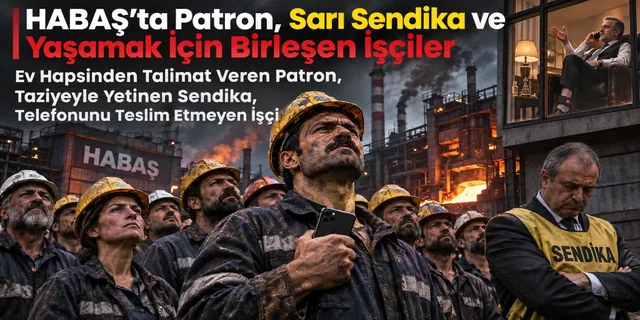
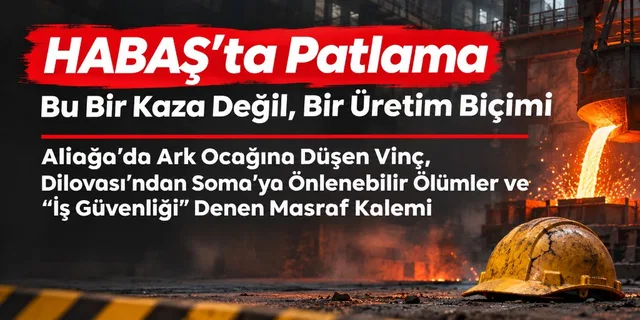
Today, 9 November 2026, an explosion and then a fire broke out in the arc furnace at the HABAŞ iron-and-steel plant in Aliağa, İzmir. After the cabinet meeting, President Erdoğan announced the death toll as 16 and the injured as 13, 2 of them critical. At 17:43 Governor Süleyman Elban had said 10 workers were dead. Four of the 15 injured were critical. He assessed that 4 people were still under the rubble. The evening announcement does not list, one by one, the 6 people by which 10 became 16. In the evening the chief physician of Aliağa State Hospital read out the names of 16 injured workers. The governor's 15, Erdoğan's 13, and these 16 names are not the same count. The dead are not named. At 19:36 Evrensel revised the report it had published at 17:52: it now writes today as 16 dead and 13 injured, 2 of them critical, and with the 11 from before today it says 27. The 17:52 text had written today as 10. The governor's 10 is not in that revision. At 21:06 Evrensel's developing report dropped 13 and wrote many injured, 2 of them critical, and said the number of the dead and the injured is not fully known and that there are workers whose identity has not been established. Sabah at the same hour still writes 13. At 20:31 the Aliağa Criminal Court of Peace banned news, interviews, criticism and commentary until the investigation ends. The ban did not change the toll. At 22:30 Sözcü writes that Health Minister Memişoğlu announced the toll had risen to 17 because one more of the injured had died. At 22:16 TRT writes 17 dead and 12 injured, 1 of them critical. The 17th person is not listed. At 23:11 Evrensel moved the headline to 17 dead and many injured, 2 of them critical. Memişoğlu's message is that one more person who was in a serious condition has died. No name. At 23:16 the death record writes today as 17 and, with the 11, 28. That is their sum. The 27 at 19:36 was the sum of the version that wrote today as 16. AA's 10 November opening is 17 dead and 13 injured, 1 of them critical. The body keeps the 16 and the 2 critical cases. The morning pages put the injured at 12, 13 and 14. There were no names. In the afternoon the same 17 names were written. The same pages also write that DNA continues. Fatih Işık is also on yesterday's injured list. Yücel Memiş and Sonay Tezcan were released. At 16:26 the burial places were written. There is a name outside the list. At 14:49 Tuncay said a detention decision for 11 people. He put the injured at 15, one of them critical. According to the families' applications one body has not been reached. This is not an 18th death. The detail is in our HABAŞ dossier. The governor tied the explosion to 11:46, to a furnace-vessel change, and to falling material striking the natural-gas line. The written statement of the afternoon tied the event to an overhead crane that broke away during the pouring of liquid steel. (Hürriyet, AA, Milliyet) The figures change by the hour. One thing does not change.
At the same plant, according to the report Evrensel revised at 19:36, at least 11 workers had died in the 10 years before today's explosion: five subcontracted, two of them interns. The same page at 19:36 added today's 16 on top of those 11 and wrote 27. The address at that hour said 21. The 23:16 revision writes today as 17 and moves the total to 28. That is their sum. The address now says 28. Only four days before this, 20-year-old Eyüp Eğinli had lost his life. In 2019 HABAŞ workers were saying that the interval between maintenance had been cut from 16 hours to 8, and that there was not even a camera that would let the crane operator see the ladle. The occupational safety specialist is on the boss's payroll. In one case the company was found 70 percent principally at fault. In another the sentences melted away with a good-conduct reduction, and the worker who died was counted "secondarily at fault". We told it in detail in our HABAŞ dossier: this is not an accident. It is a mode of production.
Why are we talking about a constitution on a day like this? Because every one of these deaths took place inside a legal order.
Human Rights Are Built on Labour
We do not think of human rights as principles hanging in the air. We think of them as the foundation of a world built on labour. Most of a human life is spent working. A person's dignity, health, time and future are tested most of all at the workplace. For that reason:
- The right to life means something when it does not end at the factory gate. A right to life with no guarantee at the arc furnace is a sentence on paper.
- Freedom of expression begins where the worker who sees the danger can say "I will not work with this crane", and is not dismissed for saying it.
- Equality exists when the subcontracted worker and the permanent worker at the same furnace have the same rights and the same protection.
- Freedom of association is real where workers are strong enough to stop a decision that shortens maintenance.
- Justice exists where the price of a preventable death is asked of the real owner of the responsibility, and does not melt away in a good-conduct reduction.
Human-rights documents have rarely said this fact in full. The 1948 Universal Declaration of Human Rights recognised the right to work and the union, and did not mention the strike or occupational safety. The 1982 Constitution passes over occupational health and safety in a single sentence, permits the postponement of strikes, counts the lockout as a right, and ties all social rights to "the sufficiency of financial resources".
If We Want Events Like HABAŞ Not to Happen
Let us think through what happened at HABAŞ step by step, and at each step ask this question: which rule made this possible?
- Who shortened the maintenance? An order that lets maintenance be set by the production plan, and that does not forbid maintenance and production to run at the same time.
- Who inspected? An occupational safety specialist whose wage the boss pays, and an inspector cadre whose numbers remain far behind the number of workplaces.
- Who could have stopped it? On paper, the worker. In fact, a worker whose union is silent, who fears dismissal, and who can be punished for reporting the danger.
- Who was punished? In cases that lasted for years, a responsibility slid to the very bottom of the chain, with sentences that melted away in reductions.
Every link of this chain is tied to a rule of law. At the top of those rules stands the constitution. As long as labour's rights are written in the constitution as a single sentence, and capital's freedom of movement as a wide field, statutes, regulations and court decisions remain inside that frame. So if events like HABAŞ are not to happen, we need more than better regulations. We need a constitution grounded in labour: a constitution that writes into the highest norm of law the right to stop work, the priority of maintenance, the independent occupational safety specialist, the criminal responsibility of companies, the rule that a strike cannot be postponed, and union security.
Let us put one note down at the start. We did not place today's events in our constitution texts. A constitution is the text of an order in which not one disaster, but no disaster, should take place. We tell HABAŞ, Dilovası and Soma in this essay. The articles of the constitution were written against all of them, and for none of them in particular.
What Is in This Dossier?
With this essay we present three texts:
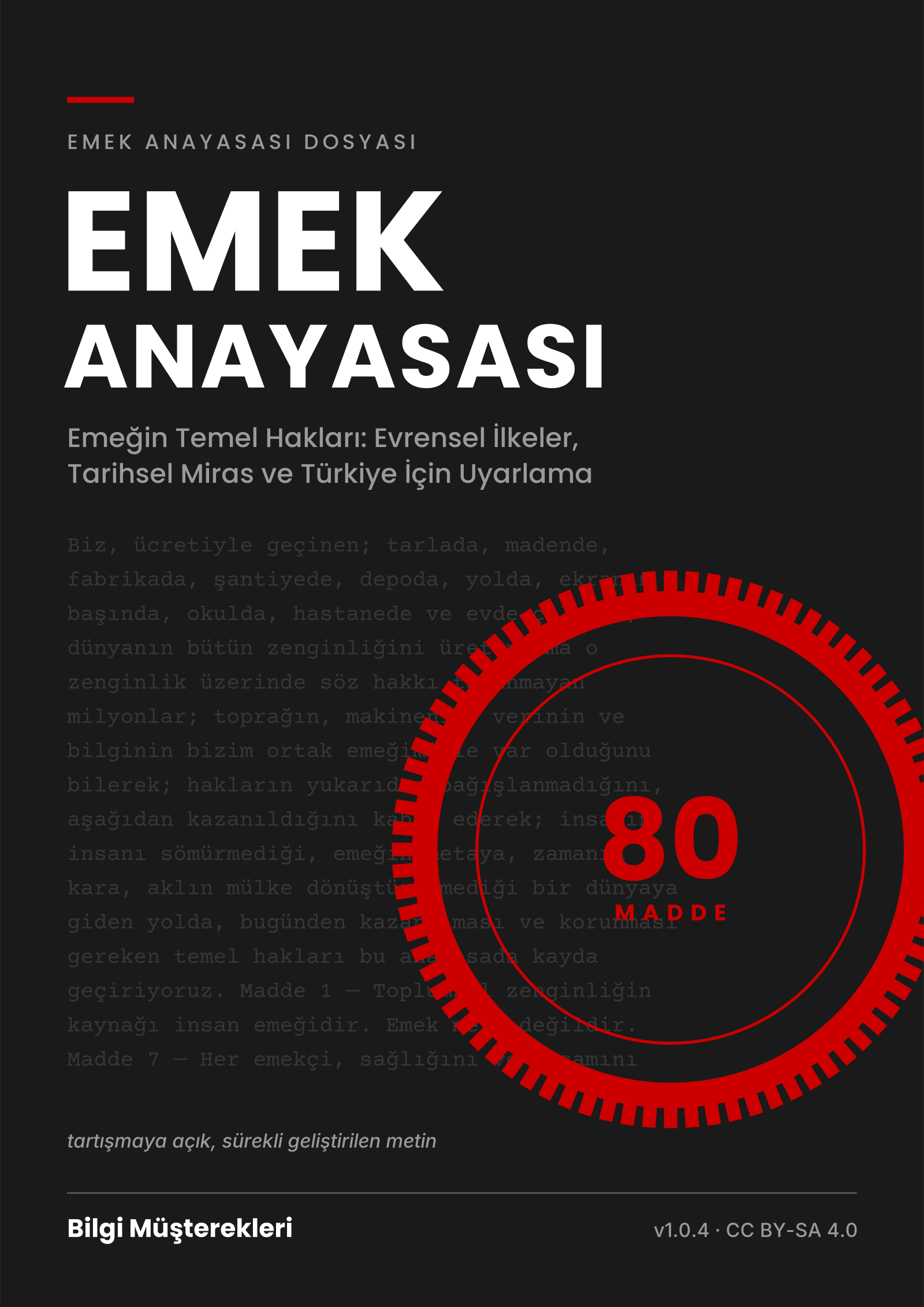
- The Labour Constitution: an eighty-article, five-part draft, open to debate. It sets out universal principles. It works through the labour articles of the socialist constitutions of 1918 and 1936 and of the 1948 Universal Declaration of Human Rights. It proposes an adaptation and a road map for Turkey.
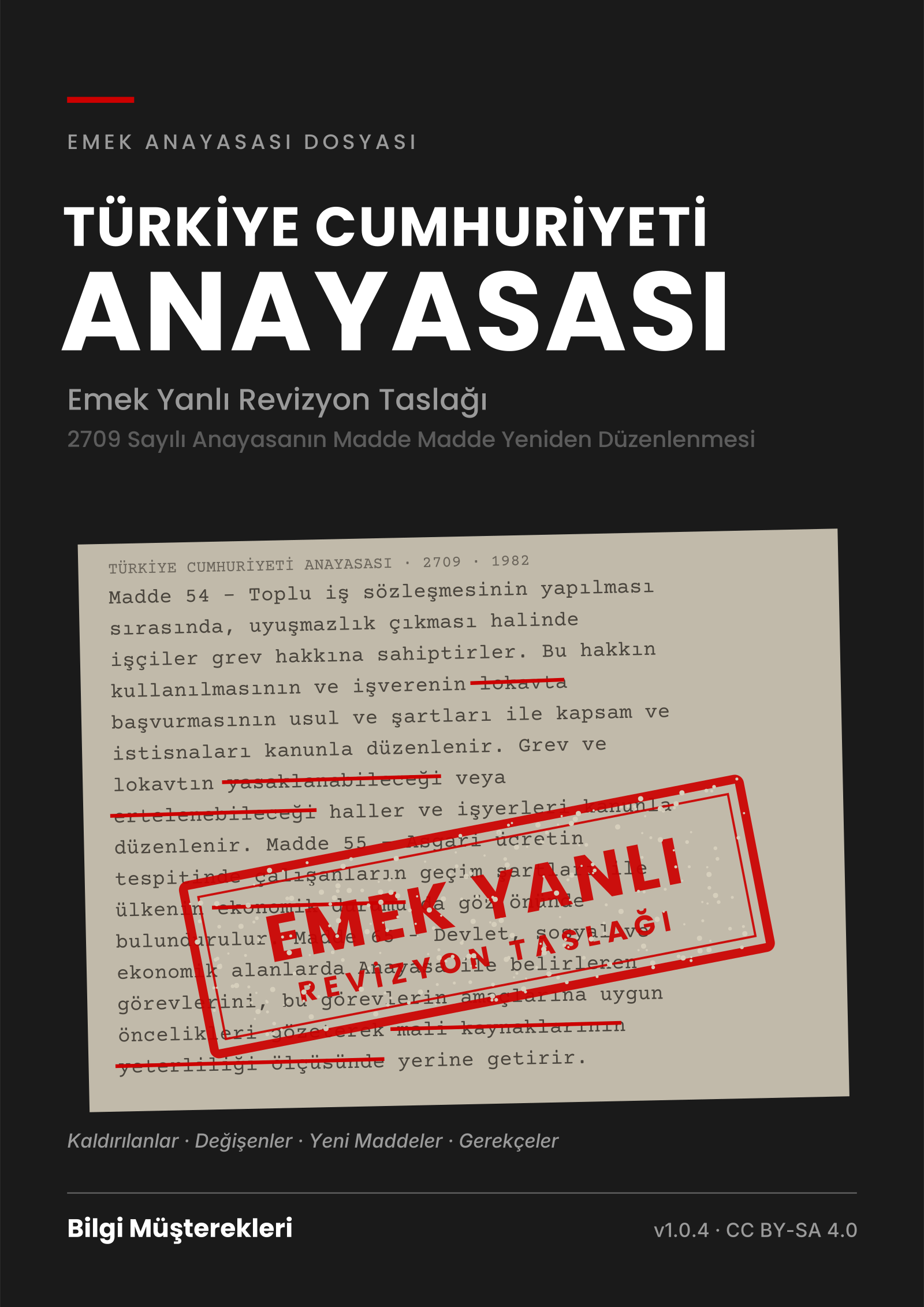
- The Constitution of the Republic of Turkey — A Labour-Sided Revision Draft: a text that takes the 1982 Constitution in force and turns it, article by article, into a labour-sided constitution, showing the reason for every change.
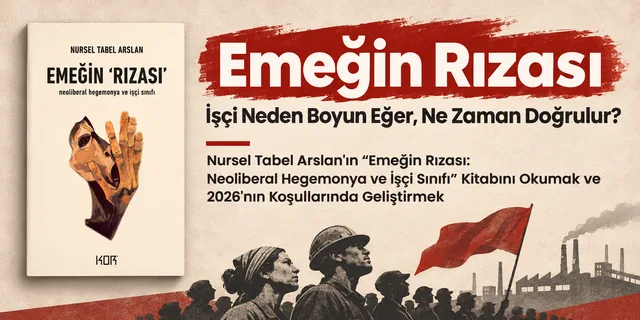
- This essay: an introduction that brings the two texts together with today's events and with today's constitution debate.
Download, read, copy (version 1.0.4)
The files are on the Guides page.
Text ePub Markdown The Labour Constitution (80 articles, 42 pages) PDF (316 Kb) ePub (1.1 Mb) MD (95 Kb) The Constitution of Turkey — Labour-Sided Revision Draft (36 pages) PDF (277 Kb) ePub (1.2 Mb) MD (77 Kb) The PDF is print-ready A4. The ePub reads easily on a phone and an e-reader. The Markdown file is there so that you can change the text and publish it again for your own union, student collective or workplace committee. All of them are licensed CC BY-SA 4.0.
We began these texts two days ago, on 7 November, the anniversary of the October Revolution. One of that revolution's first acts, one hundred and nine years ago, was to put the eight-hour day into law. We told it in The History of the Eight-Hour Day Passes Through 1917: many of the rights we count as "normal" today are either a direct result of that revolution or a concession given out of fear of it. The history of rights is a history of gains, not of gifts.
Why now? Because since the opening of Parliament on 1 October, the "new constitution" is once again at the centre of politics. The government says "a year of the constitution". The opposition says "first obey the constitution that exists". There is no chair for workers at that table. We decided to set our own table, rather than ask for a chair.
Why "labour"? Because this text is the constitution of the working class, and that class now spreads far beyond the factory: the public worker, the courier counted as a "tradesperson", the freelancer counted as "self-employed", the data worker behind the screen, the person who spends unpaid care labour at home. Capital separates these sections from one another with different legal labels. The word "labour" names the common fact under those labels.
First, the Summary
Before the long essay, the twelve-sentence core of the Labour Constitution is this:
- Labour is not a commodity. Labour is the source of social wealth. No property right may come before the fundamental rights of labour.
- A worker is everyone who lives by their labour. The courier, the person who writes code, the freelancer, the data labeller, the content maker, the student who works while studying, the agricultural worker, the teacher, the domestic worker.
- Life comes before profit. The hazard is removed at its source. Maintenance comes before production. The occupational safety specialist is under the control of the public and of the worker, not of the boss. Every preventable death is a crime, and it cannot go unpunished.
- The wage is enough for a human life. The minimum wage cannot fall below the cost of keeping a family, and it is free of tax.
- Time is ours. A 35-hour week. The right not to be reached outside working hours.
- Security is the rule. Subcontracting and agency labour are forbidden. Arbitrary dismissal is void.
- Organising cannot be blocked. A union with no threshold, no permission and no notification.
- The strike cannot be postponed or banned. The lockout is forbidden.
- An algorithm cannot be the boss. The right to object to an automatic decision. Surveillance of the body and of data is forbidden.
- Care labour is social. Health, education, housing and the crèche are free public services.
- Democracy at the workplace. Workers' councils, the right to see the books. A closed workplace belongs to the workers.
- These rights cannot be taken back. Not even in a state of emergency.
Now to the detail.
A Constitution Is a Class Document
Let us begin by asking you a question: for whom is a constitution written?
At school we are told that the constitution is a "social contract", that it reflects everyone's common will. Look a little more closely at the history of constitutions, and another picture appears. Who holds the pen decides which right counts as "fundamental" and which as "limitable"; whether property or labour is inviolable; whether the strike counts as a right or as a threat.
The constitutional history of labour is the clearest example. Article 123 of the 1917 Mexican Constitution was among the first texts to write the eight-hour day and the right to strike into a constitution. It was the product of a peasant and worker revolution. The 1918 Soviet Constitution opened with the "Declaration of Rights of the Working and Exploited People". The 1919 Weimar Constitution recognised workplace councils. That was a concession torn off by the revolutionary wave in Germany. In 1944 the ILO's Declaration of Philadelphia said "labour is not a commodity". That too was the product of the balance created by the war and by the defeat of fascism.
The same law worked in Turkey. The 1961 Constitution wrote the right to strike and to collective agreement into a constitution for the first time. That was the legal ground of the road to 15–16 June 1970. The 1982 Constitution was the labour regime of 12 September: it recognised the rights, and surrounded each of them with clauses of limitation.
To write a constitution is to record the balance of power between classes. That is why we ask you to read the Labour Constitution not as a legal text, but as a proposal to change a balance of power.
Today's Constitution Debate: What Is on the Table, and What Is Not?
The new-constitution debate is not new in Turkey. In the last two months it has settled once again at the centre of politics. First let us look at who said what, and then at what is not being talked about at the table.
What Does the Government Side Say?
On 1 October, opening the new legislative year of Parliament, President Erdoğan gave about a quarter of his speech to the new constitution. He said that the "Turkey without Terror" process would ripen the conditions for making a civilian and participatory constitution, and he wished this legislative year to be a "year of the constitution". (24 Saat) In the same speech he described the existing constitution as a narrow shirt cut for the nation, made in the shadow of weapons after 12 September. (Haber7)
MHP leader Bahçeli said they had a ready draft in hand. The government side presents the 467 yes votes given in Parliament to the "framework law" as a key for the new constitution as well. (Medyascope) On 3 November, in the General Assembly, AKP Deputy Chair Hüseyin Yayman announced that the greatest promise of the Cumhur İttifakı (People's Alliance) in the new period was a "civilian, democratic and contemporary" constitution. (Haberton)
Presidential chief adviser Mehmet Uçum says that the making of the new constitution began as of 1 October, and that the process must end in a referendum. (Euronews) According to Uçum, a new constitution is not required for Erdoğan to be a candidate again. If Parliament decides to renew the elections, the path of "exceptional candidacy" is open under the existing order. (bianet)
What Does the Opposition Side Say?
The opposition's objection is about trust before it is about content. In the same session of 3 November, Murat Emir said the government must first obey the constitution in force, and that Turkey, though it has a constitution on paper, is in fact without a constitution. (Haberton) On 6 November CHP leader Kemal Kılıçdaroğlu did not close the door to sitting at the table for a constitutional amendment, and he stressed that the amendment alone would not solve the problem. (CHP) İYİ Parti leader Müsavat Dervişoğlu insists on the parliamentary system, and argues that under the existing provisions Erdoğan cannot be a candidate again. (Haberyazar)
In short, the visible headings of the debate are the system of government, the judiciary, the method and the referendum. The knot that is not visible, and that decides the rest, is the candidacy.
What Had the Labour Organisations Said?
What labour organisations have said in constitution debates shows what today's debate leaves outside. In the period of Süleyman Çelebi, DİSK (the Confederation of Progressive Trade Unions) prepared a draft constitution together with jurists, and proposed that the new constitution be made by a constituent assembly. (bianet) In the 2010 referendum KESK (the Confederation of Public Employees' Trade Unions) said neither "yes" nor "no", arguing that the 1982 Constitution should be removed as a whole and replaced, through a plural process, by an egalitarian and libertarian constitution. That package recognised collective agreement for public workers, and did not recognise the strike. (bianet) In 2017 DİSK said that a constitution which did not contain the rights of workers could not be accepted, while the great majority of society lived on a wage. (BirGün) Today DİSK, KESK, TMMOB (the Union of Chambers of Turkish Engineers and Architects) and the TTB (the Turkish Medical Association) are preparing the joint rally they will hold on 12 December. (Enternasyonal Dayanışma)
What Is Not on the Table: The Labour Regime of 12 September
Now to the real question. The government says "let us be rid of the 12 September Constitution". The opposition says "first obey the constitution that exists". Which side of this debate has put on its agenda the articles of the 1982 Constitution that regulate working life?
In the debates that have reached the public so far, the postponement of strikes, the counting of the lockout as a constitutional right, the sectoral threshold, the ban on strikes for public workers, and the tying of the minimum wage to "the economic condition of the country" do not stand as a priority heading. Yet this is precisely the legacy of 12 September that has been kept with the most loyalty. In the period of the government that makes the "narrow shirt" criticism, at least 22 strikes were banned. Turkey's narrow shirt is tightest on the worker's body. The opposition's call to "obey the constitution" is right from the point of view of the rule of law. The text it asks people to obey is the very text that postpones the strike and counts the lockout as a right.
As we told in our 12 September dossier, the common feature of the more than twenty amendments after 1982 was this: when a right was given to labour, either a lock was fitted beside it (as in 2010, when public workers were given collective agreement and not given the strike) or the right was emptied at the level of statute (as in 2010, when the ban on political and general strikes was taken out of the constitution and in practice continued in the law). So in the new-constitution debate the first task of workers is not to decide which side to take. It is to put their own agenda on the table.
For that reason, whichever side it comes from, let us ask these litmus questions of every constitution proposal, every amendment package, every leaked "draft":
- Is the power to postpone and to ban strikes being removed?
- Is the lockout being taken out of the constitution?
- Are the sectoral threshold and the obstacles to union membership being lifted?
- Is the right to strike recognised for public workers?
- Is the minimum wage tied to the measure of a human life?
- Do labour rights cease to be suspendable in a state of emergency?
- Are platform, freelance, remote and invisible digital labour recognised?
A text that does not say "yes" to any of these questions, however "civilian" and "democratic" its name, carries the labour regime of 12 September on inside a new cover. Our three questions hold here too: In whose hands? Under whose control? To whose benefit?
The Labour Constitution was written to join this debate not as a side, but as a measure.
To make that measure concrete we took one more step: we prepared a revision draft that takes the 1982 Constitution in force and turns it, article by article, into a labour-sided constitution. In the draft every article of the 1982 text is marked "unchanged", "amended" or "new". The record in Article 65, "to the extent of the sufficiency of its financial resources", is removed. The strike-postponement and lockout provisions in Article 54 are removed. The phrase "the economic condition of the country" in Article 55 is removed. A new Article 50/A is added for occupational health and safety. Social and economic rights are taken outside presidential decrees and emergency decrees. So we ask everyone who says "a new constitution" one question: are these articles in your text? Below, in the section "A Labour-Sided Revision of the 1982 Constitution", we tell article by article which provisions we took out and what we added.
Today, in Figures
A constitution proposal begins by reading today's picture correctly. The condition of labour in Turkey is, roughly, this:
Workplace murders. According to the report of the İSİG Meclisi (the Health and Safety Labour Watch), in 2025 at least 2,105 workers lost their lives while working. That is the highest number since the pandemic. Ninety-four of those who died were children. On average, six workers a day. The most deaths were in construction (493), agriculture (414) and transport (272). (bianet, BirGün)
The absence of unions. According to the July 2026 figures of the Ministry of Labour, the official unionisation rate is 13.79 percent. About 15.2 million of some 17.6 million workers have no union membership. The striking split is this: unionisation is around 76 percent in the public sector, and 6.48 percent in the private sector. (Ministry of Labour and Social Security, bianet) When unregistered workers are also counted, according to DİSK-AR the actual rate falls to 12.3 percent, and collective-agreement coverage to 9.6 percent. (DİSK-AR)
Thresholds. As of July 2026, only 60 of 246 workers' unions can pass the 1 percent sectoral threshold. The rest, even if they have members, cannot sit at the collective-agreement table. (bianet)
Strike bans. Together with the Eti Maden strike, at least 22 strikes have been "postponed" since 2003. Under the statute a postponed strike cannot be started again after 60 days. The dispute goes to the High Board of Arbitration. "Postponement" means a ban in practice. (Evrensel) In this way the right to strike was taken from about 200,000 workers. (bianet)
Workplace murders continue this year too. In the first nine months of 2026 at least 1,736 workers lost their lives while working. Of those who died in September, 97 percent had no union. (Evrensel) At 12:35 on 10 November the İSİG Meclisi counted the first ten months: January 155, February 129, March 151, April 190, May 214, June 228, July 216, August 227, September 227, October 193. The total is at least 1,930. September has moved from the 226 of the 7 October report to 227. The HABAŞ deaths of 9 November sit outside these ten months. (İSİG Meclisi)
The collapse of the strike. By DİSK-AR's calculation, the number of days spent on strike per thousand insured workers was 2,453 in 1980, and fell to 13 in the AKP period. (bianet)
Put these figures side by side and one thing is plain. The disorganisation of workers in Turkey is not a matter of "culture" or of "choice". It is the result of a deliberate legal design. The threshold, e-Devlet membership, dismissal for union activity, and the strike ban are pieces that complete one another. The way out is possible not by patches one by one, but by changing the frame as a whole.
What Does the Labour Constitution Propose?
The text is in five parts.
Part One: Universal Principles. Eighty articles in twelve chapters. Life, health and occupational safety, the wage, time, job security, organising and the strike, labour in the digital age, the workers of the modern age, social reproduction, equality, economic democracy, and guarantees.
Part Two: The Socialist Constitution Experience: 1918 and 1936. The labour articles of the constitutions of the October Revolution: the gains, the gulf between the text and life, and the lessons drawn from this inheritance.
Part Three: The Universal Declaration of Human Rights, and Labour. Every article of the Declaration that touches labour, one by one: what it guarantees, where it is silent, and where the Labour Constitution goes beyond it.
Part Four: The Adaptation for Turkey. Today's figures, an article-by-article comparison with the 1982 Constitution, the list of statutes that have to change (6356, 4857, 6331, 5510, 4688, 6698), and the "first hundred days" transitional provisions.
Part Five: How Does This Constitution Live? How it will be read in a workplace meeting, how the articles will be turned into local demands, how they will be carried into a collective agreement.
We want to tell you five of its innovations in particular. The first is occupational safety, which is also the starting point of this essay.
Life First: The Occupational Safety Chapter after HABAŞ
After the HABAŞ disaster we told in the opening, we rebuilt the second chapter of the Labour Constitution under the name "Life, Health and Occupational Safety". Every finding that stood out at HABAŞ became an article: shortened maintenance, missing crane safety, the gas line on the path of the load, the specialist on the boss's payroll, and sentences that melt away in reductions.
We added eight new articles to this chapter (arts. 13–20). The articles do not name HABAŞ. Each of them was written so that what happened at HABAŞ does not happen again:
- The hazard is removed at its source (art. 13): The order of measures cannot be changed. A hard hat and gloves do not count as a "measure". Cost and lost production cannot be a reason for not taking a measure. An order in which a single error can cause death is unsafe by its design.
- Maintenance is the precondition of production (art. 14): A decision to shorten maintenance depends on the approval of the workers' representatives. Maintenance and pouring cannot be done in the same area at the same time. The key of the lock-out is with the worker who does the maintenance.
- Special guarantees in heavy and dangerous work (art. 15): Redundant crane systems, gas lines kept off the path of the load, automatic gas shut-off, only the necessary personnel in the danger zone. Subcontracting and the extension of shifts are forbidden in this work. A record of entry into the danger zone may be kept only to find the worker in an emergency: technology to protect, not to surveil.
- An independent occupational safety service (art. 16): The specialist and the physician are appointed not by the boss, but from a public body that works with a fund collected from employers. Stop-work decisions are binding.
- Workers' inspection (art. 17): Representatives are elected by secret ballot and carry the power to stop production. Unions may carry out an occupational-safety inspection in every workplace, even where they have no members.
- Transparency, and the right to report a hazard (art. 18): Risk assessments and maintenance records are open. A worker who reports a near miss cannot be punished. The name of a worker who dies, and the company in whose name they worked, cannot be hidden.
- After a workplace murder (art. 19): Production stops until the independent inspection is finished. Evidence is preserved. The investigation begins with those who take the decisions. Families and unions are parties to the case.
- Industrial basins, and the responsibility of the public (art. 20): A workers' health centre, with a burns unit and an occupational-diseases unit, for every heavy-industry basin. The public official who does not inspect is also responsible. The inspectors in Dilovası who "took the perfume and left" are the reason for this article.
We also strengthened Article 9. In workplace-murder cases there is no good-conduct reduction, no suspension of the pronouncement of the verdict, and no postponement. Companies are tried as legal persons. Responsibility cannot be slid to the bottom of the chain by loading "secondary fault" onto the worker who lost their life.
Let us add one more to our litmus questions: Does a constitution proposal take the occupational safety specialist off the boss's payroll?
First: The Broad Definition of the Worker
Article 2 defines the worker as "everyone who provides their living by working on someone else's account", and adds an important presumption: if a person's work is arranged by an algorithm, an application or an intermediary company, they are a worker until the contrary is proved. The burden of proof is on the employer.
This single paragraph breaks, from the start, the "tradesperson courier" game we told in the Gig Economy Dossier. The platform company's defence, "we are only an intermediary", becomes a claim that now has to be proved.
Second: The Digital Labour Chapter
The 1982 Constitution, as one would expect, never speaks of algorithms, platforms or data surveillance. In today's new-constitution debates this subject is almost entirely absent. The Seventh Chapter of the Labour Constitution sets seven articles aside for it:
- An algorithm cannot be the boss (art. 43): Decisions to hire, to evaluate, to punish and to dismiss cannot be left to automatic systems alone. The last word is with an accountable human being.
- A ban on surveillance (art. 44): Location tracking by a chipped card, keystroke recording and emotion analysis are forbidden. The Astor example we told in The Card Around Our Necks is living proof of why this article is necessary.
- A say in automation (art. 47): Before artificial intelligence is brought into the workplace, workers are informed and take part in the decision. It is forbidden to use the technology to speed the worker up and to surveil them.
This chapter can be read as the Workers' Rights Declaration in the Socialist AI Manifesto, carried onto the constitutional plane.
Third: The Unconditional Guarantee of the Strike
Article 38 is perhaps the sharpest article in the text. A strike cannot be postponed or banned on any ground. The grounds of "national security", "public health" and "economic stability" cannot be used. The solidarity strike, the general strike and the political strike are explicitly within the right. In vital services, what the minimum service is is determined not by the government or the employer, but by the organisations of the workers on strike. Article 39 forbids the lockout, and counts it a crime to run, in place of the worker on strike, another worker, a subcontractor, or an automation system. This last detail is a measure taken in advance against a new form of strike-breaking in the age of artificial intelligence.
Fourth: The Workers of the Modern Age
Today capital leaves the worker unorganised most of all by not counting them a worker. The courier becomes a "tradesperson", the programmer a "freelancer", the translator a "self-employed professional", the data labeller a "task completer", the person who broadcasts on YouTube an "entrepreneur", the student who works while studying a "part-time assistant". Every new name is a door opened outside the labour code, the union and the collective agreement. In The Human in the Loop, telling the invisible labour behind artificial intelligence, we had seen where these doors open.
The Labour Constitution therefore gives the Eighth Chapter, from beginning to end, to the workers of the modern age. Nine articles (arts. 50–58):
- Dependent freelancers (art. 50): A freelancer who takes most of their income from one or a few clients is a worker. Freelancers setting a common tariff cannot be counted a "cartel". A receivable is paid within thirty days at the latest. Unpaid "trial work" is forbidden.
- Remote and hybrid workers (art. 51): The employer pays the equipment, the internet and the energy. The home is not the employer's field of surveillance.
- Work without a border, a right without a border (art. 52): A worker who works for a company or a platform abroad benefits from the guarantees of the country they are in. The difference of exchange rate and of commission cannot be cut from the worker.
- Invisible digital labour (art. 53): Data labellers, content moderators and artificial-intelligence trainers are workers. Piece-rate pay cannot fall below the hourly minimum wage. Psychological support and paid recovery leave are given to those who work with traumatic content.
- Creative labour and content makers (art. 54): A platform algorithm's decisions on income can be objected to. Works may be used in artificial-intelligence training only with consent and a fair share. Voice, face and style cannot be copied without permission.
- Fragmented work, portable rights (art. 55): The rights of a person who works at more than one job are combined. Seniority, leave and the right to training belong to the person, and travel from job to job.
- Against the quota and speed regime (art. 56): Warehouse, courier and call-centre quotas cannot exceed health. A toilet break cannot be counted as "idle time". A compulsory smile, and dismissal by a customer score, are forbidden.
- The climate crisis and new risks (art. 57): In extreme heat and in dirty air, work stops without loss of pay. In work done together with a robot, a system error cannot be loaded onto the worker.
- The right to learn, and working students (art. 58): Two weeks of paid education leave a year. A student who works while studying is a worker. The academy's staff paid by the course and on contract are equal to the permanent staff.
This chapter is the constitutional counterpart of a thesis we set out in The Poverty of the White Collar (in Turkish) and The Computing Worker's Handbook: a worker pushed outside the factory order has not been pushed outside the class. The plaza, the screen, the application and the warehouse are the new workplaces of the same class.
Side by Side with the 1982 Constitution
A table tells the difference best:
| The 1982 Constitution and today's practice | The Labour Constitution |
|---|---|
| Rights are recognised, then surrounded by clauses of "limitation" | Rights are applied directly, and cannot be narrowed |
| In the minimum wage, "the economic and social condition of the country" is taken into account | The minimum wage cannot fall below the cost of keeping a family, and it is free of tax |
| The occupational safety specialist and the physician are on the employer's payroll; in a workplace murder the sentences melt away in reductions | An independent specialist, an elected representative, the priority of maintenance, criminal responsibility for companies |
| A sectoral and a workplace threshold for a collective agreement | Every organised union has the right to bargain. There is no threshold |
| Banned areas of strike, and a power to postpone | The strike cannot be postponed or banned |
| The lockout is a constitutional right | The lockout is forbidden |
| No strike for the public employee; in a dispute, the Arbitration Board | An equal right to strike for public workers |
| In a state of emergency, fundamental rights can be suspended | Workers' rights cannot be suspended under any condition |
| No provision at all on digital labour and surveillance | A separate chapter: algorithmic decision, a ban on surveillance, a right over data |
| The courier is counted a "tradesperson", the freelancer "self-employed", the content maker a "tax exemption" | All of them are workers: a worker presumption, collective bargaining, portable rights |
| No provision at all on democracy at the workplace | Workers' councils, seeing the books, the passing of a closed workplace to the workers |
The most instructive row of the table is the lockout row. The 1982 Constitution presents, in the same article, the worker's right to stop work and capital's "right" to put the worker out of the door, as two equal rights. To recognise an "equal right" when one side has only labour power and the other side has all the means of production is to recognise a right for the strong. The gulf between the formal equality of bourgeois law and real inequality is perhaps nowhere this plain.
A Labour-Sided Revision of the 1982 Constitution: What Comes Out, What Goes In?
The Labour Constitution draws a horizon. The revision draft does something narrower, and more concrete. It takes the 1982 Constitution in force, goes through its articles one by one, and marks each of them "unchanged", "amended", "new" or "removed". It joins the "new constitution" debate not with a blank page, but with a list of motions from inside today's text.
What We Removed
First, the provisions we took out of the 1982 text. Each of them is the constitutional basis of an order that today ties labour's hands in Turkey:
| Article | What was in the 1982 text? | Why did we take it out? |
|---|---|---|
| art. 18 | "Physical and intellectual work in the character of a civic duty, in fields required by the needs of the country", does not count as forced labour | An exception that empties the ban on forced labour |
| art. 42 | No language other than Turkish may be taught and learned as a mother tongue | Education in the mother tongue is a right. That right was written in its place |
| art. 47 | Public services may be transferred to companies by private-law contracts (1999) | The constitutional door to the subcontracting of a public service |
| art. 49 | Work counted as a "duty", and the State's task "to secure labour peace" | Work is a right. "Labour peace" was used as a ground for restricting the strike and organising |
| art. 51 | The right to a union may be limited on wide grounds such as national security, public order and general morals; the rights of public employees may be narrowed "according to the nature of the service" | Limitation was tied only to the aim of preventing crime, and to a judge's decision. Public workers were counted equal |
| art. 53 | In a collective-agreement dispute of public employees, the decision of the Arbitration Board is "final" | Compulsory arbitration removes the bargaining itself |
| art. 54 | A strike may be held only in a collective-agreement dispute; a right of lockout; a strike may not be used "to the harm of society"; a strike may be banned and postponed; the High Board of Arbitration; the clause "the work of those who do not join the strike cannot be prevented" | The whole of the article was the basis of the postponement of more than twenty strikes in the last twenty years |
| art. 55 | In setting the minimum wage, "the economic condition of the country" is taken into account | The record that cuts the minimum wage off from the measure of a human life |
| art. 56 | In health, "economy in human and material resources"; the State fulfils its task through the private sector; general health insurance "may be established" | The constitutional ground of the marketisation of health |
| art. 65 | The State fulfils its social and economic tasks "to the extent of the sufficiency of its financial resources" | The single sentence that ties all social rights to the discretion of the budget |
| art. 68 | A total ban on the membership of civil servants and of all public employees in political parties | The ban was limited to judicial, military and law-enforcement duties, where impartiality is obligatory |
| art. 119 | "A severe economic crisis" counts as a reason for declaring a state of emergency | An economic crisis cannot be a ground for suspending labour rights |
| art. 135 | Professional organisations cannot "act outside their aims", and on this ground their organs can be removed from office | The provision used against organisations of physicians, engineers and architects who state a scientific view |
What We Added
Then, what we added to the 1982 text. Some of it is an entirely new article. Some of it is new paragraphs added to existing articles:
| Where? | What did we add? |
|---|---|
| Preamble | That labour is the source of social wealth; that social rights are as binding as personal and political rights; that workplace murders are not fate |
| art. 4 | Social and economic rights cannot be amended so as to be narrowed. They can only be widened |
| art. 5 and new art. 5/A | The duty of full employment and of removing inequality; the priority of labour: labour is not a commodity, no property right may come before the rights of labour, and in doubt the reading is in the worker's favour |
| arts. 10, 11, 13 | A ban on discrimination by social class and by the form of employment; equality between the subcontracted and the permanent worker; the direct application of social rights, and their binding force against employers too; a ban on limitation on the ground that "there are no resources" |
| arts. 15, 16 | Even in a state of emergency, the rights of union, strike, wage, job security and occupational safety cannot be suspended, and no one can be expelled by decree; migrant workers are equal to citizens in rights at work |
| arts. 17, 18 | The right to life holds at the workplace too; working people by holding back a debt or a document, and unpaid internship and apprenticeship, count as forced labour |
| arts. 20, 22, 26 | A ban on surveillance at the workplace; objection to algorithmic decisions, and the last word with a human being; the worker's communication is not monitored; protection of the worker who reports a hazard |
| arts. 34, 35, 36, 38 | Squares opened to workers, and a guarantee for 1 May; ownership of the means of production limited by labour rights; a free labour judiciary; the criminal responsibility of companies; in workplace murders, the closing of the paths of time-bar and of impunity |
| arts. 41, 42 | The socialisation of care labour, a free crèche, equal parental leave; free education at every level, a public grant, education in the mother tongue, and vocational training that does not turn into child labour |
| arts. 45, 47, 48 | Equal rights for agricultural and seasonal workers; the social ownership and non-privatisability of strategic sectors; a closed workplace passes to the workers; a worker presumption for the platform and the "tradesperson courier" |
| arts. 49, 50 | The right to work and full employment; consultation of workers before automation; a 35-hour week, a 7-hour day, the right not to be reached, a ban on child labour |
| New art. 50/A | Occupational health and safety: removal of the hazard at its source, maintenance before production, the right to stop work, an independent occupational safety specialist, a ban on subcontracting in heavy work, production stopped after an event, workers' health centres in industrial basins |
| New art. 52 | Union guarantees: immediate reinstatement of a person dismissed for a union reason, a guarantee for the representative, the right to union activity at the workplace (an article number that has stood empty since 1995) |
| arts. 53, 54, 55 | Collective agreement without a threshold, and the strike for public workers; a strike that cannot be postponed or banned, a ban on the lockout, a ban on strike-breaking; a minimum wage tied to the cost of keeping a family, free of tax, and equal pay for equal work |
| arts. 56–64 | Free and public health; the right to housing; protection of young workers; a single and public social security, a pension that does not fall below the minimum wage, portable rights; disabled and migrant workers; creative labour and artificial intelligence |
| arts. 67, 73 | The vote for foreign workers in local elections; a progressive tax, and the exemption of labour income from tax up to the level of a human life |
| arts. 90, 104, 119 | ILO conventions brought within the supremacy of treaties; social and economic rights cannot be regulated by presidential decree or by an emergency decree |
| arts. 128, 129, 135 | A ban on subcontracting and precarious employment in the public sector; a ban on discrimination in the interview; a ban on discipline and on exile for a public worker who joins a strike or an action; the autonomy of professional organisations |
| arts. 166, 167, 168, 171 | A stronger representation of labour on the Economic and Social Council; the prevention of digital monopolies; a ban on subcontracting in mines, and the end of the licence in a workplace murder; priority for workers' cooperatives |
| Transitional articles | Postponed strikes start again, reinstatement of those dismissed for a union reason, permanent posts for subcontracted workers in the public sector, a Truth and Justice Commission for workplace murders, the statutes brought into line within one year |
What Did We Not Touch?
There are also fields we deliberately did not touch. The first three unamendable articles, and the paragraphs of the Preamble that concern identity, stand as they are. We wrote the priority of labour without touching these articles, in a new Article 5/A. The system of government, the electoral system and the organisation of the judiciary are also outside the draft. Not because they are unimportant, but because they are the subject of a separate debate. This draft has a single question: Whatever system is set up, where will the rights of labour stand in the constitution?
The Constitutions of 1917: 1918 and 1936
We began these texts on 7 November, the anniversary of the October Revolution. The Labour Constitution would have been incomplete if we had not looked at that revolution's own constitutions. We therefore added to the text a separate part that works through the labour articles of the 1918 Constitution of the Russian Socialist Federative Soviet Republic (RSFSR) and of the 1936 Constitution of the USSR. (A small note: the USSR was founded in 1922. The 1918 constitution is the constitution of the Russian Soviet Republic.)
These two texts show how far the rights of labour can be written into a constitution:
| What did it say? | In which constitution? | In the Labour Constitution |
|---|---|---|
| The abolition of the exploitation of the human being by the human being | 1918 Declaration, 1936 art. 4 | arts. 1, 73 |
| Workers' control | 1918 Declaration | arts. 70–72 |
| Printing presses and meeting halls given to workers: the right recognised together with its material means | 1918 arts. 14–16, 1936 art. 125 | art. 75 |
| All political rights to the foreign worker working in the country | 1918 art. 20 | art. 66 |
| Domestic labour counted equal to productive labour | 1918 art. 64 | arts. 2, 62 |
| The right to work, and the abolition of unemployment | 1936 art. 118 | art. 6 |
| A seven-hour day, and paid annual leave | 1936 art. 119 | arts. 26–29 |
| Free health care, and a state guarantee in old age and in illness | 1936 art. 120 | arts. 29, 59, 63 |
| Free education, including higher education, a state grant, education in the mother tongue | 1936 art. 121 | art. 60 |
| Equal pay for equal work, paid maternity leave, the crèche and the kindergarten | 1936 art. 122 | arts. 62, 65 |
The Labour Constitution's seven-hour day carries the same aim as Article 119 of 1936. Article 20 of 1918, which recognised equal political rights for the migrant worker, is still a horizon line today, in a world of migrant workers silenced by the fear of deportation.
To own this inheritance honestly also requires seeing the gulf between the text and life. The 1936 Constitution did not recognise the independent union or the strike. It tied the unions to the party's "leading nucleus" (art. 126). The years of repression of 1937–1938 followed its adoption at once. In 1940 a decree raised the seven-hour day to eight hours, and counted leaving a job without permission a crime. The principle "he who does not work shall not eat", which 1918 wrote against the owners of property, turned in 1961 into the charge of "parasitism" against the unemployed and against opponents. In 1962 fire was opened on striking workers at Novocherkassk.
The reason for this gulf was not the weakness of the text. It was that the independent power with which workers would defend that text was taken out of their hands. The Labour Constitution turns this lesson into a provision:
- The union is independent of every power. No party may claim a leading role over the unions (art. 35).
- The right to strike is independent of the form of property. There is a right to strike in an enterprise under public and social ownership too (art. 38).
- The right to work cannot be turned into a duty to work. Unemployment cannot be punished. No one can be declared a "parasite" (art. 6).
- Social property cannot be reduced to state property, or to the management of the bureaucracy (art. 73).
- No right can be recognised with the record "in order to strengthen the order". Whether a freedom is in the workers' interest is decided by the workers themselves (art. 75).
The socialist constitution experience left us a warning as well as a design of the future: labour's constitution does not live unless it is defended by the workers themselves.
From the Declaration to the Constitution: The Labour Articles of the Universal Declaration of Human Rights
In a month, on 10 December, there is the anniversary of the adoption of the Universal Declaration of Human Rights. The joint rally the labour organisations will hold on 12 December also falls in Human Rights Week. We therefore added to the Labour Constitution a separate part that works through the Declaration's articles on labour, one by one.
The Declaration was written in 1948, in a period when fascism had been defeated and the world workers' movement was at its strongest. For the first time it counted the right to work, equal pay for equal work, a wage worthy of human dignity, the right to a union, rest, and social security as universal human rights. This is not a gain to be belittled. Read the text with a labour eye, and the gaps appear at once:
| What does the Declaration say? | What does it not say? | What does the Labour Constitution say? |
|---|---|---|
| Everyone has the right to life and to security of person (art. 3) | It does not mention the workplace, the workplace murder, or occupational safety | Life begins at the workplace. Fourteen articles are set aside for occupational health and safety (arts. 7–20) |
| Everyone may form and join a union (art. 23/4) | It never speaks of the strike or of collective bargaining | The strike cannot be postponed or banned. The lockout is forbidden (arts. 38–39) |
| The wage must provide a life worthy of human dignity, completed if necessary by social protection (art. 23/3) | It sets no measure. It refers an insufficient wage to state aid | The minimum wage cannot fall below the cost of keeping a family (arts. 21–22) |
| Working time should be limited to a reasonable extent (art. 24) | It does not tie "reasonable" to a number | A 35-hour week. It shortens further as productivity rises (art. 26) |
| Social rights are realised according to the resources of each state (art. 22) | It leaves the door of austerity open | Social rights cannot be postponed "to the extent of resources" (art. 3) |
| Everyone has the right to property (art. 17) | It does not say which is superior when property and labour conflict | No property right may come before the fundamental rights of labour (art. 1) |
| Everyone is entitled to a social and international order in which these rights are realised (art. 28) | It does not say what that order is | A race to the bottom between countries is a violation of this right (art. 42) |
The Declaration has one more limit: its addressee is only states. It does not speak of the obligations of HABAŞ, of platform companies, of multinational monopolies. The Labour Constitution therefore loads human-rights obligations onto companies as well, and defines the Declaration not as a ceiling, but as a floor below which one cannot fall (art. 79).
Turkey was one of the countries that voted for this Declaration in 1948. In 2003 it also ratified the International Covenant on Economic, Social and Cultural Rights, which contains the right to strike. Since 2004, Article 90 of the Constitution says that when international treaties on fundamental rights conflict with statutes, the treaties are taken as the basis. Even so, in the same period more than twenty strikes were banned, and thousands of workers lost their lives in workplace murders. The Labour Constitution's first word for Turkey is not a new demand. It is an old reminder: even the words that were signed are not kept.
This year, on 10 December, when we talk about human rights, let us also talk about workplace murders, strike bans and the poverty wage. They too are violations of human rights.
Objections, and Answers
There will be people who object to this text, and those objections have to be taken seriously. A movement that does not know the objections cannot answer them. Let us put side by side the objections you will hear most often, and our answer.
"These wages and these working hours will kill competitiveness. The investor will leave." This is the strongest objection of employers' organisations and of mainstream economists. The effect of the minimum wage on employment is genuinely debated in the economics literature. Some studies find a limited loss of employment. Some find no meaningful effect. Our answer is this: Turkey's "competitiveness" has for years been built on a low wage, long hours and the strike ban. The result was a deadly model of production, with low productivity and weak investment in technology. Cheap labour is capital's easiest excuse for not investing in technology. The "competition" argument is also the name of a race to the bottom that, in every country, forces workers to pull down one another's wages. That is why the text also contains international solidarity (art. 42) and the rule that international trade agreements cannot narrow workers' rights (art. 79).
"The constitution is everyone's constitution. It cannot be the constitution of one class." This is the objection of liberal jurists. The constitution should cover all citizens. It should be neutral. Our answer: no constitution has been neutral. A constitution that counts property as inviolable and the strike as limitable also takes a side. It simply does not say which side it takes. The Labour Constitution says its side openly. And since the overwhelming majority of society lives on a wage, "the worker's constitution" is in fact the constitution of the majority.
"If there is no strike ban, what will happen to hospitals, water, electricity?" This is a legitimate concern, and the text does not ignore it. The third paragraph of Article 38 keeps the principle of a minimum service in vital services. The difference is this: what the minimum service is is decided by the organisations of the workers on strike. People who work in a hospital know the patients' lives better than the government, and care about them more. Anyone who looks at the list of postponements in Turkey sees that strikes in glass, rubber, metal and mining are not a "vital service".
"This text is not realistic." This is perhaps the objection we will hear most often. In 1886, in Chicago, the workers who asked for eight hours were also told "it is not realistic". Today, in a large part of the world, eight hours is the legal norm. Realism is a function of the balance of power. As the balance of power changes, what is realistic changes too. The Labour Constitution describes not today's balance, but the balance we want to build.
Do not belittle any of these objections. You will hear all of them at the workplace, at school, in the union meeting. Answer them not with anger, but with figures, and with patience.
What Can We Do with This Text? Concrete Tasks
A constitution lives to the extent that it finds a power that will defend it. What we can do to keep the Labour Constitution alive in workplaces, not on shelves:
- One chapter, one meeting. At your workplace, at your school, in your union branch, read one chapter at every meeting. Ask "how far is this article applied where we are?", and write the answers down.
- Turn the article into a demand. "Article 44: a ban on surveillance" becomes, in a factory, the demand to remove chipped cards; in a call centre, the demand to switch off emotion analysis; in a software company, the demand to remove screen-monitoring software.
- Carry it into the collective agreement. Many rights that cannot be won today at the constitutional level can be won as a clause of a collective agreement: the right not to be reached, consultation before automation, protection of the worker's data.
- Find your own article. If you work in heavy and dangerous work, read Articles 13–20 with your workmates. If you are a freelancer, Article 50. If you work remotely, 51. If you work for a company abroad, 52. If you are in data and content moderation, 53. If you make content, 54. If you are in a warehouse or a call centre, 56. If you work while studying, 58. Draw up your own list of demands.
- Own the broad definition. The courier, the white-collar worker, the teacher, the computing worker: all of us are the subject of the same text. A common language is needed to get past the separations we told in The Poverty of the White Collar (in Turkish). This text tries to propose that language.
- Open it to common action. This text is the property of no organisation. It can be a ground for the model of common struggle we proposed in Organising 2.0. Different unions, parties, professional organisations and workplace committees can change it and widen it according to their own conditions.
- Criticise it, develop it. This is version 1.0.4. Write to us about every article you find missing, or think is badly built. Criticising as comrades is the only way this text grows.
Dear Young Comrades,
An article of a constitution does not live by itself. The 1982 Constitution also writes "the right to strike". In twenty years, more than twenty strikes were banned. What carries the right on paper into life is the organised power that will defend it.
In 1917 the eight-hour day was written by a decree. What made that decree possible was the previous half-century of strikes, barricades, unions and councils. Writing rights is easy. What is hard is to organise the power that will have them written.
The Labour Constitution is an attempt by that power to say its own word in its own language. Read it, debate it, change it, copy it. And above all: carry it to your workplace, your school, your neighbourhood.
We produced every wealth in the world. We will also write the rules that protect it.
Sources
Full text of the Labour Constitution: The Labour Constitution — The Fundamental Rights of Labour, version 1.0.4 — PDF (316 Kb), ePub (1.1 Mb), Markdown (95 Kb)
Labour-sided revision draft: The Constitution of the Republic of Turkey — A Labour-Sided Revision Draft, version 1.0.4 — PDF (277 Kb), ePub (1.2 Mb), Markdown (77 Kb)
The new-constitution debate
- Medyascope, "The government's agenda at the opening of Parliament: the new constitution"
- 24 Saat, "A call for a year of the constitution"
- Haber7, Erdoğan's speech at the opening of Parliament
- Haberton, "The new-constitution debate in the Grand National Assembly" (the session of 3 November)
- Euronews, Mehmet Uçum on the new constitution
- bianet, Mehmet Uçum's assessment of "exceptional candidacy"
- CHP, Kemal Kılıçdaroğlu on NTV (6 November 2026)
- Haberyazar, Dervişoğlu on the system debate and the candidacy
- bianet, "DİSK: Let a Constituent Assembly Be Formed for the New Constitution"
- bianet, "The KESK Leadership Says a 'Third Front' in the Referendum"
- BirGün, DİSK's 2017 referendum campaign
- Enternasyonal Dayanışma, "The Workers' Agenda (23 October – 5 November)"
Constitution and human-rights documents
- Constitution of the Russian Socialist Federative Soviet Republic (1918)
- Constitution of the USSR (1936)
- Universal Declaration of Human Rights (1948)
- International Covenant on Economic, Social and Cultural Rights (1966)
The HABAŞ explosion (9 November 2026)
- Hürriyet, explosion at the Aliağa HABAŞ iron-and-steel plant (live)
- AA, explosion at an iron-and-steel plant in İzmir
- Milliyet, explosion at HABAŞ (live)
- Knowledge Commons, "The Explosion at HABAŞ: This Is Not an Accident, It Is a Mode of Production"
Figures and reports
- bianet, "In 2025 at least 2,105 workers died while working"
- BirGün, "2025 was one of the bloodiest years of working life"
- Ministry of Labour and Social Security, Wage and Union Statistics e-bulletin, September 2026
- bianet, "15.2 million of 17.6 million workers have no union membership"
- DİSK-AR, Unionisation and Collective Bargaining Report, January 2026
- bianet, "DİSK-AR: 87 of every 100 workers have no union, strikes have hit bottom"
- Evrensel, "22 strikes were banned in 22 years of AKP rule"
- bianet, "Strike bans became systematic"
Our related essays
- The Explosion at HABAŞ: This Is Not an Accident, It Is a Mode of Production
- The History of the Eight-Hour Day Passes Through 1917
- The Socialist AI Manifesto
- 12 September: The History, Balance Sheet, and Present of a Class Coup
- The Card Around Our Necks: Chipped Tracking at Astor
- Gig Economy Dossier
- The Poverty of the White Collar (in Turkish)
- The Human in the Loop
- The Computing Worker's Handbook
- Organising 2.0
- For a Left That Does Not Fear Criticism
This essay and the Labour Constitution are published under the CC BY-SA 4.0 licence. Copy them, change them, publish them.