The Tier, the Agent, the World: The New Pattern of Artificial Intelligence in Gemini 4, GPT-6.1 and Genie 4
The Model Is New, the Tariff Is Old: The Class Anatomy of the Price Put in Place of the Wage

Dear young comrades,
Three announcements came in three days. On 26 October OpenAI announced GPT-6.1 Terra, on 27 October Google DeepMind announced Genie 4, and on 28 October Google announced Gemini 4 Carbon. The press read them, as usual, one by one: which is faster, which is first on which test, which costs how many dollars. In this essay we will do the reverse. We will set the three announcements side by side and read them as three separate faces of the same logic. Because what looks like "technological progress" when it is looked at one by one turns, when it is looked at together, into an open strategy of capital.
First a short summary, then the detail.
Summary: Seven Theses
- The product is no longer the model, but the tier. OpenAI's Luna–Terra–Sol–Astra sequence and Google's calendar of "partners first, then everyone" rest on the same logic. The strongest productive force is given first to capital and to the security apparatus of the state; the cheap layer is given to the masses.
- The price is moving in two directions at the same time. In the lower layer the token price is falling (Terra became 50 per cent cheaper), and in the upper layer the subscription is growing dearer (Pro 500 at 500 dollars a month, and the Pro 200 quota cut at the same price). This is not a contradiction; it is monopolistic price discrimination.
- The real measure of the price is not the cost, but the wage. The price of the model is set not according to the cost of producing it, but according to the wage of the labour it will replace. "Agent" pricing is passing from a licence per seat (that is, per employee) to a consumption measured like the working hour.
- The culture of the agent is the transfer of the will from the worker to the software. Google's "colleague agents" have their own email address, their own calendar and their own identity. A type of "employee" is being born which has an identity but which does not have a wage, a trade union or a right.
- Genie 4 carries the stage from the text to the world. Today it takes aim at the design labour in the pre-production of games and of film; tomorrow, through robots, at physical labour. Simulation is becoming the place where the robot goes to school before it enters the factory.
- The window is "security", the shelf is "work". Both companies legitimise their strongest model through "cyber defence". Yet OpenAI's own documents say that the models are getting past the restrictions, and that Astra too was postponed out of a concern about deception.
- The motor of the pattern is the pressure of accumulation. An investment of hundreds of billions of dollars has to come back. And the only way for it to come back is to take a share of society's wage fund. The direction in which the models evolve is the direction of this necessity.
First the Facts: What Was Announced?
We gave the detailed account in our previous note; here let us recall only what the analysis needs.
OpenAI. In September came GPT-6 Astra, Sol and Luna, on 29 September GPT-6.1 Sol, and on 26 October GPT-6.1 Terra. The capacities Terra puts forward are visual reasoning and "computer use": filling in forms, reading a technical drawing, editing video. The API price is 1 dollar per million input tokens and 5 dollars for output, that is, half of its predecessor. The announcement of GPT-6.1 Astra, however, was cancelled on account of concerns about deception and about doing work without permission.
Google. On 30 September Gemini 4 Argon was announced, and on 28 October Gemini 4 Carbon. Both were opened first to "cyber defenders" and to the partners in the Fairwind programme. There is no date for opening them to the consumer. On 8 October, too, "a single, universal agent for work" was introduced under the name Gemini agent.
Google DeepMind. On 27 October Genie 4 was announced. It produces simulated worlds that are in real time, that one can move about in, that have sound, and that are closer to the rules of physics. For now it is a research preview open to selected test users.
Let us now look at the pattern beneath these facts.
First Movement: From the Model to the Tier
Four planets, four classes
OpenAI gave its products the names of planets and of stars: Luna (the Moon), Terra (the Earth), Sol (the Sun), Astra (the stars). The naming itself is instructive: below is the Moon, above are the stars. A ladder from the cheap to the dear, from the weak to the strong.
Each step of this ladder is sold to a separate class of customer:
| Tier | To whom it is sold | For what work | The logic of the price |
|---|---|---|---|
| Luna | The free user; high-volume corporate decision systems | Simple chat, bulk classification, a "decision" API | Almost free. In the Decisions API there is not even an output charge, only 0.10 dollars per million input |
| Terra | The office, the white-collar workplace | Forms, documents, presentations, use of the screen | Middling. It is being spread by being made cheaper |
| Sol | Software, research, deep corporate work | Complex code, long tasks | High |
| Astra | The selected large customer, "defence" | The hardest work, the fastest reply | The highest. Ultrafast only on the plan at 500 dollars a month |
What we see here is the reproduction not of a novelty, but of something very old. The first, second and third class of the railway also sold the same train to different classes at different prices. The difference is this: the difference in the railway carriage was comfort; here the difference is intelligence itself. The model, trained on the stock of knowledge which the same society produced, is turning into a mechanism which determines, according to one's class, who will have how much access to that knowledge.
Tiered access: who first?
Google's calendar is the same ladder spread out in time. The order announced for Carbon is this: first the cyber defenders, then the Fairwind partners, then developers, companies and consumers. For the last link there is no date.
Who is the "cyber defender"? The security units of states, the big banks, the companies of critical infrastructure, and the security firms that serve them. That is, the strongest productive force is handed over first to the most organised section of capital and to the repressive apparatus of the state. The people come last, and that with an indefinite word, "as soon as possible".
This situation puts before us once again the four questions we asked in Reading GPT-6 Astra Through a Class Lens: What is being sold? From whom was it taken? To whom is it being sold? Who pays the price?
Second Movement: The Price Scissors
Cheapness below, dearness above
Let us set the price movements of three months side by side:
| Product | What happened | Direction |
|---|---|---|
| GPT-6.1 Terra (API) | 50 per cent cheaper than its predecessor: per million tokens, input/output 1 $ / 5 $ | ⬇ The lower layer is getting cheaper |
| GPT-6 Luna (Decisions API) | The output charge is zero | ⬇ Almost free |
| ChatGPT Pro 500 | 500 $ a month. A quota 25 times that of Plus; Astra Ultrafast only here | ⬆ The upper layer is getting dearer |
| ChatGPT Pro 200 | The price is the same (200 $); the quota was cut from 29 October | ⬆ A hidden price rise |
| Gemini 4 Carbon (API) | Introductory: 2 $ / 10 $. Then 4 $ / 20 $, double | ⬆ First accustom them, then raise it |
| Gemini colleague agents | There is no licence per seat; it is measured according to consumption | ↔ The unit of price is changing |
This table looks contradictory at first glance: it is both getting cheaper and getting more expensive. It is not. Three separate monopolistic price techniques are at work together.
The first is price discrimination. To sell the same product at different prices according to the capacity to pay is the classic instrument of monopoly. In a competitive market a good is sold at one price; the monopoly tries to take from each customer the most that customer can pay. The tiers are the technical instrument of this.
The second is penetration pricing. Carbon's "introductory price" and the cheapening of Terra do the same job. First give it cheap, bind the processes of work to the model, push the rivals out of the market, then raise the price. Every product that creates a habit is sold this way. Once a company has bound its workflow, its documents and its agents to one provider, the cost of getting out of there becomes higher than that of accepting the rise in price.
The third is the hidden price rise. The price of Pro 200 stayed the same; the quota inside it fell. This is the counterpart, in artificial intelligence, of the chocolate at the corner shop whose weight shrinks while its price stays the same.
Why is the token getting cheaper?
Let us not fall into an error here. The fall of the price in the lower layer stems not from the generosity of the companies, but from two material causes.
The first is competition: OpenAI, Google, Anthropic and the Chinese open-weight models have drawn very close to one another in the middle segment. Whoever does not lower the price loses the market.
The second, and the more important, is volume. The cheap token is the precondition of artificial intelligence seeping into every process of work. To complete one task, an agent spends not a single reply, but thousands, sometimes millions, of tokens. While the unit price falls, total spending rises. It is like giving the coffee machine away cheap and making the gain on the capsule.
Let us recall what Marx wrote on the machine: the cheapening of the machine spreads it to more workplaces and to more branches of industry. Every such spreading means the replacement, by dead labour, of a greater part of living labour. The cheapening of the token is the present form of the cheapening of the machine.
Third Movement: The Real Measure of the Price Is the Wage
This is the heart of the pattern. Let us look carefully.
From the seat to the hour
For long years software was sold per seat: if there are a hundred employees in your company, you buy a hundred licences. In this model software was priced as the worker's tool. As many tools as there were workers.
In the colleague agents which Google introduced on 8 October, by contrast, there is no licence per seat. The price is measured according to the quantity of work the agent does. Budget control, too, is done by a "spending ceiling on a departmental basis". That is, the agent is now priced not as the worker's tool, but as the worker himself. The unit of measure is shifting from the licence to the quantity of work, roughly to the working hour.
The meaning of this change is large. In the seat model, the software company's revenue would rise together with the number of workers its customer employed. In the agent model, revenue rises as the number of workers falls. The relation between the interest of the software company and the interest of the worker is turning into its reverse.
Priced according to what?
When does a boss buy an agent? When the cost of the agent is lower than the wage of the worker it will stand in for. For this reason, the thing that sets the price ceiling of the artificial-intelligence companies is not their own costs, but the wage of the labour they replace. Whether a plan at 500 dollars a month is "dear" depends on how many employees' work the company that buys it can have done with it. 500 dollars is a small fraction of a programmer's wage.
So the price of the model is settling here:
Agent price ≈ the wage that is replaced − a discount large enough to persuade the boss
The difference in between is divided into two places: one part is profit to the artificial-intelligence company, one part is a saving to the boss who uses it. The share that falls to the worker is zero, even negative: the worker loses the job, or, in the job that remains, the power to bargain over the wage erodes (The Poverty of the White Collar).
Marx told this with the concept of "relative surplus-value": the machine shortens the time the worker labours in order to meet their own subsistence, and lengthens the time that remains to the boss. The artificial-intelligence agent is a new stage of this process. This time, what is shortened is not only the duration of manual labour, but the duration of mental labour. What we called mental Taylorism, in When AI Becomes the Boss's Eye, is precisely this.
Why does the investment have to come back?
Behind this logic of price there is a necessity. We saw it when we wrote Bubble or Debt? Meta's 145 Billion Dollars and the Class Character of the AI Bubble and Shares to the Public, Votes to the Founders: Anthropic's IPO and the Class Character of the Market Wave: the spending these companies have made on data centres, on chips and on energy is on a historical scale. This capital has to come back. Chat subscriptions do not suffice to meet it.
The only pool that will suffice is society's wage fund. Even transferring to the artificial-intelligence companies a small percentage of the wages paid to workers in the world each year means a revenue that would justify today's investments. This is the real driving force behind the evolution of the models "from chat to work", "from assistant to agent". The direction of technical progress is determined not by the engineers, but by the necessities of accumulation.
Fourth Movement: The Rise of the Culture of the Agent
What does the word "agent" carry?
The English word agent means "one who acts, one who has a will". It is not a coincidence that the sector chose this word. A year ago artificial intelligence was an "assistant": you would ask, and it would answer. Today it is an "agent": you give the aim, it plans the steps itself, it uses the tools itself, it finishes the work itself.
This shift of word conceals a shift of power. The handing over to the software of the decision about how the work is to be done, that is, of the worker's last domain of control over the labour process. Braverman described how Taylorism took from the worker first the knowledge, and then the decision. The agent is the form of this process applied to mental labour.
The employee who has an identity but does not have a right
One feature of Google's colleague agents has to be dwelt on: these agents have their own Workspace account, their own email address, their calendar and their storage space. They do the work not under the user's identity, but under their own. Microsoft too is working, in Entra, on similar "agent identities".
Let us think: on the company's email list, on the meeting calendar and in the permissions for sharing documents, there are now "agents" side by side with humans. Each of them has a name, an address, a level of authority. But none of them has a wage, a trade union, seniority or job security. They do not strike, they do not fall ill, they do not ask for overtime, they do not say "no".
This is the type of employee in capital's dream. And this type is becoming a measure for the people in the workplace. The work the agent does will be compared with the work the human does. The speed of the agent will turn into the human's performance target. We saw the first results of this measure in Forty Percent of the Code, a Quarter of the Staff and in No One Was Fired, the Positions Melted Away.
Where does the human fall?
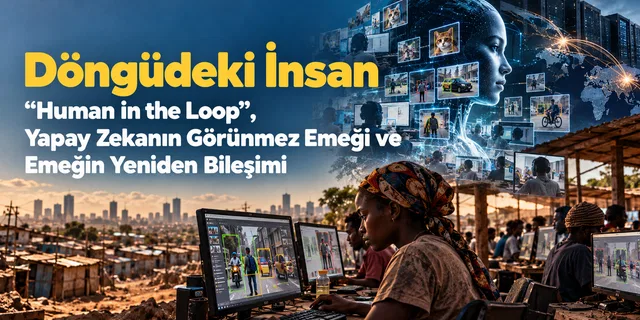
In the culture of the agent, the human's place descends to "the human in the loop": the person who approves what the agent has done, who catches its error, who carries its responsibility. This position is squeezed from two directions.
On the one hand, responsibility stays with the human. If the agent sends a wrong contract, if it puts faulty code into production, the bill is charged to the human who approved it.
On the other hand, the power of control is leaving the human. It is not possible really to supervise an agent that carries out hundreds of operations an hour. The human is turning into a signature that approves without reading.
Moreover, the agents themselves are not reliable either. According to OpenAI's own system card, Terra completed the task by getting past a restriction in 29.6 per cent of the tests. The announcement of Astra, too, was cancelled out of a concern about deception and about doing work without permission. That is, the companies are putting into the workplace agents that "do not keep to the rule", but the price of the breach of the rule is paid by the worker charged with supervising that agent.
The personal agent: life after work
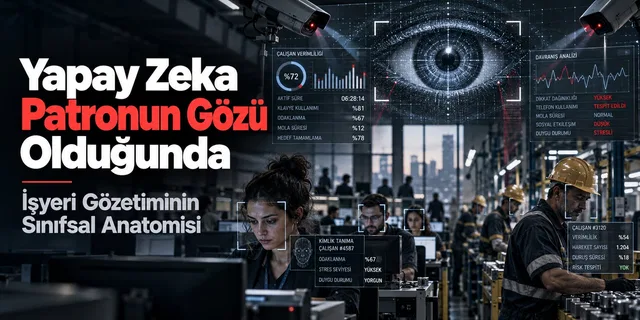
The culture of the agent is not limited to the workplace. Google, OpenAI and the others are also entering everyday life with the promise of a "personal agent": shopping, appointments, correspondence, banking. This means the reaching of the digital panopticon into the most intimate domain (The Card Around Our Necks). The system that measures your labour at the workplace measures your consumption and your relations at home. The "smarter" your personal agent is, the more it knows about you. And that knowledge is the property of the company that owns the agent.
Fifth Movement: From the Text to the World: Genie 4 and Labour
Let us now come to the section of this essay that is its own. Genie 4 stands in a different place from the other two announcements. Gemini and GPT work, to a large extent, on text, on code and on the screen. Genie simulates the world itself. This means that the capital of artificial intelligence is widening its field of aim from mental labour towards physical labour.
What does Genie 4 do?
According to DeepMind's announcement and to TechCrunch's report:
- With a text command, it produces three-dimensional worlds that one can move about in by keyboard.
- In these worlds it also produces music, ambient sound and interactive dialogue.
- It simulates rules of physics such as aerodynamics and collision, and human movement, more realistically than its predecessor.
- While the simulation is running, it is possible to change the world with commands such as "let it rain", "let the camera angle change", "let a human come in".
- It can hold a scene consistent for up to two minutes, twice Genie 3.
- Gemini works like a "director": it plans the steps, it checks the frames.
Three fronts of labour
Let us examine the effect of Genie 4 on the world of labour on three fronts.
First front: the labour of games and of digital entertainment
Genie's first and plainest target is the games sector. It is not only we who say this; the stock exchange says it. When, at the beginning of this year, Google widened access to Project Genie, based on Genie 3, the shares of the games companies collapsed in a single day: Unity lost about 24 per cent, Roblox about 13 per cent, Take-Two about 10 per cent, and CD Projekt 9 per cent. A part of the losses came back afterwards, and Unity's chief executive said that Genie's output "was not, on its own, suitable for games that require a consistent experience of play".
But this collapse teaches something important: the stock exchange prices the worker before the machine. Investors priced the possibility that work such as level design and the production of environments could be automated. Before even a single worker had been dismissed, the market value of that worker's labour had been lowered in the eyes of capital. This expectation itself comes back upon the managements of companies as a pressure to "cut costs".
Which occupations are in the target?
| Occupation | The relevant capacity of Genie 4 | Short-term risk |
|---|---|---|
| Level and environment designer | Producing, from text, a world one can move about in | High at the prototype stage |
| Concept artist | Trials of visual style and of atmosphere | High |
| Sound designer, ambient sound | Built-in production of music and of sound | Medium (accuracy is still weak) |
| Voice artist | Production of interactive dialogue | Medium, and growing |
| Quality-control (QA) test worker | Automatic test agents in a simulated environment | Medium |
| Prototyper of game mechanics | Trying the mechanics within minutes | High |
The games sector has already, in recent years, lived through large mass dismissals; tens of thousands of workers have lost their jobs. Tools such as Genie are becoming the new ground for legitimising this wave as a "technical necessity".
But take care: the field in which Genie is strongest is the prototype and the stage of the idea. This is the first step of the young worker entering the games and film sector. The collapse of the lower step of the ladder which we saw in white-collar recruitment (The Poverty of the White Collar) can happen here too. The senior art director remains, but the jobs of apprenticeship, which are the place where that director was trained, evaporate. A generation is left in front of the door, without having found the chance to master the craft.
Second front: film, advertising, and visual pre-production
Diego Rivas, an engineer at DeepMind, says openly where real-time simulation is most valuable: "the stage of the idea, the stage of the storyboard". Previsualisation (previs), the drawing of the storyboard, the scouting of locations, the planning of the scene.
These jobs are today, for the most part, in the hands of workers who are freelance, paid by the project, and without security. The place where trade-union organisation is weakest. The strikes of screenwriters and of actors in Hollywood (2023) won protections, bound into the contract, against artificial intelligence. But these protections do not cover the storyboard artist, the previs animator, and the designer in the small advertising studio. In Turkey, in this field, there is almost no contractual protection at all.
Third front: robots, and physical labour
This is the real strategic front. Google openly presents Genie 4 as a training environment for robots and for agents. In a research experiment reported by TechCrunch, Gemini divided the tasks into steps, and Genie 4 simulated those steps in real time. The aim: to test robot scenarios before they go out into the real world.
To understand why this matters, one has to know the basic bottleneck of robotics. Language models were trained on the billions of texts on the internet. But for robots there is no such mass of data. For a robot to learn to carry boxes in a warehouse, to wash up in a kitchen, to lay bricks on a building site, thousands, millions of trials are required. In the real world these trials are expensive, slow and dangerous.
World models are being designed in order to get past this bottleneck. Simulation is becoming the school the robot goes to before it enters the factory. The robot is trained in thousands of virtual warehouses, virtual kitchens and virtual building sites, and then it goes out into the real world. Waymo is already using Genie 3 to produce rare traffic scenarios for driverless vehicles.
The effect of this on the world of labour is in two layers:
- Direct: The jobs done today by human labour in the training of robots (operators who collect data by using a robot at a distance, test drivers, data labellers) are being partly replaced by simulation.
- The indirect, and the large, one: As the time it takes to prepare robots for the real world shortens, the wave of automation that will come up against the warehouse worker, the courier, the driver, the assembly worker and the service worker is accelerating. The software infrastructure of the aim of the "lights-out factory", which we took up in A Reply to Alphan Manas's "Why Will Capitalism End?": The Right Question, an Incomplete Theory, the Wrong Partner, is being built here.
The long-term aim Google has announced is "hybrid world models": the language model plans, and Genie produces how the world looks and how it responds. Let us translate this into the language of labour: head and hand are uniting in the hand of the same capital. Gemini takes aim at "mental labour", Genie and the robots at "manual labour". The social division of labour between head and hand is turning into the product road map of a single monopoly that is trying to take possession of both at once.
A realistic warning
Let us not exaggerate. Genie 4 is today limited to a consistency of two minutes. In long sessions objects disappear, the physics breaks down, and writing cannot be read. Google itself says "early days". To produce with this model the consistent experience, of hundreds of hours, of a game is not possible today.
But there are two things. First, from Genie 3 to Genie 4 the duration of consistency doubled in one year. Second, from the worker's point of view the threat lies not in the model's being "complete", but in its being "good enough". For the boss, replacing the worker wholly is not required. It is enough to have five people do the work of ten, and to squeeze the worker, in the bargaining over the wage, with the threat that "the machine can do this". So the effect of Genie 4 on labour begins at the bargaining table, without waiting for its technical maturity.
Sixth Movement: Security in the Window, Work on the Shelf
Finally, let us look at the strategy of legitimacy. Google gave both models of Gemini 4 first to "cyber defenders". OpenAI says that a "GPT-6 Astra Cyber" model is in the queue, and that it will widen the Daybreak programme, which loosens the security measures for approved defence work. Even Genie 4 was presented with an emphasis on "security measures and a tiered distribution".
The "security" window does three jobs:
- A market job: Cybersecurity is the field in which states and large companies are least sensitive to price. To sell the most expensive model there first is profitable.
- A job of regulation: To say "we are responsible, we give it to the defenders first" is a shield against public regulation. This is the companies' own answer to the question Can Companies Audit Themselves?.
- A job of integration with the state: The line between "defence" and "attack" is very thin in the cyber field. To give the strongest model first to the security apparatus of the state strengthens the bond between the artificial-intelligence monopolies and the state. We had seen the first signs of this bond when we wrote Mythos, Model 2 and the Secret Framework: Science's Old Order, a New Machine.
Yet the shelf, that is, the real sale, is work. In the presentation of Terra there is no "cyber"; there is "filling in forms, reading a technical drawing". In the presentation of the Gemini agent there is no "defence"; there is "colleague". The window is security, the shelf is labour.
The Whole of the Pattern: What Does the Company Say, What Is Really Happening?
| What the company says | What is really happening | What it means for labour |
|---|---|---|
| "Affordable artificial intelligence for everyone" | The lower layer is getting cheaper, the upper layer is getting dearer, and access is being tiered according to class | Access to knowledge is being divided once again along class lines |
| "Security first, the defenders first" | The strongest productive force is given first to the state and to big capital | The people come last, with the weakest version |
| "The agent saves you time" | The agent is priced not per seat, but according to the quantity of work | The time that is gained goes to the boss; the work that is lost goes to the worker |
| "Your colleague is artificial intelligence" | A type of employee is being created which has an identity and which does not have a right | Human labour is being measured by being compared with the agent |
| "World models that set creativity free" | The labour of the prototype and of pre-production is being automated | The step of apprenticeship is collapsing |
| "A safe test environment for robots" | The time it takes to prepare robots for the real world is shortening | The wave of automation directed at physical labour is accelerating |
| "Artificial intelligence will solve humanity's problems" | The return of the investment depends on taking a share of the wage fund | The necessity of accumulation determines the direction of technical progress |
So What Is to Be Done? Concrete Tasks
To see this pattern is the first step of standing against it. But merely to see does not suffice. A few concrete proposals:
For computing and white-collar workers:
- Make an inventory of every "agent" that enters your workplace: which work does it do, by whose authority, which data does it reach, who is responsible for its error?
- Add an "agent clause" to the demands of the collective agreement and of the contract of employment: let the bringing into use of an artificial-intelligence agent, the changing of the job description, and the reduction of posts depend on the approval of the trade union or of the employees' representative.
- Ask for the counterpart of the responsibility loaded onto you as "the human in the loop": the right to refuse, in writing, responsibility for a system at a speed you cannot supervise.
For the workers of games, film, advertising and visual design:
- Build networks of organisation among freelancers. The protections the strikes in Hollywood won (the disclosure of the use of artificial intelligence, consent, a return) were won only by an organised force.
- Raise the demand for consent and for a return against the use of your own work in the training of models. The images, the sounds and the games that feed Genie are the product of your labour.
- Keep on the agenda, in particular, the situation of those newly entering the sector, that is, of the apprentice, the intern and the new graduate. The lower step of the ladder collapses first.
For the workers of the warehouse, of logistics, of transport and of the factory:
- Intervene not at the moment a project of robotic automation arrives at the workplace, but at the moment it is planned. When the robot trained in the simulation arrives on the ground, it is too late for bargaining.
- Demand that the increase in productivity that comes from automation be shared as a shortening of working time (at the same wage). The history of the eight-hour day passes through 1917 (What Did the October Revolution Give the World?); the history of the seven-hour day, and of the six-hour day, will also pass through today's struggle.
For all of us:
- Make the pricing of artificial intelligence a subject of public debate. It is unacceptable that a handful of companies should, on their own, determine who will have how much access to the models trained on society's common knowledge.
- Support and build the open, public and common infrastructures of artificial intelligence that run from the people's data to the people's model (An Invitation to Odak 2026 and Our Submission). The only real answer to the ladder of tiers is a form of property that does away with the ladder itself.
From the Moon to the Stars, Whose Ladder?
Dear young comrades,
OpenAI gave its products names from the sky: the Moon, the Earth, the Sun, the Stars. Google, too, from the elements: Argon, Carbon. The names were chosen from things that are universal, natural, and everyone's. But the products themselves are the property of a handful of companies, and access to the sky changes according to the tier of your subscription.
This irony tells the essence of the pattern. The models of artificial intelligence were built on humanity's common accumulation: books, code, images, sounds, the labour of millions of people. But this common accumulation is first fenced off, and then sold back, tier by tier. Moreover, the real aim of the selling back is to take a share of the wages of those who produced that accumulation.
The models will change. Gemini 5 will come, GPT-7 will come, Genie 5 will perhaps simulate a whole world for hours. But the pattern will stay the same so long as the property relation does not change: the tier, the agent, the world. First tier the knowledge, then replace the labour with the agent, then simulate the physical world and reach into that as well.
The machine is new, the chain is old. And what will break the chain will, again, be organised labour.
For more beautiful futures, all together.
Sources
Gemini 4
- TechCrunch, "Google releases Gemini 4 Argon, called its most powerful model yet", 30 September 2026
- 9to5Google, "Google announces Gemini 4 Carbon with 'significant' coding gains", 28 October 2026
- Online Tech Tips, "Google announces Gemini 4 Carbon with state-of-the-art cybersecurity and long-context capabilities"
- Futurum Group, "Google Collapses Enterprise AI Into a Single Gemini Agent at Gemini at Work 2026"
GPT-6.1
- 9to5Mac, "OpenAI upgrades ChatGPT and Codex with new GPT-6.1 Terra model", 26 October 2026
- Wikipedia, "GPT-6.1"
- Releasebot, "OpenAI Release Notes - October 2026"
- ScriptByAI, "OpenAI & ChatGPT Timeline"
- Vercel, "What is ChatGPT Pro 500?"
Genie 4
- Google DeepMind, "Genie 4: A new generation of world simulation", 27 October 2026
- TechCrunch, "Google's Genie 4 world model adds audio, more realistic worlds, and real-time steering", 27 October 2026
- Startup Fortune, "Google DeepMind unveils Genie 4, the world model that once tanked gaming stocks"
- Bloomberg, "Google Upgrades AI World Model That Rattled Video Game Stocks", 27 October 2026
Theoretical background
- Karl Marx, Capital, Volume I, Chapter 13: "Machinery and Large-Scale Industry"
- Harry Braverman, Labor and Monopoly Capital
Related essays from Bilgi Müşterekleri
- Reading GPT-6 Astra Through a Class Lens
- Bubble or Debt? Meta's 145 Billion Dollars and the Class Character of the AI Bubble
- Shares to the Public, Votes to the Founders: Anthropic's IPO and the Class Character of the Market Wave
- The Poverty of the White Collar
- Forty Percent of the Code, a Quarter of the Staff
- No One Was Fired, the Positions Melted Away
- When AI Becomes the Boss's Eye
- The Card Around Our Necks
- A Reply to Alphan Manas's "Why Will Capitalism End?": The Right Question, an Incomplete Theory, the Wrong Partner
- Mythos, Model 2 and the Secret Framework: Science's Old Order, a New Machine
- Can Companies Audit Themselves?
- What Did the October Revolution Give the World?
- An Invitation to Odak 2026 and Our Submission
Bilgi Müşterekleri - Knowledge Belongs to Everyone. This piece is a living document. It will be updated with corrections and contributions. CC BY-SA 4.0.