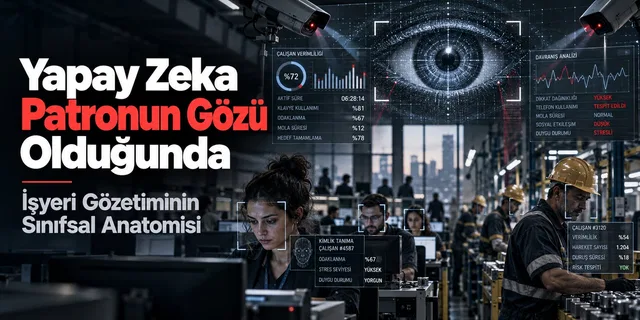
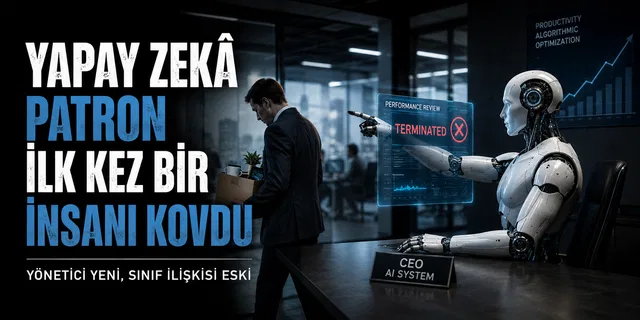
The Week's Class Developments in Technology — 27 October–2 November 2026
Compute at a Record, the Payroll at the Door

The Week's Class Struggle in Technology
27 October–2 November 2026
About this series: Every Monday we gather the developments of the previous week in the world of technology that matter for the class. We look at each heading through three questions: What happened? What does it mean in class terms? Why does it matter for us? We try to see not the news itself but the relation behind the news. This is the fourth issue of the series. You can find the third issue here, the second here and the first here. In this issue we also report what became of the headings we said last week we would keep watching. This issue was expanded on the evening of 1 November 2026 after another pass through the week.
The Week's Class Developments in Technology — Issue 4 · 27 October–2 November 2026
First, a Short Summary
Dear young comrades,
The sentence that holds this week together is this: the money going into compute hit a record, and the payroll was shown the door. Two days before Microsoft reported a quarter in which profit rose 32 per cent, it offered a "voluntary exit" to a quarter of its staff. The same week wrote two further procedures for the cut. Dropbox told about 200 people that today was their last day. On the morning Amazon announced new Alexa products, it sent a layoff message to the device software team. Alphabet, Microsoft and Amazon spent 174 billion dollars in a single quarter on data centres and chips. SK hynix, which sells the memory itself, reported an 80 per cent operating margin and treated the next three years of DRAM and HBM volume as effectively sold. Innodata, which labels the data that trains these models, shut the badges of 550 workers in India in the middle of a shift. Anthropic filed its IPO prospectus: the share to the public, the vote to the founders. In Minnesota a neighbourhood delayed Google's data-centre vote twice; on Friday night the council capped the chamber at 85 people and approved it. In Turkey, 1 November arrived: a social-media account is now tied to e-Devlet verification, the first step of a national identity wallet that will move onto the phone is in the Official Gazette, and the administrative leave of Halk TV workers was extended "until further notice".
The week's table, in brief:
What was left over from last week
- Micron: The second meeting, on 27 October, ended without a deal. The company refused to show the union a sample calculation of the new bonus system. On 28 October the Taoyuan union demonstrated outside the Ministry of Labour against the three-year strike ban in the Taichung agreement. The third meeting is on 6 November.
- Samsung Biologics: On 26 October the union protested at the National Assembly against the appeals court upholding the injunction. Talks restart on 3 December as a "final round".
- AEMO: Workers rejected the company's offer three times. After the last rejection the company took back pay off the table. We still could not confirm the ASU ballot result.
- Activision: After the launch of Modern Warfare 4 we found no public strike decision or contract news.
- Age verification: It came into force on 1 November. The deadline for existing accounts is 31 March 2027.
- Halk TV: After the YouTube and X blocks, on 26 October the site itself and years of archive became unreachable. On 30 October the trustee extended the workers' administrative leave until further notice. Social insurance is being paid. What happens to wages is left to the next payday.
- Astor: We found no new public statement this week about the card.
What is new this week
- Microsoft (26–28 October): A voluntary exit offer to about 60,000 employees, then 36.6 billion dollars in net profit, and GitHub's report that agents initiate 40 per cent of pull requests. We wrote about it.
- Big technology results (28–29 October): Alphabet's free cash flow turned negative for a second quarter in a row. Amazon's capital spending in one quarter was 77.3 billion dollars.
- Dropbox (28 October): About 200 roles, roughly 9 per cent of the global workforce. For most of those affected, the last day was the day of the announcement. The chief technology officer leaves on 18 November.
- Amazon devices (28 October): The company said "a small number of roles". A source who spoke to Reuters said it was no more than 250 people, weighted toward software. The message went out on the morning the new Alexa products were announced. The next evening the company reported 77.3 billion dollars of capital spending.
- Don't Nod (27 October): The French game workers' union STJV wrote that the studio is targeting up to 85 roles through job categories of one person. Those who draw and those who write go. Management stays. The work is to be sent to subcontractors.
- Oakland (27 October): Public-sector computing and technical workers called a one-day strike on 5 November unless an artificial-intelligence clause is written into the contract. The demand: the worker is not liable for the model's output, and the model is not a reason to increase the workload.
- Innodata (26–27 October): The company that labels artificial-intelligence data cut about 550 people in India by closing their system access. There were also cuts in the Philippines.
- Anthropic (26 October): A public S-1. We wrote about it.
- Memory and models: Sam Altman called the RAM sitting in personal computers a "terrible waste", and three model announcements arrived in three days. We wrote both: Whose Is the Memory in Your Computer? and Kademe, Ajan, Dünya: Gemini 4, GPT-6.1 ve Genie 4'te Yapay Zekanın Yeni Örüntüsü. In the same days SK hynix and Samsung reported record quarterly profit. TrendForce wrote that PC DRAM contract prices will rise 13 to 18 per cent this quarter.
- Data centres: In California, Pittsburg city council adopted a 45-day moratorium after neighbourhood objection. In Minnesota, after two postponements, Hermantown council approved the Google project unanimously on the night of 30 October. Eighty-five people were let into the chamber.
- Ports (30 October): Dockworkers in dozens of countries, including Turkey, stopped work against the war economy.
- Turkey: The national digital identity wallet entered the 2027 Annual Programme. Freedom House again gave Turkey 31 points. According to TÜİK, unemployment rose in one month from 7.8 per cent to 8.4 per cent. The energy regulator EPDK lowered the supported household electricity threshold to 3,000 kilowatt-hours.
Below we first recall the technology pieces we published this week, then open each development in detail.
This Week at Bilgi Müşterekleri: Our Technology Pieces
Between 27 October and 1 November we published fifteen pieces on technology, labour, surveillance and the commons. If you missed them, start here.
Artificial intelligence, capital and compute
- Shares to the Public, Votes to the Founders: Anthropic's IPO and the Class Character of the Market Wave (27 October) — Anthropic's flotation and the class of the market wave. Inside a valuation of two trillion dollars, whose labour, whose debt, whose vote?
- ABD Ara Seçimleri, Tekno-Sermaye ve Algoritmik Siyaset (28 October) — The money network, the feed network. When the owners of the platforms take a side in the election, what is built around the ballot box?
- Kademe, Ajan, Dünya: Gemini 4, GPT-6.1 ve Genie 4'te Yapay Zekanın Yeni Örüntüsü (30 October) — We read Gemini 4, GPT-6.1 and Genie 4 side by side. The model is new, the tariff is old: the class anatomy of a price put in the place of a wage.
- Whose Is the Memory in Your Computer? (31 October) — Sam Altman, the RAM crisis and the enclosure of compute. What creates the shortage is not the personal computer. It is the data centre.
Computing labour and the craft
- Beyaz Yakalının Sefaleti (27 October) — The diploma, language, expertise and insecurity. The proletarianisation of office labour in the age of artificial intelligence.
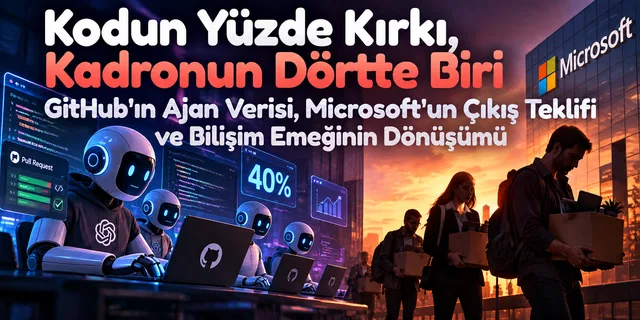
- Forty Percent of the Code, a Quarter of the Staff (29 October) — GitHub's agent figure, Microsoft's exit offer and the profit table in the same week. The labour of writing turns into the labour of supervision.
- The Human in the Loop (29 October) — "Human in the loop" and the invisible labour of artificial intelligence. We train the machine. We should be the ones who own it.
- Whose Is the Machine's Voice? (31 October) — On Martin Fowler's "LLM Voice". To write is to think. The cost of handing thinking over.
- Is This the End of Software Engineering, or the Expropriation of the Craft? (1 November) — Agents, the open-source commons and the ladder pulled up. Is the profession ending, or is the craft being taken?
Commons, openness and philosophy
- Old Questions, New Laboratory: Why Artificial Intelligence Concerns a Philosopher (27 October) — A concrete answer to the friend who says Plato asked these too. The questions are old, but for the first time they have become an experiment.
- Açık Ağırlık, Özgür Model ve Mülkiyet Sorusu (31 October) — We read İzlem Gözükeleş's "The Illusion of Openness" and carried it further. Opening the weights does not free the model.
- A Human-Made Object Is a Light-Day from Earth for the First Time (31 October) — Voyager's forty-nine-year journey and the long breath of common labour.
Surveillance, identity and the bill
- Thirty-One Points: The Freedom on the Net 2026 Report and the Screen Tied to Identity (28 October) — The Freedom on the Net 2026 report and the screen tied to identity. In Turkey the cable is there. The word is not.
- The Class of Three Thousand Kilowatt-Hours (31 October) — The 2027 trap in the electricity bill, and saving by feeling the cold. The detail is below, in the Turkey section.
- The Wallet Is Ours, Whose Is the Key? (1 November) — The national digital identity wallet: what is coming, how it will work, and under whose control.
The Week's Table: The Language of Capital, the Question of Labour
| Development | Capital's language | Labour's question |
|---|---|---|
| Micron, the 27 October meeting | "We are listed in the US, we cannot give the figures" | If I cannot calculate the formula of my own bonus, is this a share, or a lottery? |
| The strike ban in Taichung | "Not a collective agreement, a civil-law agreement" | Who signed that I will not strike for three years, and with what authority? |
| Samsung Biologics | "We are committed to dialogue" | If the court has in practice nullified the strike, with what power is the dialogue held? |
| Microsoft's exit offer | "Voluntary", "a standard severance package" | When profit is up 32 per cent, is a choice that shows a quarter of the staff the door voluntary? |
| Alphabet and Amazon investment | "Demand exceeds capacity" | When cash flow turns negative, who is billed for infrastructure built on debt? |
| Dropbox | "Hard choices", "care and respect" | If there is profit and the last day is today, is this a choice, or the door? |
| Amazon's devices team | "Efficiency", "alignment with the roadmap" | If the message reaches the software staff on the morning the product ships, whose work is the efficiency? |
| Don't Nod | "Safeguard proceedings", "restructuring" | If the category holds one person, is what is cut a trade, or a chosen worker? |
| The Oakland contract | "Multi-year pay rises" | Why do the model's error and the rising pace sit outside the pay clause? |
| Innodata | "A reduction in a line of work" | Does the worker who trained the model learn they are unemployed when the badge goes dark? |
| SK hynix and Samsung | "Demand exceeds supply", "shortage through 2028, through 2030" | If three years of memory are already sold, why is the RAM in a personal computer called waste? |
| The Hermantown vote | "Local approval", "tax revenue" | If the chamber closes at 85 people and the vote comes at midnight, where did the neighbourhood speak? |
| Anthropic's S-1 | "Long-term benefit", "existential risk" | Why does the company that writes the risk into the prospectus close management to the public? |
| Altman and RAM | "Idle capacity", "maximum use in the cloud" | Who creates the shortage, and who pays for it? |
| The Pittsburg data centre | "Investment", "next-generation infrastructure" | Why must a neighbourhood object only afterwards to a plant beside the school, the house and the church? |
| e-Devlet age verification | "Protecting children" | Does protection require tying everyone's account to a state identity? |
| The Halk TV archive | No statement | By whose decision did years of news labour become invisible? |
I. Profit Sharing and the Right to Strike
1. Micron: The Formula Is Secret, the Strike Ban Is Three Years
Date: 25–28 October 2026 · Region: Taiwan · Subject: Semiconductors, profit sharing, the right to strike
What happened? In the previous issue we wrote that the Taichung union had settled with the company, that members in Taoyuan had rejected the offer by 99 per cent, and that the meeting had been postponed to 27 October because of a typhoon. The second meeting, on 27 October, also ended without agreement. As Newtalk reported, the union asked for a sample calculation of the new bonus system, due to start on 1 December, using the financial figures on the company's own site. The company said that, because it is listed in the United States, it could not share material financial figures in that form. The union's lawyer asked which US securities rule this rested on. The company could not answer. The same report notes that selective-disclosure rules do allow information to be shared under a confidentiality agreement. The union says items in the formula, such as the individual performance score and "estimated capital spending for the next quarter", remain unclear. Taoyuan City's labour department was at the table. The third meeting will be on 6 November.
A reminder: under the plan reported by TradingKey, from fiscal 2027 the bonus pool will be calculated by subtracting the next quarter's estimated capital spending from net profit after tax. Half the bonus will be cash, half stock, and the stock portion can be used a year later. The union's demand is 15 per cent of global operating profit.
The real new information came from inside the Taichung agreement. According to PChome's 28 October report, the agreement contains a "peace clause" providing that there will be no strike for three years. The Taoyuan union argues that this breaches the three-year limit in Article 28 of the Collective Agreement Act. The Ministry of Labour said the Taichung text is not an ordinary collective agreement but a general civil-law agreement, so the limit does not apply, and that disputes about the authority to sign must be resolved in the civil courts. The union is worried that the right to strike will hang in the air while a long court case runs. On 28 October the Taoyuan union questioned the legality of the agreement with banners outside the ministry. Mirror Daily's 25 October report says some members of the Taichung union are collecting signatures to withdraw the authority they gave for the agreement. The number of signatures was not disclosed.
The class reading: Last week we said "split the working class plant by plant, sign with the larger one". This week the price of that signature became visible: a three-year strike ban in exchange for a bonus. Profit sharing arrives here not as a right but as the price of giving up the right to strike. Keeping the formula secret is part of the same trade. A worker who cannot see how their own bonus is calculated cannot make that bonus a subject of bargaining. The "stock-exchange rule" is instructive. Capital's duty of transparency toward the investor becomes the excuse for secrecy toward the worker. The same figures are disclosed to the shareholder. They are not disclosed to the worker who produced them.
Why does it matter for us? In Turkey too, collective agreements often arrive together with the language of "workplace peace", if not with an explicit strike ban. In computing there is often not even an agreement. The bonus is given by a one-sided document called "company policy", and taken back by the same document. Micron's story shows this: a bonus whose formula is not written down is not bargaining. It is an administrative favour. A bonus whose formula is written, and taken in exchange for the right to strike, is a mortgage.
2. Samsung Biologics: The Ruling Is Upheld, the Table Is 3 December
Date: 26–30 October 2026 · Region: South Korea · Subject: The right to strike, profit sharing
What happened? In the previous issue we wrote that the union had postponed the three-week strike due on 26 October. On 26 October the union held a press conference at the National Assembly and protested the appeals court upholding the injunction that restricts the strike. In the union's view the ruling "in practice nullifies" the right to strike. A representative of the Federation of Korean Trade Unions (FKTU) made a solidarity statement. According to Money Today's 30 October report, talks restart on 3 December. Union president Park Jae-seong calls this round the "final meeting". He says that if there is no agreement they will strike in stages, and that they have set up a strike fund for members. The union has not yet decided to join the FKTU, but says bargaining is hard as a single-company union and that this can be considered in the longer term. The company criticises the announcement of "a strike after the final meeting" as an attempt to legitimise a strike, and says it remains committed to dialogue. (The report is machine-translated. There are small inconsistencies in the dates, and we note that as we pass it on.)
The class reading: The important sentence of this week is that the company union has begun to discuss joining a federation. When a court cuts back what a strike can do to production, the union of a single plant is left alone. Once the power of the strike is taken out of the plant, the union starts to look for power outside the plant, in the wider organisation of the class. That is the right lesson to draw from a defeat.
Why does it matter for us? In computing too, "in-house representation", an "employee council", a "workplace club" work only up to a point. When the court, the employer and the state are across the table at once, an industry union and federation support are required. The Samsung Biologics workers are learning this by the hardest route.
3. AEMO: Three Rejections, Pay Taken Back, Executive Pay Rising
Date: 30 October 2026 · Region: Australia · Subject: Critical infrastructure, pay, the right to strike
What happened? In the previous issue we wrote that the Fair Work Commission had temporarily suspended some actions by control-room operators. According to a report dated 30 October, Professionals Australia wants a 4.2 per cent rise for this financial year and the next, with a floor tied to inflation. The company's offer caps the rise at 4.2 per cent. Workers rejected the offer three times. After the last rejection the company took the back pay to the start of July off the table. The union calls this punishment. Control-room staff had decided on an indefinite ban on assessing non-critical planned outages, on not attending daily meetings, and on not answering producers' non-urgent questions. The company asked for the action to be suspended on grounds of "catastrophic risk", even power cuts. The Commission accepted only a limited suspension. More than a hundred employees backed a call for chief executive Daniel Westerman to consider resigning. One figure in the same report completes the table: salary and short-term payments to executives were 7.2 million dollars in the twelve months to 30 June. In 2020–21 they were 3.3 million. We still could not confirm the ASU ballot result on the Fair Work Commission's list.
The class reading: The labour that runs the grid is told "no more than 4.2 per cent". In the same institution, executive pay has doubled in five years. When action begins, the action itself is declared a "catastrophe", and back pay becomes an instrument of discipline. The answer to the bargaining of indispensable labour is this trio: a ceiling, a penalty, and "public safety".
Why does it matter for us? Last week we said "AEMO is a rehearsal for the strike debate in computing". This week another scene was added to the rehearsal: using back pay as a bargaining stick. In Turkey too, tying back pay to the condition "if an agreement is reached" is a familiar method in collective bargaining.
4. Activision: Silence After the Launch
Date: 23 October–1 November 2026 · Region: United States · Subject: Game labour, generative artificial intelligence
What happened? In the previous issue we wrote that Call of Duty: Modern Warfare 4 launched on 23 October and that quality-assurance workers had won strike authorisation. While preparing this issue we found no strike called after the launch, no new record of talks, and no contract news. The demands in the CWA's 15 October release still stand: pay, a limit on generative artificial intelligence, the use of subcontractors, and accommodation under disability rights.
The class reading: We said "the moment the lever is heaviest is the moment the game is live". This week that moment passed, and no move is visible in public. That does not mean the union has lost. The authorisation is still in hand. But timing is also a power, and capital tries to wear that power down by stretching the calendar.
Why does it matter for us? The next large update, or the next season launch, is also a moment of leverage. In software too, the release calendar belongs to the boss and to the worker. We will keep watching this heading.
5. Don't Nod: A Category of One, Production Sent Outside
Date: 27 October 2026 · Region: France · Subject: Game labour, subcontracting, the procedure of redundancy
What happened? According to Vertical Slice's 27 October report, Don't Nod, the maker of Life is Strange, opened safeguard proceedings to freeze its liabilities. The company says up to 85 roles in France could go. The studio section of the French game workers' union STJV writes that the list is built by the individual targeting that French law forbids. The union's count: all six animators, all three character artists, 18 of 22 programmers, and 3 of 5 quality-assurance workers are on the list. The union says the company split 140 employees into 47 job categories, and that 23 of those categories contain a single person. A category of one is a partition built either to keep that person or to cut only them. STJV says management staff will stay, and that the project code-named P14 is to be finished through a wide shift to outsourcing. These are the union's claims. We could not find a company reply to them in this issue.
The class reading: At Activision the strike authorisation is in hand and the table is silent. At Don't Nod the table has become a redundancy list. Both are the state of game labour in the same week. Either the lever is not used, or the lever is buried in a legal game of categories. "Restructuring" is here the language of the fear of insolvency. The table the union counted shows whom that fear is written onto. The manager stays. The person who draws and the person who writes go. The work of those who go is handed to a subcontractor. This is the subcontracting we knew before artificial intelligence. The model is added later to the stock of justifications.
Why does it matter for us? In game and software studios in Turkey too, "the role is closing" is often one person closing. Building the category for a single person individualises the argument about seniority and performance. In a collective redundancy, the notice in Article 29 of the Labour Law is the procedure to set against that individualising. If the list comes to you as "performance", ask who of the same title is staying. In Is This the End of Software Engineering, or the Expropriation of the Craft? we opened how subcontracting and the pulled-up ladder work. Don't Nod is that ladder's studio form this week.
6. Oakland: An Artificial-Intelligence Clause in the Contract
Date: 27 October 2026 · Region: United States (California) · Subject: Public-sector computing, the contract, artificial intelligence
What happened? According to Oakland North's 27 October report, members of Local 21 of the International Federation of Professional and Technical Engineers (IFPTE) marched at lunch from city hall to the public library. The union announced a one-day strike on 5 November if talks do not produce a contract. Strike authorisation had been won the previous week. The report describes the union as having 11,000 members. Ware, who works in the information-technology department, says the city's artificial-intelligence policy does not protect the worker. They want two things written into the contract: the worker should not be held responsible for the model's output, and the model should not be an excuse to increase the workload. City spokesperson Sean Maher said they had offered multi-year pay rises. He did not answer the artificial-intelligence clause. SEIU 1021, IBEW 1245 and a managers' association are also at the same table.
The class reading: The clearest contract sentence of this week was written not in the private sector but in a city's computing department. Capital says "efficiency". The worker refuses to have that efficiency written onto their own working time. Who pays if the model makes an error, and whether a faster model grows the staff or the pace of work, is not a technical clause. It is a clause of working time and of responsibility. The pay offer ignoring the artificial-intelligence sentence is a familiar move. Bargaining is squeezed into money. The machine's effect on the working day is dropped from the table.
Why does it matter for us? In public computing tenders in Turkey, and in private-sector contracts, the sentence "uses artificial-intelligence tools" is increasingly entering the job description. If two limits are not written beside that sentence, liability for a faulty output and the rising pace stay with the worker. The 5 November strike is the first test of whether this clause can be won in bargaining. We will write the result in the next issue.
II. The Profit Table, Investment and the Payroll
7. Microsoft: An Exit Offer to a Quarter, Net Profit Up 32 Per Cent
Date: 26–28 October 2026 · Region: United States, Canada, United Kingdom, India · Subject: Employment, software labour, profit
What happened? Three announcements arrived in the same week from the same company, and we read them side by side in Forty Percent of the Code, a Quarter of the Staff. On 26 October, in a note from human-resources executive Amy Coleman, Microsoft offered a "voluntary exit" to about 60,000 employees. The offer covers participating teams in the United States, Canada, the United Kingdom and India, up to level 70. The deadline for a decision is the first week of December. On the morning of 28 October, GitHub's Octoverse report said that more than 40 per cent of pull requests opened in September began as a draft by an artificial-intelligence agent. In March the share was 17 per cent. The same evening the company reported 36.6 billion dollars of net profit for the July–September quarter, up 32 per cent on a year earlier. According to 24/7 Wall St., revenue was 92.3 billion dollars, Azure growth 48 per cent, and quarterly capital spending 45.2 billion dollars. The company guides to more than 50 billion dollars of capital spending next quarter.
The class reading: This is a decision of accumulation, not of crisis. Profit grows, investment grows, the payroll shrinks. Money moves from the person to the machine, from variable capital to constant capital. The word "voluntary" is the name of shifting the risk onto the worker. The company appears not to decide who stays, but everyone knows what the person who stays will meet. Octoverse itself is a confession. Everything the agents "know" was learned from the common labour of 225 million developers. The product of that labour is today used to melt the payroll of the same labour.
Why does it matter for us? In Turkish computing companies too, "voluntary separation", "mutual termination" and ikale are often used as the irregular form of a collective dismissal. Before you sign a mutual-termination contract, ask whether there is a reasonable benefit, a payment on top of severance and notice, and what happens to the right to unemployment benefit after the signature. If a whole team receives an offer, this is not an individual decision. It is a common question.
8. Alphabet and Amazon: 174 Billion Dollars in One Quarter
Date: 28–29 October 2026 · Region: United States · Subject: Capital spending, data centres, debt
What happened? The quarterly results of the large technology companies were completed this week. We read Meta's last week in Bubble or Debt? Meta's 145 Billion Dollars and the Class Character of the AI Bubble.
- Alphabet (28 October): According to 24/7 Wall St., revenue was 127.6 billion dollars, up 25 per cent. Google Cloud revenue rose 103 per cent. Quarterly capital spending was 51.3 billion dollars. Free cash flow was minus 9.1 billion dollars, the second negative quarter in a row. The company covered the gap with 28.7 billion dollars of bonds and 12.4 billion dollars of shares sold into the market. It signalled a "significant increase" in capital spending for 2027. The share fell 11 per cent the next morning.
- Amazon (29 October): According to a summary based on the company release, net sales were 201.9 billion dollars. AWS was 46 billion dollars, up 39 per cent, about the fastest growth in five years. Operating profit rose 61 per cent to 28.1 billion dollars. Quarterly capital spending was 77.3 billion dollars. A year earlier it was 35.1 billion. The guide for 2026 is about 220 billion dollars. Free cash flow over the last twelve months was minus 42.4 billion dollars. A year earlier it was plus 14.8 billion.
The morning before the results evening, on 28 October, there was another cut in the same company's devices unit. As Reuters reported, the company said "we have eliminated a small number of roles". The reason given was "to operate more efficiently" and "to align with the product roadmap". The company did not give a number. A source who spoke to Reuters said the cut was no more than 250 people and weighted toward software development. Text messages and emails went to employees early that morning. The message Reuters saw is from Cherie Robinson in devices and services human resources: the company had carried out "a thorough review of our structure". The same day Amazon announced an Alexa alarm clock and a photo frame. Earlier this month about a thousand office roles were also cut in the retail division.
Add Microsoft's 45.2 billion dollars, and three companies spent about 174 billion dollars of capital in one quarter. Most of it is going to data centres, chips and memory.
The class reading: Two figures have to be read side by side. The first is that the record is in investment, not in profit. The second is that the cash flow of two giant companies has turned negative, and the gap is closed with debt and with new shares. Compute infrastructure is no longer being built with today's profit. It is being built with tomorrow's expectation, and with debt. The question we asked in Bubble or Debt? Meta's 145 Billion Dollars and the Class Character of the AI Bubble became sharper this week. While it inflates, the winners are clear. If it bursts, the bill will be written to the pension funds that hold the bonds, to the household that pays the electricity bill, and to the worker who is dismissed. If it does not burst, the same investment is made in order to be taken back from the wage of the labour it will replace. In both cases the account of the investment is asked of labour.
Why does it matter for us? We explained why memory prices have jumped, and why buying a computer has become harder, in Whose Is the Memory in Your Computer?. The 174 billion dollars is the background of that shortage. The move from the personal device to the cloud, from local compute to rented compute, is part of the plan for this investment to return. The morning message to the devices team is the labour side of the plan: the product is on the shelf, the person who wrote it is at the door.
9. Dropbox: The Last Day Is the Announcement Itself
Date: 28 October 2026 · Region: Global · Subject: Software labour, severance, dismissal
What happened? According to the note Dropbox published on its blog the same day, co-chief executive Ashraf Alkarmi wrote that about 200 roles, roughly 9 per cent of the global workforce, were being eliminated across engineering, product, design, and general and administrative teams. For most of those affected, the last day was the day the note went out. The company says it will not spread the same work across fewer people, and that it will concentrate resources on the product areas of "highest impact". According to the company's 8-K, the cash cost is about 27 to 33 million dollars, mostly severance and benefits. Most of the expense will be recognised in the fourth quarter of 2026. The package is sixteen weeks of pay starting today, plus one further week for each completed year. Eligible people in the United States receive six months of health contribution. The person who leaves can keep one laptop. Chief technology officer Ali Dasdan's last day is 18 November. As The Economic Times reported, Alkarmi also said in the note that the company had remained profitable and had built momentum during the year. Third-quarter results will be reported on 5 November.
The class reading: Microsoft gave people until the first week of December and called it voluntary. Dropbox, the same week, said "today is the last day" and called it care. Both are legal forms of moving the payroll toward the machine and toward a new market. The severance package is not a share of the company. It is the price of the signature. "We will not spread the same work across fewer people" is also a confession: the work does not stop, the number of people doing it falls. In a profitable company, the name of this is not crisis.
Why does it matter for us? In Turkey too, a "today is the last day" practice means copying the payroll, the severance calculation and the equity-vesting letter before access closes. Sixteen weeks plus a week per year is not a universal standard. It is the ceiling that remains where there is no bargaining. International packages change with local law. Compare the floor in your own country not with the sentence in the note, but with the severance and notice in the Labour Law.
10. Innodata: The Badge of the Worker Who Trained the Model Went Dark
Date: 26–28 October 2026 · Region: India, the Philippines · Subject: Data labour, dismissal
What happened? According to Inc42's 28 October report, US-based Innodata dismissed about 550 employees in India on Monday 26 October, about 5 per cent of its global staff. Employees had logged in and been marked present in the morning. Around noon, access to company identities and internal systems was closed one by one. While workers were asking managers and human resources, termination emails arrived at personal addresses. The email gives "a reduction in a line of work" as the reason and says the decision had nothing to do with individual performance. The final payment will be made after company property is returned. There was also a cut of undisclosed size in the Philippines. Innodata provides data labelling, model training, evaluation and safety testing. It counts Google, Microsoft and Amazon among its customers. As TIKR reported, the two largest customers made up 71 per cent of second-quarter revenue. The share fell 28 per cent on 27 October. The company will report third-quarter results on 5 November.
The class reading: We published The Human in the Loop on 29 October. The Innodata news became the live example of that piece. The labour behind the model's "polite and correct" answer is the most fragile labour. One customer closing one project means the badges of hundreds of people, thousands of kilometres away, going dark at noon. Customer concentration is also a class fact. If 71 per cent of revenue comes from two customers, the worker's fate is tied to one board decision of those two monopolies. Remember that the same week those monopolies invested 174 billion dollars in a quarter. Money flows to compute. The labour that prepared the data is switched out with one click.
Why does it matter for us? The same labour exists in Turkey, in call centres, in content moderation, and in remote advertisements for "artificial-intelligence training". Much of it is by project, much of it subcontracted, much of it without a contract. What remains in the hand of a worker dismissed by having their access closed? A written contract, a payslip, and the employer's identity. Asking for these at the start is the precondition of seeking a right later.
III. Who Owns Compute
11. Anthropic: The Share to the Public, the Vote to the Founders
Date: 26 October 2026 · Region: United States · Subject: The flotation, governance, artificial-intelligence capital
What happened? On 26 October Anthropic filed a public S-1 prospectus. The shares will trade on Nasdaq under the ticker ANT. The offering is expected in mid-November. We read it in detail in Shares to the Public, Votes to the Founders: Anthropic's IPO and the Class Character of the Market Wave. The valuation target reported in the press is 1.5 to 2 trillion dollars. First-half revenue was 16.3 billion dollars. There are compute contracts with Google, Amazon, Microsoft and SpaceX of up to 637 billion dollars, of which 430 billion is firm. Against the Class A share sold to the public, a single Class F share gives a partnership of seven founders 50.1 per cent of the votes. With the Class T share, the Long-Term Benefit Trust elects a majority of the board. The prospectus also writes, as a risk item, that advanced artificial intelligence could produce "catastrophic or existential risks".
The class reading: Going public is here not the opening of ownership to the public. It is the opening of risk to the public. Capital is collected. The decision is not. The parties to the compute contracts are also the investors. The productive force grows inside a circle that a few companies turn among themselves. The expectation the valuation rests on is not today's profit. It is how much of tomorrow's labour will be handed to the machine.
Why does it matter for us? Pension and index funds will buy this share. Workers' savings will carry the risk of a company in whose management they have no say at all. The enthusiasm of "let us buy the share and get rich too", and the pessimism of "let the bubble burst", both miss the question. The question is this: why is so large a social productive force tied to so narrow a vote?
12. Altman's Memory, Sold Production, the Tiers of the Models
Date: 26–31 October 2026 · Region: Global · Subject: Compute, price, the personal computer
What happened? Two movements arrived in the same week. The first was OpenAI chief executive Sam Altman, on the Cheeky Pint podcast, finding it "pretty terrible" that the world's scarce DRAM supply "sits in everyone's own computer, used five per cent of the time". As we recalled in Whose Is the Memory in Your Computer?, OpenAI's preliminary agreements with Samsung and SK hynix for Stargate can reach 900,000 DRAM wafers a month, about 40 per cent of global output. The second was three model announcements in three days: OpenAI's GPT-6.1 Terra on 26 October, Google DeepMind's Genie 4 on 27 October, and Gemini 4 Carbon on 28 October. We read them side by side in Kademe, Ajan, Dünya: Gemini 4, GPT-6.1 ve Genie 4'te Yapay Zekanın Yeni Örüntüsü: on the lower tier the token price falls, on the upper tier the subscription gets more expensive, and the strongest model goes first to partners, then to everyone.
The third is the results of those who make the memory. On 28 October SK hynix reported third-quarter revenue of 104.6 trillion won and operating profit of 83.3 trillion won. The operating margin was 80 per cent. Revenue passed 100 trillion won for the first time. Counting long-term contracts together with demand still under negotiation, the company said DRAM and HBM volume through 2029 is effectively sold. Contracts signed with fourteen large customers tie more than half of 2027 and 2028 capacity. The same release also says about 100 trillion won of shareholder returns will be carried out this year. In CNBC's dollar equivalent, revenue is about 79 billion dollars. On 29 October Samsung reported revenue of 195.3 trillion won and operating profit of 107.4 trillion won. The semiconductor division's operating profit was 106.5 trillion won. The DX division, which covers consumer electronics and mobile devices, posted a loss of 0.8 trillion won. The company said the memory shortage could last through 2028, and that next year's HBM supply is already sold out. According to the TrendForce estimate reported by E-Daily on 30 October, PC DRAM contract prices will rise 13 to 18 per cent this quarter. In October the average contract price of an 8 GB DDR5 module rose 24 per cent in a month, to 165 dollars. Laptop shipments are a demand expected to fall 9 per cent in the same quarter. The price is rising not because personal computers are not being sold, but because the wafer is being reserved for the server.
The class reading: The language of "idle capacity" is the language of those who enclosed the peasant's land by calling it "used inefficiently". The personal computer is the last general-purpose computing tool left in an ordinary person's hands. Gathering its memory into the cloud means taking compute out of being property and turning it into a rent. In the same week, when three years of that memory's production have been sold to cloud customers, a shareholder return has been announced, and the price of the PC module has risen, the word "waste" is instructive. What is called waste is the last stock left in the hands of the worker and the student. Samsung's device division posting a loss while the memory division posts a record shows the same split. The labour that assembles the device and the price of the memory came apart this quarter. The tiers of the models are the price side of the same logic. The price of the model is set not by what it costs to produce, but by the wage of the labour it will replace.
Why does it matter for us? Running a local model, using open-weight models on one's own machine, is no longer only a technical curiosity. It is a stance on property. But as we wrote in Açık Ağırlık, Özgür Model ve Mülkiyet Sorusu, opening the weights does not free the model. Whoever holds the data, the training and the compute holds the decision.
13. A Pause in Pittsburg, a Midnight Approval in Hermantown
Date: 26–31 October 2026 · Region: United States, Australia · Subject: Data centres, local objection
What happened? According to NBC Bay Area's report of 26 October, Pittsburg city council unanimously adopted a 45-day, extendable moratorium on the next two phases of the Avaio data-centre project planned for the former Delta View golf course. The first phase, approved in 2024, is not affected. Residents raise health concerns and the plant's closeness to homes, a school and a church, and say the decision "is not enough". Objectors also oppose a state bill they fear could ease the environmental review of some data-centre projects.
The same week, in Hermantown, Minnesota, the picture turned the other way. According to MPR's reports of 27 and 28 October, hundreds of people filled the city hall on Monday night for Google's project outside Duluth. After two hours of "let us speak" and "shut it down", the council put the vote off to Tuesday. The Tuesday meeting was cancelled on the grounds that it would split a chamber used for early voting. The vote was moved to Friday. On Friday night 85 people were let into the chamber, the overflow room was closed, and the meeting could be watched online. According to MPR's 31 October report, after four hours of public comment the council, toward midnight, unanimously approved a project of about 158,000 square metres, on land of more than 200 acres (about 800 dönüm), asking for 500 megawatts of electricity. The cost of the first phase is reported as 650 million dollars. In the weeks before the vote Google had dropped a request for property-tax relief of up to 80 million dollars. The local approvals are complete. Three lawsuits continue. The state regulator also has to approve the electricity agreement.
In the same days a coalition in Philadelphia asked for a citywide moratorium before a task-force report due in the summer. In the Adelaide Hills in South Australia, on 31 October, a neighbourhood held its own rally against a 1,200-megawatt artificial-intelligence data centre. The company postponed its consultation meetings to 20 and 21 November without having filed an application.
The class reading: Last week we wrote that capital told the British government "you have a year to manage the protest". This week four scenes came out of that year. In Pittsburg the first phase does not stop, and the next phase waits 45 days. In Hermantown the neighbourhood has the vote delayed twice, and the council shrinks the chamber and approves at midnight. In Philadelphia the moratorium is stuck on the excuse of a report. In Adelaide there is no application yet, and there is already an objection. A delay is not a victory. Victory begins when the planning permission stops while the public is at the table. The 174 billion dollars above is landing on these golf courses, fields and neighbourhoods.
Why does it matter for us? Data-centre incentives are widening in Turkey, and environmental-impact procedures are already weak. The objection has to be made at the planning stage, not after the foundation is poured. That requires an organised circle that watches the plan, reads the document and talks with the neighbourhood.
IV. A Reminder from Logistics
14. The Ports Stopped Against the War Economy
Date: 30 October 2026 · Region: The Mediterranean, Europe, Turkey and beyond · Subject: Port labour, militarism
What happened? According to the AP report carried by ABC News, on 30 October there were strikes and actions in more than a hundred ports, on a joint call by unions in France, Italy, Greece, Spain, Turkey and Morocco. The demands: an end to the wars in the Middle East and to the war in Gaza, and that ports not be used to carry weapons, ammunition and soldiers. Piraeus, Genoa, Trieste, Le Havre, Marseille and Istanbul Haydarpaşa are among the ports named in the report. According to Evrensel's 23 October report, Liman-İş in Turkey had decided on action at the ports of Mersin, Gemlik and Istanbul, and Limter-İş, affiliated to DİSK, joined. Among the demands were cutting relations with Israel and moving war budgets to social rights, education and health.
The class reading: This is not directly a technology story, but it is the clearest example of whose hands the supply chain is in. The data centre's chip, its server, and the war's ammunition all pass through the same ports. The labour that can stop the chain can also have a say in what the chain will carry.
Why does it matter for us? In computing too, one cannot say "we only write code". The code of surveillance software, of targeting systems, of border-control infrastructure also comes from someone's hands. The computing equivalent of the dockworker saying "I will not carry this load" is an organised power that can say "I will not write this system".
V. From Turkey
15. 1 November: The Account Is Now Tied to e-Devlet
Date: 1 November 2026 · Region: Turkey · Subject: Identity, surveillance, youth
What happened? The regulation we put on the watch list in the previous issue came into force today. According to Cumhuriyet's 1 November report, the "Regulation on the Provision of a Separated Service Specific to Children by Social Network Providers and on Age Verification", prepared by the Presidency's Cyber Security Directorate, had been published in the Official Gazette on 10 October. Domestic and foreign social networks reached from Turkey will not open accounts for those under 15. Age will be verified with a digital key produced through e-Devlet. The key will show only whether the user has passed 15 and 18. For accounts opened before the regulation and not verified, the deadline is 31 March 2027. Accounts found to belong to someone under 15 will be closed after notice. Accounts of those aged 15 to 17 will be private by obligation, will be able to receive messages only from accounts they follow, will not be able to broadcast live, and these users' data will not be usable for profiling and personalised advertising. Parents will be given tools such as time limits and spending approval. We found no decision that reached the public this week in the Freedom of Expression Association's case at the Council of State.
The class reading: The regulation has two faces, and both have to be seen together. On one side there are clauses that limit platform capital, such as the ban on profiling young people's data for advertising. Those clauses should be defended, and their extension to adults should be demanded. On the other side, a door opens that ties everyone's account to the state's identity infrastructure. The sentence "only the age information goes" describes the system's design today, not its use tomorrow. Where the record of which account was verified with which identity will be kept, who will reach it, and how long it will be stored, is not public. As we wrote in Thirty-One Points: The Freedom on the Net 2026 Report and the Screen Tied to Identity, Turkey's score on user rights is 7 out of 40. On that table, the screen tied to identity can be a new layer of censorship.
Why does it matter for us? Computing workers are employed in the teams that build, integrate and test this system, in platform companies, at integrators, in the public sector. Minimising the data, not keeping a record, and independent audit are demands a technical team can raise in a design meeting. Those demands have to be taken out of being a matter of individual conscience and put on the agenda of the professional organisation and the union.
16. Identity Moves onto the Phone: the 2027 Annual Programme
Date: 27 October 2026 · Region: Turkey · Subject: Digital identity, state infrastructure
What happened? A short measure entered the digital-state section of the Presidency's 2027 Annual Programme, published in the Official Gazette on 27 October. As Mehmet Taşnikli reported on Türk İnternet, a prototype of a national digital identity wallet that will hold identity and diploma documents together will be developed in 2027 and tested at a university whose name is not given. The priority users are public employees. The responsible institution is the Cyber Security Directorate. The institution it works with is the Ministry of the Interior. We opened the subject across all its technical layers in The Wallet Is Ours, Whose Is the Key?. In the Freedom on the Net 2026 report published on 22 October, Freedom House again gave Turkey 31 points out of 100 and again counted the country "Not Free". The report carries last week's date. This week we read it beside the identity wallet.
The class reading: Age verification and the identity wallet are separate legislation, the same direction. The same institution runs both. Technology does not by itself either liberate or enslave. The same cryptography can produce an age proof that cannot be traced, and it can keep a ledger that records every login. Which one is built is decided by who sets the priorities. Today a security institution sets those priorities. The first test subjects are public employees.
Why does it matter for us? For public-employee unions this is directly a workplace matter. Will the pilot be compulsory, which data will enter the wallet, and on what condition will the state, as employer, reach this wallet? The prototype stage is the only time these questions can be asked.
17. Halk TV: The Block Reached the Archive, the Wage Reached Uncertainty
Date: 26 October 2026 · Region: Turkey · Subject: Censorship, news labour
What happened? In the previous issue we wrote that the YouTube block had moved from the username to the channel identity. According to Karar, drawing on Anadolu Agency's 26 October report, this time the channel's website and years of news archive became unreachable. Since the trustee appointment on 14 October, no new content had been published on the site. Now past news, special files, interviews and columns cannot be viewed. It is not known whether the outage is technical or administrative, whether the archive was deleted, or whether it was backed up. The same report recalls that a new block was placed on the YouTube channel, with 2.6 million subscribers, on 23 October by channel identity, and that the X account, with about 3 million followers, was made invisible from Turkey on 21 October.
On 30 October the trustee suspended the workers' situation as well. As Evrensel reported, the message from the TMSF administration extends administrative leave "until further notice". Unless a unit manager says otherwise, the leave continues. Press workers who spoke to the paper said social insurance continues to be paid, and that payment will become clear on next month's payday. According to Cumhuriyet's report the same day, the one-week leave of 16 October became indefinite with this message. This is not an announcement of dismissal. It is the wage and the day of return not being written down.
The class reading: Censorship targeted first the broadcast, then the account, then the channel identity, and now the past. The archive is the accumulated form of the common labour journalists produced over years. If under a trustee this accumulation can be withdrawn from the public by a single management decision, the owner of the news is not the worker who produced it. It is the power that holds control of the company. The same week the worker themselves was also left outside the working day by a sentence that says "until further notice". The archive is dark. The wage is uncertain. The method is not to fire. It is to make people wait.
Why does it matter for us? In Questions for Press Workers: Without Organisation There Is No Way Forward we said "the blocked account has to be archived, and that is not enough". This week it was seen that the archive was not protected either, and that the wage of the labour that produced the archive was also left uncertain. Independent archives, mirrors and common digital libraries are for this reason a matter of the knowledge commons. The product of news labour should be kept under the common control of those who produce it and those who read it.
18. Unemployment at 8.4 Per Cent, the Electricity Limit at 3,000 Kilowatt-Hours
Date: 27–30 October 2026 · Region: Turkey · Subject: Employment, white-collar work, energy
What happened? On 27 October TÜİK released the September labour-force figures. As we reported in Beyaz Yakalının Sefaleti, unemployment rose in one month from 7.8 per cent to 8.4 per cent, youth unemployment to 14.8 per cent, and the idle labour-force rate was 31.2 per cent. These figures came after the general manager of Michael Page Turkey told Bloomberg HT that they were seeing a 32 per cent fall in white-collar hiring. That figure is one company's observation of its portfolio, not the country's statistic, but it should be taken seriously as a sign. On 30 October EPDK lowered the last-resort supply threshold for household electricity from 4,000 kilowatt-hours to 3,000. As we explained in The Class of Three Thousand Kilowatt-Hours, about 6.5 million household subscribers, 14.7 per cent of households, will move to the unsupported tariff in 2027.
The class reading: The reason we take both stories under a technology heading is this. The bill for the contraction in white-collar work is written onto technology's fate under the heading "artificial intelligence", while cost pressure and the gap of the exchange rate and inflation stay invisible. In electricity too, the household's consumption is limited while, in the world, the load data centres draw from the grid grows. Last week we wrote about the deputy minister in India who said households should not have to compete with data centres for electricity. There is no figure in Turkey that draws this link directly, but the question is in the right place: who will use the electricity, and at what price?
Why does it matter for us? For the office worker, the unemployment figure is not an abstract rate. It means a higher seniority condition in the job advert, unpaid work in exchange for an internship, full-time work under the name "part-time". In the household budget it is the winter bill. The two are the two ends of the same table.
The Common Class Meaning of These Developments
First axis: the right to strike in exchange for a bonus
At Micron, profit sharing arrived through an agreement whose formula is secret and which is tied to a three-year strike ban. At Samsung Biologics the court ruling was upheld, and the union began to look for power outside the plant, in the federation. At AEMO, back pay became a bargaining stick. At Don't Nod the redundancy list was split into categories of one person. In Oakland the public computing worker said they would not leave the table without an artificial-intelligence clause in the contract. From East Asia to California, the same method: appear to accept the share or the pay, but take in exchange the power of the strike and of working time.
Second axis: a record in investment, a melting payroll
Three companies invested 174 billion dollars in one quarter. The cash flow of two of them turned negative, and the gap was closed with debt. The same week Microsoft offered an exit to a quarter of its staff, Dropbox declared today the last day for 200 people on the day it said it had remained profitable, Amazon sent a message to the software team on the morning it announced a new device, and Innodata closed at noon the badge of the worker who prepared the data. Money flows from labour to compute. This is a decision of accumulation, not of the technology.
Third axis: the ownership of compute
At Anthropic, capital is opened to the public and the decision is not. Altman calls the memory in a personal computer "waste". The same week SK hynix treats three years of DRAM and HBM volume as sold, and the price of the PC module rises. The tiers of the models give the strongest tool to capital first. In Pittsburg the neighbourhood wins 45 days. In Hermantown the neighbourhood has the vote delayed, and the council cuts the chamber to 85 people and approves at midnight. In all of them the same question: whose property is computing power, and whose rent?
Fourth axis: the screen tied to identity, the archive switched off
On 1 November the social-media account was tied to e-Devlet verification. On 27 October the first step was taken of the wallet that will carry identity onto the phone. On 26 October a news channel's archive became unreachable. On 30 October the administrative leave of the workers who produced that archive was extended until further notice. Freedom House's 31 points is the common table of these stories: access exists, the word does not; identity is compulsory, the past can be erased, and the wage depends on an order.
What We Will Watch Next Week
| Date | Development | Why we are watching |
|---|---|---|
| 2 November | Apple's September-quarter results | How far will the cost of memory cut into gross profit? |
| 3 November | The US midterm elections | How will the super PACs of techno-capital, and the platforms' feeds, show up in the result? |
| 5 November | A one-day strike in Oakland | Will the artificial-intelligence clause enter the contract, or will the pay offer go on ignoring it? |
| 5 November | Dropbox's third quarter and Innodata's results | Will the profitability sentence be confirmed by the results, and which customer closed which payroll? |
| 6 November | The third Micron–Taoyuan meeting | Will the formula be disclosed, and will the strike-ban clause in Taichung be tested in law? |
| Mid-November | The Anthropic flotation | Will there be a change in the price, the number of shares, or the governance structure? |
| First week of December | The last day of Microsoft's exit offer | How many people will leave, and will a compulsory cut follow? |
| 3 December | Samsung Biologics, the "final round" | The decision on a staged strike and on joining the FKTU |
| Continuing | Age verification | How the platforms apply it, the Freedom of Expression Association's case, and where the records are kept |
| Continuing | AEMO | The ASU ballot result and the final decision on the suspension application |
| Continuing | Activision QA | Whether the strike authorisation will be used, and the artificial-intelligence clause |
| Continuing | The Pittsburg moratorium and the Hermantown lawsuits | Will the 45 days be extended, and will the three lawsuits stop the local approval? |
| Continuing | The Halk TV archive and administrative leave and the Astor card | What becomes of the archive and the wage; the answer of the worker, the union and the ministry |
Concrete Tasks: What Falls to Us
- Do not answer a "voluntary separation" offer alone. If your team receives a collective offer, read together the content of the mutual-termination contract, the reasonable benefit, and the consequence for unemployment benefit. Microsoft's word "voluntary" showed this week what it covers.
- Ask for the bonus formula in writing. If the formula is "company policy", ask for its text, the items used in the calculation, and the conditions on which it can be taken back. The formula hidden at Micron, and the strike ban, show what an unwritten bonus can become.
- Copy the document before access closes. At Innodata the badge went dark at noon, at Dropbox the last day was the announcement itself, at Amazon the message went in the morning. The contract, the payslip, the severance calculation and the equity-vesting letter may not remain in your hands after that moment. Building a network among people who work by project is the first step of union organising.
- Talk about 1 November, and document it. Record what the platforms ask of you in the age-verification process, and which data they take. If you are on a team building this system, put in writing the demands for data minimisation, for not keeping a record, and for independent audit.
- If you are a public employee, put the identity-wallet pilot on your union's agenda. The questions of compulsion, of the scope of the data, and of employer access cannot be asked later if they are not asked at the prototype stage.
- Archive, and ask about the wage, but not alone. At Halk TV the archive went dark and administrative leave was left until further notice. Both the product of news labour and the wage of the person who produces it were tied to a single management sentence. Support independent archive efforts. Write the uncertainty of seniority and wages for press workers on leave onto the union's agenda.
- Ask the data-centre and energy question locally, together. Wherever the water, the electricity and the planning document of a plant proposed in your area are, read them before the foundation is poured.
- Write into the contract the place where artificial intelligence increases your work. Public computing workers in Oakland demanded exactly this, this week: the worker should not be held responsible for the model's output, and the model should not be an excuse for the workload. If those two sentences are not in your contract, put them at the head of the union's demands.
- Correct this digest. If you have a document from the 5 November Oakland strike, the 6 November Micron meeting, the AEMO ballot, or the first days of age verification in Turkey, write to us. This series grows by common labour.
Not Opposition to Technology, but a Say over Technology
Dear young comrades,
This week the unionist in Taoyuan asked for the formula of their own bonus and received the answer "stock-exchange rule". At Microsoft, sixty thousand people were brought to the front of a "voluntary" door. At Dropbox, the last day was the day the note went out. In India, the worker who trained the model understood they were unemployed when the badge went dark at noon. In Hermantown, when the neighbourhood had the vote delayed, the council shrank the chamber and approved at midnight. In Turkey, a fifteen-year-old and a forty-year-old worker alike had to tie their social-media account to the state's identity system. At Halk TV the archive went dark, and the labour that produces the wage was left until further notice. The same week three companies bought 174 billion dollars of computing power in one quarter. Three years of memory production were sold in advance as well.
We produce this technology, we train it, we operate it, and we pay its bill. The question is not against technology. It is about whose hands it is in, under whose control, and to whose benefit. If the formula is secret, if the right to strike is traded for a bonus, if the payroll is melted under the name of "voluntariness", and if identity is tied to the screen, the answer is not in an individual way out. It is in the common tie made with the friend at the next desk, with the dockworker, and with the worker who labels the data.
Until we meet again next Monday.
Knowledge belongs to everyone.
Pieces We Have Linked
Previous issues of the series
- The Week's Class Developments in Technology — 20–26 October 2026
- The Week's Class Developments in Technology — 13–19 October 2026
- The Week's Class Struggle in Technology
Pieces we named in this issue
- Forty Percent of the Code, a Quarter of the Staff
- The Human in the Loop
- Shares to the Public, Votes to the Founders: Anthropic's IPO and the Class Character of the Market Wave
- Whose Is the Memory in Your Computer?
- Kademe, Ajan, Dünya: Gemini 4, GPT-6.1 ve Genie 4'te Yapay Zekanın Yeni Örüntüsü
- Açık Ağırlık, Özgür Model ve Mülkiyet Sorusu
- Bubble or Debt? Meta's 145 Billion Dollars and the Class Character of the AI Bubble
- Thirty-One Points: The Freedom on the Net 2026 Report and the Screen Tied to Identity
- The Wallet Is Ours, Whose Is the Key?
- Beyaz Yakalının Sefaleti
- The Class of Three Thousand Kilowatt-Hours
- Questions for Press Workers: Without Organisation There Is No Way Forward
- ABD Ara Seçimleri, Tekno-Sermaye ve Algoritmik Siyaset
Computing workers and organising
- The Tech Worker's Handbook (Guides page)
- Is This the End of Software Engineering, or the Expropriation of the Craft?
- No One Was Fired, the Positions Melted Away
Sources
1. Micron
- Newtalk, the second Taoyuan meeting ending without a result, 28 October 2026
- PChome / iMedia, the Taichung and Taoyuan split, the strike-ban clause and the Ministry of Labour's view, 28 October 2026
- Mirror Daily, Taichung members collecting signatures to withdraw authority, 25 October 2026
- TradingKey, details of Micron's bonus plan, 23 October 2026
2. Samsung Biologics
- The Asia Business Daily, "Court Ruling Effectively Nullifies Right to Strike", 26 October 2026
- Money Today, talks restarting in December, and the FKTU discussion, 30 October 2026
3. AEMO
- NZCity / AAP, "Claims of 'catastrophic' risks as AEMO pay talks short circuit", 30 October 2026
- Fair Work Commission, the published list of ballot results
4. Activision
- CWA, "Activision Quality Assurance workers vote to authorize strike", 15 October 2026
5. Don't Nod and Oakland
- Vertical Slice, the claim of individual targeting at Don't Nod, 27 October 2026
- Oakland North, the city's technical workers announce a one-day strike, 27 October 2026
6. Microsoft
- GeekWire, Microsoft's voluntary exit offer, 26 October 2026
- CNBC, Microsoft's voluntary exit offer, 26 October 2026
- Developer Tech, GitHub Octoverse and agents' pull requests, 28 October 2026
- Yahoo Finance, Microsoft's first-quarter profit, 28 October 2026
7. Alphabet and Amazon
- 24/7 Wall St., "Alphabet Sinks 11% as AI Spending Pushes Cash Flow Negative Again", 29 October 2026
- Data Studios, a summary of Amazon's third-quarter results, 29 October 2026
- Amazon, "Amazon.com Announces Third Quarter Results"
- Reuters, via StreetInsider, the cut in the devices unit, 28 October 2026
8. Dropbox
- Dropbox, the note on organisational changes, 28 October 2026
- Dropbox, the 8-K, the cost of the exit, 28 October 2026
- The Economic Times, the note as reported, and the technology chief's departure, 28 October 2026
9. Innodata
- Inc42, "Innodata Lays Off Nearly 550 Employees In India", 28 October 2026
- TIKR, the share fall and customer concentration
11 and 12. Anthropic, memory and models
- Anthropic, the S-1 announcement, 26 October 2026
- Bilgi Müşterekleri, Shares to the Public, Votes to the Founders: Anthropic's IPO and the Class Character of the Market Wave, 27 October 2026
- Bilgi Müşterekleri, Whose Is the Memory in Your Computer?, 31 October 2026
- Bilgi Müşterekleri, Kademe, Ajan, Dünya: Gemini 4, GPT-6.1 ve Genie 4'te Yapay Zekanın Yeni Örüntüsü, 30 October 2026
- SK hynix, third-quarter results, 28 October 2026
- CNBC, SK hynix third-quarter profit, 28 October 2026
- Samsung, third-quarter results, 29 October 2026
- E-Daily, the TrendForce PC DRAM price estimate, 30 October 2026
13. Data centres
- NBC Bay Area, the Pittsburg data-centre moratorium, 26 October 2026
- MPR News, the Hermantown vote postponed, 27 October 2026
- MPR News, the midnight approval in Hermantown, 31 October 2026
- Philadelphia Magazine, the call for a data-centre moratorium, 29 October 2026
- ABC News, the Adelaide Hills data-centre protest, 31 October 2026
14. Ports
- ABC News / AP, "Dockworkers stage international strikes to denounce arms shipments", 30 October 2026
- Evrensel, "Liman işçileri 30 Ekim'de savaş ekonomisine karşı iş bırakacak", 23 October 2026
15–18. Turkey
- Cumhuriyet, "The age-15 limit on social media has begun", 1 November 2026
- Freedom of Expression Association, "No social media without identity from 1 November", 13 October 2026
- Türk İnternet, Mehmet Taşnikli, the national digital identity wallet
- Freedom House, Freedom on the Net 2026, 22 October 2026
- Karar / AA, "Halk TV's archive was also darkened", 26 October 2026
- Evrensel, "Wage uncertainty continues at Halk TV under the trustee", 30 October 2026
- Cumhuriyet, "The Halk TV trustee extended the workers' administrative leave", 30 October 2026
- Bloomberg HT, the Michael Page Turkey interview, 10 October 2026
- Anadolu Agency, EPDK changes the last-resort supply limit, 30 October 2026
- Evrensel, "Chipped tracking of workers at Astor", 25 October 2026
This piece is issue 4 of Bilgi Müşterekleri's series "The Week's Class Developments in Technology" (week 45 of 2026). It is a living document and may be updated with corrections and additions. It is shared under a CC BY-SA 4.0 licence.