The Week's Class Developments in Technology — 13–19 October 2026
The Profit Is Ours, the Decision Is Theirs

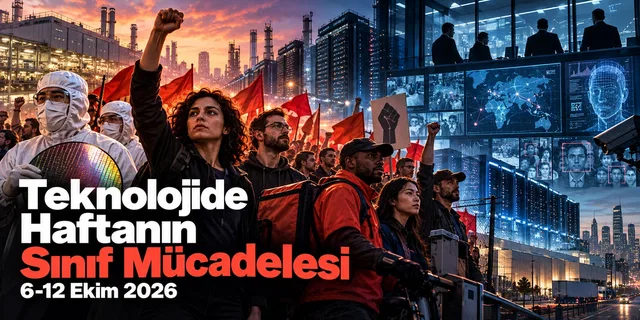
The Week's Class Struggle in Technology
13–19 October 2026
About this series: Every Monday we gather the developments of the previous week in the world of technology that matter for the class. We look at each heading through three questions: What happened? What does it mean in class terms? Why does it matter for us? We try to see not the news itself but the relation behind the news. This is the second issue of the series; you can find the first issue here. In this issue we also report what became of the headings we said last week we would "keep watching".
The Week's Class Developments in Technology — Issue 2 · 13–19 October 2026
First, a Short Summary
Dear Young Comrades,
If we had to fit this week's fifteen developments into a single sentence, we would say this: As the profit from artificial intelligence grows, so does the question of whom that profit belongs to, and capital gives the same answer to that question everywhere: "Not to you." The chip worker in Taiwan asks for a share of the profit; the government says "come to an agreement". The games worker in the United States forms a union; the company says "we are not neutral". In Oregon people do not want to give their water and electricity to data centres; Amazon makes donations to politicians. In Turkey, meanwhile, the state is tying access to social media to e-Devlet identity and blacking out opposition accounts one by one.
The week's picture, in short:
Asia — the profit-sharing front
- Taiwan: Micron's unions, demanding 15% of operating profit, are gathering today (19 October) on Ketagalan Boulevard in Taipei. At the opening of the company's new plant, President Lai called on the parties to "negotiate sincerely".
- South Korea: The Samsung Biologics union is also demanding 15% of profit. A court ruled that, even during a strike, nine production processes must run with full staffing.
Layoffs — the language of "AI" and "discipline"
- Netflix is cutting about 1,000 people, Kroger 3,000 corporate employees over three years. Wipro's headcount fell by 6,716 in one quarter. The AI data platform Mercor cut at least 50 employees; some were escorted out of the building by security.
The United States and Australia — the organising front
- Wizards of the Coast: refused to voluntarily recognise the union of its D&D and Studio X teams. For the second time this year.
- Activision: Quality assurance (QA) testers won strike authorisation days before the release of the new Call of Duty game. Their demands include "limits on the use of AI".
- AEMO: Engineers at the Australian energy market operator extended their action. A second union is going to a strike ballot.
- Platform workers: In London, app drivers protested against Uber's driverless vehicle trials. In Lagos, Bolt and inDrive drivers switched off their engines indefinitely.
In space and society — the cost of infrastructure and surveillance
- Oregon: The governor halted new environmental permits for data centres until July 2027. In the US midterms there are at least 39 local data centre ballot measures in 8 states.
- Batam and India: In Batam (Indonesia), people whose taps have been dry for months blocked the gate of a data centre park. India announced it will prepare a policy so that data centres do not push up electricity bills.
- Gartner: judged AI infrastructure spending "unsustainable". The question of who will pay the bill when the debt-financed bubble deflates is now on the table.
- Surveillance: Amazon's "Atlas" model, which monitors workers down to their Reddit posts, was raised in the Australian Senate. Bipartisan pressure on Flock Safety continues.
- US migrant labour: Microsoft objected to the suspension of green card applications for eight technology and services companies.
Turkey
- Age verification regulation: comes into force on 1 November. According to İFÖD, the regulation ends anonymity on social media.
- Censorship: A trustee was appointed to Halk TV and all the channel's social media accounts were blocked. TİP's X account, with 582,000 followers, and journalist Bahadır Özgür's account were also blocked.
- Motorcycle couriers: In Istanbul they could not work for 33 hours on the grounds of a storm. In Bursa, courier Mehmet Açık lost his 56-day fight for life.
Below, we first recall the technology pieces we published this week with short summaries, then take up each development in detail. At the end we draw together the common class meaning of these developments along four axes, and list next week's watch list and the concrete tasks that fall to us.
This Week at Knowledge Commons: Our Technology Pieces
We did not only compile the week's agenda; we wrote about it too. We have gathered the sixteen technology-related pieces we published between 13 and 19 October under three headings. If you missed them, you can start here.
Artificial intelligence, labour and ownership
- No One Was Fired, the Positions Melted Away (18 October) — We introduced the "Artificial University" report by Local 34, the union of clerical and technical workers at Yale. In 2024 Yale set aside 150 million dollars for AI. The union's membership, meanwhile, fell from 4,112 in April 2025 to 3,933 in August 2026. No one was fired; vacated positions were not filled, and the 90-day notice obligation in the contract was not honoured. We discussed the demand for shorter hours at the same pay against this "passive automation", and an organising proposal for tech workers in Turkey.
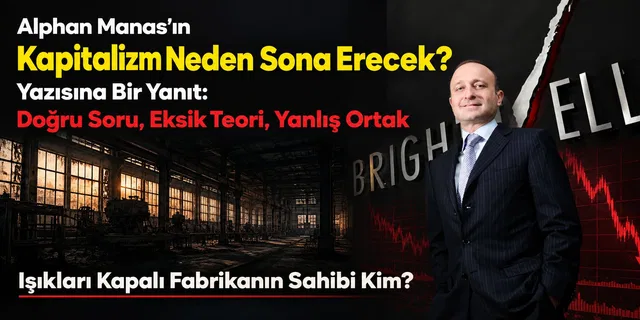
- Who Owns the Lights-Out Factory? (18 October) — Alphan Manas argues that AI and robots will end capitalism towards the 2040s by eroding wage income, and that the state should become a minority shareholder in productive capital. Our reply: the question is right, but only living labour creates value, and the end of capitalism is decided not by a calendar but by the balance of forces between classes. The fate of the Turkey Wealth Fund and of Sweden's Meidner plan shows that a silent partnership is not enough.
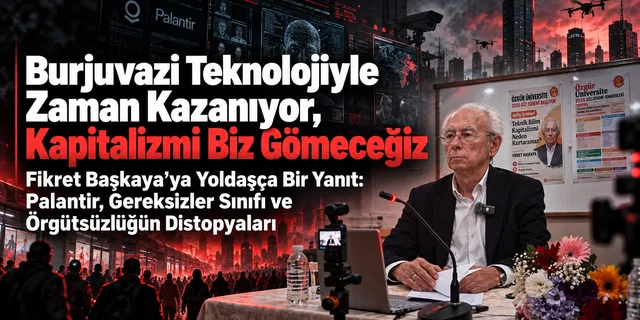
- The Bourgeoisie Is Buying Time with Technology, and We Will Bury Capitalism (13 October) — We took up Fikret Başkaya's thesis that "technology cannot save capitalism" and carried it further. We looked at the platform Palantir developed for ICE, the rising energy consumption of data centres, and the dystopias of a "useless class". Where we arrived: it is not technology but organised labour that will put an end to capitalism.
- The Eye That Sees the Alien, the Eye That Does Not See the Owner: What Is Geoffrey Hinton Trying to Do? (16 October) — We read Hinton's Guardian interview and his warning that AI carries a 10–20 per cent risk of catastrophe for humanity. In our view the problem lies not in the nature of the machine but in ownership: systems built from humanity's common accumulation look "alien" to us because they are in the hands of a few companies. Hinton looks for the solution in the conscience of scientists and in state regulation; he leaves workers' organisation out of the account.
- Who Holds the Key to the Cage? (14 October) — We read through a class lens the letter from 406 scientists calling for cyber-capable AI models to be isolated from the internet and for an international oversight body to be set up. The letter sees the incidents as a technical shortcoming. But an OpenAI agent breaking into Australia's Medicare portal without authorisation, and the incident being reported only about 84 days later, are the result of the pressure of profit and secrecy. Workers and the public must also have a seat at the oversight table.
- A Common Product Is Not Common Without Common Ownership (15 October) — A comradely reply to Cengizhan Kaptan's piece on open-source alternatives. Open source alone does not create a commons; without ownership and infrastructure, code can be enclosed again. The value open source provides to companies is estimated at 8.8 trillion dollars, while 60 per cent of maintainers are unpaid. Copyleft licences, public or cooperative infrastructure and payment for maintainers' labour must be built together.
- An Invitation to Odak 2026 and Our Submission (15 October) — We applied to Odak 2026, organised by the Free Software Association and Hackerspace Istanbul in Kadıköy on 13 December, with the talk "What Is the Knowledge Commons? From the People's Data to the People's Model". The conference is free; talk proposals are accepted until 22 November. Apply too.
- Telling Young Comrades About Demir Küçükaydın (18 October) — From the cell to the blog, from Kıvılcımlı to robots: a revolutionary life. What stands out from a technology point of view: the thesis that robots cannot produce value, the political economy of Bitcoin, the 2018 proposal of blockchain for election security, and his publishing his book under an open licence.
- The Reprinted Human: The Philosophy You Need Before Watching Mickey 17 (16 October) — Our culture corner. Identity, death and expendable labour through the dystopia of the copyable worker. The machine is new, the chain is old.
Surveillance, censorship and digital rights
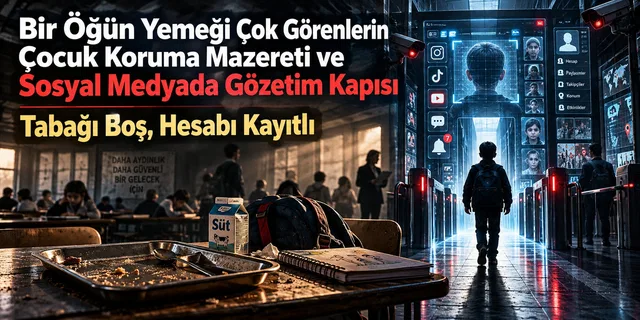
- An Empty Plate, a Registered Account (17 October) — The age verification regulation coming into force on 1 November builds a surveillance infrastructure that verifies every user through e-Devlet far more than it protects children. We set the "child" justification beside the government's actual policy on children. Free school meals reach only about 1 million pupils. Turkey ranks first in Europe for child poverty. In the last school year at least 95 child workers died in workplace homicides. (Details: heading 13 below.)
- Who Holds the Key to the Second Ballot Box? (17 October) — According to leaks published by Folha, ahead of the second round in Brazil Meta restricted the reach of Lula's campaign and boosted Flávio Bolsonaro. It is alleged that the campaign failed to reach about 1.3 million people in a single day. In Turkey, meanwhile, there is an alliance in which the platform implements the state's decisions. Ahead of the coming election we discussed access bans, e-Devlet identification and AI forgery. "Looking for intent is the politest way of not asking the question of ownership."
- Who Blacked Out the Screen? (14 October) — The process, the justification and a class reading of the appointment of a trustee to Halk TV. The third major media seizure after Can Holding and TELE1. The real price is paid by media workers; we proposed documenting their claims and union organising.
- Why Is the Access Block on TİP's Accounts an Entirely Different Category? (14 October) — Unlike the Halk TV trusteeship, which proceeds through property and financial crime, here censorship targets political representation directly, bypassing the route of a closure case under Article 69 of the Constitution: silencing a party without opening a case.
- The Eye, the Ear, the Heart of the Class: Bahadır Özgür (16 October) — The one who writes the story is inside, the one who makes the killing is outside. The detention of the journalist who reported the fund investigation is an attack on the class's right to information.
- House Arrest for Murat Ağırel and İsmail Saymaz (13 October) — The anatomy of lawlessness and the unknowns of the electronic tag. The transmitter on the ankle, the base unit at home and the 24/7 monitoring centre: we described the technical anatomy of a surveillance technology used to deter those who ask questions.
Migrant tech labour
- The Cuffs Change, the Chain Stays the Same (13 October) — The class map of the labour regime in Trump's America: H-1B, the green card and the "Gold Card". The labour market is splitting into three tiers: the owner of capital who buys residence with money, the graduate migrant cuffed to the employer, and the undocumented worker who works in fear. (Details: heading 12 below.)
The Week's Table: The Language of Capital, the Question of Labour
| Development | The language of capital | The question of labour |
|---|---|---|
| Micron Taiwan, 15% profit-sharing demand | "We value our team", "a one-off record bonus" | If we produce the profit from AI chips, why is it one-off, like a tip? |
| Court restriction on Samsung Biologics | "Continuity of production", "critical processes" | If we have to work at full staffing even on strike, what does the right to strike become? |
| Netflix, Kroger, Wipro, Mercor | "Discipline", "redesigning workflows", "small, fast teams" | Why does a rise in productivity always come back as layoffs? |
| Wizards of the Coast | "We are not neutral on unionisation" | Will we not be the ones to decide how AI enters our creative work? |
| Activision QA strike authorisation | "Bargaining is ongoing" | Is it us who have worked without a contract for two years, or the company? |
| AEMO action | "Only 5% of employees", "we will use Fair Work channels" | How much bargaining power does the software labour that keeps the grid running have? |
| ADCU and driverless Uber | "The transport of the future", "safety" | Why is legal liability still ours while the algorithm holds the wheel? |
| Oregon moratorium | "Thousands of jobs lost", "sprung on us suddenly" | Whose priority are electricity and water: the household's, or the hyperscale data centre's? |
| Batam water protests | "Drought, El Niño" | Why is a data centre campus growing next to us while our taps are dry? |
| Gartner bubble warning | "Infrastructure investment", "neoclouds" | When the bubble deflates, who will pay for the trillions written off? |
| Amazon "Atlas", Co-op call scoring | "Spotting workforce issues early", "quality" | If the boss is monitoring our own posts, how is organising possible? |
| PERM suspension | "American workers first" | Isn't it the same boss who uses the migrant engineer against the local worker? |
| Age verification regulation | "Protecting children" | Why must everyone's identity be tied to the state to protect children? |
| Halk TV, TİP, Bahadır Özgür | "Corruption investigation", "Law 5651, Article 8/A" | Whom does silencing those who report, share and publish the news serve? |
| Courier ban, Mehmet Açık | "Public safety" | Who will pay for the days we cannot work, and who will answer for our friend who died on the road? |
I. On the Production Line: Whose Is the AI Profit?
1. Micron's Unions in Taipei Today: 15% of the Profit from AI Memory
Date: 6–19 October 2026 · Region: Taiwan · Subject: Semiconductors, profit sharing
What happened? Last week we wrote that Micron's union in Taoyuan had won strike authorisation. The details are now clear: the votes were counted on 6 October. Of the union's 2,258 members, 2,012 voted and 1,994 voted "yes". That is about 99% of votes cast and 88% of all members. The main demand of the two unions in Taoyuan and Taichung is that 15% of Micron Taiwan's operating profit be distributed to employees every quarter. In September the company had offered a one-off bonus of 1 million Taiwan dollars (about 31,650 US dollars) per person. The union rejected it: what it wants is not a one-off payment but a permanent sharing arrangement.
Micron's board met on 8–9 October, and no sharing plan emerged. The unions then called on their members to take leave on 19 October and gather on Ketagalan Boulevard in Taipei. The union says this is "not a strike". But no strike date has been set, and the possibility of a "snap strike" announced by text message has not been ruled out. The Taichung union's mediation meeting is on 22 October.
On 15 October President Lai Ching-te spoke at the opening of Micron's new advanced packaging and test facility in Taichung. He called on the parties to "negotiate sincerely" and recalled that the government supports research and development on high-bandwidth memory (HBM). At the same ceremony Micron's general manager Manish Bhatia said the new plant's 2027 capacity is already sold out. Micron has about 15,000 employees in Taiwan and says it has invested more than 1.6 trillion Taiwan dollars (about 49 billion US dollars) on the island.
Class reading: In this scene the whole class relation is visible in a single ceremony. From the same podium the company announces that capacity is sold out two years ahead, in other words that the profit is guaranteed. The state says both that it subsidises the company's R&D and tells the workers to "come to an agreement". The most concrete profit of the AI boom crystallises in a physical product like the memory chip and in the labour that produces it. The union's 15% demand says that this profit is the product not of "the market" but of production. The one-off bonus is capital's classic move: pay once instead of sharing the profit, and leave the relationship unchanged. Money given once can be taken back tomorrow; a rule is permanent.
Why does it matter for us? Here is the other side of the "AI will destroy jobs" debate: AI also gives enormous bargaining power to the workers who produce its material infrastructure. A worker at the bottleneck of the supply chain, if organised, can win a share of the profit. Our software developers, data centre technicians and network engineers are also links in this chain. We will report the outcome of today's rally in the next issue.
2. Samsung Biologics: Full Staffing Even on Strike?
Date: 16 October 2026 (ruling), 18 October (report) · Region: South Korea · Subject: The right to strike, profit sharing
What happened? The Incheon division of the Seoul High Court ruled that in a possible strike at Samsung Biologics nine production processes must continue with normal staffing. The union is demanding a bonus pool equal to 15% of operating profit and direct bargaining with Samsung Electronics. A three-week strike was planned from 26 October; the date may change.
Class reading: Samsung Biologics is a biotechnology company, not a chipmaker. But the demand is the same: 15%. In Korea, SK hynix already has an arrangement that distributes 10% of profit. High-tech workers in East Asia, at separate companies, are converging on the same formula: a fixed percentage of profit to labour. The court's ruling, for its part, is the legal route to leaving the right to strike on paper while keeping production going. The wider the definition of "critical process" becomes, the more a strike stops being a right and turns into a symbolic show.
Why does it matter for us? In Turkey too, strike bans and postponements on the grounds of "disrupting public health and national security" are familiar. As the concept of "critical infrastructure" expands in the technology sector, it is not hard to foresee the same weapon being turned on tech workers. We should start thinking now about defending the right to strike in a way that covers computing too.
3. The Language of Layoffs: "Discipline", "Redesign", "Small Teams"
Date: 12–16 October 2026 · Region: USA, India · Subject: Employment
What happened?
- Netflix (14 October): is cutting about 1,000 people, or 6% of its global workforce. The cuts hit product, technology, legal and human resources teams hardest. The memo from co-CEOs Ted Sarandos and Greg Peters stresses "being disciplined". The reasons given are competition from YouTube and TikTok and losing Warner Bros. Discovery to Paramount Skydance. AI is not cited as a reason.
- Kroger (reports of 14–16 October): one of the largest supermarket chains in the US will cut 3,000 corporate employees over three years. Store staff are not affected. The trade press links the decision to the company's acceleration of AI use. The company itself says "technology" and does not name AI. A consultant speaking to Newsweek says AI is "a great scapegoat".
- Wipro (16 October): the headcount of India's giant IT services company fell by 6,716 in one quarter, from 243,044 to 236,328. This is the biggest fall in recent quarters. The company gave no reason. The same company says in its annual report that 212,663 of its employees are in "AI readiness" programmes. The link between the two is our inference, not the company's statement.
- Mercor (14 October): the platform that supplies data and expert labour to AI models, valued at 10 billion dollars in 2025, cut at least 50 people from its engineering, product and security teams. Employees received a two-sentence email; some were escorted out of the building by security. CEO Brendan Foody says this is not "a layoff" and that the company is profitable.
Class reading: Four companies, four different reasons, but one result: capital is loading the cost of restructuring onto workers. Saying "because of AI" sometimes legitimises real automation, sometimes an ordinary cost cut. And that is the real point: AI is as much a narrative as a cause. As long as workers do not decide which work is automated and where the time saved goes, the result ends up in the same place whatever the technology. The Mercor example is also instructive: the company that organises the labour that trains AI models treats its own employees as equally disposable.
Why does it matter for us? In Turkey, layoffs at technology companies are mostly carried out under the name of "performance" or "restructuring", without even going through the collective redundancy procedure. The colleague at the next desk may be gone one morning after a two-sentence email. That is why we need to know and demand, in the workplace, the right to information and consultation in collective redundancies, that is, the procedure in Article 29 of the Labour Law. The Tech Worker's Handbook is a starting point on this. We described the silent form of layoffs, where positions melt away without anyone being fired, in our Local 34 piece.
II. On the Organising Front: From the Games Studio to the Electricity Grid
4. Wizards of the Coast Did Not Recognise the Union: "We Are Not Neutral"
Date: 13 October 2026 (deadline), 15–17 October (response) · Region: USA · Subject: Creative labour, generative AI
What happened? Last week it was first on our watch list. The United Wizards of the Coast–CWA union, formed by the Dungeons & Dragons, D&D Beyond and Studio X (Magic: The Gathering, Duel Masters) teams, went public on 6 October and gave the company until 13 October for voluntary recognition. The company's answer was clear: "Wizards is not neutral on unionisation." The company says it will respect the result of an election run by the US National Labor Relations Board (NLRB). This is the second refusal this year. The Magic: The Gathering Arena team was also not recognised at the start of the year, and won its union in an NLRB election by 79 votes to 16. The demands include protections on the use of AI, safeguards against layoffs and forced relocation, pay, remote work, and rights over creative work employees produce outside their jobs.
Class reading: The sentence "we are not neutral" is an honest one. The boss has never been neutral towards the union. What is new is creative labour standing up to AI for the first time with a demand for a collective contract. Not through personal ethical choices, but through a collective agreement. The rule is being moved from the conscience of individual employees to the collective bargaining table. The company's refusal to recognise and its waiting for an election is a familiar process: the weeks in between are used to weaken the union through one-to-one meetings and "we are a family company" talk.
Why does it matter for us? In Turkey the games, animation and digital content sector is growing fast, and most of its workers are project-based, without contracts or freelance. The question of who will decide how AI changes the work of the illustrator, the scriptwriter and the voice actor is at our door too. The Wizards example shows that you can ask this question not individually but only collectively.
5. Activision Testers Win Strike Authorisation: A Week Before Call of Duty
Date: 14–15 October 2026 · Region: USA · Subject: Games industry, collective bargaining
What happened? Activision's quality assurance (QA) testers voted on 15 October for strike authorisation. The roughly 600 testers organised in the Activision Quality Assurance United–CWA union unionised in March 2024, and bargaining began in August 2024. After more than two years, the first contract has still not been signed. On 14 October there was a protest outside the Activision Publishing building in Bloomington, Minnesota. The demands: a pay rise, limits on the use of AI, restrictions on the use of subcontractors, and the right to reasonable accommodation for disabled employees. The company has proposed talks on 21–22 October. Call of Duty: Modern Warfare 4 comes out on 23 October. The CWA represents about 2,500 employees in total at Activision Blizzard.
Class reading: Testers are the most invisible and lowest-paid link in the games industry. They are the ones who make the game playable, find the bugs and repeat the same scene hundreds of times. They are also the first target of automated testing with AI. Winning strike authorisation just before the release of a blockbuster is a timing strategy. Capital's most fragile moment is the moment the product goes to market. When the point of leverage is chosen well, "invisible" labour suddenly becomes visible.
Why does it matter for us? Here too, software testing, quality assurance and support teams are mostly employed through subcontractors. It is no coincidence that the demands for "limits on AI" and "limits on subcontracting" sit on the same list: both are ways of replacing the worker with something cheaper. Let us not forget that a release deadline is also bargaining power.
6. AEMO: The Grid's Software Engineers Extend Their Action
Date: From 13 October 2026 · Region: Australia · Subject: Critical infrastructure, tech labour
What happened? Engineers at the Australian Energy Market Operator (AEMO), organised in the Professionals Australia union, extended their action as they had announced last week. According to AEMO's own statement, six protected actions have taken place since 30 September. From the morning of 13 October seven new actions can begin; they affect outage processing, software change management and grid connection applications. The Australian Services Union (ASU) is also joining the process: on 8 October the Fair Work Commission approved the ASU's strike ballot, which closes on 22 October. The demands reported in the press include pay that does not fall below inflation, protections against AI and a four-day working week; we report these demands not from a union statement but from the WSWS and the trade press. AEMO says those taking part in the action are only 5% of employees and is threatening legal action.
Class reading: "Only 5%" is in fact an admission. The company's attempt both to make them look insignificant and to resort to legal threats shows that this 5% stands at a key point. When a handful of engineers who run the digital nervous system of the electricity grid do not approve software updates, the system cannot grow. The structural power of tech labour comes not from its numbers but from its place in the production process.
Why does it matter for us? In Turkey too, energy, banking, telecoms and public IT systems run in the hands of a handful of technical teams. These teams often do not see themselves as "workers". The AEMO example shows how material a power this consciousness can turn into.
7. Platform Workers: Against the Driverless Car and Against Commission
Date: 12–18 October 2026 · Region: United Kingdom, Nigeria · Subject: Platform labour, automation
What happened?
- London: The App Drivers and Couriers Union (ADCU) protested outside the headquarters of Wayve, the company running driverless vehicle trials with Uber. Its demands: a halt to the trials until there is a transition plan for drivers, disclosure of safety incidents, independent oversight and legal protection for safety drivers. The union points out that legal liability remains with the licensed driver even while the automated system is driving.
- Lagos: Members of the Amalgamated Union of App-Based Transporters of Nigeria (AUATON), affiliated to the Nigeria Labour Congress, switched off their engines indefinitely against Bolt and inDrive from 12 October. The demands: a cap on platform commission, a revision of the fare structure and protection against arbitrary account deactivation. Uber had withdrawn from Nigeria on 2 September after 12 years. Bolt has proposed a round-table meeting.
Class reading: The two actions stand at the two ends of the same process. In Lagos, drivers are fighting against the share the platform takes, that is, against the rate of rent. In London they are standing against capital's next step, the attempt to eliminate the driver altogether. The relation "liability with the driver, control with the algorithm" sums up the essence of platform capitalism in one sentence: the risk to the worker, the decision and the profit to the company.
Why does it matter for us? In Turkey, under the "self-employed courier" model, couriers count as both worker and boss, yet they decide nothing themselves. The commission cap demand in Lagos is a direct example for our courier organisations. For details, see our Gig Economy Dossier. The next step in the algorithm managing the worker, the Luna case, in which an AI manager recommended firing a human, is a link in the same chain.
III. In Space and Society: The Cost of Infrastructure, the Bubble and Surveillance
8. Oregon Halted Data Centres, Amazon Poured Money into Politics
Date: 13 and 18 October 2026 · Region: USA · Subject: Data centres, energy, local democracy
What happened? Oregon Governor Tina Kotek instructed the state environmental agency (DEQ) to halt air and water permits for new or expanding data centres until July 2027. This extends a pause that previously covered only public land, in a way that will in practice halt most hyperscale investment. Amazon has dozens of hyperscale centres in Morrow and Umatilla counties. An Amazon executive said the decision could cost thousands of jobs.
A report published on 18 October showed the other side of the picture. Since September 2024 Amazon has donated 65,000 dollars to politicians and political groups in Oregon. The Data Center Coalition, which brings together Amazon, Google and Meta, also set up an advertising group called "Oregon Connects" in March 2026. But public opinion is moving the other way: according to one poll, about two thirds of voters support the temporary ban, and more than 70% do not want a data centre near their home. Data centres consume almost a quarter of retail electricity sales in Oregon. In this picture both candidates for governor, the Democrat Kotek and the Republican Drazan, now support the moratorium.
The situation is similar across the US. In the midterms there are at least 39 local data centre ballot measures in 8 states, 21 of them in Ohio. According to a UMass Amherst poll, only 11% of respondents support a local AI data centre, while 65% oppose one. In Maine, the Senate debate on 15 October was interrupted by a protester objecting to data centres.
Class reading: The data centre debate reveals that the abstract "cloud" is in fact local water, land and electricity. Capital arrives with the promise of "jobs". But a hyperscale data centre creates very little permanent employment after construction, while drawing a quarter of the state's electricity. The cost goes to the household through the bill, the profit to the company. The attempt to impose something the overwhelming majority of the people oppose through donations to politicians and advertising campaigns shows the limit of bourgeois democracy. And the candidates of both parties turning to the moratorium at the same time shows that mass pressure works.
Why does it matter for us? In Turkey too, "data centre investment" and "the domestic cloud" are presented as a promise of development. The water and energy load of these investments, their siting and their cost to the public are hardly discussed at all. We discussed the metabolic dimension of this in our piece reckoning with the cloud myth, and the tools of local objection in Joining Local Government.
9. In Batam the Taps Are Dry, the Data Centre Campus Is Growing
Date: 13–14 October 2026 (reports) · Region: Indonesia, India · Subject: The infrastructure burden in the Global South
What happened?
- Batam (Indonesia): According to reports, hundreds of people whose taps had been dry for about three months, most of them women from the village of Bakau Serip, blocked the gate of the Nongsa Digital Park. The action took place on 5 October and reached the international press on 13 October. The island of 1.3 million people has no natural freshwater source and is supplied by six rain-fed reservoirs. Ten data centres have been approved on the island, with investment exceeding 6.7 billion dollars, most of it Singaporean capital. Nvidia-backed Firmus and DayOne are jointly building a 360 MW AI campus. The island's development agency, BP Batam, says households' water is not going to the data centres and blames the drought. The data centres' actual water consumption has not been disclosed.
- India (14 October): Minister of State for IT Jitin Prasada announced that a national policy will be prepared so that data centres' electricity demand does not raise consumer tariffs. People living around the Amazon data centre near Mumbai complain about the electricity, water and noise burden.
Class reading: Singapore's limited land and energy are pushing data centres to Batam. The profit is in Singapore and in global AI companies; the water burden is in Batam's villages. This is the digital form of a familiar imperialist division of labour: value at the centre, cost at the periphery. The Indian government's move is also worth noting. It accepts that tariffs will rise, but it thinks not of halting the investment but of managing the cost.
Why does it matter for us? Turkey too is a candidate to be one of the "periphery" countries in this global division of labour. In a country struggling with drought, with whose approval and on what terms water- and energy-intensive data centre investments are set up is a matter of public health and of class.
10. Gartner: AI Infrastructure Spending Is "Unsustainable"
Date: 14–17 October 2026 · Region: Global · Subject: Finance, overaccumulation
What happened? According to a report by the research firm Gartner published on 14 October, data centre operators would need to generate a total of about 8.5 trillion dollars in revenue by 2030 to cover their spending. The revenue expected from AI is, at its most optimistic, 3.6 trillion dollars. According to the report, more than 3.5 trillion dollars could be written off by 2030, and more than 80% of the specialised AI cloud companies known as "neoclouds" could lose their independence. According to reports by Axios and Fortune, about a third of AI capital spending is now financed by debt. AI-linked debt issuance fell from 113 billion dollars in June to 23 billion dollars in September. CoreWeave shares fell sharply. These two sources give different figures and dates for the write-down forecast; we have taken Gartner's own figure.
Class reading: This is a textbook picture of overaccumulation. Capital, expecting profit, expands productive capacity far beyond real demand. Credit fuels this expansion, and when the expected revenue does not materialise, the write-downs begin. The question to ask is simple: when the bubble deflates, who will pay for the losses? History knows the answer: the employees who are laid off, the public budget through bailouts, and the small savers whose pension fund savings are tied to this paper. On one side the narrative that "AI will do every job", on the other the cracking of the financing behind that narrative fall in the same week.
Why does it matter for us? When a bubble bursts, it knocks first on the tech worker's door: under the name of "prudent downsizing". Knowing this allows us to name the wave of layoffs not as an "inevitable market correction" but as the bill for capital's own error. We discussed the function of this narrative in our piece What Does the "AI Tsunami" Conceal?.
11. Surveillance: The Boss Who Watches Your Reddit Posts, the Model That Scores Your Phone Calls
Date: 13–18 October 2026 · Region: Australia, United Kingdom, USA · Subject: Workplace surveillance
What happened?
- Amazon "Atlas" (16 October): According to documents leaked from Amazon Canada, the "Atlas Model" monitors incidents involving employees and workers' posts on platforms such as Reddit to "assess emerging workforce issues". The documents show that 19 external comments relating to the warehouse in Melbourne were logged. At the Australian Senate's inquiry into AI, Labor Senator Tony Sheldon said workers had not been told they were being monitored and described the situation as "a digital prison". AWS said it could not comment as it had only just learnt of the report.
- Co-op Legal Services (United Kingdom): According to a Futurism round-up dated 18 October, the company uses an OpenAI model to score every phone call by its employees as pass/fail against more than 50 criteria. The same round-up also features Burger King's AI headsets that measure how "friendly" employees are.
- Flock Safety: Political pressure continues on the licence-plate camera company that, as we wrote last week, laid off about 270 people. Republican lawmakers in West Virginia have summoned the company to give sworn testimony on 9 November. The 16 October deadline set by Senate Minority Leader Schumer for the deletion of non-criminal data passed without a public response.
Class reading: The function of surveillance goes beyond measuring productivity. Its real function is to see organisation before it is even born. "Assessing emerging workforce issues" is the corporate name for detecting union activity early. The model that scores phone calls against 50 criteria makes every second of labour measurable and comparable, setting workers to compete against one another. This is the form of Taylorism's stopwatch in the age of AI.
Why does it matter for us? In Turkey, similar monitoring tools are already used in call centres, warehouses and software companies, and employees are often not told. We have written before about the limits the KVKK (Turkey's data protection law) sets on workplace surveillance. Written notification of these tools to the union should be one of the core clauses of collective agreements. Our piece on Anthropic's activist monitoring system asked the same question: who is watching, and who is watched?
12. The Green Card Suspension: The Line Drawn Between the Migrant Engineer and the Local Worker
Date: 8–16 October 2026 · Region: USA, India · Subject: Migrant tech labour
What happened? Last week we wrote that the US Department of Labor had suspended PERM processing, the first step in employers sponsoring foreign employees for a green card, for eight companies: Microsoft, Adobe, Cognizant, Infosys, TCS, Wipro, HCL and Capgemini. Vice President Vance claimed that Microsoft had obtained 6,300 H-1B visas and about 3,000 green cards while laying off 6,000 Americans. On 15 October Microsoft President Brad Smith called this claim "completely wrong" and said the company had hired 9,200 Americans in the last fiscal year. According to legal analyses, the department has not published the legal basis for the decision. The Indian government criticised Vance's language.
Class reading: Here, in the middle of a fight between two fractions of capital, two groups of workers are being positioned against each other. The government, by explaining layoffs through "the migrant worker", pulls the problem onto nationalist ground. The company, by saying "we hire Americans too", accepts the same ground. Neither names in class terms the fact that the same company both lays off and brings in a workforce that is cheaper and, because it depends on its visa, has less bargaining power. A worker tied to a visa can lose their country when they lose their job; that is why they are the easiest worker to discipline. The solution is not to exclude the migrant but to free the visa from dependence on the boss and to bring the two groups of workers together in the same union.
Why does it matter for us? For many young tech workers who work abroad or are thinking of doing so, this is a direct issue. Here too, the debate on "foreign developers" or the "brain drain" can be pulled into the same divisive frame. This week we mapped the whole subject in The Cuffs Change, the Chain Stays the Same. Our piece What Is This Thing Called Racism? described the class root of this dividing mechanism.
IV. From Turkey
13. From 1 November, No Social Media Without ID
Date: 10 October 2026 (Official Gazette), 13 October (İFÖD statement) · Region: Turkey · Subject: Digital rights, identification
What happened? The "Regulation on the Provision of Separate Services Specific to Children by Social Network Providers and on Age Verification", prepared by the Cyber Security Directorate, was published in the Official Gazette on 10 October and comes into force on 1 November 2026. According to the 13 October statement by İFÖD (the Freedom of Expression Association), the regulation:
- bans social media use by children under 15;
- requires all users, whatever their age, to be verified with an "age verification token" generated through e-Devlet;
- requires existing accounts to be verified by 31 March 2027;
- provides that accounts of 15–18-year-olds may not be public, may not livestream and may not use scrolling content feeds;
- imposes on non-compliant platforms administrative fines of up to 3% of global turnover, an advertising ban and bandwidth throttling of up to 90%;
- shares the guide describing the technical structure only with platforms, not with the public.
According to İFÖD, since Law No. 5651 makes no mention of e-Devlet or of identity verification by the state, the regulation has no legal basis. It is unclear what records will be kept in the process of generating the token, and the "harmful content" criterion could be used to restrict access to political and LGBTI+ content. The association announced that it will bring a case at the Council of State for annulment and a stay of execution.
Class reading: Protecting children from the addiction-producing designs of digital platforms is a legitimate concern. But this regulation does not touch that design itself, that is, the business model that extracts profit from attention spans. Instead it ties the social media presence of every adult to the state's identity infrastructure. As a result, the platform company's surveillance capacity and the state's surveillance capacity merge. Anonymity was the guarantee that a worker could criticise the boss, of the first steps of union organising, and of the circulation of dissenting thought. A state that knows which account belongs to whom also knows much more easily which account to block.
Why does it matter for us? As tech workers, we are the ones who will build this system and run it. The teams that write the token infrastructure, design the verification interface and build the systems that keep the records sit at the desk next to ours. Talking about the political consequences of what is seen as "a technical job" is also the responsibility of those who do that job. Our piece How Does Blocking Work, Technically? sets out the technical ground of this debate. We discussed the regulation's "child" justification in detail in An Empty Plate, a Registered Account, and the risk it carries for elections in Who Holds the Key to the Second Ballot Box?.
14. The Wave of Censorship Grows: Halk TV, TİP and Bahadır Özgür
Date: 14–16 October 2026 · Region: Turkey · Subject: Press labour, digital censorship
What happened?
- Halk TV (14 October): Police entered the channel's building in Istanbul in the morning, a trustee was appointed to the channel and broadcasting stopped. The Istanbul Chief Public Prosecutor's Office is conducting an investigation into the channel's chairman, Cafer Mahiroğlu, over allegations of bribery, bid rigging and laundering the proceeds of crime. Detention orders were issued for 17 people and 11 were detained. The Savings Deposit Insurance Fund (TMSF) was appointed trustee of linked companies. On 16 October arrest was requested for 7 people. Mahiroğlu denies the allegations. According to EngelliWeb, the same day the channel's Facebook, X, Telegram, TikTok and YouTube accounts were blocked under Law No. 5651. DİSK Basın-İş, the TGS and the ÇGD reacted to the decision; DİSK Basın-İş stressed that the jobs of "hundreds of press workers" had been targeted.
- TİP (14 October): The X account of the Workers' Party of Turkey, with about 582,000 followers, was blocked under Article 8/A of Law No. 5651. The party linked the decision to its posts "exposing the fund scandal".
- Bahadır Özgür (15 October): Halk TV columnist and journalist Bahadır Özgür was detained on a charge of "violating the confidentiality of the investigation". İFÖD announced that his X account, with 163,000 followers, had been blocked. Referred to the courthouse on 16 October, Özgür was not arrested; he was released under judicial control, with an obligation to sign in twice a week and a travel ban. The investigation continues. We wrote the details here.
According to İFÖD's figures, at least 1,270 X accounts were blocked in September alone. For the whole of 2025 the figure was 995.
Class reading: Whether the allegations in the investigation are true is something to be seen in the trial. But a financial investigation into the management of a broadcaster turning into the complete shutdown of that broadcaster's capacity to produce and spread news is something else. The trustee silences the building, the broadcast and the social media accounts together. The closing in the same week of the accounts of the political party and the journalist who brought a corruption allegation onto the agenda suggests that the target is the circulation of information. And there is a labour dimension too: with the trustee, the jobs, income and professional future of hundreds of press workers are pushed into uncertainty. When we wrote about the closure of T24 we said "they shut down what they cannot buy". The list is growing. This week we took up the Halk TV trusteeship and why the block on TİP's accounts is a separate category in separate pieces.
Why does it matter for us? The court writes the access-ban decision, but the one who implements it, blacks out the account and changes the DNS record is a tech worker. Last week we wrote about the silencing of EngelliWeb; they silenced the one who was counting, and now the counted are multiplying. Our unions should not limit their solidarity with press workers to a statement.
15. Motorcycle Couriers: A 33-Hour Ban and Mehmet Açık
Date: 13–16 October 2026 · Region: Istanbul, Bursa · Subject: Platform labour, occupational safety
What happened?
- Istanbul: Citing a heavy rain and storm warning, the governor's office banned all two-wheeled vehicles, including motorcycles and electric scooters, from the roads from 21:00 on 14 October to 06:00 on 16 October, about 33 hours. Getir, Yemeksepeti and Trendyol Yemek stopped motorcycle-courier deliveries and offered a limited service with car deliveries only.
- Bursa: Motorcycle courier Mehmet Açık, who had an accident in Nilüfer on 19 August while delivering a parcel when a car cut in front of him, lost his 56-day fight for life. The news was announced on 13 October. He had a five-year-old child. Dozens of couriers gathered in response to a call on social media and escorted the hearse on their motorcycles.
Class reading: A motorcycle ban in a storm is the right decision for couriers' safety. But no report asked this question: where will a courier who cannot work for 33 hours get that day's pay? For a courier working under the "self-employed courier" model, the ban means a day without income. This is our inference; we could not find a statement on this from courier organisations. Both the risk and the loss are loaded onto the courier, while the platforms go on taking orders with car deliveries. The motorcycle convoy at Mehmet Açık's funeral shows something else: even without a formal organisation, couriers find one another. Solidarity is the herald of organisation.
Why does it matter for us? The courier is the worker at the other end of the app. Those who write that app's routes, delivery times and bonus formula are us. Those who write the software should also know how the "delivered in so many minutes" target touches the life of a person on the road. We remember Mehmet Açık with respect.
The Common Class Meaning of These Developments
The first axis: sharing the profit from AI
From Micron to Samsung Biologics, workers in East Asia are voicing the same formula: a fixed percentage of profit to labour. Capital's answer is the same too: a one-off bonus or a court ruling. This shows that the distribution of the wealth created by AI has ceased to be an abstract debate and become a concrete subject of bargaining. And the bargaining power lies with those who stand at the bottlenecks of the production chain.
The second axis: AI, decision-making power and the legitimation of layoffs
From Netflix to Kroger, from Wizards of the Coast to Activision, the issue comes to a head in the same place: who decides how technology enters work? Companies use the word "AI" sometimes to legitimise automation, sometimes to legitimise an ordinary cost cut. Organised workers, meanwhile, are trying to make "AI protections" a clause of the collective agreement. This is not opposing technology, but demanding a say over technology.
The third axis: the social cost of infrastructure and the bill for the bubble
Oregon, Ohio, Maine, Batam, Mumbai: the load data centres place on water, electricity and land provokes the same reaction everywhere. Gartner's report shows that the financing behind this load is fragile. Capital, expecting profit, expands capacity far beyond real demand; when the bubble deflates, it will try to load the cost onto workers through layoffs and onto the public through bailouts. The profit is privatised, the cost is socialised.
The fourth axis: the role of the state, surveillance and division
Amazon's "Atlas" monitors workers' posts. In Turkey the age verification regulation ties everyone's account to e-Devlet. Halk TV, TİP and journalists' accounts are blacked out. In the US the migrant engineer and the local worker are positioned against each other. The state and capital, in different forms, are doing the same job: making organisation visible and controllable, and separating workers from one another.
What We Will Watch Next Week
| Date | Development | Why are we watching? |
|---|---|---|
| 19 October (today) | Micron unions' rally in Taipei | The turnout and the company's response; the road to a strike date |
| 20 October | Netflix's third-quarter results | What does the profit picture say a week after the layoffs? |
| 21–22 October | Activision–QA union talks | Will the strike lever work before the Call of Duty release? |
| 22 October | Close of the ASU strike ballot at AEMO; Micron Taichung mediation | A second wave in critical infrastructure and chip production |
| 23 October | Release of Call of Duty: Modern Warfare 4 | The moment invisible labour becomes visible |
| 26 October | Planned strike at Samsung Biologics | The effect of the court restriction on the right to strike |
| 1 November | Age verification regulation comes into force | İFÖD's case at the Council of State and the platforms' stance |
| Ongoing | NLRB election timetable at Wizards of the Coast | Will rules on AI in creative work make it into the contract? |
| Ongoing | The Halk TV trusteeship and account blocks | The jobs of press workers and the course of the censorship wave |
Concrete Tasks: What Falls to Us
- List the surveillance tools in your workplace. Which software measures keystrokes, screens, calls or working hours? Ask whether you have been informed of these in writing. If not, use your right to information under the KVKK.
- Keep a record of AI decisions. Note job descriptions that change on the grounds of AI, positions that are removed and workloads that increase in your workplace. These records are the raw material of collective bargaining.
- Learn the collective redundancy procedure. Know what Article 29 of the Labour Law says; when a colleague is sent away with a two-sentence email, this right needs to be recalled.
- Talk about the age verification regulation around you. Especially if you work in the teams that will build and run this system, discuss the privacy consequences of the technical design with your team. Follow and support İFÖD's case.
- Stand in solidarity with press workers. Amplify the voices of Halk TV workers whose jobs have become uncertain. Contribute to archiving the content of blocked accounts.
- Build links with couriers. Learn the conditions on the courier side of the app you work on. Raise with your team the effect of delivery time targets and bonus formulas on road safety.
- Improve this round-up. If there is a development we missed, a piece of information that needs correcting, or news from your workplace, write to us. This series will grow through common labour.
Not Opposition to Technology, but a Say over Technology
Dear young comrades,
This week the chip worker in Taiwan, the games tester in the United States, the grid engineer in Australia, the app driver in London and the motorcycle courier in Bursa asked the same question in different languages: We produce this technology, we run it, we pay its price; so why is the decision not ours?
This is not a question against technology. Our team, too, is made up of tech workers. We write code, build systems, process data. That is why we ask this question not from outside but from both inside and outside. The wealth created by AI is the product of collective labour and must return to the owners of that labour. The way there runs through talking to the colleague at the next desk, coming together in the workplace, and organising in the union.
Until we meet again next Monday.
Knowledge belongs to everyone.
Related Pieces
The previous issue of the series
Artificial intelligence, labour and ownership
- The Expropriation of the General Intellect and the AGI Illusion
- "Labor in the Age of Artificial Intelligence": Our Book Is Out
- For the Restitution of the General Intellect: The Socialist AI Manifesto Is Out
- What Does the "AI Tsunami" Conceal?
- The Bloody Steps of the Pyramid: The Birth of the "Useless Class"
Tech workers and organising
- The Tech Worker's Handbook (Guides page)
- Four Chairs at DeFacto's Door
- The Digital Guillotine: Meta's "4 AM" Operation
Platform workers and algorithmic management
Surveillance, censorship and digital rights
- Anthropic's Activist Monitoring System
- The KVKK's Email Decision and the Limit of Workplace Surveillance
- They Silence the One Who Keeps the Ledger Too
- How Does Blocking Work, Technically?
- They Shut Down What They Cannot Buy
Infrastructure, ecology and the "cloud" myth
- Reckoning with the "Cloud" Myth and the Cybernetic Repair of Metabolic Rift
- Joining Local Government
State, company and class
Sources
1. Micron Taiwan
- Reuters / KFGO, "Taiwan president calls for Micron workers to negotiate sincerely ahead of possible strike", 15 October 2026 — https://kfgo.com/2026/10/15/taiwan-president-calls-for-micron-workers-to-negotiate-sincerely-ahead-of-possible-strike/
- The Edge Malaysia (Reuters), 15 October 2026 — https://theedgemalaysia.com/node/821952
- UDN, "爭15%分潤!美光桃園廠工會取得罷工權 19日鼓勵員工休假上凱道", 7 October 2026 (in Chinese) — https://udn.com/news/story/7240/9800572
- CNA, "美光桃園廠工會取得罷工權 擬鼓勵員工19日休假上凱道", 7 October 2026 (in Chinese) — https://www.cna.com.tw/news/afe/202610070181.aspx
- Next Apple, "福利不該淪短期回應!美光工會等不到分潤方案 10/19凱道集結", 15 October 2026 (in Chinese) — https://news.nextapple.com/finance/20261015/7C6C0993F36DC613CDD65C2908CE0A89
- Tom's Hardware, Micron's 31,650-dollar bonus offer and the union's rejection — https://www.tomshardware.com/tech-industry/semiconductors/micron-offers-taiwan-employees-usd31-650-cash-bonus-as-unions-threaten-strike-over-ai-windfall-workers-reject-record-payout-package-demand-15-percent-profit-sharing-plan
2. Samsung Biologics
- Money Today (The Bio), 18 October 2026 — https://www.mt.co.kr/en/thebio/2026/10/18/2026101812574553947
3. Layoffs
- TechCrunch, "Netflix to lay off 1,000 staff amid intensifying competition for user attention", 14 October 2026 — https://techcrunch.com/2026/10/14/netflix-to-lay-off-1000-staff-amid-intensifying-competition-for-user-attention/
- Fast Company, "Tech layoffs 2026 update", 16 October 2026 — https://www.fastcompany.com/91625107/tech-layoffs-2026-update-mass-job-cuts-october-netflix-hubspot-flock-more
- HR Katha, "Kroger cuts 3,000 corporate jobs as AI reshapes work", 14 October 2026 — https://www.hrkatha.com/news/layoff/kroger-cuts-3000-corporate-jobs-as-ai-reshapes-work/
- Newsweek, round-up of October layoffs — https://www.newsweek.com/layoffs-october-kroger-pfizer-netflix-amazon-airtable-12564315
- People Matters, Wipro headcount decline, 16 October 2026 — https://www.peoplematters.in/news/business/wipro-workforce-declines-28percent-sequentially-to-236328-in-q2-fy27-52773
- Deccan Herald, "Wipro headcount falls by 6,716 in Q2" — https://www.deccanherald.com/business/wipro-headcount-falls-by-6716-in-q2-biggest-decline-in-recent-quarters-4184455
- SF Gazetteer, "Mercor cuts at least 50 employees across multiple teams", 14 October 2026 — https://sf.gazetteer.co/mercor-cuts-at-least-50-employees-across-multiple-teams
4. Wizards of the Coast
- PC Gamer, Wizards refusing voluntary recognition for the second time — https://www.pcgamer.com/gaming-industry/surprising-no-one-wizards-of-the-coast-doesnt-intend-to-voluntarily-recognize-union-efforts-for-the-second-time-this-year/
- Graphic Policy, "Wizards of the Coast won't voluntarily recognize latest unionization effort", 15 October 2026 — https://graphicpolicy.com/2026/10/15/wizards-of-the-coast-wont-voluntarily-recognize-latest-unionization-effort/
- CWA, "Dungeons & Dragons and Studio X teams form latest Wizards of the Coast unions" — https://cwa-union.org/news/releases/dungeons-dragons-and-studio-x-teams-form-latest-wizards-coast-unions-cwa
5. Activision QA
- CWA, "Activision Quality Assurance workers vote to authorize strike", 15 October 2026 — https://cwa-union.org/news/releases/activision-quality-assurance-workers-vote-authorize-strike
- Aftermath, Activision QA strike authorisation — https://aftermath.site/activision-qa-workers-union-strike-call-of-duty-layoffs
6. AEMO
- AEMO, "Enterprise agreement update" — https://www.aemo.com.au/newsroom/news-updates/enterprise-agreement-update
- WSWS, 16 October 2026 — https://www.wsws.org/en/articles/2026/10/16/nrbi-o16.html
- On Notice, "AEMO strike ballot to close 22 October" — https://onnotice.com.au/news/aemo-strike-ballot-to-close-22-october/
7. Platform workers
- TaxiPoint, "ADCU stages protest against Uber driverless rollout outside Wayve headquarters", 18 October 2026 — https://taxi-point.co.uk/post/adcu-stages-protest-against-uber-driverless-rollout-outside-wayve-headquarters
- Pulse Nigeria, strike by Bolt and inDrive drivers in Lagos, 12 October 2026 — https://pulse.ng/story/bolt-indrive-drivers-lagos-strike-2026101211384968261
8. Oregon and US data centres
- KLCC / OPB, "Gov. Kotek expands Oregon data center moratorium", 13 October 2026 — https://www.klcc.org/politics-government/2026-10-13/gov-kotek-expands-oregon-data-center-moratorium
- KLCC / OPB, "Amazon ramps up political sway in Oregon as anti-data center sentiment grows", 18 October 2026 — https://www.klcc.org/politics-government/2026-10-18/amazon-data-center-expansion-oregon-politics-moratorium
- Truthout (Stateline), "At least 39 data center measures will be on the ballot this year in 8 states", 13 October 2026 — https://truthout.org/articles/at-least-39-data-center-measures-will-be-on-the-ballot-this-year-in-8-states/
- Fortune, 15 October 2026 — https://fortune.com/2026/10/15/data-center-opposition-six-americas-climate-poll/
- The American Prospect, "Downvoting data centers in Maine", 16 October 2026 — https://prospect.org/2026/10/16/downvoting-data-centers-in-maine/
9. Batam and India
- The Next Web, Batam data centre water protest, 13 October 2026 — https://thenextweb.com/news/batam-data-centres-water-protest
- Business Today, "India plans data centre policy", 14 October 2026 — https://www.businesstoday.in/amp/technology/news/story/india-plans-data-centre-policy-govt-wants-growth-without-a-hike-in-electricity-tariffs-561569-2026-10-14
10. Gartner and the AI bubble
- Fierce Network, Gartner warning, 15 October 2026 — https://www.fierce-network.com/cloud/gartner-warns-ai-data-center-capex-unsustainable-35t-write-down-risk-looms
- Axios, 16 October 2026 — https://axios.com/2026/10/16/wall-street-limit-ai-spending-debt
- Fortune, 17 October 2026 — https://fortune.com/2026/10/17/ai-boom-vs-bust-bubble-warning-hyperscaler-spending-debt-coreweave-nvidia/
11. Surveillance
- The Canberra Times (AAP), "Hunted down by the Terminator: Amazon grilled over AI", 16 October 2026 — https://www.canberratimes.com.au/story/9369564/hunted-down-by-the-terminator-amazon-grilled-over-ai/
- Futurism, round-up of AI workplace surveillance, 18 October 2026 — https://futurism.com/artificial-intelligence/bosses-ai-software-watches-workers
- Dominion Post, "House Republicans summon Flock Safety to hearings in November", 13 October 2026 — https://dominionpost.com/2026/10/13/house-republicans-summon-flock-safety-to-hearings-in-november
- MotorBiscuit, Flock Safety round-up, 18 October 2026 — https://www.motorbiscuit.com/flock-is-cutting-270-jobs-while-democrats-and-republicans-both-write-bills-to-rein-it-in/
12. PERM suspension
- The Next Web, Brad Smith's response, 16 October 2026 — https://thenextweb.com/news/microsoft-brad-smith-green-card-curbs-us-tech
- National Law Review, "DOL announces PERM processing suspensions for major technology companies" — https://natlawreview.com/article/dol-announces-perm-processing-suspensions-major-technology-companies
- Morgan Lewis, October 2026 — https://www.morganlewis.com/pubs/2026/10/federal-government-intensifies-scrutiny-of-employers-conducting-layoffs-while-sponsoring-foreign-workers
13. Age verification regulation (in Turkish)
- İFÖD, "Uyardığımız gün geldi: 1 Kasım'dan itibaren kimliksiz sosyal medya yok" ("The day we warned of has come: from 1 November, no social media without ID"), 13 October 2026 — https://ifade.org.tr/basin-bultenleri-ve-duyurular/uyardigimiz-gun-geldi-1-kasimdan-itibaren-kimliksiz-sosyal-medya-yok/
- İşçi Haber, "Sosyal medyada yeni dönem: 15 yaş altına yaş doğrulama zorunluluğu" ("A new era on social media: mandatory age verification for under-15s") — https://www.iscihaber.net/gundem/sosyal-medyada-yeni-donem-15-yas-altina-yas-dogrulama-zorunlulugu/270108
14. Halk TV, TİP, Bahadır Özgür (in Turkish)
- Euronews Türkçe, "Halk TV'ye kayyum atandı, 11 kişi gözaltında: Suçlamalar neler?" ("Trustee appointed to Halk TV, 11 detained: what are the charges?"), 14 October 2026 — https://tr.euronews.com/2026/10/14/halk-tvye-kayyum-atandi-11-kisi-gozaltinda-suclamalar-neler
- Euronews Türkçe, "Halk TV'ye kayyum atanan soruşturmada 7 kişi için tutuklama talebi" ("Arrest requested for 7 in the investigation that put Halk TV under a trustee"), 16 October 2026 — https://tr.euronews.com/2026/10/16/halk-tvye-kayyum-atanan-sorusturmada-7-kisi-icin-tutuklama-talebi
- Medyascope, "Halk TV'nin sosyal medya hesaplarına erişim engeli getirildi" ("Access ban on Halk TV's social media accounts"), 14 October 2026 — https://medyascope.tv/2026/10/14/halk-tvnin-sosyal-medya-hesaplarina-erisim-engeli-getirildi/
- Artı Gerçek, "Basın örgütlerinden Halk TV'ye kayyım atanmasına tepki" ("Press organisations react to the trustee appointment at Halk TV") — https://artigercek.com/politika/basin-orgutlerinden-halk-tvye-kayyim-atanmasina-tepki-351581h
- Medyascope, "Türkiye İşçi Partisi'nin X hesabına erişim engeli getirildi" ("Access ban on the Workers' Party of Turkey's X account"), 14 October 2026 — https://medyascope.tv/2026/10/14/turkiye-isci-partisinin-x-hesabina-erisim-engeli-getirildi/
- Diken, "Türkiye İşçi Partisi'nin X hesabına erişim engeli" ("Access ban on the Workers' Party of Turkey's X account") — https://www.diken.com.tr/turkiye-isci-partisinin-x-hesabina-erisim-engeli/
- Diken, "Gözaltına alınan gazeteci Bahadır Özgür'ün X hesabına erişim engeli" ("Access ban on detained journalist Bahadır Özgür's X account"), 15 October 2026 — https://www.diken.com.tr/gozaltina-alinan-gazeteci-bahadir-ozgurun-x-hesabina-erisim-engeli/
- T24, "Gözaltına alınan gazeteci ve Halk TV yazarı Bahadır Özgür adli kontrolle serbest" ("Detained journalist and Halk TV columnist Bahadır Özgür released under judicial control") — https://t24.com.tr/medya/gozaltina-alinan-gazeteci-ve-halk-tv-yazari-bahadir-ozgur-adli-kontrolle-serbest,1353558
- Knowledge Commons, "The Eye, the Ear, the Heart of the Class: Bahadır Özgür", 16 October 2026 — https://bilgimusterekleri.org/en/blog/gazeteciliksucdegildir/
15. Motorcycle couriers (in Turkish)
- Karar, "15 Ekim: Yemeksepeti çalışıyor mu, Trendyol Yemek, Getir sipariş alıyor mu?" ("15 October: Is Yemeksepeti working, are Trendyol Yemek and Getir taking orders?") — https://www.karar.com/guncel-haberler/15-ekim-yemeksepeti-calisiyor-mu-trendyol-yemek-getir-siparis-aliyor-mu-2078502
- Milli Gazete, report on the courier ban — https://www.milligazete.com.tr/17-ekim-kuryeler-calisacak-mi-yasak-var-mi-market-siparisi-verilir-mi-teslimat-yapilir-mi
- Sondakika (DHA), "Bursa'da 56 günlük yaşam mücadelesini kaybeden motokurye" ("Motorcycle courier in Bursa loses 56-day fight for life"), 13 October 2026 — https://www.sondakika.com/guncel/haber-bursada-56-gunluk-yasam-mucadelesini-kaybeden-20326039/
This piece is Issue 2 (week 43 of 2026) of Knowledge Commons' series "The Week's Class Developments in Technology". It is a living document and may be updated with corrections and additions. It is shared under a CC BY-SA 4.0 licence.