Industry No. 10 Is Not an Accident, but a Design
Exposing the Legal Machinery That Constrains Union Struggle and What We Can Do Against It

On the evening of 18 November, seven unions issued a joint call: “We know our strength! Regulate Industry No. 10! Remove the obstacles to freedom of association!” The poster brought together Bilişim-Sen, Müzik-Sen, the Teachers' Union (Private Sector Teachers' Union), the Actors' Union, the Cinema and Television Union, Sine-Sen and Sosyal-İş. Bilişim-Sen's thread on X concluded that together, we have the power to change this deadly system.
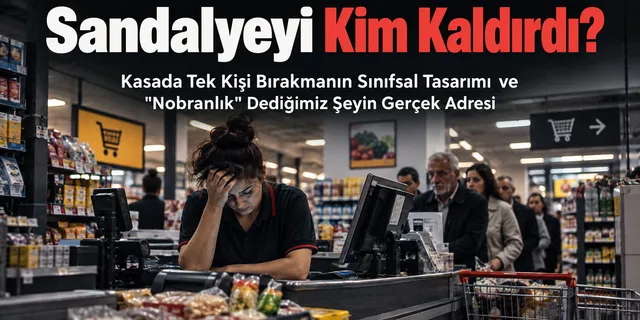
This article asks the question behind that call: why are four and a half million people in Turkey's largest industry branch so poorly organised? Our answer is clear: this is not an oversight, a missing provision or a technical glitch. It is a deliberate legal apparatus, operating in layers, that constrains union struggle. Industry No. 10 is the laboratory in which its effects are most concentrated. First, a summary; then the parts of the apparatus; and finally what we can do against it.
Summary: Ten Theses
- Workers in Turkey cannot freely establish and choose their unions. The state determines the boundaries of organising. Worker unions may be established only at industry level and nationwide; workplace and occupational unions are prohibited.
- The state also decides which industry a worker belongs to. The Ministry determines a workplace's industry and regulates which activities fall into each branch.
- A double threshold separates the right to form a union from the right to bargain collectively. A union can recruit members, but without reaching one per cent of the industry nationwide and the required workplace or enterprise majority, it cannot conclude a collective agreement or call a lawful strike through that process.
- Industry No. 10 is the sharpest example. It has 4.5 million workers, a unionisation rate of about seven per cent, a threshold of roughly 45,000 members and only three of 31 unions above the industry threshold.
- Time is also a weapon. Objections to authorisation and statistics can delay bargaining, while industry classification disputes can make organising harder. Once the authorisation process has begun, a request for classification and related litigation do not suspend authorisation proceedings. Meanwhile, organised workers can be dismissed and teams dispersed.
- The right to strike is narrowly defined and can be suspended by decree. Lawful strikes are tied to collective bargaining disputes; solidarity and political strikes are not recognised as lawful strikes. Postponement can amount to a de facto ban.
- Union protections are hard to use in practice. A worker alleging an anti-union dismissal must prove its union-related motive; workers outside ordinary job-security rules nevertheless retain specific legal protection against such dismissals.
- The apparatus is deliberate. Established after the 12 September coup and repackaged in 2012, it has survived decades of ILO criticism because it protects a growth model based on cheap, unorganised labour.
- Law records the balance of power between classes. A right is recognised on paper while barriers make it difficult to exercise: formal freedom and practical deprivation side by side.
- Such barriers have historically been overcome through action. In Turkey, the right to strike was won in the streets and workplaces before it was written into law. The path today is unity, action, legitimacy built in practice and alliances across the working class.
The Parts of the Apparatus
The structure constraining union struggle is not a single provision but six mutually reinforcing layers. Each can be defended with seemingly reasonable arguments; together they create a labyrinth that makes organising exceedingly difficult.
First Layer: The State Draws the Map
Under Law No. 6356 on Trade Unions and Collective Labour Agreements, worker unions can only be established by industry and nationwide. Article 4 points to the list of industry branches annexed to the law; Article 5 provides that the Ministry determines a workplace's industry. The Ministry's regulation specifies which activities fall into each branch.
Workers therefore cannot simply decide the organisational form and bargaining unit they want. Employees of a software company cannot establish a separate workplace or occupational union of software workers to bargain collectively; they are placed in the same broad branch as supermarkets, private schools and film sets. This map is a legacy of 12 September. As a parliamentary question recalled, the junta's Law No. 2821 required unions to operate at industry level and nationwide, prohibiting workplace and occupational unions.
The map can also be contested to the employer's advantage. Industry classifications can be challenged in court. However, once the authorisation process for a new collective agreement has begun, a change of classification takes effect in the following period, and classification requests and related cases do not suspend authorisation proceedings. Classification disputes can nevertheless make organising harder. Arts workers told BirGün that employers had registered them in unrelated textile or construction branches. Court decisions also show how widespread and protracted classification disputes can be. A worker who begins organising can suddenly be caught in a case about whether their union belongs to the “wrong industry”.
Second Layer: The Double Threshold
To conclude a collective agreement, a union must satisfy two conditions: it must organise at least one per cent of all workers in its industry nationwide and more than half the workers at the workplace, or 40 per cent across an enterprise.
Passing the industry threshold alone does not confer authorisation: the workplace or enterprise requirement must also be met.
This separates the right to form a union from the right to bargain. Even if every employee at a software company joins the same union, that union cannot conclude an agreement unless it reaches roughly 45,000 members nationwide in this branch. As legal scholar Prof. Gülsevil Alpagut notes, the ILO has long criticised workplace and industry thresholds as obstacles to collective bargaining.
Other broad branches face similar problems. The Fair Labor Association observes that in textiles, which employs more than a million workers, the industry threshold is practically insurmountable for many unions.
Third Layer: Time
Even after a threshold is passed, an employer can play for time. When a union applies for authorisation, an employer can challenge the determination in court, stopping the bargaining process during the dispute. Objections to industry statistics can have a similar effect; Alpagut notes that an objection under Article 41/6 of Law No. 6356 can affect unions whether or not they themselves objected.
The first months of recruiting members and waiting for authorisation are the most vulnerable. When litigation stretches those months into years, employers gain time to break up the group through dismissals, promises of promotion and pressure. The law does not explicitly say “you cannot organise”; it makes organising wait. And a waiting organisation often comes apart.
Fourth Layer: A Narrowed Right to Strike
Law No. 6356 defines a lawful strike in connection with a collective bargaining dispute. If a union cannot enter a bargaining process because it has not passed the threshold, it cannot call a lawful strike through that process. Solidarity, general and political strikes are not recognised as lawful strikes.
Under Article 63, the President may postpone a strike for 60 days under the conditions stated in the law. If no agreement is reached by the end of that period, either party may refer the dispute to the High Arbitration Board; otherwise the union's authorisation lapses. The mechanism effectively prevents the strike from continuing.
The history of this power reveals a political choice. The ILO Committee of Experts' 2019 report referred to the Constitutional Court's 22 October 2014 judgment and Decree-Law No. 678, and warned against applying Law No. 6356 in a way that violates union independence. After the Court struck down strike bans in banking and urban transport, the decree expanded postponement powers in those sectors. In 2019 the Court also struck down those additional grounds for postponement, while public health and national security remained in the law. The Kartal rally's demand to end de facto strike bans under the name of postponement is no coincidence.
Fifth Layer: Protection on Paper
Dismissal for union membership is prohibited. Article 25 of Law No. 6356 requires the employer to prove the reason for dismissal; a worker who disputes that reason must prove that the dismissal was motivated by union activity. When an employer invokes “performance” or “restructuring”, litigation can take years.
Subject to exceptions, ordinary job-security rules do not cover workplaces with fewer than 30 workers or workers with less than six months' service. Following a Constitutional Court decision, however, those ordinary conditions do not entirely remove the right to bring a claim and seek union compensation for anti-union dismissal. Fixed-term contracts can still make workers vulnerable: a private-school teacher waits each year to see whether their contract will be renewed; a union member's contract can simply be allowed to expire.
The gap between legal protections and the practical difficulties of using them leaves workers asking before they join a union: “Who will pay the price?”
Sixth Layer: Invisibility
The final layer concerns registration. The threshold is calculated using workers registered with social security. Informal workers are absent from this official count, and informal employment also makes union membership and the exercise of rights harder. According to the president of Müzik-Sen, approximately 90 per cent of music and stage workers work without social insurance. Much of the workforce a union needs to organise is invisible in official statistics.
There is a historical precedent. The Constitutional Court challenge brought shortly after Law No. 6356 was enacted recalled that, under the old ten-per-cent threshold, many unions could not pass it and publication of industry statistics was halted. Statistics are not just a count: they are the basis of union authorisation, and the state controls them.
Industry No. 10: The Laboratory
The six layers converge most intensely in Industry No. 10.
According to the Ministry of Labour and Social Security's July 2026 figures, the branch has 4,508,122 workers, of whom 315,206 are union members: 6.99 per cent. The Ministry's bulletin reports unionisation rates of 76.29 per cent in the public sector and 6.48 per cent in the private sector for July 2026.
| Indicator | July 2026 |
|---|---|
| Workers in the industry | 4,508,122 |
| Union members | 315,206 (6.99%) |
| Number of unions | 31 |
| Members needed for the 1% industry threshold | 45,082 |
| Unions above the industry threshold | 3 (Koop-İş, Tez-Koop-İş, Öz Büro-İş) |
| Share of union members in the three largest unions | Approximately 94% |
The branch is not only large but heterogeneous. It includes supermarkets, shops and shopping centres, office services, many software and computing workplaces, call centres, private schools and courses, private universities, theatres, film sets, music and stage work, and accounting and law offices. As Kansu Yıldırım writes in Evrensel, the services sector forms the branch's core, closely connected to Turkish capitalism's longstanding growth strategy.
Its size magnifies the threshold. According to Sine-Sen's Galip Görür and lawyer Murat Özveri, while one per cent of the branch means about 45,000 members, the actual number of workers in culture and the arts is at most around 20,000. Even if everyone in that field organised, they could not cross the threshold. The Teachers' Union, with around 10,000 members, faces the same wall. Its representative told the Ankara march that its membership should be enough for collective bargaining, but that its place in Industry No. 10 prevents it from concluding an agreement.
The branch expands while organisation stagnates. According to figures compiled by BirGün, only 48,000 of the 510,000 workers added to the branch over two years joined a union. In a Sosyal-İş survey in Ankara, 63.8 per cent of workers were in debt. In Bilişim-Sen's words, wages run out by the middle of the month and workers wake up every morning wondering when they will be dismissed.
Why a Deliberate Design?
“Deliberate” does not mean looking for a conspiracy behind every provision. We judge an apparatus by who created it, how it is preserved and whom it serves. There are four pieces of evidence.
First: Its Birthplace
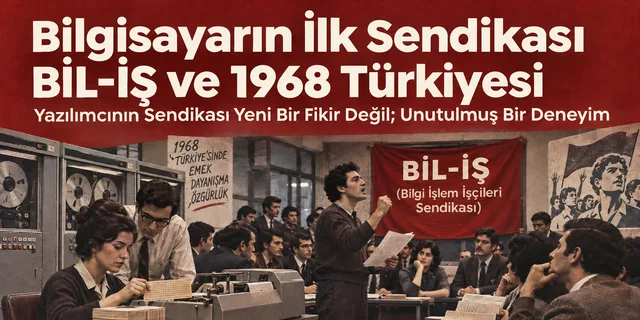
This apparatus is a child of 12 September. Workplace unions could be established in Turkey in the 1960s; BİL-İŞ, the first union in computing, was born that way at IBM Türk in 1968. Capital saw the rising workers' movement as a threat to be stopped. In 1983, the 12 September junta's Laws No. 2821 and 2822 prohibited workplace and occupational unionism, imposed industry-wide organisation and introduced the ten-per-cent threshold. The purpose was to prevent the class unionism represented by DİSK from being rebuilt.
Second: A Makeover
Law No. 6356, enacted in 2012, was presented as a break with 12 September. As CNN Türk reported, it reduced the industry threshold from ten to three per cent and the number of branches from 28 to 20. What looked like an improvement was undermined by the other half of the reform: branches were combined, denominators grew, and three per cent became a share of a much larger whole. The Constitutional Court application against the law argued that the mergers had made the problem worse without a scientific basis. Later changes reduced the threshold to one per cent, but the oversized branch remained: in Industry No. 10, one per cent now means about 45,000 members.
Third: Preserving It Knowingly
The apparatus survives despite warnings from international supervisory bodies. Turkey is a party to ILO Conventions 87 and 98. In its 2022 observations on Turkey, the ILO Committee of Experts reiterated that seeking consensus could not prevent the government from bringing legislation and practice into conformity with the convention. In 2019 Turkey was on the agenda of the ILO Conference Committee on the Application of Standards under Convention 87. The warnings are known; so is the response: inaction.
The executive can also change parts of the map through regulation. The Industry Branches Regulation has been amended repeatedly since 2012; an amendment published on 23 January 2024 revised Article 4 on industry classification. But the branches themselves are listed in a schedule annexed to the law, so a particular change may require legislation as well as regulation. Leaving the system unchanged remains a political choice.
Fourth: Whom Does It Serve?
The strongest evidence is the result. Unionisation in the private sector is 6.48 per cent. Services are the employment engine of Turkish capitalism, powered by a low-paid, flexible, precarious, frequently changing and largely unorganised workforce. Using Intan Suwandi's term, Kansu Yıldırım calls this “market despotism”: state oversight, market pressure and employer power intertwine. The oversized industry branch and high threshold protect that model. Removing the threshold would give service workers bargaining power; bargaining power means wages and security, threatening the cheap labour on which the model depends.
A Marxist Framework: Formal Rights, Practical Deprivation
In analysing rights in bourgeois society, Marx distinguishes political freedom from real human emancipation. Bourgeois law recognises rights equally in form, while the material conditions for exercising them depend on property. Anatole France captured the irony: the law, in its majestic equality, forbids rich and poor alike from sleeping under bridges.
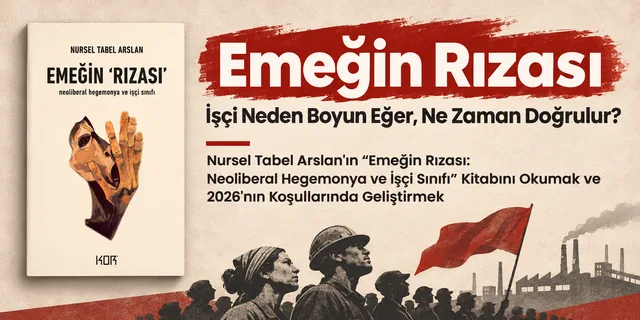
The union right works in much the same way. The Constitution and the law recognise it, but thresholds, classifications, objections, postponements and dismissals drain it of practical force. Law crystallises the balance of power between classes: capital remains organised while workers are kept divided. The mechanisms of hegemony discussed in Labour's Consent and the Framework Law take legal form here. Workers are subordinated not only by force, but by procedure.
What the Apparatus Says and What It Does
| What it says | What it does |
|---|---|
| “Strong, large, nationwide unions” | Suppresses smaller militant unions before they can grow and concentrates authorisation in a few large organisations |
| “Preventing union fragmentation” | Restricts workers' choice to unions able to obtain authorisation |
| “Industry classification according to international standards” | Puts different labour processes in one oversized branch, obscuring their distinct demands |
| “The right to object for legal certainty” | Can freeze authorisation for years, allowing organising to unravel |
| “Strike postponement in the public interest” | Stops an effective strike at the moment it begins to exert pressure |
| “A ban on anti-union dismissal” | Weakens protection through the difficulty of proving a union-related motive and lengthy proceedings |
| “Objective measurement based on official statistics” | Leaves informal workers outside the official picture |
| “Leaving the law of 12 September behind” | Preserves its logic in new packaging |
What Can Be Done?
A multilayered apparatus requires a multilayered struggle. We propose four planes of action. None is sufficient alone; each gains strength from the others.
First: Clarify the Legal Demands
The demands should be short and clear:
- Abolish the industry threshold entirely. A union with the required workplace majority should be able to bargain regardless of its nationwide membership. As Murat Özveri proposes, a threshold could at most apply to industry-level agreements, not workplace agreements.
- Let workers choose their form of organisation. Workplace and occupational unions should again be lawful.
- Reorganise Industry No. 10 around labour processes. Computing, culture and the arts, education, retail and office services should be considered separately. This must be paired with abolition of the threshold, or new monopolies could arise in smaller branches.
- Stop the manipulation of time. Set short, binding deadlines for objections to authorisation and prevent litigation from suspending bargaining.
- Free the right to strike. Remove the power of postponement and recognise solidarity strikes.
- Make union protection real. Place the burden of proving the absence of an anti-union motive on employers, make reinstatement available in all workplaces and make fixed-term contracts the exception.
Some demands require legislation. The legal distinction must be kept clear: branches are listed in the schedule annexed to the law, while the allocation of activities is regulated; the measures needed depend on the proposed change. The campaign should press for both legislative reform and any regulatory changes the Ministry can make.
Second: Use Institutional Channels Fully
Legal struggle alone will not save us, but it must not be neglected.
- Individual applications to the Constitutional Court. In 2025 the Court found a violation of union rights where domestic courts gave insufficient reasons for excluding a white-collar member of the union party to an existing collective agreement. The ruling opens possibilities for white-collar and service workers. A concrete violation caused by the threshold could also be brought after considering domestic remedies and admissibility requirements; that ruling did not itself concern the industry threshold.
- ILO complaints. Concrete complaints to the Committee on Freedom of Association can strengthen the record for international pressure.
- International union solidarity. Joint statements, visits and reports with European and global unions in computing, culture and education.
- Parliament. Present labour-friendly MPs with concrete legislative and regulatory proposals and use parliamentary questions to demand answers from the Ministry.
Third: Build Legitimacy Through Action
The lesson of Turkey's working class is that rights are won before they are written down. On the last day of 1961, tens of thousands of workers gathered in Saraçhane to demand the right to strike. In early 1963, Kavel cable factory workers struck while the law still did not recognise that right. Only afterwards, in the same year, did it enter legislation. The law recorded what had been won in struggle.
A similar path is possible today:
- Bargaining beyond the threshold. A union with majority support in a workplace can present collective demands, seek a signed protocol and build public pressure even without legal authorisation. Each protocol can challenge the threshold's legitimacy.
- Workplace representation and assemblies. Without waiting for legal authorisation, workers can meet regularly, decide common demands and elect representatives to speak to management.
- Public documentation. Build a monitoring network recording and publicising alleged anti-union dismissals and the non-renewal of teachers' contracts.
- The legitimacy of action without a collective agreement. Private-sector teachers could not conclude a collective agreement or call a lawful strike through that process. They nevertheless held sit-ins in Parliament Park, marched from Istanbul to Ankara, faced detention and began a hunger strike. Following a 30 July 2026 meeting at the Labour Ministry, their union announced agreement on setting up technical working groups to discuss a wage floor, indefinite contracts and industry classification. This is not yet a victory, but it shows how determined action can force an opening. We followed this struggle in The Future Produced at Ankara's Barricades.
Fourth: Unity and Alliances
The apparatus divides workers by industry and confederation, authorised and unauthorised unions, registered and informal employment, and white and blue collars. The first weapon against it is a conscious refusal of that division.
- A lasting partnership within the branch. The joint statement by nine unions in December 2023 and today's call by seven unions are valuable, but an annual statement is not enough. An Industry No. 10 Unions Platform needs regular meetings, a shared calendar, joint legal and research capacity and a common campaign.
- Cross confederation lines with common demands. DİSK-affiliated and independent unions stand side by side on the poster. Members and representatives of the branch's large unions should also be invited: the threshold restricts their members' freedom of choice too.
- Unions and professional chambers together. The dual-power model in computing combines the chamber's professional knowledge and public voice with the union's struggle for wages and job security.
- New forms of organising. Digital networks, transparent decisions and member participation can reach dispersed, remote and frequently changing workers. We discussed this in Organising 2.0.
- Alliances with the rest of the class. Thresholds affect textiles, metal and construction too. Service workers' demands gain strength when they meet those of industrial workers.
A Note for Tech Workers
In the age of artificial intelligence, the cost of this apparatus is growing for tech workers. Consider the layoffs at Canva, companies having machines write forty per cent of their code while cutting a quarter of staff, and a period when time gained grows while labour's share shrinks. Bilişim-Sen's thread puts it plainly: every day we remain unorganised, the costs of the sector's crises and transformations are passed on to us. The pace and scope of technological change, and who pays for it, can only be contested at an organised bargaining table. The apparatus prevents that table from being built.
29 November: A Stop Along the Way
A milestone is approaching. Fourteen signatory unions, including DİSK-affiliated unions, have called a labour rally for Sunday 29 November in Kartal Square, Istanbul. Sine-Sen and Sosyal-İş from Industry No. 10 are among them. The demands announced by Birleşik Metal-İş President Özkan Atar on 9 November include wages, taxes, the budget, an end to dismissals for union activity, reform of objections that delay authorisation, removal of workplace and industry thresholds and an end to de facto strike bans called “postponements”. Almost every part of the apparatus discussed here appears in the rally's demands.
The seven unions' joint call adds the voice of Industry No. 10. But Kartal is a stop, not the end. A crowd gathered for one day will disperse unless it becomes workplace representatives, members and networks the next. As we have said before: the square is not enough; we need an organisation to carry it forward.
Unions in Industry No. 10
The Seven Unions Behind the Joint Call
| Union | Field | Confederation | Members (July 2026) |
|---|---|---|---|
| Teachers' Union (Private Sector Teachers' Union) | Teachers in private schools, courses and colleges | Independent | 10,307 |
| Sosyal-İş | Office work, education, commerce, private universities | DİSK | 6,088 |
| Cinema and Television Union | Film and television production | Independent | 434 |
| Sine-Sen (Cinema Workers' Union) | Cinema workers | DİSK | 110 |
| Bilişim-Sen (Tech Workers' Union) | Tech workers | Independent | 75 |
| Actors' Union | Stage and screen actors | Independent | 28 |
| Müzik-Sen | Music and stage workers | Independent | 21 |
Together the seven have around 17,000 members, not even half the threshold. These figures show where organising begins, not where it ends. They also reveal how the apparatus works: informal employment, fear of dismissal and the deterrent of “you'll never obtain authorisation” keep small unions small.
All 31 Unions in the Branch
| Rank | Union | Confederation | Members |
|---|---|---|---|
| 1 | Koop-İş | Türk-İş | 125,640 |
| 2 | Tez-Koop-İş | Türk-İş | 122,735 |
| 3 | Öz Büro-İş | Hak-İş | 48,359 |
| 4 | Teachers' Union | Independent | 10,307 |
| 5 | Sosyal-İş | DİSK | 6,088 |
| 6 | Birlik Sendikası | Independent | 490 |
| 7 | Sinema-TV Sendikası | Independent | 434 |
| 8 | Bağımsız Market-İş | Independent | 183 |
| 9 | İSG-Sen | Independent | 112 |
| 10 | Sine-Sen | DİSK | 110 |
| 11 | T. Büro-İş | Independent | 99 |
| 12 | Bilişim-Sen | Independent | 75 |
| 13 | Kamu İş Sen | Independent | 73 |
| 14 | BİL-İŞ | Independent | 69 |
| 15 | Tüm Birlik İş | Tüm-İş | 51 |
| 16 | Mali Müşavir Sen | Independent | 46 |
| 17 | AVMES | Independent | 41 |
| 18 | TMGD-Sen | Independent | 36 |
| 19 | Öz Büro Sen | Ülkem-İş | 35 |
| 20 | Actors' Union | Independent | 28 |
| 21 | EDE-Sen | Independent | 24 |
| 22 | VEB-Sen | Independent | 23 |
| 23 | Öğrenci-Sen | Independent | 22 |
| 24 | Lider Büro Sen | Yeniden MİSK | 22 |
| 25 | Müzik-Sen | Independent | 21 |
| 26 | Avukatlar Sendikası | Independent | 20 |
| 27 | SAT-Sen | Independent | 20 |
| 28 | TYS | Independent | 13 |
| 29 | SANDEN | Independent | 12 |
| 30 | GLOB-İŞ | Independent | 10 |
| 31 | YAZ-İŞ | Independent | 8 |
| Total | 315,206 |
Source: Ministry of Labour and Social Security, July 2026 statistics, compiled via sendikadata.com.
Concrete Tasks
For Tech and Service Workers
- Find out the industry in which your workplace is registered; classification is the first gate in the apparatus.
- Join a union, but not alone: join together with your colleagues.
- With a few trusted colleagues, write down common concerns: pay, overtime, contract type, dismissals, surveillance and AI applications.
- If you face pressure or dismissal because of union activity, document and share it; invisibility serves the apparatus.
For Unions in Industry No. 10
- Turn the joint call into a permanent platform.
- Prepare a concrete proposal distinguishing demands for legislative and regulatory change.
- Launch joint legal work to bring concrete threshold-related violations before the Constitutional Court and the ILO.
- Collect and publicise experiences of workplace protocols and practical bargaining beyond the threshold.
- Bring the threshold issue to members and representatives of the branch's large unions.
For Professional and Democratic Mass Organisations
- Strengthen joint work between the computing chamber and the union.
- Bring professional associations in culture, the arts and education behind union demands.
- Establish a joint network to monitor and report violations of union rights.
For Us
- Share this account of the apparatus in workplace communication groups and student communities.
- Place a comprehensive dossier on Industry No. 10 and union thresholds on the agenda.
- After 29 November, assess what the rally has left behind and how to sustain the demand.
Dear Young Comrades,
When we read a law, we often examine provisions one by one. This one is reasonable, that one technical, another exceptional. To understand an apparatus, however, we must look at what the provisions do together. That is what we have tried to do here: the state draws the map of organising; thresholds separate rights from bargaining; time dissolves unions; strikes are stopped by decree; protection remains difficult to exercise; and workers are invisible even in the statistics. This structure did not emerge by accident. It was established after 12 September, repackaged in 2012 and preserved because it serves a growth model based on cheap labour.
History also teaches us that such arrangements are not permanent. Kavel workers struck when there was no statutory right to strike, and the law followed them. Private-sector teachers marched despite being unable to conclude collective agreements, and the Ministry had to meet them. If law records the balance of power between classes, changing that balance can change the writing too.
Bilişim-Sen's thread identifies the people who make up this power: employed, unemployed and student tech workers. If software developers and teachers, actors and cashiers, musicians and call-centre workers are in the same oversized branch, we can turn the structure designed to divide us into a basis for unity.
We know our strength. Regulate Industry No. 10. Remove the obstacles to freedom of association.
Sources
Joint call
- Bilişim-Sen, "Gücümüzün farkındayız!" X dizisi ve ortak afiş, 18 Kasım 2026: https://x.com/bilisimsenorg/status/2123054291455787413
The legal framework and its history
- 6356 sayılı Sendikalar ve Toplu İş Sözleşmesi Kanunu (resmi mevzuat): https://www.mevzuat.gov.tr/mevzuatmetin/1.5.6356.htm
- Anayasa Mahkemesi, 6356 sayılı kanuna ilişkin 2014 kararı: https://www.anayasa.gov.tr/tr/haberler/norm-denetimi-basin-duyurulari/sendikalar-ve-toplu-is-sozlesmesi-kanunu-kararina-iliskin-basin-duyurusu
- 6356 sayılı Sendikalar ve Toplu İş Sözleşmesi Kanunu metni (TÜRMOB e-kütüphane): https://turmob.org.tr/ekutuphane/Read/89a2f8b3-c8a4-4b9f-974b-9ddb44a6450e
- ÇSGB, İşkolları Yönetmeliği: https://live.csgb.gov.tr/Media/1ovfu3lx/işkolları-yönetmeliği.pdf
- İşkolları Yönetmeliğinde Değişiklik, Resmi Gazete, 23 Ocak 2024: https://www.alomaliye.com/2024/01/23/iskollari-yonetmeliginde-degisiklik-23-01-2024/
- CNN Türk, "Toplu İş Sözleşmesi Kanunu'na onay" (2012): https://www.cnnturk.com/ekonomi/genel/toplu-is-sozlesmesi-kanununa-onay-299314
- Anayasa Mahkemesi, 2013/1 Esas başvuru dilekçesi: https://normkararlarbilgibankasi.anayasa.gov.tr/Dosyalar/Kararlar/DilekceWord/2014-161-nrmd.docx
- TBMM soru önergesi, 2821 sayılı yasa ve baraj sistemi: https://cdn.tbmm.gov.tr/KKBSPublicFile/D28/Y4/T2/WebOnergeMetni/c4d4f1ae-031c-4c69-af49-6d1910054e5e.pdf
- Gülsevil Alpagut, "İşkolu Barajının Toplu Sözleşme Hakkı Karşısında Değerlendirilmesi ve İstatistiklere İtirazın Yetki Başvurusuna Etkisi": https://dergipark.org.tr/en/download/article-file/2204059
- Lexpera, "İşkolu tespitine itirazda davalı sıfatı": https://www.lexpera.com.tr/literatur/derleme-makaleler/toplu-is-iliskileri-c-iskolu-tespitine-itirazda-davali-sifati-418-421/1
International oversight
- ILO, 2022 CEACR Raporu, Türkiye'ye ilişkin gözlemler: https://www.ilo.org/resource/news/summary-observations-ratified-conventions-related-turkey
- ILO Uzmanlar Komitesi 2019 Raporu, Türkiye: https://en.kesk.org.tr/wp-content/uploads/2019/02/ILO_Experts_report_2019_Turkey.pdf
- ILO Konferansı, Normların Uygulanması Komitesi, Türkiye (C87), 2019: https://www.ilo.org/wcmsp5/groups/public/---ed_norm/---relconf/documents/meetingdocument/wcms_710466.pdf
- Fair Labor Association, "Limitations on collective bargaining rights in Türkiye": https://www.fairlabor.org/?p=60417
- Anayasa Mahkemesi, beyaz yakalı çalışanın toplu sözleşmeden dışlanmasına ilişkin ihlal kararı: https://anayasa.gov.tr/en/news/individual-application/press-release-concerning-the-judgment-finding-a-violation-of-the-right-to-trade-union-freedom-due-to-deprivation-of-a-white-collar-employee-from-the-benefits-of-a-collective-labour-agreement
Industry data and workers’ accounts
- ÇSGB, Ücret ve Sendikal İstatistikler E-Bülteni, Ekim 2026: https://csgb.gov.tr/yayinlar/calisma-hayati-istatistikleri-e-bulteni/ekim-2026/ucret-ve-sendikal-istatistikler.html
- sendikadata.com, 10 No'lu işkolu (Temmuz 2026): https://sendikadata.com/iskolu/isci/10-nolu-is-kolu
- Kansu Yıldırım, "Piyasa despotizmi kıskacında 10 numaralı iş kolu 'cehennemi'", Evrensel, 3 Nisan 2026: https://www.evrensel.net/yazi/99016/piyasa-despotizmi-kiskacinda-10-numarali-is-kolu-cehennemi
- BirGün, "Sanat emekçileri ve öğretmenler sendikalaşmanın dışına atılıyor: İşkolu bizi sindiriyor", 28 Haziran 2025: https://www.birgun.net/haber/sanat-emekcileri-ve-ogretmenler-sendikalasmanin-disina-atiliyor-iskolu-bizi-sindiriyor-634204
- sendika.org, "10 No'lu işkolundaki sendikalar: TİS hakkımız gasp ediliyor", Aralık 2023: https://sendika.org/2023/12/tis-hakkimiz-gasp-ediliyor-calisma-bakanligindan-gorusme-ve-acil-calisma-talep-ediyoruz-698619
- Evrensel, "İstanbul'dan Ankara'ya yürüyen özel sektör öğretmenleri", 4 Temmuz 2025: https://www.evrensel.net/haber/560029/istanbuldan-ankaraya-yuruyen-ozel-sektor-ogretmenleri-gorusmeler-surecek-ogretmenler-ankarayi-terk-etmeyecek
- Evrensel, "Öğretmenlerden Bakanlık toplantısı sonrası açıklama", 30 Temmuz 2026: https://www.evrensel.net/haber/5994253/ogretmenlerden-bakanlik-toplantisi-sonrasi-aciklama-talepler-icin-teknik-ekipler-kurulacak
29 November
- Evrensel, "Yoksulluğa ve yolsuzluğa karşı 29 Kasım'da Kartal'dayız", 9 Kasım 2026: https://www.evrensel.net/haber/6008680/yoksulluga-ve-yolsuzluga-karsi-29-kasimda-kartaldayiz-gelin-ortak-taleplerde-birleselim
Related articles from Bilgi Müşterekleri
- The First Union in Computing: BİL-İŞ and Turkey in 1968
- 12 September: The History, Toll and Legacy of a Class Coup
- The Future Produced at Ankara's Barricades
- Labour's Consent
- Rejecting the Ruling Class's Playing Field
- From Corporatism to Proletarian Control: Dual Power in Computing
- Organising 2.0
- The Square Is Not Enough
- A Handbook for Tech Workers
- The Misery of White-Collar Workers
- A Generous Package, a Silent Table
- Forty Per Cent of the Code, a Quarter of the Workforce
- Time Gained, Share Shrunk
This living document was prepared by Bilgi Müşterekleri and is shared under the Creative Commons Attribution-ShareAlike 4.0 (CC BY-SA 4.0) licence. The machine is new; the chain is old.