The Data Centre Got Stuck at the Ballot Box
The Class of the Backlash against Artificial Intelligence, the Electricity Bill and the "New World" in the US Midterms

Third piece of the US midterm file. It belongs to the series The US Agenda.
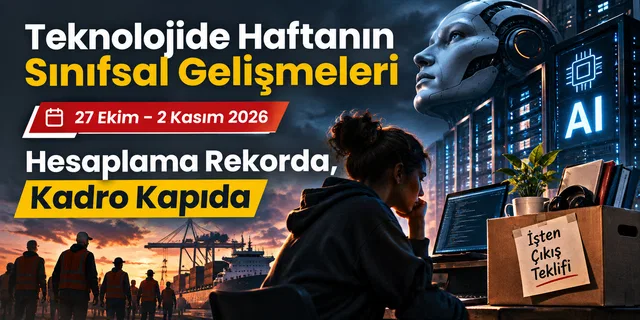
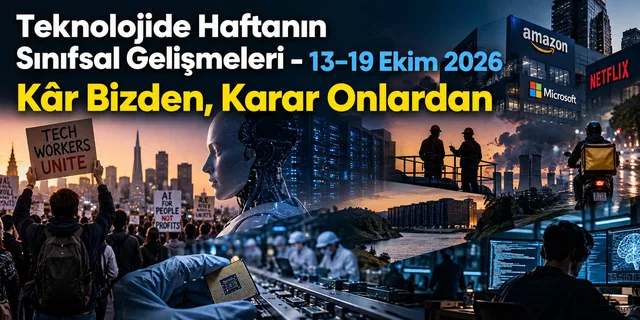
In the first piece of this file, as we went into the election (in Turkish), we told how the owners of the platforms were a side in the election, and how the money network and the flow network ran through each other. In the second piece, when the results came in, we discussed why the "blue wave" broke on the same shore, and why the Democrats can never be an alternative for the class. In this third piece we follow a vein that runs through the election on its own: the backlash building against artificial intelligence, against data centres, and against the "new world" these stand for.
First the summary, then the detail.
Summary: Ten Theses
- The midterms of 3 November 2026 were the artificial-intelligence industry's first great electoral test, and the industry lost it. The press is already calling the election "the data-centre election".
- In the local ballots the picture is almost one colour. The side against data centres won 39 of 41 local votes that contained a ban, a moratorium or a zoning restriction. In Ohio alone, 13 localities voted a ban.
- Governors who look at the data centre with suspicion were elected in three critical states. In Texas, Gina Hinojosa unseated Greg Abbott. Amy Acton won in Ohio, Keisha Lance Bottoms in Georgia. All three promised a "pause" in one form or another. These three states are home to nearly half of the investment in AI data centres in the United States.
- In the exit poll, about 60 per cent of voters counted data centres as a "decisive or important" factor in their vote. About 80 per cent do not want a data centre in their neighbourhood.
- The material basis of the anger is the electricity bill. On PJM, the largest grid in the United States, the wholesale price of electricity rose 76 per cent in a year. Data-centre demand laid an extra burden of 13 billion dollars on the consumer in the last two capacity auctions alone.
- AI money could not buy the result. AI super PACs spent 79 million dollars across 68 seats. In the competitive races, most of the candidates they backed lost. The roughly 474 million dollars Elon Musk moved to the Republicans could not stop the wave either.
- But the conclusion that "money did not work" is misleading. The industry's money was spent most of all in the primaries, to decide who would be the candidate. The real clash was not in November. It was in the primaries of the summer months.
- Two fractions fought inside capital. The "light regulation, a single national standard" camp around Andreessen Horowitz and OpenAI, and the "safety and state regulation" camp backed by Anthropic. Both are capital's money. Neither talks about the worker's bill.
- The content of the backlash is a class content. Its form is not yet. The anger of the worker whose bill rises, whose water is drawn down, who puts up with the noise and breathes the exhaust flowed to the ballot box largely in the language of "not in my back yard", and through the channel of the Democratic Party.
- The lesson for us: the backlash against a new technology should neither be belittled as Luddism nor counted as progressive of itself. The question is not "should there be a data centre?" It is "in whose property, under whose supervision, to whose benefit?"
What happened on election night?
As the results came in on the evening of 3 November, two separate stories were seen to flow at the same time. The first was the known story. The fall in Trump's popularity, and the cost of living, brought the Democrats a wide wave. The Democrats took control of both houses of Congress. We discussed this in detail in the second piece.
The second story was newer. The morning after the election, the US press ran almost a common headline. Time counted the winners and losers of "artificial intelligence's first great election". Fortune wrote that "even Texas turned, and technology has to sit at the bargaining table". Euronews said "the data-centre backlash reached the ballot box". Even the right-liberal Reason confessed that "in the end this was a data-centre election".
The next day the stock market made its own comment. While the general market rose, the shares of data-centre companies such as CoreWeave, Applied Digital and Cipher Digital fell. The investment analyst Dan Ives said the governors who were elected were "a new reality" for the technology companies, and added: "Technology must adapt to slowing the pace at which artificial intelligence spreads." Goldman Sachs foresaw construction delays in Georgia and Texas. Morgan Stanley described Ohio's new governor as "a major risk" for investment.
If capital's own analysts have begun to price the backlash at the ballot box as a "risk line", this backlash is no longer a local noise. It is a political fact.
Detail 1: The local ballots - "Not here"
The most striking figure of the election came not from the races for Congress or the governorships, but from the town and county votes. According to Reason's compilation, there were 41 proposals about data centres on local ballots. Most contained a ban, a moratorium or a zoning restriction. The side against data centres won all but two of them.
What stands out from the list Forbes set out state by state:
- Ohio (21 votes, the most): In Conneaut, Defiance, Granville, Grove City, Hubbard, Monroeville, Oregon, Pataskala, Piqua, Sunbury, Trenton, Upper Sandusky and Urbana, a ban on "high-impact" data centres was voted, and all of them were on the way to passing. In Ashville more than 80 per cent of voters rejected a data centre whose construction was under way. In Monroe and Sprigg counties, zoning rules "protecting the rural fabric" amount in practice to a ban.
- Illinois: In advisory votes in Granite City, Joliet and other localities, a "no" by a wide margin. In Bloomington, about 78 per cent support for a moratorium.
- Kansas: El Dorado and Emporia passed a ban.
- Maine: Peru, Wells and Wiscasset passed a temporary moratorium. North Berwick passed a ban on large facilities.
- California (Alhambra) and Florida (Edgewater): Support above 77 to 80 per cent for a ban and a moratorium.
The exceptions are instructive too. In Wilmington, Ohio, zoning decisions that open the way for a particular project passed. In Perry, voters approved a rule that ties the tax break to financial security and a noise limit. In Janesville, Wisconsin, a popular vote was made a condition for projects above 450 million dollars to be built on the land of the old General Motors factory.
The Janesville example is perhaps the most symbolic detail of this piece. In place of a factory where thousands of car workers once worked, what is wanted is a "computation factory" that runs with a handful of technicians but asks for the electricity and the water of the whole town. The town's answer was not "no". It was "we will vote on this".
Data Center Watch, run by 10a Labs, recorded that in the second half of 2026 alone at least 45 data-centre projects stalled because of local opposition. The election is the form in which these local resistances were carried to the ballot box.
Detail 2: Three governors, three promises
Texas: Abbott's U-turn was not enough
Texas is the state with the most data-centre capacity in the United States. In 2028 it is expected to hold about 30 per cent of the country's capacity. Governor Greg Abbott had promised to make the state the "epicentre" of artificial intelligence. OpenAI, Anthropic, Oracle, Microsoft, Google, Meta and Amazon had been drawn to the state with promises of tax breaks, land and energy. According to the Texas Tribune, donors linked to data centres had given Abbott about 9 million dollars since July 2025.
When the anger grew as the election approached, Abbott changed direction in August. He first froze grid connections, then environmental permits, until an audit was finished. He asked for data to be gathered on water use, tax incentives, noise and light. In October, when it emerged that some permits had been given despite the freeze, the permitting body shut down its online application system.
The Democratic candidate Gina Hinojosa called this "an election-year trick" and went further: a moratorium on all data-centre approvals until the legislature passes protective rules, the removal of the tax breaks given to large developers, the protection of communities' water sources, a ban on the confidentiality agreements that block public oversight of the projects, and a requirement that union labour be employed in data centres. Hinojosa won. The same night the Democrat James Talarico also took Texas's Senate seat, beating Ken Paxton.
Ohio: a "conditional moratorium"
Ohio is a state where OpenAI has its eye on a 500-billion-dollar data centre with 100 billion dollars of financing from Nvidia, and where Meta plans an investment of 1 billion dollars and Amazon Web Services of 2 billion. The elected governor, Amy Acton, promised a moratorium on new data centres unless the developers take on the whole cost of the infrastructure, employ union labour, and comply with environmental standards. The county where Meta planned a facility of 700,000 square feet (about 65,000 square metres) voted a ban at the ballot box.
Georgia: a turn that begins with the bill
In Georgia, Keisha Lance Bottoms promised a temporary, statewide pause on construction until the effect on electricity bills, on communities and on the environment is assessed. Georgia had given notice of this election a year earlier. In November 2025 the Democrats took two seats from the Republicans on the Public Service Commission (PSC), which sets electricity tariffs. The main subject of that election, too, was Georgia Power's price rises and the load of data centres on the grid.
Virginia is another forerunner on the same line. In Virginia, home to the densest data-centre region in the world, Abigail Spanberger was elected governor in 2025 by resting her campaign largely on energy bills. A study the state itself commissioned foresaw that Virginians could face an extra energy cost of up to 37 dollars a month by 2040.
Detail 3: The material basis of the anger - the electricity bill
It is easy, and wrong, to read the backlash as "fear of technology". The voter's first worry about the data centre, as even Reason accepts, is the price of electricity.
On the PJM grid, which supplies electricity to about 67 million people in 13 states in the east of the United States and in Washington, according to the May 2026 report of the market monitor Monitoring Analytics:
- The wholesale price of electricity rose from 77.78 dollars per megawatt-hour in the first quarter of 2025 to 136.53 dollars in the first quarter of 2026: a rise of 76 per cent.
- Capacity costs rose 398 per cent in the same period.
- The data-centre load brought the consumer an extra cost of about 13 billion dollars in the last two capacity auctions alone.
- In the monitor's own words: "The price effects on consumers are very large and irreversible."
The mechanism is simple. The data centre adds a large and continuous load to the grid. The grid asks for new capacity and transmission lines. The cost of this is spread across the tariffs. So the infrastructure investment of the AI companies is financed in part by the bills of households. The profit is privatised. The cost of the grid is socialised.
Add water to this. In Texas, which has a drought problem, even the water need of the data centres is not known. Add air. xAI's supercomputer in Memphis runs on gas turbines, and the working-class neighbourhoods of South Memphis breathe that exhaust. Nadine Smith of Color of Change put it in the right place: "Families should not be forced to subsidise the richest companies in history with their electricity bills."
For a reader looking from Turkey, this picture is not foreign. In The Class of Three Thousand Kilowatt-Hours we discussed the EPDK's lowering of the household electricity limit to 3,000 kilowatt-hours, and "saving by being cold". The scale and the institutions differ. The question is the same: for whom is the energy produced, and who pays the cost?
Detail 4: What do the polls say?
NBC's exit poll, as reported by TechCrunch, shows this:
- About 60 per cent of voters counted data centres as "a decisive or important factor" in their vote.
- About 80 per cent are against a data centre being built in their neighbourhood.
- More than half think artificial intelligence will bring more harm than benefit.
The polls before the election pointed the same way. According to Quinnipiac, 55 per cent of Americans said artificial intelligence would bring more harm than benefit in their daily lives, and 65 per cent said they were against the building of a data centre in their own community. In Pew's 2025 research, more than half of Americans said they felt more fear than excitement about artificial intelligence.
But we have to be honest. In the same NBC's October poll, only 3 per cent counted data centres as "the country's most important problem". The largest share was the cost of living. An analysis reported by Reason claims that Democratic candidates who put the data centre forward in their advertisements did worse than those who did not, because as the election approached the candidates of both parties put distance between themselves and the data centre, and the subject ceased to be distinguishing.
These two figures do not contradict each other. The data centre is not an "agenda item" on its own. It is the most concrete, the most visible, the most nameable face of the cost of living. The voter did not vote for an abstract thing called "artificial intelligence". They voted for the figure on their bill, for the concrete box at the edge of their town, for the level of the water in their well.
Detail 5: Could money not buy it?
This election was also the first in which AI capital entered politics directly.
The industry's camp: Leading the Future
The Leading the Future network, into which the Andreessen Horowitz founders Marc Andreessen and Ben Horowitz put 25 million dollars each, and OpenAI's president Greg Brockman and his spouse put 25 million dollars, was set up for "light regulation and a single national artificial-intelligence standard that would override state laws". Its Republican wing worked under the name American Mission, its Democratic wing under the name Think Big.
The results: Darline Graham, on whom they spent 4.8 million dollars in the South Carolina Senate race, lost 51.1 to 46.7 to the campaign her rival Annie Andrews ran under the nickname "Data Centre Darline". Aaron Flint lost in Montana, Laurie Buckhout in North Carolina. By Citation Needed's reckoning, the greater part of the money crypto and AI groups set aside for competitive races went to losing candidates. In 9 of 12 competitive races whose result was clear, the side they backed was beaten. In Ohio, Sherrod Brown returned to the Senate despite more than 64 million dollars of crypto money spent against him.
Elon Musk has to be set beside this. Musk moved about 474 million dollars to Republican campaigns, and many of the candidates he backed lost. The sentence he wrote after election night sums up the mood of a class: "Data centres in space look increasingly attractive." A fraction of capital that thinks of leaving the planet in order to escape the people's supervision: the barest form of the future fiction we told in From Futurism to Techno-Fascism. We had followed the longer history of the line that counts the sky as a company's property in The Space Race from Sputnik to Starlink.
The "safety" camp: Public First and the Guardrails Alliance
On the other side were Public First, backed by Anthropic, and the Guardrails Alliance, which said its aim was "to make AI money politically toxic". Guardrails spent more than a million dollars against Jimmy Gomez in California. Gomez lost. All of the Republicans backed by Public First were beaten. It did better with the Democrats.
The real war was in the primaries
We should not jump straight to the conclusion that "money did not work". Leading the Future itself says openly that it found the primaries "more effective". It spent more than 27 million dollars in the primaries, and relatively little in the general election. The most symbolic example is New York's 12th district. More than 8 million dollars was spent against Alex Bores, the architect of the state's artificial-intelligence safety law (the RAISE Act), and Bores lost the Democratic primary despite the 15 million dollars of Public First, which backed him.
So before capital was beaten at the ballot box in November, it had largely decided in the primaries who would enter the ballot box. This is the ordinary working of bourgeois democracy. The voter chooses, but capital filters the choice. The day after the election, Curtis Yarvin, the ideologue of the same circle, drew less democracy out of the defeat. We opened this in Parties Are Armies, Voters Are Soldiers. If many candidates won that night by saying "we will make Big Tech pay", it also has to be asked with what words those candidates passed through the filter of the primary.
Detail 6: Two fractions, one property
The press tells this clash as "the safety people against the AI industry". We read it otherwise.
The fight between Leading the Future and Public First is a fight between two fractions of AI capital. The first wants regulation to be as light and as central as possible, and the hands of the states to be tied. This is the post-election form of the picture we saw in A Class Balance Sheet of a Week in Washington: while the constitution stands in the archive, the state that does not want a rule sits at the table. The second wants there to be particular safety rules, and the states' say to be protected, because safety rules are also rules that raise the threshold for entering the market and reward the player that is large and looks "responsible". In what we wrote on Anthropic's flotation prospectus and its tempo calls, we discussed this legitimation of the "responsible monopoly". In Bubble or Debt? we also asked who will pay the cost of this race.
The common point of the two camps is this. Neither questions in whose property the data centre, the model and the data will be. Neither makes the voter's electricity bill, Memphis's air or Texas's water the main agenda. It was not one of the fractions of capital that carried the bill to the ballot box. It was the spontaneous organisations in the towns.
The confusion on the political map is born here too. As NPR noted as early as January, opposition to data centres blurred the party lines. While Bernie Sanders proposed a national moratorium, the Republican senator Josh Hawley and the governor of Florida, Ron DeSantis, also refused "to give Big Tech whatever it wants". An activist organising the protests in Virginia said the subject was "a unifying issue of a kind we have not seen for a long time". Trump remained almost the only national politician speaking positively of the data centre, and his party paid the price.
This confusion can open in two directions. Right populism can turn the anger onto "global elites", onto migrants, onto China, and serve the same capital. The instrument of that turning is not new. In The Declaration of Techno-Fascism we told the class of the Palantir manifesto, and in Two Towers, One World we told how September 11 was turned into a surveillance state. Or the anger can be followed as far as the property relation behind the bill. What decides which of these happens is not the technology. It is organisation.
A comparison: what is said, and its class meaning
| What is said | Its class meaning |
|---|---|
| "The AI industry lost the election" | The industry lost in November, but in the primaries it largely decided who would be the candidate. Capital was not beaten. It is correcting its course |
| "The voter is afraid of technology" | The voter is afraid of the bill, of the water, of the air. The object of the fear is not the machine. It is the machine's cost being dumped on them |
| "I do not want a data centre in my back yard" | The local and defensive form of a justified anger. If the facility moves to another town, or another country, the problem is counted as solved |
| "The Democrats will make Big Tech pay" | A moratorium and the removal of a tax break can be real gains. But the party is built with candidates who took money from the same capital in the primary |
| "The safety people against the industry" | Two fractions of the same capital. One wants light and central regulation, the other "responsible" and state-level regulation. Neither questions property |
| "Data centres create jobs" | A handful of technicians in place of a car factory's thousands of workers. The old GM land in Janesville is the symbol of this |
| "Data centres in space look attractive" (Musk) | A fantasy of escape from the people's supervision. The class consciousness that counts democracy as a cost line |
| "A requirement of union labour" (Hinojosa, Acton) | The most progressive detail of the election. It moves the debate from "should it exist or not" to "on whose conditions" |
What this backlash is, and what it is not
It is not Luddism, and Luddism was not what it is thought to be. The weavers who broke machines in England at the start of the nineteenth century did not hate the technology. They hated the use of the machine to destroy their wages, their craft and their communities. As Marx wrote in Capital, it took time for the workers to learn "to distinguish the machine from its capitalist use". The townspeople in Ohio today are also not voting on artificial intelligence itself. They are voting on the conditions under which it is built, and on whose account. Sharpening this distinction is our work.
Nor is it progressive of itself. The logic of "not in my back yard" does not solve the problem. It pushes it into someone else's back yard. If the data centre leaves Texas, it goes to a state with looser rules. If it leaves the United States, it goes to a country with cheaper electricity and a weaker union. The towns of the Global South can welcome, as "investment", the facility Texas refused. A backlash that stays inside national borders always falls behind the geographical flexibility of capital.
But it is a real politicisation. In forty-one local votes the towns went to the ballot box. Tens of thousands of people learned that a zoning decision, a tax break, a confidentiality agreement is political. In Texas a candidate for governor put the union condition into the programme. This means that millions of people are learning by experience that technology is not "neutral progress", that it is a question of property and of power. The question we defended in Public Artificial Intelligence and in the Socialist AI Manifesto is no longer only a manifesto's question. It is a ballot paper's question.
What happens from here?
The lines of clash in the period ahead are already clear:
- The federal–state clash. The industry wants a single national frame that will override state laws. It looks hard for a Democratic Congress to pass this. Observers expect the Trump administration to try to go forward with new presidential decrees that bypass Congress.
- The proposal of a national moratorium. Sanders and Ocasio-Cortez propose a nationwide moratorium on new data centres until Congress brings safeguards. They set as conditions that construction should not raise the cost of electricity, should not harm the environment, and should not go forward without the community's consent. It is likely to meet a presidential veto. We took up the relation the American left builds with these names, and the fear with which capital answers it, in Red Scare Again.
- Who will pay the bill. Senator Martin Heinrich's proposal aims to stop the cost of grid infrastructure being passed on to communities. At state level, rules that "the data centre should pay for its own grid investment" will spread.
- Capital's answer. A slowing down, a geographical shift, building its own power plant (a gas turbine or nuclear), and of course, for 2028, money that is earlier, quieter, and aimed at the primaries.
Whether the elected governors keep their word is also an open question. In Ohio, Acton's moratorium is "conditional". When the conditions are met, the facility will be built. Who will supervise these conditions, how the union-labour requirement will be applied, and whether the tax breaks will really be removed, depends on the organised pressure of those who voted.
What does it mean for Turkey?
The backlash in the United States will push capital towards geographies that are more "untroubled". Cheap energy, loose environmental inspection, weak local democracy and unorganised labour are each a "competitive advantage" for data-centre investment. Energy prices in Turkey, zoning and environmental permits, the powers of local government, and the organisation of the computing worker should be assessed from this angle.
When news arrives here of a data centre opening, we should make it a habit to ask four questions. How much load does it bring to the grid, and onto whose bill will this load be passed? How much water does it use, and from which basin? Which incentives does it receive, and is its contract open to the public? How many people does it employ, on what conditions, and do these people have the right to a union?
Concrete tasks
- Bill literacy. Prepare a simple guide that follows the lines on electricity and water bills, the reasons given for price rises, and the tariffs given to large consumers.
- A data-centre watch list. Gather the data centres being built or planned in Turkey, with their capacity, energy, water, incentive and employment figures, in an open table. This is a work of the knowledge commons.
- The demand that incentive contracts be opened to the public. Investment incentive documents, and energy and water contracts, should be run by public oversight, not by secrecy.
- The language of "on whose conditions?". Without falling into the yes/no binary of "technology", put forward the demands of the right to a union, an environmental standard, the loading of the cost onto capital, and public property.
- Bind the local to the class. So that town resistances do not stay at the limit of the "back yard", build international ties that connect the communities and the unions fighting the facilities of the same capital in different geographies.
- The position of the computing worker. Tell that the computing worker who builds these facilities, runs them and writes the model for them has to stand on the same side as the worker whose bill is rising. We mapped the form of this labour that is tied to a visa in the United States in The Class Map of the Labour Regime in Trump's America. The network forms in Organising 2.0 are of use here too.
Dear Young Comrades
In this election the American voter did not say "no" to artificial intelligence. They said "no" to paying its bill for someone else's profit, to handing their town's water over to someone else's computing power, to having their own future decided in someone else's boardroom. This "no" is still scattered, still local, still flowing through the channel of a bourgeois party. But for the first time so wide a public has seen that the new world is not neutral, that it too has an owner and a bill.
The machine is new, the chain is old. The chain is not broken by breaking the machine. It is broken by changing who owns the machine. To be able to do tomorrow, in the running of a grid, a data centre, a model, what the towns did at the ballot box, go on organising.
In whose hands? Under whose supervision? To whose benefit? The questions are the same. We will write the answer.
Sources
- Time, "How AI Backlash Shaped the 2026 Midterms", 4 November 2026 - time.com
- CNBC, "Voters rebuff data centers in every ballot measure except one during the 2026 midterms", 4 November 2026 - cnbc.com
- Forbes, "Here's Where Voters Are Rejecting Data Centers On Midterm Ballots (Full List)", 4 November 2026 - forbes.com
- Reason, "It was a data center election after all", 4 November 2026 - reason.com
- Fortune, "Democrat wins will slow data center construction…", 4 November 2026 - fortune.com
- Fortune, "Here's how the candidates backed by AI super PACs fared", 4 November 2026 - fortune.com
- TechCrunch, "AI PACs spent millions trying to shape Congress - here's how they fared", 4 November 2026 - techcrunch.com
- TechCrunch, "After the midterms, a bigger clash over data centers could be coming", 4 November 2026 - techcrunch.com
- Euronews, "US midterms: Data centre backlash helps Democrats win in Texas, Georgia and Ohio", 4 November 2026 - euronews.com
- Texas Tribune, "Under Hinojosa, Texas data center approvals could stay paused", 4 November 2026 - texastribune.org
- NBC News, "Democrat Gina Hinojosa takes down Texas Gov. Greg Abbott in stunning result" - nbcnews.com
- Citation Needed, "Crypto and AI's $250 million election goes sideways" - citationneeded.news
- E&E News, "Data centers drive 76% surge in PJM power prices", 15 May 2026 - eenews.net
- NPR, "People are protesting AI data centers, and it's scrambling political lines", 25 January 2026 - npr.org
- Axios Atlanta, "Democrats win Public Service Commission races", 5 November 2025 - axios.com
- Summary of the Quinnipiac poll - bensbites
- Karl Marx, Capital, Volume I, Chapter 13, "Machinery and Large-Scale Industry"
The US Agenda series
- The Declaration of Techno-Fascism: The Palantir Manifesto and the Dialectic of Class Struggle in the Digital Age
- Two Towers, One World: Twenty-Five Years of September 11
- A Class Balance Sheet of a Week in Washington
- The Space Race from Sputnik to Starlink
- The Class Map of the Labour Regime in Trump's America: H-1B, the Green Card and the Fronts It Has Opened
- Red Scare Again: The Newsweek Cover, the White House Panic, and the Real State of the American Left
- The US Midterms, Techno-Capital and Algorithmic Politics (in Turkish)
- US Election Results: A Blue Wave, the Same Shore
- Parties Are Armies, Voters Are Soldiers: Curtis Yarvin's Post-Election Prescription
Related pieces
- Bubble or Debt?
- The Class of Three Thousand Kilowatt-Hours
- Did You Know There Is a Directorate General of Public Artificial Intelligence?
- For the Restitution of the General Intellect: The Socialist AI Manifesto Is Out
- From Futurism to Techno-Fascism
- Organising 2.0
This piece is one of the living documents of Knowledge Commons. It is shared under the CC BY-SA 4.0 licence. You may copy, change and share it if you credit the source.